Minutemen

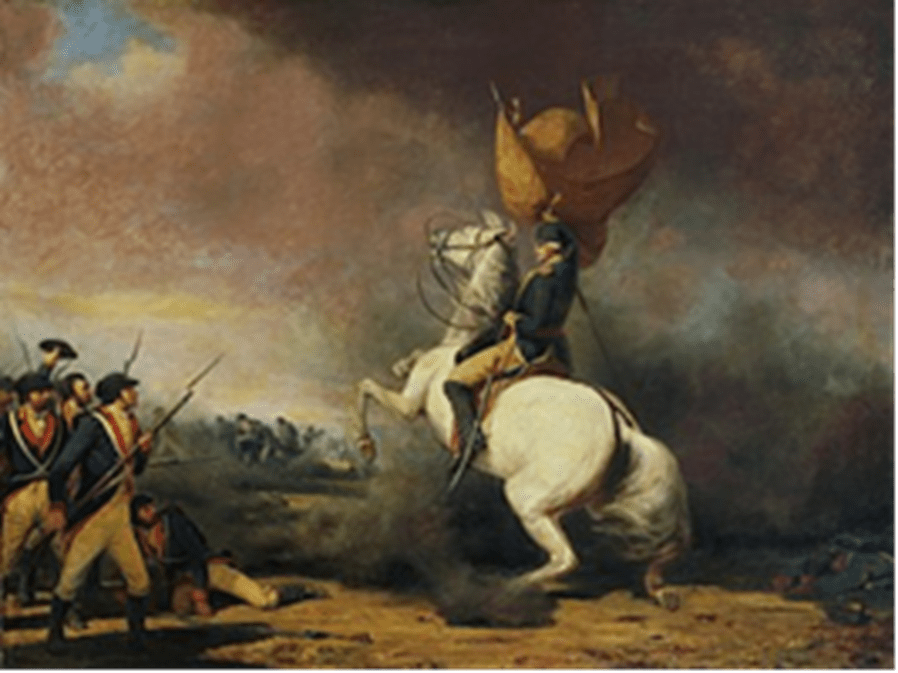
Minutemen were members of the organized New England colonial militia companies trained in weaponry, tactics, and military strategies during the American Revolutionary War. They were known for being ready at a minute’s notice, hence the name. Minutemen provided a highly mobile, rapidly deployed force that enabled the colonies to respond immediately to military threats. They were an evolution from the prior colonial rapid-response units.

The minutemen were among the first to fight in the American Revolution. Their teams constituted about a quarter of the entire militia. They were generally younger, more mobile, and provided with weapons and arms by the local governments. They were still part of the overall militia regimental organizations in the New England Colonies.

In the Massachusetts Bay Colony, all able-bodied men between the ages of 16 and 60 were required to participate in their local militia company. As early as 1645 in the Massachusetts Bay Colony, some men were selected from the general ranks of “town-based training bands” to be ready for rapid deployment. Men so selected were designated as minutemen. Their companies were organized by town, so it was very common for their counterpart militia company to contain relatives and friends. Some towns in Massachusetts had a long history of designating a portion of their militia as minutemen, with “minute companies” constituting special units within the militia system whose members underwent additional training and held themselves ready to respond at a minute’s notice to emergencies, which gave rise to their name as Minutemen.

Members of the minutemen, in contrast to the regular militia, were no more than 30 years old, and were chosen for their enthusiasm, political reliability, and strength. They were the first armed militia to arrive at or await a battle. Officers were elected by popular vote, as in the rest of the militia, and each unit drafted a formal written covenant to be signed upon enlistment.

The militia in the New England colonies were organized in regiments by county. The militia and minutemen companies still were organized by town and trained typically as an entire unit in each town two to four times a year with the Minutemen receiving extra training. From the end of the French and Indian War, this was normal during peacetime but, in the 1770s, as friction with The Crown increased and the possibility of war became apparent, the militia trained three to four times a week.

In response to these tensions, the Massachusetts Provincial legislators found that the colony’s militia resources were too short just before the American Revolutionary War, on October 26, 1774, after observing the British military buildup. They found that, “including the sick and absent, it amounted to about 17,000 men, far short of the number wanted, So the council recommended an immediate application to the New England governments to make up the deficiency, resolving to re-organize and increase the size of the militia:

The Massachusetts General Assembly was stymied by Governor Hutchinson from passing a bill. As a result, resisting legislators, including Samuel Adams being among the leaders, set up Committees of Correspondence in parallel with their fellow Patriots in ConnecticutNew Hampshire, and Rhode Island that recommended that the militia increase in size and reorganize and form special companies of minutemen, who should be equipped and prepared to march at the shortest notice. These minutemen were to comprise one-quarter of the whole militia, to be enlisted under the direction of the field-officers, and divide into companies, consisting of at least 50 men each. The privates were to choose their captains and subalterns, and these officers were to form the companies into battalions, and chose the field-officers to command the same. Hence the minute-men became a body distinct from the rest of the militia, and, by being more devoted to military exercises, they acquired better skill in the use of arms.

The need for efficient minuteman companies was illustrated by the Powder Alarm of 1774. Militia companies were called out to engage British troops, who had been sent to capture ammunition stores. By the time the militia was ready, the British regulars had already captured the arms at Cambridge and Charlestown and had returned to Boston.

The new reorganization provided six regiments of militia with a nominal strength of 9,000 men with minuteman companies being formed from the younger, more physically fit men. The militia in New England was still midway through the process of splitting the Minutemen companies from the regular militia companies into their own regiments by the spring of 1775. For example, the old 2nd Middlesex Regiment of Foot, a provincial unit that had seen action in the French and Indian Wars, divided into a militia regiment under Colonel David Green and a Minuteman regiment under Colonel Ebenezer Bridge. Colonel William Prescott’s Middlesex regiment had not yet split and had ten companies of militia and seven of minutemen. Worcester County had managed to already complete the organization and staffing of three Minuteman regiments by April 1775.

In May 1653, the Council of Massachusetts said that an eighth of the militia should be ready to march within one day to anywhere in the colony. Eighty militiamen marched on the Narragansett tribe in Massachusetts, though no fighting took place. Since the colonies were expanding, the Narragansetts got desperate and began raiding the colonists again. The militia chased the Indians, caught their chief, and got him to sign an agreement to end fighting.

In 1672, the Massachusetts Council formed a military committee to control the militia in each town. In 1675, the military committee raised an expedition to fight the raiding Wampanoag tribe. A muster call was sent out and four days later, after harsh skirmishes with the Wampanoags, three companies arrived to help the locals. The expedition took heavy losses: two towns were raided, and one 80-man company was killed entirely, including their commander. That winter, a thousand militiamen pushed out the Wampanoags.

In response to the success of the Wampanoags, in the spring of 1676 an alarm system of riders and signals was formed in which each town was required to participate.

The Second Indian War broke out in 1689, and militiamen throughout the Thirteen Colonies began to muster in preparation for the fighting. In 1690, Colonel William Phips led 600 men to push back the French. Two years later he became governor of Massachusetts. When the French and Indians raided Massachusetts in 1702, Governor Phips created a bounty which paid 10 shillings each for the scalps of Indians. In 1703, snowshoes were issued to militiamen and bounty hunters to make winter raids on the Indians more effective. The minuteman concept was advanced by the snow shoe men.

American Revolutionary War

The British practiced formations with their weapons, focusing on marching formations on the battlefield. The military ammunition of the time was made for fast reloading and more than a dozen consecutive shots without cleaning. Accuracy of the British musket was sacrificed for speed and repetitive loading.

The militia prepared with elaborate plans to alarm and respond to movements by the king’s forces out of Boston. The frequent mustering of the minute companies also built unit cohesion and familiarity with live firing, which increased the minute companies’ effectiveness. The royal authorities inadvertently gave the new Minuteman mobilization plans validation by several “show the flag” demonstrations by General Gage through 1774.

The royal authorities in Boston had seen these increasing numbers of militia appearing and thought that the militia would not interfere if they sent a sizable force to Concord to seize munitions and stores there (which they considered the King’s property, since it was paid for to defend the colonies from the American Indian threat). The British officers were proven wrong. Shooting erupted at Lexington. There is still a debate as to whether it was a colonist or a British soldier who fired the first shot. The militia left the area, and the British moved on. The British then moved to Concord and faced a larger number of militia men. However, the British were rapidly outnumbered at Concord, with the arrival of the slower moving militia; they had not counted on a long fight, and so had not brought additional ammunition beyond the standard issue in the soldiers’ cartridge boxes. This then forced a strategic British defeat on Colonel Smith, forcing him back to Boston.

A “running fight” began during the retreat. Militiamen knew the local countryside and were familiar with “skulking” or “Indian warfare”. They used trees and other obstacles to cover themselves from British gunfire and pursuit by British soldiers, while the militia were firing and moving. This kept the British under sporadic fire, and caused them to exhaust their limited ammunition. Only the timely arrival of a relief column under British Lord Percy prevented the annihilation or surrender of the original road column.

While a lot of Colonial militia units did not receive either arms or uniforms and were required to equip themselves. Many simply wore their own farmers’ or workmen’s clothes and, in some cases, they wore cloth hunting frocks. Many farmers who owned separate guns such as fowling pieces, and sometimes rifles (though rarer in southern New England) would use them instead of the militia muskets. These pieces gradually appeared in quantity, but neither fowling pieces nor rifles had bayonets such as the British used.

Minutemen tended to get more training in line tactics and drill than the regular militia. Many Minutemen company commanders put their men through more training separate from the rest of the militia. Some also expended time, money, and effort to make sure their Minutemen were well-armed. For example, Captain Isaac Davis who was a gunsmith in his civilian occupation built a firing range on his farm to train his men in firing and drill. He also made sure that every man in his company had a good musket, cartridge box, canteen, and bayonet. This was one of the reasons that his company was in the lead of Colonel Barrett’s Middlesex Minutemen regiment as the Rebels marched down to face the regulars at the Old North Bridge at the Battle of Concord.

Their American experience suited irregular warfare. In the colonial agrarian society, many were familiar with hunting. The Indian Wars, and especially the recent French and Indian War, had given colonials valuable experience in irregular warfare and skirmishing, while British line companies tended to stick to European style fighting. The long rifle was also well suited to this role. The rifling (grooves inside the barrel) gave it a much greater range than the smoothbore musket of the British, although it took much longer to load. When performing as skirmishers, the militia could fire and fall back behind cover or behind other troops, before the British could get into range. The wilderness terrain that lay just beyond many colonial towns favored this style of combat and was very familiar to the local militia.

Through the remainder of the American Revolution, militias moved to adopting the minuteman model for rapid mobilization. With this rapid mustering of forces, the militia proved its value by augmenting the Continental Army, occasionally leading to instances of numerical superiority. This was seen at the Battles of Hubbardton and Bennington in the north and at Camden and Cowpens in the south. Cowpens is notable in that Daniel Morgan used the militia’s strengths and weaknesses skillfully to attain the double-envelopment of the famous Tarleton‘s forces.

There was a shortage of ammunition and supplies, and what they had were constantly being seized by British patrols. As a precaution, these items were often hidden or left behind by minutemen in fields or wooded areas. Other popular concealment methods were to hide items underneath floorboards in houses and barns.

And so, with the help of the Minutemen, General Wahington defeated the European British army and the country of America prevailed and has prospered greatly.

The U.S. Air Force named the LGM-30 Intercontinental Ballistic Missile the “Minuteman”, which was designed for rapid deployment in the event of a nuclear attack. The “Minuteman III” LGM-30G remains in service.

The U.S. Navy VR-55 Fleet Logistic Support Squadron is named “Minutemen” to highlight the rapid deployment and mobility nature of their mission.

Recently President Donald Trump pledged his support for the Texas Minutemen Militia to arm themselves and march to intercept the migrant caravans at the Texas border to aid the U.S soldiers sent to intercept the Migrant caravans heading up through Central America to invade the United States.

Group of Minutemen Searching for Illegals on Texas Border
President of a Group of 200 Minutemen
Border Patrol Searching for Illegals on Texas Border

Ron

Truly God

It says In the Bible: (1Kings 18:39)

When all the people saw it, they fell on their faces; and they said, “The Lord, He is God.”

Either you truly believe the Lord is God or you do not. That is the choice before you today. Either you truly trust the Father has brought you to the end of your options, strength, and ability for His glory; or you will give in to the notion that you are alone without hope.

 The prophet Elijah knew he could always count on the Father. And in order to demonstrate that there is only one true God, he challenged 850 prophets of the false deities Baal and Asherah to send fire from heaven and consume an offering. Whoever responded—whether their idols or the Lord—would prove to be sovereign.

 With no other source than wholehearted confidence in the ability of the Father, Elijah stood courageously against the multitude of enemies (1Kings 18).

 And the Lord powerfully honored his faith. God did not let Elijah down, and He will not fail you either. Circumstances may be so aligned against you that you feel powerless to overcome, but it is all to display His glory.  So, trust Him and be assured—He will respond and prove He is truly God.

Ron

Mother Teresa of Calcutta

The Country of Albania has had a tumultuous history, going back and forth between control by the Christians and the Muslims. With the help of Bill Clinton, the Muslims now control 98% of it.

One of the most famous Albanians was the humble daughter of an Albanian grocer.

Born in 1910, she joined a Catholic religious order at age 18 and began working in the slums of Calcutta, India. She founded the Missionaries of Charity, and was awarded the Nobel Prize in 1979.

This was Mother Teresa of Calcutta. Please read about her below:

Malcolm Muggeridge, a British Journalist who had converted to Christianity, wrote in “The Human Holocaust,” (Human Life Review, 1980): “Mother Teresa in Calcutta, goes to great trouble to have brought into her Home for Dying Derelicts, castaways left to die in the streets. They may survive for no more than a quarter of an hour, but in that quarter of an hour, instead of feeling themselves rejected and abandoned, they meet with Christian love and care. 

Mother Teresa’s love and compassion reach out to the afflicted without any other consideration than their immediate need, just as our Lord does when He tells us to feed the hungry, shelter the homeless, clothe the naked. She gives all she has to give at once, and then finds she has more to give. Something of God’s love has rubbed off on Mother Teresa.”

Phyllis Schlafly wrote in The Power of the Positive Woman (NY: Arlington House Publishers, 1978): “Few women in history have ever known the career fulfillment that Mother Teresa has known. She is the Albanian nun who has made it her mission to minister to the poor and dying in Calcutta, India. She has become a living legend, acclaimed throughout the world, a career success and a happy woman by any standard. And Mother Teresa has said that men could never equal women in love and compassion.”

Mother Teresa explained: “Many people mistake our work for our vocation. Our vocation is the love of Jesus. God hasn’t called me to be successful. He’s called me to be faithful. If you want to pray better, you must pray more. We can do no great things, only small things with great love.”

Ronald Reagan wrote in “Abortion and the Conscience of the Nation,” (Human Life Review, 1983): “The revered Mother Teresa, who works in the streets of Calcutta ministering to dying people in her world-famous mission of mercy, has said that ‘the greatest misery of our time is the generalized abortion of children’. We can echo the always-practical woman of faith, Mother Teresa, when she says, ‘If you don’t want the little child, that unborn child, give him to me.'”

On February 3, 1994, frail 83-year-old Mother Teresa addressed the National Prayer Breakfast in Washington, D.C., before an audience of 3,000: “Jesus died on the Cross because that is what it took for Him to do good to us, to save us from our selfishness in sin. The greatest destroyer of peace today is abortion, because it is a war against the child, a direct killing of the innocent child, murder by the mother herself, and if we accept that a mother can kill even her own child, how can we tell other people not to kill one another?”

Urging America to repent, Mother Teresa stated: “How do we persuade a woman not to have an abortion? We must persuade her with love and we remind ourselves that love means to be willing to give until it hurts. Jesus gave even His life to love us. So the mother who is thinking of abortion, should be helped to love, that is, to give until it hurts her plans or her free time, to respect the life of her child.

The father of that child, whoever he is, must also give until it hurts. By abortion, the mother does not learn to love, but kills even her own child to solve her problems. And, by abortion, the father is told that he does not have to take any responsibility for the child he has brought into the world. The father is likely to put other women into the same trouble. So abortion just leads to more abortion.”

The Old Testament version of abortion was sacrificing innocent children to pagan gods. Proverbs 6:16-17 “The Lord hates hands that shed innocent blood.” God is just. Though patient and long-suffering, He will eventually judge individuals and nations who shed innocent blood, unless they repent.

2 Kings 21: “King Manasseh did evil in the eyes of the Lord, following the detestable practices of the nations the Lord had driven out before the Israelites. He sacrificed his own son in the fire (to Moloch). The Lord said through his servants the prophets: “Manasseh has done more evil than the Amorites who preceded him. Therefore, this is what the Lord, the God of Israel, says: I am going to bring such disaster on Jerusalem and Judah that the ears of everyone who hears of it will tingle. Manasseh also shed so much innocent blood that he filled Jerusalem from end to end.”

2 Kings 24:2-4: “The LORD sent Babylonian, Aramean, Moabite and Ammonite raiders … to destroy Judah because of the sins of Manasseh and all he had done, including the shedding of innocent blood. For he filled Jerusalem with innocent blood, and the LORD was not willing to forgive.”

Mother Teresa continued: “Any country that accepts abortion is not teaching its people to love, but to use violence to get what they want. That is why the greatest destroyer of love and peace is abortion. Many people are very, very concerned with the children of India, with the children of Africa where quite a few die of hunger, and so on. Many people are also concerned about all the violence in this great country of the United States.

These concerns are very good. But often these same people are not concerned with the millions who are being killed by the deliberate decision of their own mothers. We have sent word to the clinics, to the hospitals and police stations: ‘Please don’t destroy the child; we will take the child.’ So we always have someone tell the mothers in trouble: ‘Come, we will take care of you, we will get a home for your child.'”

Mother Teresa spoke further: “And we have a tremendous demand from couples who cannot have a child. Jesus said, ‘Anyone who receives a child in my name, receives me.’ By adopting a child, these couples receive Jesus but by aborting a child, a couple refuses to receive Jesus. Please don’t kill the child. I want the child. Please give me the child. I am willing to accept any child who would be aborted and to give that child to a married couple who will love the child and be loved by the child. From our children’s home in Calcutta alone, we have saved over 3,000 children from abortion.”

Mother Teresa concluded: “If we remember that God loves us, and that we can love others as He loves us, then America can become a sign of peace for the world. From here, a sign of care for the weakest of the weak, the unborn child, must go out to the world. If you become a burning light of justice and peace in the world, then really you will be true to what the founders of this country stood for. God bless you!”

Declaring January 22, 2018, National Sanctity of Human Life Day, President Trump stated: “We focus our attention on the love and protection each person, born and unborn, deserves. Reverence for every human life, one of the values for which our Founding Fathers fought, defines the character of our Nation. Today, it moves us to promote the health of pregnant mothers and their unborn children. It dispels the notion that our worth depends on the extent to which we are planned for or wanted. Science continues to support and build the case for life. Medical technologies allow us to see images of the unborn children moving their newly formed fingers and toes, yawning, and even smiling. Those images present us with irrefutable evidence that babies are growing within their mothers’ wombs, precious, unique lives, each deserving a future filled with promise and hope.”

President Donald J. Trump remarked at the 47th Annual March for Life, January 24, 2020: “Every child is a precious and sacred gift from God. When we see the image of a baby in the womb, we glimpse the majesty of God’s creation. When we hold a newborn in our arms, we know the endless love that each child brings to a family. When we watch a child grow, we see the splendor that radiates from each human soul. One life changes the world, And as the Bible tells us, each person is ‘wonderfully made.'”

He continued: “We are protecting pro-life students’ right to free speech on college campuses. And if universities want federal taxpayer dollars, then they must uphold your First Amendment right to speak your mind. Sadly, the far-left is actively working to erase our God-given rights; and silence Americans who believe in the sanctity of life. Last year, lawmakers in New York cheered with delight upon the passage of legislation that would allow a baby to be ripped from the mother’s womb right up until delivery. Then, we had the case of the Democrat governor in the state of Virginia. The Governor stated that he would execute a baby after birth.”

President Trump concluded: “The tens of thousands of Americans gathered today not only stand for life to help spread God’s grace. And to all of the moms here today: We celebrate you, and we declare that mothers are heroes. Because of you, our country has been blessed with amazing souls who have changed the course of human history. We cannot know what our citizens yet unborn will achieve, the dreams they will imagine, the masterpieces they will create, the discoveries they will make. But we know this: Every life brings love into this world. Every child brings joy to a family. Every person is worth protecting. And above all, we know that every human soul is divine, and every human life –- born and unborn –- is made in the holy image of Almighty God.”

On September 5, 1997 Mother Teresa died.

On September 4, 2016, Pope Francis recognized this humble daughter of an Albanian grocer as a Saint in the Catholic Church.

Albanian Mother Teresa shared what motivated her: “I see Jesus in every human being. I say to myself, this is hungry Jesus, I must feed him. This is sick Jesus. This one has leprosy or gangrene; I must wash him and tend to him. I serve because I love Jesus.”

Ron

5

Battle of Bunker Hill

June 17 is the anniversary of the Battle of Bunker Hill. Since it is so very important in America’s history, I have prepared the history of it below so that you can have the opportunity to celebrate it.  (And besides that, I live on Bunker Hill Road at the intersection of it and Victory Lane in Midland, Texas.)

Battle of Bunker Hill

“Don’t Shoot Until You See the Whites of Their Eyes!” commanded Colonel William Prescott, repeating the order of General Israel Putnam, JUNE 17, 1775.

Colonel William Prescott’s men were in the center redoubt located on Breed’s Hill, adjacent Bunker Hill, guarding the north entrance to Boston Harbor.

Samuel Swett wrote in his History of Bunker Hill, that as the 2,300 British soldiers advanced: “The American marksmen are with difficulty restrained from firing. Putnam rode through the line, and ordered that no one should fire till they arrived within eight rods. Powder was scarce and must not be wasted. They should ‘not fire at the enemy till they saw the whites of their eyes.’ The same orders were reiterated by Prescott at the redoubt.”

Franklin Roosevelt proclaimed March 20, 1942: “Our Army is a mighty arm of the tree of liberty. It is a living part of the American tradition, a tradition that goes back to Israel.

Putnam, who left his plow in a New England furrow to take up a gun and fight at Bunker Hill.”

General Putnam

At the beginning of the battle, a stray musket ball from a British gun killed an American soldier, resulting in other soldiers running away. To stop the confusion, Colonel William Prescott climbed on top of the wall of the fortification, stood upright and walked back and forth, rallying his men.

Colonel Prescot

When British General Thomas Gage saw Prescott through his telescope, he asked a local loyalist, Abijah Willard, who happened to be Prescott’s brother-in-law, if Prescott had enough courage to fight. Willard replied: “Prescott is an old soldier, he will fight as long as a drop of blood is in his veins.” Another recorded Willard’s statement as: “As to his men, I cannot answer for them, but Colonel Prescott will fight you to the gates of hell.”

Historian George Bancroft wrote that at the redoubt in the center of battle: “No one appeared to have any command but Colonel Prescott. His bravery could never be enough acknowledged and applauded.”

British General Gage had no respect for the rag-tag Americans, resulting in him pridefully committing the serious mistake of ordering a direct assault. British General William Howe had intended to unleash an artillery bombardment from field pieces on the Americans prior to the British advance, but providentially for the Americans, the British brought the wrong caliber ammunition. They had six pounder cannons but nine pound shot. As a result, British artillery was not able to soften the resistance.

General Howe ordered some 2,300 British soldiers to fix bayonets, and in their wool uniforms, charge in the hot sun up the hill covered with fences and uneven rows of uncut grass.  The British muskets were such poor weapons that they fought by charging forward with their long, sharp bayonetts.

Twice the Americans repelled them, but the third time they ran out of gunpowder. Over 1,000 British were killed or wounded in this first major action of the Revolutionary War. There were nearly 500 American casualties, including the notable Dr. Joseph Warren.

Dr. Joseph Warren Killed in Battle

Amos Farnsworth, a corporal in the Massachusetts Militia, made this entry in his diary immediately after the Battle of Bunker Hill, JUNE 17, 1775: “We within the entrenchment, having fired away all ammunition and having no reinforcements were overpowered by numbers and obliged to leave. I did not leave the entrenchment until the enemy got in. I then retreated ten or fifteen rods. Then I received a wound in my right arm, the ball going through a little below my elbow, breaking the little shellbone. Another ball struck my back, taking a piece of skin about as big as a penny. But I got to Cambridge that night. Oh the goodness of God in preserving my life, although they fell on my right and on my left! O may this act of deliverance of thine, O God, lead me never to distrust thee; but may I ever trust in thee and put confidence in no arm of flesh!”

The British then burned the nearby town of Charlestown.

Daniel Webster declared at the Bicentennial Celebration at Plymouth Rock, December 22, 1820: “In New England the war of the Revolution commenced. I address those who saw the burning spires of Charlestown; who beheld the deeds of Prescott, and heard the voice of Putnam amidst the storm of war, and saw the generous Warren fall, the first distinguished victim in the cause of liberty. It would be superfluous to say, that no portion of the country did more than the States of New England to bring the Revolutionary struggle to a successful issue.”

This same day as the Battle of Bunker Hill, 300 miles away in Philadelphia, the Continental Congress drafted George Washington’s commission as commander-in-chief, for which he refused a salary. Washington wrote to his wife, Martha: “Dearest It has been determined in Congress, that the whole army raised for the defense of the American Cause shall be put under my care, and that it is necessary for me to proceed immediately to Boston to take command. I shall rely therefore, confidently, on that Providence which has heretofore preserved, and been bountiful to me.”

Yale President Ezra Stiles wrote May 8, 1783: “Every patriot trembled till we had proved our armor, till it could be seen, whether (we) could face the enemy with firmness. They early gave us the decided proof of this, in the memorable Battle of Bunker Hill (June 17, 1775). This instantly convinced us, and for the first time convinced Britons themselves, that Americans both would and could fight with great effect. Whereupon Congress put at the head of this spirited army, the only man, on whom the eyes of all Israel were placed (George Washington). This American JOSHUA was raised up by God, and divinely formed by a peculiar influence of the Sovereign of the Universe, for the great work of leading the armies to liberty and independence.”

Less than a month after the Battle of Bunker Hill, the Continental Congress proclaimed a Day of Public Humiliation, Fasting and Prayer, as John Adams wrote to his wife, Abigail, July 12, 1775: “We have appointed a Continental fast. Millions will be upon their knees at once before their great Creator, imploring His forgiveness and blessing; His smiles on American Council and arms.”

Georgia’s Provincial Congress also passed a motion, July 5, 1775: “That this Congress apply to his Excellency the Governor requesting him to appoint a Day of Fasting and Prayer throughout this Province, on account of the disputes subsisting between America and the Parent State.”

Georgia’s Royal Governor James Wright replied July 7, 1775: “Gentlemen: I have taken the request made by the Provincial Congress, and must premise, that I cannot consider that meeting as constitutional; but as the request is expressed in such loyal and dutiful terms, and the ends proposed being such as every good man must most ardently wish for, I will certainly appoint a Day of Fasting and Prayer to be observed throughout this Province.”

Connecticut Governor Jonathan Trumbull wrote to General Washington, July 13, 1775: “The Honorable Congress have proclaimed a Fast to be observed by the inhabitants of all the English Colonies on this continent, to stand before the Lord in one day, with public humiliation, fasting, and prayer, to deplore our many sins, to offer up our joint supplications to God, for forgiveness, and for his merciful interposition for us in this day of unnatural darkness and distress. They have, with one united voice, appointed you to the high station you possess. The Supreme Director of all events hath caused a wonderful union of hearts and counsels to subsist among us. Now therefore, be strong and very courageous.

May the God of the armies of Israel shower down the blessings of his Divine Providence on you, give you wisdom and fortitude, cover your head in the day of battle and danger, add success, convince our enemies of their mistaken measures, and that all their attempts to deprive these Colonies of their inestimable constitutional rights and liberties are injurious and vain.”

On July 19, 1775, the Journals of the Continental Congress recorded: “Agreed, That the Congress meet here tomorrow morning, at half after 9 o’clock, in order to attend divine service at Mr. Duche’s Church; and that in the afternoon they meet here to go from this place and attend divine service at Doctor Allison’s church.”

On July 20, 1775, General Washington issued the order: “The General orders this day to be religiously observed by the Forces under his Command, exactly in manner directed by the Continental Congress.

It is therefore strictly enjoined on all Officers and Soldiers to attend Divine Service; And it is expected that all those who go to worship do take their Arms, Ammunition and Accoutrements, and are prepared for immediate action, if called upon.

Ron

Genuine Faith

It says in the Bible: Isiah 41:10 (NLT)

Don’t be afraid, for I am with you. Don’t be discouraged, for I am your God. I will strengthen you and help you. I will hold you up with my victorious right hand.”

Many people who think they have faith in God are actually dominated by fears and doubts—overwhelmed by the circumstances of their lives. Are you? What is it that makes you anxious today? Is there something you fear you’ll never achieve or receive.

Understand, genuine faith means realizing God wants to provide His very best for you and will not let you miss it as you walk with him. True, sometimes what He perceives as best for you is different from what you do. But take heart, the One who created you ultimately knows what will truly satisfy your soul—even better than you do.

So let go of whatever you fear you will never have or accomplish. He is faithful to provide. And if God does not give you what your heart presently desires, it is because He has something far better planned for you.

Ron

Is the Universe an Accident

Did everything happen just by accident or was it on purpose?  This has perplexed man through all history. Following are some of the conclusions by many of the great thinkers and scientists through out modern history that I have compiled for you. What do you think?

Cambridge biochemist Rupert Sheldrake, author of Morphic Resonance: The Nature of Formative Causation, 2009, remarked in his TEDx Talk “The Science Delusion” at Whitechapel, January 12, 2013: “As (ethnobotanist) Terence McKenna used to say, ‘Modern science is based on the principle: Give us one free miracle and we’ll explain the rest.’ And the one free miracle is the appearance of all the matter and energy in the universe, and all the laws that govern it, from nothing in a single instant.

Rupert Sheldrake

It takes faith for an atheist to believe that by chance nothingness produced everything in an instant; that unguided random accidents created all things, from the unimaginably complicated DNA molecule to all that is beautiful, including selfless love, a baby’s giggle, the masterpieces of Michelangelo, Da Vinci, Shakespeare, Beethoven and the intelligence to appreciate them.

What about fractals? In geometry, these are intricate shapes made up of miniature renditions of that same shape, made up of even smaller versions, repeating in infinity, with each having very slight differentiations, so each is both the same yet unique.

Nobel Prize winning physicist Eugene Wigner wrote in “The Unreasonable Effectiveness of Mathematics in the Natural Sciences,” 1960: “It is difficult to avoid the impression that a miracle confronts us here, or the two miracles of the existence of laws of nature and of the human mind’s capacity to divine them.”

Eugene Wigner

Wigner continued: “The enormous usefulness of mathematics in the natural sciences is something bordering on the mysterious and there is no rational explanation for it.”

Richard Feynman, a Nobel Prize winner in quantum electrodynamics, wrote in The Meaning of It All: Thoughts of a Citizen–Scientist (NY: BasicBooks, 1998): “Why nature is mathematical is a mystery. The fact that there are rules at all is a kind of miracle.”

Galileo Galilei stated:  “The laws of nature are written by the Hand of God in the language of mathematics.”

God created everything with rules. He is an eternal, perfect, all powerful, all-knowing Being, who is completely just, with order, laws, and rules. If you do not believe in a God who created everything with rules, then you are left with believing all things came from nothing. If all things came from nothing, then eventually all things will return to nothing, therefore your life is meaningless, just the result of millions of mindless mistakes.

C.S. Lewis stated in The Oxford Socratic Club, 1944: “If I swallow the scientific cosmology as a whole, then not only can I not fit in Christianity, but I cannot even fit in science. If minds are wholly dependent on brains, and brains on biochemistry, and biochemistry — in the long run — on the meaningless flux of atoms, I cannot understand how the thought of those minds should have any more significance than the sound of the wind in the trees.”

C. S. Lewis

Oxford mathematician John C. Lennox wrote in God’s Undertaker – Has Science Buried God, 2007: “Indeed, faith is a response to evidence, not rejoicing in the absence of evidence. The apostle Paul says what many pioneers of modern science believed — that nature itself is part of the evidence for the existence of God.”

John C. Lennox

Lennox continues: “To the majority of those who have reflected deeply and written about the origin and nature of the universe, it has seemed that it points beyond itself to a source which is non-physical and of great intelligence and power.”

Adam Sandage, widely regarded as one of the fathers of modern astronomy for which he won the Nobel Prize (and was one of my best friends) is in no doubt: ‘God to me is the explanation for the miracle of existence – why there is something rather than nothing.’”

Adam Sandage

Albert Einstein told William Hermanns in an interview:  “I observe the laws of nature. There are not laws without a lawgiver.”

Sir William Blackstone wrote in Commentaries on the Laws of England, 1768:  “When the Supreme Being formed the universe, and created matter out of nothing,  He impressed certain principles upon that matter, certain laws of motion, to  which all movable bodies must conform, not left to chance, but guided by  unerring rules laid down by the great Creator. ” 

Eric Metaxas wrote in “Science Increasingly Makes the Case for God,” March 25, 2015: “Today there are more than 200 known parameters necessary for a planet to support life — every single one of which must be perfectly met, or the whole thing falls apart. The odds against life in the universe are simply astonishing. Yet here we are, not only existing, but talking about existing. What can account for it? Can every one of those many parameters be perfect by accident? At what point is it fair to admit that science suggests that we cannot be the result of random forces?”

Eric Metaxas

Metaxas continued: “Doesn’t assuming that an intelligence created these perfect conditions require far less faith than believing that a life-sustaining Earth just happened to beat the inconceivable odds to come into being? There’s more. The fine-tuning necessary for life to exist on a planet is nothing compared with the fine-tuning required for the universe to exist at all. The greatest miracle of all time, without any close seconds, is the universe. It is the miracle of all miracles, one that ineluctably points with the combined brightness of every star to something—or Someone— beyond itself.

A Little Piece of the Universe

Sir Isaac Newton wrote in Principia, 1687: “This most beautiful system of the sun, planets, and comets, could only proceed from the counsel and dominion of an intelligent and powerful Being. Order and life in the universe could happen only by the willful reasoning of its original Creator, whom I call the ‘Lord God.’”

G.K. Chesterton wrote in The Everlasting Man, 1925: “Nobody can imagine how nothing could turn into something. Nobody can get an inch nearer to it by explaining how something could turn into something else. It is really far more logical to start by saying ‘In the beginning God created heaven and earth’ even if you only mean ‘In the beginning some unthinkable power began some unthinkable process.’ For God is by its nature a name of mystery, and nobody ever supposed that man could imagine how a world was created any more than he could create one.”

G. K. Chesterton

English poet William Cowper’s wrote: “Nature is but a name for an effect, Whose cause is God.”

Einstein wrote: “Behind each cause is still another cause. Yet, only one thing must be remembered: there is no effect without a cause, and there is no lawlessness in creation.”

Albert Einstein

Albert Einstein stated further: “As I observe the Laws of Nature, there are not Laws without a Lawgiver”

Danish poet Hans Christian Andersen put it this way: “The whole world is a series of miracles, but we’re so used to them we call them ordinary things.”

Psalm 19:1: “The heavens declare the glory of God, and the sky above proclaims his handiwork.”

Ron

His Great Love

It says in the Bible: 1John 3:1 
“See how great a love the Father has bestowed on us, that we would be called children of God.

No one  loves you more intimately and unconditionally than God does. He created you to be in relationship with Him—to glorify Him, have fellowship with Him, and be His beloved child forever. 

He wants you to know how deeply and unconditionally He cares for you. There is nothing you could ever do to surprise or disappoint Him because He knows all things and is never shocked by your actions. Although He does not approve of sin, and may urge you to repent of ungodly behavior, He will always invite you back into His presence and accept you when you repent (1 John 1:9).

Therefore, when you do stumble, always remember you have an Advocate before the Father—Jusus Christ—who hears your prayers for forgiveness and cares when you are hurting. God may discipline you when you yield to temptation, but He will never withhold His love from you. You are His child. This truth never changes. And because He is righteous, loving, and steadfast, He will certainly never fail you.

Ron 

Women of The American Revolution

You hear much about the men of the American Revolution, but there were many women who were deeply involved. In fact, many believe we never would have won that war without those women. Below I have referenced many of them. You can look on Google to read about the whole story of each one.

Women of The American Revolution

Courageous women have always played a vital role in American history. Addressing the Daughters of the American Revolution, April 19, 1926, President Calvin Coolidge stated: “The importance of women in the working out the destiny of mankind is well known. As there were fathers in our Republic so there were mothers. By their abiding faith they inspired and encouraged the men; by their sacrifice they performed their part in the struggle out of which came our country.”

“We read of the flaming plea of Hanna Arnett, which she made on a dreary day in December, 1776, when Lord Cornwallis, victorious at Fort Lee, held a strategic position in New Jersey. A group of Revolutionists, weary and discouraged, were discussing the advisability of giving up the struggle.  Casting aside the proprieties which forbade a woman to interfere in the counsels of men, Hannah Arnett proclaimed her faith. In eloquent words, which at once shamed and stung to action, she convinced her husband and his companions that righteousness must and will win.”

Hanna Arnett

Women followed the American army to Valley Forge, enduring the freezing 1777. Over 2,500 soldiers perished from hunger, typhoid, jaundice, dysentery, and pneumonia, but also an estimated 500 women died there too. “We have been told of the unselfish devotion of the women who gave their own warm garments to fashion clothing for the suffering Continental Army during that bitter winter at Valley Forge. The burdens of the war were not all borne by the men. Referred to as “camp followers,” these women were organized by Martha WashingtonLucy Knox, wife of Colonel Henry Knox, and Caty Greene, wife of General Nathanael Greene.

To help the Continental Army, they scavenged for supplies, cooked food, washed clothes, formed sewing circles to knit and mended ragged uniforms and blankets, and cared for sick and dying soldiers. One of the ladies, Mrs. Westlake, described Martha Washington: “I never in my life knew a woman so busy from early morning until late at night as was Lady Washington, providing comforts for the sick soldiers.

Martha Washington

Esther DeBerdt Reed, wife of officer Joseph Reed, and Sarah Franklin Bache, daughter of Benjamin Franklin, organized “The Ladies of Philadelphia” and raised $300,000 for General Washington to buy warm clothes for American troops.

During the Revolution, many, like Lucy Knox, left their Loyalist British families who sailed for England, never to see them again, in order to join their patriotic American husbands on military assignments in shifting encampments. Lucy and Colonel Henry Knox did not have a permanent home till they were married 20 years later.

“Many have heard of Molly Pitcher, whose heroic services at the Battle of Monmouth helped the sorely tried army of George Washington!” Molly Pitcher is generally believed to be Mary Ludwig Hays. When her husband enlisted, she became one of the “camp followers.”

Molly Pitcher

During the intense heat of the battles, these women would go from trench to trench, carrying pitchers of water to the parched soldiers. These women also carried a continuous supply of water to those loading the cannons. Water was needed to cool and clean the hot barrels of the cannons between shots, using a soaked end of a long ramrod. If this was not done, the cannons would soon overheat and become useless.

At the Battle of Monmouth, June 28, 1778, Molly Pitcher was bringing water to soldiers, while her husband manned one of the cannons. When her husband collapsed from heat stroke, Molly took his place swabbing and loading the cannon for the rest of the battle. A British cannonball flew between her legs, tearing off part of her skirt. Molly straightened up and uttered, “Well, that could have been worse,” and resumed loading the cannon.

Sergeant Molly

As Soldier Joseph Plumb Martin described: “A woman whose husband belonged to the artillery and who was then attached to a piece in the engagement, attended with her husband at the piece the whole time. While in the act of reaching a cartridge and having one of her feet as far before the other as she could step, a cannon shot from the enemy passed directly between her legs without doing any other damage than carrying away all the lower part of her petticoat. Looking at it with apparent unconcern, she observed that “it was lucky it did not pass a little higher, for in that case it might have carried away something else, and continued her occupation.”

Hearing of her courage, General George Washington commended “Molly Pitcher” (Mary Ludwig Hays) issuing her a warrant as a non-commissioned officer. She was known as “Sergeant Molly.”

A similar story is that of Margaret Cochran Corbin, wife of artilleryman John Corbin. On November 16, 1776, John Corbin, along with 2,800 Continental soldiers, defended Manhattan’s Fort Washington, which was being attacked by 9,000 Hessian mercenary troops. Margaret Corbin was bringing water to swab the cannon, when her husband was killed. She immediately took his place at the cannon, and helped return fire. Seriously wounded in her arm, Margaret Corbin, or “Captain Molly,” was the first woman in U.S. history to be awarded a military pension.

Margaret Corbin

When the men of Pepperell, Massachusetts, went off to war, Prudence Cummings Wright and Sarah Shattuck formed their own militia of women to protect the remaining townspeople – “Mrs. David Wright’s Guard.” Their weapons were everything from muskets to farm tools.

Women managed homesteads while their husbands fought. They worked the farms, raised families, and defended against Indians stirred up by the British to attack. Women raised money for suffering soldiers, organized resistance protests, boycotted British-made products, which meant going back to using their old spinning wheels. Women engaged in the riskier roles as messengers, scouts, saboteurs, or spies, the punishment for which, if caught, was hanging.

In addition to well-known names, such as Abigail Adams, Mercy Otis Warren, Dolley Madison, and Deborah Read Franklin, there were:

Catherine “Kate” Moore Barry, the “Heroine of the Battle of Cowpens,” who rode through the back trails of South Carolina to warn of approaching British troops and round up militia, including her husband, to join General Daniel Morgan for the Battle of Cowpens, January 17, 1781.

Kate Moore Barry

16-year-old Sybil Ludington, on the night of April 26, 1777, rode 40 miles through Putnam and Dutchess Counties waking up patriots to join the militia, led by her father, Colonel Henry Ludington. Sybil delivered the urgent warning that the British had burned Danbury, Connecticut, and were fast approaching.

Sybil Ludington

Lydia Darragh, a Quaker, had her home commandeered by British officers for weeks. During their meetings, Lydia would hide in a closet under the stairs and listen through the walls. Hearing their plans, Lydia made notes on small pieces of paper and sewed them into button covers on her son’s coat, instructing him to go to General Washington’s camp at Whitemarsh. Her intelligence saved the Americans from a surprise British attack.

Lydia Darragh

22-year-old Deborah Champion, in September 1775, disguised as an old woman wearing a silk hood and an oversized bonnet, risked her life to ride from New London, Connecticut, to Boston, passing several British checkpoints. Deborah was delivering an urgent message from her father, Henry Champion (the Continental Army’s commissary general), to General George Washington, hiding the important papers under the bodice of her linsey-woolsey dress.

Deborah Champion

Anna Smith Strong was an integral part of the Culper Spy Ring, which gathered information for General Washington, 1778-1781. Robert Townsend, pretending to be a loyalist, learned of British troops movements around New York and told tavern owner Austin Roe, who got it to Abraham Woodhull. Woodhull was signaled by  Anna Smith Strong, when she hung her laundry outside to dry on a clothesline in pre-arranged configurations, since Caleb Brewster was waiting in a cove to take the information across Long Island Sound to Major Ben Tallmadge and General Washington.

Hot tempered Nancy Hart had her cabin searched by six British soldiers. They shot her prized turkey and ordered her to cook it. While serving the soldiers wine, she discreetly passed their stacked muskets through a crack in the wall to her daughter outside. When the soldiers finally noticed what she was doing, she pointed one of the guns at them saying that she would shoot the first one who moved, which she promptly did. Nancy held the rest at gun point till her husband arrived. She insisted they be hung. In 1912, a railroad construction worker grading land near the old Hart cabin found a neat row of six skeletons…..one tough young lady.

Nancy Hart

Deborah Samson Gannett, after being freed from being an indentured servant on a farm, bound her chest to hide her breasts, dressed as a man, and enlisted in the Continental Army under the name Robert Shurtliff. Deborah served three years, being injured several times, but refused medical attention for fear of being found out. It was not until she became deathly ill of fever that the doctor discovered her identity. She was honorably discharged. In 1792, Deborah received back pay, and in 1805, Congress granted her a pension as a war veteran.

Deborah Gannett

Martha Bratton, wife of Colonel William Bratton, blew up a cache of gunpowder to keep it from the British. When questioned, she proclaimed, “It was I who did it!” A British officer held a reaping hook to her throat, demanding she confess where her husband was, but Martha refused to tell. When a battle was taking place right outside her home, Martha extinguished the fire in the fireplace and put her little son up the chimney to keep him from being hit by stray gunfire.

Nancy “Nanyehi” Ward was a Cherokee in eastern Tennessee. The Cherokee had sided with the British during the French and Indian War, and again during the Revolution. But Nancy hated the British. Nanye’hi learned that the British had incited her tribe to attack a nearby American settlement. She took the risk of freeing American prisoners so they could warn their village, one of whom, Lydia Bean, was expecting to be burned to death the next day. While captives, Lydia Bean and Nanye’hi reportedly traded cooking advice, such as making butter.

Nancy “Nanye’hi” Ward

The Ladies of Havana, Cuba are credited with saving the American Revolution. They donated their own gold and jewelry, estimated at several million dollars, and sent it to help General Washington defeat the British at Yorktown. Their story is seldom told are even known about by most Americans. Those that know consider it Divine Intervention. The message that the “Ladies of Havana” sent with their contribution was: “So the American mothers’ sons are not born as slaves.” Washington reportedly threw his hat in the air when he heard the news of their gift.

(The Continental Army had borrowed every penny that it could and was now totally destitute. The Revolution was finished. However, it is my opinion that it was not the Will of God that the Revolution stop right then and there.  God put it into the hearts and minds of the Ladies of Havanna to sell their jewelry and their rings and their financial assets of gold and send all the proceeds to save the Continental Army.  Otherwise, there would have been no more America and it would never have evolved to the nation that we are today.)

General Jean Baptiste de Rochambeau wrote in his “Daily Memoirs” (Library of Congress): “The joy was enormous when it was received, the money from Havana: The contribution of 800,000 silver pounds and more which helped stop the financial bankruptcy (of the Revolutionary Army) and raised up the moral spirit of the Army that had began to dissolve.”

Historian Stephen Bonsal wrote in When the French Were Here (Doubleday, Doran & Co.,1945): “The millions that were supplied by the ladies of Havana, may, with truth, be regarded as the ‘bottom dollars’ upon which the edifice of American independence was erected.”

On January 2, 1952, the U.S. Postal Service issued a 3-cent stamp in Philadelphia to commemorate the 200th anniversary of the birth of Betsy Ross. Born a day earlier, January 1, 1752, to a Quaker family in Philadelphia, Betsy was the 8th of 17 children. Betsy apprenticed as a seamstress and fell in love with upholsterer John Ross, son of an Episcopal rector at Christ Church and nephew of Declaration signer, George Ross. John and Betsy eloped, as Quakers forbade interdenominational marriage. They were married by the last colonial Governor of New Jersey William Franklin, the son of Ben Franklin.

John and Betsy Ross attended Christ’s Church with: George Washington, Robert Morris, Francis Hopkins, Alexander Hamilton, Thomas Jefferson, and Benjamin Franklin. The Ross’ pew, number 12, was next to a column adjoining George Washington’s pew number 56 and not far from Ben Franklin’s pew number 70. During the Revolution, John Ross died when a munitions depot he was guarding blew up.

Shortly after, in June 1776, General Washington reportedly asked Betsy Ross to sew an American Flag. With the Continental Congress meeting in Pennsylvania, Betsy Ross also made a flag for the Pennsylvania navy ensign, which had 7 red stripes and 6 white stripes, as well as a commissioning pennant with 13 red-and-white stripes. Betsy Ross and her family continued to make U.S. flags for 50 years. They were the ones used to honor our nation and the designe still used today.

Betsy Ross

To continue the heroic legacy of the women in the American Revolution, the Daughters of the American Revolution was founded in 1890, and incorporated by an Act of Congress in 1896. Its motto is: “God, Home, and Country.”

Voicing the sentiment of the courageous, patriotic women of the Revolution, Abigail Adams wrote to her husband, September 16, 1775: “And unto Him who mounts the whirlwind and directs the storm, I will cheerfully leave the ordering of my lot and whether adverse or prosperous days should be my future portion, I will trust in His right Hand to lead me safely through! I need not say how sincerely I am your affectionate, Abigail Adams.”

Ron

Attention:  If you would like for me to send this story to certain people on your call list as well as stories in future weeks, please copy their emal addresses to me in an email.  Also, please call or email each of them to let them know this story is coming, that it is not spam, and that you would like for them to read it.  Thanks. My email is…………. linam7@verizon.net


“Stonewall” Jackson

It is acknowledged by all those who really understood the Civil War that if this great general had not been killed when he was by his own sentry, the South would have for sure won that war. And that this country would still be divided into two entities. Even though I have always loved and favored the South. I must acknowledge that it was for sure the will of God that America still remain as one country through history. Below, I have set out what happened for you to see. Do read it so that you will understand what happened and how:

“Stonewall” Jackson

During the Civil War, on March 30, 1863, President Abraham Lincoln proclaimed a National Day of Humiliation, Fasting and Prayer.

Lincoln stated: “Whereas, the Senate of the United States devoutly recognizing the Supreme Authority and just Government of Almighty God in all the affairs of men and of nations, has, by a resolution, requested the President to designate and set apart a day for national prayer and humiliation; and Whereas, it is the duty of nations as well as of men to own their dependence upon the overruling power of God, to confess their sins and transgressions in humble sorrow yet with assured hope that genuine repentance will lead to mercy and pardon, and to recognize the sublime truth, announced in the Holy Scriptures and proven by all history: that those nations only are blessed whose God is the Lord.

And, insomuch as we know that, by His divine law, nations like individuals are subjected to punishments and chastisement in this world, may we not justly fear that the awful calamity of civil war, which now desolates the land may be but a punishment inflicted upon us for our presumptuous sins to the needful end of our national reformation as a whole people?

We have been the recipients of the choicest bounties of Heaven. We have been preserved these many years in peace and prosperity. We have grown in numbers, wealth and power as no other nation has ever grown. But we have forgotten God. We have forgotten the gracious Hand which preserved us in peace, and multiplied and enriched and strengthened us; and we have vainly imagined, in the deceitfulness of our hearts, that all these blessings were produced by some superior wisdom and virtue of our own.

Intoxicated with unbroken success, we have become too self-sufficient to feel the necessity of redeeming and preserving grace, too proud to pray to the God that made us! It behooves us then to humble ourselves before the offended Power, to confess our national sins and to pray for clemency and forgiveness.

Now, therefore, in compliance with the request and fully concurring in the view of the Senate, I do, by this my proclamation, designate and set apart Thursday, the 30th day of April, 1863, as a Day of National Humiliation, Fasting and Prayer. And I do hereby request all the people to abstain on that day from their ordinary secular pursuits, and to unite, at their several places of public worship and their respective homes, in keeping the day holy to the Lord and devoted to the humble discharge of the religious duties proper to that solemn occasion.

All this being done, in sincerity and truth, let us then rest humbly in the hope authorized by the Divine teachings, that the united cry of the nation will be heard on high and answered with blessing no less than the pardon of our national sins and the restoration of our now divided and suffering country to its former happy condition of unity and peace.

In witness whereof, I have hereunto set my hand and caused the seal of the United States to be affixed. Done at the city of Washington, this 30th day of March, A.D. 1863, and of the Independence of the United States the eighty-seventh. Abraham Lincoln. By the President: William H. Seward, Secretary of State.”

Lincoln’s National Day of Humiliation, Fasting and Prayer was observed April 30, 1863.

Just Two days later, a freak accident occurred which altered the entire course of the war. One of the South’s very best generals was accidentally shot by his own men.

Lt. General Thomas J. “Stonewall” Jackson was considered one of the greatest tactical commanders in history. He refused to let his men give ground at the First Battle of Bull Run, July 21, 1861, standing there “like a stonewall.”

Often outnumbered, sometimes 2 to 1, Jackson successfully fought the Shenandoah Valley Campaign:

  • Battles of McDowell, May 8, 1862;
  • Front Royal, May 23, 1862;
  • Winchester, May 25, 1862;
  • Port Republic, June 9, 1862;
  • Seven Days Battles, June 25-July 1, 1862;
  • Second Battle of Bull Run, August 28-30, 1862;
  • Antietam, September 17, 1862.
  • Fredericksburg, December 11-15,
  • Chancellorsville, April 30-May 2, 1863.

Stonewall Jackson wrote to Colonel Thomas T. Munford, June 13, 1862: “The only true rule for cavalry is to follow the enemy as long as he retreats.”

Jackson advised General John D. Imboden (Robert Underwood and Clarence C. Buel, eds. Battles and Leaders of the Civil War, 4 vols. New York: Century Co., Vol.2, p. 297): “Always mystify, mislead, and surprise the enemy, if possible; and when you strike and overcome him, never let up in the pursuit so long as your men have strength to follow; for an army routed, if hotly pursued, becomes panic-stricken, and can then be destroyed by half their number.

The other rule is, never fight against heavy odds, if by any possible maneuvering you can hurl your own force on only a part, and that the weakest part, of your enemy and crush it. Such tactics will win every time, and a small army may thus destroy a large one in detail, and repeated victory will make it invincible.”

The day after Lincoln’s Day of Fasting was observed, April 30, 1863, the Battle of Chancellorsville began, May 1, 1863. Outnumbered two to one, Stonewall Jackson’s 60,892 Confederate troops successfully attacked the flank of 133,868 Union troops. The Union suffered a devastating 17,197 casualties to the Confederate 13,303.

At the end of the day, May 2, 1863, Jackson surveyed the field and returned to camp at twilight. Suddenly, one of his own men shouted, “Halt, who goes there,” and without waiting for a reply, a volley of shots were fired.

Two bullets hit General Jackson’s left arm and one hit his right hand. Several men accompanying him were killed, in addition to many horses. In the confusion that followed, Jackson was dropped from his stretcher while being evacuated. His left arm was mangled, became infected, and had to be amputated.

General Robert E. Lee wrote to Jackson: “Could I have directed events, I would have chosen for the good of the country to be disabled in your stead.”

General Lee sent the message through Chaplain B.T. Lacy: “He has lost his left arm but I my right. Tell him that I wrestled in prayer for him last night as I never prayed for myself.”

Jackson’s injuries resulted in him contracting pneumonia. Growing weaker, Jackson said, May 10, 1863: “It is the Lord’s Day; my wish is fulfilled. I have always desired to die on Sunday.”

A few moments before he died, as he was losing consciousness, Jackson said: “Let us cross over the river, and rest under the shade of the trees.”

Jackson had previously told General John D. Imboden (“Stonewall Jackson at the Battle of Bull’s Run,” New York Times, May 3, 1885): “My religious belief teaches me to feel as safe in battle as in bed. God has fixed the time for my death. I do not concern myself about that, but to be always ready, no matter when it may overtake me. That is the way all men should live, and then all would be equally brave.”

Many Civil War historians speculate what would have happened if Stonewall Jackson had not been shot. He most certainly would have been at the Battle of Gettysburg two months later, which conceivably would have resulted in a Confederate victory, changing the entire outcome of the war.

Jackson’s death was difficult to reconcile, as he was exemplary in faith and virtue. He did not fight to defend slavery, but rather he fought to defend his home state of Virginia from the war of Northern Federal aggression. Jackson was personally against slavery, having arranged to free the slaves he inherited from his wife’s estate. Beginning in 1855, Jackson participated in civil disobedience every Sunday by teaching a Colored Sunday School class at the Lexington Presbyterian Church. This was against the law, as a Virginia statue forbade teaching slaves to read, especially after Nat Turner’s rebellion. Nevertheless, Jackson regularly taught both slaves and free blacks, adults and children, to read the Bible.

President Franklin D. Roosevelt stated, September 17, 1937: “I came into the world 17 years after the close of the war between the states. Today there are still many among us who can remember it. It serves us little to discuss again the rights and the wrongs of the long 4-years’ war. We can but wish that the war had never been. We can and we do revere the memory of the brave men who fought on both sides.  

But we know today that it was best for the generations of Americans who have come after them, that the conflict did not end in a division of our land into two nations.

I like to think that it was the will of God that we remain one people.”

Ron

Leave It to Him

It says in the Bible:  Psalm 37:5 NIV 

Commit your way to the Lord, trust also in Him, and he shall bring it to pass.”

When a difficult decision arises, the natural response is to examine the consequences you can anticipate. You weigh how challenging the choice will prove, your ability to manage it, and whether it is worth the trouble.

This is all fine until the Lord directs you to step out in absolute faith. When He does, you can expect that the obstacles will appear greater than you can handle and that defeat is sure unless He intervenes. That is the very nature of faith—you must trust Him rather than yourself or your resources.

Is such a decision before you today? Do you sense the Father calling you to take a difficult path? Remember that God has the very best plan for you and there are astounding rewards you cannot possibly anticipate when you submit to Him.

So, don’t miss His best because of what you can or cannot see concerning your choice. Rather, obey God, leave the consequences to Him, and expect Him to work powerfully on your behalf.

Ron