Importance to Keep and Bear Arms

(Through all of history, through many countries and peoples, the right to keep one’s arms to oppose tyranny and oppression was of paramount importance. Below, I have recorded this importance in the founding of America, and then chronicled its importance through the history of the world. Do read it.)

The sun never set on the British Empire. It was the largest empire in world history.

In April of 1775, the British Royal Military Governor of Massachusetts, General Thomas Gage, sent 800 British Army Regulars, under the command of Lieutenant Colonel Francis Smith, on a preemptive raid to seize guns from American patriots at Lexington and Concord.

George Mason of Virginia stated: “To disarm the people is the best and most effectual way to enslave them.”

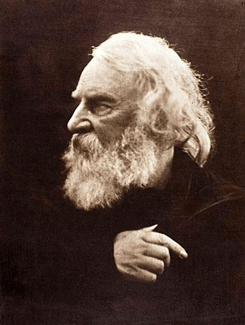
A warning was sent from Boston’s Old North Church that the British were c oming, as recounted in Henry Wadsworth Longfellow’s poem, “Paul Revere’s Ride”:

“Listen my children and you shall hear Of the midnight ride of Paul Revere, Of the 18th of April, in 75; Hardly a man is now alive Who remembers that famous day and year. He said to his friend, ‘If the British march By land or sea from the town to-night, Hang a lantern aloft in the belfry arch Of the North Church tower as a signal light. One if by land, and two if by sea; And I on the opposite shore will be, Ready to ride and spread the alarm Through every Middlesex village and farm, For the country folk to be up and to arm Through the gloom and the light, The fate of a nation was riding that night; the spark struck out by that steed, in his flight.”

Paul Revere was captured along the way, but William Dawes and Dr. Samuel Prescott continued the midnight ride.

Revere wrote: 10 o’clock, Dr. Warren sent in great haste for me, and begged that I would immediately set off for Lexington, where Messrs. Hancock & Adams were.

I got a horse off Deacon Larkin and set off. It was then about 11 o’clock. After I had passed Charlestown Neck I saw two men on horseback. When I got near them, I discovered they were British officers. One tried to get a head of me, and the other to take me. I turned my horse very quick, and galloped to Medford Road. The one who chased me, endeavoring to cut me off, got into a clay pond, near where the new tavern is now built. I got clear of him. I went through Medford, over the bridge, and up to Menotomy. I alarmed almost every house, till I got to Lexington.”

Revere continued: “I mentioned, that we had better alarm all the inhabitants till we got to Concord; the young Doctor much approved of it. We had got nearly half way. Mr. Dawes and the Doctor stopped to alarm the people of a house: I was about one hundred rods a head, when I saw two men.i n an instant I was surrounded by four men. The Doctor being foremost, he came up; and we tried to get past them; but they being armed with pistols and swords, they forced us in to the pasture; the Doctor jumped his horse over a low stone wall, and got to Concord.

Six officers, on horseback ordered me to dismount, and asked me if I was an express? I answered in the affirmative. They demanded what time I left Boston. Major Mitchel, of the 5th Regiment, clapped his pistol to my head and told me he was going to ask me some questions, and if I did not give him true answers, he would blow my brains out. However, I managed to give them no information of importance.”

In a related story, four months earlier, on December 13, 1774, two British warships set sail for Portsmouth, New Hampshire, to seize gunpowder and weapons patriots had taken from Fort William and Mary. Riding all night to warn the citizens of Portsmouth that the British were coming were Paul Revere and 29-year-old African American Wentworth Cheswell. Cheswell was constable of Newmarket, New Hampshire, being considered the first African American elected to public office in U.S. history.

On April 19th, “Patriots’ Day,” the British continued their march to Lexington and Concord intent on seizing arms and arresting Tea Party leader Samuel Adams and Massachusetts Provincial Congress president John Hancock.

On the way, the British passed through Arlington, Massachusetts. They stormed the inn where lodged the patriots Elbridge Gerry, Azor Orne and Jeremiah Lee, who was America’s largest colonial ship owner and the wealthiest man in Massachusetts.

Jeremiah Lee was using his ships to smuggle in supplies to the patriots. When the British stormed the inn, Gerry, Orne and Lee fled wearing only their night clothes and hid, laying on the cold ground in a wet cornfield for hours. Jeremiah Lee caught a pneumonia and died a few weeks later. John Hancock had previously experienced British tax collectors confiscating his merchant ship Libert in 1768.

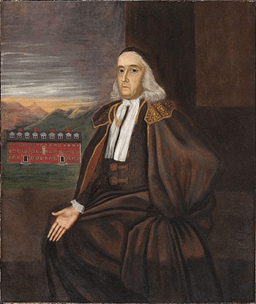
Jeremiah Lee and his New England Mansion

Hancock had declared to the Massachusetts Provincial Congress, April 15, 1775: In circumstances dark as these, it becomes us, as men and Christians, to reflect that, whilst every prudent measure should be taken to ward off the impending judgments, a day be set apart as a Day of Public Humiliation, Fasting and Prayer to confess their sins, to implore the Forgiveness of all our Transgressions”

Connecticut Governor Jonathan Trumbull, whom Washington called ‘the first of the patriots’, was the only colonial governor at the start of the Revolution to support the patriot cause.

Trumbull proclaimed a Day of Fasting, April 19, 1775, that: “God would graciously pour out His Holy Spirit on us to bring us to a thorough repentance and effectual reformation that our iniquities may not be our ruin; that He would restore, preserve and secure the liberties of this and all the other British American colonies, and make the land a mountain of Holiness, and habitation of righteousness forever.”

As the sun rose, April 19, 1775, there were 800 British regulars approaching Lexington’s town green. To their surprise, they were met by Lexington’s militia, comprised of 77 men who were mostly members of the Church of Christ, pastored by Rev. Jonas Clark, whose wife was a cousin of John Hancock.

Patriot captain John Parker told the militia: “Stand your ground; don’t fire unless fired upon, but if they mean to have War, let it begin here!”

Patriots “Stand their Ground”
British Fire on Patriots

It is disputed who fired first, but the British opened fire and killed eight and wounded ten of Captain Parker’s men.

In his sermon preached a year later, April 19, 1776, Pastor Jonas Clark described: “Under cover of the darkness, a brigade of these instruments of violence and tyranny, made their approach. They enter this town like murders and cut-throats without provocation, without warning, when no war was proclaimed, they draw the sword of violence, upon the inhabitants of this town, and with a cruelty and barbarity, which would have made the most hardened savage blush, they shed INNOCENT BLOOD.”

Pastor Clark continued: “And the names of Munroe, Parker, and others, that fell victims to the rage of blood-thirsty oppressors, on that gloomy morning. And from the nineteenth of April, 1775, we may venture to predict, will be dated, in future history, THE LIBERTY or SLAVERY of the AMERICAN WORLD, according as a sovereign God shall see fit to smile, or frown upon the interesting cause, in which we are engaged.”

The American militia retreated, growing to number 400, and took a stand at Concord’s Old North Bridge. The British fired first there, wounding four and killing two. Militia commander John Buttrick yelled: “Fire, for God’s sake, fellow soldiers, fire!”

(This was, thus the start of the American War for independence.)

Taking many casualties, the British began a hasty retreat 20 miles back to Boston, being ambushed all along the way by John Parker’s militia in “Parker’s Revenge.”

Tragically, in the anger of their retreat, the British shot or bayoneted almost everyone in the town of Menotomy.

Henry Wadsworth Longfellow continued his poem: “You know the rest. In the books you have read, How the British Regulars fired and fled,—How the farmers gave them ball for ball, From behind each fence and farmyard wall, Chasing the redcoats down the lane, Then crossing the fields to emerge again, Under the trees at the turn of the road, And only pausing to fire and load.”

Longfellow ended: “So through the night rode Paul Revere; And so through the night went his cry of alarm To every Middlesex village and farm, A cry of defiance, and not of fear, A voice in the darkness, a knock at the door, And a word that shall echo for evermore! For borne on the night-wind of the Past, Through all our history, to the last, In the hour of darkness and peril and need, The people will waken and listen to hear, The hurrying hoof-beats of that steed, And the midnight message of Paul Revere.”

Though it took eight long years, Americans won their independence.

A century later, on April 19, 1875, at that same Old North Bridge, patriots were honored by the dedication of the “Minute Man Statue” designed by Daniel Chester French. On the statue’s base is a stanza of the poem The Concord Hymn, written by Ralph Waldo Emerson, April 19, 1860: “By the rude bridge that arched the flood, Their flag to April’s breeze unfurled; Here once the embattled farmers stood; And fired the shot heard round the world. The foe long since in silence slept; Alike the conqueror silent sleeps, And time the ruined bridge has swept, Down the dark stream that seaward creeps.

On this green bank, by this soft stream, We place with joy a votive stone, That memory may their deeds redeem, When, like our sires, our sons are gone. O Thou who made those heroes dare, To die, and leave their children free, Bid time and nature gently spare, The shaft we raised to them and Thee.”

Two months after the Battles of Lexington and Concord, the Continental Congress, under President John Hancock, declared, June 12, 1775: Congress considering the present critical, alarming and calamitous state do earnestly recommend a Day of Public Humiliation, Fasting and Prayer, that we may with united hearts confess and deplore our many sins and offer up our joint supplications to the All-wise, Omnipotent and merciful Disposer of all Events, humbly beseeching Him to forgive our iniquities. It is recommended to Christians of all denominations to assemble for public worship and to abstain from servile labor and recreations of said day.”

The Revolutionary War began with an attempt by government officials to seize citizens’ guns.

Patriots had prepared for this with the Massachusetts Provincial Congress, October 26, 1774, organizing their defenses with one-third of their regiments being “Minutemen,” men who were ready to fight at a minute’s notice.

David B. Kopel wrote in “Ancient Hebrew Militia Law” (Denver University Law Review, July 15, 2013): “New Englanders intensely self-identified with ancient Israel … Thus, ancient Hebrew militia law is part of the intellectual background of the American militia system, and of the Second Amendment. Every male ‘from the age of twenty years up, all those in Israel who are able to bear arms’ were obliged to fight, to go forth ‘armed to battle.’ Men who failed this duty ‘sinned against the Lord.'”

E.C. Wines wrote in Commentaries on the Laws of the Ancient Hebrews, 1853 (NY: Geo. P. Putnam & Co., 1853): “Moses’ constitution made no provision for a standing army. The whole body of citizens formed a national guard.”

  • “Thus says the LORD God of Israel, Put every man his sword by his side” (Exodus 32:27);
  • “They all hold swords, being expert in war: every man hath his sword upon his thigh” (Song of Solomon 3:8);
  • “Every one with one of his hands wrought in the work, and with the other hand held a weapon. For the builders, every one had his sword girded by his side (Nehemiah 4:17-18).

James Madison wrote (Letters & Writings of James Madison, 1865, p. 406): “The advantage of being armed, which the Americans possess over the people of almost every other nation forms a barrier against the enterprise of ambition. Kingdoms of Europe are afraid to trust the people with arms.”

Noah Webster wrote in An Examination into the leading Principles of the Federal Constitution, October 10, 1787: “Before a standing army can rule, the people must be disarmed; as they are in almost every kingdom in Europe. The supreme power in America cannot enforce unjust laws by the sword because the whole body of the people are armed.”

(So, above we have shown how America won its independence from Great Britian, because the people of America most all had their own weapons. Now, starts below, the chronicles from America and around the world the statements of leaders, statesmen, historians and others of influence—whether or not it is necessary for the people of a country to be allowed to be individually armed, and knowing how to use them, and being willing to do so if necessary.)

Machiavelli wrote in The Prince (trans. L. Ricci, 1952.): “An armed republic submits less easily to the rule of one of its citizens.”

Michigan Supreme Court Chief Justice Thomas Cooley wrote in The General Principles of Constitutional Law, 1891: “The Second Amendment was meant to be a strong moral check against the usurpation and arbitrary power of rulers. The people shall have the right to keep and bear arms, and they need no permission or regulation of law for the purpose.”

Patrick Henry, the five-time Governor of the State of Virginia, wrote (Elliott, ed., The Debates in the Several State Conventions, 1836: “Let him candidly tell me, where and when did freedom exist when the sword and the purse were given up from the people? No nation ever retained its liberty after the loss of the sword and the purse. The great object is, that every man be armed. Everyone who is able may have a gun.”

Joel Barlow, U.S. Consul to Algiers and France, wrote in Advice to the Privileged Orders in the Several States of Europe, Resulting from the Necessity and Propriety of a General Revolution in the Principle of Government, 1792: “The foundation of everything is that the people will form an equal representative government and that the people will be universally armed. A people that legislate for themselves ought to be in the habit of protecting themselves.”

Jeffrey R. Snyder, esq., wrote in “A Nation of Cowards” (The Public Interest, 1993): “Classical republican philosophy has long recognized the critical relationship between personal liberty and the possession of arms by a people ready and willing to use them.”

The Roman orator, Marcus Tullius Cicero, wrote (Cicero, Selected Political Speeches, trans. M. Grant, 1969): “There exists a law inborn in our hearts that if our lives are endangered by plots or violence or armed robbers or enemies, any and every method of protecting ourselves is morally right.”

Cicero

Montesquieu wrote in The Spirit of the Laws (trans. T. Nugent, 1899): “It is unreasonable to oblige a man not to attempt the defense of his own life.”

Machiavelli wrote in The Prince (trans. L. Ricci, 1952): “It is not reasonable to suppose that one who is armed will obey willing one who is unarmed.”

Cesare Beccaria wrote in On Crimes and Punishment (trans. H. Paolucci, 1963): “False is the idea that would take fire from men because it burns, and water because one may drown in it. The laws that forbid the carrying of arms are laws of such a nature. They disarm those only who are neither inclined nor determined to commit crimes. Can it be supposed that those who have the courage to violate the most scared laws of humanity, will respect the less important and arbitrary ones, which can be violated with ease and impunity. Such laws serve rather to encourage than to prevent homicides, for an unarmed man may be attacked with greater confidence than an armed man.”

Thomas Paine wrote (Writings of Thomas Paine, Conway Ed. 1894: “The peaceable part of mankind will be continually overrun by the vile and abandoned while they neglect the means of self defense. The supposed quietude of a good man allures the ruffian; while on the other hand, arms, like laws, discourage and keep the invader and the plunderer in awe, and preserve order.”

Aristotle wrote in Parts of Animals (trans. A. Peck, 1961): “Animals have just one method of defense and cannot change it for another. For man, on the other hand, many means of defense are available, and he can change them at any time.Take the hand: this is as good as a talon, or a claw, or a horn, or again, a spear, or a sword, or any other weapon or tool it can be all of these.”

Sir Thomas More wrote in Utopia (trans. R.M. Adams, 1975): “Men and women alike assiduously exercise themselves in military training to protect their own territory or to drive an invading enemy out of their friends’ land or, in pity for a people oppressed by tyranny, to deliver them by force of arms from the yoke and slavery of the tyrant.”

Roman historian Livy wrote (trans. B. Foster, 1919): “Formerly— in the reign of Rome’s 6th king, Servius Tullius, 578-535 B.C.— the right to bear arms had belonged solely to the patricians —the ruling class. Now plebeians— common citizens— were given a place in the army. All the citizens capable of bearing arms were required to provide their own swords, spears, and other armor.”

Machiavelli wrote in On the Art of War (trans. E. Farnsworth, 1965): “Citizens, when legally armed did the least mischief to any state. Rome remained free for four hundred years and Sparta eight hundred, although their citizens were armed all that time, but many other states that have been disarmed have lost their liberty in less than forty years.”

Machiavelli wrote in Discourses on the First Ten Books of Titus Livius (trans. L. Walker, 1965): “If any city be armed as Rome was all its citizens, alike in their private and official capacity it will be found they will be of the same mind. But, when they are not familiar with arms and merely trust to the whim of fortune they will change with the changes of fortune.”

Adam Smith wrote in The Wealth of Nations (ed., Cannan, p. 309): “Men of republican principles have been jealous of a standing army as dangerous of liberty. The standing army of Caesar destroyed the Roman Republic. The standing army of Cromwell turned the Long Parliament out of doors.” (For the people were armed.)

Jeffrey R. Snyder, esq., wrote in “A Nation of Cowards” (The Public Interest, 1993): “Political theorists as dissimilar as Niccolo Machiavelli, Sir Thomas More, James Harrington, Algernon Sidney, John Locke, and Jean Jacques Rousseau all shared the view that the possession of arms is vital for resisting tyranny, and that to be disarmed by one’s government is tantamount to being enslaved by it.”

Anti-socialist John Basil Barnhill stated in a debate with Henry M. Tichenor, 1914 (National Rip Saw Publishing Co., St. Louis, MO): “Where the people fear the government you have tyranny. Where the government fears the people, you have liberty.”

The Texas Declaration of Independence, March 2, 1836, stated:

“The late changes made in the government by General Antonio Lopez Santa Anna, who having overturned the constitution of his country, now offers, as the cruel alternative, either abandon our homes acquired by so many privations, or submit to the most intolerable of all tyranny. It has demanded of us to deliver up our arms, which are essential to our defense — the rightful property of freemen — and formidable only to tyrannical governments.”

Mahatma Gandhi wrote in An Autobiography of the Story of My Experiments with the Truth (trans. M. Desai, 1927): “Among the many misdeeds of the British rule in India, history will look upon the Act depriving a whole nation of arms as the blackest.

Islamic sharia law forbids non-Muslims from possessing arms, swords or weapons of any

Adolph Hitler acted similarly with his Edict of March 18, 1938: “The most foolish mistake we could possibly make would be to allow the subjected people to carry arms. History shows that all conquerors who have allowed their subjected people to carry arms have prepared their own down fall.”

German Firearm Act of 1937 stated: “Firearm licenses will not be granted to Jews.”

Democrat Vice-President Hubert Humphrey was quoted by David T. Hardy in The Second Amendment in 1979: “The right of citizens to bear arms is just one more guarantee against arbitrary government, one more safeguard against the tyranny which now appears remote in America, but which historically has proved to be always possible.”

Jefferson wrote to George Washington, 1796: “One loves to possess arms, though they hope never to have occasion for them.”

Similar to the midnight ride of Paul Revere, when Jefferson was Governor of Virginia, British Colonel Tarleton led his cavalry to Charlottesville to capture him. Jefferson barely escaped, thanks to 27-year-old Jack Jouett, Junior, the “Paul Revere of the South,” who rode all night on June 3, 1781, to warn him.

Thomas Jefferson

Jefferson wrote in the Declaration on the Causes and Necessity of Taking Up Arms, July 1775:

“We most solemnly, before God and the world declare that the arms we have been compelled to assume, we will use with perseverance, exerting to their utmost energies all those powers which our Creator hath given us, to preserve that liberty which He committed to us in sacred deposit.”

(Thus, through all of the above statements by men of importance, you see how important it is for a free people to keep their arms and be ready to use them.

Ron
Call Out to Him👍

The Bible says: Psalm 57:1-2 NIT

O God, have mercy! I look to you for protection…..I cry out to God Most High, to God who will fulfill his purpose for me.”

Are there obstacles or difficulties that seem to block you from fulfilling God’s purposes for your life! Perhaps you’ve worried, planned, and toiled but have ultimately failed to achieve what you desire and despair is beginning to settle in. If so, it is time for you to stop doing and begin asking.

Friend, the Lord your God is sovereign. He can soften hearts that you could never touch, change circumstances beyond your control, provide resources you can’t even dream of attaining, and untangle messes that seem unredeemable. And He is waiting for you to cry out to Him for deliverance.

Friend, it is sheer pride that keeps you relying on yourself rather than depending on and obeying your heavenly Father, who wants to be your strength, your life, and your all. Stop trying to figure everything out. Kneel before Him and leave all that concerns you in His hands. He will not fail you.

The Crusades – Part Two

First Crusade (1096=1099)

With Spain exuberant after successfully driving the Muslim occupiers from Toledo and Leon a few years earlier, the First Crusade began in 1097, led by Godfrey of Bouillon. It freed Iconium, though it was later lost.

Godfrey of Bouillon

The First Crusade defeated Islamic warriors at Dorylaeum and Antioch, and captured Jerusalem in 1099, holding it for nearly 100 years.

Second Crusade (1147-1149)

After Muslims conquered Edessa, another crusade was called for by Bernard of Clairvaux in 1147. It was made up of French and German armies, led by King Louis VII and Conrad II.

Second Crusade Fighting Muslims

The Second Crusade failed to take Damascus and returned to Europe in 1150. Bernard of Clairvaux was disturbed by reports of misdirected violence toward some Jewish populations.

On July 4, 1187, the Muslim leader Saladin, founder of the Ayyubid dynasty, captured Crusaders who had not yet made it back to Europe at Hattim and ordered their mass execution.

Third Crusade (1187-1149)

In 1190, Pope Gregory VIII called for a Third Crusade. It was led by German King Frederick I, called Frederick Barbarossa—meaning Redbeard—who was the Emperor of the Holy Roman Empire. He was joined by Richard I of England and Philip II of France.

King Frederick Driving Muslims out of Iconium

Frederick led 100,000 soldiers across Byzantium, driving out Muslims and temporarily freeing Iconium. He most likely would have freed Jerusalem had he not fallen off his horse while crossing the Göksu River in Cilicia, Asia Minor. Being 67 years old and weighted down with heavy armor, Frederick Barbarossa drowned in waist deep water and the Crusade went into confusion.

Richard the Lionheart was suddenly in charge leading the Third Crusade and successfully captured Acre. Due to rivalries, Philip II, without warning, abandoned the Crusade and returned to France in 1191.

Richard’s troops came within sight of Jerusalem in 1192 which had now been taken back by the Muslims under their very capable leader, Saladin. However, they grew weary as it did not look like they were making an impact.

Then word came to Richard that Phillip II was trying to take away Normandy from England, so Richard quickly ended his part in the Crusade to go back and defend his kingdom.

Richard got things in order back home, and then he heard that Crusade troops had Jerusalem surrounded and later heard Saladin was on the verge of defeat and was propping up dead soldiers along the walls. Saladin allowed some Christians to leave Jerusalem if they paid a ransom, but according to Imad al-Din, approximately 15,000 could not pay their ransom and were enslaved.

So, Richard was determined to return to Jerusalem. He went by ship to get there more quickly. But was shipwrecked and attempted to travel on foot across Europe in disguise. But he was recognized near Vienna and captured by Duke Leopold VI of Austria. He was then imprisoned at Dumstein for three years.

Legend has it that Richard’s loyal minstrel, Blondel, traveled from kingdom to kingdom across Europe trying to find him by singing Richard’s favorite song.

Blondel Looking for Richard

When Richard heard the song, he sang the second verse from the prison tower, and was found. Richard’s brother, King John, had to raise taxes for the “king’s ransom.” This was the origins of the story of Nottingham, Sherwood Forest, and Robin Hood.

The Holy Roman Emperor, Henry VI, prepared for another crusade in 1197, but died from malaria.

Once back in England, Richard ruled only a few years before being shot and killed with an arrow during the siege of a castle in Normandy.

His brother, King John, once again ruled, where he raised taxes oppressively. When he lost Britain’s claim to Normandy after the Battle of Bouvines in 1214, English baron’s were upset, as they also lost their titled lands there.

Angry barons then surrounded King John on the plains of Runnymede on June 15, 1215, and forced him to sign the Magna Carta – the cornerstone of English liberty.

(Yes, it was a political victory for the Barrons, but the Magna Carta turned out to be one of the most important documents in history. For the first time since the 400 year rule by ‘the people’ established way back there by Moses, people were able to rule themselves. Thus, England was able to become rich and powerful; so were the other countries in that area by copying its principles. And it sowed the seeds that ultimately caused the Pilgrims to self rule, and became the founding principle of the American Constitution. Rule by the people instead of a King.)

Saladin prevailed at Jerusalem; however, though almost defeated, and eventually took over all the surrounding country.

Richard’s exploits gave rise to the legends of the Lion-Hearted, and, through them, Richard acquired a posthumous prestige. Richard did regain Acre and Jaffa for the Christians, but that as all.

The agreement he finally reached with Saladin gave pilgrims free access to Jerusalem and little else. The city itself and the adjoining kingdom, except for some coastal cities were still subject to the same law—The Koran, not the Holy Bible. So the troops of the Third Crusade went home.

The Fourth Crusade (1202-1204)

Initiated by Pope Innocent III, the Fourth Crusade was largely composed of Frenchmen and Venetians.

Innocent was greatly disappointed by the events of the Crusade. In the original agreement, the Venetians had promised to transport the French crusaders to the Holy Land and to provide them with military equipment and provisions.

When the Frenchmen arrived in Venice, they were too few to pay for the contracted amount; only twelve thousand of the expected thirty thousand warriors came. The Venetians who had constructed ships and had assembled provisions for the original number. It was proposed that the Frenchmen make up the deficit by assisting them in attacking the seaport of Zara. Ruled by the Christian king of Hungry, Zara was the greatest Adriatic rival of Venice. To the Venetians, this was reason enough for an attack, and they cajoled the French into helping them make it.

Following the sack of Zara, the Venetians had another plan. They suggested that the expedition now direct its efforts against Constantinople and restore the dethroned Byzantine emperor, Isaac II Angelos. Pope Innocent again issued a reprimand to the crusaders, which they again disregarded; they captured Constantinople on April 13, 1204, and spent the next three days pillaging it. Their seizure of Zara had been uncalled for; their sack of Constantinople was unparalleled.

 The crusaders established a new Latin empire and selected the Count of Flanders for its ruler. This empire lasted until 1261, but it never ruled all Byzantium; it comprised most of the land in Thrace and Greece, where the French barons were rewarded with feudal fiefs. For their contributions, the Venetians obtained the harbor rights in Constantinople plus a commercial monopoly throughout the empire and the Aegean Islands. The Fourth Crusade was a complete victory for the Venetians but for nobody else; it never reached the Holy Land. 

So that part of the Fourth Crusade returned to Europe. However, there was another part to that Crusade that few have heard or. It was called:

The Children’s Crusade (1212)

This Crusade was the most pathetic of all Christian attempts to free the Holy Land. It was also the most senseless. The movement originated in France and Germany, and peasant children in two separate bands flocked to join it. They were convinced they could succeed where older and more sinful crusaders had failed: the miraculous power of faith would triumph where the force of arms had not. Many parish priests and parents encouraged such religious fervour and urged the children on. The pope and higher clergy opposed the outburst but were unable to stop it entirely. Despite all their efforts, a land of several thousand children (reportedly led by a Cologne boy named Nicholas) set out for Italy. About a third survived the march over the Alps and as far as Genoa, another group reached Marseilles. The luckier ones eventually managed to get safely home, but many others paid dearly for their innocence and ignorance. For them, the route to Jerusalem came to a dead end on the auction blocks of Mediterranean slave dealers.

The Fifth Crusade (1217-1221)

Instigated by Pope Innocent III at the Fourth Lateran Council in 1215, this Crusade was fixed for 1217 under John Brienne, king of Jerusalem, with the intention of conquering Egypt. John was replaced as leader by the papal legate Pelagius in 1218, and in 1219 the city of Damietta was captured by the Crusaders. The sultan of Egypt offered to exchange Jerusalem for Damietta but this was rejected. After an unsuccessful assault on Cairo in 1221, the Crusaders surrendered Damietta in return for the freedom to retreat.

The Sixth Crusade (1228-1229)

Often called the Diplomatic Crusade, this expedition was led by Emperor Fredrick II, the grandson of Frederick I Barbarossa. After several postponements, Frederick undertook the Crusade in 1228, but he fought no battles. Instead, by negotiation, he obtained Jerusalem and a strip of territory from Acre to Jerusalem for the Christians. He had previously (1225) married Yolanda, the young heiress of the kingdom. Following her death in 1228, Frederick crowned himself king of Jerusalem.

The Seventh Crusade (1248-1250)

Led by King Louis IX of France and directed against the Arabs of Egypt, this Crusade was a complete failure. After the capture of Damietta, the crusaders were decisively defeated at Cairo and King Louis was captured. Completely victorious, the Arabs demanded and received a huge ransom for the release of the king.

The Eighth Crusade (1270)

Disregarding his advisers, King Louis IX again attacked the Arabs in North Africa. This time he struck the city of Tunis. The Crusaders picked the hottest season of the year for campaigning and were devastated by a pestilence. One of its victims was Louis IX, whose death in 1270 ended the Crusade,

 These holy wars were driven by religious zeal, seeking adventure, and reclaiming “Christian lands”. While achieving initial victories—notably the first crusade—they ultimately failed to hold Jerusalem permanently. However, they significantly increased trade, cultural exchange, and scientific knowledge between Europe and the Middle East, paving the way for the Renaissance. 

Ron
The Crusades – Part One

(Many people have heard about the Crusades, but know little about them; especially what really caused them to happen; and the history and outcome of each one. For your edification, below I have chronicled what really caused them, and then a brief history of each one. Do read it and become informed.)

What happened Palm Sunday 937 AD that led Europe to respond with the Crusades.

Palm Sunday, 937 A.D., Caliph al-Radi ordered the destruction of Jerusalem’s Church of Calvary and the Church of the Resurrection.
What was the background of that?

Jerusalem had been a Jewish city since the time of King David, around 1000 B.C. It had been a Christian city since Emperor Constantine, circa 325 A.D.
Part of Ancient Jerusalem

Syria, Lebanon, Palestine and Egypt, which had previously been Christian lands, were conquered by Islamists. Then Muslim warriors under Caliph Umar took Jerusalem away from the Christian Byzantine Patriarch Sophronius in 637 A.D. “Caliph” is the title of Islam’s supreme religious, political and military leaders.

Caliph Umar forced Christian and Jewish inhabitants to live as second-class citizens under “Jim Crow” style laws called “dhimmi.” 

In the 700’s, Christians were banned from giving religious instruction to their children and displays of the cross were banned in Jerusalem. Pilgrims to the Holy Land began to be harassed, massacred and even crucified.

In 772 A.D., Caliph al-Mansur of the Abbasid Caliphate ordered Jews and Christians to be branded on the hand.

In 846 AD, 11,000 Arab Saracen Muslim warriors invaded Rome, Italy, and damaged the Basilica of St. Peters and the Church of St. Paul Outside the Walls, desecrating the graves of St. Peter and St. Paul. In response, Pope Leo IV built a 39 foot wall around the Vatican.

In 923 A.D., Caliph al-Muqtadir of the Abbasid Caliphate began enforcing sharia in Jerusalem, inciting Muslim rioters to destroy churches in Jerusalem.

In 937A.D., on Palm Sunday, Abbasid Caliph al-Radi ordered Muslim rioters to plunder the Church of Calvary and the Church of the Resurrection.

1004, Caliph al-Hakim bi-Amr Allah of the Fatimid Caliphate, known as the “Mad Caliph” or the “Nero of Egypt,” began a ten year persecution of Christians and Jews. Thousands were forced to convert or die. 30,000 churches were destroyed.

1008, Mad Caliph al-Hakim forbade Christians from having their annual Palm In Sunday procession from Bethany.

In 1009, al-Hakim ordered frenzied rioters to use picks, hammers and fire to destroy the Church of the Holy Sepulchre in Jerusalem, considered the holiest site in Christendom.

In Egypt, al-Hakim demanded everyone speak Arabic. Those caught speaking the traditional Egyptian language of Coptic had their tongues removed.

In In 1958, Egypt, President Gamal Nasser told a gathering: “I met with the head of the Muslim Brotherhood and he made his requests to make wearing the hijab mandatory in Egypt. I told him, if I make that a law they will say that we have returned to the days of al-Hakim bi-Amr Allah, who forbade people from walking at day and only allowed walking at night.”

1075, Seljuk Turkish Muslims captured Jerusalem from Arab Muslims. Travelers returning from pilgrimages to the Holy Land shared reports of Islamic persecution of “dhimmi” Christians.

The Italian city-states of Pisa, Genoa and Catalonia fought the Muslims who were raiding Italy’s coasts, Majorca, Sardinia, and Italian Catalonia.

Italians Fight the Muslims along the Coast

By 965, Muslim forces had succeeded in their 130 year conquest of Sicily.

Nearly a century later, in 1057, the Norman adventurer Robert Guiscard fought against the Islamic warriors of Sicily and gained control of Calabria in the “toe of Italy.”

In 1071, the Seljuk Turkish Muslims inflicted a major defeat on the Byzantine Christians at the Battle of Manzikert and took control of all but the coastlands of Asia Minor.

Christians Defeated at Battle of Manzikert

Cries for help were carried back to Europe. Europe sent help, it was called The Crusades.

Europeans had just two centuries of crusades compared to Islam’s fourteen centuries of jihad crusades which are still continuing, killing an estimated 240 million.

The Europeans’ nine major Crusades lasted from 1095 till 1291, when Acre was finally recaptured by Islamic forces. The First Crusade began when, in desperation, the proud Byzantine Emperor Alexius the First Comnenus humbled himself and sent ambassadors to the Council of Piacenza in March of 1095, appealing for aid from his religious rival, the Roman Catholic Pope.

The seriousness of this call for help is underscored by the fact that it occurred just a few years after the Great East-West Schism of 1054, where the Byzantine Church and the Roman Catholic Church split.

Pope Urban II gave an impassioned plea at the Council of Clermont in 1095 for Western leaders to set aside their doctrinal differences and come to the aid of their Byzantine Christians brethren.

Pope Urban described how Christians were treated by Islamists, who “compel (them) to extend their necks and then, attacking them with naked swords, attempt to cut through the neck with a single blow,” as recorded by Robert the Monk in Medieval Sourcebook, Fordham University.

(Please now go to Part Two)

Ron

Anything

The Bible says: John 14:14

“If you ask Me anything in My name. I will do it.”

Will God answer that deep desire of your heart that you’ve repeatedly taken to His throne? Will He reallly help you? Jesus placed only one condition on answering your requests—that they be made in His name. However, this doesn’t mean merely affixing the phrase “in Jesus name” to the end of every appeal.

As Christ spoke to His disciples, they understood that His name signified His character. So to pray “in the name of Jesus” means that they would conform their requests to His mission, values, and will.

How do you do that? How can you be sure your prayers align with His character? Rely on the Holy Spirit. Romans 8:25 explains. “The Spirit helps us in our weakness. We do not know what we ought to pray for, but the Spirit himself intercedes for us” NIV.

Praying in Jesus’ name requires the help of the Holy Spirit. So allow His Spirit to guide your words and conform the desires of your heart to His will. And be assured—He hears you and will answer.

Texas Independence Day

March 2nd is Texas Independence Day.  But do you know the real history of how it came about.  And have you ever read the real Texas Declaration of Independence.  Every real Texan should read it at least once.

Below I have transcribed a verbatim copy of it for you.  However, first, let me give you a short history of what brought it about, and then show you the document.  See, the Mexican people had been under the control of Spain and then France for so many years.  Finally they gained their independence.  They were overjoyed at what they expected would be their new-found freedom. 

The Americans living in the northern part of Mexico north of the Rio Grande River in the area called Texas were thrilled too.  They were expecting to enjoy new freedoms also.  Most had come to Texas to start a new life and acquire their own land. 

The people of Mexico had their first free election and elected their own president.  His full name was ………Antonio de Padua María Severino López de Santa Anna y Pérez de Lebrón or for short, Antonio Lopez de Santa Anna.

However, much to their consternation, he immediately overrode their constitution and became a vicious dictator.  He ruled through executive orders, demanding more control and higher taxes.  Santa Anna decided the people were incapable of ruling themselves, so he ignored the Constitution, dissolved the Congress and declared himself dictator. 

Santa Anna wrote to the U.S. minister to Mexico, Joel R. Poinsett:  “A hundred years to come my people will not be fit for liberty, a despotism is the proper government for them, but there is no reason why it should not be a wise and virtuous one.” 

Santa Anna demanded citizens surrender their guns, decreeing:  “All foreigners who might be caught under arms on Mexican soil should be treated as pirates and shot”   Santa Anna wrote in his Manifesto, 1837:  “I offered life to the defendants who would surrender their arms and retire under oath not to take them up again against Mexico.”  He incited killings and used his military against those resisting his centralized power.  

 New Orleans there was a Mexican army led by General José Antonio Mexía.  He decided to march his troops down and free the people of Mexico from Santa Anna. In 1835, Federal General José Antonio Mexía marched his troops from New Orleans to Tampico, but Santa Anna defeated him and executed every prisoner. 

None of this sat well with those Texans living north of the Rio Grande river.  They needed their weapons to kill wild game, which was a big part of their diet, and for protection from the Kiowa, the Apaches, and especially the Comanches.  They drew up a Declaration of Independence from Mexico and started to organize for defense. 

So, Santa Anna himself decided to lead his army north and put down these rebellious Texans.  On February 23, 1836, General Santa Anna’s army arrived outside the Old Alamo Mission near San Antonio de Béxar.  His troops, eventually numbering 1,800, flew the blood-red flag of no quarter, signifying that all those captured would be killed.

Texan and Tejano defenders, numbering between 182 to 257, responded by firing their cannon.  In the “13 days of glory at the Alamo,” Santa Anna’s take-no-prisoner policy had all defenders killed, including: William Travis, Jim Bowie, and former U.S, Congressman Davy Crockett. 

Santa Anna ordered those who surrendered to be executed and have their corpses burned.  The few survivors included Susanna Dickinson, her baby, Angelina, and Travis’ young black servant, Joe.

The only Texas army left in the field was Col. James Fannin’s.  It departed Goliad to rescue the Alamo but was surrounded in open ground and 350 were captured.  Santa Anna ordered the prisoners executed.  When the Mexican officer hesitated carrying out the executions, Santa Anna sent another officer who proceeded to execute nearly all of them in the Goliad Massacre, March 27, 1836.  Bodies were stripped, piled, burned and left exposed to vultures and coyotes.  A few dozen of the Texans were spared execution through the courageous intervention of Francita Alavez, the “Angel of Goliad,” and Mexican Colonel Francisco Garay.

Had Fannin’s troops been left in prison, Texans would have been disheartened, but instead, Santa Anna’s Goliad Massacre aroused world outrage. 

General Sam Houston had by now recruited a crew of tough Texans.  Much to their consternation Houston kept retreating until he had led Santa Anna and his troops all the way down to the San Jacinto area south of present day Houston.  He waited until the Mexican army retreated into their tents for their daily siesta. Then those brave Texans attacked in force.  They loaded their cannons with grape shot and aimed them at ground level.  They say that all across the battle field were the loud shouts of the Texans…….”Remember the Alamo!, Remember Goliad!……Remember the Alamo!, Remember Goliad!” 

The Battle of San Jacinto on April 21, 1836 was a massive Texan victory.  Santa Anna was shot through the leg and managed to hide in the swamp, but those Texans found him and drug him back in front of General Sam Houston.  He had no choice but to cede all the territory north of the Rio Grande to the new Texas Republic. 

So, like I said, every real Texan should read the Texas Declaration of Independence at least once, and here it is for you:

UNANIMOUS DECLARATION OF INDEPENDENCE by the delegates of the People of Texas in General Convention at the Town of Washington, on the Second Day of March, 1836. 
When a government has ceased to protect the lives, liberty, and property of the people, from whom its legitimate powers are derived, and for the advancement of whose happiness it was instituted; and so far from being a guarantee for their inestimable and inalienable rights, becomes an instrument in the hands of evil rulers for their oppressionin such a crisis the inherent and inalienable right of the people to appeal to first principles, and take their political affairs into their own hands in extreme cases, enjoins it as a right towards themselves and a sacred obligation to their posterity to abolish such government, and create another in its stead, calculated to rescue them from impending dangers, and to secure their welfare and happiness”
The Texas Declaration continued: 
“The late changes made in the government by General Antonio Lopez Santa Anna,who having overturned the constitution of his country, now offers, as the cruel alternative, either abandon our homes acquired by so many privations, or submit to the most intolerable of all tyranny, the combined despotism of the sword and the priesthood. It denies us the right of worshiping the Almighty according to the dictates of our own conscience, by the support of a National Religion, calculated to promote the temporal interest of its human functionaries, rather than the glory of the true and living God. 
It has demanded us to deliver up our arms, which are essential to our defense – the rightful property of freemen – and formidable only to tyrannical governments. 
It has, through its emissaries, incited the merciless savage, with the tomahawk and scalping knife, to massacre the inhabitants of our defenseless frontiers.”
The Texas Declaration ended: 
“We, therefore, the delegates, with plenary powers, of the people of Texas … DECLARE, that our political connection with the Mexican nation has forever ended, and that the people of Texas, do now constitute a FREE, SOVEREIGN, and INDEPENDENT REPUBLIC.
Conscious of the rectitude of our intentions, we fearlessly and confidently commit the issue to the decision of the Supreme Arbiter of the destinies of nations.”

Remember the Alamo

Please note that in declaring their independence the Texans not only demanded the right to keep their guns and homes and property, but they absolutely did not want to be subjected to a State Religion.  As they put it in their Declaration, they demanded the “right of worshiping the Almighty according to the dictates of our own conscience” and that this worship be according to “the glory of the true and living God”. 

Ron

Early History of Captain John Smith

Captain John Smith

(Americans are aware of how Captain John Smith came across the Atlantic and saved first English colony in North America. Jamestown was established on May 14, 1607. Jamestown was established on May 14, 1607. Smith trained the first settlers to work at farming and fishing, thus saving the colony from early devastation. He publicly stated, “He that will not work, shall not eat“, alluding to 2 Thessalonians 3:10. Harsh weather, a lack of food and water, the surrounding swampy wilderness, and attacks from Native Americans almost destroyed the colony. However, with Smith’s leadership, Jamestown survived and eventually flourished. Smith was forced to return to England after being injured by an accidental explosion of gunpowder in a canoe. Also, many Americans are aware of the story where Captain John Smith was about to be killed by Chief Powhatan but was saved by the pleadings of 11–year–old Pocahontas.

However, almost none in America have heard of the early days of Captain John Smith. He very effectively fought the Muslims and is greatly responsible for keeping them from conquering Europe. Otherwise we would be speaking Arabic today an worshiping Allah. Do read below about those historic early days of “John Smith, the Warrior.”)

The True Travels, Adventures and Observations of Captain John Smith, 1630′ recorded that six years before he came to America, John Smith joined the Austrian forces and fought in the “Long War” against the Muslim Ottoman Turks in Eastern Europe.

Mehmed the Third, 1566–1603, became Ottoman Sultan in 1595. He had his 16 brothers strangled to death to eliminate rivalry to his throne.

Bertrand Russell, who received the Nobel Prize for Literature, stated in his Nobel Lecture, 1950: “Over and over again in Mohammedan history, dynasties have come to grief because the sons of a sultan by different mothers could not agree, and in the resulting civil war universal ruin resulted.”

Sultan Mehmed the Third raised an army of 60,000 and in 1596 conquered the Hungarian city of Erlau. He defeated the Austrian Habsburg and Transylvanian forces at the Battle of Mezõkeresztes.

Sultan Mehmed the Third raised an army of 60,000 and in 1596 conquered the Hungarian city of Erlau. He defeated the Austrian Habsburg and Transylvanian forces at the Battle of Mezõkeresztes.

Sultan Mehmed the Third

UNC Press, 1986) reported that at age 21, John Smith joined the ranks of Austrian Hapsburg Earl of Meldritch, assigned to the General of Artillery, Baron Kisell.

The book, Captain John Smith by Charles Dudley tells of Smith marching with German, French, Austrian and Hungarian troops to fight Muslims who had captured Budapest and were invading Lower Hungary, Wallachia, Moldovia, Romania and Transylvania near the Black Sea.

In 1600–1601, during the campaign of Romanian Prince Michael the Brave, John Smith introduced ingenious battle tactics. When Muslims were besieging the garrison at Oberlymback, Smith devised a method of signaling messages with torches and using gunpowder to create diversions. The resulting victory earned him the rank of captain with a command of 250 horsemen.

At the siege of Alba Regalis, Smith assisted Duc de Mercoeur by devising makeshift bombs of earthen pots filled with gunpowder, musket shot and covered with pitch, and catapulted them into the city, leading to an evacuation.

Muslims had captured the city of Regall, located in a pass between Hungary and Transylvania, “the Turks having ornamented the walls with Christian heads when they captured the fortress.”

Smith fought under General Moyses, serving the Prince of Transylvania, Sigismund Bathory, to lead a campaignto regain the city. During a lull in the fighting, the bashaw — officer — of the Turks put out a challenge.

In a “David and Goliath” style contest, the 23–year–old John Smith was chosen to fight. He defeated the bashaw, cutting off his head. To avenge the bashaw’s death, another Muslim challenged Smith and lost his head. This happened a third time, resulting in Smith being awarded a “coat-of- arms” depicting three severed turbaned heads.

General Moyses, with Captain John Smith, soon recaptured Regall, then Veratis, Solmos and Kapronka. At Weisenberg, Prince Sigismund Bathory conferred on John Smith a shield-of-arms with “three Turks’ heads.” Smith continued in the regiment of Earl Meldritch, fighting in 1602 for Radu Serban to defend Wallachia against invading Turkish Muslims.

In the battle, the Earl of Meldritch was killed along with 30,000 soldiers. John Smith was wounded and left for dead: among the slaughtered dead bodies, and many a gasping soul with toils and wounds lay groaning among the rest, till being found by the pillagers he was able to live, and perceiving by his armor and habit, his ransom might be better than his death, they led him prisoner with many others.

At Axopolis, Smith was sold with other prisoners at the slave market to Bashaw Bogall, “so chained by the necks in gangs of twenty they marched to Constantinople.” There, Smith was pitied by Bashaw Bogall’s mistress, who sent him to her brother, Tymor Bashaw.

Unfortunately, Tymor “diverted all this to the worst cruelty,” stripped Smith naked, shaved him bald, riveted an iron ring around his neck, clothed him in goat skins and, as slave of slaves, was given only goat entrails to eat.

Following a beating received while thrashing in a field, Smith seized the opportunity and killed his master. He hid the body in the straw, put on his master’s clothes, took a bag of grain and rode off toward Russia. After 16 days he reached a Muscovite garrison on the River Don, where the iron ring was removed from his neck. With their help he found his way through Poland back to his troops in Transylvania. After being released from service with a large reward, John Smith traveled through Europe to Morocco in Northern Africa to fight Muslim Barbary pirates in the Mediterranean Sea. (He was an amazing warrior.)

In 1605, at the age of 26, he returned to England. In 1606, Captain John Smith set sail to help found Jamestown, Virginia, the first permanent English colony in North America.

In 1614, six years before the Pilgrims arrived, Smith explored Maine and Massachusetts Bay.

In his Advertisements for Unexperienced Planters, published in London, 1631, John Smith wrote: “When I first went to Virginia, I well remember for a church, we did hang an awning—which is an old sail—to three or four trees to shadow us from the sun, our walls were rails of wood, our seats unhewed trees, till we cut planks, our pulpit a bar of wood nailed to two neighboring trees, in foul weather we shifted into an old rotten tent, for we had few better. This was our church, till we built a homely thing like a barn.

We had daily Common Prayer morning and evening, every day two Sermons, and every three months the holy Communion, till our Minister died. But we held Prayers daily, with an Homily on Sundays.”

(Yes, John Smith was an incredible and adventurous warrior, but he was really close to God.)

Ron

The Crusades

(Many people have heard about the Crusades, but know little about them; especially what really caused them to happen; and the history and outcome of each one. For your edification, below I have chronicled what really caused them, and then a brief history of each one. Do read it and become informed.)

What happened Palm Sunday 937 AD that led Europe to respond with the Crusades.

Palm Sunday, 937 A.D., Caliph al-Radi ordered the destruction of Jerusalem’s Church of Calvary and the Church of the Resurrection.

What was the background of that?

Jerusalem had been a Jewish city since the time of King David, around 1000 B.C. It had been a Christian city since Emperor Constantine, circa 325 A.D.

Part of Ancient Jerusalem

Syria, Lebanon, Palestine and Egypt, which had previously been Christian lands, were conquered by Islamists. Then Muslim warriors under Caliph Umar took Jerusalem away from the Christian Byzantine Patriarch Sophronius in 637 A.D. “Caliph” is the title of Islam’s supreme religious, political and military leaders.

Caliph Umar forced Christian and Jewish inhabitants to live as second-class citizens under “Jim Crow” style laws called “dhimmi.” 

In the 700’s, Christians were banned from giving religious instruction to their children and displays of the cross were banned in Jerusalem. Pilgrims to the Holy Land began to be harassed, massacred and even crucified.

In 772 A.D., Caliph al-Mansur of the Abbasid Caliphate ordered Jews and Christians to be branded on the hand.

In 846 AD, 11,000 Arab Saracen Muslim warriors invaded Rome, Italy, and damaged the Basilica of St. Peters and the Church of St. Paul Outside the Walls, desecrating the graves of St. Peter and St. Paul. In response, Pope Leo IV built a 39 foot wall around the Vatican.

In 923 A.D., Caliph al-Muqtadir of the Abbasid Caliphate began enforcing sharia in Jerusalem, inciting Muslim rioters to destroy churches in Jerusalem.

In 937A.D., on Palm Sunday, Abbasid Caliph al-Radi ordered Muslim rioters to plunder the Church of Calvary and the Church of the Resurrection.

1004, Caliph al-Hakim bi-Amr Allah of the Fatimid Caliphate, known as the “Mad Caliph” or the “Nero of Egypt,” began a ten year persecution of Christians and Jews. Thousands were forced to convert or die. 30,000 churches were destroyed.

1008, Mad Caliph al-Hakim forbade Christians from having their annual Palm In Sunday procession from Bethany.

In 1009, al-Hakim ordered frenzied rioters to use picks, hammers and fire to destroy the Church of the Holy Sepulchre in Jerusalem, considered the holiest site in Christendom.

In Egypt, al-Hakim demanded everyone speak Arabic. Those caught speaking the traditional Egyptian language of Coptic had their tongues removed.

In In 1958, Egypt, President Gamal Nasser told a gathering: “I met with the head of the Muslim Brotherhood and he made his requests to make wearing the hijab mandatory in Egypt. I told him, if I make that a law they will say that we have returned to the days of al-Hakim bi-Amr Allah, who forbade people from walking at day and only allowed walking at night.”

1075, Seljuk Turkish Muslims captured Jerusalem from Arab Muslims. Travelers returning from pilgrimages to the Holy Land shared reports of Islamic persecution of “dhimmi” Christians.

The Italian city-states of Pisa, Genoa and Catalonia fought the Muslims who were raiding Italy’s coasts, Majorca, Sardinia, and Italian Catalonia.

Italians Fight the Muslims along the Coast

By 965, Muslim forces had succeeded in their 130 year conquest of Sicily.

Nearly a century later, in 1057, the Norman adventurer Robert Guiscard fought against the Islamic warriors of Sicily and gained control of Calabria in the “toe of Italy.”

In 1071, the Seljuk Turkish Muslims inflicted a major defeat on the Byzantine Christians at the Battle of Manzikert and took control of all but the coastlands of Asia Minor.

Christians Defeated at Battle of Manzikert

Cries for help were carried back to Europe. Europe sent help, it was called The Crusades.

Europeans had just two centuries of crusades compared to Islam’s fourteen centuries of jihad crusades which are still continuing, killing an estimated 240 million.

The Europeans’ nine major Crusades lasted from 1095 till 1291, when Acre was finally recaptured by Islamic forces. The First Crusade began when, in desperation, the proud Byzantine Emperor Alexius the First Comnenus humbled himself and sent ambassadors to the Council of Piacenza in March of 1095, appealing for aid from his religious rival, the Roman Catholic Pope.

The seriousness of this call for help is underscored by the fact that it occurred just a few years after the Great East-West Schism of 1054, where the Byzantine Church and the Roman Catholic Church split.

Pope Urban II gave an impassioned plea at the Council of Clermont in 1095 for Western leaders to set aside their doctrinal differences and come to the aid of their Byzantine Christians brethren.

Pope Urban described how Christians were treated by Islamists, who “compel (them) to extend their necks and then, attacking them with naked swords, attempt to cut through the neck with a single blow,” as recorded by Robert the Monk in Medieval Sourcebook, Fordham University.

First Crusade (1096=1099)

With Spain exuberant after successfully driving the Muslim occupiers from Toledo and Leon a few years earlier, the First Crusade began in 1097, led by Godfrey of Bouillon. It freed Iconium, though it was later lost.

Godfrey of Bouillon

The First Crusade defeated Islamic warriors at Dorylaeum and Antioch, and captured Jerusalem in 1099, holding it for nearly 100 years.

Second Crusade (1147-1149)

After Muslims conquered Edessa, another crusade was called for by Bernard of Clairvaux in 1147. It was made up of French and German armies, led by King Louis VII and Conrad II.

Second Crusade Fighting Muslims

The Second Crusade failed to take Damascus and returned to Europe in 1150. Bernard of Clairvaux was disturbed by reports of misdirected violence toward some Jewish populations.

On July 4, 1187, the Muslim leader Saladin, founder of the Ayyubid dynasty, captured Crusaders who had not yet made it back to Europe at Hattim and ordered their mass execution.

Third Crusade (1187-1149)

In 1190, Pope Gregory VIII called for a Third Crusade. It was led by German King Frederick I, called Frederick Barbarossa—meaning Redbeard—who was the Emperor of the Holy Roman Empire. He was joined by Richard I of England and Philip II of France.

King Frederick Driving Muslims out of Iconium

Frederick led 100,000 soldiers across Byzantium, driving out Muslims and temporarily freeing Iconium. He most likely would have freed Jerusalem had he not fallen off his horse while crossing the Göksu River in Cilicia, Asia Minor. Being 67 years old and weighted down with heavy armor, Frederick Barbarossa drowned in waist deep water and the Crusade went into confusion.

Richard the Lionheart was suddenly in charge leading the Third Crusade and successfully captured Acre. Due to rivalries, Philip II, without warning, abandoned the Crusade and returned to France in 1191.

Richard’s troops came within sight of Jerusalem in 1192 which had now been taken back by the Muslims under their very capable leader, Saladin. However, they grew weary as it did not look like they were making an impact.

Then word came to Richard that Phillip II was trying to take away Normandy from England, so Richard quickly ended his part in the Crusade to go back and defend his kingdom.

Richard got things in order back home, and then he heard that Crusade troops had Jerusalem surrounded and later heard Saladin was on the verge of defeat and was propping up dead soldiers along the walls. Saladin allowed some Christians to leave Jerusalem if they paid a ransom, but according to Imad al-Din, approximately 15,000 could not pay their ransom and were enslaved.

So, Richard was determined to return to Jerusalem. He went by ship to get there more quickly. But was shipwrecked and attempted to travel on foot across Europe in disguise. But he was recognized near Vienna and captured by Duke Leopold VI of Austria. He was then imprisoned at Dumstein for three years.

Legend has it that Richard’s loyal minstrel, Blondel, traveled from kingdom to kingdom across Europe trying to find him by singing Richard’s favorite song.

Blondel Looking for Richard

When Richard heard the song, he sang the second verse from the prison tower, and was found. Richard’s brother, King John, had to raise taxes for the “king’s ransom.” This was the origins of the story of Nottingham, Sherwood Forest, and Robin Hood.

The Holy Roman Emperor, Henry VI, prepared for another crusade in 1197, but died from malaria.

Once back in England, Richard ruled only a few years before being shot and killed with an arrow during the siege of a castle in Normandy.

His brother, King John, once again ruled, where he raised taxes oppressively. When he lost Britain’s claim to Normandy after the Battle of Bouvines in 1214, English baron’s were upset, as they also lost their titled lands there.

Angry barons then surrounded King John on the plains of Runnymede on June 15, 1215, and forced him to sign the Magna Carta – the cornerstone of English liberty.

(Yes, it was a political victory for the Barrons, but the Magna Carta turned out to be one of the most important documents in history. For the first time since the 400 year rule by ‘the people’ established way back there by Moses, people were able to rule themselves. Thus, England was able to become rich and powerful; so were the other countries in that area by copying its principles. And it sowed the seeds that ultimately caused the Pilgrims to self rule, and became the founding principle of the American Constitution. Rule by the people instead of a King.)

Saladin prevailed at Jerusalem; however, though almost defeated, and eventually took over all the surrounding country.

Richard’s exploits gave rise to the legends of the Lion-Hearted, and, through them, Richard acquired a posthumous prestige. Richard did regain Acre and Jaffa for the Christians, but that as all.

The agreement he finally reached with Saladin gave pilgrims free access to Jerusalem and little else. The city itself and the adjoining kingdom, except for some coastal cities were still subject to the same law—The Koran, not the Holy Bible. So the troops of the Third Crusade went home.

The Fourth Crusade (1202-1204)

Initiated by Pope Innocent III, the Fourth Crusade was largely composed of Frenchmen and Venetians.

Innocent was greatly disappointed by the events of the Crusade. In the original agreement, the Venetians had promised to transport the French crusaders to the Holy Land and to provide them with military equipment and provisions.

When the Frenchmen arrived in Venice, they were too few to pay for the contracted amount; only twelve thousand of the expected thirty thousand warriors came. The Venetians who had constructed ships and had assembled provisions for the original number. It was proposed that the Frenchmen make up the deficit by assisting them in attacking the seaport of Zara. Ruled by the Christian king of Hungry, Zara was the greatest Adriatic rival of Venice. To the Venetians, this was reason enough for an attack, and they cajoled the French into helping them make it.

Following the sack of Zara, the Venetians had another plan. They suggested that the expedition now direct its efforts against Constantinople and restore the dethroned Byzantine emperor, Isaac II Angelos. Pope Innocent again issued a reprimand to the crusaders, which they again disregarded; they captured Constantinople on April 13, 1204, and spent the next three days pillaging it. Their seizure of Zara had been uncalled for; their sack of Constantinople was unparalleled.

 The crusaders established a new Latin empire and selected the Count of Flanders for its ruler. This empire lasted until 1261, but it never ruled all Byzantium; it comprised most of the land in Thrace and Greece, where the French barons were rewarded with feudal fiefs. For their contributions, the Venetians obtained the harbor rights in Constantinople plus a commercial monopoly throughout the empire and the Aegean Islands. The Fourth Crusade was a complete victory for the Venetians but for nobody else; it never reached the Holy Land. 

So that part of the Fourth Crusade returned to Europe. However, there was another part to that Crusade that few have heard or. It was called:

The Children’s Crusade (1212)

This Crusade was the most pathetic of all Christian attempts to free the Holy Land. It was also the most senseless. The movement originated in France and Germany, and peasant children in two separate bands flocked to join it. They were convinced they could succeed where older and more sinful crusaders had failed: the miraculous power of faith would triumph where the force of arms had not. Many parish priests and parents encouraged such religious fervour and urged the children on. The pope and higher clergy opposed the outburst but were unable to stop it entirely. Despite all their efforts, a land of several thousand children (reportedly led by a Cologne boy named Nicholas) set out for Italy. About a third survived the march over the Alps and as far as Genoa, another group reached Marseilles. The luckier ones eventually managed to get safely home, but many others paid dearly for their innocence and ignorance. For them, the route to Jerusalem came to a dead end on the auction blocks of Mediterranean slave dealers.

The Fifth Crusade (1217-1221)

Instigated by Pope Innocent III at the Fourth Lateran Council in 1215, this Crusade was fixed for 1217 under John Brienne, king of Jerusalem, with the intention of conquering Egypt. John was replaced as leader by the papal legate Pelagius in 1218, and in 1219 the city of Damietta was captured by the Crusaders. The sultan of Egypt offered to exchange Jerusalem for Damietta but this was rejected. After an unsuccessful assault on Cairo in 1221, the Crusaders surrendered Damietta in return for the freedom to retreat.

The Sixth Crusade (1228-1229)

Often called the Diplomatic Crusade, this expedition was led by Emperor Fredrick II, the grandson of Frederick I Barbarossa. After several postponements, Frederick undertook the Crusade in 1228, but he fought no battles. Instead, by negotiation, he obtained Jerusalem and a strip of territory from Acre to Jerusalem for the Christians. He had previously (1225) married Yolanda, the young heiress of the kingdom. Following her death in 1228, Frederick crowned himself king of Jerusalem.

The Seventh Crusade (1248-1250)

Led by King Louis IX of France and directed against the Arabs of Egypt, this Crusade was a complete failure. After the capture of Damietta, the crusaders were decisively defeated at Cairo and King Louis was captured. Completely victorious, the Arabs demanded and received a huge ransom for the release of the king.

The Eighth Crusade (1270)

Disregarding his advisers, King Louis IX again attacked the Arabs in North Africa. This time he struck the city of Tunis. The Crusaders picked the hottest season of the year for campaigning and were devastated by a pestilence. One of its victims was Louis IX, whose death in 1270 ended the Crusade,

 These holy wars were driven by religious zeal, seeking adventure, and reclaiming “Christian lands”. While achieving initial victories—notably the first crusade—they ultimately failed to hold Jerusalem permanently. However, they significantly increased trade, cultural exchange, and scientific knowledge between Europe and the Middle East, paving the way for the Renaissance. 

Ron

The Power of His Word

The Bible says: 1 Corinthians 1:18

“The word of the cross is foolishness to those who are perishing, but to us who are being saved it is the power of God.”

Have you experienced the power of God’s Word in your life? Have you seen how the Father uses it to sustain your soul and transform your life? It’s not only when He heals a disease or provides for your needs in a supernatural way that He’s active on your behalf. Often the greatest miracles He does involve breaking you free of strong holds and useless behaviors.

However, realize that God releases His miraculous truth in your life not only to liberate you but also as a testimony to those who don’t know Him. Your unsaved loved ones and others see the Savior’s power in your life and it inspires them to believe in Jesus and be saved.

So as you spend time in Scripture and faithfully testify of God’s love, look for ways He exhibits His power in your life. Ask the Father to use you mightily as His representative to those around you. And then watch as He uses His Word to work miraculously through you.

Praying Indians of New England

(Not all Indians in America were vicious savages. Some were, but in the New England Colonies were many who found the real God and became great examples of Christianity for generations. Below is the inspiring history of those Indians, the white men who led them to Christ, and the Indian pastors who fostered and perpetuated their Christian walk. Do read about them.)

Settlers in New England were caught between the need for self-preservation on one hand, and the desire to selflessly share the love of the Gospel on the other.

Dr. Paul Jehle of the Plymouth Rock Foundation highlighted in “Answered Prayer and a Day of Thanksgiving”, how in 1623 an Indian named Hobbamock saw the Pilgrims offer public prayer during a drought, after which came a gentle rain. Edward Winslow recorded:

“Of this the Indians, by means of Hobbamock, took notice, which when he knew, and saw what effects, admired the goodness of our God towards us showing the difference between their conjuration, and our invocation in the name of God for rain; theirs being mixed with such storms and tempests, as sometimes, instead of doing them good, it layeth the corn flat on the ground; but ours in so gentle and seasonable a manner, as they never observed the like.”

Hobbamock

Nathaniel Morton reported Hobbamock remarking: ‘Now I see that the Englishman’s God is a good God, for he hath heard you, and sent you rain, and that without storms and tempests and thunder, which usually we have with our rain, which breaks down our corn, but yours stands whole and good still; surely your God is a good God.”

A reprint of Good News from New England stated: “In New England’s First Fruits, published in London in 1643, Hobbamock is described as follows:

‘As he increased in knowledge, so in affection reforming and conforming himself accordingly; and though he was much tempted by enticements, scoffs, and scorns from the Indians, yet he could not be turned against the English, nor from seeking after their God.”

Some settlers viewed natives as souls to be won for the Kingdom of God through kindness. Other settlers viewed them as an unpredictable danger, as sometimes they would steal from farms, scalp, or kidnap women and children.

Among the thousands kidnapped were:

  • Mary Rowlandson and 3 of her children, by the Narraganset during King Philip’s War in 1676;
  • Hannah Dustin and her six day old baby, by the Abenaki in 1697;
  • Eunice Williams, at the age of 8 years old, after the Mohawk killed her family in 1704;
  • Mary Draper Ingles, at the age of 23, after the Shawnee massacred her family in 1755;
  • Mary Jemison, at the age of 12 years, by the Shawnee in 1755.
  • Mary Campbell, at the age of 10, was kidnapped by Chief Pontiac’s warriors in 1758.
  • Frances Slocum, at the age of 5, was kidnapped by the Delaware in 1778. Indiana’s Frances Slocum Trail and State Park is named for her.

In a larger sense, what settlers and natives were experiencing was a colliding of civilizations. By the 1600s, nearly all of Europe, Asia, China, India, North Africa, and the Middle East, had:

  • written languages;
  • metal tools;
  • scientific advancements;
  • agricultural technologies; and
  • armor, gunpowder and advanced weapons.

By comparison, native inhabitants of North America had a subsistence lifestyle. This was due in part to the abundance of wild game, fish, and edible plants to forage on the North American continent.

The plentiful food in North America meant they could survive adequately without the need to:

  • domesticate animals or crops;
  • or smelt copper, bronze and iron, or forge steel;
  • or communicate through reading or writing;
  • or invent the wheel for transportation.

When settlers arrived, Indians traded animal pelts to them in exchange for manufactured items, such as knives, axes, guns, and unfortunately, alcohol.

The Indians’ dilemma was that, on one hand, they wanted to trade with the colonists, but on the other hand, they grew in their dependency.

Indians also did not have the concept of land ownership, as the settlers did. This led to a resentment of settlers who encroached into areas considered Indian territory.

Eventually, there erupted the first major confrontation— the Pequot War of 1637.

In the midst of this, Gospel-motivated settlers wanted to show the Indians as much love and kindness as possible, in hopes they would open up to hearing the message of how much the Creator loved them and sent His son to die for them.

These included:

  • Thomas Tupper (1578-1676), a founder of Sandwich, Massachusetts, who as a charter member of the church there, being deeply interested in religious work among the Indians.
  • Richard Bourne (1610-1682), who sought fair treatment for the Indians and worked for 20 years to secure for them protected reservation land at Mashpee.

A historical marker reads: Burying Hill, site of the First Meeting House for Indians in Plymouth Colony, established by Richard Bourne and Thomas Tupper, soon after their settlement in Sandwich, 1637. By their influence peace was preserved throughout the Cape during the perilous times of Indian warfare.”

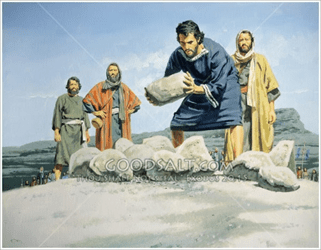
An amazing and miraculous thing happened 1646, Richard Bourne came upon a large rock around which a few hundred natives were dancing and offering sacrifices, one of which was human.

Bourne lifted his arms and raised his voice, declaring “if you do not stop your horrible work I will call upon my God to visit his wrath upon you! Suddenly, a flash of lightning split the rock into pieces. Immediately following this, hundreds of Indians converted.

The rock, located near Bournedale, Massachusetts, is referred to as Sacrifice Rock or Chamber Rock.

Another Gospel-motivated settler was Missionary John Eliot. He was called “Apostle to the Indians.” John Eliot was baptized in England as an infant on August 5, 1604. He sailed to America and preached his first sermon in the Algonquian language in 1646.

Eliot printed the first book in North America—the Bay Psalm Book.

Eliot translated the Lord’s Prayer, the Ten Commandments, and the Bible, the first to be printed in America, in 1663.

A Massachusetts historical marker reads: “John Eliot established here in 1651 a village of Christian Indians called Hassanamesit—‘at a place of small stones.’ It was the home of James the Printer who helped Eliot to print the Indian Bible.”

John Eliot

Another historical marker reads: “In reverent Memory of Eliot, Born in England 1604, Died in Roxbury, 1690, Lover of God, Lover of Men, Seeker of the Christian Commonwealth, Who in this spot preached to his friends the Indians in their own tongue the mercies and the laws of The Eternal.”

Eliot wrote: “The Word of God is the perfect system of laws to guide all moral actions of man.”

In a 1674 census, there were 4,000 “Praying Indians” in 14 self-ruling villages complete with houses, streets, bridges, and their own ministers.

A marker reads: “Indian Village Pakachoag, One-half mile up Malvern Road is the Indian Spring and the site of the Indian Village Pakachoag- Clear Spring, One of three Indian villages on Worchester ground. John Eliot preached here in 1674.”

“Praying Indian” villages were located throughout Massachusetts, Martha’s Vineyard and Rhode Island. A marker reads: “Ponkapoag Plantation, The north line of Ponkapoag Plantation, second of the Apostle Eliot’s Praying Indian towns set apart by the Dorchester Proprietors in 1657.”

Another marker reads: “Chaubunagungamaug, site of Praying Indian town established by John Eliot and Daniel Gookin in 1674 and known as Chaubunagungamaug.”

In A Brief Narrative, July 20, 1670, John Eliot wrote: “These Indians being of kin to our Massachusett Indians received amongst them the Light and love of the Truth. On a day of fasting and prayer, elders were ordained.

The Teacher of the Praying Indians of Nantucket, with a Brother who made good Confessions of Jesus Christ, did make report that there be about ninety families who pray unto God in that island, so effectual is the Light of the Gospel.”

John Eliot

Another historical marker there reads: On this site, John Eliot helped his Indian converts to build their first meeting house in 1651, with a ‘Prophet’s Chamber’ where he lodged on his fortnightly visits to preach to them in their own language. His disciple Daniel Takawambait succeeded to the Pastoral office in 1698.” Daniel Takawambpait was New England’s first native Indian minister, ordained in Natick, Massachusetts, in 1681.

Pilgrim leader William Bradford and Wampanoag Chief Massasoit had been friends, which maintained peace between settlers and Indians. Sadly, after Bradford died in 1657 and Chief Massasoit in 1661, tensions arose between the settlers and Indians. This was similar to the Book of Acts, where following the Apostle Paul’s successful preaching, opposers of the Gospel would arrive to stir up violence.

Massasoit’s son was known as chief or “King” Philip. In 1675, he became upset over settlers allowing their livestock to graze on wild Indian crops and encroach onto Indian territories. The new Plymouth Colony Governor, Josiah Winslow, did nothing to appease the concerns of King Philip. As a result, King Philip recruited warriors and attacked more than half of New England’s 90 towns.

A marker read”Sudbury Fight, one-quarter mile north took place the Sudbury Fight with King Philip’s Indians on April 21, 1676. Captain Samuel Wadsworth fell with twenty-eight of his men. Their monument stands in the burying ground.”

During King Philip’s War, 1675-1678, over 800 settlers died, 1,200 homes burned, 8,000 cattle lost, and the entire English population of 52,000 in Massachusetts and Rhode Island was threatened to be driven back to the coast. A marker reads: “Redemption Rock, Upon the rock fifty feet west of this spot Mary Rowlandson, wife of the first minister of Lancaster, was redeemed from captivity under King Philip. The narrative of her experience is one of the classics of colonial literature.”

King Philip

Unfortunately, John Eliot’s Christian “Praying Indians” were caught in the middle. They were not trusted by King Philip’s warriors nor by the panicking colonists. As a results, many tragically died. A marker reads: “Praying Indians lived here living peacefully with white settlers to whom Sachem Tahatttawan sold 6 sq. miles. John Eliot converted Indians, including Tahattawan, to Christianity. In 1654, Nashoba, meaning ‘land between the waters’ was named the Sixth Praying Indian town.

In 1675, during King Philip’s War, Praying Indians were accused of mischief, rounded up and marched to Deer Island in Boston Harbor where many died. Survivors were released in 1677, but only a few returned, including Sarah Doublet. They were given 500 acres called New Town. Sarah Doublet died in 1730, the last Praying Indian.

A small remnant of the Christian Wampanoag continued, with “Blind” Joe Amos as the first ordained Mashpee Wampanoag Indian minister. He brought the Baptist faith to the Mashpee Wampanoag tribe in the early 1830’s, and advanced the concept of self-governance.

In 1832, Rev. “Blind” Joe Amos formed a second Baptist congregation among the Wampanoags at Gay Head on Martha’s Vineyard, serving as the pastor. There, he built the first Indian Baptist Church building in America.

Rev. “Blind” Joe Amos

The Gay Head Lighthouse, authorized by Congress during President John Adams’ Administration, was the first lighthouse built on Martha’s Vineyard, using a lamp which burned whale oil.

In 1920, Aquinnah Wampanoag Indian Charles W. Vanderhoop, Sr. was appointed as the tenth Principal Lighthouse Keeper, followed by his son in 1986. Local Aquinnah Indians of the Wampanoag Tribe helped maintain the lighthouse, including rotating the lamp which turned on large wooded gears that became swollen due to the moisture.

Mwalim Peters, a researcher of Mashpee Wampanoag history, stated that Rev. “Blind” Joe Amos “knew the entire King James Bible by heart and could recite it in both English and Wampanoag.” Peters noted that Rev. Amos: “preached under the shade of a large oak tree every Sunday throughout the seasons.”

Rev. Amos was joined by Rev. William Apes, an itinerant Pequot Indian minister adopted by the Mashpee Wampanoag tribe. Rev. Amos continued on at Martha’s Vineyard, where he died in 1869.

Rev. Curtis W. Frye, Jr., was the great-great-great-grandson of Rev. Blind Joe Amos. Frye served as the pastor of Mashpee Baptist Church from 2007 till his death in 2014.

Rev. Curtis W. Frye, Jr.

Rev. Frye helped refurbish the Old Indian Meetinghouse used by the church. He stated: “Being able to perform a wedding there, or a funeral or a service, being able to follow in the footsteps of Blind Joe Amos and Reverend Apes, every time I do a service there to me it brings home a lot of feelings, a flood of feelings. It is so original, so close to the way it was back when they were preaching inside that building.”

Rev. Curtis W. Frye, Jr., recounted: “Blind Joe was one of the preachers who brought the Gospel to the Wampanoag people. We are still here and we are still doing what Blind Joe did, and that’s preach the word of God.

(So, if you stayed with me through all of this, you now know about the ‘praying Indians of New England’ and that their tradition of prayer and worship of God lives on there to this very day!)

Ron