John Witherspoon

In the founding of our country there were several men who were deeply important.  However, you seldom hear about them, as important as they were.  One of those was John Witherspoon.  Below I have told a little about him.  Please read it if you would like to know about this man who was so involved in founding our country. Ron

John Witherspoon was a colonial pastor who signed the Declaration of Independence.

He was born in Scotland on February 5, 1723.

A descendant of Protestant Reformer John Knox, Witherspoon was educated at the University of Edinburgh, Scotland, and afterwards served as a Presbyterian pastor.

His writings brought him to the attention of the trustees of the College of New Jersey, who sent Benjamin Rush and Richard Stockton to Scotland to persuade him and his wife, Elizabeth, to come to the American colonies.

Benjamin Rush and Richard Stockton later joined John Witherspoon in signing the Declaration of Independence.

Sailing to America in 1768, John Witherspoon became the President of the College of New Jersey, which was later renamed Princeton University.

There, Witherspoon taught 12 members of the Continental Congress, and 9 of the 55 writers of the U.S. Constitution, including James Madison.

Witherspoon’s other Princeton students included:

1 U.S. Vice-President, 3 Supreme Court Justices, 10 Cabinet Members, 13 Governors, 28 U.S. Senators, 49 U.S. Congressmen, 37 judges, and 114 ministers.

John Witherspoon was elected as a delegate from New Jersey to the Continental Congress.

He declared:

“Gentlemen, New Jersey is ready to vote for independence.  The country is not only ripe for independence, but we are in danger of becoming rotten for the want of it!”

On note, is that John Witherspoon was prominent clergyman who signed the Declaration of Independence.

Clergymen were often the most educated individuals in their communities.

Whereas most Church of England ministers in America held allegiance to the King and left for England when the Revolution began, patriot pastors stayed and supported the American cause.

Patriot Pastors preached on the topics of:

self-government; government from the consent of the governed; purpose of government to secure God-given rights; rights of conscience; equality before the law; freedom to speech; freedom to assemble; freedom of press; self-defense; the right to possess and bear arms; no taxation without representation; and trial by a jury of peers, rather than a partisan, king appointed judge.

President Calvin Coolidge acknowledged in his address at the 150th Anniversary of the Declaration of Independence, in Philadelphia, July 5, 1926:

“The principles of human relationship which went into the Declaration of Independence are found in the texts, the sermons, and the writings of the early colonial clergy who were earnestly undertaking to instruct their congregations in the great mystery of how to live.

They preached equality because they believed in the fatherhood of God and the brotherhood of man. They justified freedom by the text that we are all created in the divine image, all partakers of the divine spirit.

Placing every man on a plane where he acknowledged no superiors, where no one possessed any right to rule over him, he must inevitably choose his own rulers through a system of self-government.

In those days such doctrines would scarcely have been permitted to flourish and spread in any other country.

In order that they might have freedom to express these thoughts and opportunity to put them into action, whole congregations with their pastors had migrated to the colonies.”

Coolidge added:

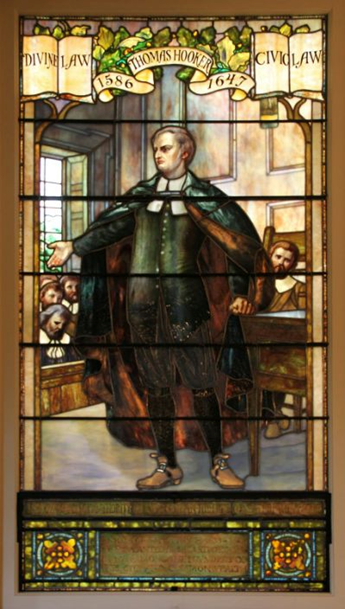
“Rev. Thomas Hooker of Connecticut as early as 1773 said in a sermon before the General Court that:

‘The foundation of authority is laid in the free consent of the people. The choice of public magistrates belongs unto the people by God’s own allowance.’

This doctrine found wide acceptance among the nonconformist clergy who later made up the Congregational Church.

The great apostle of this movement was the Rev. John Wise of Massachusetts.

He was one of the leaders of the revolt against the royal governor Andros for which he suffered imprisonment.

His works were reprinted in 1772 and have been declared to have been nothing less than a textbook of liberty for our Revolutionary fathers.

That these ideas were prevalent in Virginia is further revealed by the Declaration of Rights, which was prepared by George Mason and presented to the general assembly on May 27, 1776.

This document asserted popular sovereignty and inherent natural rights, and confirmed the doctrine of equality in the assertion that ‘All men are created equally free and independent.’

It can scarcely be imagined that Jefferson was unacquainted with what had been done in his own Commonwealth of Virginia when he took up the task of drafting the Declaration of Independence.”

Coolidge continued:

“These thoughts can very largely be traced back to what Rev. John Wise was writing in 1770. He said ‘Democracy is Christ’s government in church and state.’

Here was the doctrine of equality, popular sovereignty, and the substance of the theory of inalienable rights clearly asserted by Wise at the opening of the eighteenth century, just as we have the principle of the consent of the governed stated by Hooker as early as 1773.

When we take all these circumstances into consideration, it is but natural that the first paragraph of the Declaration of Independence should open with a reference to Nature’s God and should close in the final paragraphs with an appeal to the Supreme Judge of the world and an assertion of a firm reliance on Divine Providence.”

Coolidge continued:

“In its main feature the Declaration of Independence is a great spiritual document.  Equality, liberty, popular sovereignty, the rights of man.  These are not elements which we can see and touch. They have their source and their roots in our religious convictions.

Unless the faith of the American in these religious convictions is to endure, the principles of our Declaration will perish. We cannot continue to enjoy the result if we neglect and abandon the cause.

If anyone wishes to deny their truth the only direction in which he can proceed is backward toward the time when there was no equality, no rights of the individual, no rule of the people.

The duly authorized expression of the will of the people has a divine sanction.

The ultimate sanction of law rests on the righteous authority of the Almighty.

It was in the contemplation of these truths that the fathers made their Declaration and adopted their Constitution.

Their intellectual life centered around the meeting-house. They were intent upon religious worship. While their thoughts were found with other literature, there was a wide acceptance with the authority of the Scriptures.”

President Coolidge continued:

“We live in an age of science and of abounding accumulation of material things. These did not create the Declaration. Our Declaration created them.

The things of the spirit come first.

Unless we cling to that, all our material prosperity, overwhelming though it may appear, will turn to a barren sceptre in our grasp. We must not sink into a pagan materialism.

We must cultivate the reverence which our founders had for the things that are holy. We must follow the spiritual and moral leadership which they showed.

John Witherspoon died near Princeton, New Jersey, on NOVEMBER 15, 1794.

John Adams described Rev. Witherspoon as:  “A true son of liberty but first, he was a son of the Cross.”

Young George Washington

Many people think that it was the plan of God for America to be preserved.  It is for sure that such would  never have happened if not for George Washington.  He not only led the military part of the revolution but was the guiding influence for so many other important things.  When he was still young, he was exposed to death so many times, but was miraculously shielded from death.  Later in life, a famous Indian Chief, traveled many miles before he died to meet Washington.  He described how eleven times he shot at Young Washington with his very accurate rifle from “point-blank” range but how the bullets would never touch him.  He went on to relate that he had concluded that: “The Great Spirit protected Washington for Washington to do important things in his life.”   Below, you can read about many of those experiences in his younger life. Ron

In the decades prior to the Revolutionary War, tensions arose between the two largest global powers: BRITAIN, led by King George II, and FRANCE, led by King Louis XV.

Because of their alliances with other nations, fighting escalated into the first global war, the Seven Years War, or as it was called in America, the French and Indian War.

The conflict included every major power in Europe as well as their colonies from the Caribbean, to India, to the Philippines, and to Africa.

Over a million died.

It was sparked by the ambush in 1754 of a French detachment in the Ohio Valley by British militia led by 22-year-old Virginia Colonel George Washington.

During this crisis, so many people turned to Christ. The Great Awakening Revival swept through the American colonies.

A notable dissenting preacher, Samuel Davies, spread revival across racial lines and was heard by many in Virginia, including Patrick Henry, who credited Davies with “teaching me what an orator should be.”

Rev. Davies regularly invited hundreds of slaves to his home for a Bible study on Saturday evenings, their only free time, and taught them hymns and how to read.

Realizing the importance of education, Davies helped found Princeton University, and was chosen its president after Jonathan Edward’s sudden death.

In 1755, 1,400 British troops marched over the Appalachian Mountains to seize French Fort Duquesne near present day Pittsburgh.

One of the wagon drivers for the British was 21-year-old Daniel Boone.

On July 9, 1755 they passed through a deep wooded ravine along the Monongahela River eight miles south of the fort.

Suddenly, they were ambushed by French regulars and Canadians accompanied by Potawatomi and Ottawa Indians.

Not accustomed to fighting unless in an open field, over 900 British soldiers were annihilated in the Battle of the Wilderness, or Battle of Monongahela.

Colonel George Washington rode back and forth during the battle delivering orders for General Edward Braddock, who was the Commander-in-Chief of British forces in America.

General Braddock was trying to get his soldiers into a formation typical of European warfare, which tragically made them an open target for the French and Indians, who were firing from behind trees.

Eventually, every British officer on horseback was shot, except Washington.

General Braddock was mortally wounded.

Washington carried Braddock from the field.

Braddock’s field desk was captured, revealing all the British military plans, enabling the French to surprise and defeat British forces in succeeding battles at five other forts.

The terrible British losses convinced the Iroquois tribes of Senecas and Cayugas to switch their allegiances to the French.

Before he died, General Braddock gave Washington his battle uniform sash which Washington reportedly carried with him the rest of his life, even while Commander-in-Chief and President.

Washington presided at the burial service for General Braddock, as the chaplain had been wounded.

Braddock’s body was buried in the middle of the road so as to prevent it from being found and desecrated.

Shortly after the Battle of Monongahela, George Washington wrote from Fort Cumberland to his younger brother, John Augustine Washington, July 18, 1755:

“As I have heard, since my arrival at this place, a circumstantial account of my death and dying speech, I take this early opportunity of contradicting the first, and of assuring you, that I have not as yet composed the latter. But by the All-Powerful Dispensations of Providence, I have been protected beyond all human probability or expectation; for I had four bullets through my coat, and two horses shot under me, yet escaped unhurt, although death was leveling my companions on every side of me!”

Reports of the defeat of General Braddock at the Battle of Monongahela spread across the country.

A short time later on July 8, 1755 a band of Shawnee Indians massacred the inhabitants of Draper’s Meadow, Virginia.

Mary Draper Ingles was kidnapped and taken as far away as Kentucky and Ohio.

At one point during her captivity, she overheard a meeting that the Shawnee had with some Frenchmen. They described in detail the British defeat in the Battle of Monongahela at Duquesne, and how the Indian Chief Red Hawk claimed to have shot Washington eleven times, but did not succeed in killing him.

After several months, Mary Draper Ingles escaped in mid-winter, as recorded in her biography, and trekked nearly 1,000 miles back home.👍

Fifteen years after the Battle of Monongahela, George Washington and Dr. Craik, a close friend of his from his youth, were traveling through those same woods near the Ohio river and Great Kanawha river.

There they were met by an old Indian chief, who addressed Washington through an interpreter:

“I am a chief and ruler over my tribes. My influence extends to the waters of the great lakes and to the far blue mountains.

I have traveled a long and weary path that I might see the young warrior of the great battle.

It was on the day when the white man’s blood mixed with the streams of our forests that I first beheld this Chief. I called to my young men and said, mark yon tall and daring warrior? He is not of the red-coat tribe-he hath an Indian’s wisdom, and his warriors fight as we do-himself alone exposed.

Quick, let your aim be certain, and he dies. Our rifles were leveled, rifles which, but for you, knew not how to miss, `twas all in vain, a power mightier far than we, shielded you.

Seeing you were under the special guardianship of the Great Spirit, we immediately ceased to fire at you. I am old and soon shall be gathered to the great council fire of my fathers in the land of shades, but ere I go, there is something bids me speak in the voice of prophecy.”

The Indian Chief continued:

“Listen! The Great Spirit protects that man and guides his destinies — he will become the chief of nations, and a people yet unborn will hail him as the founder of a mighty empire. I am come to pay homage to the man who is the particular favorite of Heaven, and who can never die in battle.”

The qualities of faith virtue and discipline were evident during this early period of George Washington’s public career as seen in his actions and correspondence.

The young Colonel George Washington wrote from Alexandria, Virginia to Governor Dinwiddie, February 2, 1756:

“I have always so far as was in my power endeavored to discourage gambling in camp, and always shall while I have the honor to preside there.”

Colonel Washington wrote from Winchester, Virginia to Governor Dinwiddie, April 18, 1756:

“It gave me infinite concern to find in yours by Governor Innes that any representations should inflame the Assembly against the Virginia regiment, or give cause to suspect the morality and good behaviour of the officers.

I have, both by threats and persuasive means, endeavored to discountenance gambling, drinking, swearing, and irregularities of every kind; while I have, on the other hand, practised every artifice to inspire a laudable emulation in the officers for the service of their country, and to encourage the soldiers in the unerring exercise of their duty.”

Washington issued the following order while at Fort Cumberland in June of 1756:

“Colonel Washington has observed that the men of regiment are very profane and reprobate. He takes this opportunity to inform them of his great displeasure at such practices, and assures them, that, if they do not leave them off, they shall be severely punished. The officers are desired, if they hear any man swear, or make use of an oath or execration, to order the offender twenty-five lashes immediately, without a court-martial. For the second offense, he will be more severely punished.”

In 1756, Colonel George Washington issued the order: “Any soldier found drunk shall receive one hundred lashes without benefit of court-martial.”

About a year after General Braddock’s defeat, Colonel Washington wrote to Governor Dinwiddie from Winchester, Virginia: “With this small company of irregulars, with whom order, regularity, circumspection, and vigilance were matters of derision and contempt, we set out, and by the protection of Providence, reached Augusta Court House in seven days without meeting the enemy; otherwise we must have fallen a sacrifice through the indiscretion of these whooping, hallooing, gentlemen soldiers.”

On September 23, 1756, Colonel Washington wrote to Governor Dinwiddie from Mount Vernon: “The want of a chaplain, I humbly conceive, reflects dishonor on the regiment, as all other officers are allowed. The gentlemen of the corps are sensible of this, and propose to support one at their private expense. But I think it would have a more graceful appearance were he appointed as others are.”

On November 9, 1756, Colonel Washington wrote to Governor Dinwiddie: “As to a chaplain, if the government will grant a subsistence, we can readily get a person of merit to accept the place, without giving the commissary any trouble on the point.”

On November 24, 1756, Colonel Washington wrote to Governor Dinwiddie: “When I spoke of a chaplain, it was in answer to yours.

I had no person in view, though many have offered; and I only said if the country would provide subsistence we could procure a chaplain without thinking there was offense in expression.”

On April 17, 1758, after Governor Dinwiddiewas recalled, Colonel Washington wrote from Fort Loudoun to the President of the Council: “The last Assembly, in their Supply Bill, provided for a chaplain to our regiment. On this subject I had often without any success applied to Governor Dinwiddie. I now flatter myself, that your honor will be pleased to appoint a sober, serious man for this duty. Common decency, Sir, in a camp calls for the services of a divine, which ought not to be dispensed with, although the world should be so uncharitable as to think us void of religion, and incapable of good instructions.”

On July 20, 1758, in a letter to his fiancee, Martha Dandridge Custis, Colonel George Washington wrote from Fort Cumberland:  “We have begun our march for the Ohio. A courier is starting for Williamsburg, and I embrace the opportunity to send a few lines to one whose life is now inseparable from mine. Since that happy hour when we made our pledges to each other, my thoughts have been continually going to you as to another Self. That an All-Powerful Providence may keep us both in safety is the prayer of your ever faithful and ever affectionate Friend.”

On January 6, 1759, George Washington was married to Martha Dandridge Custis by Rev. David Mossom, rector of Saint Peter’s Episcopal Church, New Kent County, Virginia.

After having settled at Mount Vernon, George Washington became one of the twelve vestrymen in the Truro Parish, which included the Pohick Church, the Falls Church, and the Alexandria Church.

The old vestry book of Pohick Church contained the entry:  “At a Vestry held for Truro Parish, October 25, 1762, ordered, that George Washington, Esq. be chosen and appointed one of the Vestry-men of this Parish, in the room of William Peake, Gent. Deceased.”

In his diary, George Washington recorded his attendance at numerous Church and Vestry meetings.

On February 15, 1763, the Fairfax County Court recorded: “George Washington, Esq. took the oath according to Law, repeated and subscribed the Test and subscribed to the Doctrine and Discipline of the Church of England in order to qualify him to act as a Vestryman of Truro Parish.”

Thirteen years later, General George Washington stated, July 2, 1776: “The time is now near at hand which must probably determine whether Americans are to have any property they can call their own;  whether their houses and farms are to be pillaged and destroyed, and themselves consigned to a state of wretchedness from which no human efforts will deliver them.

The fate of unborn millions will now depend, under God, on the courage and conduct of this army. Our cruel and unrelenting enemy leaves us no choice but a brave resistance, or the most abject submission. We have, therefore to resolve to conquer or die.”

More on Theodore Roosevelt

Yesterday I sent you info on Teddy Roosevelt.  What I wanted you to figure out was that Donald Trump is tough just like Teddy was.  Trump is running for President for a second time.  Roosevelt was running for President for a second time also as the candidate for Bull Moose Party.

Teddy was starting to make a speech at a political rally at this same time of the year.  This evil fellow walked up in front of the lectern and shot Teddy right in the chest. The bullet missed his heart and lodged in the back of his chest.  How tough of a dude was Teddy Roosevelt???  He walked up and finished his whole speech as his white shirt turned red from all the blood.


The Amazing Theodore Roosevelt

Yes, you have heard stories about this man, how he stormed San Juan Hill with his Rough Riders, and how Franklin Roosevelt gained the White House on his coat tailes.  However, his whole life was so amazing and so influenced our America, that I wanted you to have the opportunity to see his whole story, as shown below:                                   Ron 


Theodore Roosevelt, Jr., was born October 27, 1858.

As a child, he had debilitating asthma, often waking up at night as if being smothered to death.

At 6-years-old, he watched Abraham Lincoln’s funeral procession from the window of his grandfather’s mansion in Union Square, New York City.

Theodore was home-schooled as a child, becoming fascinated with animals and zoology after seeing a dead seal in a local market.

His father, Theodore Roosevelt, Sr., was a successful New York business leader, who helped raise support for the Union during the Civil War.

Young Theodore described him:  “My father, Theodore Roosevelt, was the best man I ever knew. He combined strength and courage with gentleness, tenderness, and great unselfishness. He would not tolerate in us children selfishness or cruelty, idleness, cowardice, or untruthfulness.” 

His father took the family on trips to Europe in 1869 and 1870, and Egypt in 1872, and helped found New York’s Metropolitan Museum of Art.

At 15-years-old, Roosevelt wrote of their trip to Jerusalem:  “In the afternoon we went to the Wailing Place of the Jews.”

After being accosted by older boys on a camping trip, Roosevelt began exercising.  He became an accomplished boxer and a third-degree brown belt in judo.

He entered Harvard in 1876.

He was devastated in 1878 upon news of the sudden death of his father, who had told him:  “Take care of your morals first, your health next, and finally your studies.”   

After graduation, he attended Columbia University Law School in New York. 

While there, at the age of 23, he wrote a significant book, The Naval War of 1812 (published in 1882).

The book was so well received that just four years later, the U.S. Navy ordered a copy of it to be placed on every ship.

The book influenced Rear Admiral Alfred Thayer Mahan to write The Influence of Sea Power Upon the French Revolution and Empire, 1793–1812 (published in 1892). 

This book revolutionized naval warfare, causing not only the United States, but Britain and Germany, to improve their navies.

Roosevelt began attending meetings of New York’s 21st District Republican Association.

When 20th President, Republican President James Garfield, was assassinated in 1881, and Chester Arthur became the 21st President, Roosevelt decided to run for state assemblyman.

He won in 1882, and dropped out of law school to pursue politics.

He was reelected in 1883, and again in 1884, the same year Democrat Grover Cleveland was elected the 22nd U.S. President.   

In 1880, Theodore married Alice Hathaway Lee.

Four years later, in 1884, their daughter, Alice Lee Roosevelt, was born. Tragically, two days later, on February 14, 1884, Roosevelt’s mother, Mittie, died of typhoid, and later that afternoon, in the same house, his wife, Alice, died of kidney failure.

Roosevelt scratched in his diary a large black “X” with the words “The light has gone out of my life.”

Attending the Republican National Convention in June of 1884, he gave a speech in support of John Roy Lynch, an African-American former slave, recommending he be chosen as the temporary chair of the Convention.

After bitter political battles, Roosevelt retired from politics, left his baby daughter with his sister, and went to ranch in the Dakotas.

Roosevelt wrote that: “A cattle rancher had few of the emasculated, milk-and-water moralities admired by the pseudo-philanthropists; but he does possess, to a veryhigh degree, the stern, manly qualities that are invaluable to a nation.”

While there, he wrote three books: Hunting Trips of a Ranchman; Ranch Life and the Hunting-Trail; and The Wilderness Hunter.

Roosevelt bought a herd and ranched for three years, till the severe winter on 1886-1887 killed most of his cattle.
He returned east and married a childhood friend, Edith Kermit Carow, on December 2, 1886, at St George’s Church in Hanover Square, London.

Together they had five children, and also raised daughter Alice from his first marriage.

In 1886, he ran for Mayor of New York City, but lost.

He wrote another book: The Winning of the West.

Roosevelt campaigned for Republican Benjamin Harrison, who won election as the 23rd U.S. President.

Harrison appointed Roosevelt to the United States Civil Service Commission.

In 1892, Democrat Grover Cleveland won his second term, as the 24th President, and reappointed Roosevelt to the same position.

Before the mafia came to New York, the local police “ran” the crime in their districts.
In 1894, the Mayor of New York appointed Roosevelt to the City Police Commissioners, where he became president of the board, reforming the department, cleaning out corruption, and installing telephones in the station houses.

Roosevelt was for law and order. He walked officers’ beats on the streets after midnight to make sure they were on duty.

On Sundays to make sure all stores were closed to comply with New York’s Sunday Closing Blue Laws, which were put in place to promote observance of the Lord’s day of worship.
Roosevelt was the first to bring Jews into the police force, calling them his “Maccabees.”

Journalist Jacob Riis of the Evening Sun newspaper, wrote in his book How the Other Half Lives, of the terrible conditions the millions of immigrants suffered:
“When Roosevelt read my book, he came. No one ever helped as he did. For two years we were brothers in (New York City’s crime-ridden) Mulberry Street.

There is very little ease where Theodore Roosevelt leads, as we all found out.

The lawbreaker found it out, and lived to respect him. For the first time a moral purpose came into the street. In the light of it, everything was transformed.”

In 1897, when William McKinley became the 25th President, he appointed Roosevelt as the Assistant Secretary of the Navy.

With the help of Alfred Thayer Mahan, Roosevelt built up the U.S. Navy, especially battleships.

On February 15, 1898, USS Maine exploded in Cuba’s Havana Harbor, beginning the Spanish-American War.

Roosevelt immediately sent orders for the Navy to prepare for war. Admiral George Dewey later credited this as a key factor in quick victory in the Battle of Manila Bay.

Roosevelt resigned his position as Assistant Secretary of the Navy and organized the first Volunteer Cavalry, “The Rough Riders,” which helped capture Cuba’s San Juan Hill.

Upon his return to New York in 1898, Roosevelt ran for Governor and won.

In the 1900 Republican Convention, he was chosen to be the Vice-Presidential running-mate for William McKinley’s reelection.

When McKinley was assassinated on September 6, 1901, Theodore Roosevelt became America’s youngest President.

As the 26th U.S. President Theodore Roosevelt, a Republican, was the first President to invite an African American, Booker T. Washington, to dine in the White House on October 16, 1901.

Southern Democrat newspapers condemned him, as printed in The Memphis Scimitar:  “The most damnable outrage which has ever been perpetrated by any citizen of the United States was committed yesterday by the President, when he invited a n…. to dine with him at the White House.

It would not be worth more than a passing notice if Theodore Roosevelt had sat down to dinner in his own home with a Pullman car porter, but Roosevelt the individual and Roosevelt the President are not to be viewed in the same light.”


 Roosevelt addressed the Long Island Bible Society in 1901:
“Every thinking man realizes that the teachings of the Bible are so interwoven and entwined with our whole civic and social life that it would be literally — I do not mean figuratively, I mean literally — impossible for us to figure to ourselves what that life would be if these teachings were removed.

We would lose almost all the standards by which we now judge both public and private morals; all the standards toward which we, with more or less of resolution, strive to raise ourselves.

Almost every man who has by his lifework added to the sum of human achievement of which the race is proud, has based his lifework largely upon the teachings of the Bible.

Among the greatest men a disproportionately large number have been diligent and close students of the Bible at first hand.”

Roosevelt took on his era’s version of big tech globalist elites by being a “trust-buster,” breaking up monopolies, such as John D. Rockefeller’s Standard Oil Account.

He exposed deep-state corruption in the Bureau of Indian Affairs, Land Office, and Post Office.

After Upton Sinclair’s book, The Jungle (1906), Roosevelt harnessed public opinion to pass the Meat Inspection Act and the Pure Food and Drug Act.

He intervened to settle labor disputes.


On March 17, 1905, St. Patrick’s Day, President Theodore Roosevelt gave away in marriage his deceased brother’s daughter, Eleanor, to wed her fifth cousin, once removed, Franklin D. Roosevelt.

Capitalizing on Theodore’s name, Franklin rose in politics to become the 32th U.S. President.

Theodore Roosevelt is considered the first “conservationist president.”

He created the U.S. Forest Service, designating:
5 National Parks;

18 U.S. National Monuments;

51 bird reserves,4 game preserves,

150 National Forests,being responsible for a total of 121 forest reserves in 31 states.

He set 230,000,000 acres under public protection and by the end of his second term established 150 million acres of reserved forestry land.

In his foreign policy, he assisted in 1904 to negotiate a Japan-Russian Treaty, for which he won the Nobel Peace Prize.

He intervened in the First Moroccan Crisis, the Venezuelan Crisis, and settled the dispute with Britain over the Alaskan border.

He helped Panama separate from Columbia, and began building the Panama Canal.

Roosevelt argued for the protection of Jews of North Africa.

Ambassador Michael B. Oren noted in Power, Faith and Fantasy, that in Roosevelt’s negotiations with Morocco, he insisted they:
“Secure his country’s customary concerns in the area, protecting North African Jews from oppression and American merchants from unfair restrictions and fees.”

He pressured Romania and Russia to treat their Jewish populations fairly.

After a massacre of Jews in Kishinev, in the Bessarabia Governorate of the Russian Empire, Roosevelt wrote:  “I need not dwell upon a fact so patent as the widespread indignation with which the Americans heard of the dreadful outrages up on the Jews in Kishineff.”

In 1906, Roosevelt became the first president to appoint a Jew as a Cabinet Member – Secretary of Commerce and Labor Oscar Solomon Straus, who owned, with his brother, the Macy’s Department Store.

He wrote to Straus: “I don’t know whether you know it or not, but I want you to become a member of my Cabinet. I have a very high estimate of your character, your judgment and your ability, and I want you for personal reasons.

There is still a further reason: I want to show Russia and some other countries what we think of Jews in this country.”

Roosevelt stated:  “To discriminate against a thoroughly upright citizen because he belongs to some particular Church, or because, like Abraham Lincoln, he has not avowed his allegiance to any Church, is an outrage against the liberty of conscience.

In my Cabinet at the present moment there sit side by side Catholic and Protestant, Christian and Jew, each man chosen because in my belief he is peculiarly fit to exercise on behalf of all our people the duties of the office.”

A member of the Dutch Reformed Church, Theodore Roosevelt stated in 1909:  “After a week on perplexing problems it does so rest my soul to come into the house of The Lord and to sing and mean it, ‘Holy, Holy, Holy, Lord God Almighty’.  (My) great joy and glory that, in occupying an exalted position in the nation, I am enabled, to preach the practical moralities of the Bible to my fellowcountrymen and to hold up Christ as the hope and Savior of the world.”

Theodore Roosevelt also championed a type of muscular, manly Christianity, addressing the Holy Name Society, August 16, 1903:
“I am not addressing weaklings, or I should not take the trouble to come here. I am addressing strong, vigorous men, who are engaged in the active hard work of life men who have strength to set a right example to others.  You cannot retain your self-respect if you are loose and foul of tongue, that a man who is to lead a clean and honorable life must inevitably suffer if his speech likewise is not clean and honorable. A man must be clean of mouth as well as clean of life — must show by his words as well as by his actions his fealty to the Almighty.  We have good Scriptural authority for the statement that it is not what comes into a man’s mouth but what goes out of it that counts.” 

He added:

“Every man here knows the temptations that beset all of us in this world. At times any man will slip. I do not expect perfection, but I do expect genuine and sincere effort toward being decent and cleanly in thought, in word, and in deed. I expect you to be strong. I would not respect you if you were not. I do not want to see Christianity professed only by weaklings; I want to see it a moving spirit among men of strength.”

 Roosevelt continued:

“I should hope to see each man become all the fitter to do the rough work of the world and if, which may Heaven forfend, war should come, all the fitter to fight. I desire to see in this country the decent men strong and the strong men decent.”

He added: 

“There is always a tendency among very young men to think that to be wicked is rather smart; to think it shows that they are men. Oh, how often you see some young fellow who boasts that he is going to ‘see life,’ meaning by that that he is going to see that part of life which it is a thousandfold better should remain unseen!

I ask that every man here constitute himself his brother’s keeper by setting an example to that younger brother which will prevent him from getting such a false estimate of life. 

Example is the most potent of all things. If any one of you in the presence of younger boys, and misbehave yourself, if you use coarse and blasphemous language before them, you can be sure that these younger people will follow your example and not your precept.

It is no use to preach to them if you do not act decently yourself. 

The most effective way in which you can preach is by your practice The father, the elder brothers, the friends, can do much toward seeing that the boys as they become men become clean and honorable men.” 

Roosevelt concluded:

“I have told you that I wanted you not only to be decent, but to be strong. These boys will not admire virtue of a merely anemic type. They believe in courage, in manliness. They admire those who have the quality of being brave, the quality of facing life as life should be faced, the quality that must stand at the root of good citizenship in peace or in war. 

If you are to be effective as good Christians you must possess strength and courage, or your example will count for little with the young.

I want to see every man able to hold his own with the strong, and also ashamed to oppress the weak. I want to see him too strong of spirit to submit to wrong. I want to see each man able to hold his own in the rough work of actual life outside, and also, when he is at home, a good man, unselfish in dealing with wife, or mother, or children.

Remember that the preaching does not count if it is not backed up by practice. There is no good in your preaching to your boys to be brave, if you run away.”


After his Presidency, he helped William Howard Taft to be elected the 27th President.

Roosevelt then led a Smithsonian safari in Africa in 1909.

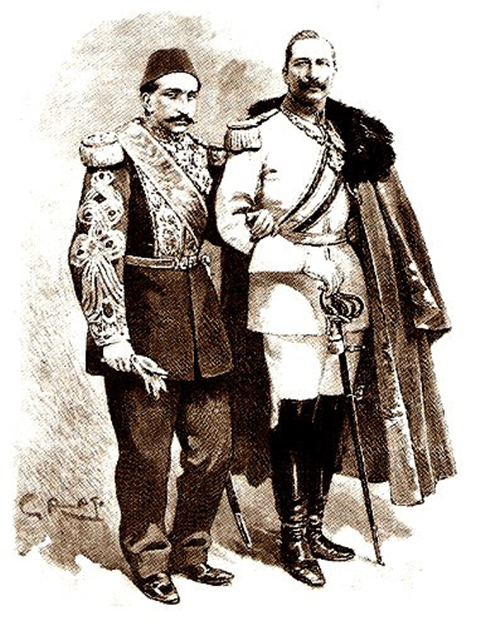
He then traveled to meet world leaders, from Egypt to Austrian-Hungarian Emperor Franz Joseph, Germany’s Kaiser Wilhelm II, England’s King George V.


In St. Louis, Missouri, 1910, Roosevelt was the first person who had been President to fly in an airplane.

At a campaign speech in Milwaukee, October 14, 1912, a saloonkeeper shot Roosevelt in the chest. As the bullet did not hit any vital organs, Roosevelt stood back up and finished his speech, with blood staining his shirt.


 On June 28, 1914, Austria’s Archduke Franz Ferdinand was assassinated in Sarajevo, beginning World War I.

As America was preparing to enter the War, the New York Bible Society published a pocket New Testament and Book of Psalms in 1917 to be handed out to all the U.S. soldiers, with Theodore Roosevelt writing the introduction:

“The teachings of the New Testament are foreshadowed in Micah’s verse (Micah vi. 8):
‘What more does the Lord require of thee than to do justice, and to love mercy, and to walk humbly with thy God?’

DO JUSTICE; and therefore fight valiantly against the armies of Germany and Turkey, for these nations in this crisis stand for the reign of Moloch and Beelzebub on this earth.

LOVE MERCY; treat prisoners well, succor the wounded, treat every woman as if she was your sister, care for the little children, and be tender to the old and helpless.

WALK HUMBLY; You will do so if you study the life and teachings of the Saviour.
May the God of justice and mercy have you in His keeping.-(signed) Theodore Roosevelt.”


 During World War I, Roosevelt’s son Quentin was pilot in Europe, but was tragically shot down and killed July 14, 1918.

Theodore Roosevelt died less than six months later, on January 6, 1919, at the age of 60.

Vice-President Thomas R. Marshall stated:  “Death had to take Roosevelt sleeping, for if he had been awake, there would have been a fight.”


The End

Independence Day in America -July 4th

In commemoration of this important day, below are the thoughts expressed by some of the most famous leaders and thinkers of our country on the Revolution and the resulting Declaration of Independence.  I hope they are very meaningful to you! Ron 

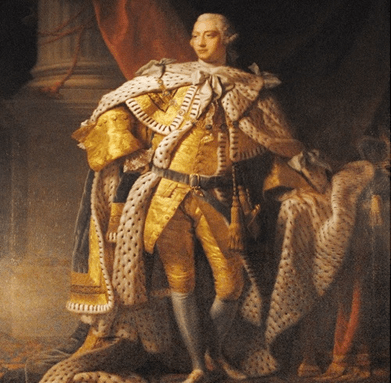
38-year-old King George the Third ruled the largest empire that planet earth had ever seen – “on which the sun never sets.”

He was a one-world government globalist, with him at the top, ruling through mandates.

President Ronald Reagan declared May 9, 1983:
“The Founding Fathers understood that only by MAKING GOVERNMENT THE SERVANT, not the master, only by positing SOVEREIGNTY in THE PEOPLE and not the state, can we hope to protect freedom.  In 1776, the source of government excess was the crown’s abuse of power and its attempt to suffocate the colonists with its overbearing demands. In our own day, the danger of too much state power has taken a subtler but no less dangerous form.”

Twenty-seven abuses of King George the Third were listed in the Declaration of Independence, signed JULY 4, 1776.
These abuses included:

A two-tiered justice system:
“He has made judges dependent on his will alone.”

Weaponizing bureaucracy:
“He has erected a multitude of new offices, and sent hither swarms of officers to harass our people and eat out their substance.”

Imposing martial law:
“He has kept among us, in times of peace, standing armies, to subject us to a jurisdiction foreign to our constitution, for quartering large bodies of armed troops among us.”

Targeting political opposition:
“For imposing taxes on us without our consent.

For depriving us in many cases, of the benefit of trial by jury.

For establishing an arbitrary government.

For altering fundamentally the forms of our governments.”

Turning law enforcement and military against his own subjects:

“He has plundered our seas, ravaged our coasts, burnt our towns, and destroyed the lives of our people.

He is at this time transporting large armies of foreign mercenaries to complete the works of death, desolation, and tyranny.

He has excited domestic insurrections amongst us, and has endeavored to bring other inhabitants of our frontiers, the merciless Indian savages whose known rule of warfare, is an undistinguished destruction of all ages, sexes and conditions.”

33-year-old Thomas Jefferson’s original rough draft of the Declaration also contained a line condemning slavery, as the King of England was part owner of the Royal African Company: “He has waged cruel war against human nature itself in the persons of a distant people who never offended him, captivating and carrying them into slavery in another hemisphere, or to incur miserable death in their transportation thither, suppressing every legislative attempt to prohibit or to restrain this execrable commerce determining to keep open a market where MEN  should be bought and sold.” 

Unfortunately, a few delegates from southern states objected to this line.  Since everyone was in a panic as the British were invading New York and the city was in flames, and since the Declaration needed to pass unanimously, the line in Jefferson’s original draft condemning slavery was tragically set aside.

John Hancock, the 39-year-old President of the Continental Congress, signed the Declaration first, reportedly saying “the price on my head has just doubled.”

Next to sign was Secretary, Charles Thomson, age 47.

70-year-old Benjamin Franklin said: “We must hang together or most assuredly we shall hang separately.”

When the King infringed upon people’s GOD given rights, the founders went above the King’s head, appealing in the Declaration directly to God as the author of individual rights:
“Laws of Nature and of NATURE’S GOD.”

“All Men are created equal, that they are endowed by their CREATOR with certain unalienable Rights”

“Appealing to the SUPREME JUDGE OF THE WORLD for the rectitude of our intentions.”And for the support of this Declaration, with a firm reliance on the protection of DIVINE PROVIDENCE, we mutually pledge to each other our Lives, our fortunes, and our sacred honor.”

The line “all men are created equal” fundamentally changed government, as kings did not believe everyone was created equal. They believed they were created extra special. It was called “the divine right of kings,” namely, that the Creator gives rights to the king and he dispenses them at his discretion to whoever he wishes.
The Declaration of Independence bypassed the King, declaring that the Creator gives rights directly to each individual person.

Many of the 56 signer’s sacrificed their prosperity for their posterity.
Of the signers:

11 had their homes destroyed;

were hunted and captured;

7 served in the military;

9 died during the war.

27-year-old George Walton signed, and at the Battle of Savannah was wounded and captured.

Signers Edward Rutledge, age 27, Thomas Heyward, Jr., age 30, and Arthur Middleton, age 34, were made prisoners at the Siege of Charleston.

38-year-old signer Thomas Nelson had his home used as British headquarters during the siege of Yorktown. Nelson reportedly offered five guineas to the first man to shoot into his house.

Signer Carter Braxton, age 40, lost his fortune during the war.

42-year-old signer Thomas McKean wrote that he was “hunted like a fox by the enemy, compelled to remove my family five times in three month.”

46-year-old Richard Stockton signed and was dragged from his bed at night and jailed.

50-year-old signer Lewis Morris had his home taken and used as a barracks.

50-year-old signer Abraham Clark had two sons tortured and imprisoned on the British starving ship Jersey.

More Americans died on British starving ships than died in battle during the Revolution.

53-year-old signer Rev. John Witherspoon had his son, James, killed in the Battle of Germantown.

60-year-old signer Philip Livingston lost several properties to British occupation and died before the war ended.

63-year-old signer Francis Lewis found out that the British plundered his home and carried away his wife, Elizabeth, putting her in prison. The British wanted to make an example of her, so they denied her a change of clothes, a bed, and gave her nothing but the most meager food. She was treated so harshly that she died shortly after being released.

65-year-old signer John Hart had his home looted and had to remain in hiding, dying before the war ended.

41-year-old John Adams wrote:  “Posterity, you will never know how much it cost the present generation to preserve your freedom! I hope you will make a good use of it. If you do not, I shall repent in Heaven that I ever took half the pains to preserve it.”
Regarding on the day the Declaration was signed, John Adams wrote to his wife:  “I am apt to believe that it will be celebrated, by succeeding generations, as the great anniversary Festival.

It ought to be commemorated, as the Day of Deliverance by SOLEMN ACTS OF DEVOTION TO GOD ALMIGHTY.

It ought to be solemnized with pomp and parade, with shows, games, sports, guns, bells, bonfires and illuminations from one end of this continent to the other from this time forward forever more.”

Gustave de Beaumont, a contemporary of Alexis de Tocqueville, wrote in Marie ou L’Esclavage aux E’tas-Unis, 1835:  “I have seen a meeting of the Senate in Washington open with a prayer, and the anniversary festival of the Declaration of Independence consists, in the United States, of an entirely religious ceremony.”

John Adams continued in his letter to his wife: “You will think me transported with enthusiasm but I am not. I am well aware of the toil and blood and treasure, that it will cost us to maintain this Declaration, and support and defend these States. Yet through all the gloom I can see the rays of ravishing light and glory. I can see that the end is more than worth all the means. And that Posterity will triumph in that Days Transaction, even although we should rue it, which I trust in God we shall not.”

When 54-year-old Samuel Adams signed the Declaration, he said: “We have this day restored THE SOVEREIGN to whom all men ought to be obedient. He reigns in heaven and from the rising to the setting of the sun, let His kingdom come.”

34-year-old James Wilson signed the Declaration. He later signed the Constitution and was appointed to Supreme Court by George Washington. 
James Wilson stated in 1787: “After a period of 6,000 years since creation, the United States exhibit to the world THE FIRST INSTANCE of a nation … assembling voluntarily and deciding that system of government under which they and their posterity should live.”

Senator Daniel Webster stated in 1802: “Miracles do not cluster, and what has HAPPENED ONCE IN 6,000 YEARS, may not happen again. Hold on to the Constitution, for if the American Constitution should fail, there will be anarchy throughout the world.”

John Jay was President of the Continental Congress, 1778-1779, and later nominated by George Washington to be the First Chief Justice of Supreme Court. John Jay wrote in 1777: “The Americans are THE FIRST PEOPLE whom Heaven has favored with an opportunity of choosing the forms of government under which they should live. All other constitutions have derived their existence from violence or accidental circumstances. Your lives, your liberties, your property, will be at the disposal only of your Creator and yourselves.

“Yale President Ezra Stiles, 1788: “All the forms of civil polity have been tried by mankind, except one: and that seems to have been reserved in Providence to be realized in America.”

At the time of the Revolutionary War, nearly every other country on Earth was ruled by a king.


Dr. Pat Robertson wrote in America’s Dates with Destiny, 1986: “On September 17, 1787, the day our Constitution was signed, monarch the absolute Ch’ien Lung, emperor of the Manchu (or Ch’ing) Dynasty, reigned supreme over the people of China. Revolts were put down by ruthless military force.

In Japan the shogun (warriors) of the corrupt Tokugawa chamberlain Tanuma Okitsugu exercised corrupt and totalitarian authority over the Japanese.

In India, Warren Hastings, the British Governor of Bengal, had successfully defeated the influence of the fragmented Mogul dynasties that ruled India since 1600.

Catherine II was the enlightened despot of all the Russia’s.

Joseph II was the emperor of Austria, Bohemia and Hungary.

For almost half a century, Frederick the Great had ruled Prussia.

Louis XVI sat uneasily on his throne in France just years away from revolution, a bloody experiment in democracy, and the new tyranny of Napoleon Bonaparte.

A kind of a constitutional government had been created in the Netherlands in 1579 by the Protestant Union of Utrecht, but that constitution was really a loose federation of the northern provinces for a defense against Catholic Spain.

What was happening in America had no real precedent, even as far back as the city-states of Greece. The only real precedent was established thousands of years before by the tribes of Israel in the covenant with God and with each other.”


President Theodore Roosevelt stated in 1903: “In NO other place and at NO other time has the experiment of governmentof the PEOPLE, by the PEOPLE, for the PEOPLE, been tried on so vast a scale as here in our own country.”

President Calvin Coolidge stated in 1924:  “The history of government on this earth has been almost entirely rule of force held in the HANDS OF A FEW. Under our Constitution, America committed itself to power in the HANDS OF THE PEOPLE.”

A King has “subjects” who are subjected to his will.

The word “citizen” is Greek, and it means a co-ruler, a co-regent, a co-king.

America’s founders, for all their faults, gave a present to all future citizens, namely, each person gets to be king of their own life, and all citizens together are the co-kings of the country!

A republic is where the people are king, ruling through representatives.
America is a republic where WE THE PEOPLE get to rule ourselves.When someone protests the flag, what they are effectively saying, is, that they no longer want to be king.

They protest this system where they participate in ruling themselves.
They want someone else to rule their life.

President Ford stated in Rock Hill, South Carolina, October 19, 1974:  “What they don’t tell us when they propose all these benefits that they are going to give you from our Government, that a government big enough to give us everything we want is a government big enough to take from us everything we have.”

Ronald Reagan opened the Ashbrook Center, Ashland, Ohio, May 9, 1983:  “From their own harsh experience with intrusive, overbearing government, the Founding Fathers made a great breakthrough in political understanding. They understood that it is the excesses of government, the will to power of one man over another, that has been a principle source of injustice and human suffering through the ages.

“John Adams wrote in his notes on A Dissertation on Canon & Feudal Law, 1765:  “I always consider the settlement of America as the opening of a grand scene and design in Providence for the emancipation of the slavish part of mankind all over the earth.”


John Jay noted in 1777:  “This glorious revolution distinguished by so many marks of the Divine favor and interposition and I may say miraculous, that when future ages shall read its history, they will be tempted to consider a great part of it as fabulous.  The many remarkable events by which our wants have been supplied and our enemies repelled are such strong and striking proofs of the interposition of Heaven, that our having been hitherto delivered from the threatened bondage of Britain ought, like the emancipation of the Jews from Egyptian servitude.”


Franklin Roosevelt stated in 1939:  “Rulers increase their power over the common men. The seamen they sent to find gold found instead the way of escape for the common man from those rulers.

What they found over the Western horizon was not the silk and jewels of Cathay, but MANKIND’S SECOND CHANCE, a chance to create a new world after he had almost spoiled an old one. The Almighty seems purposefully to have withheld that SECOND CHANCE until the time when men would most need and appreciate liberty.”

Ronald Reagan stated 1961:  “In this country of ours took place THE GREATEST REVOLUTION that has ever taken place IN THE WORLD’S HISTORY. Every other revolution simply exchanged one set of rulers for another. Here for THE FIRST TIME in all the THOUSANDS OF YEARS of man’s relation to man, the founding fathers established the idea that you and I had within ourselves the GOD-GIVEN RIGHT AND ABILITY to DETERMINE OUR OWN DESTINY.”

Donald Trump stated July 3, 2020:  “Each of you lives in the most magnificent country in the history of the world.

Our Founders launched not only a revolution in government, but a revolution in the pursuit of justice, equality, liberty, and prosperity.

No nation has done more to advance the human condition than the United States of America. And no people have done more to promote human progress than the citizens of our great nation.

It was all made possible by the courage of 56 patriots who gathered in Philadelphia 244 years ago and signed the Declaration of Independence.

They enshrined a divine truth that changed the world forever when they said: ‘All men are created equal’

Our Founders boldly declared that we are all endowed with the same divine rights, given to us by our Creator in Heaven. And that which God has given us, we will allow no one, ever, to take away. Ever.

Seventeen seventy-six represented the culmination of thousands of years of western civilization.

Trump explained the left’s “identity theft” of America’s history:

“And yet there is a growing danger that threatens every blessing our ancestors fought so hard for, struggled, they bled to secure.

Our nation is witnessing a merciless campaign to wipe out our history, defame our heroes, erase our values, and indoctrinate our children.

Angry mobs are trying to tear down statues of our Founders, deface our most sacred memorials, and unleash a wave of violent crime in our cities.

Many of these people have no idea why they are doing this, but some know exactly what they are doing.”

He added:

“One of their political weapons is “Cancel Culture” — driving people from their jobs, shaming dissenters, and demanding total submission from anyone who disagrees.
This is the very definition of totalitarianism, and it is completely alien to our culture and our values, and it has absolutely no place in the United States of America.”

Trump spoke further:

“We will expose this dangerous movement, protect our nation’s children, end this radical assault, and preserve our beloved American way of life.

In our schools, our newsrooms, even our corporate boardrooms, there is a new far-left fascism that demands absolute allegiance.

If you do not speak its language, perform its rituals, recite its mantras, and follow its commandments, then you will be censored, banished, blacklisted, persecuted, and punished. It’s not going to happen to us.

Make no mistake: this left-wing cultural revolution is designed to overthrow the American Revolution.

In so doing, they would destroy the very civilization that rescued billions from poverty, disease, violence, and hunger, and that lifted humanity to new heights of achievement, discovery, and progress.

They are determined to tear down every statue, symbol, and memory of our national heritage.

The violent mayhem we have seen in the streets of cities that are run by liberal Democrats, in every case, is the predictable result of years of extreme indoctrination and bias in education, journalism, and other cultural institutions.

Our children are taught in school to hate their own country, and to believe that the men and women who built it were not heroes, but that were villains.

Their radical view of American history is a web of lies — all perspective is removed, every virtue is obscured, every motive is twisted, every fact is distorted, and every flaw is magnified until the history is purged and the record is disfigured beyond all recognition.

No movement that seeks to dismantle these treasured American legacies can possibly have a love of America at its heart.

No person who remains quiet at the destruction of this resplendent heritage can possibly lead us to a better future.”

He continued:

“The radical ideology attacking our country advances under the banner of social justice. But in truth, it would demolish both justice and society.
It would transform justice into an instrument of division and vengeance, and it would turn our free and inclusive society into a place of repression, domination, and exclusion.

We will not be silenced. We declare that the United States of America is the most just and exceptional nation ever to exist on Earth.

Our country was founded on Judeo-Christian principles, and we understand — that these values have dramatically advanced the cause of peace and justice throughout the world.

We believe in equal opportunity, equal justice, and equal treatment for citizens of every race, background, religion, and creed.
Every child, of every color — born and unborn — is made in the holy image of God.
We want free and open debate, not speech codes and cancel culture. We only kneel to Almighty God.”

President Trump concluded:

“Those who seek to erase our heritage seek to dissolve the bonds of love and loyalty that we feel for our country, and that we feel for each other.

Their goal is not a better America, their goal is the end of America.

Our opponents would tear apart the very documents that Martin Luther King used to express his dream, and the ideas that were the foundation of the righteous movement for Civil Rights.

It is time for our politicians to summon the bravery and determination of our American ancestors.

It is time to plant our flag and protect the greatest of this nation, for citizens of every race, in every city, and every part of this glorious land. For the sake of our honor, for the sake of our children.

Americans must never lose sight of this miraculous story. We will raise the next generation of American patriots.”


British Edwardian writer G.K. Chesterton stated in “What is America”:  “America is the ONLY NATION IN THE WORLD that is founded on creed.

That creed is set forth in the Declaration of Independence, that all men are equal in their claim to justice, that governments exist to give them that justice.

It certainly does condemn atheism, since it clearly names the CREATOR as the ultimate authority from whom these equal rights are derived.”


Calvin Coolidge stated July 5, 1926:  “THE PRINCIPLES which went into the Declaration of Independence are found in THE SERMONS of the early colonial clergy.

They preached equality because they believed in the fatherhood of God and the brotherhood of man.

They justified freedom by the text that we are all created in the Divine image.”
Lincoln stated in his Gettysburg Address, November 19, 1863:  “Our fathers brought forth upon this continent a new nation, conceived in liberty, and dedicated to the proposition that all men are created equal.”


Henry Cabot Lodge, who filled the role of the first Senate Majority Leader, warned the U.S. Senate in 1919:

“The United States is the world’s best hope.

Beware how you trifle with your marvelous inheritance for if we stumble and fall, freedom and civilization everywhere will go down in ruin.”

Persecution of Christians

In the Gospel of Mark and in the other gospels, Jesus told of the great persecution that would happen to those associated with Him and His Spirit.  Unfortunately, it is still happening.  Below is a brief history of that persecution for you to review:

Ron

The Christian church was born into persecution from an anti-Christian one world government — the Roman Empire.

Eleven of the twelve apostles were martyred, with the 12th, John, being reportedly thrown into a boiling pot of oil, but miraculously survived.

Jesus said in Acts11:8: “But ye shall receive power, after that the Holy Ghost

is come upon you: and ye shall be witnesses unto me both in Jerusalem, and in all Judaea, and in Samaria, and unto the uttermost part of the earth.”

 The word “witness” in Greek is “martyr.”

The traditional histories are:

Peter preached in Rome and was crucified upside down c.66 AD;

Andrew preached in Asia Minor, modern-day Greece and Turkey, before being crucified on a sideways “Saint Andrew’s Cross” around 60 AD;

Thomas preached east of Syria, Parthia, and possibly India, and was pierced through with spears by four soldiers in 72 AD;

Philip reportedly preached in Egypt, Carthage in North Africa, and Asia Minor. After converting the wife of a Roman proconsul in Phrygia, he was arrested and cruelly put to death in the city of Heliopolis around 80 AD;

Matthew preached in Parthia, Persia and Ethiopia, where he
was reportedly stabbed to death in the back in city of Nadabahl
in 74 AD;

Bartholomew, according to tradition, preached in India, Armenia, Ethiopia and Southern Arabia, before being skinned and martyred in the 1st Century AD;

James, the son of Zebedee, also know as “James, the greater,” was arrested by Herod Agrippa, and beheaded by the Romans in 44 AD;

James, the son of Alpheus, also known as “James, the younger,” is said to have ministered in Syria, where he was stoned and clubbed to death in 62 AD;

Thaddaeus, or Jude, preached in Asia Minor and Greece, till he was crucified in Beirut or Edessa around 65 AD;

Simon the Zealot reportedly preached in Persia, Mauritania, on Africa’s west, and possibly England, before being crucified in 74 AD;

Matthias preached in Syria, where he was burned to death.

The first martyr was Stephen, as told in the Book of Acts, chapter 7: “When they heard these things, they were cut to the heart, and they gnashed on him with their teeth.

 But Stephen, being full of the Holy Ghost, looked up stedfastly into heaven.  And said, ‘Behold, I see the heavens opened, and the Son of man standing on the right hand of God’.  They cast him out of the city, and stoned him: and the witnesses laid down their clothes at a young man’s feet, whose name was Saul.

Stephen, calling upon God, and saying, ‘Lord Jesus, receive my spirit.’

Saul converted and became the Apostle Paul, who preached in Syria, Asia Minor, Greece, and throughout the Roman Empire, till he was beheaded in Rome in 66 AD.

James the Just, also known as “James, brother of the Lord,” was one of the leaders of the early church in Jerusalem till he was martyred in 62 AD.

In 155 AD, Polycarp, a disciple of John, was ordered to deny Christ or die.

Polycarp responded:  “Eighty and six years have I have served Him, and He has done me no wrong. How can I blaspheme my King and my Savior?”

Josh McDowell explained the significance of the Apostles being martyred in his best-selling book, Evidence That Demands a Verdict (1972).

The book was updated (2017) with his son and co-author, Sean McDowell, who stated:  “The apostles spent between 1.5 to 3 years with Jesus during His public ministry.  Although disillusioned at His untimely death, they became the first witnesses of the risen Jesus and they endured persecution; many subsequently experienced martyrdom, signing their testimony, so to speak, in their own blood.  Their willingness to die, indicates that they did not fabricate these claims; rather, without exception, they actually believed Jesus to have risen from the dead lending credibility to their claims about the veracity of the resurrection, which is fundamental to the case for Christianity.”

Jesus foretold persecution in the Gospel of John, chapter 15:  “You are not of the world, but I chose you out of the world, therefore the world hates you … If they persecuted Me, they will also persecute you. But all these things they will do to you for My name’s sake, because they do not know Him who sent Me.  He who hates Me hates My Father also.”

The Book of Revelation, with chapter 12, stated:  “Now is come the kingdom of our God, and the power of his Christ: for the accuser of our brethren is cast down, which accused them before our God day and night.  And they overcame him by the blood of the Lamb, and by the word of their testimony; and they loved not their lives unto the death.”

It was a criminal act for Christians to assemble.

 If the government caught Christians meeting together, they were subject to being arrested and killed.

This resulted in Christians meeting in caves carved underground called “catacombs.”

Emperor Diocletian’s persecution was the worst.

When Diocletian lost battles in Persia, his generals blamed it on the army’s neglect of worshiping the Roman gods.

Diocletian ordered all military personnel and government employees to worship the Roman gods.

This order forced Christian soldiers to either go out of the military or into the closet.

After purging Christians from the military and government, Diocletian surrounded himself with anti-Christian advisers.

In 303 A.D., he consulted the Oracle Temple of Apollo at Didyma, which told him to initiate a great empire-wide persecution of Christians.

Diocletian revoked the tolerance issued a previous Emperor Gallienus in 260 A.D., and then used the military to force all of Rome to return to worshiping pagan gods.

What followed was a decade of the worst and most intense persecution of Christians to that date.

Diocletian had his military go systematically province by province forbidding church gatherings, arresting church leaders, burning scriptures, destroying church buildings.

He ordered the beautiful new church at Nicomedia to be torn down.

Christians were deprived of official ranks, lost their jobs, imprisoned, had their tongues cut out, were boiled alive, and even decapitated.

From Europe to North Africa, thousands were martyred. The faithful cried out in fervent prayer.

Finally, Diocletian was struck with an intestinal disease so painful that he abdicated the throne on MAY 1, 305 A.D..

The next emperor, Gelarius continued the persecution, but he too was struck with the intestinal disease and died in 311.

Emperor Constantine defeated Emperor Maxentius in 312 A.D. at the Battle of Romes’ Milvian Bridge.

In 313 A.D., Constantine issued the Edit of Milan, ending the persecution of Christians.

Commenting on Roman persecutions was Secretary of State William Jennings Bryan, the Democrat Party’s candidate for President in 1896, 1900, and 1908.

William Jennings Bryan, in his speech, “The Prince of Peace,” (New York Times, September 7, 1913), stated:
 “I can imagine that the early Christians who were carried into the Coliseum to make a spectacle for those more savage than the beasts, were entreated by their doubting companions not to endanger their lives.

But, kneeling in the center of the arena, they prayed and sang until they were devoured.”

Bryan continued:

“How helpless they seemed, and, measured by every human rule, how hopeless was their cause!

And yet within a few decades the power which they invoked proved mightier than the legions of the Emperor, and the faith in which they died was triumphant o’er all the land.

They were greater conquerors in their death than they could have been had they purchased life.”

It takes courage to walk in faith:  Joshua 1:9: “Be strong and of a good courage; be not afraid, neither be thou dismayed: for the LORD thy God is with thee whithersoever thou goest.”

The Book of Revelation 21:8 lists cowards as the first ones thrown in the lake of fire:  “But the cowardly (fearful), unbelieving, abominable, murderers, sexually immoral, sorcerers, idolaters, and all liars shall have their part in the lake which burns with fire and brimstone, which is the second death.”

The Center for Studies on New Religions found that in 2016, over 90,000 Christians courageously kept their faith, even though they were murdered, 30 percent of whom were at the hands of Islamic terrorists.

Open Doors UK & Ireland CEO Lisa Pearce reported: “Persecution levels have been rising rapidly across Asia and the Indian subcontinent, driven by extreme religious nationalism which is often tacitly condoned, and sometimes actively encouraged, by local and national governments.

If a Christian is discovered in Somalia, they are unlikely to live to see another day.

 North Korea is at the top of the list of countries persecuting Christians, followed by nations practicing sharia Islam.  

China has increased targeting Christians and demolishing churches.”

Catholic News Agency reported:  “All top 10 countries with the worst persecution of Christians are in Asia and Africa. Somalia ranks second on the list, followed by Afghanistan, Pakistan, the Sudan, Syria, Iraq, Iran, Yemen, and Eritrea.

More Christians were recorded as killed (in Pakistan) for their faith in 2016 than any other country.”

Open Doors reported that in 2016:  Islamic fundamentalism is responsible for persecution of Christians in 35 of the top 50 countries;

Pakistan is 4th in persecution, worse than northern Nigeria;

Sudan is the 5th worst persecutor of Christians, with President Omar al-Bashir proclaiming, “Now we can impose sharia here”;

Christians are killed in crossfire in Yemen, Syria and Iraq;

Hindu nationalists have caused India to reach its highest level of persecution, battering churches;

Laos, Bangladesh, Vietnam and Bhutan increased persecution;

Buddhist nationalism in Sri Lanka has put the country among the top 50 persecutors;

Turkish President Erdogan used a suspicious coup to eliminate opposition and increase persecution of Christians, moderate Muslims and non-Islamists.

President Ronald Reagan commented on the courageous Christians who suffered persecution in the Roman Coliseum at the National Prayer Breakfast, February 2, 1984:

 “This power of prayer can be illustrated by the story that goes back to the fourth century, the monk (Telemachus) living in a little remote village, spending most of his time in prayer.

 One day he thought he heard the voice of God telling him to go to Rome.  Weeks and weeks later, he arrived at a time of a festival in Rome.

He followed a crowd into the Coliseum, and then, there in the midst of this great crowd, he saw the gladiators come forth, stand before the Emperor, and say, ‘We who are about to die salute you.’

 And he realized they were going to fight to the death for the entertainment of the crowds.

He cried out, ‘In the Name of Christ, stop!’ And his voice was lost in the tumult there in the great Colosseum.”

Reagan continued:

“And as the games began, he made his way down through the crowd and climbed over the wall and dropped to the floor of the arena.

Suddenly the crowds saw this scrawny little figure making his way out to the gladiators and saying, over and over again, ‘In the Name of Christ, stop!’

 And they thought it was part of the entertainment, and at first they were amused.  But then, when they realized it wasn’t, they grew belligerent and angry.”

Reagan added:

“And as he was pleading with the gladiators, ‘In the Name of Christ, stop!’ one of them plunged his sword into his body.

And as he fell to the sand of the arena in death, his last words
were, ‘In the Name of Christ, stop!’

And suddenly, a strange thing happened.

The gladiators stood looking at this tiny form lying in the sand.

 A silence fell over the Colosseum.

 And then, someplace up in the upper tiers, an individual made his way to an exit and left, and the others began to follow.

 And in the dead silence, everyone left the Colosseum.

That was the last battle to the death between gladiators in the Roman Colosseum.

 Never again did anyone kill or did men kill each other for the entertainment of the crowd.”

 Reagan ended:

“One tiny voice that could hardly be heard above the tumult. ‘In the Name of Christ, stop!’

It is something we could be saying to each other throughout the world today.”


Dr. Albert Schweitzer

I am sure that you have heard about Dr. Albert Schweitzer.  Most people only know that he was a medical missionary to Africa.  That is true, but there is so much more to know about him and his life and especially his thoughts on things such as abortion and God.  If you would like to know about those things concerning this amazing man, I have compiled some of them for you below:  Ron      

Albert Schweitzer was born January 14, 1875, in a village in Alsace, Germany.

The son of a Lutheran-Evangelical pastor, he won acclaim at playing the organ.
He earned doctorates in philosophy and theology.

 Schweitzer was pastor of St. Nicholas Church. He was also the principal of St. Thomas College and a professor at University of Strasbourg.
Then, at age 30, his life changed.
He read a Paris Missionary Society article of the desperate need for physicians in Africa. To everyone’s dismay, he enrolled in medical school and became a medical missionary.
In 1912, he married a nurse, Helene Bresslau.
The next year they traveled to west central Africa, and founded a hospital in the jungle village of Lambarene, Gabon.

After first using a chicken hut as their medical clinic, they erected a hospital building of corrugated iron in 1913.

In the first 9 months they saw over 2,000 patients.
World War I started, and the conflict between France and Germany went global, reaching into Africa. The Schweitzers were arrested and put under French military supervision, then taken to a prison camp in France.
After the war, they moved to Alsace-Lorraine, a border area between France and Germany, where their only child was born, a daughter, Rhena.
Saving their money, Helene stayed back with their daughter, Rhena, and Albert returned to Gabon in 1924.

Traveling back and forth several times, they rebuilt the hospital.

They served uninterrupted throughout World War II, being joined by additional staff.

The patients they treated suffered from:• malaria,• fever,• dysentery,• severe sandflea bites,• tropical eating sores,• leprosy,• crawcraw sores,• sleeping sickness,• yaws (tropical infection of skin & bones),• nicotine poisoning,• necrosis,• heart disease,• chronic constipation,• strangulated hernias, and• abdominal tumors.
He helped Mbahouin tribes and pygmies who lived in fear of cannibalism.
Albert Schweitzer spoke in Europe and in 1949 visited the United States.
He was very frugal, for instance, once he was asked “Why are you traveling in the 4th class?” He replied “Because there is no 5th class.”
Once on a train two schoolgirls asked him, “Dr. Einstein, will you give us your autograph?”  Not wanting to disappoint them, he signed: “Albert Einstein, by his friend Albert Schweitzer.”
 His daughter, Rhena, became a medical technician and married an American doctor, David C. Miller, who was serving at the African hospital — Albert Schweitzer Hospital.
Albert Schweitzer joined Albert Einstein in warning the world of the dangers indeveloping nuclear weapons.
In 1952, Dr. Schweitzer was awarded the Nobel Peace Prize. He used the prize money to build a leper colony.

Schweitzer embraced a pro-life philosophy, explaining:

“For months on end, I lived in a continual state of mental agitation. Without the least success I concentrated even during my daily work at the hospital on the real nature of the affirmation of life and of ethics.  I was wandering about in a thicket where no path was to be found. I was pushing against an iron door that would not yield.In that mental state, I had to take a long journey up the river.  Lost in thought, I sat on deck of the barge, struggling to find the elementary and universal concept of the ethical that I had not discovered in any philosophy. I covered sheet after sheet with disconnected sentences merely to concentrate on the problem.
Two days passed.  Late on the third day, at the very moment when, at sunset, we were making our way through a herd of hippopotamuses, there flashed upon my mind, unforeseen and unsought, the phrase:  ‘Ehrfurcht vor dem Leben’ (‘Reverence for Life’).
The iron door had yielded. The path in the thicket had become visible.”
Schweitzer’s words stand in contrast to utilitarian cultures and political party platforms advocating euthanasia, organ harvesting, honor-killings, and abortion: Those that were being so advocated by Hitler and the Nazis.
 At the beginning of World War Two, The New York Times reported October 10, 1933, on the utilitarian views of socialized medicine in Germany:
“NAZI PLAN TO KILL INCURABLES. The Ministry of Justice explaining the (Hitler’s National Socialist Workers Party) intentions to authorize physicians to end the sufferings of the incurable patients.
The Catholic newspaper Germania hastened to observe: ‘The Catholic faith binds the conscience of its followers not to accept this method’.  In Lutheran circles, too, life is regarded as something that God alone can take.  Euthanasia has become a widely discussed word in the (Third) Reich. No life still valuable to the State will be wantonly destroyed.”
Similar to Nazis, in recent times utilitarian governments give hospitals financial incentives for administering experimental gene therapies, ventilator treatments and expensive pharmaceuticals, with little or no regard for conscientious objections, while refusing alternative treatments. Such governments even have schools groom children into questioning their sex and then steer them into experimental surgeries which result in higher risks of suicide.
In contrast to these utilitarian views and financially incentivized treatments, Dr. Schweitzer stated:
“Ethics is nothing other than Reverence for Life. Reverence for Life affords me my fundamental principle of morality, namely, that good consists in maintaining, assisting and enhancing life, and to destroy, to harm or to hinder life is evil.”

In declaring National Sanctity of Human Life Day, President Trump stated January 22, 2018:

“Reverence for every human life, one of the values for which our Founding Fathers fought, defines the character of our Nation. Today, it moves us to promote the health of pregnant mothers and their unborn children.”

Schweitzer’s attitude was in agreement with the original Hippocratic Oath, which, up until recent times, was taken by all medical practitioners:
“I swear … I will use those dietary regimens which will benefit my patients according to my greatest ability and judgement, and I will do no harm or injustice to them.
I will not give a lethal drug to anyone if I am asked, nor will I advise such a plan; and similarly I will not give a woman a pessary to cause an abortion.
In purity and according to divine law will I carry out my life and my art.”

Dr. Albert Schweitzer wrote in Indian Thought and Its Development, 1935:
“The laying down of the commandment to not kill and to not damage is one of the greatest events in the spiritual history of mankind.”

Dr. Albert Schweitzer wrote in Out of My Life and Thought: An Autobiography, 1931:
“The world-view based on reverence for life is, through the religious character of its ethic of active love and through its fervor, essentially akin to that of Christianity.
What Christianity needs is to be filled with the spirit of Jesus Christ, to become living, intense, a religion of love which it was meant to be.
Since I myself am deeply devoted to Christianity, I seek to serve it with fidelity and truth.
I hope that the thought which has resulted in this simple, ethical-religious idea — reverence for life — may help to bring Christianity and thought closer to each other.”

Schweitzer’s life has been portrayed in numerous documentaries and films, including the 2009 movie Albert Schweitzer-A Life for Africa.”
Many groups work to raise awareness of crimes against life, and endeavor to protect it.
VOICE OF THE MARTYRS documents crimes committed against Christian minorities in Egypt, Iraq, Iran, Syria, Pakistan, Turkey, Palestine, Uzbekistan, South Sudan, Ivory Coast, Tanzania, Indonesia, and Nigeria.
INTERNATIONAL SOCIETY FOR HUMAN RIGHTS reported that 80 per cent of all acts of religious discrimination in the world today are directed at Christians.
CENTRE FOR THE STUDY OF GLOBAL CHRISTIANITY estimated that every year 100,000 Christians, 11 every hour, die because of their faith.
PEW RESEARCH CENTER reported in 2012 that Christians faced discrimination in 139 countries, nearly 3/4s of the nations in the world.
THE GLOBAL WAR ON CHRISTIANS (Random House) author John Allen stated that followers of Jesus are “indisputably the most persecuted religious body on the planet.”
CHRISTIANOPHOBIA: A FAITH UNDER ATTACK (Eerdmans) author Rupert Shortt reported from Nigeria to the Far East, Christians are targets of violent human rights abuses and intimidation: “in a vast belt of land from Morocco to Pakistan there is scarcely a single country in which Christians can worship entirely without harassment.”
OPEN DOORS USA estimated 100 million Christians are persecuted globally each year, mostly from Islamic extremism. Open Doors president David Curry said: “Tactics used by the Islamic State are being adopted and used in Africa.”

After reading these tragic reports, one is challenged by a sermon of Dr. Albert Schweitzer, January 6, 1905:
“Our Christianity — yours and mine — has become a falsehood and a disgrace, if the crimes are not atoned for in the very place where they were instigated.  For every person who committed an atrocity someone must step in to help in Jesus’ name; for every person who robbed, someone must bring a replacement; for everyone who cursed, someone must bless”
He continued:
“When you speak about missions, let this be your message:  We must make atonement for all the terrible crimes we read of in the newspapers.  We must make atonement for the still worse ones, which we do not read about in the papers, crimes that are shrouded in the silence of the jungle night.”
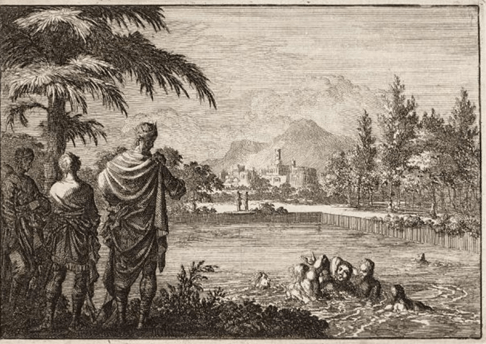
After his wife died, Schweitzer continued to work in Africa till he died at the age of 90. Overcoming innumerable difficulties, he once wrote:  “One day, in my despair, I threw myself into a chair in the consulting room and groaned out:  ‘What a blockhead I was to come out here to doctor savages like these!’.
Whereupon his native assistant quietly remarked:’Yes, Doctor, here on earth you are a great blockhead, but not in heaven.'”

Before he died, Dr. Schweitzer wrote:
“I don’t know what your destiny will be, but one thing I do know: the only ones among you who will be really happy are those who have sought and found how to serve.”
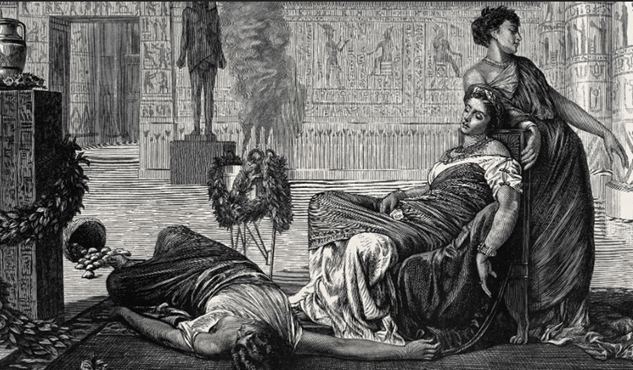
Early Solstice

I thought that you would like this “trivia” announcement:  The summer solstice is tomorrow, the longest day of the year and announcing the real summer.  What is so interesting is that it is the earliest that it has happened in over 200 years.  The last time that it appeared so early, George Washington was president of the U.S.
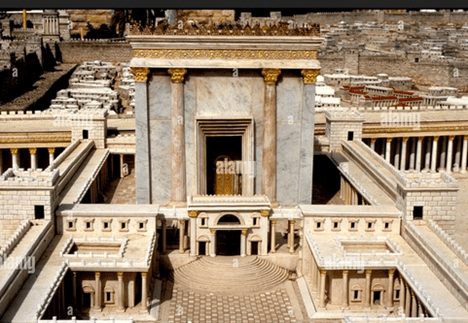
Ron 

Fathers Day in America


Yes, today is Father’s Day in America.  The following is sent to you to help us both remember what it means to be a father and to have a father:

Ron

U.S. Census Bureau, U.S. Department of Health & Human Services, Center for Disease Control, and other agencies report that children from fatherless homes are:

• Five times more likely to live in poverty;

• Nine times more likely to drop out of school;

• Twenty times more likely to go to in prison;

• Higher risk of drug and alcohol abuse;

• Increased incidents of internalized and externalized aggressive behavioral problems;

• Greater chance of runaways and homelessness;

• Twice as likely to commit suicide. 

In an effort to recognize the importance of a father in the home, several “Father’s Day” services were celebrated:

One was organized by Grace Golden Clayton, who on July 5, 1908, arranged a church service to honor all fathers, in memory of her father who was a Methodist minister in West Virginia.

Another event was celebrated June 19, 1910, in Spokane, Washington.

Sonora Louise Smart Dodd heard a church sermon on the newly established Mother’s Day and wanted to honor her father, Civil War veteran William Jackson Smart, who had raised six children by himself after his wife died in childbirth.

Sonora Louise Smart Dodd drew up a petition supported by the Young Men’s Christian Association and the ministers of Spokane to celebrate Fathers’ Day.

In 1916, Woodrow Wilson spoke at a Spokane Fathers’ Day service.

On December 6, 1904, President Theodore Roosevelt addressed Congress:

“No Christian and civilized community can afford to show a happy-go-lucky lack of concern for the youth of to-day; for, if so, the community will have to pay a terrible penalty of financial burden and social degradation in the to-morrow.”
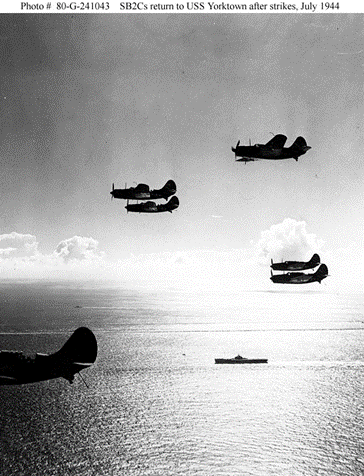
Roosevelt continued:

“The prime duty of the man is to work, to be the breadwinner; the prime duty of the woman is to be the mother, the housewife.  All questions of tariff and finance sink into utter insignificance when compared with the tremendous, the vital importance of trying to shape conditions so that these two duties of the man and of the woman can be fulfilled under reasonably favorable circumstances.”
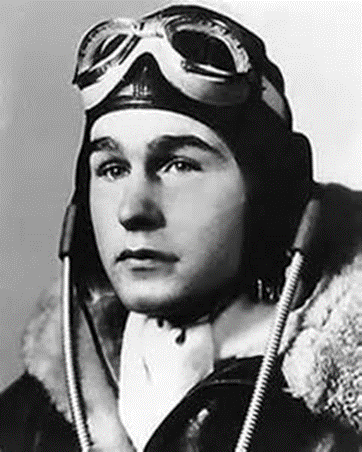
In 1972, President Nixon established Father’s Day as a permanent national observance (Proclamation 4127), stating:

“To have a father, to be a father is to come very near the heart of life itself. In fatherhood we know the elemental magic and joy of humanity.  In fatherhood we even sense the divine, as the Scriptural writers did who told of all good gifts corning ‘down from the Father of lights, with whom is no variableness, neither shadow of turning’ (James 1:17); symbolism so challenging to each man who would give his own son or daughter a life of light without shadow.”

Nixon added:

“Our identity in name and nature, our roots in home and family, our very standard of manhood, all this and more is the heritage our fathers share with us.  It has long been our national custom to observe each year one special Sunday in honor of America’s fathers; and from this year forward, by a joint resolution of the Congress approved April 24, 1972, that custom carries the weight of law.  Let each American make this Father’s Day an occasion for renewal of the love and gratitude we bear to our fathers, increasing and enduring through all the years.

Now, Therefore, I, Richard Nixon, President of the United States of America, do hereby request that June 18, 1972, be observed as Father’s Day.”

On May 20, 1981, in a Proclamation of Father’s Day, President Ronald Reagan stated:

“‘Train up a child in the way he should go: and when he is old, he will not depart from it,’ Solomon tells us (Proverbs 22:6).   Clearly, the future is in the care of our parents. Such is the responsibility, promise, and hope of fatherhood. Such is the gift that our fathers give us.”

Dr. Ben Carson explained:

“The more solid the family the more likely you are to be able to resist peer pressure. Human beings are social creatures. We all want to belong, we all have that desire, and we will belong, one way or another. If the family doesn’t provide that, the peers will, or a gang will, or you will find something to belong to.”

On Father’s Day, 1988, Ronald Reagan said:

“Children, vulnerable and dependent, desperately need security, and it has ever been a duty and a joy of fatherhood to offer it.  Being a father requires strength and more than a little courage to persevere, to fight discouragement, and to keep working for the family.”

Reagan ended:

“Let us express our thanks and affection to our fathers, whether we can do so in person or in prayer.”

U.S. Senate Chaplain Peter Marshall commented on Marxist social deconstruction (20 Centuries of Great Preaching Vol. 12 Waco: Word, 1971 p. 11-19):

“The history of the world has always been the biography of her great men.  There was a time in these United States when youth was inspired by (heroes), when a picture of Washington or Lincoln adorned every school room wall, along with the ponderous Family Bible on the Victorian table and the hymn books on the old-fashioned square piano, there looked down from the walls the likenesses of our national heroes.

Those were the days of great beliefs, belief in the authority of the Scriptures, belief that prayer was really answered, belief in marriage and the family as permanent institutions, belief in the integrity and worth of America’s great men.  These beliefs laid the groundwork for producing more great men, for many a boy figured, “If that man could do it, get an education, make his life count for something, then I can too'”

Marshall continued:

“Then there dawned the day when the pictures of Washington and Lincoln did not fit in with our concept of modern décor. The old Family Bible looked embarrassingly out of place.  So, the pictures and the Bible were often relegated to the Attic of Forgotten Things.  There went with them some of the most stabilizing influences of American life.  We had become a more sophisticated people, somewhat cynical of the cherished beliefs of our ancestors, rather blasé, frankly skeptical of old-fashioned sentimentalism.

Along with our higher education came a debunking contest. This debunking became a sort of national sport.  It was smarter to revile than to revere, more fashionable to depreciate than to appreciate.  In our classrooms at all levels of education, no longer did we laud great men, those who had struggled and achieved. Instead, we merely took their dimensions and ferreted out their faults.

We decided that it was silly to say God sent them for a special task. They were merely  products of their environments.  The Constitution, that hitherto cherished charter of American liberties, was drawn up by men who never spoke on a telephone or flew in a plan therefore, we should change the Constitution to suit modern ways.”

Senate Chaplain Marshall added that sons and daughters need courageous fathers to defend them against predatory agendas:

“We failed to realize that when we were denying the existence of great men, we were also denying the desirability of great men.  So now, many of our children have grown up without the guiding star holding in their hands, only a bunch of question marks, with no keys with which to open the doors of knowledge and life.  The young no longer had any particular ambition to become heroes. Their ambition now was to make as much money as possible, as quickly as possible, in whatever way was most convenient.

Thus, our debunking is a sign of decaying foundations of character to the individual and in the national life. We who are Christians, believe that God gives the world a few great men to lead the rest of us closer to Him, that to depreciate or to deny their greatness is to deny one of God’s revelations of Himself to mankind.  The heroes the Christian cherishes were (or are) human. They have their weakness. Their faults are well-known to their friends, better known to themselves. But the point is that with God and His guidance, they can provide the moral leadership that our nation so sorely needs.

America needs heroes on the battlefield of everyday life, in our homes, in our schools, on college campuses, in offices and factories, who can lead us towards a return to idealism. For time is running out for us.”

U.S. Senate Chaplain Peter Marshall concluded:

The call today is for Christian heroes and heroines who are willing to speak a good word for Jesus C”hrist, who are willing to live by the undiluted values of Christian morality in the pagan atmosphere of our society surrounded by lewdness, pornography, and profanity. This may be a higher bravery than that of any battlefield: to face ridicule, sarcasm, sneering disdain for what one believes to be right.  To fight for goodness and right, fighting the battle first in our own hearts and souls, seeking God’s help to overcome our particular temptations for the sake of peace, for the sake of America, for our own sake, and yes, for God’s sake.”

In 1942, General MacArthur was named Father of the Year. He stated:

“By profession I am a soldier and take pride in that fact.  But I am prouder. infinitely prouder to be a father.

A soldier destroys in order to build; the father only builds, never destroys. The one has the potentiality of death; the other embodies creation and life.

And while the hordes of death are mighty, the battalions of life are mightier still.

It is my hope that my son, when I am gone, will remember me not from the battle but in the home, repeating with him our simple daily prayer, ‘Our Father Who Art in Heaven.'”

MacArthur composed “A Father’s Prayer”.  Please read it while thinking of yourself and your father:

“Build me a son, O Lord, who will be strong enough to know when he is weak, brave enough to face himself when he is afraid, one who will be proud and unbending in honest defeat, and humble and gentle in victory.

Build me a son whose wishes will not take the place of deeds; a son who will know Thee — and that to know himself is the foundation stone of knowledge.

Lead him, I pray, not in the path of ease and comfort, but under the stress and spur of difficulties and challenge. Here let him learn to stand up in the storm; here let him learn compassion for those who fail …

Build me a son whose heart will be clear, whose goal will be high; a son who will master himself before he seeks to master other men; one who will reach into the future, yet never forget the past.

And after all these things are his, add, I pray, enough of sense of humor, so that he may always be serious, yet never take himself too seriously.

Give him humility, so that he may always remember the simplicity of true greatness, the open mind of true wisdom, and the meekness of true strength.

Then, I, his father, will dare to whisper, ‘I have not lived in vain.'”

Anniversary of the Korean War

The Communists of Korea were pushing the Non-Communists and Liberty loving Koreans off that peninsula in early June of 1950.  In that June the United States declared war on those Korean Communists and went there with our military to oppose them.  We were very tired of war.  We had no taste for doing that, but we did it. 

On this anniversary of our doing it, I think it is very important for us to remember why we did it, especially with things that are happening again this June.  Please remember it here with me this June!

Ron

The Korean War started June 25, 1950.

Communists from the north invaded the non-communists, killing thousands.

 Outnumbered, the liberty loving non-Communists and American troops who went to help them, as part of a U.N. police action, fought courageously against the Communist Chinese and North Korean troops, who were supplied with arms and MIG fighters from the Soviet Union.

Five-star General Douglas MacArthur was Supreme U.N. Commander, leading the United Nations Command from 1950 through1951.

MacArthur made a daring landing of troops at Inchon, deep behind Communist lines, and recaptured the city of Seoul.

MacArthur Watching the Dangerous Invasion of Inchon Korea

With temperatures sometimes forty degrees below zero in the Korean mountains, and Washington politicians limiting the use of air power against the Communists, there were nearly 140,000 American casualties:

• in the defense of the Pusan Perimeter and Taego;

• in the landing at Inchon and the freeing of Seoul;

• in the capture of Pyongyang;

• in the Yalu River where nearly a million Communist Chinese soldiers invaded;

• in the Battles of Changjin Reservoir, Old Baldy, White Horse Mountain, Heartbreak Ridge, Pork Chop Hill, T-Bone Hill, and Siberia Hill.

Harry S Truman contrasted communism and democracy in his Inaugural Address, January 20, 1949:

“We believe that all men are created equal because they are created in the image of God. From this faith we will not be moved.  Communism is based on the belief that man is so weak and inadequate that he is unable to govern himself, and therefore requires the rule of strong masters. Democracy is based on the conviction that man has the moral and intellectual capacity, as well as the inalienable right, to govern himself with reason and justice.

Communism subjects the individual to arrest without lawful cause, punishment without trial, and forced labor as a chattel of the state. It decrees what information he shall receive, what art he shall produce, what leaders he shall follow, and what thoughts he shall think. Democracy maintains that government is established for the benefit of the individual, and is charged with the responsibility of protecting the rights of the individual and his freedom.”

Truman continued:

“These differences between Communism and Democracy do not concern the United States alone. People everywhere are coming to realize that what is involved is material well-being, human dignity, and the right to believe in and worship God.”

The word “democracy” has two main definitions:

• the first is a political form of government where every citizen votes on every issue and the majority rules. This only successfully worked on a small city-state basis, like Athens, where every citizen had to physically be present at every meeting;

• the second definition of “democracy” is simply a general reference to a “popular” government, where the population participates in ruling themselves.

It was the second definition that came into common use.

Karl Marx and Friedrich Engels published their Communist Manifesto in 1848.

That same year, after France’s 1848 Revolution, Alex de Tocqueville wrote in his “Critique of Socialism”:

“Democracy extends the sphere of individual freedom, socialism restricts it. Democracy attaches all possible value to each man; socialism makes each man a mere agent, a mere number. Democracy and socialism have nothing in common but one word: equality. But notice the difference: while democracy seeks equality in liberty, socialism seeks equality in restraint and servitude. Democracy allows for individual capitalism, where a person can own private property and engage in business to improve his or her life.”

Forbes, July 27, 2020, published Rainer Zitelmann’s article “Anyone Who Doesn’t Know The Following Facts About Capitalism Should Learn Them,” in which he wrote:

“In 1820, 94% of the world’s population was living in extreme poverty. By 1910, this figure had fallen to 82%, and by 1950 the rate had dropped yet further, to 72%. However, the largest and fastest decline occurred between 1981 (44.3%) and 2015 (9.6%).

Reading these figures, which were compiled by Johan Norberg for his book Progress, is enough to make anyone rub their eyes in disbelief. For according to leftist anti-capitalists, these were the very decades in which so much went so wrong in the world.”

Zitelmann continued:

“200 years ago, at the birth of capitalism, there were only about 60 million people in the world who were NOT living in extreme poverty. Today there are more than 6.5 billion people who are NOT living in extreme poverty. Between 1990 and 2015 alone 1.25 billion people around the world escaped extreme poverty —- 50 million per year and 138,000 every day.”

Friedrich Engels explained in Outlines of a Critique of Political Economy, 1844, how the middle-class must be eliminated so that the socialist planners can rule without opposition:

“Every new crisis must be more serious than the last, ruin more small capitalists and increase the number of the unemployed.  In the end commercial crises will lead to a social revolution.”

Karl Marx had attended the University of Berlin, where he became involved with a radical anti-religious student group — the Young Hegelians. After being refused a university post because of his extreme views, Karl Marx began publishing a paper in 1842, which was banned in Germany.

He fled to Paris, then Brussels, and finally to London.

Marx founded the International Workingmen’s Association and the Social Democrat Labor Party.

        Karl Marx

Marx’s philosophy influenced:

• Adolph Hitler in starting the National Socialist Workers Party;

• Vladimir Lenin in starting the Social-Democrat Party;

• Joseph Stalin in the Union of Soviet Socialist Republics; and

• Mao Zedung in the Chinese Communist Party.

Lenin explained:

“The goal of socialism is communism.”

Lenin wrote in State and Revolution, 1917:

“The dictatorship of the proletariat will produce a series of restrictions of liberty in the case of the capitalists. We must crush them. Their resistance must be broken by force. There must also be violence, and there cannot be liberty or democracy.”

                                                               Vladimir Lenin

Karl Marx wrote:

“The theory of the Communists may be summed up in the single sentence: ‘Abolition of private property.’ Take away the heritage of a people and they are easily destroyed.”

Franklin D. Roosevelt explained that communism is nothing more than dictatorship, as he stated in his address to the Delegates of the American Youth Congress, Washington, D.C., February 10, 1940:

“I disliked the regimentation under Communism. I abhorred the indiscriminate killings of thousands of innocent victims. I heartily deprecated the banishment of religion.   I, with many of you, hoped that Russia would work out its own problems, and that its government would eventually become a peace-loving, popular government. That hope is today shattered.  The Soviet Union, as everybody who has the courage to face the fact knows, is run by a dictatorship as absolute as any other dictatorship in the world.”

President Harry S Truman spoke at the laying of the cornerstone of the New York Avenue Presbyterian Church, Washington, D.C., April 3, 1951:

“The international Communist movement is based on a fierce and terrible fanaticism. It denies the existence of God and, wherever it can, it stamps out the worship of God. Our religious faith gives us the answer to the false beliefs of Communism. fOur faith shows us the way to create a society where man can find his greatest happiness under God. Surely, we can follow that faith with the same devotion and determination the Communists give to their godless creed.

Every day our newspapers tell us about the fighting in Korea.  Our men there are making heroic sacrifices. They are fighting and suffering in an effort to prevent the tide of aggression from sweeping across the world. Our young men are offering their lives for us in the hills of Korea. and yet too many of us are chiefly concerned over whether or not we can buy a television set next week. This is a failure to understand the moral principles upon which our Nation is founded.”

Conrad Hilton, founder of the hotel chain, spoke at a Prayer Breakfast at the Mayflower Hotel, following addresses by Congressmen, Senators, and Vice-President Nixon.

Hilton stated:

“It took a war to put prayer at the center of the lives of our fighting men. It took a war, and the frightening evil of Communism, to show the world that this whole business of prayer is not a sissy, a counterfeit thing that man can do or not as he wishes. Prayer is a part of man’s personality, without which he limps. Men grope in darkness unless they believe that God, in His kindness, is willing to lift the shadows if we ask Him in prayer.” 

Truman stated while lighting the National Christmas Tree, December 24, 1952:

“Shepherds, in a field, heard angels singing: ‘Glory to God in the highest, and on earth peace, good will toward men’. We turn to the story of how ‘God so loved the world, that He gave His only begotten Son, that whosoever believeth in Him should not perish, but have everlasting life.'”

Truman continued:

“Tonight, our hearts turn first of all to our brave men and women in Korea. They are fighting and suffering and even dying that we may preserve the chance of peace in the world.

                                   Actual Picture of the Fighting and Suffering in Korea

And as we go about our business of trying to achieve peace in the world, let us remember always to try to act and live in the spirit of the Prince of Peace. He bore in His heart no hate and no malice, nothing but love for all mankind. We should try as nearly as we can to follow His example. We believe that all men are truly the children of God.

As we pray for our loved ones far from home, as we pray for our men and women in Korea, and all our service men and women wherever they are, let us also pray for our enemies. Let us pray that the spirit of God shall enter their lives and prevail in their lands.”

Truman concluded:

“Through Jesus Christ the world will yet be a better and fairer place.”

Fighting in Korea was halted July 27, 1953, with the signing of an armistice with North Korea at Panmunjom.

On December 24, 1953, Dwight Eisenhower stated at the lighting of the National Christmas Tree:

“The world still stands divided in two antagonistic parts. Prayer places freedom and communism in opposition one to the other. The Communist can find no reserve of strength in prayer because his doctrine of materialism and statism denies the dignity of man and consequently the existence of God. But in America religious faith is the foundation of free government, so is prayer an indispensable part of that faith. The founders of this, our country, came first to these shores in search of freedom to live beyond the yoke of tyranny.”

So, my friends, 36,000 U.S. service men died in Korea to protect us from Communism.  However, I hope you are as disgusted as I am on this anniversary of that war, that miss-led professors across America are teaching Communism to our young people.  

And as I have shown above, it is in opposition to the God of most all of their parents, and certainly in oppositionto the Mighty God of the Universe!