“You desire truth in the innermost being, and in the hidden part you will make me know wisdom.”
Are you debating whether or not to talk to God about a certain concern? Are there burdens weighing you down because you’re afraid to give them over to Him? Do they seem unworthy of His attention or cause you shame? Do you think to yourself, I should be praising Him, not complaining?
Friend, transparency is absolutely necessary for growing closer to Jesus. The Father wants you to feel confident enough in His unfailing love to be completely honest before Him with whatever is in your heart. He is devoted to you and cares about what concerns you. You can always feel free to speak with Him honestly about the matters that weigh on your heart.
The father already knows every thought and emotion you have, but you express your trust in Him when you can openly confess your sins, anxieties, desires, doubts, and frustrations. So share all the details that concern you with God, and allow Him to minister to the deepest part of your soul.
The first nation to recognize early America was Morocco. Morocco began recognizing American colonists in 1625.
Governor William Bradford described the incident in the History of the Plymouth Settlement. In 1625, the Pilgrims sent two ships back to England carrying dried fish and 800 lbs of beaver skins to trade for much needed supplies. What happened next?
Bradford related the fate of one ship: “They were well within the English channel, almost in sight of Plymouth. But there she was unhapply taken by a Turkish man-of-war and carried off to Morocco where the captain and crew were made slaves. Now by the ship taken by the Turks, all trade was dead.”
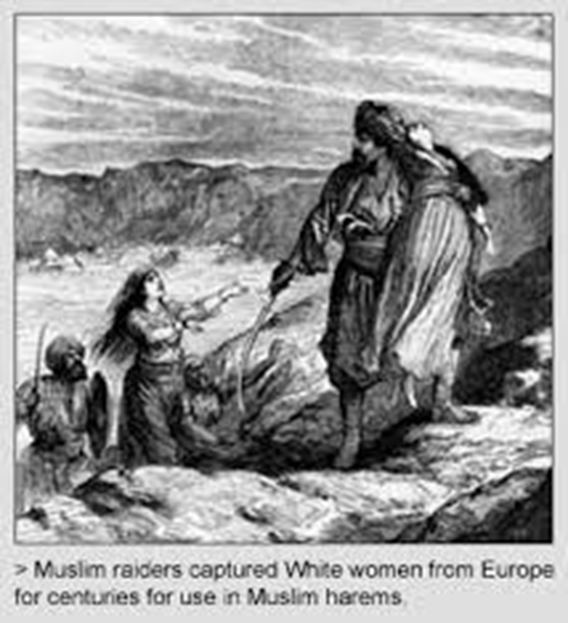
Expansionistic Islamic pirates of Morocco raided the coasts of Europe and carried away over a million Europeans to the North African slave markets.
Islamists captured and enslaved an estimated 14 million Africans and sold them in notorious slave markets from Timbuktu to Zanzibar, from the Black Sea to the Indian Ocean.
In 1627, Algerian pirates, led by Murat Reis the Younger, raided Iceland, and carried 400 into North African slavery. One captured girl, who had been made a slave concubine in Algeria, was rescued back by King Christian IV of Denmark.
Thomas Osborne Davis wrote in his poem, “The Sack of Baltimore” (1895): “The yell of ‘Allah!’ breaks above the shriek and roar; O’blessed God! the Algerine is lord of Baltimore.”
Des Ekin wrote in The Stolen Village: Baltimore and the Barbary Pirates (2008): “Here was not a single Christian who was not weeping and who was not full of sadness at the sight of so many honest maidens and so many good women abandoned to the brutality of these barbarians.”
Kidnapped Englishman Francis Knight wrote: “I arrived in Algiers, that city fatal to all Christians and the butchery of mankind.” Moroccan Sultan Moulay Ismail had 500 wives, mostly captured from Europe, and forced 25,000 white slaves to build his enormous palace at Meknes. He killed an African slave just to try out a new hatchet.
The Catholic Order “Trinitarians” or “Mathurins,” collected alms to ransom slaves. One of those ransomed from North Africa was Miguel de Cervantes, author of Don Quixote de La Mancha (1605).
European countries would pay exorbitant tribute payments in exchange for Barbary pirates not attacking their ships. When America became independent, it was no longer covered by the British tribute payments to the Barbary coast pirates. Morocco “recognized” the United States in 1785 by capturing two American ships and holding the sailors for ransom.
Thomas Jefferson worked to free them, writing to John Jay, 1787: “There is an order of priests called the Mathurins, the object of whose institution is to beg alms for the redemption of captives. They keep members always in Barbary, searching out the captives of their country, and redeem, I believe, on better terms than any other body, public or private. It occurred to me, that their agency might be obtained for the redemption of our prisoners at Algiers.”
In 1786, Thomas Jefferson wrote to William Carmichael regarding Tripoli’s demand for extortion tribute payment, 1786: “Mr. Adams and I had conferences with a Tripoline ambassador, named Abdrahaman. He asked us thirty thousand guineas for a peace with his court.”
When Jefferson asked the Islamic Ambassador what the new country of America had done to offend them, he reported to John Jay, March 28, 1786: “The ambassador answered us that it was founded on the laws of the prophet, it was written in their Qur’an, that all nations which had not acknowledged the Prophet were sinners, whom it was the right and duty of the faithful to plunder and enslave; and that every mussulman (Muslim) who was slain in this warfare was sure to go to paradise. He said, also, that the man who was the first to board a vessel had one slave over and above his share, and that when they sprang to the deck of an enemy’s ship, every sailor held a dagger in each hand and a third in his mouth; which usually struck such terror into the foe that they cried out for quarter at once.”
Jefferson read the Qur’an, not out of admiration or devotion, but to understand why Muslims were attacking Americans unprovoked. The word Islam means submission to Allah, and a Muslim is one who has submitted to Allah. Islam is supposed to be a religion of peace, it is just the Islamic definition of “peace” is different. To someone raised in Western Civilization, “peace” is achieved when different groups get along. In fundamentalist Islam, “peace” is when everyone is submitted to Allah. Essentially, to a fundamentalist Muslim, “world peace” means “world Islam.”
Lincoln gave an example of one word having two different meanings in his address at the Sanitary Fair, Baltimore, Maryland, April 18, 1864: “We all declare for liberty; but in using the same word we do not all mean the same thing.” A moderate Muslim believes the world will submit to Allah later, maybe in the distant future or at the end of the world, and since it is so far off, they are not preoccupied with it and are non-violent. A fundamentalist or “Islamist” Muslim believes the world is supposed to submit to Allah now, and they are excited to help make it happen. This is referred to as becoming radicalized.
The dilemma for Western Civilization is, the more it shows itself welcoming and tolerant, the more a percentage of moderate Muslims begin to rethink that maybe the world is actually submitting to Allah now rather than later. They gravitate from the “future” non-violent mindset into the radicalized “now” mindset. In other words, the nicer the West is, the more violent Islamists become. It is the law of the jungle – weakness invites aggression. This reflects a fundamentalist attitude, that when your enemy is strong, retreat; when your enemy is weak, attack. When an Islamist senses fear in the heart of their enemy, they take it as a sign that Allah wants them to attack their enemy.”
Psychologist Nicolai Sennels explained it this way (Hapeles Orthodox Jewish Newspaper, July 5, 2016): “Muslims instinctively see our lack of reaction as fear, its an invitation to attack.”
Another word which has a different definition is the word “innocent.” In sharia Islam, it is wrong to kill the innocent, but the definition of innocent is a faithful follower of the way of Allah. Those who reject sharia are not faithful followers, therefore they are not innocent:
“Allah loveth not those who reject Faith” (Sura 3:32); “Be ruthless to the infidels” (Sura 48:29); “Make war on the infidels (Sura 9:123; 66:9); “Fight those who believe not in Allah” (Sura 9:29); “Kill the disbelievers wherever we find them” (Sura 2:191); “Be ruthless to the infidels” (Sura 48:29); “Make war on the infidels (Sura 9:123; 66:9); “Fight those who believe not in Allah” (Sura 9:29); “Kill the disbelievers wherever we find them” (Sura 2:191).
Saying it is wrong to kill the innocent is code for saying it is wrong to kill faithful Muslims. Fundamentalist Muslims accuse moderate Muslims of being unfaithful, of having backslidden from the way of Allah, of not following the example of Mohammed and the Rightly Guided Caliphs. Islamists are just as motivated to kill a moderate Muslim as they are to kill an infidel.
Lawrence of Arabia wrote of sharia Islamists in Seven Pillars of Wisdom, 1922: “Wahhabis, followers of a fanatical Moslem heresy, had imposed their strict rules. Everything was forcibly pious or forcibly puritanical.”
But the Mahommedan religion increases, instead of lessening, the fury of intolerance.
Winston Churchill wrote in The Story of the Malakand Field Force: An Episode of Frontier War (Dover Publications, 1898): “The Mad Mullah was a wild enthusiast, convinced of his divine mission, he preached a crusade, or Jehad, against the infidel. It is impossible for the modern European to fully appreciate the force which fanaticism exercises among an ignorant, warlike and Oriental population. Several generations have elapsed since the nations of the West have drawn the sword in religious controversy, and the evil memories of the gloomy past have soon faded. Indeed, it is evident that Christianity must always exert a modifying influence on men’s passions, and protect them from the more violent forms of fanatical fever, as we are protected from smallpox by vaccination. It was originally propagated by the sword, and ever since, its votaries have been subject, above the people of all other creeds, to this form of madness”
Churchill continued:
“In a moment fear of death itself, flung aside, seizing their weapons, they become Ghazis. as dangerous and as sensible as mad dogs: fit only to be treated as such. Tribesmen become convulsed in an ecstasy of religious bloodthirstiness. Poorer and more material souls derive additional impulses from plunder and the joy of fighting. Thus, whole nations are roused to arms.”
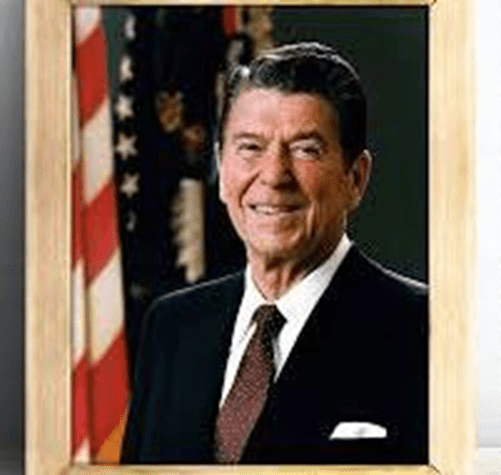
Ronald Reagan wrote in his autobiography, An American Life (Simon & Schuster, 1990, p. 409): “Radical fundamentalist sects have institutionalized murder and terrorism in the name of God, promising followers instant entry into paradise if they die for their faith or kill an enemy who challenges it. Twice in recent years, America has lost loyal allies in the Middle East, the Shah of Iran and Anwar Sadat, at the hands of these fanatics.”
Reagan added:
“I don’t think you can overstate the importance that the rise of Islamic fundamentalism will have to the rest of the world in the century ahead, especially if, as seems possible, its most fanatical elements get their hands on nuclear and chemical weapons and the means to deliver them against their enemies.”
In 1793, the Islamist Barbary pirates captured and plundered the U.S. cargo ship Polly, imprisoning the crew. The pirate captain justified his brutal treatment of the Americans: “For your history and superstition in believing in a man who was crucified by the Jews and disregarding the true doctrine of God’s last and greatest prophet, Mohammed.”
In 1795, Muslim Barbary Pirates of Algiers captured 115 American sailors. The United States was forced to pay nearly a million dollars in ransom. At one point, nearly 20 percent of the U.S. Federal budget was used to make extortion tribute payments to the Muslim pirates. The Treaty of Tripoli failed.
Christopher Hitchens wrote in his article “Jefferson Versus the Muslim Pirates”: “Of course, those secularists like myself who like to cite this treaty must concede that its conciliatory language was part of America’s attempt to come to terms with Barbary demands.”
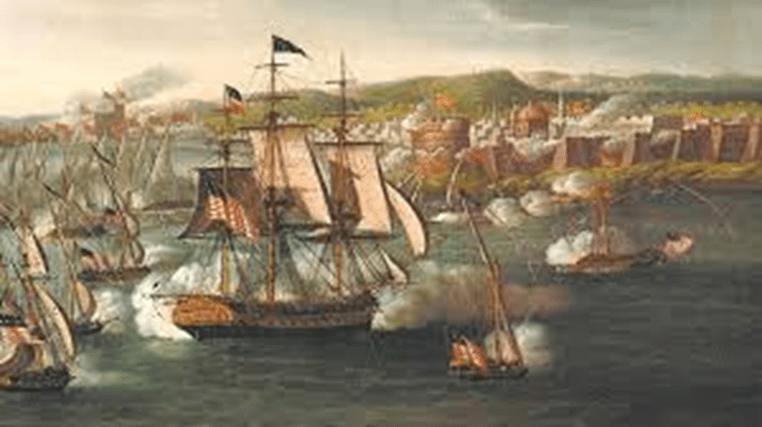
Immediately after Jefferson became President in 1801, Barbary pirates demanded $225,000, plus an annual tribute of $25,000. When Jefferson refused, the Pasha (Lord) of Tripoli declared war, the first war the U.S. was in after becoming a nation. Jefferson sent U.S. frigates to the Mediterranean to protect American shipping.
In his First Annual Message, December 8, 1801, Jefferson stated: “Tripoli, the least considerable of the Barbary States, had come forward with demands unfounded either in right or in compact, and had permitted itself to (declare) war on our failure to comply before a given day. The style of the demand admitted but one answer. I sent a small squadron of frigates into the Mediterranean, with assurances to that power of our sincere desire to remain in peace, but with orders to protect our commerce against the threatened attack. The Bey (lord) had already declared war. His cruisers were out. Two had arrived at Gibraltar. Our commerce in the Mediterranean was blockaded and that of the Atlantic in peril.”
“The arrival of our squadron dispelled the danger.
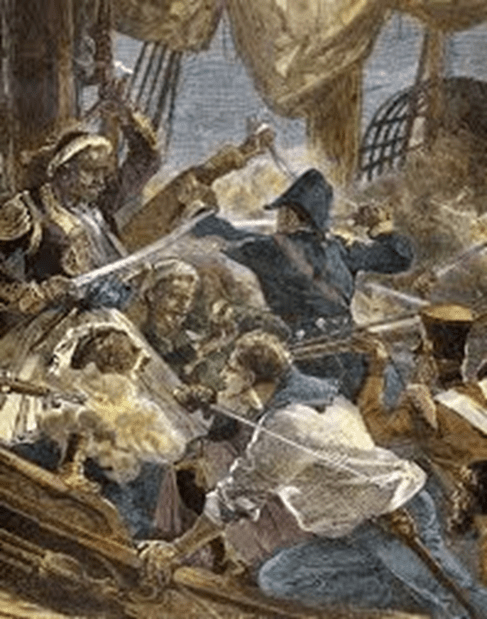
One of the Tripolitan cruisers having fallen in with and engaged the small schooner Enterprise, commanded by Lieutenant Sterret, which had gone as a tender to our larger vessels, was captured, after a heavy slaughter of her men, without the loss of a single one on our part. The bravery exhibited by our citizens on that element will, I trust, be a testimony to the world.”
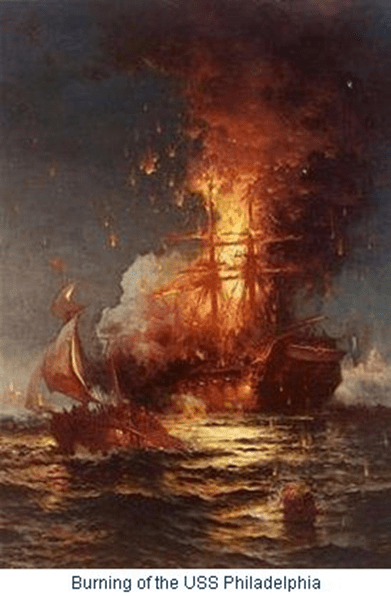
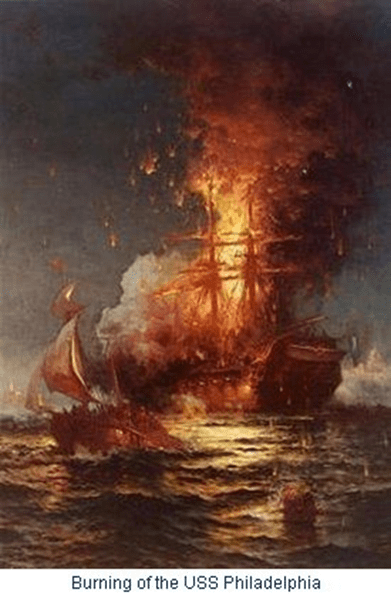
On December 29, 1803, the new 36-gun USS Philadelphia ran aground on Morocco’s shallow coast. Muslims surrounded and captured Captain William Bainbridge and his 307 man crew and held them for 18 months. To prevent this important ship from being used by Muslim pirates, Lieut. Stephen Decatur, in what was described as the “most bold and daring act of the age,” sailed his ship, Intrepid, on FEBRUARY 16, 1804, into the Muslim pirate harbor. He climbed about the captured USS Philadelphia and set if ablaze, then fled out of the harbor.
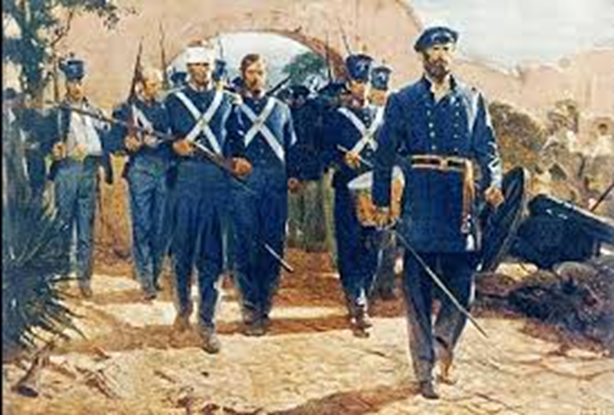
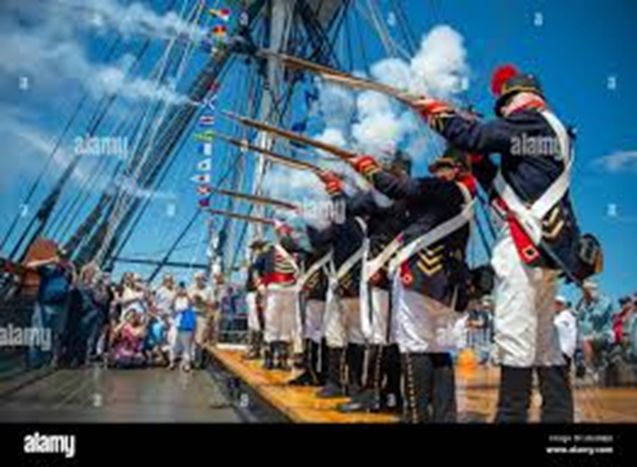
Jefferson sent the Navy and Marines to capture Tripoli, led by Commodores Edward Preble, John Rogers and Captain William Eaton. They marched into Tripoli with the Navy band playing. The marines lined up in battle formation and shot to death all of the large group of the Pasha’s guards with the Navy band still playing. The Pasha was force to make peace on all U.S. terms.
The First Barbary War, 1801-1805, was America’s first war after the Revolution.
Christopher Hitchens wrote in “Jefferson Versus the Muslim Pirates – America’s first confrontation with the Islamic world helped forge a new nation’s character,”
“On the United States’ undertaking of the First Barbary War to suppress the Muslim Barbary pirates along the southern Mediterranean coast, ending their kidnapping of Europeans for ransom and slavery, Pius VII declared that the United States ‘had done more for the cause of Christianity than the most powerful nations of Christendom have done for ages.'”
Frederick Leiner wrote in The End of the Barbary Terror-America’s 1815 War Against the Pirates of North Africa (Oxford University Press): “Commodore Stephen Decatur and diplomat William Shaler withdrew to consult in private. The Algerians were believed to be masters of duplicity, willing to make agreements and break them as they found convenient.”
In a bibliography by John Quincy Adams published in New York, he stated: “Our gallant Commodore Stephen Decatur had chastised the pirates of Algiers, The Dey (Omar Bashaw) disdained to conceal his intentions; ‘My power,’ said he, ‘has been wrested from my hands; draw ye the treaty at your pleasure, and I will sign it; but beware of the moment, when I shall recover my power, for with that moment, your treaty shall be waste paper.'”
Sure enough, a few years later the Muslims started their acts of piracy again.
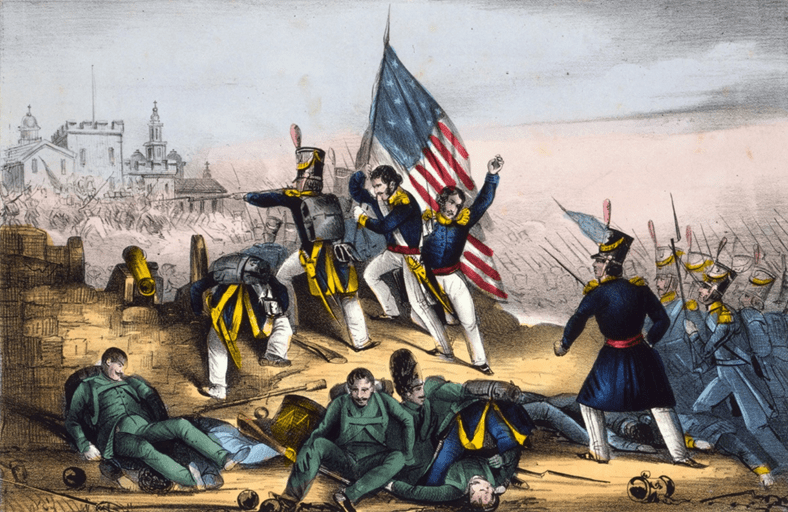
Thus in 1815 the United States sent the Marines there again. This time they wiped out the whole bunch, including all of the Muslim pirates. It was called The Second Barbary War and gave rise to the Marine Anthem:
“From the halls of Montezuma to the shores of Tripoli.”
The curved Marine sword is from the confiscated Muslim scimitars, called “mamluke” swords. Marines were called “leathernecks” for the wide leather straps worn around their necks to prevent being beheaded. For (Sura 47:4) states: “When you meet the infidel in the battlefield, strike off their heads.”
Francis Scott Key, nine years before he wrote the Star-Spangled Banner, wrote a song to the same tune to commemorate the victory over the Islamist Barbary Pirates. He titled his song, “When the Warrior Returns from the Battle Afar,” published in Boston’s Independent Chronicle, Dec. 30, 1805:
“In conflict resistless each toil they endur’d
Till their foes shrunk dismay’d from the war’s desolation:
And pale beamed the Crescent, its splendor obscur’d
By the light of the Star-Spangled Flag of our nation.
Where each flaming star gleamed a meteor of war,
And the turban’d head bowed to the terrible glare.
Then mixt with the olive the laurel shall wave
And form a bright wreath for the brow of the brave.“
“The Lord has established His throne in the heavens, and His sovereignty rules over all.”
Have you considered what an astounding gift it is to be able to know the living God? To be able to approach Him at any time with whatever issue presses on your heart?
No matter what you encounter today, He already knows all about it and has the best plan for leading you successfully through it. He knows you better than you know yourself—your past, present, and future; the thoughts you think; the motives of your heart; the places where you need to heal, and the ways you must grow.
With His sovereign, omnipotent hand, He can handle any obstacle or difficulty you face. With His unfathomable knowledge, He guides you with perfect wisdom. And because of His unfailing, unconditional love, He makes sure everything that touches your life will ultimately be used for your good.
Is your heart set on knowing Him? I hope it is, because there’s absolutely nothing better or more encouraging than walking with Him and experiencing His awesome presence.
Minutemen were members of the organized New England colonial militia companies trained in weaponry, tactics, and military strategies during the American Revolutionary War. They were known for being ready at a minute’s notice, hence the name. Minutemen provided a highly mobile, rapidly deployed force that enabled the colonies to respond immediately to military threats. They were an evolution from the prior colonial rapid-response units.
The minutemen were among the first to fight in the American Revolution. Their teams constituted about a quarter of the entire militia. They were generally younger, more mobile, and provided with weapons and arms by the local governments. They were still part of the overall militia regimental organizations in the New England Colonies.
In the Massachusetts Bay Colony, all able-bodied men between the ages of 16 and 60 were required to participate in their local militia company. As early as 1645 in the Massachusetts Bay Colony, some men were selected from the general ranks of “town-based training bands” to be ready for rapid deployment. Men so selected were designated as minutemen. Their companies were organized by town, so it was very common for their counterpart militia company to contain relatives and friends. Some towns in Massachusetts had a long history of designating a portion of their militia as minutemen, with “minute companies” constituting special units within the militia system whose members underwent additional training and held themselves ready to respond at a minute’s notice to emergencies, which gave rise to their name as Minutemen.
Members of the minutemen, in contrast to the regular militia, were no more than 30 years old, and were chosen for their enthusiasm, political reliability, and strength. They were the first armed militia to arrive at or await a battle. Officers were elected by popular vote, as in the rest of the militia, and each unit drafted a formal written covenant to be signed upon enlistment.
The militia in the New England colonies were organized in regiments by county. The militia and minutemen companies still were organized by town and trained typically as an entire unit in each town two to four times a year with the Minutemen receiving extra training. From the end of the French and Indian War, this was normal during peacetime but, in the 1770s, as friction with The Crown increased and the possibility of war became apparent, the militia trained three to four times a week.
In response to these tensions, the Massachusetts Provincial legislators found that the colony’s militia resources were too short just before the American Revolutionary War, on October 26, 1774, after observing the British military buildup. They found that, “including the sick and absent, it amounted to about 17,000 men, far short of the number wanted, So the council recommended an immediate application to the New England governments to make up the deficiency, resolving to re-organize and increase the size of the militia:
The Massachusetts General Assembly was stymied by Governor Hutchinson from passing a bill. As a result, resisting legislators, including Samuel Adams being among the leaders, set up Committees of Correspondence in parallel with their fellow Patriots in Connecticut, New Hampshire, and Rhode Island that recommended that the militia increase in size and reorganize and form special companies of minutemen, who should be equipped and prepared to march at the shortest notice. These minutemen were to comprise one-quarter of the whole militia, to be enlisted under the direction of the field-officers, and divide into companies, consisting of at least 50 men each. The privates were to choose their captains and subalterns, and these officers were to form the companies into battalions, and chose the field-officers to command the same. Hence the minute-men became a body distinct from the rest of the militia, and, by being more devoted to military exercises, they acquired better skill in the use of arms.
The need for efficient minuteman companies was illustrated by the Powder Alarm of 1774. Militia companies were called out to engage British troops, who had been sent to capture ammunition stores. By the time the militia was ready, the British regulars had already captured the arms at Cambridge and Charlestown and had returned to Boston.
The new reorganization provided six regiments of militia with a nominal strength of 9,000 men with minuteman companies being formed from the younger, more physically fit men. The militia in New England was still midway through the process of splitting the Minutemen companies from the regular militia companies into their own regiments by the spring of 1775. For example, the old 2nd Middlesex Regiment of Foot, a provincial unit that had seen action in the French and Indian Wars, divided into a militia regiment under Colonel David Green and a Minuteman regiment under Colonel Ebenezer Bridge. Colonel William Prescott’s Middlesex regiment had not yet split and had ten companies of militia and seven of minutemen. Worcester County had managed to already complete the organization and staffing of three Minuteman regiments by April 1775.
In May 1653, the Council of Massachusetts said that an eighth of the militia should be ready to march within one day to anywhere in the colony. Eighty militiamen marched on the Narragansett tribe in Massachusetts, though no fighting took place. Since the colonies were expanding, the Narragansetts got desperate and began raiding the colonists again. The militia chased the Indians, caught their chief, and got him to sign an agreement to end fighting.
In 1672, the Massachusetts Council formed a military committee to control the militia in each town. In 1675, the military committee raised an expedition to fight the raiding Wampanoag tribe. A muster call was sent out and four days later, after harsh skirmishes with the Wampanoags, three companies arrived to help the locals. The expedition took heavy losses: two towns were raided, and one 80-man company was killed entirely, including their commander. That winter, a thousand militiamen pushed out the Wampanoags.
In response to the success of the Wampanoags, in the spring of 1676 an alarm system of riders and signals was formed in which each town was required to participate.
The Second Indian War broke out in 1689, and militiamen throughout the Thirteen Colonies began to muster in preparation for the fighting. In 1690, Colonel William Phips led 600 men to push back the French. Two years later he became governor of Massachusetts. When the French and Indians raided Massachusetts in 1702, Governor Phips created a bounty which paid 10 shillings each for the scalps of Indians. In 1703, snowshoes were issued to militiamen and bounty hunters to make winter raids on the Indians more effective. The minuteman concept was advanced by the snow shoe men.
American Revolutionary War
The British practiced formations with their weapons, focusing on marching formations on the battlefield. The military ammunition of the time was made for fast reloading and more than a dozen consecutive shots without cleaning. Accuracy of the British musket was sacrificed for speed and repetitive loading.
The militia prepared with elaborate plans to alarm and respond to movements by the king’s forces out of Boston. The frequent mustering of the minute companies also built unit cohesion and familiarity with live firing, which increased the minute companies’ effectiveness. The royal authorities inadvertently gave the new Minuteman mobilization plans validation by several “show the flag” demonstrations by General Gage through 1774.
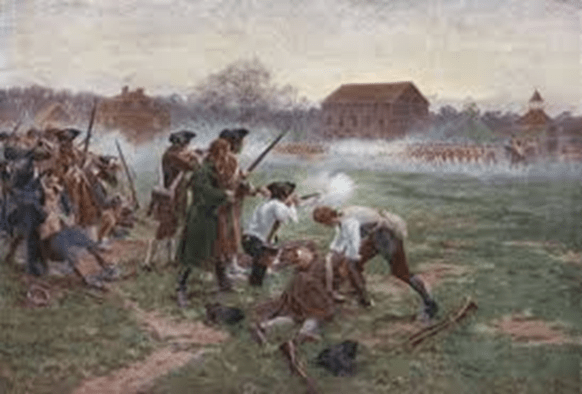
The royal authorities in Boston had seen these increasing numbers of militia appearing and thought that the militia would not interfere if they sent a sizable force to Concord to seize munitions and stores there (which they considered the King’s property, since it was paid for to defend the colonies from the American Indian threat). The British officers were proven wrong. Shooting erupted at Lexington. There is still a debate as to whether it was a colonist or a British soldier who fired the first shot. The militia left the area, and the British moved on. The British then moved to Concord and faced a larger number of militia men. However, the British were rapidly outnumbered at Concord, with the arrival of the slower moving militia; they had not counted on a long fight, and so had not brought additional ammunition beyond the standard issue in the soldiers’ cartridge boxes. This then forced a strategic British defeat on Colonel Smith, forcing him back to Boston.
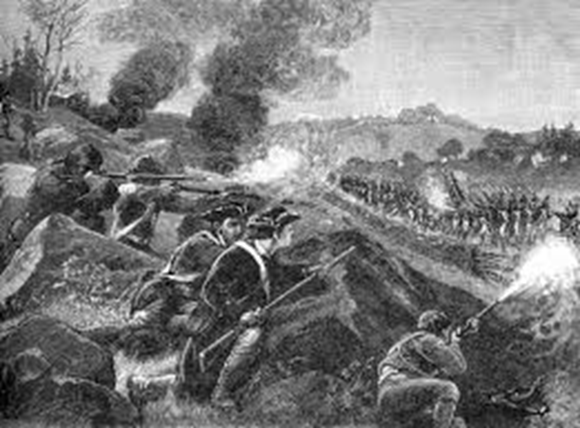
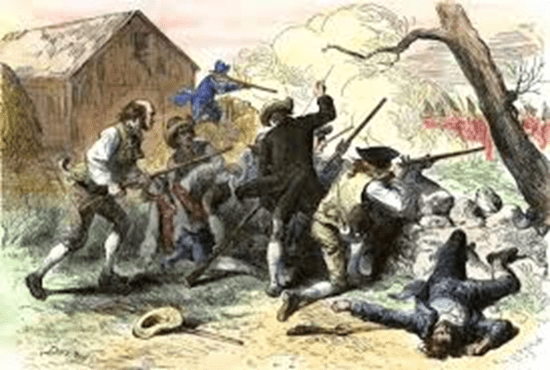
A “running fight” began during the retreat. Militiamen knew the local countryside and were familiar with “skulking” or “Indian warfare”. They used trees and other obstacles to cover themselves from British gunfire and pursuit by British soldiers, while the militia were firing and moving. This kept the British under sporadic fire, and caused them to exhaust their limited ammunition. Only the timely arrival of a relief column under British Lord Percy prevented the annihilation or surrender of the original road column.
While a lot of Colonial militia units did not receive either arms or uniforms and were required to equip themselves. Many simply wore their own farmers’ or workmen’s clothes and, in some cases, they wore cloth hunting frocks. Many farmers who owned separate guns such as fowling pieces, and sometimes rifles (though rarer in southern New England) would use them instead of the militia muskets. These pieces gradually appeared in quantity, but neither fowling pieces nor rifles had bayonets such as the British used.
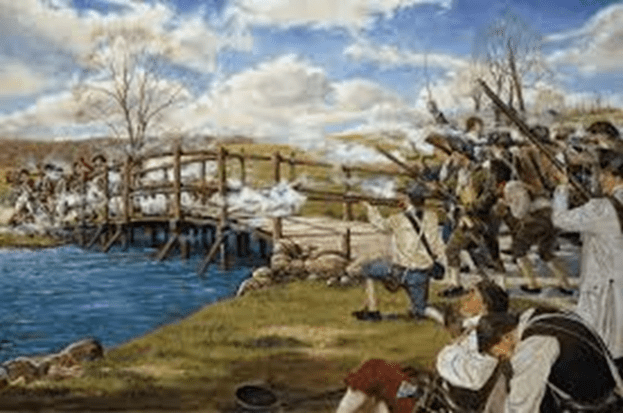
Minutemen tended to get more training in line tactics and drill than the regular militia. Many Minutemen company commanders put their men through more training separate from the rest of the militia. Some also expended time, money, and effort to make sure their Minutemen were well-armed. For example, Captain Isaac Davis who was a gunsmith in his civilian occupation built a firing range on his farm to train his men in firing and drill. He also made sure that every man in his company had a good musket, cartridge box, canteen, and bayonet. This was one of the reasons that his company was in the lead of Colonel Barrett’s Middlesex Minutemen regiment as the Rebels marched down to face the regulars at the Old North Bridge at the Battle of Concord.
Their American experience suited irregular warfare. In the colonial agrarian society, many were familiar with hunting. The Indian Wars, and especially the recent French and Indian War, had given colonials valuable experience in irregular warfare and skirmishing, while British line companies tended to stick to European style fighting. The long rifle was also well suited to this role. The rifling (grooves inside the barrel) gave it a much greater range than the smoothbore musket of the British, although it took much longer to load. When performing as skirmishers, the militia could fire and fall back behind cover or behind other troops, before the British could get into range. The wilderness terrain that lay just beyond many colonial towns favored this style of combat and was very familiar to the local militia.
Through the remainder of the American Revolution, militias moved to adopting the minuteman model for rapid mobilization. With this rapid mustering of forces, the militia proved its value by augmenting the Continental Army, occasionally leading to instances of numerical superiority. This was seen at the Battles of Hubbardton and Bennington in the north and at Camden and Cowpens in the south. Cowpens is notable in that Daniel Morgan used the militia’s strengths and weaknesses skillfully to attain the double-envelopment of the famous Tarleton‘s forces.
There was a shortage of ammunition and supplies, and what they had were constantly being seized by British patrols. As a precaution, these items were often hidden or left behind by minutemen in fields or wooded areas. Other popular concealment methods were to hide items underneath floorboards in houses and barns.
And so, with the help of the Minutemen, General Wahington defeated the European British army and the country of America prevailed and has prospered greatly.
The U.S. NavyVR-55 Fleet Logistic Support Squadron is named “Minutemen” to highlight the rapid deployment and mobility nature of their mission.
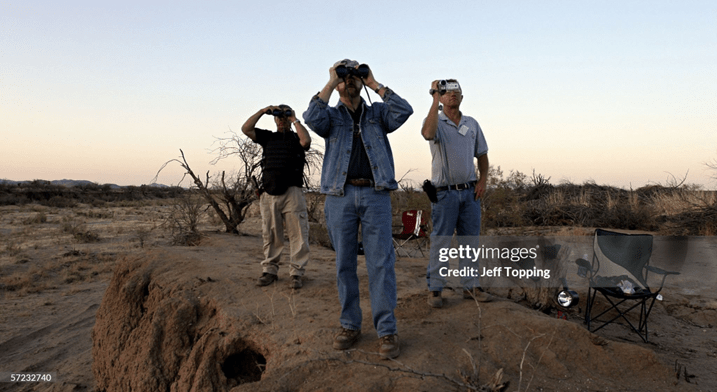
Recently President Donald Trump pledged his support for the Texas Minutemen Militia to arm themselves and march to intercept the migrant caravans at the Texas border to aid the U.S soldiers sent to intercept the Migrant caravans heading up through Central America to invade the United States.
Group of Minutemen Searching for Illegals on Texas Border
President of a Group of 200 Minutemen
Border Patrol Searching for Illegals on Texas Border
When all the people saw it, they fell on their faces; and they said, “The Lord, He is God.”
Either you truly believe the Lord is God or you do not. That is the choice before you today. Either you truly trust the Father has brought you to the end of your options, strength, and ability for His glory; or you will give in to the notion that you are alone without hope.
The prophet Elijah knew he could always count on the Father. And in order to demonstrate that there is only one true God, he challenged 850 prophets of the false deities Baal and Asherah to send fire from heaven and consume an offering. Whoever responded—whether their idols or the Lord—would prove to be sovereign.
With no other source than wholehearted confidence in the ability of the Father, Elijah stood courageously against the multitude of enemies (1Kings 18).
And the Lord powerfully honored his faith. God did not let Elijah down, and He will not fail you either. Circumstances may be so aligned against you that you feel powerless to overcome, but it is all to display His glory. So, trust Him and be assured—He will respond and prove He is truly God.
The Country of Albania has had a tumultuous history, going back and forth between control by the Christians and the Muslims. With the help of Bill Clinton, the Muslims now control 98% of it.
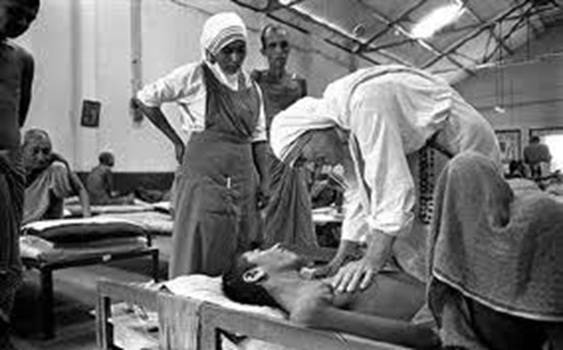
One of the most famous Albanians was the humble daughter of an Albanian grocer.
Born in 1910, she joined a Catholic religious order at age 18 and began working in the slums of Calcutta, India. She founded the Missionaries of Charity, and was awarded the Nobel Prize in 1979.
This was Mother Teresa of Calcutta. Please read about her below:
Malcolm Muggeridge, a British Journalist who had converted to Christianity, wrote in “The Human Holocaust,” (Human Life Review, 1980): “Mother Teresa in Calcutta, goes to great trouble to have brought into her Home for Dying Derelicts, castaways left to die in the streets. They may survive for no more than a quarter of an hour, but in that quarter of an hour, instead of feeling themselves rejected and abandoned, they meet with Christian love and care.
Mother Teresa’s love and compassion reach out to the afflicted without any other consideration than their immediate need, just as our Lord does when He tells us to feed the hungry, shelter the homeless, clothe the naked. She gives all she has to give at once, and then finds she has more to give. Something of God’s love has rubbed off on Mother Teresa.”
Phyllis Schlafly wrote in The Power of the Positive Woman (NY: Arlington House Publishers, 1978): “Few women in history have ever known the career fulfillment that Mother Teresa has known. She is the Albanian nun who has made it her mission to minister to the poor and dying in Calcutta, India. She has become a living legend, acclaimed throughout the world, a career success and a happy woman by any standard. And Mother Teresa has said that men could never equal women in love and compassion.”
Mother Teresa explained: “Many people mistake our work for our vocation. Our vocation is the love of Jesus. God hasn’t called me to be successful. He’s called me to be faithful. If you want to pray better, you must pray more. We can do no great things, only small things with great love.”
Ronald Reagan wrote in “Abortion and the Conscience of the Nation,” (Human Life Review, 1983): “The revered Mother Teresa, who works in the streets of Calcutta ministering to dying people in her world-famous mission of mercy, has said that ‘the greatest misery of our time is the generalized abortion of children’. We can echo the always-practical woman of faith, Mother Teresa, when she says, ‘If you don’t want the little child, that unborn child, give him to me.'”
On February 3, 1994, frail 83-year-old Mother Teresa addressed the National Prayer Breakfast in Washington, D.C., before an audience of 3,000: “Jesus died on the Cross because that is what it took for Him to do good to us, to save us from our selfishness in sin. The greatest destroyer of peace today is abortion, because it is a war against the child, a direct killing of the innocent child, murder by the mother herself, and if we accept that a mother can kill even her own child, how can we tell other people not to kill one another?”
Urging America to repent, Mother Teresa stated: “How do we persuade a woman not to have an abortion? We must persuade her with love and we remind ourselves that love means to be willing to give until it hurts. Jesus gave even His life to love us. So the mother who is thinking of abortion, should be helped to love, that is, to give until it hurts her plans or her free time, to respect the life of her child.
The father of that child, whoever he is, must also give until it hurts. By abortion, the mother does not learn to love, but kills even her own child to solve her problems. And, by abortion, the father is told that he does not have to take any responsibility for the child he has brought into the world. The father is likely to put other women into the same trouble. So abortion just leads to more abortion.”
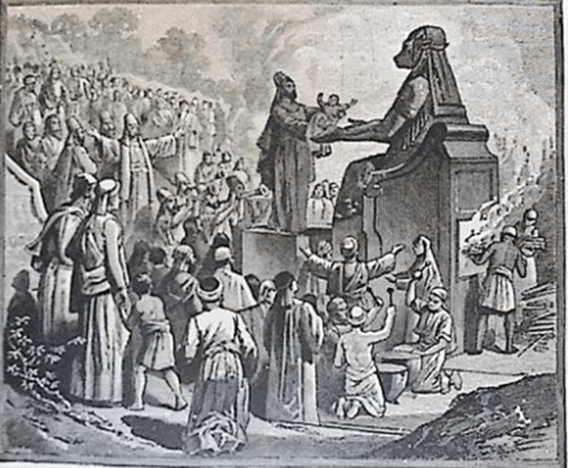
The Old Testament version of abortion was sacrificing innocent children to pagan gods. Proverbs 6:16-17 “The Lord hates hands that shed innocent blood.” God is just. Though patient and long-suffering, He will eventually judge individuals and nations who shed innocent blood, unless they repent.
2 Kings 21: “King Manasseh did evil in the eyes of the Lord, following the detestable practices of the nations the Lord had driven out before the Israelites. He sacrificed his own son in the fire (to Moloch). The Lord said through his servants the prophets: “Manasseh has done more evil than the Amorites who preceded him. Therefore, this is what the Lord, the God of Israel, says: I am going to bring such disaster on Jerusalem and Judah that the ears of everyone who hears of it will tingle. Manasseh also shed so much innocent blood that he filled Jerusalem from end to end.”
2 Kings 24:2-4: “The LORD sent Babylonian, Aramean, Moabite and Ammonite raiders … to destroy Judah because of the sins of Manasseh and all he had done, including the shedding of innocent blood. For he filled Jerusalem with innocent blood, and the LORD was not willing to forgive.”
Mother Teresa continued: “Any country that accepts abortion is not teaching its people to love, but to use violence to get what they want. That is why the greatest destroyer of love and peace is abortion. Many people are very, very concerned with the children of India, with the children of Africa where quite a few die of hunger, and so on. Many people are also concerned about all the violence in this great country of the United States.
These concerns are very good. But often these same people are not concerned with the millions who are being killed by the deliberate decision of their own mothers. We have sent word to the clinics, to the hospitals and police stations: ‘Please don’t destroy the child; we will take the child.’ So we always have someone tell the mothers in trouble: ‘Come, we will take care of you, we will get a home for your child.'”
Mother Teresa spoke further: “And we have a tremendous demand from couples who cannot have a child. Jesus said, ‘Anyone who receives a child in my name, receives me.’ By adopting a child, these couples receive Jesus but by aborting a child, a couple refuses to receive Jesus. Please don’t kill the child. I want the child. Please give me the child. I am willing to accept any child who would be aborted and to give that child to a married couple who will love the child and be loved by the child. From our children’s home in Calcutta alone, we have saved over 3,000 children from abortion.”
Mother Teresa concluded: “If we remember that God loves us, and that we can love others as He loves us, then America can become a sign of peace for the world. From here, a sign of care for the weakest of the weak, the unborn child, must go out to the world. If you become a burning light of justice and peace in the world, then really you will be true to what the founders of this country stood for. God bless you!”
Declaring January 22, 2018, National Sanctity of Human Life Day, President Trump stated: “We focus our attention on the love and protection each person, born and unborn, deserves. Reverence for every human life, one of the values for which our Founding Fathers fought, defines the character of our Nation. Today, it moves us to promote the health of pregnant mothers and their unborn children. It dispels the notion that our worth depends on the extent to which we are planned for or wanted. Science continues to support and build the case for life. Medical technologies allow us to see images of the unborn children moving their newly formed fingers and toes, yawning, and even smiling. Those images present us with irrefutable evidence that babies are growing within their mothers’ wombs, precious, unique lives, each deserving a future filled with promise and hope.”
President Donald J. Trump remarked at the 47th Annual March for Life, January 24, 2020: “Every child is a precious and sacred gift from God. When we see the image of a baby in the womb, we glimpse the majesty of God’s creation. When we hold a newborn in our arms, we know the endless love that each child brings to a family. When we watch a child grow, we see the splendor that radiates from each human soul. One life changes the world, And as the Bible tells us, each person is ‘wonderfully made.'”
He continued: “We are protecting pro-life students’ right to free speech on college campuses. And if universities want federal taxpayer dollars, then they must uphold your First Amendment right to speak your mind. Sadly, the far-left is actively working to erase our God-given rights; and silence Americans who believe in the sanctity of life. Last year, lawmakers in New York cheered with delight upon the passage of legislation that would allow a baby to be ripped from the mother’s womb right up until delivery. Then, we had the case of the Democrat governor in the state of Virginia. The Governor stated that he would execute a baby after birth.”
President Trump concluded: “The tens of thousands of Americans gathered today not only stand for life to help spread God’s grace. And to all of the moms here today: We celebrate you, and we declare that mothers are heroes. Because of you, our country has been blessed with amazing souls who have changed the course of human history. We cannot know what our citizens yet unborn will achieve, the dreams they will imagine, the masterpieces they will create, the discoveries they will make. But we know this: Every life brings love into this world. Every child brings joy to a family. Every person is worth protecting. And above all, we know that every human soul is divine, and every human life –- born and unborn –- is made in the holy image of Almighty God.”
On September 5, 1997 Mother Teresa died.
On September 4, 2016, Pope Francis recognized this humble daughter of an Albanian grocer as a Saint in the Catholic Church.
Albanian Mother Teresa shared what motivated her: “I see Jesus in every human being. I say to myself, this is hungry Jesus, I must feed him. This is sick Jesus. This one has leprosy or gangrene; I must wash him and tend to him. I serve because I love Jesus.”
June 17 is the anniversary of the Battle of Bunker Hill. Since it is so very important in America’s history, I have prepared the history of it below so that you can have the opportunity to celebrate it. (And besides that, I live on Bunker Hill Road at the intersection of it and Victory Lane in Midland, Texas.)
Battle of Bunker Hill
“Don’t Shoot Until You See the Whites of Their Eyes!” commanded Colonel William Prescott, repeating the order of General Israel Putnam, JUNE 17, 1775.
Colonel William Prescott’s men were in the center redoubt located on Breed’s Hill, adjacent Bunker Hill, guarding the north entrance to Boston Harbor.
Samuel Swett wrote in his History of Bunker Hill, that as the 2,300 British soldiers advanced: “The American marksmen are with difficulty restrained from firing. Putnam rode through the line, and ordered that no one should fire till they arrived within eight rods. Powder was scarce and must not be wasted. They should ‘not fire at the enemy till they saw the whites of their eyes.’ The same orders were reiterated by Prescott at the redoubt.”
Franklin Roosevelt proclaimed March 20, 1942: “Our Army is a mighty arm of the tree of liberty. It is a living part of the American tradition, a tradition that goes back to Israel.
Putnam, who left his plow in a New England furrow to take up a gun and fight at Bunker Hill.”
General Putnam
At the beginning of the battle, a stray musket ball from a British gun killed an American soldier, resulting in other soldiers running away. To stop the confusion, Colonel William Prescott climbed on top of the wall of the fortification, stood upright and walked back and forth, rallying his men.
Colonel Prescot
When British General Thomas Gage saw Prescott through his telescope, he asked a local loyalist, Abijah Willard, who happened to be Prescott’s brother-in-law, if Prescott had enough courage to fight. Willard replied: “Prescott is an old soldier, he will fight as long as a drop of blood is in his veins.” Another recorded Willard’s statement as: “As to his men, I cannot answer for them, but Colonel Prescott will fight you to the gates of hell.”
Historian George Bancroft wrote that at the redoubt in the center of battle: “No one appeared to have any command but Colonel Prescott. His bravery could never be enough acknowledged and applauded.”
British General Gage had no respect for the rag-tag Americans, resulting in him pridefully committing the serious mistake of ordering a direct assault. British General William Howe had intended to unleash an artillery bombardment from field pieces on the Americans prior to the British advance, but providentially for the Americans, the British brought the wrong caliber ammunition. They had six pounder cannons but nine pound shot. As a result, British artillery was not able to soften the resistance.
General Howe ordered some 2,300 British soldiers to fix bayonets, and in their wool uniforms, charge in the hot sun up the hill covered with fences and uneven rows of uncut grass. The British muskets were such poor weapons that they fought by charging forward with their long, sharp bayonetts.
Twice the Americans repelled them, but the third time they ran out of gunpowder. Over 1,000 British were killed or wounded in this first major action of the Revolutionary War. There were nearly 500 American casualties, including the notable Dr. Joseph Warren.
Dr. Joseph Warren Killed in Battle
Amos Farnsworth, a corporal in the Massachusetts Militia, made this entry in his diary immediately after the Battle of Bunker Hill, JUNE 17, 1775: “We within the entrenchment, having fired away all ammunition and having no reinforcements were overpowered by numbers and obliged to leave. I did not leave the entrenchment until the enemy got in. I then retreated ten or fifteen rods. Then I received a wound in my right arm, the ball going through a little below my elbow, breaking the little shellbone. Another ball struck my back, taking a piece of skin about as big as a penny. But I got to Cambridge that night. Oh the goodness of God in preserving my life, although they fell on my right and on my left! O may this act of deliverance of thine, O God, lead me never to distrust thee; but may I ever trust in thee and put confidence in no arm of flesh!”
The British then burned the nearby town of Charlestown.
Daniel Webster declared at the Bicentennial Celebration at Plymouth Rock, December 22, 1820: “In New England the war of the Revolution commenced. I address those who saw the burning spires of Charlestown; who beheld the deeds of Prescott, and heard the voice of Putnam amidst the storm of war, and saw the generous Warren fall, the first distinguished victim in the cause of liberty. It would be superfluous to say, that no portion of the country did more than the States of New England to bring the Revolutionary struggle to a successful issue.”
This same day as the Battle of Bunker Hill, 300 miles away in Philadelphia, the Continental Congress drafted George Washington’s commission as commander-in-chief, for which he refused a salary. Washington wrote to his wife, Martha: “Dearest It has been determined in Congress, that the whole army raised for the defense of the American Cause shall be put under my care, and that it is necessary for me to proceed immediately to Boston to take command. I shall rely therefore, confidently, on that Providence which has heretofore preserved, and been bountiful to me.”
Yale President Ezra Stiles wrote May 8, 1783: “Every patriot trembled till we had proved our armor, till it could be seen, whether (we) could face the enemy with firmness. They early gave us the decided proof of this, in the memorable Battle of Bunker Hill (June 17, 1775). This instantly convinced us, and for the first time convinced Britons themselves, that Americans both would and could fight with great effect. Whereupon Congress put at the head of this spirited army, the only man, on whom the eyes of all Israel were placed (George Washington). This American JOSHUA was raised up by God, and divinely formed by a peculiar influence of the Sovereign of the Universe, for the great work of leading the armies to liberty and independence.”
Less than a month after the Battle of Bunker Hill, the Continental Congress proclaimed a Day of Public Humiliation, Fasting and Prayer, as John Adams wrote to his wife, Abigail, July 12, 1775: “We have appointed a Continental fast. Millions will be upon their knees at once before their great Creator, imploring His forgiveness and blessing; His smiles on American Council and arms.”
Georgia’s Provincial Congress also passed a motion, July 5, 1775: “That this Congress apply to his Excellency the Governor requesting him to appoint a Day of Fasting and Prayer throughout this Province, on account of the disputes subsisting between America and the Parent State.”
Georgia’s Royal Governor James Wright replied July 7, 1775: “Gentlemen: I have taken the request made by the Provincial Congress, and must premise, that I cannot consider that meeting as constitutional; but as the request is expressed in such loyal and dutiful terms, and the ends proposed being such as every good man must most ardently wish for, I will certainly appoint a Day of Fasting and Prayer to be observed throughout this Province.”
Connecticut Governor Jonathan Trumbull wrote to General Washington, July 13, 1775: “The Honorable Congress have proclaimed a Fast to be observed by the inhabitants of all the English Colonies on this continent, to stand before the Lord in one day, with public humiliation, fasting, and prayer, to deplore our many sins, to offer up our joint supplications to God, for forgiveness, and for his merciful interposition for us in this day of unnatural darkness and distress. They have, with one united voice, appointed you to the high station you possess. The Supreme Director of all events hath caused a wonderful union of hearts and counsels to subsist among us. Now therefore, be strong and very courageous.
May the God of the armies of Israel shower down the blessings of his Divine Providence on you, give you wisdom and fortitude, cover your head in the day of battle and danger, add success, convince our enemies of their mistaken measures, and that all their attempts to deprive these Colonies of their inestimable constitutional rights and liberties are injurious and vain.”
On July 19, 1775, the Journals of the Continental Congress recorded: “Agreed, That the Congress meet here tomorrow morning, at half after 9 o’clock, in order to attend divine service at Mr. Duche’s Church; and that in the afternoon they meet here to go from this place and attend divine service at Doctor Allison’s church.”
On July 20, 1775, General Washington issued the order: “The General orders this day to be religiously observed by the Forces under his Command, exactly in manner directed by the Continental Congress.
It is therefore strictly enjoined on all Officers and Soldiers to attend Divine Service; And it is expected that all those who go to worship do take their Arms, Ammunition and Accoutrements, and are prepared for immediate action, if called upon.
“Don’t be afraid, for I am with you. Don’t be discouraged, for I am your God. I will strengthen you and help you. I will hold you up with my victorious right hand.”
Many people who think they have faith in God are actually dominated by fears and doubts—overwhelmed by the circumstances of their lives. Are you? What is it that makes you anxious today? Is there something you fear you’ll never achieve or receive.
Understand, genuine faith means realizing God wants to provide His very best for you and will not let you miss it as you walk with him. True, sometimes what He perceives as best for you is different from what you do. But take heart, the One who created you ultimately knows what will truly satisfy your soul—even better than you do.
So let go of whatever you fear you will never have or accomplish. He is faithful to provide. And if God does not give you what your heart presently desires, it is because He has something far better planned for you.
Did everything happen just by accident or was it on purpose? This has perplexed man through all history. Following are some of the conclusions by many of the great thinkers and scientists through out modern history that I have compiled for you. What do you think?
Cambridge biochemist Rupert Sheldrake, author of Morphic Resonance: The Nature of Formative Causation, 2009, remarked in his TEDx Talk “The Science Delusion” at Whitechapel, January 12, 2013: “As (ethnobotanist) Terence McKenna used to say, ‘Modern science is based on the principle: Give us one free miracle and we’ll explain the rest.’ And the one free miracle is the appearance of all the matter and energy in the universe, and all the laws that govern it, from nothing in a single instant.
Rupert Sheldrake
It takes faith for an atheist to believe that by chance nothingness produced everything in an instant; that unguided random accidents created all things, from the unimaginably complicated DNA molecule to all that is beautiful, including selfless love, a baby’s giggle, the masterpieces of Michelangelo, Da Vinci, Shakespeare, Beethoven and the intelligence to appreciate them.
What about fractals? In geometry, these are intricate shapes made up of miniature renditions of that same shape, made up of even smaller versions, repeating in infinity, with each having very slight differentiations, so each is both the same yet unique.
Nobel Prize winning physicist Eugene Wigner wrote in “The Unreasonable Effectiveness of Mathematics in the Natural Sciences,” 1960: “It is difficult to avoid the impression that a miracle confronts us here, or the two miracles of the existence of laws of nature and of the human mind’s capacity to divine them.”
Eugene Wigner
Wigner continued: “The enormous usefulness of mathematics in the natural sciences is something bordering on the mysterious and there is no rational explanation for it.”
Richard Feynman, a Nobel Prize winner in quantum electrodynamics, wrote in The Meaning of It All: Thoughts of a Citizen–Scientist (NY: BasicBooks, 1998): “Why nature is mathematical is a mystery. The fact that there are rules at all is a kind of miracle.”
Galileo Galilei stated: “The laws of nature are written by the Hand of God in the language of mathematics.”
God created everything with rules. He is an eternal, perfect, all powerful, all-knowing Being, who is completely just, with order, laws, and rules. If you do not believe in a God who created everything with rules, then you are left with believing all things came from nothing. If all things came from nothing, then eventually all things will return to nothing, therefore your life is meaningless, just the result of millions of mindless mistakes.
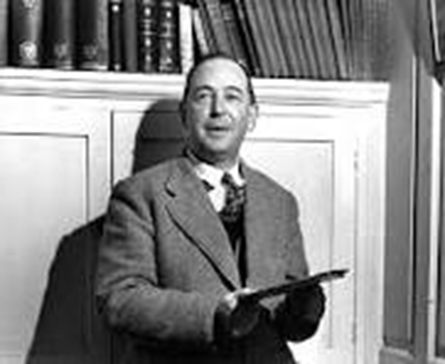
C.S. Lewis stated in The Oxford Socratic Club, 1944: “If I swallow the scientific cosmology as a whole, then not only can I not fit in Christianity, but I cannot even fit in science. If minds are wholly dependent on brains, and brains on biochemistry, and biochemistry — in the long run — on the meaningless flux of atoms, I cannot understand how the thought of those minds should have any more significance than the sound of the wind in the trees.”
C. S. Lewis
Oxford mathematician John C. Lennox wrote in God’s Undertaker – Has Science Buried God, 2007: “Indeed, faith is a response to evidence, not rejoicing in the absence of evidence. The apostle Paul says what many pioneers of modern science believed — that nature itself is part of the evidence for the existence of God.”
John C. Lennox
Lennox continues: “To the majority of those who have reflected deeply and written about the origin and nature of the universe, it has seemed that it points beyond itself to a source which is non-physical and of great intelligence and power.”
Adam Sandage, widely regarded as one of the fathers of modern astronomy for which he won the Nobel Prize (and was one of my best friends) is in no doubt: ‘God to me is the explanation for the miracle of existence – why there is something rather than nothing.’”
Adam Sandage
Albert Einstein told William Hermanns in an interview: “I observe the laws of nature. There are not laws without a lawgiver.”
Sir William Blackstone wrote in Commentaries on the Laws of England, 1768: “When the Supreme Being formed the universe, and created matter out of nothing, He impressed certain principles upon that matter, certain laws of motion, to which all movable bodies must conform, not left to chance, but guided by unerring rules laid down by the great Creator. ”
Eric Metaxas wrote in “Science Increasingly Makes the Case for God,” March 25, 2015: “Today there are more than 200 known parameters necessary for a planet to support life — every single one of which must be perfectly met, or the whole thing falls apart. The odds against life in the universe are simply astonishing. Yet here we are, not only existing, but talking about existing. What can account for it? Can every one of those many parameters be perfect by accident? At what point is it fair to admit that science suggests that we cannot be the result of random forces?”
Eric Metaxas
Metaxas continued: “Doesn’t assuming that an intelligence created these perfect conditions require far less faith than believing that a life-sustaining Earth just happened to beat the inconceivable odds to come into being? There’s more. The fine-tuning necessary for life to exist on a planet is nothing compared with the fine-tuning required for the universe to exist at all. The greatest miracle of all time, without any close seconds, is the universe. It is the miracle of all miracles, one that ineluctably points with the combined brightness of every star to something—or Someone— beyond itself.
A Little Piece of the Universe
Sir Isaac Newton wrote in Principia, 1687: “This most beautiful system of the sun, planets, and comets, could only proceed from the counsel and dominion of an intelligent and powerful Being. Order and life in the universe could happen only by the willful reasoning of its original Creator, whom I call the ‘Lord God.’”
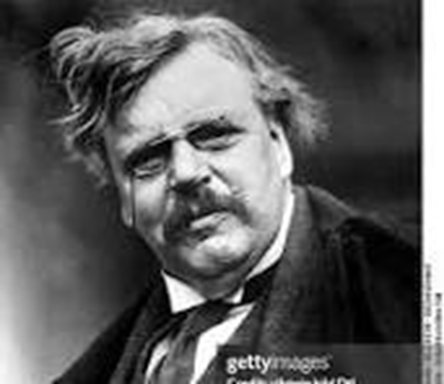
G.K. Chesterton wrote in The Everlasting Man, 1925: “Nobody can imagine how nothing could turn into something. Nobody can get an inch nearer to it by explaining how something could turn into something else. It is really far more logical to start by saying ‘In the beginning God created heaven and earth’ even if you only mean ‘In the beginning some unthinkable power began some unthinkable process.’ For God is by its nature a name of mystery, and nobody ever supposed that man could imagine how a world was created any more than he could create one.”
G. K. Chesterton
English poet William Cowper’s wrote: “Nature is but a name for an effect, Whose cause is God.”
Einstein wrote: “Behind each cause is still another cause. Yet, only one thing must be remembered: there is no effect without a cause, and there is no lawlessness in creation.”
Albert Einstein
Albert Einstein stated further: “As I observe the Laws of Nature, there are not Laws without a Lawgiver”
Danish poet Hans Christian Andersen put it this way: “The whole world is a series of miracles, but we’re so used to them we call them ordinary things.”
Psalm 19:1: “The heavens declare the glory of God, and the sky above proclaims his handiwork.”
It says in the Bible: 1John 3:1 “See how great a love the Father has bestowed on us, that we would be called children of God.
No one loves you more intimately and unconditionally than God does. He created you to be in relationship with Him—to glorify Him, have fellowship with Him, and be His beloved child forever.
He wants you to know how deeply and unconditionally He cares for you. There is nothing you could ever do to surprise or disappoint Him because He knows all things and is never shocked by your actions. Although He does not approve of sin, and may urge you to repent of ungodly behavior, He will always invite you back into His presence and accept you when you repent (1 John 1:9).
Therefore, when you do stumble, always remember you have an Advocate before the Father—Jusus Christ—who hears your prayers for forgiveness and cares when you are hurting. God may discipline you when you yield to temptation, but He will never withhold His love from you. You are His child. This truth never changes. And because He is righteous, loving, and steadfast, He will certainly never fail you.