The Amazing Count Zinzendorf

Few people have ever heard of this amazing man. However, Count Zinzendorf had a greater impact on spreading the Gospel of Christ to the whole world, and the founding of America, than any man who ever lived. You just must know about him. Do read the account below of his amazing life and how God used him:

Pilgrim Governor William Bradford wrote: “As one small candle may light a thousand, so the light here kindled hath shone unto many, yea in some sort to our whole nation.”

An example of “one small candle” lighting a thousand” occurred in the early 1700s, with a rich young ruler.…..Count Nikolaus Ludwig von Zinzendorf.

Count Zinzendorf was born in 1700 into a noble German family, with his ancestor being Maximillian the First, the Holy Roman Emperor from 1508 to 1519.

When Nikolaus was six weeks old, his father died. His mother remarried, and at the age of four, he was sent to live with his pietistic Lutheran grandmother, Henriette Catharina von Gersdorff.

In 1719, at the age of 19 years old, Count Zinzendorf went on his “Grand Tour” – a trip where young aristocrats made their first introductions to the royal courts of France, the Netherlands, and major German kingdoms.

While on this tour, in the city of Dusseldorf, Count Zinzendorf visited a museum, where he viewed a painting by Domenico Feti depicting Christ’s suffering.

The painting, titled “Ecce Homo” — “Behold the Man”, had a Latin caption underneath, “Ego pro te haec passus sum Tu vero quid fecisti pro me,” which translated is: “This have I suffered for you; now what will you do for me?”

Young Count Zinzendorf was moved in a profound way.

Convicted in his heart by the Holy Spirit, Count Zinzendorf came to an intensely personal faith in Christ, an experience which was part of a revival movement labeled “Pietism.”

In 1722, at the age of 22, Count Zinzendorf opened up his estate at Berthelsdorf, Saxony, for persecuted Christians of Europe who were displaced during the 30 Years War, to come and live together.

People arrived from Moravia, Bohemia, Czech Republic, and other areas, and built a village on his estate called “Herrnhut,” which means “The Lord’s Watchful Care.”

The religious refugees that came to Count Zinzendorf’s estate almost ended the endeavor before it really began, by bringing their doctrinal rivalries with them. When they started disagreeing among themselves, the 27-year-old Count Zinzendorf began a prayer meeting, August 13, 1727. This meeting, called a “prayer watch,” went on continuously 24 hours a day, seven days a week, with believers taking turns, uninterrupted for over 100 years.

Count Zinzendorf stated: “I have one passion: it is Jesus, Jesus only.”

More Moravian missionaries were sent out from Herrnhut in the next 20 years than all Christendom had in the previous 200 years. The Moravians (Moravia was just the name of a state in Germany) were the first to send unordained lay people onto the mission field rather than trained clergy. Missionaries were also given no financial support but had to earn their own living. Most of the missionaries were young men and women. Imagine today, if all the woke youth, instead of rioting and tearing things down, were using their energy to share the love of Christ and found missions, orphanages, schools and hospitals around the world!

They established hundreds of renewal groups and Herrnhut-style settlements around the world, emphasizing personal prayer, worship, Bible study, confession of sins, communion, and mutual accountability.

On May 3, 1728, Moravians began publishing a daily devotional called Losungen, or “Daily Watchwords,” which went on to be translated into over 50 languages and be the oldest and most widely read daily devotional in the world.

Moravians were the first large scale Protestant missionary movement: They sent missionaries to Greenland, Canada, Alaska, to the Inuit of Labrador, to the West Indies, Costa Rica, Belize, Haiti, to American Indians, such as Cherokee, Lenape, Mohican, Algonquin, to the northern shores of the Baltic, to the slaves of South Carolina, to the Miskito peoples of Nicaragua and Honduras, to slaves in South America, Suriname, French Guyana, Peru, to Tranquebar and Nicobar Islands in the East Indies, to the Copts in Egypt, to Northern India and Nepal, to Kenya, Rwanda, Zanzibar, Uganda, Sierra Leone, Tanzania, Kivu, Katanga in DR Congo, and the west coast of South Africa.

The story of the first Moravian missionaries began in Germany with Johann Leonhard Dober. Dober was apprenticing to be a potter like his father, but at age 17, visited the community at Herrnhut and converted. On July 24, 1731, he heard Zinzendorf’s plea for someone to reach the slaves on the Caribbean sugar plantations, recounting the testimony of Anthony Ulrich, a former slave from the Danish island of St. Thomas — which became part of the U.S. Virgin Islands in 1917.

“In the course of a few weeks the negro, Anthony, himself arrived at Hermhut, and confirmed, at a public meeting that his oppressed countrymen in St. Thomas were worked by their masters, that, unless those who went to preach to them would consent to become slaves themselves, and labour with the negroes in the plantations, they would have little opportunity of communicating divine instruction to them.

This intelligence did not in the smallest degree daunt the devoted young men at Hermhut; they were both ready, not only to be bound, but to die for the Lord Jesus. They were willing to make any sacrifice which might be required, if they could win but one soul to Christ, nay, if they might but have the opportunity of carrying the news of salvation to Anthony’s sister, a poor despised female slave.”

David Nitschman, then traveled to the Danish capital of Copenhagan to get permission to go to go there. After a prayer meeting, August 20, 1732, Zinzendorf blessed Johann Leonhard Dober and carpenter Dt. Thomas to go there.

Not having financial support of a church or missionary organization, the King’s Chamberlain, Von Plesz, asked how they expected to live while evangelizing the slaves. Nitschmann replied: “We shall work as slaves among the slaves.” Von Plesz said, “But that is impossible. It will not be allowed. No white man ever works as a slave.” Nitschmann replied, “I am a carpenter, and will ply my trade.” “But what will the potter do?” “He will help me in my work.” “If you go on like that,” the dismayed Chamberlain replied, “you will stand your ground the wide world over.”

They left Copenhagen, October 8, 1732, and two months later arrived in St. Thomas where they lived humbly and ministered to the slaves. Over the next 50 years, more Moravians arrived and established churches on St. Thomas, St. Croix, St. John’s, Jamaica, Antigua, Barbados, and St. Kitts, baptizing over 13,000 converts.

Nitschmann undertook no less than fifty sea voyages and was particularly successful evangelizing among slaves and native Americans. In 1740, he helped found a mission near Bethlehem, Pennsylvania.

On a trip back to Germany, David Nitschmann was elected a Moravian bishop. In 1735, he sailed for Georgia on a ship carrying the passengers John and Charles Wesley. The ship was caught in a terrible storm. While others panicked in fear, the Moravians sang praise songs to the Lord. This made a profound impression on the Wesleys.

Charles Wesley was sent to be the secretary of Georgia’s founder James Oglethorpe. John Wesley was sent to be the colony’s Anglican minister, at the settlement on St. Simon Island. The Wesley brothers returned to England where, feeling defeated, they were invited to a Moravian prayer meeting at Aldersgate. They were so touch by they Holy Spirit and their lives were forever changed.

In 1738, John Wesley visited Herrnhut to study with the Moravians. What he witnessed he described as “the religion of the heart.”

John returned to England where he began the Methodist revival movement. Charles Wesley wrote over 6,000 sacred hymns.

Through the Wesleys, the Moravian influence was felt by George Whitefield, who helped lead the Great Awakening Revival in the American colonies.

In 1741, Count Zinzendorf visited America, hoping to unify the various German Protestants churches in Pennsylvania. On Christmas Eve, 1741, Count Zinzendorf founded Bethlehem, Pennsylvania. Moravians settled an area in North Carolina which was named Wachovia, after one of Count Zinzendorf’s ancestral estates on the Danube River. There his daughter, Benigna, organized a school which became Moravian College.

Count Zinzendorf traveled with the German Indian agent and interpreter Conrad Weiser into the wilderness to share his faith with Iroquois Indian chieftains, making Zinzendorf one of the few European noblemen to meet with Indians in their villages.

Conrad Weiser’s daughter, Ann Marie, married a young German minister, Henry Muhlenberg, who is considered the main founder of the Lutheran Church in America.

In 1742, Henry Melchior Muhlenberg met Count Nicholas Ludwig Von Zinzendorf. Later that year, on December 12, 1742, Henry Muhlenberg became pastor of fifty German families at the Old Trappe Church in Pennsylvania. In 1751, Henry Muhlenberg received a land grant from the sons of William Penn, and on it founded Trinity Lutheran Church in Reading, Pennsylvania. It was referred by Lutherans as their “mother church,” as out of it were birthed numerous Lutheran Churches.

Henry Muhlenberg was influenced by the Pietist movement within Lutheranism which stressed a personal relationship with Christ in addition to adhering to orthodox doctrine. It also had a political consequence similar to “separation of church and state.” Calvinist Puritans believed God had a will for everything including government and it was a Christian’s duty to put God’s Will in place; Pietists, on the other hand, believed that when someone believed in Christ their life should change and they should not participate in worldly distractions such as bars, theaters, and government.

It was therefore a major step for Henry Muhlenberg’s son, John Peter Muhlenberg, pastor of Emanuel Church in Woodstock, Virginia, to join General George Washington’s army as a colonel, with 300 members of his church forming the 8th Virginia Regiment. John Peter Muhlenberg was promoted to Major-General in the Continental Army, then elected to the U.S. Congress and Senate.

Henry Muhlenberg’s other son, Frederick Augustus Muhlenberg, was pastor of a Lutheran congregation in New York. Frederick Muhlenberg became active during the Revolution and afterwards was elected to the U.S. Congress, being the first Speaker of the U.S. House of Representatives. Both John Peter and Frederick were members of the First Session of U.S. Congress which passed Twelve Amendments limiting the power of the Federal Government. With both of them being ordained pastors, it is obvious they did not think the purpose of the First Amendment was to keep pastors out of politics.

Pastor Henry Muhlenberg wrote of General George Washington at Valley Forge in The Notebook of a Colonial Clergyman: “I heard a fine example today, namely that His Excellency General Washington rode around among his army yesterday and admonished each to fear God, to put away wickedness and to practice Christian virtues”

Rev. Muhlenberg continued:

“From all appearances General Washington does not belong to the so-called world of society, for he respects God’s Word, believes in the atonement through Christ, and bears himself in humility and gentleness. Therefore, the Lord God has also singularly, yea, marvelously preserved him from harm in the midst of countless perils, ambuscades, fatigues, and has hitherto graciously held him in his hand as a chosen vessel.”

“As one small candle may light a thousand,” Count Ludwig von Zinzendorf, the Moravian missionaries, and the pietist Lutherans, had a profound impact on the founding of America, as well as on missionary efforts spreading the Gospel around the world.

Ron

The Date “Thanksgiving” Was Established in America

(Please read below the documentation of the official founding of “Thanksgiving” in America.)

Congress approved the First Amendment the same week it called for a Day of Thanksgiving to Almighty God.

The First Amendment was passed in the First Session of Congress, which was meeting in New York City.

The first Ten Amendment, called the Bill of Rights, were intended to be “handcuffs” or limitations on the power of the new Federal Government — a restraining order on Washington politicians.

The Bill of Rights was signed by two individuals in the U.S. Congress: Vice-President John Adams, as President of the Senate, and Frederick Augustus Muhlenberg, as the First Speaker of the House, who was also an ordained Lutheran minster.

The PREAMBLE to the Bill of Rights reveals the intent of the States to prevent the Federal Government from an “abuse of its powers,” insisting “restrictive clauses” should be placed on it: “The Conventions of a number of the States, having at the time of their adopting the Constitution, expressed a desire, in order to PREVENT misconstruction or ABUSE OF ITS POWERS, that further declaratory and RESTRICTIVE CLAUSES should be added as amendments to the Constitution of the United States.”

The First Amendment began: “CONGRESS shall make no law respecting an establishment of religion or prohibiting the free exercise thereof.”

Websters 1828 Dictionary defined “respecting” as: “regarding, concerning, relating to.”

In other words, when anything relating to the subject of “an establishment of religion” came before the Federal Government, the response was to be “hands off,” as religion was under each individual State’s jurisdiction.

In his Commentaries on the Constitution of the United States, 1833, Justice Joseph Story stated: “In some of the States, Episcopalians constituted the predominant sect; in others, Presbyterians; in others, Congregationalists; in others, Quakers. It was impossible that there should not arise jealousy if the national government were left free to create a religious establishment. The only security was in abolishing the power. But this alone would have been an imperfect security, if it had not been followed up by a declaration of the right of the free exercise of religion. Thus, the whole power over the subject of religion is left exclusively to the State governments.”

In the First Amendment, the states also limited the Federal Congress from: “abridging the freedom of speech, or of the press; or the right of the people peaceably to assemble, and to petition the Government for a redress of grievances.”

Congress was the only branch of government that made laws, so it was the focus of the restrictions.

If the founders could have seen into the future that the Supreme Court would make laws from the bench, or that Presidents would make laws through executive orders, or that bureaucratic Departments would make law through regulations, they might have worded the First Amendment something like: “CONGRESS, the SUPREME COURT, the PRESIDENT, and FEDERAL BUREAUCRACIES shall make no law respecting an establishment of religion, OR PROHIBITING THE FREE EXERCISE THEREOF.”

Obviously, they did not think the First Amendment that they just passed should outlaw prayer or God! 

The Bill of Rights were passed by Congress on September 25, 1789, and sent to the States for ratification.

The same week Congress approved the First Amendment, they requested President George Washington declare the United States’ First National Day of Thanksgiving and Prayer to Almighty God.

(Now, even though it is lengthy, do read what George Washington wrote in establishing our first official national Thanksgiving.)

Washington declared on OCTOBER 3, 1789: “Whereas it is the DUTY of all nations to acknowledge the Providence of ALMIGHTY GOD, to obey His will, to be grateful for his benefits, and humbly to implore His protection and favor; and Whereas both Houses of Congress have by their joint Committees requested me ‘to recommend to the People of the United States A DAY OF PUBLIC THANKSGIVING AND PRAYER to be observed by acknowledging with grateful hearts the many signal favors of ALMIGHTY GOD, especially by affording them an opportunity peaceably to ESTABLISH A FORM OF GOVERNMENT for their safety and happiness.’

Now, therefore, I do recommend and assign Thursday, the twenty-sixth day of November next, to be devoted by the People of these United States to the service of that GREAT AND GLORIOUS BEING, who is the BENEFICENT AUTHOR of all the good that was, that is, or that will be. That we may then all unite in rendering unto Him our sincere and humble thanks, for His kind care and protection of the People of this country previous to their becoming a Nation; for the signal and manifold mercies, and the favorable interpositions of HIS PROVIDENCE, which we experienced in the course and conclusion of the late war; for the great degree of tranquility, union, and plenty, which we have since enjoyed.

Since it is for the peaceable and rational manner in which we have been enabled to ESTABLISH CONSTITUTIONS OF GOVERNMENT for our safety and happiness, and PARTICULARLY THE NATIONAL ONE NOW LATELY INSTITUTED, for the CIVIL AND RELIGIOUS LIBERTY with which we are blessed, and the means we have of acquiring and diffusing useful knowledge; and in general for all the great and various favors which He hath been pleased to confer upon us.

And also that we may then unite in most humbly offering our prayers and supplications to THE GREAT LORD AND RULER OF NATIONS, and beseech Him to pardon our national and other transgressions, to enable us all, whether in public or private stations, to perform our several and relative duties properly and punctually; And to render OUR NATIONAL GOVERNMENT a blessing to all the People, by constantly being A GOVERNMENT OF WISE, JUST AND CONSTITUTIONAL LAWS, discreetly and faithfully executed and obeyed.

And to protect and guide all Sovereigns and Nations (especially such as have shown kindness unto us) and to bless them with good government, peace, and concord; TO PROMOTE THE KNOWLEDGE AND PRACTICE OF TRUE RELIGION AND VIRTUE, and the increase of science among them and us; and generally to grant unto all Mankind such a degree of temporal prosperity as He alone knows to be best.

Given under my hand, at the city of New York, the 3rd of October, IN THE YEAR OF OUR LORD one thousand seven hundred and eighty-nine

George Washington.”

Ron

Your Heavenly Father

It says in the Bible: Hebrews 12:9 (NIV)

We have all had human fathers who disciplined us….But God disciplines us for our good, in order that we may share in his holiness.

You have a Father who loves, protects, and provides for you. Regardless of how your earthly dad treated you, our heavenly Father never fails you and He would never reject you. This is because through Jesus sacrifice on the cross, you’ve been permanently adopted into God’s household and have been given the Holy Spirit as a guarantee of His love foever.

Truly understanding how wonderful this is may require a shift in your thinkking and the removal of strongholds in your life. So your wise and merciful heavenly Father allows you to experience circumstances that reveal His faultless character to you, demonstrate the depth of His love, and help you trust Him more.

So today, embrace that He is your Father. In whatever you face, look to Him to teach you and be assured you remain in the center of His perfect provision and love no matte what happens.

Ron

The History of Education In The World and In America

The earliest human records appeared about 3,000 or 4,000 BC – Sumerian cuneiform on clay tablets in the Mesopotamian Valley.

Astrophysicist Neil deGrasse Tyson stated in his Cosmos TV series (2014): “It was around 5,000 years ago between the Tigris and Euphrates Rivers that we learned how to write.”

This was followed by Egyptian hieroglyphics on papyrus and stone, around 3,000 BC.

The earliest human records appeared about 3,000 or 4,000 BC – Sumerian cuneiform on clay tablets in the Mesopotamian Valley.

Astrophysicist Neil deGrasse Tyson stated in his Cosmos TV series (2014): “It was around 5,000 years ago between the Tigris and Euphrates Rivers that we learned how to write.”

This was followed by Egyptian hieroglyphics on papyrus and stone, around 3,000 BC.

Chinese characters in bamboo annals were invented during the reign of China’s legendary Yellow Emperor around 2,600 BC.

Richard Overy, author of The Times Complete History of the World (2010) wrote: “No date appears before the start of human civilization about 5,500 years ago and the beginning of a written or pictorial history.”

Writing originated as an accounting method which scribes used to keep track of everything the king owned. Then writing was used to keep a record of kings’ decrees, king’s genealogies, and astronomy. Only kings, the upper class, and scribes could read, leaving ancient Egypt with an overall literacy rate of less than one percent. The Egyptian National Archeological Museum’s display on “scribes” stated: “Only a small percentage of ancient Egypt’s population was literate, namely, the pharaoh, members of the royal family, officials, priests, and scribes. Particularly popular and lucrative, the scribe’s profession was mostly hereditary. Scribes had careers in the government, priesthood, and the army. They began their rigorous training in their early childhood.”

The thousands of hieroglyphic and cuneiform characters were not only difficult to learn, the lower classes and slaves were not allowed to learn them. This facilitated the government’s control of the illiterate masses. Kings wanted subjects to blindly obey, not think for themselves. Anthropologist Claude Levi Strauss wrote: “Ancient writing’s main function was to facilitate the enslavement of other human beings.”

One of the ways a king motivated subjects was to honor and reward those who obeyed him, and dishonor and strike fear into those who did not obey him.

The first well-recorded instance of a nation, with millions of people, ruling itself without a king was ancient Israel when it made its exodus from Egypt’s Pharaoh around 1,400 BC.

When Moses came down Mount Sinai, he not only had the Law, he had it in a 22 character alphabet that was so easy to comprehend that even children learned to read. The first letter was “aleph,” second letter “beth,” etc. Israel is, perhaps, the first instance in history of an entirely literate population.

Jewish historian Eupolemus wrote c.150 BC: “Moses was the first wise man. He taught the alphabet to the Jews who passed it on to the Phoenicians, who passed it to the Greeks. Moses first wrote laws for the Jews.”

Not only could they read the Law, they were required to, as the Law was addressed to each individual citizen.

E.C. Wines wrote in The Hebrew Republic (Philadelphia: c1853): “A fundamental principle of the Hebrew government was the education of the whole body of the people. An ignorant people cannot be a free people. Intelligence is essential to liberty. No nation is capable of self-government, which is not educated to understand and appreciate its responsibilities. Upon this principle Moses proceeded in the framing of his commonwealth.  Ignorant people cannot be a free people. Intelligence is essential to liberty. There is reason to believe that the ability to read and write was an accomplishment more generally possessed by the Hebrews than by any other people of antiquity.”

Wherever there is a king, the friends of the king are “more equal”, and those not friends with the king are “less equal.” Those who are enemies of the king are dead— it is called “treason,” or they are slaves.

For Israel’s first four centuries in the Promised Land, there was no king, they were being ruled instead by the Law. The Law declared there was no respect of persons in judgment; rich and poor were to be treated the same; male and female made in the image of the Creator; even the stranger living among them was under the same Law that they were under. This was the beginning of the concept of “equality” as there was no royal family to seek favors from, no superior or inferior class, no caste system. Israel’s experiment in self-government was dependent on one thing—the priests teaching the people to read the Law.

People were motivated to keep the Law as they were taught:

1) there is a God who is everywhere, who knows every thought and sees every action;

2) God wants them to be fair;

3) God will hold each person accountable in the future.

When the priests neglected teaching the Law, everyone did what was right in their own eyes and the country fell into moral chaos. Thus to get out of their rebellious moral chaos, Israel got a totalitarian ruler, King Saul, who soon killed a large number of the priests, with the exception of Abiathar escaping to young David.

The pattern was clear, for a country to maintain order without fear of a king, there needed to be a citizenry educated in moral restraints and fear of God.

After Independence, large numbers of immigrants arrived in America. The response was to create “common” schools for them. The “Father of American Scholarship and Education” was Noah Webster. He was the “Guiding Light” for education of young people across the whole nation for many years.

Noah Webster attended Yale, which was founded as a Puritan Congregational school. When the Revolutionary War started, Webster left for four years to fight. Then after coming back and graduating, Noah Webster became a lawyer and taught in New York. However, he became very interested in the education of America’s youth.

Dissatisfied with children’s spelling books, Webster wrote the famous Blue-Backed Speller, which sold over one hundred million copies. That was a huge number in those days. It became the primary book that was used for educating students in all schools across the whole country. It had a “Moral Catechism” with rules from the Scriptures.

For generations, American school children learned letters, morality and patriotism from Webster’s Blue Backed Spellers. They were also educated from his catechisms, his history books, and his Webster’s Dictionary. For he published the first English dictionary in a hundred years and the first ever from America.

Noah Webster served 9 terms in Connecticut’s Legislature and 3 terms in Massachusetts’ Legislature where he lobbied for funding of public education, arguing the government should: “Discipline our youth in early life in sound maxims of moral, political, and religious duties.

For generations, American school children learned letters, morality and patriotism from Webster’s Blue Backed Spellers. They were also educated from his catechisms, his history books, and his Webster’s Dictionary. For he published the first English dictionary in a hundred years and the first ever from America.

Noah Webster served 9 terms in Connecticut’s Legislature and 3 terms in Massachusetts’ Legislature where he lobbied for funding of public education, arguing the government should: “Discipline our youth in early life in sound maxims of moral, political, and religious duties.

(Noah Webster was so very, very important in educating and influencing the youth of early America that I am going to here put forward many of his writings so that you can see what he was teaching America’s youth, and how it influenced the whole nation:)

Noah Webster stated: “Society requires that the education of youth should be watched with the most scrupulous attention. Education, in a great measure, forms the moral characters of men, and morals are the basis of government. Education should therefore be the first care of a legislature, for it is much easier to introduce and establish an effectual system for preserving morals, than to correct by penal statutes the ill effects of a bad system”

Webster continued: “The goodness of a heart is of infinitely more consequence to society than an elegance of manners; nor will any superficial accomplishments repair the want of principle in the mind. The education of youth lays the foundation on which both law and gospel rest for success.”

He stated: “To give children a good education in manners, arts and science, is important; to give them a religious education is indispensable; and an immense responsibility rests on parents and guardians who neglect these duties.”

Webster further wrote: “Practical truths in religion, in morals, and in all civil and social concerns, ought to be among the first and most prominent objects of instruction, for without both kinds of knowledge, citizens can not enjoy the blessings which they seek. Controlling the mind and the whole conduct, science and literature will not make men what the laws of God require them to be; and of instruction, truths in religion, in morals, and in all civil and social concerns, ought to be among the first and most prominent objects of instruction.”

Noah Webster wrote in “On the Education of Youth in America,” printed in Webster’s American Magazine, 1788: “In some countries the common people are not permitted to read the Bible at all. In ours, it is as common as a newspaper and in schools is read with a great degree of respect. Select passages of Scripture may be read in schools, to great advantage. My wish is not to see the Bible excluded from schools but to see it used as a system of religion and morality.”

In “Advice to the Young,” included in his History of the United States, 1832, Noah Webster wrote: “The brief exposition of the Constitution of the United States, will unfold to young persons the principles of republican government. And the genuine source of correct republican principles is the Bible, particularly the New Testament of the Christian religion. Republican government loses half of its value, where the moral and social duties are imperfectly understood, or negligently practiced.”

Webster added: “To exterminate our popular vices is a work of far more importance to the character and happiness of our citizens than any other improvements in our system of education.”

Webster wrote: “Be it remembered then that disobedience to God’s law, or sin is the procuring cause of almost all the sufferings of mankind. God has so formed the moral system of this world, that a conformity to His will by men produces peace, prosperity and happiness.”

In the preface of his American Dictionary of the English Language, republished 1841, Noah Webster wrote: “If the language can be improved in regularity, so as to be more easily acquired by our own citizens and by foreigners, it should be rendered a more useful instrument for the propagation of science, arts, civilization and Christianity.”

Noah Webster published his translation of the Holy Bible, The Webster Bible, in 1833, stating: “The Bible is the chief moral cause of all that is ‘good’, and the best corrector of all that is ‘evil’, in human society; the ‘best’ book for regulating the temporal concerns of men, and the ‘only book’ that can serve as an infallible guide to future felicity.”

In “Letters to a Young Gentleman Commencing His Education” (New Haven, 1823), Webster wrote: “It is alleged by men of loose principles that religion and morality are not necessary or important qualifications for political stations. But the Scriptures teach a different doctrine. They direct that rulers should be men who rule in the fear of God, able men, such as fear God, men of truth, hating covetousness. And it is to the neglect of this rule of conduct in our citizens, that we must ascribe the multiplied frauds, breeches of trust, peculations and embezzlements of public property which astonish even ourselves; which tarnish the character of our country; which disgrace a republican government; and which will tend to reconcile men to monarchs in other countries and even our own.”

Noah Webster wrote further in Letters to a Young Gentleman: “Men may devise and adopt new forms of government; they may amend old forms, repair breaches, and punish violators of the constitution; but there is, there can be, no effectual remedy, but obedience to the divine law.”

In his 1834 work titled, Value of the Bible and Excellence of the Christian Religion, Webster wrote: “The Bible must be considered as the great source of all the truths by which men are to be guided in government, as well as in all social transactions. The Bible (is) the instrument of all reformation in morals and religion.”

Noah Webster wrote in The History of the United States, 1832: “All the miseries and evils which men suffer from vice, crime, ambition, injustice, oppression, slavery and war, proceed from their despising or neglecting the precepts contained in the Bible.”

Ron

The Battle of Okinawa and the Amazing Desmond Doss

Desmond Doss was A Seventh-Day Adventist Christian and he was the first conscientious objector to receive the Congresional Medal of Honor. He saved the lives of a huge number of other soldiers, most all while under intense fire. It is my opinion that he was protected time and again directly by God. When you read his story, see if you agree with me.

The Battle of Okinawa is considered the largest land-sea-air battle in world history, and the last major battle of World War II.

It began April 1, 1945, when 60,000 U.S. troops landed on the Island of Okinawa. It was called “The Typhoon of Steel” because of the hundreds of kamikaze attacks, where suicide bombers flew planes filled with explosives into American ships. Fighting continued for 82 days. For the first time, America was attacking what the Japanese considered their “Home Islands”.

Kamikaze pilots sank 38 U.S. ships, and damaged 368 more, in what is considered the greatest loss of American ships in U.S. naval history. There were over 72,000 American casualties.

Imperial Japan lost over 110,000 soldiers killed, in addition to nearly 150,000 Okinawan civilian casualties, many of whom were ordered by the retreating military to be human shields or to commit suicide, as the Imperial honor code, called “seppuku” or “harakiri,” considered surrender a shame worse than death.

Pulitzer Prize winning war correspondent Ernie Pyle was killed in the battle, April 18, 1945, by Japanese machine-gun fire on an island northwest of Okinawa Island. Ernie Pyle had been embedded with Army infantry soldiers in Europe, North Africa and the Pacific. Infantry soldiers were given “Government Issued” supplies, resulting in the initials “G.I.”

As I mentionded above, Desmond Doss was a medic who officially saved a multitude of lives during the Battle of Okinawa. A Seventh-Day Adventist Christian, he was the first conscientious objector to receive the Medal of Honor. Mel Gibson’s 2016 Oscar-winning film Hacksaw Ridge depicts his story.

Rather that receiting the stories of his amazing exploits, I am just going to relate, verbatim, the citation as read by President Harry S. Truman at the White House in his Medal of Honor presintation: “The 1st Battalion assaulted a jagged escarpment 400 feet high. As our troops gained the summit, a heavy concentration of artillery, mortar and machine gun fire crashed into them, inflicting approximately 75 casualties and driving the others back. Private First Class Doss refused to seek cover and remained in the fire-swept area with the many stricken, carrying them one by one to the edge of the escarpment and then lowering them on a rope-supported litter down the face of a cliff to friendly hands, with the Japanese firing at him the whole time.”

Truman continued:

“On 2 May, he exposed himself to heavy rifle and mortar fire in rescuing a wounded man 200 yards forward of the lines on the same escarpment; and two days later he treated four men who had been cut down while assaulting a strongly defended cave, advancing through a shower of grenades to within eight yards of enemy forces in the cave’s mouth, where he dressed his comrades’ wounds before making four separate trips under fire to evacuate them to safety.”

On 5 May, he unhesitatingly braved enemy shelling and small arms fire to assist an artillery officer. He applied bandages, moved his patient to a spot that offered protection from small-arms fire and, while artillery and mortar shells fell close by, painstakingly administered plasma.”

Later that day, when an American was severely wounded by fire from a cave, Private First Class Doss crawled to him where he had fallen 25 feet from the enemy position, rendered aid, and carried him 100 yards to safety while continually exposed to enemy fire.”

On 21 May, in a night attack on high ground near Shuri Ridge, he remained in exposed territory while the rest of his company took cover, fearlessly risking the chance that he would be mistaken for an infiltrating Japanese and giving aid to the injured until he was himself seriously wounded in the legs by the explosion of a grenade.”

Rather than call another aid man from cover, he cared for his own injuries and waited five hours before litter bearers reached him and started carrying him to cover. The trio was caught in an enemy tank attack and Private First Class Doss, seeing a more critically wounded man nearby, crawled off the litter and directed the bearers to give their first attention to the other man.”

Awaiting the litter bearers’ return, he was again struck, this time suffering a compound fracture of one arm. With magnificent fortitude he bound a rifle stock to his shattered arm as a splint and then crawled 300 yards over rough terrain to the aid station.”

Through his outstanding bravery and unflinching determination in the face of desperately dangerous conditions Private First Class Doss saved the lives of many soldiers.”

His name became a symbol throughout the 77th Infantry Division for outstanding gallantry far above and beyond the call of duty.”

The fierceness of Japanese combat in the Battle of Okinawa convinced the U.S. Navy and Marines to expect over a million casualties if they attempted to invade the main Japanese islands. This convinced President Harry S Truman to drop the atomic bomb on the industrial centers of Hiroshima and Kyoto in August of 1945. Secretary of War Henry Stimson argued to spare Kyoto as a target. The city Kokura was then chosen, but on the fateful day cloud cover blocked the crews’ visual identification, so the bomb was dropped on nearby Nagasaki.

Tragically, Nagasaki had been the most Christian city in all of Japan. Nagasaki was first visited by Jesuit missionary St. Francis Xavier in 1549, through whose efforts the powerful daimyo (lord) Ōmura Sumitada had been baptized. Over 300,000 Japanese became Christian by the end of the 16th century. Suffering intense persecution, the Kakure Kirishitan “Hidden Christians” or Mukashi Kirishitan “Ancient Christians” passed their faith on to succeeding generations, century after century.

Emperor Meiji finally allowed religious freedom during the Meiji Restoration, 1868-1912. From 1912 to 1926, Japan experienced unprecedented freedom and prosperity during the “Taishō democracy.” However, beginning in 1926, Japan’s Shōwa Emperor, Hirohito and his generals re-concentrated power politically into a totalitarian, militaristic state. Emperor Hirohito’s Imperial Japan entered into a Tripartite Treaty with Benito Mussolini’s Fascist Italy and Adolph Hitler’s National Socialist Workers Party on September 27, 1940, being referred to as the “Axis Powers.”

Japanese Emperor Hirohito at Start of the War

After the Imperial planes had attacked Pearl Harbor, President Franklin D. Roosevelt recited the reason the U.S. entered into war in his address to Congress, December 8, 1941: “The attack yesterday on the Hawaiian Islands has caused severe damage, lives have been lost. Ships have been reported torpedoed between San Francisco and Honolulu. The Japanese Government also launched an attack against Malaya, Hong Kong, Guam, Philippine Islands, Wake Island, and Midway Island.”

FDR continued his address:

“We are fighting today for security, for progress, and for peace, not only for ourselves but for all men, not only for one generation but for all generations. We are fighting to cleanse the world of ancient evils, ancient ills. Our enemies are guided by brutal cynicism, by unholy contempt for the human race. We are inspired by a faith that goes back through all the years to the first chapter of the Book of Genesis: ‘God created man in His own image.’ We on our side are striving to be true to that divine heritage.”

FDR concluded his address:

“We are fighting, as our fathers have fought, to uphold the doctrine that all men are equal in the sight of God. Those on the other side are striving to destroy this deep belief and to create a world in their own image — a world of tyranny and cruelty and serfdom. That is the conflict that day and night now pervades our lives. No compromise can end that conflict. There never has been, there never can be, successful compromise between good and evil. Only total victory can reward the champions of tolerance, and decency, and freedom, and faith.”

Ron

The French Revolution

One of the most amazing episodes in the modern history of mankind was the French Revolution. The attempt to bring it to young America was a most perilous time for our young county. Below, I have chronicled some of its history and the result of the attempt to bring it to the young republic of America.

In 1781, the monarchs of France, 27-year-old King Louis XVI and 26-year-old Queen Marie Antoinette, sent the French navy and army to help America gain independence from Britain.

King Louis XVI
Queen Marie Antoinette

In return, France gained very little, except an enormous amount of debt.

On the verge of financial collapse, France then experienced a terrible famine in 1788. The people blamed the King and Queen.

Anti-monarchists referred to Queen Marie Antoinette as Madame Déficit. According to Jean-Jacques Rousseau, when she was told the people did not have bread, her naive reply was: “Let them eat cake.”

Jean-Jacques Rousseau

On July 14, 1789, an anarchist mob went through the streets of Paris and stormed the the Bastille Fortress which had been used as the police prison. The king, endeavoring to be an enlightened monarch, allowed rioters space to blow off steam, and withheld police from responding with force. Sadly, the more benevolence he showed, the more the unruly rioters became embolden to commit increased violence.

On October 5, 1789, a peaceful protest began — a Women’s March demanding bread, but it escalated into a violent mob which surrounded the King’s Palace at Versailles. The Marquis de Lafayette attempted to convince the crowd to show moderation, but they ignored him.

Disgruntled soldiers sympathetic to the demonstrators, failed to defend the palace. Finding an unguarded door, rioters barged in. Two guards were killed, with one’s head placed on a pike. The Queen fled through a secret passage to the King’s chamber.

With the mob now numbering 60,000, the King and Queen were escorted back to Paris, where they became captives in the Royal residence called the Tuileries. On June 20, 1791, the Royal family tried escaping by carriage at night. They almost made it out of France, but someone recognized the king’s face from having seen it on French currency. One again, the royal family were captives in the Tuileries.

Left-wing “Jacobin Club” agitators, most notably Maximilien Robespierre, whipped the city into an anti-king frenzy. The Tuileries were stormed August 10, 1792. The naive King ordered his loyal Swiss guards, who had sworn to defend him, to stand down. Instead of showing restraint, the mob slaughtered hundreds of the Swiss guards.

Maximilien Robespierre

Following the example of England’s regicide in 1649, with the beheading of its regent King Charles I, France committed regicide on January 21, 1793, with the beheading its regent, King, Louis XVI. The French Revolution quickly turned into a bloodbath, called the Reign of Terror.

The motto of the French Revolution sounded noble, “liberté, égalité, fraternité,” which stood for liberty, equality and fraternity=– “fraternity” being another word for socialism. At issue was the mutually exclusive nature of these words: “liberty” being experienced individually, but “fraternity” being the collective, the mob, the social contract state.

In France, “equality” was “equity” — was everyone having an equal amount of stuff, material possessions. It was called “The reign of Terror”. The terror was not just an unfortunate side effect it was the Revolution’s source of collective energy. From the very beginning, violence was the motor of the revolution.

Robespierre began accusing, arresting, and beheading:

  • first all the royalty;
  • then the wealthy;
  • then the farmers and businessmen;
  • then those hoarding food;
  • then the religious clergy;
  • then the former revolutionaries.

Over 40,000 French citizens who held to old values, were falsely accused by the new intolerant government of being domestic terrorists. These citizens were arrested, interrogated, imprisoned and beheaded in Paris.

The French Revolution initiated an intentional campaign to separate French society from its Judeo-Christian past and replace it with a civic religion of state worship.

Not wanting a constitution that was “Done in the year of the Lord,” as the U.S. Constitution was, the French made 1792 the new “Year One.” They did not want a seven day week with a Sabbath day of rest, as this was derived from the Bible, so they devised a ten day “decade” week, and ten month year.

The new secular government proceeded to:

  • Forbid crosses as being offensive;
  • Religious monuments were destroyed;
  • Statues were torn down, including that of Good King Henry IV;
  • Christian graves were desecrated, including that of Ste. Genevieve, the patron saint of Paris who called the city to pray when Attila the Hun was attacking in 451 AD;
  • Public and private worship and education outlawed;
  • Priests and ministers, along with those who harbored them, were executed on sight;
  • Churches were closed or used for “immoral,” “lurid,” “licentious,” “scandalous” “depravities.”

Robespierre put a prostitute in Notre Dame Cathedral, covered her with a sheet, and called her “the goddess of reason” to be worshiped.

So many were being beheaded, a more efficient machine was invented to do it —the guillotine.

During this time, French privateers ignored treaties and by 1798, had seized nearly 300 American ships bound for British ports. Talleyrand, the French Minister of Foreign Affairs, demanded millions of dollars in bribes to leave America’s ships alone.

Alexander Hamilton and others condemned the French Revolution and its attempt to overthrow Christianity. So, the cry went up across America, “Millions for defense, not a cent for tribute.”

Alexander Hamilton

American college campuses were being infiltrated by “decadent, ungodly and immoral Francophiles” — the term used to describe those fascinated with culture, infidelity and irreligion which was being exported from France.

President Adams declared a Day of Fasting, March 23, 1798, and again, March 6, 1799.

As America and France came perilously close to war, second President John Adams asked George Washington, now retired at Mount Vernon, to again be Commander-in-Chief of the Army.

Older George Washington

Washington wrote the following words in reply: “Satisfied you have exhausted, to the last drop, the cup of reconciliation, we can, with pure hearts, appeal to Heaven for the justice of our cause; and may confidently trust the final result to that kind Providence who has, heretofore, and so often, signally favored the people of these United States. Feeling how incumbent it is upon every person to contribute at all times to his country’s welfare, and especially in a moment like the present, when everything we hold dear and sacred is so seriously threatened, I have finally determined to accept the commission of Commander-in-Chief.”

Washington was not asked to be President again since head of the American Army was a more powerful position.

Now head of the Army again, George Washington, though now old, decreed that under no circumstances would anything like the French Revolution ever be tolerated in the United States of America. And it for sure was not.

George Washington died only a year later on July 13, 1798. But that was enough time to make sure that his “decree” was for sure enforced.

“The American Crisis”

In 1776 many of the Americans had had enough of the tyrany of the British king. They were ready to revolt and form their own independent country. This they did. However, it was such a dangerous course at the very beginning, that many were afraid to go along with the patriots. At this very critical time, Thomas Payne in Genereal Washington’s army of revolutionaries sat down in their camp and wrote a thesis that inspired the whole nation and that very first group in the new army of America, also.

Few have ever heard of this thesis. Thomas Payne published it anonymously, but called it “The American Crisis”. Without it, the revolution most probably would have ended right then. It is so very, very important to the founding of our country, that I am recording it for you to see, below:

The American Crisis

It started out stating in December 1776: “”Tyranny, like hell, is not easily conquered; yet we have this consolation with us that the harder the conflict, the more glorious the triumph”

In today’s era of hostility toward freedoms of religion and conscience, it is important to be reminded of challenges Americans have faced in the past.

At the beginning of the Revolutionary War, as the American army was being chased out of New York and New Jersey, Thomas Paine, an aide-de-camp to General Nathanael Greene, anonymously wrote “The American Crisis,” filled with historical and Biblical references. In the freezing cold, not having a table in camp, Paine used the head of a drum for his desk. He signed the it “Common Sense.”

It was immediately published in the Pennsylvania Journal, December 19, 1776.

General George Washington was so moved by “The American Crisis” that he ordered it read out loud to his troops, rallying them not to disperse at the end of the year when their six-month enlistment was up. This was vital to keep the army together prior to the Crossing of the Delaware River and the Battle of Trenton.

In “The American Crisis,” Thomas Paine wrote: “THESE are the times that try men’s souls. The summer soldier and the sunshine patriot will, in this crisis, shrink from the service of their country; but he that stands by it now, deserves the love and thanks of man and woman. Tyranny, like hell, is not easily conquered; yet we have this consolation with us, that the harder the conflict, the more glorious the triumph. What we obtain too cheap, we esteem too lightly. Heaven knows how to put a price upon its goods; and it would be strange indeed if so celestial an article as freedom should not be highly rated.”

Paine went on: “Britain, with an army to enforce her tyranny, has declared that she has a right – not only to TAX – but ‘to BIND us in ALL CASES WHATSOEVER,’ and if that is not slavery, then is there not such a thing as slavery. So unlimited a power can belong only to God. God Almighty will not give up a people to military destruction who have so earnestly sought to avoid the calamities of war. Neither have I so much of the infidel in me, as to suppose that He has relinquished the government of the world to the care of devils. I cannot see on what grounds the King of Britain can look up to heaven for help against us: a common murderer, a highwayman, or a house-breaker.”

Paine wrote further: “‘Tis surprising to see how rapidly a panic will sometimes run through a country. All nations and ages have been subject to them. Britain has trembled like an ague – fever – at the report of a French fleet of flat-bottomed boats; and in the – fifteenth – century the whole English army, after ravaging the kingdom of France, was driven back like men petrified with fear by a few broken forces headed by a woman, Joan of Arc. Would that heaven might inspire some Jersey maid to spirit up her countrymen, and save her fair fellow sufferers from ravage and ravishment!”

Paine added: “I am as confident as I am that God governs the world, that America will never be happy till she gets clear of foreign dominion. Let it be told to the future world, that in the depth of winter, when nothing but hope and virtue could survive, that the country, alarmed at one common danger, came forth to repulse it. Throw not the burden of the day upon Providence, but ‘show your faith by your works,’ that God may bless you.”

His line “throw not the burden of the day upon Providence” was a rebuke to those who just prayed but did not exert themselves to do anything. It echoed the phrase “tempting Providence,” used by Connecticut Governor Jonathan Trumbull in a letter to General Washington, August of 1776: “In this day of calamity, to trust altogether to the justice of our cause, without our utmost exertion, would be tempting Providence. March on! — This shall be your warrant: Play the man for God, and for the cities of our God, May the Lord of Hosts, the God of the Armies of Israel, be your Captain, your Leader, your Conductor, and Saviour.” – 2nd Samuel 10:12.

Thomas Paine continued in “The American Crisis”: “It matters not where you live, or what rank of life you hold, the evil will reach you. The blood of his children will curse his cowardice, who shrinks back at a time when a little might have saved the whole. I love the man that can smile in trouble, that can gather strength from distress, and grow brave by reflection. ‘Tis the business of little minds to shrink’; but he whose heart is firm, and whose conscience approves his conduct, will pursue his principles unto death.”

Paine went on: “Not all the treasures of the world could have induced me to support an offensive war, for I think it murder; but if a thief breaks into my house, burns and destroys my property, and threatens to kill me, or those that are in it, and to ‘bind me in all cases whatsoever’ to his absolute will, am I to suffer it? Let them call me rebel, I feel no concern from it”

Paine condemned the weak-willed, who were willing to lose their souls in order to keep their jobs: ” But I should suffer the misery of devils, were I to make a whore of my soul by swearing allegiance to one whose character is that of a sottish, stupid, stubborn, worthless, brutish man. I conceive likewise a horrid idea in receiving mercy from a being, who at the last day shall be shrieking to the rocks and mountains to cover him, and fleeing with terror from the orphan, the widow, and the slain of America.”

Paine was referring to the last day judgement, as prophesied in the Book of Hosea 10:8: “Then they will say to the mountains, ‘Cover us!’ and to the hills, ‘Fall on us!’”

The Gospel of Luke 23:28-30 stated: “Jesus turned to them and said: The days are coming when ‘they will say to the mountains, ‘Fall on us!’ and to the hills, ‘Cover us!'”

This is also prophesied in the Book of Isaiah 2:19: “Men will flee to caves in the rocks and holes in the ground, away from the terror of the LORD and from the splendor of his majesty, when He rises to shake the earth.”

The apocalyptic Book of Revelation 6:15-16, states: “And the kings of the earth, and the great men hid themselves in the dens and in the rocks of the mountains; And said to the mountains and rocks, Fall on us, and hide us from the face of him that sitteth on the throne, and from the wrath of the Lamb.”

Thomas Paine continued in “The American Crisis”: “There are persons, too, who see not the full extent of the evil which threatens them; they solace themselves with hopes that the enemy, if he succeed, will be merciful. It is the madness of folly, to expect mercy from those who have refused to do justice; and even mercy, where conquest is the object, is only a trick of war; the cunning of the fox is as murderous as the violence of the wolf, and we ought to guard equally against both.”

In “The American Crisis,” Paine warned that “men must be fools” who surrender their weapons in exchange for a “promise” of peace: “British General Howe’s first object is, partly by threats and partly by promises, to terrify or seduce the people to deliver up their arms and receive mercy. This is what the Tories call making their peace. A peace which would be the immediate forerunner of a worse ruin than any we have yet thought of. Were the back counties to give up their arms, they would fall an easy prey to the Indians, who are all armed: this perhaps is what some Tories would not be sorry for. Were the home counties to deliver up their arms, they would be exposed to the resentment of the back counties who would then have it in their power to chastise their defection at pleasure. And were any one state to give up its arms, that state must be garrisoned by all Howe’s army of Britons and Hessians. Howe is mercifully inviting you to barbarous destruction, and men must be fools that will not see it.”

In his third edition of Common Sense, published in Philadelphia, February 14, 1776, Thomas Paine warned of the danger of kings claiming a hereditary right: “Most wise men, in their private sentiments, have ever treated hereditary right with contempt; yet it is one of those evils, which when once established is not easily removed; many submit from fear, others from superstition, and the more powerful part shares with the king the plunder of the rest”

Paine explained: “The present race of kings could we take off the dark covering of antiquity, and trace them to their first rise, that we should find the first of them nothing better than the principal ruffian of some restless gang, whose savage manners or preeminence in subtility obtained him the title of chief among plunderers; and who by increasing in power, and extending his depredations, over-awed the quiet and defenseless to purchase their safety by frequent contributions.”

Paine ended by referring to Mohammed: “In those days, and traditionary history stuffed with fables, it was very easy, after the lapse of a few generations, to trump up some superstitious tale, conveniently timed, Mahomet like, to cram hereditary right down the throats of the vulgar.” In the face of challenges, Thomas Paine ended “The American Crisis,” December 1776, stating: “I thank God, that I fear not.”

President Reagan stated, March 20, 1981: “Evil is powerless if the good are unafraid. “Isaiah 41:10: “Fear not, for I am with you; Be not dismayed, for I am your God. I will strengthen you, Yes, I will help you, I will uphold you with My righteous right hand.’”

Ron

History of the Mountain Men


The amazing Mountain Men of the old west tamed the frontier and made it possible for civilization to move to the western United States.  Here is a short history of these increible individuals.  Do enjoy it:

History of The Mountain Men

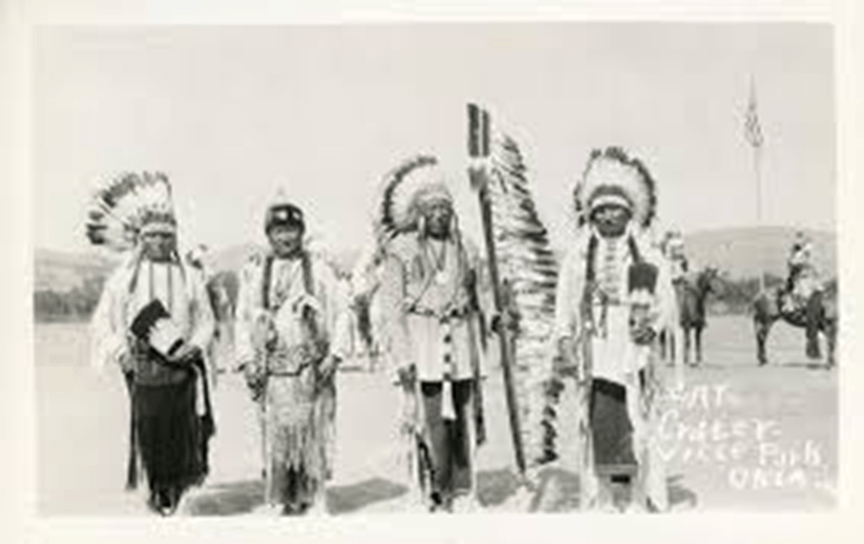
Following Lewis and Clark’s expedition, Christian missionaries made their way to the West.

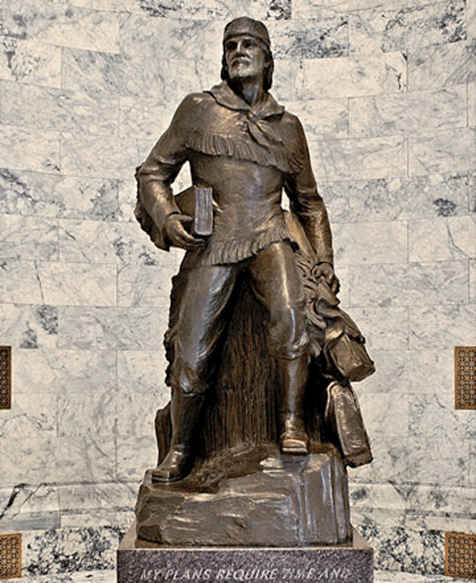
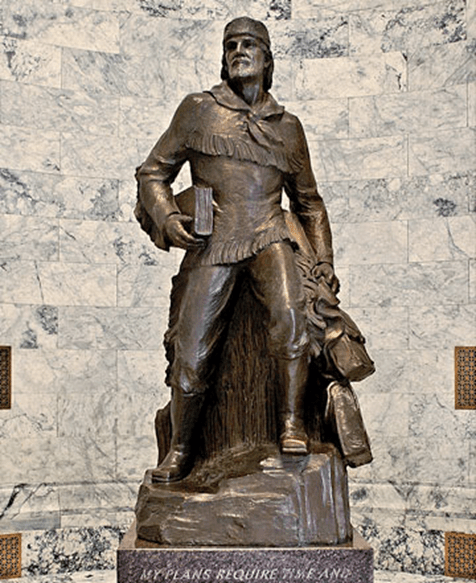
These include: Jason Lee, Methodist missionary to the Kalapuya tribe, who founded the capitol city of Salem, Oregon, and whose statue is in the U.S. Capitol.

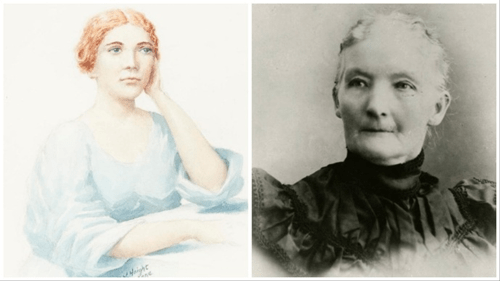
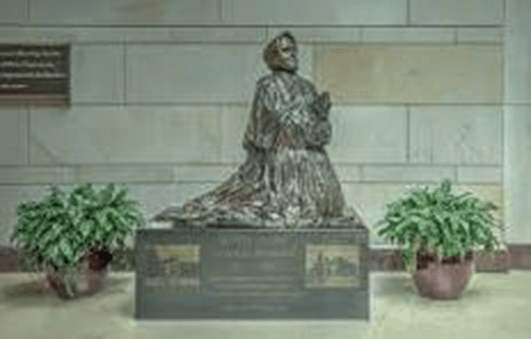
Marcus Whitman, and his wife Narcissa, were Methodist missionaries to the Cayuse and Walla Walla tribes. He pioneered the Oregon Trail and his statue is in the U.S. Capitol.

Henry & Eliza Spalding were Presbyterian missionaries to the Nez Perce tribe and helped found Lapwai, Idaho.

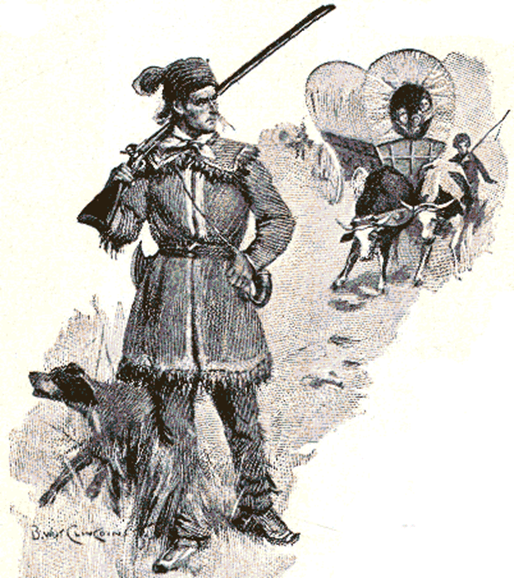
During this time, mountain men explored America’s west: John Colter was on Lewis and Clark’s Expedition. Afterwards, he explored Yellowstone National Park and the Teton Mountain Range, spending several months alone in the winter of 1807–1808. He is considered the first “mountain man.”

Joseph Meek was a fur trapper in the Oregon Territory who led the Champoeg Meetings, the area’s first government.

John Sutter owned Sutter’s Mill, where gold was discovered, and established “Sutter’s Fort,” which became Sacramento, California’s State capital.

John David Albert worked on a Mississippi keelboat before he became a fur trapper. In 1847, during the Mexican-American War, he survived an attack by 500 Indians and Mexicans at Turley Mill in Taos, New Mexico;

Jedediah Smith pioneered the South Pass across the Continental Divide. He was the first to explore Salt Lake to the Colorado River, and the first to cross the Mojave Desert into California. Attacked by a bear, he had a fellow fur-trapper sew his scalp back on.

Hugh Glass was mauled by a bear and left for dead by his companions. He crawled and stumbled 200 miles to Fort Kiowa, South Dakota and survived.

John “Grizzly” Adams captured bears with just a knife or his bare hands. His wilderness survival adventures were the basis for a movie in 1974;

James “Bloody Arm” Beckwourth was a freed slave who lived with Crow Indians. A renown black frontiersman, he discovered Beckwourth Pass through the mountains of Sierra Nevada (Reno to Portola, California).

Jeremiah Johnson was hunting in 1847 when a his Flathead Indian wife was killed by a Crow brave. He went on a vendetta and in revenge, according to historian Andrew Mehane Southerland, “killed and scalped more than 300 Crow Indians.” A movie was made about him 1972, staring Robert Redford.

Peter Skene Ogden explored with his North West Company through Oregon, Washington, Nevada, California, Utah, Idaho and Wyoming, often confronting the Hudson’s Bay Company, North America’s oldest commercial corporation and largest landowner from Great Lakes to Arctic Circle to the Pacific Northwest.

William Sublette and his four brothers improved routes along the Oregon Trail. He was co-owner of the Rocky Mountain Fur Company.

Jim Bridger’s trail-blazing tales include being chased by 100 Cheyenne warriors into a dead-end canyon and barely escaping with his life. Bridger explored Jackson Hole, the Teton Range, and discovered “Bridger Pass” across the Continental Divide, cutting some 60 miles off of what would become the Oregon Trail. He was one of the first white men to see the geysers of Yellowstone, petrified wood forests, and the Great Salt Lake. Though illiterate, Bridger spoke the language of Sioux, Black Foot, and Crow.

Singer Johnny Horton recorded a song dedicated to Jim Bridger in 1960: “Once there was a mountain man who couldn’t write his name. Yet he deserves the front row seat in History’s Hall of Fame. He forgot more about the Indians than we will ever know. He spoke the language of the Sioux the Black Foot and the Crow. There’s poems and there’s legends that tell of Carson’s fame. Yet compared to Jim Bridger, Kit was civilized and tame.”

Kit Carson was a fur trapper, soldier and Indian agent. His exploits west of the Mississippi were as famous as Daniel Boone’s were east.

Kit Caron’s father fought in the Revolutionary War, then moved his family from Kentucky to a tract of land in Missouri owned by Daniel Boone’s sons. At age 16, Kit Carson followed the Santa Fe Trail to Taos, New Mexico, which was the capital of the fur trade in the Southwest. He stayed with a friend who had served with Carson’s older brothers in the War of 1812. Learning the skills of a fur trapper, Kit Carson became fluent in speaking: Paiute, Spanish, Navajo, Apache, Cheyenne, Arapaho, Shoshone, and Ute.

Francis Parkman, Jr., wrote in The Oregon Trail (1849): “The buffalo are strange animals; in order to approach them the utmost skill, experience, and judgment are necessary. Kit Carson, I believe, stands preeminent in running buffalo.”

In 1835, at the age of 25, Carson went to the annual mountain man rendezvous in Wyoming, where he met an Arapaho girl named Waa-Nibe or “Singing Grass.” Carson fought a gun fight with a French-Canadian trapper over her. Kit married Singing Grass and together they worked with the Hudson’s Bay Company. Later they worked with Jim Bridger and the Rocky Mountain Fur Company. Kit Carson and Singing Grass trapped beaver along the Yellowstone River, the Powder River, and the Big Horn river.

They traveled throughout Colorado, Wyoming, Idaho, and Montana. Carson considered these years as “the happiest days of my life.” It broke Kit Carson’s heart when Singing Grass died of a fever after giving birth to their second daughter. The trapping of beaver drove the exploration of the west. It was fueled by demand for beaver top hats popular in eastern America and Europe.

Around 1840, silk from China allowed hats to be made less expensively and the demand for beaver suddenly ceased. In 1841, Kit Carson married a Cheyenne woman, but she left him to follow her tribe’s migration.

In 1842, Carson met Josefa Jaramillo, the daughter of a prominent Taos family. Carson received religious instruction from Padre Antonio Jose Martinez, was , was baptized, married Josefa and together they had eight children.

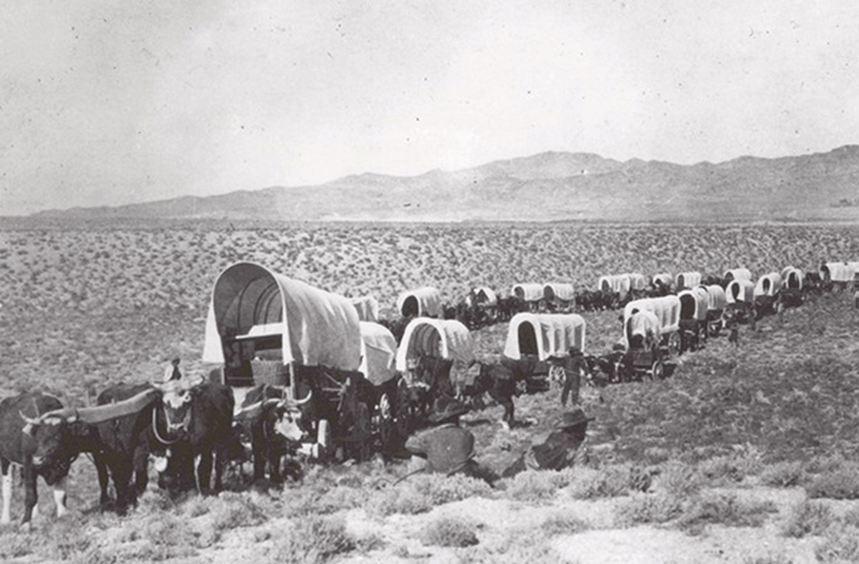
Kit Carson led John C. Frémont on expeditions across the South Pass of the Continental Divide which “touched off a wave of wagon caravans filled with hopeful emigrants.” Carson led Frémont to map the second half of the Oregon Trail, from South Pass to the Columbia River, traveling along the Great Salt Lake into Oregon. They came within sight of Mt. Rainier, Mt. Saint Helens, Mt. Hood, and ventured into Mexican territory, where Carson’s wilderness skills averted mass starvation in the Sierra Nevadas. Traveling across the Mojave Desert, they arrived at a watering hole called Las Vegas (Spanish for “The Meadows”). When Congress published Frémont’s reports in 1845, Carson’s reputation as a frontiersman and Indian fighter inspired writers to use him as the hero in dime novels.

In 1846, Carson accompanied John Frémont to California. Carson participated in several battles which eventually led to California being brought into the Union as the 31st State.

He even once courageously slipped through a siege at night and ran 25 miles barefoot through the desert to San Diego for reinforcements. General Sherman wrote of meeting Kit Carson in The Memoirs of General William T. Sherman: “As the spring and summer of 1848 advanced, the reports came faster and faster from the gold mines at Sutter’s saw-mill.

It was our duty to go up and see with our own eyes, that we might report the truth to our Government. As yet we had no regular mail to any part of the United States, but mails had come to us at long intervals, around Cape Horn.” Sherman continued: “I well remember the first overland mail. It was brought by Kit Carson in saddle-bags from Taos in New Mexico. We heard of his arrival at Los Angeles, and waited patiently for his arrival at headquarters. His fame then was at its height, from the publication of Frémont’s books, and I was very anxious to see a man who had achieved such feats of daring among the wild animals of the Rocky Mountains, and still wilder Indians of the Plains.


At last his arrival was reported at the tavern at Monterey, and I hurried to hunt him up. I cannot express my surprise at beholding a small, stoop-shouldered man, with reddish hair, freckled face, soft blue eyes, and nothing to indicate extraordinary courage or daring. He spoke but little, and answered questions in monosyllables.”

Sherman added: “He spent some days in Monterey, during which time we extracted with difficulty some items of his personal history. He was then by commission a lieutenant in the regiment of Mounted Rifles serving in Mexico under Colonel Sumner, and, as he could not reach his regiment from California, Colonel Mason ordered that for a time he should be assigned to duty with A.J. Smith’s company, First Dragoons, at Los Angeles. He remained at Los Angeles some months, and was then sent back to the United States with dispatches, traveling two thousand miles almost alone, in preference to being encumbered by a large party.”

During the Civil War, Kit Carson was a scout and soldier for the Union Army, which carried out a Federal mandate of subduing the west. When General James Carleton and Colonel Chivington used severe tactics against the Indians, Carson strongly objected and sent a letter of resignation, February 3, 1863, but General Carleton refused it.

Kit Carson’s fame was such that “Buffalo Bill” Cody named his son after him. His sister, Helen Cody Wetmore, wrote in Last of the Great Scouts-The Life Story of Col. William F. Cody ‘Buffalo Bill’: “The first boy of the family was the object of the undivided interest of the outpost for a time, and names by the dozen were suggested. Major North offered ‘Kit Carson’ as an appropriate name for the son of a great scout and buffalo-hunter, and this was finally settled on.” “The mantle of Kit Carson has fallen upon his shoulders, and he wears it worthily.”

Buffalo Bill Cody

Buffalo once roamed the western plains, numbering in the millions, and were hunted for blankets, meat and leather. When railroads began moving west, buffalo were shot by the thousands to clear the way for the tracks.

Documenting the changing West, frontier artist Frederic Remington wrote: “I knew the railroad was coming — I saw men already swarming into the land. I knew the wild riders and the vacant land were about to vanish forever, and the more I considered the subject, the bigger the forever loomed.  Without knowing how to do it, I began to record some facts around me, and the more I looked the more the panorama unfolded.”

The Federal Government adopted a big government solution, namely, force migrating plains Indians onto reservations by killing off the buffalo.

A bill to protect buffalo was introduced in the Texas Legislature in 1875, but U.S. General Philip Sheridan retorted (John Cook, 164): “They are destroying the Indians’ commissary. And it is a well known fact that an army losing its base of supplies is placed at a great disadvantage. For a lasting peace, let them kill, skin, and sell until the buffaloes are exterminated, as it is the only way to bring lasting peace and allow civilization to advance.”

As herds were slaughtered, Indian hostilities increased. The Federal Government made treaties with Indians, which were later often ignored by greedy politicians if gold, oil or other valuable minerals were found. Sympathetic to the Indians’ plight, Kit Carson was appointed Superintendent of Indian Affairs in Colorado, January of 1868.

Like Sam Houston, who in 1818 escorted a delegation of Cherokee to Washington, D.C., Kit Carson escorted Ute Indian Chiefs to Washington, DC., to arrange a treaty. Though physically weak and having difficulty breathing, Carson led them through northern cities where they met crowds and posed for pictures with western military notables, such as General James Carleton and Former California Governor John C. Frémont. Governor John C. Frémont.

While staying with the Indian Chiefs at New York City’s Metropolitan Hotel, Kit Carson almost died. He wrote: “I felt my head swell and my breath leaving me. Then, I woke; my face and head all wet. I was on the floor and the chief was holding my head on his arm and putting water on me. The Chief was crying. He said, ‘I thought you were dead. You called on your Lord Jesus, then shut your eyes and couldn’t speak.’ I did not know that I spoke. I do not know that I called on the Lord Jesus, but I might have. It’s only Him that can help me where I now stand. Carson ended: “My wife must see me. If I was to write about this, or died out here, it would kill her. I must get home.”

Carson successfully arranged the treaty, as President Andrew Johnson wrote: “I herewith lay before the Senate, a treaty made on the 2d day of March, 1868, by and between Nathaniel G. Taylor, Commissioner of Indian Affairs; Alexander C. Hunt, governor and ex officio superintendent of Indian affairs of Colorado Territory, and Kit Carson, on the part of the United States, and the representatives of the Tabeguache, Muaehe, Capote, Weeminuche, Yampa, Grand River, and Uintah bands of Ute Indians.”

Carson returned to Taos, New Mexico, but unfortunately, his wife Josefa soon died from complications after giving birth to their eighth child.

One month later, Kit Carson died of an abdominal aortic aneurysm on MAY 23, 1868, at the age of 58. He was buried next to his wife. His last words were: “Adios Compadres”

Ron

Battle of Cowpens: A Tactical Masterpiece & Revolutionary War Turning Point

“The bloody butcher” is what colonists called British Colonel Banastre Tarleton. He let his dragoons bayonet and hack hundreds of surrendering Americans at Buford’s Massacre during the Battle of Waxhaw, May 29, 1780.

In January of 1781, 26-year-old Colonel Banastre Tarleton led 1,200 of Britain’s best troops, consisting of British dragoons, regulars, highlanders and loyalists, in a day-long, non-stop pursuit of the Americans.

American General Daniel Morgan led Colonel Banastre Tarleton into a trap — the Battle of Cowpens, January 17, 1781. The Americans took a stand at two low hills with the Broad River behind them, leaving them no opportunity to retreat.

Seeing this as a tactically foolish move, British Colonel Tarlton gave into the temptation to pursue the Americans without doing any reconnaissance.

The Americans had some fierce fighters on their side: Gen. Andrew Pickens (nicknamed “the Wizard Owl”); Gen. Francis Marion (nicknamed “the Swamp Fox); and Col. Thomas Sumter (nicknamed “the Carolina Gamecock”).

Approaching Cowpens, without allowing his fatigued troops to catch their breath after their exhaustive day long march, Tarlton ordered a headlong attack upon the American militia.

American General Daniel Morgan had his line of weak militia fire twice into the charging British cavalry, then quickly retreat around a hill.

Tarlton’s dragoons were now at a full gallop, charging toward the American position.

Suddenly, Tarlton discovered that behind the militia was hiding a line of 400 battle-hardened American Continental soldiers, with their rifles leveled. The American Continentals stood immovable and fired at point-blank range. Over 100 British dragoons were hit and fell from their saddles.

Then the militia which had retreated, circled around and appeared on the other side of the hill to attack Tarlton’s flank. Tarlton barely escaped. In the confusion, 110 British were killed and 830 captured. Captured British officer, Maj. McArthur of the 71st Highlanders commented that “he was an officer before Tarleton was born; that the best troops in the service were put under ‘that boy’ to be sacrificed.”

The Battle of Cowpens is widely considered the tactical masterpiece and turning point of the Revolutionary War.

The battle strategy was similar to the smaller Carthaginian army of Hannibal defeating the overwhelmingly large Roman army at the Battle of Cannae on August 2, 216 BC. Roman generals put their strongest men in the center of the attack. Hannibal knew he could not defeat them head on, so he put his weakest men in the center, instructing them to fall back when attacked. Hannibal’s cavalry and strong infantry waited on the flanks till the Roman soldiers pursued Hannibal’s retreating soldiers. When the Romans were sucked into the collapsing line and nearly surrounded in a concave, Hannibal’s cavalry and strong infantry attacked, defeating the Romans.

News of the British defeat at the Battle of Cowpens was rushed to British General Cornwallis, who was leaning on his sword. Upset, he leaned so hard the blade snapped. Cornwallis gave chase, abandoning his slow supply wagons so he could pursue faster.

General Daniel Morgan hastily retreated north, meeting up with American General Nathanael Greene. They raced to get out of South Carolina, across North Carolina to the border of Virginia, where was the Great Dismal Swamp — over 100,000 acres of dangerous wetlands which would prevent British pursuit.

Cornwallis regrouped to chase the Americans as fast as he could, discarding his slow and cumbersome supply wagons. Cornwallis arrived at the Catawba River just two hours after the Americans had crossed, but a sudden storm made the river impassable, delaying the British pursuit. The British nearly overtook the Americans at the Yadkin River, but again rains flooded the river slowing the British. Now it was a frantic race to the Dan River.

The local historical marker reads: “Boyd’s and Irwin’s ferries to the west were used by Nathanael Greene in his passage of Dan River, in mid-February, 1781, while Cornwallis was in close pursuit.”

General Nathanael Greene quickly got the Americans across the Dan River, then another storm and flash flood ended the British chase. British Commander Henry Clinton wrote: “Here the royal army was again stopped by a sudden rise of the waters, which had only just fallen (almost miraculously) to let the enemy over, who could not else have eluded Lord Cornwallis’ grasp, so close was he upon their rear.” (Here, once again, it is my opinion that God miraculously intervene on behalf of General Washingtons troops.)

Having discarded his supply wagons in the desperate chase, Cornwallis was now at a logistical disadvantage. General Nathanael Greene recrossed and fought against Cornwallis again at the Battle of Guilford Court House, March 15, 1781. Colonel Tarleton was shot in the right hand, causing the loss of two fingers. Though the British technically won that battle, their heavy losses of over 500 killed or wounded, and their failure to capture American supplies, contributed to their subsequent defeat.

For the next seven months, the Americans pushed back. On April 25, Greene was defeated at Hobkirk’s Hill, SC, but retook it. On May 15, Lieutenant Colonel Henry Lee forced British Major Andrew Maxwell to abandon Fort Granby, SC. On June 6, Americans recaptured Augusta, GA. On June 18: Americans attacked the British at Ninety Six, SC, though they did not dislodge them. On July 6, “Mad” Anthony Wayne attacked but was repulsed by the British at Green Springs Farm, VA. On September 8, Greene’s forces confronted the British at Eutaw Springs, SC, but were forced to retreat.

Badly needing supplies for his army, Cornwallis was ordered by British General Henry Clinton to move his 8,000 troops to a defensive position where the York River entered Chesapeake Bay, and wait for British ships to come to his aid.

Providentially, Ben Franklin and young Marquis de Lafayette were successful in their efforts to persuade French King Louis XVI to send ships and troops to help the Americans. The French fleet stopped off at Havana, Cuba, where the Spanish raised funds for George Washington. The “Ladies of Havana” gave their gold and silver jewelry with the note: “So the American mothers’ sons are not born as slaves.”

French General Rochambeau wrote in his “Daily Memoirs” ( Now in the Library of Congress): “The joy was enormous when it was received, the money from Havana: The contribution of 800,000 silver pounds which helped stop the financial bankruptcy (of the Revolutionary Army) and raised up the moral spirit of the Army that had began to dissolve.”

French Admiral de Grasse and the French fleet abruptly left off fighting the British in the West Indies and sailed with 24 ships to the mouth of Chesapeake Bay, where arriving just at the precise moment to fight in the Battle of the Capes. Admiral de Grasse successfully drove off the 19 British ships which were sent to evacuate Cornwallis’ men.

Then De Grasse’s 3,000 French troops and General Rochambeau’s 6,000 French troops hurriedly joined yound General Lafayette’s division as they marched to Yorktown. There they joined General Washington in trapping Cornwallis against the sea.

Altogether, 17,000 French and American troops surrounded Cornwallis. On October 19, 1781, Cornwallis surrendered and the Revolutionary War was effectively over.

Yale President Ezra Stiles wrote, May 8, 1783: “Who but God could have ordained the critical arrival of the Gallic (French) fleet, so as to assist in the siege of Yorktown? Should we not ascribe to a Supreme energy the wise generalship displayed by General Greene leaving the roving Cornwallis to pursue his helter-skelter ill fated march into Virginia. It is God who had raised up for us a powerful ally, a chosen army and a naval force: who sent us a Rochambeau to fight side by side with a Washington. in the battle of Yorktown.”

General Washington wrote to William Gordon in March of 1781: “We have abundant reasons to thank Providence for its many favorable interpositions in our behalf. It has at times been my only dependence, for all other resources seemed to have failed us.”

Ron

Exploits of the USS Constitution

The first of the new American fighting ships was now finished in Boston. The war of 1812 had started. The USS Constitution, under the command of Captain Isaac Hull, sailed from Boston on August 2, 1812 and steered for the blustery waters southeast of Halifax, Nova Scotia. After two weeks of daily gun drills in preparation for combat, Hull and his crew sighted the British frigate HMS Guerriere, under the command of Captain James Richard Dacres, on the afternoon of August 19, 1812. Guerriere was one of the ships in a British squadron Hull and his crew had outrun a few weeks earlier.

As Guerriere closed to within a mile of Constitution, the British hoisted their colors and released a broadside, but the cannonballs fell short. The crew asked Hull for permission to return fire, but he refused so as not to waste the first broadside. Soon, however, Constitution slid alongside her opponent and Hull gave command to fire. The battle commenced. 

Constitution’s thick oak hull was composed of very durable oak from the Colonies and was never available to the British in England. It proved resilient to enemy cannonballs. During the engagement, an American sailor was heard exclaiming, “Huzza! Her sides are made of iron! See the British cannon balls are bouncing off!” Boarding parties were summoned as the ships came together, and Lieutenant William Sharp Bush, commander of Constitution’s Marine detachment, took the initiative. Jumping on the taffrail, sword in hand, he called to Hull, “Shall I board her?” No sooner were the words out of his mouth than a musket ball hit him in the cheek, instantly killing him. Seeing Bush fall, First Lieutenant Charles Morris leapt to take his place, but he too fell seriously wounded with a ball in the abdomen. Aboard Guerriere, Captain Dacres was gravely wounded when an American musket ball struck him in the back. Before either side could reorganize, the two ships wrenched apart. The severely damaged Guerriere was forced to surrender.

All through the night, the Americans tended to the wounded and dead, and ferried the British prisoners of war and their possessions across to Constitution. By the morning, it was clear Guerriere could not be saved and Hull made the difficult decision to scuttle the ship by igniting the warship’s powder in the magazines. 

Constitution and the prisoners sailed for Boston and arrived on August 30. It was not the first American naval victory of the war (that honor went to USS Essex’s crew, who captured HMS Alerton on August 13), but it established Constitution as a household name. Throngs of cheering Bostonians greeted Hull and his crew upon their return. A militia company escorted Hull to a reception at the Exchange Coffee House and more dinners, presentations and awards followed in the ensuing weeks, months, and years. USS Constitution, for her impressive strength in battle, earned the nicknamed “Old Ironsides” since British cannon balls just bounced off her strong oak sides.

On December 29, 1812, while cruising off the coast of Brazil, USS Constitution’s masthead lookout sighted two ships on the horizon. Constitution, under the command of Commodore William Bainbridge, stood toward them, and the larger of the two, HMS Java, tacked toward the Americans.

Java, a 38-gun frigate (but mounting 47) commanded by Captain Henry Lambert, maneuvered to close with Constitution. The Americans opened fire as the range decreased, but the gun crews had difficulty hitting their target. Soon, Java ranged alongside Constitution and the battle commenced. As the two ships maneuvered to rake each other, Java suddenly turned under the American’s stern and fired.

British shot smashed Constitution’s wheel and wounded or killed the four quartermasters manning it. The same broadside shattered a railing surrounding the after hatchway, embedding a shard of copper in Bainbridge’s thigh. Despite his wound, Bainbridge rallied his crew. To regain control of the ship, crew members were sent to the berth deck to steer the ship using the tiller directly connected to the rudder. The heavy American shot, coupled with the defensive properties of Constitution’s thick hull, began to turn the tide of battle. Captain Lambert decided to board the American frigate, and aimed Java’s shattered bow at Constitution. As the two ships neared, American shot toppled Java’s foremast and the boarding attempt failed. Soon after, Lambert received a mortal wound in the chest.

The Americans fired several more broadsides and then stood off out of range to repair damaged rigging. On Java, the devastation was complete with her three masts and bowsprit damaged, and many of her guns inoperable. An hour later, Constitution swept back and took up a raking position off Java’s bow. First Lieutenant Henry Ducie Chads surrendered the ship for Constitution’s second victory of the War of 1812.

After removing the British prisoners, Bainbridge determined that he could not tow Java to an American port. A demolition party lit fires in Java’s hold, causing the magazine to explode. Although Constitution suffered damage to her rig and hull, the ship made Boston on February 15, 1813. News of the victory had arrived six days before, and the city was ready to welcome its heroes. When the news reached England, the British Admiralty took steps to ensure that no more of their frigates would fall victim to the Americans. In July 1813 they issued orders forbidding their captains from engaging American frigates one on one.

On December 24, 1814, the United States and Great Britain signed the Treaty of Ghent, putting an end to the War of 1812. The hostilities officially concluded on February 17, 1815, when the U.S. Congress ratified the treaty. However, word of the war’s end had not yet reached USS Constitution, at sea three thousand miles away. Having escaped from British blockaders off Boston on December 18, 1814, the ship, under Captain Charles Stewart, had spent the intervening two months cruising Atlantic sea lanes in search of prizes.

By February 20, 1815, Constitution was near the island of Madeira off Portugal. At 1:00 that afternoon, the masthead lookout spied a large ship sailing to the southwest. A half hour later, another ship was spotted further westward. The two ships were HMS Levant, a sloop-of-war mounting 21 guns commanded by Captain the Honorable George Douglas, and HMS Cyane, a 22-gun frigate (mounting 34) commanded by Captain Gordon Falcon. By 5:00 the ships had closed, and Stewart ordered two guns fired to try the range. The shot fell short. At about 6:00, the British shorted sail and formed a line with Levant leading. All the ships hoisted their ensigns and the battle commenced.

Constitution had the windward advantage of greater maneuverability and the ability to block the wind from her opponents’ sails. It also meant that clouds of gun smoke would envelop the British warships, obscuring their view of the American vessel. Stewart ordered his crew to fire. Both British ships returned fire and a 15-minute exchange between the three vessels ensued. Once the smoke cleared, Constitution was alongside Levant and fired a broadside. Then, with Cyane maneuvering to attack Constitution’s port after quarter (a vulnerable spot), Stewart ordered the main and mizzen topsails braced a back, causing the ship to back sternward, under the cover of the gun smoke, surprising Cyane. The battle continued for another 30 minutes.

After more sailing and blistering fire from Constitution’s larger guns, Cyane surrendered just before 7:00. An hour later, Constitution gave chase to Levant and exchanged broadsides. The Americans raked Levant’s stern, thereby prompting Captain Douglas to flee. Constitution pursued, firing with the bow chasers, cutting up the British warship’s rigging and masts. By 10:00, finding they could not escape, Levant surrendered.

Despite the two-to-one advantage of the British, it had hardly been a fair fight. Constitution’s heavier guns and heavy construction were able to both deal out and absorb more punishment than her opponents. Still, it was a hard fought battle with brilliant ship handling, and both the U.S. Navy and the American press were quick to sing the praises of the ship and crew. The battle with HMS Cyane and HMS Levant was USS Constitution’s last time engaging in active combat.

On November 3, 1853, USS Constitution, the flagship of the Africa Squadron captained by Commander John Rudd and under the leadership of Commodore Isaac Mayo, seized the New York schooner H.N. Gambrill off the coast of Africa near the Congo River delta. There was evidence indicating the ship was en route to pick up enslaved people who would be illegally sold into captivity. Bulkheads had been removed and an abundance of provisions had been loaded aboard – far more than was needed by any ship without living cargo.

The ship’s cook eventually told one of Constitution’s lieutenants that Gambrill‘s captain was planning a slaving voyage to Cuba. A prize crew was assigned to the schooner and sailed it back to New York, where the court adjudicated its disposition. H. N. Gambrill was the last capture of USS Constitution’s long career.

USS Constitution went on to more exploits. However, the US Navy could not bring itself to put her on the junk heap in retirement. Over the years they kept her in fighting condition. To this day she is the last fighting sailing ship in the U.S. Navy.

So here she is today under sail with a group of F-15s passing overhead in escort:


Ron