This is an excerpt from my 400+ page book. I sent part of it out to you two years ago, but the plethora of people reading these stories in China did not get to see it. And because they want to see it, I am herewith sending an edited version of it again.
Ron
The Texas Rangers are an elite law enforcement group. They were originally started to protect the early settlers from the Comanche Indians on the frontier. Then they were assigned to protect the people along the Mexican border from raids by bandits coming across from Mexico.
In my soon to be published book, I have a whole section on the Texas Rangers with some of their amazing true tales and exploits.
For many years I had a large office in downtown Dallas in the Adolphus Tower. It had lovely parquet wood flooring with lush deep green carpeting. There were big green leather chairs and beautiful western art on the walls by famous western artists. I had a faithful secretary who could take short-hand dictation and could check the accuracy of complicated bond and stock prices. I also had two young male assistants who traveled across the country finding specific real estate for purchase.
A few blocks up the street was a large, famous gun store. It was across the street to the north from the Dallas police station. Lawmen from all across Texas would come there to buy their guns which were priced at a large discount to them. It was so interesting to visit there since when some old gun collector would die, his widow would not know what to do with all those guns. However, this store would buy the whole collection and exhibit it before selling off the guns.
I would sometimes go up there on my lunch hour and visit. On one particular day, while I was there, Captain Clint Peoples come in. He had just retired from being head of the Texas Rangers for many years. The people at the store made a big fuss about him being there. However, as head of the Texas Rangers he talked to almost no one in the media, and was still not accustomed to talking to people.
At that time my father was President of Central Freight Lines which just dominated the LTL freight business across Texas. One reason that businesses liked to use Central was that it was the only large freight lines business in the whole United States that was never in a union. Most all in the US were dominated by the Teamsters Union, controlled by Jimmy Hoffa and his thugs.
Central Freight Lines was a particular challenge to the Teamsters, being the only one not in their union. They continually put enormous pressure on Central to get them into their union. And in those days, the Teamsters would not fool with a National Labor Relations Board election to get them in, which was the proper legal process to go through. They would just kidnap the President’s son and hold him until they got a union. If it was taking too long for the company to capitulate, they would start sending back ears and fingers to accelerate the process. As the son of Central’s president, that is why I had to carry a gun for much of my early life. It was another reason that I liked to visit that famous gun store.
Anyway, as I mentioned, the folks at the store were so thrilled that Captain Clint Peoples had come in. They implored him to please wait for a little while. They explained that Captain Will Fritz had just retired and was living in a hotel suite just down the street. They wanted to go get him.
So, I decided to wait too, and see these two famous lawmen visit with each other. You have heard that name…….Will Fritz, but you can’t remember where. Well, he was the Captain of the Dallas Police Detectives when Kennedy was shot. He was the one who arraigned Oswald when he was taken into custody…….the only one who talked with him.
You have also seen the video showing Will Fritz many times. He was the fellow in the white hat just to the left of Oswald when Jack Ruby shot him in the basement of that Dallas Police building.
Anyway, I was not disappointed when Fritz came into the store to meet-up with Captain Peoples. Peoples knew that Fritz would never talk to the media about anything associated with the assassination, much to their consternation. They always wanted to know what Oswald may have told Captain Fritz.
So, Captain Peoples said: “Will, are those people still bothering you?”
“Oh yea, Clint. A few weeks ago the Washington Post said that if I would not answer their questions, they were going to have me investigated by the FBI!”
To which Peoples said with dripping sarcasm: “I’ll bet you were just scared to death weren’t you, Will.”
Those two old dudes were so very entertaining.
However, here is what I wanted to tell you: When the store folks went to get Will Fritz, everyone walked off and left Captain Peoples and me just sitting alone on couches across from each other. It was rather awkward, so I thought that I should introduce myself to Peoples. But he stopped me!
He said: “Don’t bother, I know you Ronald.”
“You know me Captain Peoples???”
And he said: “Son, I have protected you your whole life, but you never knew it.”
I was so overwhelmed that I almost cried.
Later I realized that Waco was Captain Peoples home-town and Central’s headquarters, and that it was a matter of principle with him and his Texas Rangers that those Teamster thugs would never kidnap and harm me.
This is an excerpt from my 400+ page book. I sent part of it out to you two years ago, but the plethora of people reading these stories in China did not get to see it. And because they want to see it, I am herewith sending an edited version of it again.
Ron
The Amazing Dr. Youngerman
For many years I took 60+ member medical teams down to very remote parts of Honduras……..doctors, nurses, dentists, optometrists, pharmacists and just willing volunteers. We treated multitudes of people who had never seen a doctor or dentist or had access to a pharmacist or optometrist and probably never would for the rest of their life. We would usually set-up in a school that would let-out for the one or two days that we were there. Many times, out in the jungle, it would only have a dirt floor.
Crowds Waiting to See Dr. Youngerman
This old optometrist went with us on every group that I took down there. He was very competent and extremely effective. Among his clientele in the Dallas area was a large group of airline pilots. He would give them eye exercises to strengthen and adjust their vision so that they would be able to keep flying without needing glasses. In his office he had all the optometrist’s lenses and instruments, but he really did not need them. He could write a very accurate prescription for glasses without having to use all those instruments.
Dr. Youngerman looked just like his name sounds, very German, fairly short, even down to the little goatee. Most times he was my only optometrist. He was just incredible under all manner of hardships and circumstances.
I had an engineer friend who worked at Bell Helicopter. He had an instrument that could read the prescription in any pair of donated glasses. He would spend all year going through thousands of pairs of donated glasses and affixing their prescriptions to each one. I don’t think he ever went with us on the trips, but he was so very helpful.
We would take the glasses down in suitcases on the plane and wherever the eye clinic was, a group of lady volunteers would open the suitcases in a room next to where Dr. Youngerman was doing his work in his cubical that we would make for him. He would have each patient take the prescription that he wrote for them in to the ladies and they would search until they found the right prescription. Then before the patient left, we had a lady with a device for heating the plastic frames of the glasses to fit them properly to the patient’s head. If the glasses were wire frames the lady could just bend them to a proper fit.
But here is what I want to tell you about. On the very first trip down there, after working is some very remote spots, we did our clinic in a school in the central area of the town of Tela. It is the port from which United Fruit ships its bananas out to all over the world. At Tela and its whole surrounding area there is only one doctor. He has one little hospital, but is not set-up to do operations or even close to any kind of sophisticated medical work…..not even one real Registered Nurse.
However, as we ended that trip in Tela, we ran out of reading glasses, completely. And you know that is what most patients need. Later, we learned to buy enough reading glasses so that we would never run out again. We brought plenty of reading glasses, but that did not help us at that moment on that first trip.
I never knew how religious Dr. Youngeman was. I never knew what church he went to or if he ever went at all, but here is what he did. After they ran out, he went into the room with the suitcases of glasses and called all the lady volunteers together. He did not have any prayer with them. He just told them: “Ladies, I am going to keep writing prescriptions for reading glasses, and I want you to search in all these suitcases of glasses and see if you can find just one more pair.” And he just waked out.
Well, the rest of that day and for the next two days, each time, they kept finding just one more pair, all day long…..for real. It got so “spooky” for the ladies that they would not even talk about it. Folks, I consider that a real, tangible manifestation of God’s power and intervention…….a real miracle.
But that is not the end of that story. Dr. Youngerman was a member of a men’s service club that met every month in downtown Dallas. As you know, they usually have speakers at those meetings.
A few years later, as program chairman, Dr. Youngerman asked me to come be the speaker for one of their meetings. Of course, I told those men about the reading glasses and what happened, and they were very amazed.
However, after the meeting, Dr. Youngerman took me aside after everyone else had left and said: “That is not the most amazing thing that happened that day on that trip.” So, after saying “really”, I asked him to explain. He related how that morning the mayor of that town had come in to get his eyes checked. Dr. Youngerman wanted to make a good impression on the mayor, for he knew that we needed permission to show the Jesus Film on the main square in that town, and that we also wanted permission to show it in their high school one night, also.
So, Dr. Youngeman related how he proceeded to check the Mayor’s eyes. And he said that in his whole career he could not remember ever having a patient with so many unusual and difficult problems with their eyes……just a mass of problems. He told the Mayor that he was going to go ahead and write him a prescription, but that he doubted that he could get such a prescription filled anywhere in Honduras, that he would probably have to go somewhere like Miami, Florida. The Mayor thanked him and went out. So, I asked what was so spectacular about that.
Then Dr. Youngerman related how after lunch he was walking through the room with all the suitcases of glasses and happened to glance over at one suitcase with a very long strip of paper attached to one of the glasses. It was the long prescription that the Bell Helicopter engineer had written for it. Dr. Youngerman said that when he read down it, every single item, verbatim, was exactly the prescription that he had written for the Mayor. He had them call the Mayor to come back. He put the glasses on the Mayor, and he could see perfectly. He went out praising those amazing Americans.
Dr. Youngerman said: “Ronald, you would have to be in my business to realize the sheer, almost impossible mathematical possibility of that ever happening by accident.” So, I found out how what I considered God’s spirit power was once again manifested in actual, tangible form when it was needed in that remote place.
This is an excerpt from my 400+ page book. I sent part of it out to you two years ago, but the plethora of people reading these stories in China did not get to see it. And because they want to see it, I am herewith sending an edited version of it again.
Ron
Valle de Leán
For many years it has been my privilege to lead medical teams to some of the most remote parts of Honduras. They usually consisted of approximately 60 people. Every trip, we had medical doctors, pharmacists, optometrists, nurses, dentists, and all manner of volunteer helpers. Every trip I would try to get a particular church to be a sponsor for that specific trip. The people would not necessarily all be from that church, but it just worked better that way. Most were either Baptist churches or Lutheran churches.
There were primarily two purposes. First, of course, was to treat the people; many of whom would never see a dentist or doctor the rest of their life and had never seen one before. The other reason was to show the Jesus Film every night, most of the time at the location of the clinic for that day. We would usually be in a school somewhere in the jungle or in the mountains. The school would recess for that day or some-times two days and allow us to use their facilities. Many a time there was only a dirt floor, but it was a school. Most times, I would go down two days ahead of time and get a doctor from that region when one existed there, and we would interact with the local public health person when there was one. We would together select the most needy sites. On two trips I remember that the First Baptist Church of Carrollton, Texas was the sponsor, and the ones going from there expressed the desire to go to especially needy places. I asked them if they were sure, and they assured me that they were really sure.
I took them into the Central Highlands of the Province of Yoro on the first paved road ever there which had just been completed. That whole province is mostly a minority area with many indigenous people. Even its governor who helped us greatly is an indigenous person. So, I took them to two Indian tribes who had seen Hispanic people, but had never seen an Anglo person………had never seen a white man. One Indian group walked all night to meet us at a school way up on a remote mountain top. Usually, my most critical part of the clinic is the dentists. They can only see so many patients. We early on learned that the people in remote parts of Honduras did not want to bother with fillings. They all wanted only extractions, for they would most probably never see another dentist, and that filling may be lost or have problems. However, these Indians had few dental problems. We realized that their diets were mostly wild game, not rice and beans.
I am digressing but let me tell you one thing about these Indians. Especially the men would sit in the room on a chair absolutely rigid and face straight ahead, but never move their body or head. However, their eyes would be darting all over the room. It was weird. Only when I got back did my oldest son in Austin explain the answer to me: “Dad, these guys spend their whole life hunting. They must sit absolutely still and only move their eyes to be successful. It becomes a habit ingrained into them.”
About a third of the way from Tela to La Ceiba on the east coast of Honduras is the De Leán Valley. When you pass it you see no people, it is just open country, but about 6 miles inland there are thousands of people scattered out under the massive mango trees that grow there. There is a small general store on the dirt road, but no real village or town.
They do have a really nice wooden school that was all freshly painted blue-grey when we went there. There are so many people there that we scheduled two days of clinic at that school. When we are at the same place for two days, the second day is usually fairly calm, since the people know that those who already have numbers are the ones who will be treated, and if you don’t have a number, you are not going to get in. So, I was looking forward to the second day.
I was one of the last to arrive with the big bob-tail truck all loaded with equipment and supplies. Much to my surprise the place was just a bedlam. There was a young Peace Corps fellow who had been teaching the people Marxism for several months. He was gone on our first day there but had come back that night and changed everyone’s numbers, mostly for his friends. I confronted him and asked him what the heck he thought he was doing.
He walked up close and ordered me not to invade his space. He meant his physical space. I informed him that I was about to eliminate “his space” all together. When he saw that I was 6’ 3” and 200 lbs and deadly serious, he backed off and promptly left.
I did not know that one of our doctors was good friends with President Reagan. He made a call to Washington later that evening, and that boy was back in the US by the next night.
There was just something about that place that was hard to understand. I am not sure that I can accurately feel evil, but I sure thought that I could there. Some of our volunteers said the same thing.
Our doctors had to treat an unusual number of machete wounds there.
I had brought the Jesus Film and projector and speakers and screen and the string of lights. I left them with a group of volunteers. They promised to start the film as soon as it was dark while I took the truck back to Tela and then returned later.
When I returned there was no film being shown and hundreds of people were wandering around under those big mango trees. The volunteers explained that the projector had just burned out. When I got it back to Dallas, the technicians there said they had never seen anything like the damage. They could not even repair it.
On most every one of our trips to Honduras a small group of men from Church-on-the-Rock east of Dallas would go down with us on the plane. They had discovered that we could get them permission to get into the prisons all across Honduras for their prison ministry. I would not see them again until we left for home on the plane. However, they were always telling me how much they wanted to see the Jesus Film with us.
It turned out that they were passing by the De Leán Valley at just the right time to see the film. So, they were there. They expressed their disappointment at not getting to see the film. They also expressed their discernment that it seemed like the Devil just owned this place, as many of our group had also concluded.
There were hundreds and hundreds of people still there, so not wanting to waste the occasion, I asked the leader of the Church-on-the-Rock guys to step up there and preach a good sermon. Some of the other guys in their group supplied some music, so a large crowd gathered. The projector was not working, but the speakers still were.
He spoke in Spanish, but I could understand most of his message, and I was very disappointed. I was expecting him to give an evangelical message and invite people to know Jesus. No, he was speaking about how important it was to forgive people, especially those who have wronged you. He kept saying in different ways that one just must not harbor hatred in one’s heart but ask God to help you forgive.
There was a businessman there from Tela who had come all the way there to see the film, and who spoke good English. I expressed my disappointment to him over this sermon, but he passionately told me no, that these people really needed to hear what was being said. He explained that all over Honduras and especially in this place, that it was almost the custom for the father or man in the family to go off and just abandon the family and take-up with a younger woman. This fellow explained that there were so very many men who harbored deep anger and hatred in their heart for that father who had abandoned them and caused so much hardship to them and their mother as a result.
When the speaker had finished he gave an invitation for those present to come forward and pray for God’s Power to help them to free themselves from the anger and resentment that they had been harboring inside themselves for so long. Then I heard something that I will never forget. Large numbers of men started just wailing at the top of their voices. It just kept up and kept up. They wanted God to help them get rid of that pent-up anger. It went on for the longest time, and I really learned something new.
Back in Dallas the next winter at Christmas time, Onelia (my evangelist lady who I wrote about before) wanted to go back down there for the Christmas holidays and minister to the people. I told her that I would pay her way, but under one condition…….that she would, for sure, show the Jesus Film in that De Lean Valley. She gave me her word that she would and promised to call back frequently with periodic reports.
On her first call back I asked if she had shown the film. She said that she tried, but that the projector had burned up again. So, I told her to go into San Pedro Sula and rent another projector.
I asked her about the little Pentecostal pastor that we met there who kept pleading with us to come back and help him. Onelia said: “Oh they killed him.”
On her next call back, I asked the same question, had she shown the film? She said that she tried last night, but just as the film started, blood came all over the screen. I said: “What in the world do you mean?” She explained that a little mouse had gotten into the projector, and it ground him up and caused the screen to have the appearance of being covered with his blood. Like I said, it seemed that the Devil just owned that place.
Finally, I got some really “strong” older Christians together in Dallas, and with much powerful prayer, Onelia was finally able to show the film there in the De Leán Valley with great results. Many of those people took God into their life!
This is an excerpt from my 400+ page book. I sent part of it out to you two years ago, but the plethora of people reading these stories in China did not get to see it. And because they want to see it, I am herewith sending an edited version of it again
Ron
The Little Girl
On this one trip to Honduras, it was so very hot and humid. I worked mostly in the dental clinic, for there were always way more people needing relief from severe dental problems than we could possibly treat.
Before we go, I always ask the doctors going for the first time to go back and study some of the things that they had studied about in medical school but have never seen in their practice in the US. They will most likely encounter them there in the jungle. On this one occasion I remember that an older man came in with advanced jungle rot. His whole foot was grossly swollen and just covered in a mass of it. The doctor came over to me and said: “Ronald, I don’t know what to do about this. I can’t do an amputation down here. What shall I do?”
I told his nurse to spray it all down with Hydrogen Peroxide and bandage it up. The old gentleman went away happy and smiling.
Also, on this trip, I was walking through the room where the ladies were finding the glasses from all those that had been donated to match the prescriptions that Dr. Youngerman had written. They were then adjusting them to fit the heads of the patients with that prescription after those glasses had been found. Just as I was about to leave, I noticed one of our ladies who was just standing there, quietly crying.
Of course, I asked her what was wrong, like was she ill? She assured me that she was fine, but that it had to do with this one older Hispanic lady who had just left. She said that after she had fitted the lady with her new glasses, she just stood there looking at her hands. She asked the lady if something was wrong with her hands. Did she need to go see one of the doctors? The Hispanic lady said that her hands were fine.
She just said: “This is the first time that I have been able to see my hands in as long as I can remember.”
This just struck an emotional chord with this lovely lady volunteer from Hurst, Texas and brought her to tears.
As you might suspect, finding the optimum job for each volunteer cam be a challenge. And in that heat and pressure, some folk’s temper gets the better of them late in the day.
On several trips this one guy went with us who was not mean, but just very aggressive. The other team members called him “Rambo”. I finally found just the right job for Rambo. Almost without exception almost everyone down there needs worming. It won’t last that long with the grownups, but we hope that the children will be able to stay worm free long enough for their mental facilities to develop so that they will not be impaired later in life. I learned to put Rambo out in the very front of each clinic. His job was to worm every single person coming into the clinic. It worked great, and he really “adapted himself” to the task.
But this trip, we encountered a major catastrophe. We ran out of worm medicine with several more days to go. I rely on the doctors to furnish the particular drugs that they think that they will need. Much of the time they are able to use the samples that the drug salesmen leave at their offices. However, someone slipped up this time and did not order nearly enough worm medicine.
On this trip our pharmacist was the pharmacy director for a Sack-and-Save store in Denton, Texas. He was a real character. Some might have described him as a “real piece of work.” He told me not to worry about it, that he would take care of it. And he for sure did. He went to the one agricultural store in that town of Tela and bought a supply of cattle spray. He was good; he knew what he was doing. He diluted it down sufficiently with some organic chemicals and that became our worm medicine. It turned out to be a bright pink, and, wow, was it effective. I kid you not, for years after that I got calls from down there wanting some more of that pink worm medicine. They had never had anything so effective.
So, I kept hearing a rumor on this one trip that some of the people had found a little girl and were planning on bringing her back with us. I did not investigate and did not talk with them, but only when we got to the airport at San Pedro Sula did I see the little girl. Her mother had dressed her in her best dress, and she was just a darling girl with the most engaging smile. Her problem was that this massive growth covered the whole area of what would have been her right eye…….that whole area of her face. I guessed her to be about 9 years old.
One of the doctors with us had called his friend in Mississippi who he knew specialized in such things. The doctor in Mississippi had promised to operate on her. Other than that horrible growth, she was just the cutest thing with her very best dress on. Her name is Valentina.
She may have that growth, but her beautiful smile never left her face.
I did not see her again until we got to Houston. I waited until most all of our group had gone through immigration. Then I looked way over where those huge curtains were pulled back from the floor to ceiling windows in the Houston terminal. There was this group of our people with the little girl. No one was headed toward immigration so I went over to see what was wrong.
They had panicked. They had realized that this girl had no passport and no visa, and not even and ID to enter the United States. No one wanted to be the person to try to take her up to immigration, so they just handed her to me.
I don’t know how to tell you what happened next. Just believe me. At that moment this powerful rush of power or energy just invaded my body. It seemed to permeate every single cell. I suddenly felt as if I could walk through fire or even walk on water. I just took that little girl by the hand and said: “Come on ‘little darlin’ Valentina, let’s go to the Estados Unidos”. I headed straight ahead to the first open immigration station.
Ron and Valentina about to head for Immigration
I had my passport out, but, of course, she had nothing, not even any ID. There behind the counter was this huge black man in his green uniform. He was not fat, he was just really huge and quit official and imposing looking. He looked down at that little girl, and she just smiled up at him. Big tears welled up in his eyes. All he could say was: “Lord bless you sir, Lord bless you sir. You all just go right on.”
He did not check my passport or anything as respects Valentina. So, we just went right on. She sat next to me on the flight to Dallas. When we got there, I took her on up to my ranch west of Denton, Texas. She really enjoyed visiting with my two daughters and my two youngest sons by the swimming pool that looks out over the prairie. They were so kind to her.
Before dark, I took her back to Carrollton to Onelia. Onelia escorted her to Mississippi the next morning.
A few days later I called Onelia to inquire about the operation. She said that it was successful, but that the doctors told her that they estimated that the girl would have died in only 3 more weeks without that operation.
Onelia hopes to get her an artificial eye, later, some day.
On every trip that I took to Honduras, this wonderful, impressive lady went with us. Her name is Barbara Borre. She is over six feet tall and perfectly proportioned, not overweight and not skinny and very nice looking. She was one of the top Immigration Officials in the Dallas Region. Barbara just effused authority. Since her shoulders were a little wider than most women and the military way in which she carried herself made her all the more impressive, especially when she put on her Immigration uniform.
It was very helpful to have her on those trips, since she could tell us what we could take out of the US and what we could bring in. On every trip she worked in the Dental Clinic.
When she heard about the little Honduran girl that I have just described and how she was able to get into the US with no ID, without a passport or even a visa, here is what Barbara said to me: “Ronald, I can tell you with authority, that was absolutely a miracle from God!”
PS: When writing this, I became curious about whatever happened to Valentina, so I called down there to Honduras just now. They told me that she was living up in the mountains with her father and doing fine.
This is an excerpt from my 400+ page book. I sent part of it out to you two years ago, but the plethora of people reading these stories in China did not get to see it. And because they want to see it, I am herewith sending an edited version of it again
Ron
Onelia
On the second trip taking a medical team to Honduras I worked the projector showing the Jesus film each night, since the Hornstein’s were not there; and relied on the local Baptist missionary in Progresso to help with follow-up. He was a nice fellow who had previously worked in Nicaragua. He had been working there in a suburb of San Pedro Sulla for two years and only had a small church. He did counsel the people for us but did not seem to have his heart in it. And he finally told me that he did not “consider this to be part of his ministry”.
On the third medical team trip down there I was determined to have an “on fire” evangelist to be there to help us. Since I was Chairman of the Trustees of Dallas Baptist University in Dallas, I called out there and explained our need and asked whether they had such a person. They sent a fairly young lady down to my office. Her name was Onelia Lawrence. She was from Honduras and had just finished her third year of nursing school.
First thing I took her to lunch at a fine Mexican restaurant two doors down from my office. At this particular place you ate upstairs. We went up and got seated, but before our food came, a strange thing happened. All the Hispanic help came out from the kitchen and stood around our table. These people could feel the God in Onelia and were just drawn to her. It was so unusual and interesting. She said a few words to them about God in Spanish and they seemed satisfied and went back to their tasks.
I wanted to know her story………like why she was a little older than the other students and why was she in Dallas Baptist and how she got there? So, she patiently told me her story.
She had been a mountain girl in the central highlands of Honduras in the Province of Yoro. Most of the people are indigenous in the Yoro area, but she was Hispanic. While she was still a teen she realized that there must be a God, and she wanted to know Him. She went into the town of Yoro and moved in with a small group of Catholic nuns who lived there. She did everything she could think of for the Catholic Church in Yoro. She helped the priest with his tasks. She cleaned and kept the place spotless, but she said that she never really found God.
Sometime later a traveling evangelical evangelist came through town and held services in a brush arbor on the edge of town. She said that she went out and attended the services and for sure found Jesus and asked the real God into her life.
At that time they were cutting down the big fir and pine trees in those mountains and sending them to the United States. The forestry company doing the work there had a forestry engineer in charge of the operation, and Onelia wound up marrying that fellow. That was really “making good” for a mountain girl, particularly from that poor part of Honduras. He provided for her quite well, and they had three children, though Onelia said that she knew that he messed around with the other women down there.
Being a forestry engineer, he wanted to have a fine home for the family. He built a really nice place over to the east toward the Atlantic coast. He built it under the big trees almost right in the river that came down from the mountains so that it would stay cool in that hot climate. He built it strong and quite high to avoid any chance of flooding and they moved in with the baby and the other two young children.
Onelia then related that about this time she became overwhelmed with the desire to do something special for Jesus. Her husband did not understand. He told her that she read her bible and went to church on Sunday……like what else did she need to do?
Onelia said that about that time she had this dream. She had the same exact dream 6 nights in a row. She said that in the dream, Jesus came down and put his arms around the family and said that he was going to take them all off with Him. However, before they left, they were to sing a song together. Well, Onelia could not remember the words for the song, so Jesus said that she could not go, she had to stay.
When Onelia told her husband about the dream, he said: “Gee, Nelly, you have one of those church song books. Go through it and learn all of the words.”
On the seventh night, she was staying awake, reading her bible. She did want to have that dream again. Outside it was raining, really raining. Their area was not hit directly by a hurricane, but the back of one whipped around and dumped an enormous amount of rain. And what no one knew was that the dam of a large lake up in the mountains was threatened. It did break and thousands were killed and even the railroad tracks along the coast were washed away.
As Onelia was sitting there, an enormous wind just blew her bible off the table. It was the wind in front of a wall of water from that dam. She grabbed the baby up right out of the water as it rushed through the room. Then the whole house collapsed. As she was struggling in the water, a big log bore down upon her and hit her right in the face. She has implanted teeth there now, but they are not hers. Plus, that log knocked the baby right out of her arms.
She floated downstream for two or three miles and wound up in the top of an orange tree. She was in shock and dazed, but she estimates that she stayed in that tree for at least two days. All her night clothes were ripped off and she said that she made some crude covering from the orange branches.
Then she swears that what happened next is absolutely true. She said that this little dog swam by her tree, and that a deep voice, right out of the sky around her, plainly said: “Nelly, get down out of that tree and follow that dog.” She says that was the only thing that would have gotten her out of that tree. She followed the dog through the water that was about shoulder high, but as the water got more shallow, she realized that the water had been holding her up. She could now not get her legs to work, so she crawled after the dog as it got onto dry ground and went up over a hill. Then she crawled over and down the hill toward another body of water.
Just then a man saw her and came and took her to safety.
She says that they found the bodies of the two younger children and her husband, but that the vultures and already “gotten to him”. They never found the older boy. She always had hope that he may have survived. I even helped her try to find him later, but we were not successful.
Some wonderful Christians helped her get to Dallas and enroll in Dallas Baptist’s nursing school. And that is Onelia’s story.
She went with me on every trip after that. She was extremely effective in counseling after the Jesus Film was shown each night. Many nights there would be several hundred people who had come out of the dark to stand under the string of lights we set up, signifying the decision they were invited to make about having God in their life.
We also wanted to tell the people about Jesus in our medical clinics. If a pastor from the sponsoring church had gone with us, we would have him speak with Onelia translating, but most of the time it was just Onelia.
She had taught me to select a particular room in the different schools where we would hold the clinics. She insisted that we put only “room number 4” on the door. We would ask the people to go to room numero cuarto after they had finished their respective medical treatments. She explained that if we put “counseling” or something like that on the door, those macho men would not go in. So, we just put número cuatro on the door or on a sign to go out to meet with her under a big tree in the yard when there was no appropriate room.
So, I was curious how things were going. I would slip into that room or out under the trees, and what I found was hard to believe. Without exception, almost every person was making a decision for God. I told Onelia that they were just being courteous or being grateful for their treatment. But she insisted that she was making it really tough. She said she was insisting that they be very serious and sincere about making a decision to ask Jesus into their hearts……that they should never just “play around” with God.
It took me three years to figure out what was really happening. These people had been reared in a culture where they thought that only a very wealthy person could be sure that they were going to heaven. They were the only ones who had enough money to pay the priest for enough dispensations to be sure they would get there. Then Onelia would explain that with Jesus, they could have a relationship with God, himself, have him as part of their life, all for free. Then they would look around at me and the doctors and nurses and say to themselves: “These people are from the outside. They are educated. This lady must be telling us the truth.” So, they would readily make the decision, and Onelia would make sure they sincerely meant it.
Onelia Leading a Group to Know the Lord who have just Finished the Clinic. See her in her red shirt.
PS: As a highly trained surgical nurse, fluent in Spanish, Onelia could be making big money here in the US; but no. She is back down there in a poor area of Honduras without an income (other than a few donations) teaching the people Bible and ministering to their medical needs.
This is an excerpt from my 400+ page book. I sent part of it out to you two years ago, but the plethora of people reading these stories in China did not get to see it. And because they want to see it, I am herewith sending an edited version of it again. And it is the rest of the story about those refugee camps in Thailand on the Cambodian border.
Ron
Sa Kaeo II
After we left Khao-I-Dang we did not find out until the next day that the North Vietnamese had probed and killed 30 people right there at the intersection in front of the Khao-I-Dang Camp just after we left. You may recall that I wrote about the man at that camp who had been the only pastor in Cambodia, and how the Khmer Rouge had found him and put him into one of their killing fields camps. I told how God had actually sent one of his “shining angels” to miraculously protect him from certain execution, just like others Billy Graham wrote about in his book, {Angels}.
However, we wanted to visit one more refugee camp before dark, Sa Kaeo II. By now things were working just as the KGB had planned. The North Vietnamese Communists were coming into Cambodia and driving the Khmer Rouge out. This was a new camp and was already mostly populated by Khmer Rouge refugees who were themselves escaping Cambodia.
Sa Kaeo II
When we arrived, they were pulling this enormous chain across the entrance to block any North Vietnamese tanks from coming in. There were no UN people there. The place was run by a Thai officer. They called him down to the entrance to check our credentials, and right away we found how casual this place was. He came down only clad in his T-shirt and his drawers. He was really nice. He put a soldier on the outside step of our little bus with his automatic weapon and told us to go anywhere we wished.
Everything there was made of big stalks of bamboo, and most all of it was still green.
The people here were much younger than the previous camp, and there were many young children.
Khamer Rouge Mothers with their New Babies
I walked up to the top of a hill where a Swiss NGO had constructed a hospital. All workers at the hospital had already gone home, but there was a group of the most interesting young boys gathered there. They were all between the ages of 12 and 16. But what was so strange was that almost every one of them had some kind of injury. Some had lost a leg or an arm or and eye, but most just had flesh wounds that were almost healed. They all crowded around me, for they were all in the process of learning English in the hopes of getting to the US some day and had never met an American.
Cambodian Orphans at Sa Kaeo IIHe May have is leg shot off, but he is still going to Play Soccer
One of the older ones was named Hem-Hatch. He could speak fairly good English, so I asked him about all these boys. Where were their parents? He said: “No parents.” So I asked: “What is your story?” So, he told me that they all had the same story. They had all been in Cambodia in different villages. The Khmer Rouge had come to their villages and lined everyone up and started going down the line, shooting every person, one at a time. These guys saw their parents and siblings shot. They realized that if they did not get out of there, they were going to be dead. So, they just bolted for the jungle. They ran as fast as they could, zigzagging as they ran to dodge the bullets. Most had been hit at least once or lost an eye to the thorns as they crashed through the jungle. What a strange group of orphans, but they were full of energy and enthusiasm.
I corresponded with Hem-hatch for quite a while and sent him some Thai Baht that I could buy at a Dallas bank. I don’t know what finally happened to him. In the last letter I received from him he stated that he had the chance to go to France, but they were trying to get him to go back into Cambodia. I wrote him to get his rear-end into France, for I knew that the North Vietnamese were intercepting those repatriation busses as soon as they crossed the border and killing everyone on them.
When I got back to our little bus, the folks there had found this young lady. She was somewhere between age 19 to 24. She was one of those new Christians that were coming out of Cambodia that I mentioned earlier. And they were not just casual Christians. That terror had bonded them so close to God that it was spooky. This girl had taken upon herself the task to teach bible stories and Christian principles to every young child in the camp that she possibly could. She was teaching groups of children all day and into the night. There were 90,000 people already in that camp. She stayed on the verge of exhaustion all the time. Her dream was to get to the US and attend a bible-oriented college some day.
She gave me the name and address of a young lady friend who worked for the UN and would be able to bring things into the camp to her. When I got back to Dallas I went to several Christian book stores and bought all the different boxes of felt bible stories and sent them to her. Those are where you put up the different characters of a bible story on a felt board for the children as you tell the story. She wrote back how thrilled she was and how she used them to great effect for all those children. I also sent her quite a lot of Thai Baht so that she could buy things such as soccer balls for the older children.
So, before we left, we wanted to have a prayer for this lovely young Christian lady. I was sitting on the front row of the little bus and she sat just above me on the chrome supports. After we prayed, she prayed. And I will never forget for the rest of my life what happened. The bus was air conditioned, so it must have been cooler than normal for her. But as she prayed, I felt water dripping down onto me. When that girl prayed, the intensity of her prayer, the intensity of her communication with God, caused her to become wet all over. Evidently, because of the necessity of what she was doing, God had infused her with a prodigious amount of his mighty Spirit Power.
To this day, I feel guilty that I have never been able to pray like that……with the intensity of that girl.
This is an excerpt from my 400+ page book. I sent part of it out to you two years ago, but the plethora of people reading these stories in China did not get to see it. And because they want to see it, I am herewith sending an edited version of it again. Enjoy!!
Ron
Miracle in Cambodia
In the 1970’s and early 1980’s when Russia was pushing to take over as much of the world as possible; the Russian KGB had an effective tactic to take over a country. They would find some entity or group to create as much terror as possible so that the people of that country would welcome a Communist takeover to stop the terror.
That is what the KGB did in Cambodia. They backed this crazy guy named, Pol Pot. He called his organization and his fighters, the Khmer Rouge (the Red Khmer People). The KGB gave his band of young people guns and explosives and even artillery, and they created massive terror.
Pol Pot had this strange idea of putting everyone into the country-side, no cities. He and his cadres wanted “faithful” low IQ type followers. It was a death sentence if you were an “educated person”, if you could speak a foreign language, if you had ever been out of the county, all kinds of things, even if you could do arithmetic. United Nation’s estimates are that they murdered as much as 3 million people……42% of the population of the whole country. The capitol city of Phnom Penh finally fell in 1975 and the Khmer Rouge ran the country and continued the killing until 1980.
A documentary film was made about it, called “The Killing Fields”, and was shown all across the US. Some of the tourist attractions in Cambodia now are the enormous piles of human skulls from that time.
Many times certain people, particularly non-Christians, will ask: “How do you Christians know that your God is the only true God. How about the Buddhists, and the Muslims and the other religions?” What happened in Cambodia answered that question for me. Before 1975 there were less than 500 Christians in the whole country. But with that much intense terror and torture quite a few of the country’s 7 million people managed to escape, mostly into Thailand. The Thai’s could not let thousands of people just roam the county; they put them into refugee camps.
Here is what was so interesting to me, though. Like I said, there were less than 500 Christians in the whole country, but thousands and thousands of those escaping into Thailand were sincere new Christians. I took it to mean that if one is subjected to enough extreme, intense terror, he will be driven to what is true, really true. In this case it became obvious to some of us that they were driven to the one true God. I see no other explanation.
So, in the summer of 1980, Paul Eshelman and I and a small group of tough US businessmen went to visit those refugee camps in Thailand. The Thai Generals and the United Nations were supposed to be co-equal over the camps. But like in George Orwell’s book, “The Animal Farm”, the United Nations was a ”little more equal”. However, we secured letters from the Thai Generals to allow us to enter them.
We were in a little mini-bus. We had heard that these United Nations employees, who were mostly atheists, were persecuting all these new Christians by requiring them to go into the Buddhist Temple to get their rations of sardines and bread. Being Asian and new Christians, they would starve rather than go into the Buddhist Temple. We wanted to get that stopped.
We had also heard that there was this man, who had become the pastor over the largest refugee camp named, Khao-I-Dang. We went there first. At that time there were 160,000 refugees at that camp and over a thousand new ones arriving each day. It covered 600 acres. But we wanted to meet this fellow who was acting as the pastor for all those new Christians in the camp.
We had the letters of permission from the Thai Generals, but the UN people took up our cameras and would not even let us get off of our little bus. As a result, we just took one circle through the camp and came back to the Headquarters to leave. But in a place like that, as in a US prison, there is a “grapevine” of information that travels quickly. So, the man that we wanted to meet showed up at the Headquarters. I sent him and our people to a room in the back and since it was almost 5:00 PM, I stayed with the United Nations people until they left for their “Holy Cocktail Hour”.
I had only one question that I wanted to ask this fellow when I got back there where they were. He could speak fairly good English, he had been out of the country, he had been the only Christian pastor in all Cambodia…….How could he possibly still be alive? Everything about him was a death sentence for the Khmer Rouge. He said: “Oh, I will tell you. I have not spoken to anyone from the ‘outside’ about it.” So, he started telling his story.
He said that he was in Phnom Penh when it finally fell. When the Khmer Rouge captured a city, they gave the population 24 hours to vacate it. Anyone found there after that was shot. Like I related earlier, they wanted everyone to be in the country-side.
He said he left with everyone else and saw all those strange sites, like nurses pushing their critical care patients down the road in their beds with their IV sets trailing in the wind. He related how he hid in the jungle for nearly a year. He said: “They tell you that there is lots of food in the jungle, but man, I nearly starved to death.” Finally, they found him and took him to one of those ‘killing fields’ camps. By then they had stopped shooting people. They were using up too many bullets. Now they were just lining up a new group of people each day and cutting their throats. Everyone in the camp was required to watch.
He described how they put him in this bamboo hut that was about 3 feet off the ground to get it out of the moisture. He said that on the first night a group of Khmer Rouge came to the edge of the jungle and watched his hut. He found that strange, since the usually did their killing in the daytime.
Being a Christian, he would prepare himself every night to die the next day. He had a friend that worked in the headquarters of this camp who told him that he was on the death list, but he knew that would be so anyway. Yet, they did not kill him. It really got on his nerves. Every night he would prepare himself to die the next day and it would not happen.
He said that one day they called him up to the headquarters for something, and he just decided to get it over with. He said: “You people know who I am. Why don’t you go on and kill me like all the others?”
I am standing by the window and listening intently to every word he is saying. And he said: “They told me that they were afraid to touch me because of the White Man!” And I just blurted out: “What White Man?”
Then he said that they told him in detail how every night this shining white man sat on the top step of his hut with his back to his door.
It was about three days before I remembered that I had read that book Billy Graham wrote called “Angels”, where he told these stories about how over history these shining white men would come and save certain people who must have been especially important to God. This man had literally been saved by one of those shining White Angels!!!
(Next week I will send you the rest of the story about these refugee camps.)
I sent the first part of the story of Richard Brooks to you last week. Herewith is the rest of the story. The plethora of people in China reading these stories are anxious to see this “rest of the story”.
Ron
And here is the rest of the story:
In their blitz across Germany, Capt. Brooks told me of a German aviator that came down from his burning Messerschmitt one day near them.
He was captured and brought to Capt. Brooks. He could speak very good English. Since they were moving so fast, there was really no place to put him under proper custody. He was quite well behaved and stayed with Brooks for several days. My Uncle Dick Brooks told me that the German Aviator Officer was just adamant that they should not be fighting each other. He strongly contended that: “They should all be fighting the Russians, together”.
Richard Brooks was as appalled as the other soldiers by what he saw as they liberated the German concentration camps. He did not want to talk much about it, but I learned this much about Dachau.On April 25, 1945 the US Seventh Army’s 45th Infantry’s Division was tired, dirty, and pushing on to take the German town of Munich. Just ten miles from Munich is when they came upon Dachau.
Literal Photo of American Troops Approaching the Very Gates of Dachau
The first thing they saw was 40 German freight cars lined up on the train rails leading into the camp. They looked in and were shocked and amazed to see that the cars were stacked full of human corpses. Later count showed that there were 3,219 stacked in those cars.
Inside One of the Rail Cars at the Edge of Dachau
The 45th was in full battle mode and all hyped-up with the adrenalin of battle. They were immediately fired on by German SS troops in the towers of the concentration camp. They dispatched those and warily entered the camp, for they did not know how many SS troops may be lurking there to attack them, and they knew how dangerous and brutal the German SS was.
Then they saw the first of the 30,000 emaciated prisoners who were still there. 7,000 had been marched off in a “death march” the day before from Dachau to Tegernsee by the Germans in which most were either shot because they could not keep up or just died from the exertion and starvation in their emaciated state.
The troops of the 3rd Battalion saw the kilns where the corpses were still being burned. There were piles of corpses waiting to be burned. The stench of death just permeated the air. They were in full battle gear and still all hyped, not knowing who was there to shoot at them. And they were just overwhelmed and appalled at these sites.
Corpses at Dachau Waiting to be Burned
The 3rd Battalion of the 45th started rounding up the German SS officers and guards. It was never reported in the media, but these US troops were so appalled and viscerally sickened that they lined up many of those SS guards and started executing them. They had encountered SS troops before and knew how brutal and fanatical they were. These men of the 45th said: “To Hell with the Geneva Convention rules.” And they started taking their own revenge in their righteous indignation.
You don’t believe it? Look at this shot:
American Troops Taking Revenge
Some of the prisoners had not been there too long. They were not yet totally emaciated. When they saw the US soldiers rounding-up the Waffen SS Officers and guards, they became emboldened and took after the other German guards and officers.
One of the prisoners, Walenty Lenarczyk, said that immediately following the liberation the prisoners gained a newfound sense of courage. They caught the SS men “and knocked them down and nobody could see whether they were stomped or what, but they were killed.” As Lenarczyk put it, “We were, all these years, animals to them and it was our birthday.”
There’s a reporting of two liberated prisoners beating a German guard to death with a shovel and another witnessed an account of a liberated prisoner stomping repeatedly on the face of a guard.
Two of the most notorious prison guards had been stripped naked by the prisoners before they were shot.
Jack Goldman was liberated at Dachau and became a U.S. Veteran of the Korean War. His father was killed in Auschwitz.
Goldman reflected on the Dachau liberation, the subsequent events that transpired, and the idea of vengeance. Though he doesn’t preach hatred, he understood the feelings of those prisoners.
“I knew men in camp who had sworn by everything that was holy to them that if they ever got out that they would kill every damn German in sight. They had to watch their wives mutilated. They had to watch their babies tossed in the air and shot.”
One vivid memory Goldman recalled from the liberation was the American troops taking their names. He said, “For the first time, we were no longer only numbers.”
After word of American soldiers killing SS Guards at Dachau spread, an investigation was ordered by Lt. Col. Joseph Whitaker. The “Investigation of Alleged Mistreatment of German Guards at Dachau” as it was called produced documents that were marked “secret.” Soldiers spoke under sworn testimony and in the aftermath were inclined to speak little more of whatever happened at the Dachau Concentration Camp after it was liberated.
Felix L. Sparks was a general who wrote a personal account of the events.
General Sparks wrote that, despite more exaggerated claims, “The total number of German guards killed at Dachau during that day most certainly did not exceed fifty, with thirty probably being a more accurate figure.”
I think Sparks was just trying to make things look better. Take a look at that last picture again.
The stories of US troops taking revenge in behalf of those prisoners and corpses was kept secret until 2001 when certain archives of WWII were finally released.
After the war Captain Brooks became Chief Engineer of American Airlines. He was first stationed in Dallas, and AA kept promising that they were going to move to Dallas, but he finally had to move to their headquarters in New York. They eventually did move to Dallas, but way too late for his purposes. He eventually resigned and moved back to Dallas to work for Braniff.
However, he knew something that he could never talk about. It deeply disturbed him all the rest of his life. One night it even caused him to take all his medals out into the backyard in New York and burn them.
I will just mention what it was without getting too deep into it. Others have completely confirmed it, and even written books about it.
General Patton was seriously considering coming back to the States and running for President. It was the opinion of those who knew, that he would have for sure been elected. Eisenhower was, and Patton was way more popular than Eisenhower at the time. Patton knew all about the Deep State, though it was not called such then. He did not owe anybody anything. He would have for sure cleaned it up. It was way worse then than it probably is now, even though it is still way bad now.
We had not even translated the Verona Tapes back then. (Look them up on Google/Wikipedia.) There were so very many Russian/Communist agents all through our government. Our Intelligence people recorded all the radio transmissions going out of the US back to Russia, but they were never translated until many years later. That was the Verona tapes. Senator Joseph McCarthy wanted to do something about that plethora of Communist agents. He held hearings on the subject, but our liberal media just excoriated him. They even make his name into a bad word that is still used today…….”McCarthyism”.
It has never been publicized by our Media, but when we finally translated all those tapes, it showed that not only was McCarthy correct, he had only scratched the surface.
The Deep State could not let Patton come back and clean that whole mess up. They could not let that happen. It is well documented now, that they had Patton assassinated. When he did not die from their staged “accident” at that railroad crossing, and was getting better, in collaboration with assistance from Russian Intelligence, they had him injected with the Russian drug that gives the appearance of a heart attack.
Brooks knew all that. I told you how he became so disgusted with the actions of “The Deep State” that he went out into his backyard and burned all of his WW II medals. But he had to just hold it all inside himself until the day he died. In those days you did not “mess” with the Deep State.
This is a chapter from my 400+ page book. I sent part of it out to you two years ago, but the plethora of people reading these stories in China did not get to see it. And because they want to see it, I am herewith sending it again.
Ron
The Garifuna
Along the east coast of Central America there is a very unusual group of people. There are over 300,000 of them and they are all black. They live in villages’ right against the ocean. There are some in Nicaragua , some in Guatemala , a few in Belize , but most live in Honduras . They mostly live off of food from the sea…….fish, crabs, oysters and also cassava root. And they have a most unusual language. Many languages like Latin, Spanish, and even Arabic have male and female endings for their words. However, in the Garifuna language the male and female are totally different words. That makes it a really hard language to master.
The history of these people is so interesting. There were many tribes across West Africa over the centuries, but by far the fiercest were the Ashanti . They lived deep in the forest in what is now central Ghana . They were quite wealthy, deriving most of their wealth from raiding neighboring tribes and selling slaves to the Muslims.
The British conquered and subdued all of the tribes across West Arica, but not the Ashanti . They were so fierce that they were never scared or “cowed” by the British rifles or cannon. The Ashanti were never conquered until the British were able to bring in modern machine guns in later years.
Occasionally, though, from the early 1600’s to the middle 1700’s the slave ships would wind-up with a few groups of Ashanti on them. They would be captured by Muslims coming around to that part of Africa and raiding inland to capture slaves. But that is when certain slave ships “messed-up”. Like I said, occasionally a ship would get some Ashanti on them. Those Ashanti warriors would either take over the ship or die trying, and were apparently often successful. They most all wound up in the islands off the coast of Venezuela, mostly on St. Vincent by sailing there or drifting there. Those that were taken to Jamaica didn’t stay, not the Ashanti. They captured boats and sailed or rowed west to the same islands.
Most all slaves brought to the Caribbean on these ships were men. The plantation owners wanted strong workers. Thus the Ashanti who got to St. Vincent and surrounding islands were mostly all men. So they just married the local, indigenous women. That is how their language developed. The men spoke one word for an object or action, and the indigenous women spoke another.
For a time, the Afro-Caribbean Garifunas lived peacefully alongside French settlers who reached St. Vincent later in the 17th century, until being exiled by British troops in 1796 and eventually shipped off to Roatan, one of the Honduras Bay Islands in the Caribbean Sea . After successfully developing a healthy crop of cassava, a mainstay of traditional Garifuna diets, on Roatan, Garifunas branched out to the Caribbean mainland to establish fishing villages. According to one source, the Spanish agreed to transfer the Garifunas from Roatan to the coastal mainland of Honduras , effectively consolidating their claim on Roatan and the other Honduras Bay Islands .
Garifuna culture is closely identified with music and dance. Garifuna music styles are known for their heavy use of percussion instruments and distinctive drumming, which combines the beats of primero (tenor) and segunda (bass) drums. Garifuna drums are typically made from hollowed-out hardwoods such as mahogany or mayflower that are native to Central America .
Punta, an evolved form of traditional music played using traditional instruments, is the most popular and well-known genre of Garifuna music and dance. Punta lyrics are typically sung by Garifuna women and often relate to one gender or the other. Energetic punta dancing has been described as “consciously competitive.”
On one mission trip I did a one day clinic just for the Garifuna. It was one of the most fun clinics that we have ever had. They were so very grateful too, for the attention paid just to them.
In a coastal town about and hour from San Pedro Sula where our medical teams often stayed I met a young missionary named, David. He and his wife were originally from Arkansas . He wandered around Central America for some time seeking what he thought God wanted him to do.
When he encountered the Garifuna people he became intrigued that no one had ever learned their language. There had been many Catholic missionaries in past years, but none had ever learned the language.
So David decided that he should learn their language and be the first missionary that we know of to them other than the Catholics years ago. When I met him, he had a new small church and was working on mastering their language. He even had a radio show in their language. It had a really large audience of Garifuna, mostly because they found it great fun to hear all the mistakes that he made trying to speak Garifuna on the radio show.
David asked if he could show the Jesus Film in Spanish to the congregation in his new church. It was on the same night that I had the electrical trouble with the old bob-tail truck, so I got there only at about the end of the showing.
David and I visited afterward, mostly discussing these interesting people. I asked him what would happen if we ever got the Jesus Film into their language. He was overwhelmed at the thought. He said thousands and thousands of them would find God and come to know Jesus and be saved into Heaven.
I came back to the US and called Paul Eshleman about it. As I mentioned earlier, up until that time we thought that the Jesus Film only had to be translated and produced into 89 languages. However, Paul had discovered that words like “love” and “forgiveness” only have real meaning in a peoples’ heart language, not just the 89 trade languages that are mostly spoken around the world.
Paul agreed to do it, and what was so interesting time wise, was that this would be the first making of the film into a “heart language”……….Garifuna.
So we started making plans. To save money it was decided to only lip-synch Jesus’ words in the film and have a narrator talk over the other parts. They had done it that way before, and the way it turned-out, it really did not make that much difference. So I really only needed to get two Garifuna speakers to California .
David selected the two that he considered the most appropriate that could also speak fairly good English. I went down to Houston to meet their plane to make sure that they got on the right flight to Los Angeles .
We did real well until we got on the driverless rail train that circles the Houston Airport . When that voice came on with no driver, I almost lost them, but finally got them on the plane to LAX.
I had coached the folks at Campus Crusade who do the Jesus Film about how these Garifuna live mostly on a protein diet of fish and cassava. We did not want them to get sick and delay the translation project, so the Campus Crusade folks had a diet all prepared for them.
About two days later I got a call from California . The Crusade people said that they had it all prepared what the two Garifuna speakers were to eat, but that all they wanted to eat was cheeseburgers. I asked if they were doing OK on cheeseburgers, and the answer was “yes”. So I said: “Just give them cheeseburgers.”
So, the Campus Crusade film team finished the Jesus Film in the Garifuna language. It was now time to take it there for its Premiere.
Paul Eshleman liked to go to as many premiers as he could manage, and he for sure wanted to go to this first one in the first Heart Language as he called it. We coordinated with the young missionary down in Honduras and set a date. I also recruited a really fine Christian oil man to go along with us too, Bob Foree, Jr. His father had been on the Board of Dallas Baptist University with me when I was Chairman of the Board. Uncle Bob, as we called him was one of the first Texas oil barons. He was the one who drilled the well that off-set Dad Joiner’s that established the East Texas Oil Field.
Previously when we were down in Honduras and speculating about getting the film into the Garifuna language, I had lamented to the young missionary, David, what a shame it was that we did not have a bible in their language to go along with the film. David said, “Man, you can forget about that. It is not even written”.
In those days it was really hard to get a phone call back to the US from that part of Honduras . David lived in the town of Tela on the east coast. That was the town where United Fruit Company had once had its headquarters that I mentioned before. To get a call out, you usually had to get an operator recruited to set up the call and then call you back when she had it all ready. So, when you got a call from there it was usually to announce something really major……like someone had died or something.
Three days before we left, I got a phone call from David. I was so worried that he was calling to report some tragedy had happened. Instead he said, “Ron, you won’t believe what has happened. This lady has walked out of the jungle up in Guatemala and come down here with a bunch of bibles in the Garifuna language.” I said, “How can that be”? David explained that she had started with Wycliffe Bible Translators 27 years ago to put a bible into the Garifuna language. With Wycliffe they had a rule that you are supposed to stop if you lose your partner, and even though she lost her’s, they let her stay on in their compound and finish. I later learned from the Wycliffe people that if you can start with a language that has never been written, and put it into written form for the first time, you can use the phonetics of the language. In this way, when it is done correctly, the speakers of that language can learn to read very easily.
Just consider this timing. This lady shows up with bibles she started on 27 years before, just one week before the premiere of the Jesus Film in that language. You can call it a fortuitous coincidence. I call it the amazing timing of God.
David wanted the first showing to be in a Garifuna village down the coast from Tela. Many Garifuna lived there, but it was so remote that it could only be reached by going over the mountains with great difficulty in a four-wheel drive vehicle with a very high center. We loaded the generator and projector and film into a dugout canoe with an outboard motor and all piled in as a preferred way to get there.
We finally reached the village, and beached through the surf. It was amazingly beautiful. All the ground was covered with a vivid green grass that only grew about an inch high and appeared to be perfectly mowed in all directions. The whole place was shaded by tall coconut palms, and there were beautiful little waterways meandering through the whole village.
We rested in hammocks until it got dark. We brought food for dinner, but one of the kids in the village caught a big iguana to roast for us.
As was expected, they were just amazed to have a film in their heart language. Like we did with the Hispanics, we showed it on a big white sheet so they could sit on both sides of the sheet for viewing. You could just feel God’s Spirit there permeating the crowd.
The lady from Maine who had spent 27 years translating for the Garifuna a Bible into their “heart language” wanted to be there for this first showing of the film in this very remote village. David’s wife was able to get her there over the treacherous mountain roads in their 4-wheel drive jeep.
There is that part in the film where Jesus has Peter throw out his net on the right side of the boat and Peter and his fellow fishermen bring in so many fish that the boat is just filled. Wow! That caused a huge commotion among those fish conscious Garifuna. There is another place in the film where this cute little girl looks right into the camera and says some words. The folks in California had her use a special idiom that is unique to the Garifulna language. The crowd just couldn’t stop laughing at that.
At the end when the film gives you a chance to ask Jesus into your heart and life, most all the crowd sincerely wanted to do so. With one of the English speaking Graifuna translating, Paul Eshleman himself did the counseling, and those people were so filled with God’s Spirit that they did not want to stop. They wanted to start a Christian church, right there. David promised to come back and help them do exactly that.
Lady from Maine teaching the Children who wanted Jesus in their Hearts after the Film. She was able to teach them in their own “Heart Language”.
By now the surf and waves were much higher, but we managed to get back to Tela safely, although at some Campus Crusade meetings later, Paul accused me of trying to drown him that night.
We showed the film several more times to different Garifuna groups, but the last showing in La Ceiba was the most dramatic. La Ceiba is farther down the coast from San Pedro Sula and Tela, toward Nicaragua . It has a port and limited commercial air service. It also has a large Garifuna population, concentrated on its west side.
Garifuna Homes in La Ceiba
We arrived fairly early before dark and had plenty of time to set up the big white sheet/screen and get the projector and speakers well positioned. We selected a big open soccer field for the showing.
The lady who translated the bible into Garifuna went with us. She brought a supply of those bibles.
I was fascinated watching her visit with a large group of mostly Garifuna children. She was teaching them to read their language right there. But those kids kept looking at her mouth. They just could not believe that their language was coming out of this very white lady’s mouth. She was originally from the State of Maine, and she was very white from being closed-up inside during all those years doing the translation.
White Lady from Maine Teaching the Garifuna to Read their Heart Language
While waiting, I kept going over and over in my mind that she had started translating 27 years before, and here she was at what turned out to be a crowd of Garifunas at one of the premiere showings of the Jesus Film in their language with her just finished bibles. This would be the primary place and optimum time for their distribution, and their printing had just been finished on time for this occasion after 27 years. I just know that was God’s plan working as I mentioned before.
The showing was a huge success with hundreds of children sitting right up front on both sides of the screen. I don’t know how many prayed to accept Christ and come forward for counseling, but it was hundreds. Paul and David handled the counseling. The young man with the blue shades who spoke Jesus part in this version of the film was also there and helped with the counseling. He had acquired these treasured blue sun-glasses while in California. He had gotten much closer to the Lord as one would expect after living those weeks in California with those wonderful Campus Crusade folks.
As we were finishing up late that evening, I saw something that I had never seen before and have never seen since. Paul Eshleman, standing out in that field, broke down in a wave of tears. Sure, there had been a lot of pressure counseling all those people, but that was not why. Later he told me.
Paul had thought that the young man with the blue shades would go on and pastor some of the Garifuna groups. He had expressed a desire to do so, but out in that field, in the dark, he had asked Paul how much money Paul was going to give him to do it. Maybe it was because of the occasion and all those people accepting Christ, but that just devastated Paul. Paul had assumed that the young man had higher or deeper motives in his heart.
A year later I was back in Tela, two days in advance of another medical team. With the help of the only local doctor we needed to select the optimum sites for the clinics. That afternoon after the doctor and I had finished, I was walking back to that compound that had formerly been the headquarters for United Fruit. It was now a hotel/resort on the beach where we stayed so many times and was great for housing the medical teams with its great food and contiguous beach as I have mentioned.
Just as I was about to enter the compound, here came David’s red jeep down the road. I stepped in front of it to stop them. And there in the front seat was that Garifuna dude with his blue shades on. So, “where are you guys going.” They explained that every week they went over the mountains to that remote village where this dude was preaching to the Garifuna there in their new church.
I hope Paul reads this. I know he will be thrilled and gratified to find that this dude had “really come around” after all.
But, unfortunately, there is more to this story. Before we left for the States, I said to the group: “We had better be careful. We all know how powerful the Devil is. He has had a strong hold on these people for many generations. And here we are down here breaking his hold on them.” He will not be pleased!
Little did I know!
When we arrived back in the Dallas airport Paul got the message that his daughter had been overcome by a strange infection and was dying. It later took Billy Graham, his whole staff, Dr. Bill Bright and a host of Campus Crusade folks to pray that girl back from death.
The fine Christian Dallas oil man had told us on the trip how thrilled he was that his wife had finally recently conquered years of alcoholism. He had been praying for her for years. But she was not there to meet him at the airport. She was drunk again and passed-out on the floor at home.
And my wife was not there to meet me. She had run off with a homeopathic doctor to Oklahoma with our four children and filed for divorce.
The Jesus Film continues to cause amazing results. I have shown it in countries all over the world, and have been just amazed at how many would want God in their life, after each and every showing, whether it as in a city or out in a remote jungle setting.
There are teams of young people showing the film every night now all over. Many are doing so in quite dangerous places and settings. But every day new stories are coming to us about amazing manifestations of God’s intervening Spirit Power. And I wanted to share with you just one of those stories from this week……………
A local father and son heard about a “JESUS” film team going around their community sharing the gospel. This was blasphemy that had to be stopped. So, they grabbed guns and headed to where the team was.
The team was jarred awake from sleep with guns pointed right at them. They were about to be executed.
The father and son demanded, “Are you the ones showing the film about the Prophet, causing people to stop following our faith?”
Knowing they could be killed in the next moment, the team courageously replied: “Yes. We are the people, and if you have come to kill us, that is OK. You can kill us. But before you do, we have one request. Will you please watch the film?”So, here is what happened……….
“You May Kill Us … But Watch This Film First”
The team was amazed when the father, a man who fervently defended his religion, agreed to watch the film. So, they set up their portable equipment and showed them “JESUS.”
Because the film was in their heart language, the father and son heard and understood the Word of God for the first time. They were gripped by God’s love, and by the story of Jesus’ miracles, words, death and resurrection. It was clear to them: Jesus was not just a Prophet, but God Incarnate.
Something more was happening, for when the film concluded, rather than killing the team, the father jumped to his feet and shouted, “I have seen the Lord!”The film team explained the gospel further to the father and son and about how much Jesus, the Son of God, loves them. They believed and were made new by the power of the Holy Spirit … transformed from death to life.
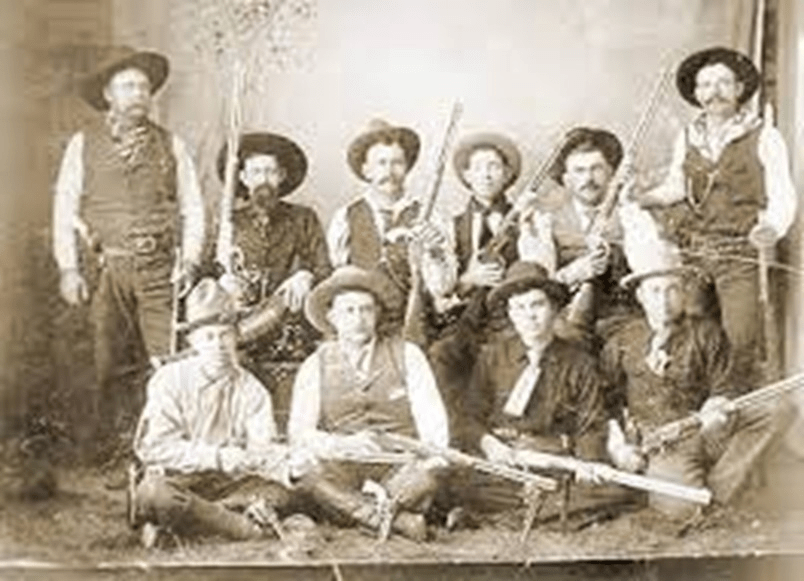


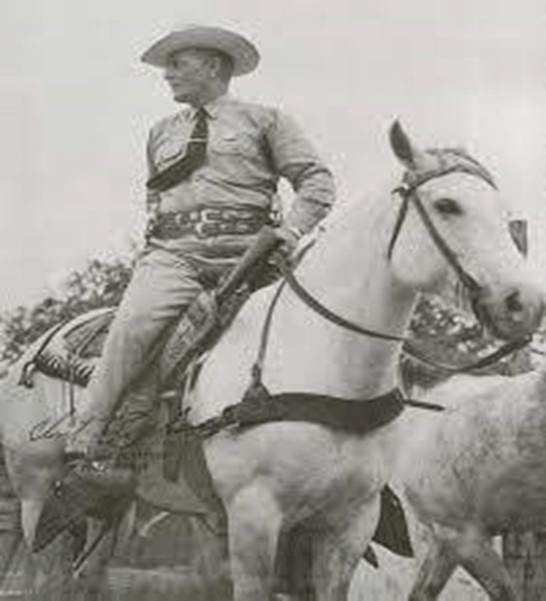



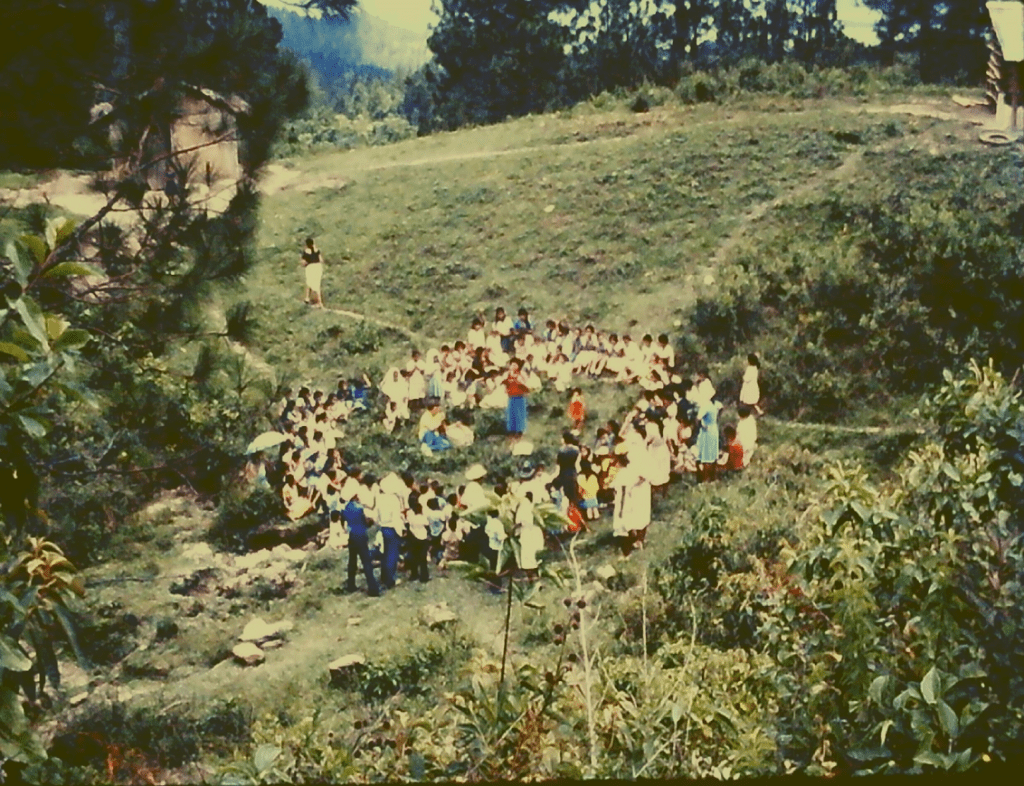


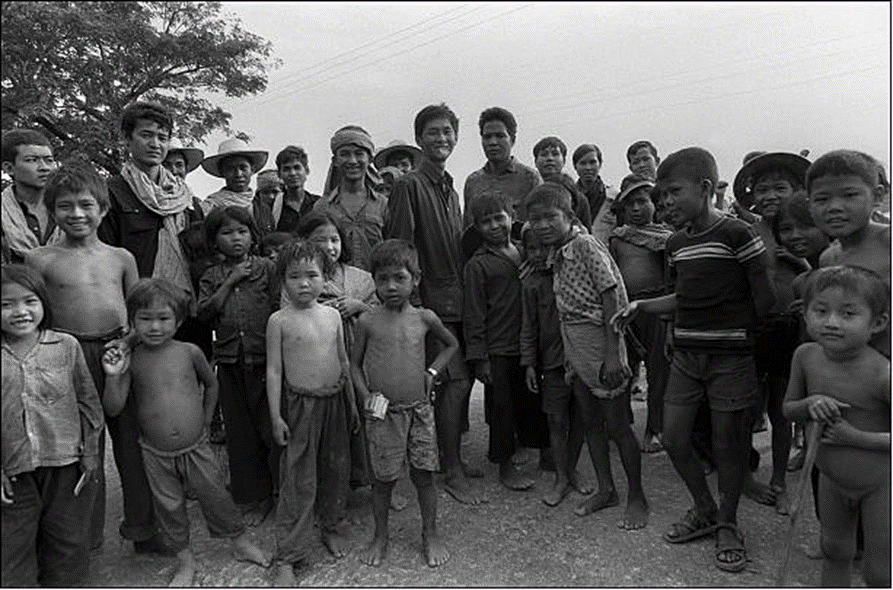



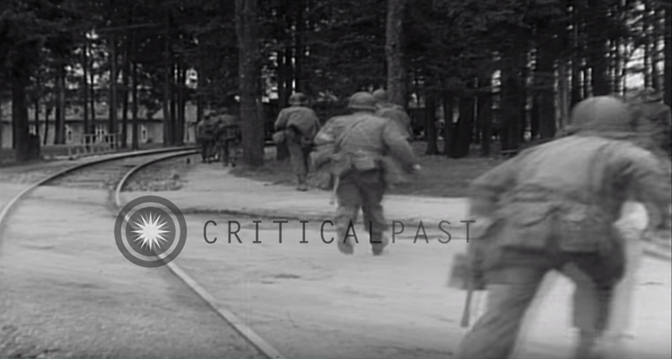

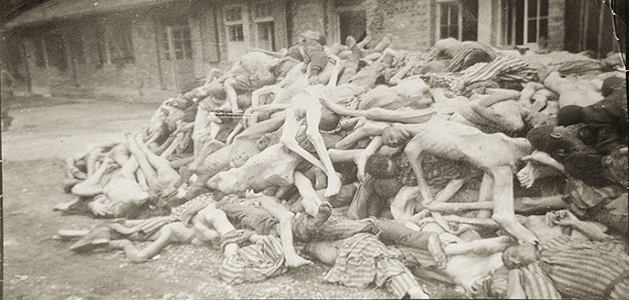

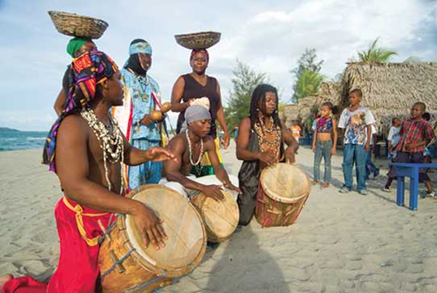
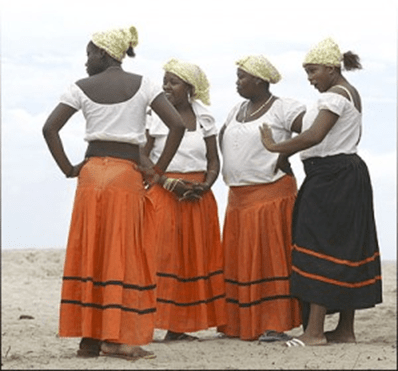
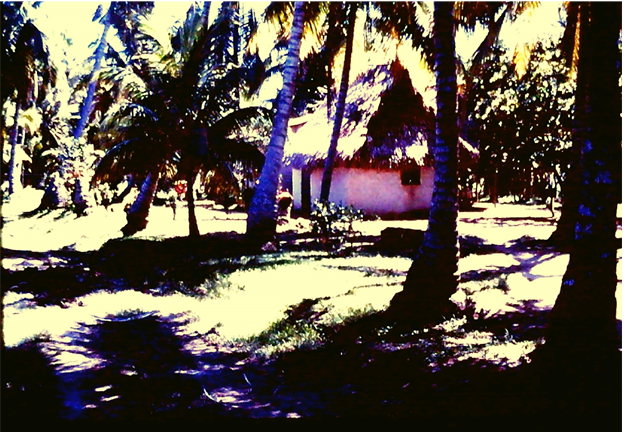

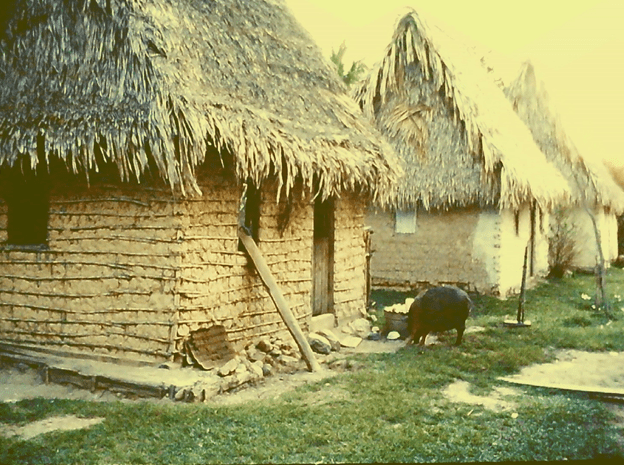
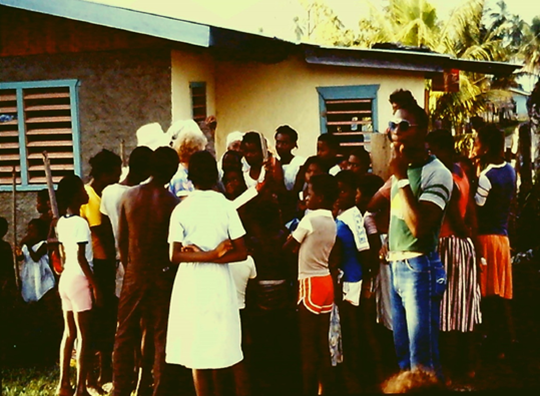

 True Texan Tales