In Tela, where our medical teams stayed so many times, they had one little public hospital and one doctor……Dr. Gunera. He and I had become good friends. One time he came to the US to attend a medical seminar in Las Vegas for a week. At the end of the week he came back through Dallas and had his wife fly up from Honduras and meet him there. The two of them stayed for a week on my ranch. I loaned them one of our vehicles and they had a great time touring all over north Texas.
Shortly before I met him, he and his whole family were led to the Lord in their home by a very interesting fellow. This fellow is famous all over Mexico, Central America and South America. He had a radio show that was listened to by millions of people there five days each week. He was originally from Argentina, and Argentin Spanish sounds particularly well over the radio. He went with me on two medical trips, and all the ladies in particular there knew him and adored him. He transcribed the show at a studio in the Mid-cities between Dallas and Ft. Worth. He did not preach, he did not give any opinions, he did not teach, he just read the bible.
I never realized how many people, particularly the women in the Hispanic world on our continent cannot read. And even if they can, they cannot read well enough to understand the bible. They just religiously listened to him reading the bible to them. He had quite a useful radio ministry.
Dr. Gunera loved tennis and played with me on my court on my ranch. And in Tela there was a tennis court left over from the days United Fruit was headquartered there. Every time I went down, I would take him a supply of tennis balls which were non-existent for purchase in Tela.
I would go down there two or three days before our medical teams were to arrive. Dr. Gunera and I would go out and select the sites for the clinics. They had Public Health ladies scattered out across the country-side. We would have them pass out numbers to the people who were the most in need of treatment. That way things were much more orderly for the clinics. If you had no number, you were not seen.
It was also absolutely heart rending to see ladies with little babies in their arms who may die if they did not get certain of our medicines, like a series of anti-biotics to kill an infection. And they did not get a number. And by late in the afternoon, the doctors and nurses and dentists were just absolutely totally fatigued from all the work they had put in, especially in that heat. They just had to leave and go back and get refreshed for the next day at a new location.
When I would stay to gather up all the equipment, those ladies would not say a word, but would “speak and plead” with me with their eyes. It is hard to describe, but sometimes even now, I wake-up in the middle of the night seeing those pleading eyes.
None of these People got a Number, but they are Just Hanging Around, Hoping to get into the Clinic for Treatment, Someway!
None of these People got a Number, but they are Just Hanging Around Hoping to get nto the Clinic, Someway!
The Public Health ladies also had the authority to send people who were very ill in to Dr. Gunera’s little hospital. He did not do major operations, and he had only a very limited supply of drugs for them. He had ladies there who were not RN’s but knew enough to help nurse them back to health if at all possible, as best they could.
Most times Dr. Gunera would come help in our clinics when we had them in his area. One day when we were having a clinic fairly close to Tela, they sent out a messenger for him to come back to town. At that time the Communists had taken over Nicaragua and the KGB contingent there was trying to take over Salvador and Honduras and Guatemala and Belize. The US Navy had instituted a program of visiting the different ports up and down the coast in those countries and distributing things like medical supplies as a good-will gesture. Since Tela had a port from which United Fruit still shipped out their bananas, it could take a deep draft ship.
The message for Dr. Gunera was that a full-size US Navy Destroyer was coming in to deliver medical supplies to him. We went together down to the port and arrived just as the Destroyer was docking. The Navy had arranged for the press to be there. There were lots of pictures being taken of Dr. Gunera meeting the ship’s officers and of the Mayor of Tela meeting them too.
But what Dr. Gunera was interested in was what may be coming off that ship. We stood there together watching as rows of sailors were carrying boxes of medical supplies down the wharf. I was watching Dr. Gunera as his face just fell from its previous expression of expectation. The Navy had nothing there that he really needed. They had boxes and boxes of plastic pulmonary devices that the Navy probably did not want and that he had little use for either, though they looked impressive for the attending press. I had already gotten him a huge supply of Tylenol from a US company, so he did not need the boxes and boxes of Tylenol that the sailors were bringing down. What he really needed was all kinds of anti-biotics, but they were not on the Destroyer.
I determined to go back and contact the Navy and find the officer in charge of that program and tell him that they were not really helping. I did find him and he already knew. He was very apologetic. But he knew how the system worked. He did promise that he would do his very best to get Dr. Gunera a supply of things that he really needed.
So, while we were standing there at the wharf, I asked Dr. Gunera what single thing he needed more than anything else. He was quick with the answer…..anti-venom. They have a pit-viper down there called a Yellow Beard. It gets its name from the yellow strip around its bottom lip. They are called pit-vipers because their head is indented or concave. That allows them to sense heat from a mammal or a human leg and strike in the dark. In the US our pit-vipers are rattle snakes, water moccasins, and copper heads.
Dr. Gunera said that the yellow beards were so deadly that of all those people who had been bitten in his area, only three had made it to his hospital without dying, and that all three of those died after they arrived. They are a particular scourge to the ladies who work in the rice fields.
Anyway, the Navy officer promised to try his best to get Dr. Gunera some anti-venom.
This was one incredible woman. She was born in Missouri but wound up with her husband and two young children in Sherman, Texas. At the very worst part of the great depression, her husband just left her and the children. She figured that if they were not going to starve, she had better get a job.
She went downtown and walked around the square. She picked out the store that she liked best and went in and asked to see the manager. She made it into his office and presented her case. The manager said: “Let me see if I have got this right, lady. There are a host of people outside desperately wanting a job. So, you walked around the square and picked out my store to come and work for.” Mary said: “That is correct.”
The manger explained that he didn’t need any more employees and that besides, he had a list of job applicants a “mile long”. However, Mary was quite insistent, and finally proposed to work for no salary, only on commission. The manger was so taken-aback by this that he just agreed. So, she went down to work.
On that very first day, Mary observed that most everything in the store had a price that ended in 95 or 98 or 99 cents. She knew that women in those days most all mended their own clothing and were always needing another spool of thread. So, she put the tree with spools of thread up by the cash register, and had the women take their change in spools of thread which were priced in those days at one cent per spool.
The manager was so impressed that he hired her to a regular job before the day was over.
She then moved her children down to Dallas and studied to be a CPA. She became the bookkeeper/accountant for a prominent furniture store. At that store she observed that women would come in and buy a whole complement of furniture, but that they had no idea about what colors in their home would look best with the furniture, and especially what accessories would dress-up the room to go best with the furniture. Those thoughts never left her.
She eventually got a job with a fellow who was selling such accessories on the “party plan”. In “nothing flat” she had 500 women in her pyramid group. When the owner refused to pay the money and bonuses she had earned under the plan since it was so large, she left and formed her own company.
She named it Home Interiors and Gifts. She then needed a loan to furnish the capital to grow her company. She went around to most all the banks in downtown Dallas with no success. Finally, one banker was so intrigued with her, that he made her the loan. Later, when she was putting millions of dollars into that bank’s coffers, was he ever glad that he had decided to have faith in Mary Crowley. She stayed very loyal to that bank.
She not only recruited a multitude of ladies to work for her direct selling company, she was so influential with her powerful personality, that she influenced those ladies to totally remake their lives for the better and become close to God. Those ladies’ husbands loved her too since she insisted that her ladies take special care of their husbands in all ways.
Mary was especially noted for her “sayings” that she would give her ladies to inspire them. The company even had a little book of her sayings printed. It has a powder blue cover with gold writing on the cover.
Incredible Mary Crowley
Mary would tell those ladies, all across America, as she pointed at them: “Ladies, you be somebody; God didn’t have time to make a nobody!!!”
She trained her friend Mary Kay Ash how to do direct selling. Mary Kay concentrated on selling cosmetics and skin care products. They made an unwritten deal with each other that Mary Crowley would never sell cosmetics, and Mary Kay would never sell home interior products.
As a reward, Mary Kay would have her best producers get one of her pink Cadillacs for a year. However, Mary Crowley more concentrated on “mink”. To her, mink represented success and “having arrived”. Over and over she would tell her ladies……..”Think Mink!” She became famous for it.
Mary had special philanthropies that she gave too, such as her Cancer Research Center, but on top of all that, she gave away approximately 8 million dollars every year to various other special causes, like putting certain young people through Dallas Baptist University with a full scholarship.
Mary just didn’t fool with the trivial. One of her famous sayings had to do with problems that would keep most folks up at night worrying about them. Mary would say: “I am not going to worry about that tonight. I am going to turn that over to Jesus to handle and just go on to sleep. He is going to be up all night anyway!”
She was particularly interested in Dallas Baptist University and its high academics set into a Christian context. That is where we first met, as Trustees of the University. I can’t really describe it, but we became so closely bonded together. It was out of the ordinary and most unusual. When she went off that board, having served her allotted terms, I am sure that is why I was asked to be Chairman of the Board of Trustees, when I was way too young for that job. Whatever Mary wanted, she usually got.
On quite a few occasions, Mary Crowley and Mary Kay Ash would have me to lunch at some big prominent luncheon spot in Dallas. They would have some specific project that they would want me to handle. But on those occasions, there would be 50 or 60 other women in there having lunch. They would all be watching these two famous and well known ladies sitting on both sides of this young man and earnestly talking to him. It was quite obvious that they would really like to know what those two well known ladies were telling him.
Mary Kay Ash on the left
Mary was so important to that company. When a big group of her ladies would be having a meeting somewhere in America it was imperative that she be there. No substitute would do. As a result, they had two Fan Jet Falcon’s and a compliment of pilots to be sure that she got there. The 2nd Falcon was just in case the first one may have some problem to keep it from flying that day. Mary was quite low-key as respects showing off, but her people insisted on those jet Falcon planes.
One of Mary’s Fan Jet Falcons
Late in her career she built herself a new house in one of Dallas’ “Silk Stocking” areas along Inwood road. I went there many times, but the first time, her house-warming occasion, was most impressive. “Everyone” was there. I distinctly remember visiting with Tom Landry (coach of the Dallas Cowboy’s) and his wife. Mary took me on a tour of it. I have seen some big closets. I have a big closet, but I have never seen one like the one in her bedroom. It was so long, that when you looked down it, past all that plethora of fur coats, it was like the two sides came together in the far distance.
Out back of the house on a little island in the creek she had built a private chapel. What I remember most about it was the high-backed chairs that Billy Graham had given her for it. They had come from a nunnery in Europe where the nuns would kneel in the seat of the chairs for their morning and evening prayers.
So, folks, I have gone through all this about Mary to just relate one little story concerning the theme of this book.
At the Fairmont Hotel in Dallas in the late 1970’s there was this monster, prestigious dinner to honor a famous dignitary. All manner of people were there, including the President of the United States. As part of the program, toward the end, Mary was to speak for a short time, W. Clement Stone, who founded and was President of the Combined Insurance Companies of America and the founder of the Positive Mental Attitude Movement, was to speak for a short time, then the President was to speak, and finally Mary was to give a prayer to finish off the evening.
In order to accommodate all the dignitaries at the head table, they had constructed five levels behind it. Each level had continuous tables for eating with chairs behind them. By the time you got to the fifth level it was really high. I estimated at least over a full story in height all the way from the fifth level to the concrete floor behin.
I was placed in the next to the top level.
Mary now had cancer again. Most people there knew that this was probably the last time they would ever be seeing her in a public setting. The night before the dinner Mary called me. She knew that this was probably the last time she would ever be able to greet all the people there who would want to come up to see her. She also knew how tough and protective that her son could be…….that as soon as she was finished, he would just grab her and whisk her out.
She told me that the moment she finished her prayer, she wanted me to be standing right there beside her to shield her and make sure that she would be able to greet all those dear well-wishers. Mary said: “Ronald, you be right there beside me when I finish!!! Do you understand???”
So, the evening progressed. However, there was one near tragedy. Most of us had heard W. Clement Stone’s standard life story speech several times. But now he was really “up in years”. When he got up there in front of that mike he was speaking again as he had done so many, many times. He just started into his standard speech. We all knew that it lasted nearly an hour. No one wanted to wait an hour to hear the President. I was just cringing. The Master of Ceremonies for the evening didn’t know what to do. There was only one person there who could gracefully salvage the evening,…… Mary Crowley. Bless her heart, she slipped up there, put her arm around old Clement and led him back to his chair. I thought I could hear a sigh of relief across that whole vast audience.
But I had my problem. How was I going to be able to get down from my perch to be standing beside Mary just as she finished her prayer? Particularly how was I ever going to be able to get past all those Secret Service guys who were guarding the President. To come down those stairs while she was praying was going to look so out of place, which is exactly what those guys would be looking for.
The plan that I devised was to step up to the top level and walk behind all those people eating on the top level and go all the way down to the end and get down those end stairs someway. Ringing in my head were Mary’s words: “Ronald, you be there!!!”
So just as she started her prayer, I stepped up to the top level and started along behind the people there. I looked down and saw how very far it was to the concrete way down below. I remember thinking, there should be some kind of railing here. This is dangerous.
I hadn’t gotten but a very short distance when for some strange reason this big fellow just lurched back in his chair. I wasn’t expecting or anticipating such. He just toppled me off. I was headed down, head first, toward that distant concrete.
I don’t expect you to believe what happened next. I can’t even believe it. But so help me God, it is absolutely true. I just floated all the way down. I landed prone on my back as lightly as a feather. I have never ever felt such an absolutely peaceful feeling in my whole life as while I was floating down……..no broken neck, no broken leg!.
Now I was on the same level as the speaker’s rostrum. I walked around that built up structure, past two Secret Service guys, trying to look like I belonged there as best as I could. I was not stopped, and just as Mary finished her prayer, I was standing by her side.
Folks, please believe me. That floating descent was no accident!!!
Under Chairman Mao Zedong the Chinese people suffered greatly. He was a total dictator and not only repressive, but capricious as well. When he died and his surviving leaders were thrown out, Deng Xiaoping became China’s leader. Below I describe how he was heading China toward much more democracy and freedoms. He hand-picked China’s succeeding Presidents who were also leading China into more democracy and freedoms.
Upon Deng’s death, Xi Jinping was elected President. He proceeded to change the Chinese Constitution and make himself a total dictator for life. There is not indication that he will ever be repressive like Mao, but no one is sure just where he will now lead China. However, since China is such a very major player in the world’s economy and the #1 consumer of oil and most other minerals. And since China has such a huge influence upon the US and the US economy, it is really important to know all about Xi Jinping. If you will read the info that I have provided below, you will understand much more about him and his close relations with the US in his past life.
China Now
I have written earlier about how Deng Xiaoping visited Singapore very soon after becoming the new leader of China; and how he brought back to China the freedoms that he saw among the ethnic Chinese there and the policies as respects the freedom for businesses that Singapore’s famous leader, Lee Kuan Yew taught him.
Lee kuan Yew
I mentioned how he granted freedoms first to the farmers and how they became rich. The freedoms eventually were granted to all of the different groups across China and the people did become rich in great numbers. Never in the history of our planet has so much wealth been accumulated in such a short time. I would go there and visit with regular common folks as respects assets. I would come back two years later and they would be worth 100 and 200 million US dollars. It was amazing.
When Deng told them to “go get rich” they did. Even the military officers were getting rich. I could hardly believe the sight of Chinese Army trucks delivering goods to Wal-Mart. Finally, they had to ban Chinese military officers from being in business. That is when so many of them resigned their commissions and left the Army to peruse their businesses instead.
Deng Xiaoping
Even though Deng gave businesses freedoms, left over from the Communist system they still had all of this monstrous, stifling system of regulations. You needed to get permission to do most anything. However, as you probably know, just an average Chinese has a really high IQ. You have probably observed how on occasion just an average Chinese will get permission to live here and bring their children. The child will speak no English upon arriving, but in only two years he will be the valedictorian upon his graduation from one of our high schools.
It did not take these clever Chinese long to learn how to deal with this plethora of stifling regulations. If you were going to start a business or build a building or even a cluster of high-rise buildings, you just made it part of your budget to allocate the money needed to pay whatever official needed to be paid to get that specific permission. It just became their system. Since the municipalities there own most all of the land, you had that as part of your budget also, to pay that municipal official for permission to buy the land you needed and to get a very fair price for it.
Another part of this system was taking whoever you needed the favor from out to a fabulous dinner. I have been to many, many of those dinners. They were usually at lavishly outfitted restaurants in one of their many private upstairs paneled rooms. They were always at one of those huge, round tables with the whole center part revolving. You eat at only a small space between the big revolving part and the edge. The more lavish the dinner, the more exotic the food. On my last trip to China I ate eleven different kinds of snakes.
They nearly always start with turtle soup, and the whole turtle shell must be showing. Literally tons of turtles are being shipped to China out of the Port of Houston. Most are being trapped along the whole length of the Trinity River and other rivers leading into the Gulf of Mexico. It is quite a thriving business as long as the turtle population lasts.
These dinners will have a vast array of different foods. Toward the end, they serve different fruits. Finally the main ending soup of the meal is served. That signals the end; when the soup comes. They don’t serve desert.
However, these meals do not constitute the end of the evening. The host and principle guests all go to one of the big facilities owned and run by the hospitals in that particular city. There you are met by male and lovely female greeters garbed in hospital clothing. The women are ushered off to the right, and the men to the left. You go down a stairway to a huge shower room. There are all manner of steam baths there for taking off weight, but for the occasions I am describing, each male host and guest take a shower. Then they are ushered
into another room where a young man scrubs down their body to take off all the old skin. After you survive that, you go back and take another shower. You are then issued a sumptuous terry cloth robe and are ushered upstairs to a private room where you meet the ladies in the same type of robes. These rooms have a long line of massage tables where beautiful, tall Chinese young ladies lay you down for a fantastic full body massage.
The ladies then discuss lady things, and the men discuss sports and sometimes business. I just wish they would all be quiet so that I could enjoy that massage in peaceful quiet.
If the hosts and hostesses of the evening think you have already had massages earlier in the week, they take the whole party to another kind of facility. It is not run by hospitals, but it has private rooms for each such party.
You enter that room and there is a long line of very comfortable recliner chairs. In front of each chair is an oak bucket that is filled in the bottom with small round river rocks. You sit down, and the bucket is filled with very warm water and different kinds of herbs.
At that point a very beautiful young lady takes off your shoes and proceeds to bath and massage your feet. I have timed these, and they usually last at least two hours. She knows so very many ways to pleasure your feet. You would think that after two hours this would “get old”, but I have never wanted her to quit.
But, the evening still does not end there. The hosts and hostesses and guests all travel to one of the special Chinese Tea Houses. There you all sit together in a fairly private room. At the head of the little room is a lovely young Chinese lady who goes through their elaborate tea ceremony and continuously serves tea to everyone in their special, small tea cups.
At this point, the women continue their lady discussions and the men get down to their real business. After about two hours the tea party is over and everyone goes home.
99% of the Chinese, other than the country and farm dwellers, live in high-rise buildings in what we would call condos. If you want to build such a condo or office building in Dallas or Atlanta it takes at least two to three years to get all the permissions and zoning that you need. If you live in California or New Jersey or New York it takes 6 to 7 years in most cases. In the “payoff system” the Chinese developed, you were finished with all permissions and land purchase and zoning in only 2 weeks in most cases and ready for construction. Anywhere in the world wherever this kind of accelerated, freedom of business activity has existed, amazing growth and enormous wealth creation has developed. China’s GDP growth under most of Deng’s tenure was 10 and 12% and more, per year.
I pass no judgment on the “pay-off for permission” system that they developed. It was their system under all of Deng Xiaoping’s tenure of leadership. Toward the end of his life he appointed new Presidents, but everyone knew he was still the boss. His reign lasted from 1978 until his death in 1997. The last Presidents that China had before its present one were appointed by Deng after he went into semi-retirement. They pretty much continued Deng’s policies on increasing freedoms for the people. The first was Hu Yaobang. He allowed even more freedoms. Next was Jiang Zemin who was still controlled by Deng. Then they had Hu Jiantao who was groomed by Deng for the job. He served until the present President/Chairman, continuing Deng’s policies.
On March 14, 2014 Xi Jinping became the President of the People’s Republic of China.
President Xi Jinping
President Xi Jinping was born in Beijing on 15 June 1953. He is the second son of XiZhongxun and his wife QiXin. After the founding of the People’s Republic of China in 1949 by Mao Zedong, Xi‘s father held a series of posts, including propaganda chief, vice-premier, and vice-chairman of the National People’s Congress.
However, Mao Zedong was just like Stalin, who he patterned his life after. He was always suspicious of those under him and continually purged them. Sure enough In 1963, when Xi was age 10, his father was purged from the Party and sent to work in a factory in Luoyang, Henan Province. Then in 1966 that horrid Cultural Revolution broke out.
Student militants ransacked the Xi family home and one of Xi‘s sisters, Xi Heping, was killed. Later, his mother was forced to publicly denounce his father, as he was paraded before a crowd as an enemy of the revolution and was put into prison. Without his father’s political “shield”, Xi was sent to the countryside like so many others to work on a farm in a little village near Yan‘an in Shaanxi Province. Life was so severe and oppressive as so many others experienced, that he ran away to Beijing. But they found him. He was arrested and sent to a work camp to dig ditches. He worked diligently and became boss of his production team. When asked later about this experience by Chinese state television, Xi recalled, “It was emotional. It was a mood. And when the ideals of the Cultural Revolution could not be realized, it proved an illusion.
He continued to advance there “where he was planted”. From 1975 to 1979, Xi studied chemical engineering at Beijing’s Tsinghua University as a “Worker-Peasant-Soldier student“. There engineering majors spent about one-fifth of their time studying Marxism–Leninism–Mao Zedong thought, doing farm work and “learning from the People’s Liberation Army”.
From 1979 to 1982, Xi got a job as secretary for a fellow who had once worked for his father, GengBiao, the then vice premier and secretary-general of the Central Military Commission. At this job Xi got some military background and experience. Then in 1985, as part of a Chinese delegation to study U.S. agriculture, he stayed in the home of an American family in the town of Muscatine, Iowa. This trip, and his two-week stay with a U.S. family, is said to have had a lasting impression upon him and his views on the United States.
He continued to “climb the ladder” in the Communist party and the political establishment. Then in 2007 he was ranked above LiKequiang on the 9 man Politburo Standing Committee of the Communist Party of China, a sure indication that he was gong to succeed HuJiantao as China’s next leader. In 2008 he became Vice President of the Central Secretariat and also in the same year he was put in charge of preparations for the 2008 Olympics held in Beijing.
In 2012 he traveled to Ireland and Turkey and to the United States again. He visited with V.P. Joe Biden and President BarackObama, but he insisted on that trip that he go back and visit the family in Muscatine, Iowa that he had lived with years before.
I read a translation of Xi’s inaugural address to the nation at the People’s Party Congress in the Great Hall of the People upon his becoming the new President of China. He stressed a few things directly and specifically. He promised to immediately and completely do away with the “pay-off system” that had become a Chinese business norm, and to do away with the multitude of “permissions” demanded by Communist Cadres on businesses. I was greatly heartened by this. I hoped that he would drift toward a democratic system as Deng and his picked successors had been doing.
One reason that I was hopeful of this was that Xi’s daughter, XiMingze, had just returned from getting her degree in the US at Harvard. Xi’s first wife wanted to go and live in Britain. He did not, so they divorced.
He then married the beautiful PengLiyuan who was one of the most popular entertainers in all China. She is a celebrity soprano. XiMingze is their only child. She attended Harvard under an assumed name. They say that only 10 people knew her true identity. She majored in Psychology and English. She crossed the podium at Adams House for her degree, the same dorm that housed Franklin Roosevelt and Henry Kissinger, at age 22.
No one knows how much of an influence she may be on her father. I am hoping that she may be an influence for tolerance and freedoms in China, but it does not look that way.
After his inaugural address, Xi immediately started to crack down on any payoffs. However, his big mistake as respects business, is that he stopped the payoff system without stopping the red-tape of all the permissions demanded of businesses first. Gone were most all the lavish dinners, the different massage treatments and the trips to the lovely tea houses.
In his inaugural address he has promised to purify the Communist Party. This turned out to be a purging of anyone who may be even the slightest threat to his power. This was easy to do. Since everyone was getting payoffs, he could easily purge anyone by showing that they had been taking money for permissions. He called this purging program “Tigers and Flies”……. Meaning that he would not only get rid of the big officials that he did not want, but a multitude of little people. He purged former Central Military Commission vice-chairman XuCaihou, former Politburo Standing Committee member and security chief ZhouYongkang and former HuJintao chief aide Ling Jihua.
So much of the power in China rests with the many municipalities and their leaders. Xi initiated the formation of “centrally-dispatched inspection teams”. These were essentially cross-jurisdictional squads of officials whose main task was to gain more in-depth understanding of the operations of provincial and local party organizations, and in the process, also enforce party discipline mandated by Beijing.
Many of the work teams also had the effect of identifying and initiating investigations of high-ranking officials. Over one hundred provincial-ministerial level officials were implicated during a massive nationwide anti-corruption campaign. These included former and current regional officials (SuRong, BaiEnpei, Wan Qingliang), leading figures of state-owned enterprises and central government organs (Song Lin, LiuTienan), and highly ranked generals in the military (GuJunshan). In June 2014, the Shanxi provincial political establishment was decimated, with four officials dismissed within a week from the provincial party organization’s top ranks. Within the first two years of the campaign alone, over 200,000 low-ranking officials received warnings, fines, and demotions. And in China a clean-up is not like here, many of these people were just shot. I would come back to China and ask about a former friend, only to be informed that he had been shot dead by firing squad.
In consolidating his power, Xi formed several new commissions. A new National Security Commission was formed with Xi at its helm. The Central Leading Group for Comprehensively Deepening Reforms…….another ad-hoc policy coordination body led by Xi…….was also formed to oversee the implementation of the reform agenda. Termed (“comprehensive deepening reforms”), they were said to be the most significant in 25 years.
In 2013 at the Communist Party’s Third Plenum they created the National Security Commission of the Communist Party of China, another body chaired by Xi. This is believed to have ultimateoversight over issues of national security such as combating terrorism, intelligence, espionage, ultimately incorporating many areas of jurisdiction formerly vested in others.
Xi has been really active in all Chinese military affairs. He has taken a direct, hands-on approach to military reform. In addition to being the Chairman of the Central Military Commission, and the leader of the Central Leading Group for Military Reform founded in 2014 to oversee comprehensive military reforms, Xi has delivered numerous high-profile pronouncements vowing to clean up malfeasance and complacency in the military, aiming to build a more effective fighting force. In 2014 he held a conference of all of China’s top military officers to re-emphase the principle of “the party has absolute control over the army”. One university professor in the US who closely studies China’s military says: “Xi has been able to take political control of the military to an extent that exceeds what Mao and Deng had done”.
On 21 April 2016 Xi was named commander-in-chief of the country’s new Joint Operations Command Center of the People’s Liberation Army. That puts him as head of all military affairs for China. Another military affairs expert in the US says: “Xi not only controls the military but also does it in an absolute manner, and that in wartime, he is ready to command personally”.
Finally in an ultimate stroke of consolidating power, in March 2018, the party-controlled National People’s Congress passed a set of constitutional amendments including removal of term limits for the president as well as enhancing the central role of the Communist Party. Then on 17 March 2018, the Chinese legislature reappointed Xi as president, now without term limits ……….President for life.
Xi claims that all this concentration of power is so that he can better the country by streamlining the cumbersome government bureaucracy. For instance, he caused the whole legal system to be changed “for more transparency in legal proceedings, more involvement of ordinary citizens in the legislative process, and an overall ‘professionalization’ of the legal workforce.” It was stated that “the reform of the legal system was needed because it had been perceived as ineffective at delivering justice and affected by corruption, local government interference and lack of constitutional oversight.”
Xi caused the Plenum to announce that “market forces” would begin to play a “decisive” role in allocating resources. This meant that the state would gradually reduce its involvement in the distribution of capital, and restructure state-owned enterprises to allow further competition, potentially by attracting foreign and private sector players in industries that were previously highly regulated. This policy aimed to address the bloated state sector that had unduly profited from an earlier round of re-structuring by purchasing assets at below-market prices, assets which were no longer being used productively.
All this sounds great, but his dogmatic thoughts about “anti capitalism” and his other highly Marxist thoughts have been actually inculcated into their current Constitution.
Communism did not enjoy an immaculate conception in China. Rather, it was grafted onto an existing ideological system…..the classical Chinese dynastic system. China has an unusual veneration for the written word, and acceptance of its value for teaching principles about life and systems. China’s veneration of the written word causes stories, histories, and teachers to have great moral authority. As a result we are seeing Xi making his claim to be the true Revolutionary Successor of Mao. Xi’s language of “party purity; criticism and self criticism”; his obsession with “unity”; his attacks on elements of “hostile Western liberalism”, “constitutionalism” and other variants of ideological “subversions”……..this is all Marxism-Leninism as interpreted by Stalin as re-interpreted by Mao.
So, we have this new leader of China, with highly concentrated power who can take the country in most any direction……toward liberation and freedom for the people, or as a despot holding on to power through coercion and total thought control of the people.
I suggest that we sincerely pray for him to take the course that God would have him to, for the benefit of the people and for him to allow policies that will lead to the Gospel being further spread across that huge diverse country.
P.S. This is to all my many friends in China who read these stories ……………这是向所有读过这些故事的中国朋友问好。 请,请,如果您不介意,请给我发电子邮件并告诉我有关您的信息。我的E-mail地址是………..ronald82@verizon.net
This is an excerpt from my 400+ page book. I sent part of it out to you two years ago, but the plethora of people reading these stories in China did not get to see it. And because they want to see it, I am herewith sending an edited version of it again.
Ron
Shandong Province
While in China with Chinese Intelligence and the group of graduate students from Dallas Baptist University, I wanted to visit and see the area where Lottie Moon had ministered. So, they agreed to take me there. At that time there were no flights to Yantai, the main prefecture city. There were no fast trains, either. We had to take a really slow “local” that made many stops and took two nights.
That coastal area of China is famous for its seafood, and I can attest that it is really great. But we were there in January and it was really cold. What tourists come there, come in the summer. We had to wear really warm clothing, for the hotels and restaurants are just not prepared for hosting people in the cold winters there.
The Chinese authorities that I met there had never heard of Miss Moon. Neither had the Intelligence people. I tried to tell them how famous she was and what an influence she had been there. I pitched it that if we found the church where she had worshiped, it would make that whole area a better tourist attraction. As a result, after I had left, the Chinese authorities did research and found that it was all true. They even discovered that The Baptists had established a Christian Seminary in the area.
Baker James Cauthen started the Seminary there. In 1939, Dr. Cauthen and his wife, Eloise, went to China as missionaries before the country fell to Japanese invaders.
Later he was executive secretary and then executive director of the Southern Baptist Convention’s Foreign Mission Board from 1954 until he retired at the end of 1979. The number of Southern Baptist missionaries increased from 908 to nearly 3,000 under his leadership. The number of countries where they served grew from 32 to 95. The Southern Baptist Convention is the nation’s main Baptist body, with more than 15 million members.
The evangelist Billy Graham called Dr. Cauthen ”one of the greatest missionary statesmen in all American church life.” The last time I heard him speak was at a colloquium in Williamsburg Virginia in 1976. (A convention is a gathering together of churches; a colloquium is a gathering together of universities.) As Chairman of the Board of Dallas Baptist University I went to the Colloquium of Baptist universities that was held there to commemorate the Bi-Centennial. It was dangerous to go to hear Dr. Cauthen speak. When he finished, you were ready to pack your bags and just leave for the foreign mission field.
Anyway, that night in Yantai the Chinese said we were to leave early the next morning for Penglai and visit Lottie Moon’s church which they had found.
Late that night I got a telephone call. Like who do I know in Yantai? It was Eloise Cauthen, Dr, Cauthen’s widow. She had come back to Shandong Province to “teach English” where she had been as a missionary way before WWII and where she had been reared, since her father had been a missionary there too. She had heard somehow that we were going to Penglai the next morning and she wanted to go too. She said that she had been able to go there and had driven by the church but was never given permission to go inside its gate and wall.
Certainly, I was happy to welcome her, and she was there bright and early the next morning. She had a helper that had been sent with her to Yantai by the Foreign Mission Board to take care of her as they were to “teach English” there. However, in my opinion, Mrs. Cauthen was in better shape than the helper. She looked great, all dressed in a fur coat and beautiful fur hat.
We boarded a little bus that the Chinese had provided. On the drive it was so interesting to visit with Mrs. Cauthen and hear her recollections of that area where she had been reared, and where she had returned with her husband in 1939. She said that she had visited the Baptist seminary buildings which were now a Chinese school. She said that she had even found her old piano which was still in use in the school.
We arrived in Penglai and as we went over the bridge spanning the river there, they pointed out the back of one of the church buildings that backed-up to the river. We turned left and went down a long lane of really old Chinese houses all jammed together with no spaces between and with their old-style tile roofs. We then turned left again into an open area in front of the main church sanctuary.
Of course, I wanted to be sure this was the real, authentic place. In one of Miss Moon’s biography’s there was a picture of a large commemorative arch over the old road to the church. It was a famous icon, for that area: The commemoration of a famous Chinese General from generations past, named Ji Qi Guang. Sure enough, just beyond the open space, over the old road was the big Arch. I knew we were for sure there, in front of Lottie Moon’s church’s sanctuary with its steeple and cross on top of that .
Mrs. Cauthen and I walked up to the gate. There was a small arch over the gate with a Christian cross built into the keystone of the arch. The hollow space of the cross was completely filled with stones that had been put there by the Cultural Revolution young people. You have probably read about it.
When Chairman Mao was afraid that he was going to be deposed, he started it. It was one of the most gruesome times in modern human history. These passionate teenagers took over the country to “cleanse it” as they called it. They all carried one of Chairman Mao’s little red books. Or, to give its full title, “Quotations from Chairman Mao Zedong”. It contains 267 aphorisms from the Communist Chinese leader, covering subjects such as class struggle, “correcting mistaken ideas” and the “mass line”, a key tenet of Mao Zedong Thought. It is dated May 1964. It is estimated that between 800 and 900 million copies were printed world-wide by 1967.
Hitler and Stalin were branded as mass murderers. What they did was nothing compared to Mao’s Cultural Revolution. Articles in History Today say that over 45 million people died under Mao. Many were starved to death, many were murdered, and many committed suicide. People had their jobs, homes, land, belongings and livelihoods taken from them. In collective canteens, food, distributed by the spoonful according to merit, became a weapon used to force people to follow the party’s every dictate.
It is not merely the extent of the catastrophe, but also the manner in which many people died: between two and three million victims were tortured to death or summarily killed, often for the slightest infraction. One article in History Today describes how when a boy stole a handful of grain in a Hunan village, local boss Xiong Dechang forced his father to bury him alive. The father died of grief a few days later. The case of Wang Ziyou was reported to the central leadership: One of his ears was chopped off, his legs were tied with iron wire, a ten kilogram stone was dropped on his back and then he was branded with a sizzling iron tool – punishment for digging up one potato.
Anyone who was a teacher or any kind of professional or even known to be educated was sent to the countryside to do menial labor on farms. So very many died there from starvation and abuse. All schools were closed for several of those years. When it finally ended, students who were now past college age did not know whether to go back to school or skip going back.
When you ask a Chinese who lived through that period, they will say, “I don’t know for sure what kind of government that I want, I just know that I never want anything like that again,” as I mentioned earlier. Another thing that it did that I also mentioned briefly earlier is that by wiping out all religion for that whole period, it created a spiritual vacuum that is now being filled by Christianity in many cases.
Anyway, back to Penglai and Miss Moon’s church. Like I said, the Cultural Revolution people had filled the Christian cross on the arch over the church’s gate with pebbles, but it was still quite visible.
We went through the gate and before we reached the door to the church, there just on our left was a fairly large obelisk type monument. It had inscriptions on all sides. Even though they were not in Simplified Mandarin, Mrs. Cauthen could read them. This was a stone monument commemorating Lottie Moon and her Girl’s School. Mrs. Mrs. Cauthen and I just stood there in amazed silence, thinking the same thing. The Cultural Revolution kids destroyed everything like this, for sure. We both acknowledged out loud that only God Himself had preserved this monument to Lottie Moon because of all her dedicated, Godly work and all that she and her memory stood for.
Monument to Miss Moon, Defaced by the Cultural Revolution but not destroyed
The inside of the church was all wood and very clean. It had been meticulously cleaned in anticipation of our arrival. The lectern was still there on the raised dais like ready for a sermon. The chairs for the choir were all in place. The pews were there, but they had all been moved back, for the local Chinese had been using the building to store sacks of cement. That was because it had the best roof in town that did not leak. We could still smell the cement which must have been moved out the afternoon before.
After looking around, Mrs. Cauthen went back outside. However, I went upstairs and looked through the class rooms there. I am sure these were used by Miss Moon so many years before. Many still had their little small sized chairs.
I went back outside and through the gate, and there was Mrs. Cauthen surrounded by a group of really old men who lived in those old row buildings. I took a picture of her in her fur hat conversing with them. She told me that they had related to her how her father, Wiley B Glass, had baptized them, many years before.
Mrs. Cauthen, Meeting the Old Men Who Were Baptized by Her Father so long Ago.
The Mayor of Penglai had us to lunch with other dignitaries of the town. They patiently listened as I encouraged them to preserve the church and to become acquainted with who Lottie Moon had been. I assured them that many Baptists from the US would want to visit, for I knew how important tourism would be to that poor area.
We went back to Yantai and took a train on to Jinan, the capital of Shandon Province, and then on to Shanghai from where we could catch a plane to the south part of China to Guilin where we could finally warm-up.
I do think that my exhortations to the Authorities in Penglai and also Chinese Intelligence there had an effect.
For, that church in Penglai now has a fine young pastor and is thriving. It is totally filled on Sundays and other days. In the church office they have two book cases filled with mementos of Lottie Moon and several pictures of her from those days. They dug them up from somewhere.
But what is really amazing to me is that every August they now hold a big celebration service in her honor. I think the tradition started in 2012 to honor what they called “the 100th anniversary celebration of Lottie Moon’s heavenly journey”. Different choirs come in from churches in all the surrounding communities, each dressed in their own distinctive robes. Women even act out scenes from her life as they sing and ask God to mold their lives as “Mu La Di” (the name they use for Lottie Moon) would want them to be. All through this service and the singing and the sermon that follows you hear the words “mu la di xiong di jie mei”, which translates “Miss Moon, my older sister”.
Bruce Moon is a fine Christian fellow who has taken many summer mission trips to China to teach English in their universities. His wife does amateur genealogical research and found that he was actually distantly related to Miss Moon as her fourth cousin “twice removed.” In 2015 while he was teaching in Beijing he got a three day weekend. He wondered if anyone in Shandon Province remembered Lottie Moon. He was able to book a fairly fast train straight to Yanti and a bus on to Penglai where he had reserved a room. On Saturday morning he asked the people in the hotel if they knew about this church. He had a picture of it on his cell phone. By now Bruce’s Chinese was fairly good. When he asked at the front desk about a “jiao hui” (church teaching meeting) or “jiao tang” (church teaching building) he got no response. Then when he showed them the picture they and the taxi driver there all said “Ji Qi Gong” the name of the famous General for which the arch had been built there over the road at the site of the church.
Bruce was able walk the few blocks straight there. He found the General’s arch and he found the church. Since it was a Saturday morning he figured no one would be there, but he heard singing from the sanctuary. He figured it must be a children’s choir practicing.
The gate was locked from the inside, but there were two men just inside that opened it for him. He saw the monument to Miss Moon that he had already heard about, then went on inside. Much to his amazement there were over 400 people there. Through amazing co-incidence (or as he later figured “God’s timing”) he had arrived on the one day of the year they were commemorating the memory of Lottie Moon. All the different choir’s were there in their different colored robes and the resident choir up front with their white robes. He said they had a large screen-projection up high in front honoring Miss Moon.
Picture of this Service by Bruce Moon and Screen Honoring Miss Moon
After all the performances the pastor of the church delivered a sermon where the said “Mu La Di” many times. Then he and the congregation sang “Jesus Loves” me, and a woman’s group sang two more songs. The finale was Beethoven’s “Ode to Joy” sung by the massed choirs.
On his way out, Bruce showed the pastor his passport with the name of Moon on it and explained that he was actually related to her. The pastor took him up to the church office and showed him all the old pictures of Miss Moon and her girls. There was even an old picture of the Moon home back in Virginia from the early 1800’s. Bruce had no idea how they got that.
New Pastor of Miss Moon’s Old Church, showing a picture of Miss Moon on display in his office.
So, because of Miss Moon’s remaining influence, her old church (Wulin Shenghui Church of Penglai) has recently been designated as a nationally protected historical and cultural site by The State Council of the People’s Republic of China.
In 2001, a new hall was built covering an area of 4,089 square meters (1 acre) with a capacity of more than 1,400 people at one time. The membership has now grown to more than 4,000.
Lottie Moons Church Today with the old fence torn down and the New Buildings
Lottie Moon’s Church Today with the old fence torn down and the New Buildings So, Miss Lottie Moon’s tradition and influence lives on there on the coast on Shandong Province in China.
Just as an example, here is a recent picture of 176 new Christians being baptized at one service of that church. In China they do not baptize laying down, but kneel beneath the water as Jesus did in the Jordan River.
This is an excerpt from my 400+ page book. I sent part of it out to you two years ago, but the plethora of people reading these stories in China did not get to see it. And because they want to see it, I am herewith sending an edited version of it again.
Ron
Miss Lottie Moon
If you have ever been involved with Southern Baptists, I am sure you know about Lottie Moon. She was a missionary to China in the late eighteen hundreds. Southern Baptists have the largest foreign mission effort of any group in the world. They raise almost all that money each year at Christmas time. It is called the Lottie Moon offering in honor of Miss Moon.
She was one of the last of the great Southern ladies. She was so fluent in Latin and Greek that she was offered a full Professorships at Harvard to teach Greek. That was a great honor and opportunity for a woman in those days as it would be today. She was also courted by some spectacular gentlemen wanting to marry her. However, she turned it all down to go to China as a single lady missionary to join her sister who had recently gone there. She sailed from San Francisco on September 1, 1873.
Lottie Moon in Early Years
She wound up in Shandong Province in the town of Penglai, just up the coast from the larger prefecture city of Yantai. Life was not easy in China in those days, especially in that cold sea-coast area. She was under five feet tall. Now days, most foreign missionaries get to return home every five years, but not in those days. She stayed for so very many years. However, she was forced to leave for Japan for a short time during the Boxer Rebellion in China, but returned to Shandong Province. She also returned home to bring her sister back just before Christmas in 1876. She did not have enough money to go back to China, but the Baptist churches in the area of her home got the money together for her to sail again for China on November 8,1877.
Two biographies have been written about her. If you want to be inspired concerning real service to God, I would encourage you to read one of them. The last is called The New Lottie Moon Story. For most all those years there she ran a girl’s boarding school headquartered in her residence with some classes meeting in the church she attended in Penglai. But she regularly took trips into the interior teaching the Gospel. Travel was really tough over the unimproved roads there. Most of the time she used a Shentze. It was a basket enclosed by curtains and hung on poles between two donkeys. To say the least, it was not a comfortable way to travel. At other times she would travel in a chair suspended from poles carried my men called bearers and hired at very low cost.
Picture of a Shentze just like those that carried Lottie Moon
She would stop at homes to teach the Gospel, mostly to groups of women. Life in the homes in the cold, wet countryside of Shandong Province revolved around the kang. It was a clay covered tunnel about three feet off t Picture of a Shentze just like those that carried Lottie Moonhe dirt floors. It varied from a few feet to five or more feet wide. It was hollow and heated usually from an opening to the outside by burning sticks and brush and sometimes coal. In a large room it would run down the center of the room. In a small room, it may take up the whole room. In her writings, Miss Moon described how she would teach the bible while sitting on the kang to keep warm. I have stayed in those farmhouses in Shandong Province on January days. We would eat off a low table with all sitting on the kang. Also, as honored guest on those occasions, I would get to sleep on the kang at night. It is the primary source for heat in those country homes, as it has been for thousands of years.
In her girl’s schools, Miss Moon taught the girls strict manners just like in the old South in the US. As part of their lessons, the girls were taught to memorize and recite whole sections of the bible. She wrote that some girls could recite the whole New Testament book of Mark and of Mathew.
Miss Moon with some of her girls
Penglai went by the name of Tengchow in those days, but it was a rather formal and dreary place. However, it was under consular authority and safe for foreigners.
Penglai was also a coastal city, like Yantai and for many generations was a naval headquarters. It has a large harbor that is dug out and still has the huge gates that could be closed to protect the old Chinese wooden ships after they had entered the harbor.
Part of the Old Harbor in Penglai as it still looks today
Just before the year 1885, Miss Moon began to hear about an area 120 miles inland called P’ingtu. Although it was an agricultural area, it had a walled city by the same name. No explanation has ever been found why, but the people in that whole area most all felt that there must be a real god and they were hungry and even anxious to know about Him. There were different vegetarian sects there which were anxiously open to knowing the Gospel. They were all seeking the real god that they just knew must exist but did not know how to find Him.
Miss Moon went there to visit for a month and eventually moved there. Previously, she had never been more than 50 miles inland. Living inland as a foreigner she had no official protection. The US Consul in Tengchow really frowned on any foreign women going inland. She was the only foreigner there, but she could not resist the hunger of the people there to know about the real God. She first made friends with the people individually in their homes, and then began to spread the Gospel to that whole area.
Hostesses on the Weilai Highspeed Railway that goes through P’ingtu now
Her letters back to Virginia were distributed to Baptist churches all across the Southern States. Such results of the Gospel being planted there in that foreign land were thrilling to the Christian people of the deep south.
Eventually, young college age girls would go and stay with Miss Moon during summers. She was such an inspiration to them. One of my favorite stories about Miss Moon happened on one of those summer evenings. It was her custom to read the bible and explain the scriptures to the young ladies and have prayer before bedtime. On this particular evening as Miss Moon was reading from the bible, the girls stopped her. They asked: “Miss Moon, what translation of the bible are you reading from? We have never heard it expressed in those particular words.” Miss Moon looked up a little confused, and then showed the girls that, as was her custom, she was reading directly from the Greek texts and translating to the girls straight from the Greek.
She stayed in that area of Shandong Province for the rest of her life, becoming a big influence on the people there. Finally in 1912, being quite ill, she got passage on a ship back to the US. However, she died aboard ship shortly after leaving on December 12.
Her letters back to the US were such an inspiration to the churches that she was a major influence for Foreign Missions to the whole Southern Baptist Denomination. As I mentioned earlier, under her name they raise most all their budget for foreign missions every year…..a big influence on the whole world.
See the next follow-up story about China next week……….”Shandong Province”.
This is an excerpt from my 400+ page book. I sent part of it out to you two years ago, but the plethora of people reading these stories in China did not get to see it. And because they want to see it, I am herewith sending an edited version of it again.
Ron
More on China
After the trip to China just described, I worked with Chinese Intelligence for 22 years. But before you question whether that was “good” or not let me explain. Shortly after 1980 the Chinese authorities were still determined to know about the United States’ “management system”………just like the authorities in Russia wanted to know.
Since central planning of a huge economy by government bureaucrats has never ever worked, and things in the U.S. economy work so wonderfully well by comparison, they assumed that we had this magically wonderful system as I have explained previously. Since Dallas is a well-known business center, they sent one of their bright young intelligence operatives to Dallas to find the answer to our system.
He enrolled in Dallas Baptist University to get a Master’s Degree in Business. Since I was on the Board of Trustees of the University, he came down to my office to meet me to gather his “intelligence information”. I wanted him to know our Capitalist system, so I was happy to co-operate. I actually had him read Adam Smith’s Wealth of Nations so he could learn about the “guiding had of the market” that works so well under the freedom of Capitalism.
We became good friends. However, he had been tasked by the Chinese Authorities with another task. They wanted to know about these Christians. Why do they want to come to China ? Are they a danger? Should we let them in? Do they want to overthrow the government? That is why he had enrolled in Dallas Baptist University, since it is a Christian school. He eventually sent reports to China that Christians were the most honest people that they would find….that Christians were the ones who could be the most trusted.
When China first opened-up there is no telling how many evangelical types wanted to go to China a be a missionary. There would be a Pentecostal pastor in Arkansas who had two churches there. He would feel that he needed to go to China and convert the people. China got a plethora of such requests. So many of such folks asked for permission to go there and teach English as a cover for their real mission.
My Chinese “Handler” was gracious enough to show me the response of his superiors. It went something like this: “Let them come and teach English. We need the hard currency they will bring. They are not going to hurt anything. We will watch them.”
In 1989 I went to China with my handler and a small group of Master’s Degree students from Dallas Baptist University. At that time it was still necessary to fly to Hong Kong, take the train to Guangzhou, and then fly to where ever one wished to go in China . We wished to fly directly on to Beijing . Right away I learned that there are certain advantages to a centrally planned and managed government if you are one of the “insiders”.
We were tired and wanted to get on to Beijing, but all the flights were full for the next several days. Those of us from the US thought what a bum situation that was. However, that was when my handler opened his wallet and pulled out this little card. I could not read the Chinese on it, but it looked very “official”. The airline folks promptly bumped off enough people on the next plane leaving Guangzhou and we promptly boarded and took off. Not good for regular Chinese citizens and tourists, but great for those in authority.
In Beijing I met with some of China ’s top authorities. This would happen at banquets that I would host for them. One of the most interesting was one where I hosted a banquet for the fellow who was over all of the many minority people groups in China. It was at one of those typical big round tables. He had brought many of his top aides. As at many such business dinners we had the big, common hot pot. This one was not electric, but coal fired with a big flue on top. The servers would bring in all kinds of meat thinly sliced and rolled into many small rolls……beef, pork, mutton, goat meat, dog meat, monkey meat, snake, and no telling what else. The Head of Minorities was from one of the minority provinces, Guangxi. His home was in Nanning, the capital of that province where I subsequently stayed many times. At my urging, he gave permission for the Jesus film to be put into several of the many minority languages spoken in Guangxi.
At this dinner, the hot pot was unusually large. It had a complete circle filled with boiling water around its base. People would take turns putting the different meats into the pot to boil and then take it out with their chopsticks to eat. However, they would take turns dipping their cooked meat into a big pot of extremely hot/spicy sauce to “out macho” each other. I really detest this macho stuff that some Chinese men do. So I broke all precedent and decorum and just dumped the whole bowl of the super hot sauce into the common circle of boiling water.
That stopped all the macho stuff, and as it turned out, greatly pleased the Head of Minorities since he did not like all the macho stuff either.
On this trip, we were there just a few months before the student takeover of Tiananmen Square. Deng Xiaoping was the absolute ruler of China from 1978 until his death in 1997. Late in his life he had others take the title of President of China, but he was still the boss. He had lived for 5 years in Paris , France. On that trip he passed through Singapore in1920. However, soon after taking over as the leader of China, he visited Singapore again in 1978.
Deng Xiaoping – former President of China
On his trip to Singapore he had a full schedule of activities. However, his first activity was to meet Lee Kuan Yew, Founding Father and First Premier of Singapore. Lee lived until he was age 91 and did not die until 3/23/2015 after governing for 30 years. Deng was so impressed with what Premier Lee had done to build that little country into one of the most prosperous places in the world, that he just canceled all of his schedule and spent almost the whole time with Premier Lee, learning how he had done such a fantastic job. One reason that he was so interested was that Singapore was almost totally populated with ethnic Chinese. They had most all come there as uneducated coolie laborers, but now they and their decedents were wealthy, sophisticated people.
Lee showed Deng that his main secret was to give business-people and most anyone wanting to go into business almost complete freedom…….as few restrictions as possible on starting and operating a business. What Deng saw in Singapore was such a revelation to him that he went back to China, determined to do the same thing there. He decided to implement these freedoms in stages. His first stage was to start with China ’s farmers. When I was there in 1989, the farmers had just received their first freedoms. They were setting up markets in all of the towns and cities across China and were getting rich. Later, Deng told everyone to “go and get rich”. And now, amazing wealth has been amassed across the country. China will soon have more billionaires than the US according to Forbes Magazine.
On that trip we visited a farmer’s co-op in Shandong province which was not only selling their agricultural products for good profits, they were generating the electricity for that whole area, they had all manner of side businesses, they had their own private planes, and were even charging money to show other farm groups how to do what they were doing. I will give more information about the results of Deng’s new policies and their influence on China later.
On this trip, I really wanted to meet Bishop Ting, who was over all Christian activities in China. His office was in Nanjing where he was head of a large seminary and where he was training new Christian pastors and was printing bibles to distribute across China. That printing operation was called Amity Press.
Before I left for China for that trip, my friends at Campus Crusade (like Dr. Bill Bright) told me that I would not get to meet him, since they had not gotten to meet him. I was told the same thing by Billy Graham’s folks. But they each told me that if I did get to meet him: “Would I please ask him questions that only he would know the answers to…….like, ‘Is there any Christian activity at all in North Korea.’”
We visited Nanjing, and found that Bishop Ting (he had once been an Anglican Bishop before the revolution) was quite shielded for some reason. It did seem that it was going to be impossible to meet him.
In China the Shanghai Language Institute is one of the primary places where Chinese Intelligence people are trained. If a Chinese ever tells you that is where he went to school, you can be sure that he is probably with their Intelligence Service. Well, my handler called one of his former classmates from that institution that he knew now lived in Nanjing. Amazingly she happened to have the private phone number of Bishop Ting. Bishop Ting was contacted and agreed to meet us the next day out in front of his Seminary, and in front of anyone who may be shielding him.
Original Nanjing Union Seminary
Here is the Seminary Today – Showing the result of the amazing rise of Christianity
Of course, I was concerned about how I could ask him the sensitive questions that those in the US had requested of me with official Chinese interpreters in attendance. There was no worry. Bishop Ting has a Master’s Degree in English from Boston College. My English will never be as good as his. He welcomed our little group warmly and ushered us into his office at the Seminary. Since he had been out of the country to speak at certain meetings, he was able to give us essays that he had written concerning his speeches at those places.
His one primary theme was that the United States did not need to send missionaries to China, that Chinese pastors could get the job done with just some support and backing from the US. He iterated that there had only been a small number of Christians before the revolution, but that there were many, many thousands now….that they were doing a fairly good job of evangelizing. And he did express his burning desire to see all of China won to Jesus.
Not knowing anything about my handler who was there, present, Bishop Ting urged him to return to China and help to win China to Jesus.
He showed us through the Amity Press where they were printing all kinds of bibles for China.……….. millions. He also showed us through the art department of the seminary. There the senior professor drew one of those popular Chinese vertical paintings showing a bond between their Seminary and Dallas Baptist University.
See the next follow-up story about China next week……….”Miss Lottie Moon”.
This is an excerpt from my 400+ page book. I sent part of it out to you two years ago, but the plethora of people reading these stories in China did not get to see it. And because they want to see it, I am herewith sending an edited version of it again.
Ron
China
In the Summer of 1980 China had just been opened to outsiders. The people there all still wore those grey baggy clothes……everyone the same. If one was privileged to be able to “dress up” it had to be in one of those Mao suits. There was no style, no color as respects clothing.
Except for a very few cars, all local transportation was by bicycle, just hundreds of thousands of them in each city.
Just about the only Americans that the Chinese had seen were a few retired professors and doctors, no American young people. But in the late summer of 1980 a handful of us along with Campus Crusade took 350 young people into China . They caused a huge sensation. Most of them had been following up in places like the Philippines behind where the Jesus film had been shown the previous summer. They had been starting bible classes and bible study groups, discipling new converts, and even starting new churches.
We, along with some of the real “tigers” at Camus Crusade wanted to know what the Christian situation was in newly opened China. Were there still Christians? Were there any Christians in places of authority? Were Christians welcome there? Was there any persecution of Christians?
We were very surprised to find all manner of Christians is very high places. We found no persecution, anywhere. And since we came openly as Christians, we were welcomed in the most extra-ordinary manner.
You may know that one of the most important buildings in all of China, right on the west side of Tiananmen Square, is The Great Hall of The People. It is where the Communist representatives from across the county meet to “elect” their new leaders, and where their new Five Year Plans are announced in convocations. It could be described as the very inner-sanctum of the Communist Party.
Much to our amazement, because they wanted to show that Christians were welcome, our whole group, including the 350 young people were given a grand banquet right in the Great Hall of The People. Many of the top Chinese Authorities were in attendance and welcomed us in a welcoming line of introduction. The food was most grand, some of the best in Beijing. The tables were typical Chinese, big and round and with their usual large revolving centerpieces. I co-hosted a table with the official who had been over what we would call the American Desk of their State Department when Nixon and Kissinger went there to help “open-up” China to the outside world. I think we were the first Americans to receive a banquet there in The Great Hall of the People since the one for Nixon and Kissinger.
I did fairly well with the protocol with my co-host at the dinner. One of my major tests was when I was supposed to reach way up to a platter being held overhead and offer him one of those slippery sea-urchins with my chopsticks. I am sure that it was only with God’s help that I got it safely down to his plate without having it squirt out onto the table. My only snafu was when I had dropped two grains of rice onto the table next to my plate. He watched those two grains for the longest time before he finally picked them up. He went on to explain that his grandfather had trained him like others in China to never leave a grain of rice on the table. It had to do with knowing about all the starving people across China in the past who had no rice.
The Chinese loved to hear our young people sing. After the dinner for the longest time we sang all the US patriotic songs and Christian songs that we could remember, like God Bless America, Jesus Loves Me, HowGreat Thou Art, and even The Lord’s Prayer………right there in the very inner-sanctum of Communism. I don’t know if they knew the meaning of any of the words or if any were interpreted for them, but the Chinese officials smiled and clapped the whole time.
The Chinese official that co-hosted the table with me that I described earlier was most interested that I had spent time in Moscow in the Kremlin. I had described to him how much the Russians wanted me to tell them about our US “management system”. He later met with me outside the building beside the hedges around the building where I tried to explain how free market capitalism is our “management system”……how we really don’t have any secret plan or system. Just like in Russia, government central planning for a whole economy by the bureaucrats under Communism, nothing works. Spare parts if they exist at all seem to never get where they are needed. Later, I had some of China ’s top leaders actually read Adam Smith’s Wealth of Nations in which he describes what he calls “the guiding hand of the market” under the freedom of Capitalism. It gets spare parts where they are needed and makes everything in the economy of a nation work beautifully without any planning.
We knew how these young people are so motivated to share the Gospel with others. We did not want to cause any problems, so each one of the 350 was given only one little book of The Four Spiritual Laws to take into China. I thought that it was so neat that each was printed inside of bright red covers, just like Chairman Mao’s little red books had their red covers, and which were carried by the young people that plunged China into that awful Cultural Revolution. That was where every teacher or professor or even what would be considered an educated person was banished out into the country to work in the fields and was so severely persecuted. Hundreds of thousands died. Many books have been written about what an awful time it was.
One of the results of it was to purge the entire population of China from any kind of overt religion or even spiritual philosophy or political thought across China. In 1980 and later if you would have the opportunity to engage the Chinese in any kind of political discussion, the answer was always the same: “We are not sure what system we really want in the future, but we are absolutely certain that we never want anything like that Cultural Revolution again.” It is my opinion that it created such a spiritual vacuum that it made a wonderful opportunity for Christianity to fill that vacuum.
Still testing things in China, we asked for something really bold. We asked for permission from the very top authorities “to hold a prayer meeting on top of the Great Wall of China to claim China for Jesus”. Much to our surprise we were given that permission without changing any of those words in the request.
At that time there were no tourist facilities at the Great Wall. There was not even a good road there. One took a special train there. It stopped at the wall and then waited until your group was ready to return. The distance is only 50 miles, but the train traveled fairly slowly and passes parts of other walls which were built way before the present one.
On the trip there I met a most interesting young man on the train. His father was one of the top officials in Beijing. He had learned English fairly well, and was already in Graduate School. but he really wanted to go on this trip to the Wall with all those American young people. He did remark something about what he called the “interesting spirit” that these young people seemed to have. I told him that we were going to have a “special meeting” on the Wall and encouraged him to attend and observe the “meeting” and tell me later on the return trip what he thought about it. I even asked him to see if he could feel anything at that “meeting”.
We went about a half mile east along the wall and climbed up to one of its highest parts. Every so often along the Wall there is a rock tower built for the guards who were stationed there. We held our prayer meeting on the east side of one of those towers which loomed above us. Some great and powerful prayers were offered by the young Campus Crusade leaders. They prayed earnestly for the Gospel to spread across China in the future, which is now happening.
On the return trip that same young man came and sat down beside me. I decided that it was a great opportunity to share the Gospel with him. I got out my one copy of the Four Spiritual Laws that was printed in Chinese and started explaining it to him.
He got so interested that the noise where we were on the train began to bother us for what was becoming a very intense conversation. We decided to go out between the cars on the train where we could be alone. This train was so well made that the spaces between the cars were closed-in with glass so it was fairly quiet. When we got to the part where it was time for him to pray the prayer to ask God into his life, he stopped. He said that maybe he had done so many wrong things in his life that he should not pray that prayer.
It was at this critical juncture that I needed to say just the right words to him, and I am totally convinced that God put just the perfect words into my mouth. I have since shared those words with hundreds and hundreds of my prison boys, and they are very effective and achieve amazing results with God’s leading.
So, I asked him if he had ever been “camping”. Then I said: “Oh, you wouldn’t know what that means, that doesn’t translate into Chinese.” However, he quickly said: “I have a masters degree in English, certainly I know what going camping means…..you sleep out in the woods under the trees, you cook your food over a wood fire, you catch a wild pig and you roast him and eat him.”
So I said: “OK. Let us assume that you go camping for two whole weeks. You sleep out under the trees, you have a great time, you catch your wild pig and roast him and eat him. He is really good.”
And he said: “Oh, that would be fun, and I could get away from that dorm and all those guys where I live at college.”
Then I said: “But the whole second week that you are there, you really begin thinking how great a shower would feel and clean clothes. You start just dreaming about them.
“You stay the whole two weeks; you have a great time, but by now you are really dirty and you smell really bad, and it is time for you to go back. You start the long walk back to the dormitory where you live with your friends. You have had a grand time, but all the way back you are thinking and dreaming about how wonderful that shower and those clean clothes will feel.
“Finally, you arrive back, and you see that all of your friends are getting on this bus. They are all dressed-up, fancy. You ask what is happening and they tell you—–’Oh, we have been invited to a banquet in The Great Hall of the People…..It is the chance of a lifetime for us. We have been getting ready all afternoon…..getting our hair combed just right, getting our shoes shined, and our ties on straight.’
“And you say: ‘Yes, you fellows really look great.’
“And they say: ‘Haven’t you heard!’
“And you say: ‘I haven’t heard anything. I have been out in the woods for two weeks!’
“And they say: ‘You were invited to this banquet too!’
“And you say: ‘No!’
“And they reply: ‘Yes! But it starts in just 15 minutes. We are already late leaving. Look!!! The bus is leaving right now. Jump on! You must go! It is the chance of a lifetime! You don’t have time to change or have a shower or get cleaned up. Hurry, hurry, hurry!’”
“Oh! How could you go to such a beautiful banquet with all of those dressed-up people as dirty and smelly as you were. Those Communist guards would never let you through the gate.”
But the young man saw what I was trying to show him. God has prepared Heaven like a great banquet for all of us—-for all of Eternity. He wants all of us to be there. But how can we be there in such purity and splendor—-as dirty and filthy as we have become? No matter how much He might love us, it just could not happen. But that is what the Forth Law is about.
Thus, The Forth Spiritual Law:
We must each one, individually receive Jesus Christ as our Savior and Lord. Then we can be in Heaven with Him, and know His love here and the wonderfulplan that he has for our life here.
It is not enough to just believe in Him. The Devil believes in Him, but the Devil will not be in Heaven. Jesus called such a decision “being born again”…..having our souls washed clean. He did all the “work” for us when He died on the cross. But we have to each one individually accept it like accepting a contract.
Here is a person. The dots represent all the things in his life. The chair represents the throne in his life…..who is king, who is in charge, who is boss? This person is like most people we know…..his self is on the throne. He is in charge of his own life. I don’t know whether he is doing a good job or not. He believes there a God. He prays sometimes. He even goes to church sometimes. But as far as his life is concerned; he is in charge, and God is outside.
However, Jesus said in the back of the Bible (Revelation 3:20): “Behold, I stand at the door of every man’s heart and I knock”. He will not break the door down or force His way in, but you can open the door of your heart and invite Him in. His Spirit Power can come in and change your whole life.
That is what this second person has done. He has asked God to be on the throne of his life. And the things in his life are now getting arranged around God. His self is still there, but it is not running things, not in charge, not in control anymore. He will still sin and mess-up sometimes, because he is still trapped in a human body…..but he is on a new and different road now.
Which one of these two people is you, ?
Which would you like for it to be?
If you wish to be the second person, and ask God into your life, and really be born again, you can do so right now. I would want you to very be serious, and plan for a turning in your life.
OK, I will pray for a few seconds, and then I will say some words that you can repeat after me, quietly, but out loud, straight to God, if you really mean them.
“Father God, we come before you now. And as it says in your Holy Book, if we meet here in Your Name, Your Spirit Power will be right here with us, and we know that this is true, for You do not lie. Father God, this young person wishes to come now and ask you into his heart and life. He wants his sins to be forgiven. He wants a turning in his life. He wants to be washed clean. He wants to be saved into Heaven, and he needs your Spirit Power living inside him to help him. So, he is going to come now, Father God, and quietly say these words, to You:
“‘Lord Jesus, I need you. Thank you for dying on the cross for my sins. Right now I open the door of my heart and receive You as my Savior and my Lord. Thank You for forgivingmy sins, and for giving me eternal life. Now Lord, just take control of the throne of my life, and make me into the kind of person that you want me to be. Amen.’”
The young man did pray those words. Chinese men never cry, but he had big tears in his eyes.
I told him that I wanted to give him a bible. I went back several cars to a group of young people. One fellow had a nice, leather bound bible. He was running short of money and was quite willing to sell it to me.
When I returned to the car where I had left the young man, he was gone.
I went forward through two or three cars and found him right in the middle of a group of Campus Crusade kids. They had been observing him and had figured out what had happened. They were already in the midst of discipling him. I gave him the bible and left.
This is an excerpt from my 400+ page book. I sent part of it out to you two years ago, but the plethora of people reading these stories in China did not get to see it. And because they want to see it, I am herewith sending an edited version of it again.
Ron
The Take-up Reel
On about the third medical team trip down to Honduras, I got this neat idea. After our labors in the heat and humidity all day and from the pressures of the mass of people, everyone is just exhausted at the end of each day. However, as I have related several times, we want to show the Jesus Film on the night where we have had the clinic that day. But like I related, everyone is so tired at that point. I send them back to rest-up for the next day. When we are staying at the old United Fruit compound in Tela, they can refresh in the nice clear waters of the Caribbean and they can get rehydrated with the great limeades they serve there made from the local limes.
Since Onelia and I have to stay at the clinic site without all those amenities, I thought it would be a great idea to have someone like an electrician go with us on the trip and be in charge of getting all of the electricity set up, and other preparations for showing the film. Then it would be great for him to run the projector and change the reels and keep the speakers working and set up the string of lights for the people to come out of the dark and stand under who wanted to make a decision to have God in their life. So, before we left I called the pastor of the church that was to sponsor that trip, and asked him to recruit an electrician from his church or from his community. I volunteered to pay his way.
The pastor understood and recruited what he said was just the right man. I called back three different times before we left to ask if the man was bringing extra extension cords, extra wire to splice if necessary, adaptors in case we needed to go from 220v to 110v for the projector. And I particularly wanted to know if the man had practiced with the projector we were to take and knew everything about running it and changing the reels.
The pastor assured me that it all had been taken care of. On the third call, the pastor said in exasperation: “Ronald, just don’t worry about it. He is ready!”
On this trip we had a whole day to get everything ready for the clinics. Everyone prepared for their assigned tasks. A local carpenter had made nice reclining chairs for the dentists which worked great. However, that morning the pastor and the electrician fellow came to me with this dark look on their faces. After all the fellow’s preparation and my exhortations, he had forgotten to bring a take-up reel for the projector.
You can’t show the film without a take-up reel. The 16mm film has four reels. You run each reel onto the take-up reel and then run it back onto its original reel. If you have only one take-up reel, you run it back right there and have 3 intermissions during the showing for the people to go to the bathroom or discuss what they have just seen.
I said that: “You must find one! Make one of you have to! I have paid your way down here just for this! Do something! David has invited all the black Garifina people in this area to his church to see the film tonight in Spanish! We have to show it!”
That afternoon I asked them if they had one. They said they had scoured the whole town without success. I had told them to check with the two local theaters, but they said that the equipment at the theaters was all 32mm and would not fit. They said that they could not find anything to make one with. I had suggested that they check with the manager of our hotel facility, but they found him of no help. I take those 60 member medical people down there to treat people that will probably never see a doctor or dentist or pharmacist the rest of their life. However, my real motive for these trips is to show the Jesus Film each night and have hundreds of people each night make a decision to have God in their life.
So with no take-up reel were we not going to be able show the film at all for this whole trip to Honduras?
That was the afternoon I had promised the group of doctors and nurses and dentists that I would take them off to the village where our clinic was to be the next two days. It was also the evening that the truck stopped in the village and miraculously started again. So, before I left with those medical folks standing up in the back of the truck, I told the electrician: “You have got to do something!”
Several hours later, when I got back to Tela, I drove straight to the new Garifuna church after dropping off the medical folks. Mirabile dictu, they were just finishing showing the film.
Of course, I was anxious to know what had happened, and this is what the young man related to me after the film was finished: He said that as it was getting late in the afternoon and time to leave for the church; he still had no take-up reel. I said: “But you were going anyway!” He said: “Yes, but I was praying like I had never prayed in my life.” He said that just as he was reaching down to the handle of the car door to open it, the manager of the hotel called to him from up at the office and motioned for him to come over. He went over and the manager said: “Tell me once more what you are talking about.” So, the young man explained. He said that the manager then got a chair and pushed it over to the counter where you check into the hotel. The manger then crawled up onto the counter and stood up. He reached along the wall, way up to the ceiling. The young man said that there was a space between the edge of the ceiling and the wall.
The manger reached up into that space on top of the ceiling and pulled out and old take-up reel all covered in dust and cobwebs. It must have been left by the United Fruit people years ago. The manager had been reaching up there for some reason long ago and had felt of it there.
You can say that this was a very fortuitous coincidence. But the young man and I considered it and all the timing involved, an overt, miraculous act of God and specific answer to prayer.
This is an excerpt from my 400+ page book. I sent part of it out to you two years ago, but the plethora of people reading these stories in China did not get to see it. And because they want to see it, I am herewith sending an edited version of it again.
Ron
Beijing Area Christians
Up until recently Churches and most all Christian activities in China have had almost total freedom. The Chinese government only wanted them to register with the government. There is so much potential unrest in China and so many different ethnic groups with their own “agendas”, this did not seem to be an unreasonable request to me. Many Christian groups even headquartered in the US , such as China Partner in Colorado Springs , have had great freedom for their activities in China . China Partner works with and supports the many Christian Seminaries across China by holding training seminars for the students and giving the students extensive quantities of training and pastoral reference books.
Pastor Yu is over all Christian activities in the Beijing area. We wanted him to come to Dallas and visit, however it took two years and great difficulty to get him permission. The reason was that when the Communists took over in China , they rounded-up all the Christian seminary students and incarcerated them. He was one of the ones rounded-up. They held him in prison for 27 years with consistent torture trying to get him to renounce any allegiance to Jesus. I tried to get him to talk about those years, but he never would. Finally, when he graciously escorted me to the Airport upon leaving Beijing after my second visit with him, he opened up and told me about it while we were in the back of his private car.
He said that as far as he could tell, he was the only seminary student being held that did not recant, commit suicide or lose his mind. With that background, the authorities there were not sure they wanted to allow him to leave the country.
When we finally got him to Dallas , he wanted the visit the different Christian seminaries there and also visit Dallas Baptist University. Since I had proviously been Chairman of their Board of Trustees, I personally took him to Dallas Baptist where he visited with some of the religion professors. However, though I never understood why at the time, he was so interested in one of the life-size bronze statues there. They have several statues on the campus showing Jesus’ apostles in scenes from the New Testament. However, one in particular, has become more or less a motif for the University and is used on its stationary and publications. It is a statue of Jesus washing Peter’s feet.
Pastor Yu took several pictures of it and had me take his picture standing next to it. Only later, when I was in Beijing with him did I learn why. There had been a Christian Seminary in downtown Beijing on very valuable land. Pastor Yu sold it and used the money to buy a factory on the north side of Beijing . Factories in China most all have dormitories to house the workers. This one also had many offices. With the dormitories and offices and quite a bit of land, it was ideal for a new Seminary.
Pastor Yu was so proud to take me there to see it and visit and speak with the students. Upon entering the gate to the grounds of the Seminary there was a roundabout in the road that leads out to the different parts of the facility. Pastor Yu had taken those pictures from Dallas Baptist University and had commissioned one of the top artists in China to sculpt a life size statue of Jesus washing Peter’s feet out of two great blocks of pure white marble. He then had the scriptures from that section of the New Testament carved into the base and painted in bright crimson. He was so proud to show me. When I wanted to know why, he explained in detail: He said that the male students in China tend to have an authoritarian attitude when they become pastors. He wanted them to have a “servant attitude” and he felt that this statue in particular represented that spirit.
Pastor Yu’s Statue at his Seminary on the North Side of Beijing
After that 27 years of incarceration and torture, I can attest that Pastor Yu’s heart is so very pure and anxious to see the Gospel spread over the Beijing area. He is proving a very capable administrator with a dedicated staff. When he took over the job, one of his first tasks was with the 2nd largest church in the city, the Gangwashi Church.
It had a very old pastor and only an aged congregation. Pastor Yu replaced the old pastor with a 35 year-old lady pastor named, Pastor Du. She was very popular and really “on fire” for Jesus. They were soon holding 5 services a week with overflow crowds.
In Beijing the original formal buildings such as this church were set back from the street with large, tree covered open areas separating the buildings from the main streets. However, the land along the streets became quite valuable as commercial sites. Thus, the open land along the streets became built-up into commercial establishments. That meant that in order to reach the older buildings, it is now necessary to go down fairly wide alleyways. At this church, they were covering the alleyway with awnings to shield the sun and rain and setting-out huge numbers of folding chairs to take care of the overflow crowds and then broadcasting the services to these outside folks.
I became good friends with Pastor Du. I also took a pastor from the Mid-Cities area of Dallas/Ft Worth who was the Chairman of the Board of Trustees of the Baptist’s Golden Gate Seminary in San Francisco and the Business Manager of that Seminary to Beijing with me. Pastor Du wanted my pastor friend to deliver the sermon for the Main Sunday Morning Service. His wife brought a beautiful Christian solo just before he preached. After his sermon he and his wife and his Seminary friend and Pastor Du went into the church Conference Room. I stayed and did the follow-up with all of the many people who came forward after the sermon.
When I finally got back to the Conference Room with the others, I was surprised to find 5 people there from the United States State Department waiting on me. Like……….”What do you folks want?” They explained what we already knew, that President Clinton was to be in Beijing the following week. He was scheduled to bring the morning sermon at the largest church in the city, and Secretary of State Madeleine Albright was to bring the sermon at this church. They explained that their boss was a “nice lady” but that she did not have a clue about bringing a sermon at a Christian church. They wanted her to get up and say a few words and for us to bring the Sermon to the congregation. We explained that we had to leave, that we would not be able to be there. I never heard what happened on that following Sunday.
One of the people that I met doing the follow-up was a lovely older lady who was teaching English at the main technical university there in Beijing. We later became close friends on the internet and still are. She explained that those top students wanted to learn English just as it was spoken and written in the US, not as it is spoken and written in England and other places. This lady was a really strong Christian and wanted her students to be exposed to Christian principles. Later, I would send her very, very evangelical messages in English and she would use those as examples of just how English is currently written and expressed in the US. Then she would have those students debate, in English, subjects from my material; subjects like…..”Is there really a God?”, and “What is Jesus’ connection to that God?” She would then report back to me about those discussions.
That proved to me that there was religious freedom in China, because I doubt that one could get away with what she was doing at most of our liberal universities in the US……not as evangelical as what I was sending there.
Like I mentioned earlier, Pastor Du and I became good friends. We even visited together when she was able to come to the US two years later. But I was still skeptical on that trip about how really free Christians were.
I had heard that there was persecution of house churches in China . Pastor Du explained that such was true only if they refused to register. She said that there was no attempt to influence them or what they taught and said, that they only needed to be registered. She then went on to explain, much to my amazement that her church sponsored over 300 house churches for mostly older Christians who could not make it to the main church services and as an aid to spreading the Gospel over that part of Beijing.
But skeptical me, I said: “Would you please take me to visit one of those 300 house churches while they are having a service and have a totally unannounced visit?” She readily agreed. So, she and one of her male assistants set out to take me and my pastor friend. She only had the address and time of the meeting. It was poring down rain. We wandered all over that really old part of Beijing trying to find it. Finally, we were successful in locating the place, but the service had already started. The 40 or so people there were so startled at the four of us arriving, unannounced, that they wanted to stop their service and cut the watermelons right now.
We insisted that they go on with their service, though my pastor friend and I could not understand the Chinese. I sat there and wished so much that I could interview those much older Christians. I speculated in my mind what most of them must have gone through during the trauma of the Cultural Revolution. When the sermon was finished and the last Chinese hymn was sung, they did cut the watermelons and we had great fellowship time together.
On this same trip I got closely acquainted with one of the staff members of Pastor Yu’s organization. He was young middle-age and spoke perfect English. Late one afternoon we were walking all the way across Tiananmen Square to its east side.
Part of Tiananmen Square in Beijing
It was natural that I would bring up the subject of the massive student led rebellion that happened right there. I made the comment that they had made their statement and that they should have finally left and not remained to be slaughtered.
Much to my amazement he said, “No”, with very much emotion. He then said: “We almost, almost got rid of this oppressive government.” I was just shocked that he would say such. Then he went on to explain that he had been there and had been part of the student group.
By this time we were right on the east edge of that huge Square. He stopped and looked around and made mental calculations and said: “It was right here!!!” To which I said: “Right here what?” Then he went on and explained that he had been there several days and really needed a shave and to shower and clean-up. He said that he left, accomplished his tasks and had just returned right at dark. He explained to me that he had been in the Chinese Army and knew what that sound meant.
I asked: “What sound?”
He said it was the sound of an incoming mortar shell. He said that he instantly bolted away from the square toward the east and ran faster than he had ever run in his life. He said that everyone was killed right where he had been standing. He was knocked flat by the blast but was totally unhurt.
It was so dramatic to get this first hand account right there where it all happened in Tiananmen Square.
It is my opinion that it was God, Himself who saved this young man for the work that he is doing now for the advancement of God’s tasks there in the very heart of China!!!
This is an excerpt from my 400+ page book. I sent part of it out to you two years ago, but the plethora of people reading these stories in China did not get to see it. And because they want to see it, I am herewith sending an edited version of it again.
Ron
The Truck
The Southern Baptists had an old bob-tail truck on the east coast of Honduras. A Baptist missionary at Progresso, a suburb of San Pedro Sula kept it. I was allowed to use it on most every medical trip that I took to that area of the country.
The truck was quite old with faded blue paint and with wooden rails around the back where my people could stand as we went along. It was pre-1973 with an old-fashion ignition system, since most all vehicles post-1973 have a computerized ignition system.
I want to tell you about one afternoon. The medical team was scheduled to be in a certain remote village for the next two days. Two of the doctors and some nurses and a few other folks wanted to go visit the place on the afternoon before. They wanted to decide where we should locate the different parts of the clinic in the school where we were to be and move the desks and benches aside to be all prepared for the next morning.
I was supposed to be at a screening of the Jesus Film at a new Garifina church where the young missionary to the black Garifinas was to show the Jesus Film that night in Spanish, which I had brought with us. However, I needed to take the group on to that village and try to get back for the last of the film. I commandeered a local fellow who knew the location of the village, and we all piled into the old bob-tail truck and started up the highway. As I have mentioned, there was one narrow new blacktop highway that ran along to coast all the way from Tela to La Ceiba down near Nicaragua. After about 25 miles on the pavement, we turned off onto a dirt road. We went at least 15 miles and forded two rather large rivers before finally arriving at the village.
There were many houses and shacks scattered around the village, but very little infrastructure there. There was just the one dirt road through it, and a few buildings that went on down to the school.
We finished our tasks at the school, and just as we were going back through the little group of buildings, the truck suddenly just died. I tried the ignition, and nothing. Quite a crowd of people gathered around us and one of them raised the hood. These people are used to old vehicles so they proceeded to do the first thing that one should do. They proceeded to take the cables off the battery and scrape the inside of the cable clamps and the battery posts. They put them back on, clamped the cables down and I was very hopeful. I got back in the truck, tried the ignition…….and nothing. Nothing at all. Not even a grinding sound.
Here we were with dark coming on soon, so many miles from help, and no way to contact anyone from that remote site. Even if they had a phone somewhere in the village there was no way to get a call back to our folks. The phones down there at that time were so awkward, almost to the point of impossible. We were about 30 miles from San Pedro Sula, which has the highest rate of murders of any town on the planet, even those in the Middle East. You can check that on the internet…..not a good place for all those folks to spend the night. Really, that truck needed to start, but it was just dead.
I explained all that to the Lord, but I am sure that he already knew. But what happened next I will never forget. I went back and looked under the hood. I know quite a bit about cars and trucks, but I am just lost as a master mechanic. At that precise moment it was like a force just took hold of me. I cannot explain it. There were all kinds of old wires in that engine compartment and at least 30 or 40 black electrical tape covered connections. But my eyes suddenly became just riveted on one piece of old, black, dry electrical tape. I reached down and took hold of it and it just came off loose in my fingers. And there where it had been were two wires that had been twisted together, but were now just loose and apart.
A big noisy “aahhh” went up from the crowd. I had no idea what those wires went to, but I twisted them back together. I went back into the cab, tried the ignition, and that old truck fired up as smooth as could be. Much later I figured that the wires must have gone to the coil that that makes the spark plugs spark, and would be necessary for the truck to run. However at the time I had no idea, nor could I have known that they were pulled apart……..under that piece of old black tape.
We got on back to Tela just before 9:00 PM.
You can say that I was just lucky, but, folks, I personally consider that specific, divine intervention! It proved to me, once again, that God’s Spirit Power and His Powerful Angels are really there and available when they are really, really needed. How could I possibly have known which one of all those pieces of black tape needed to be pulled off.
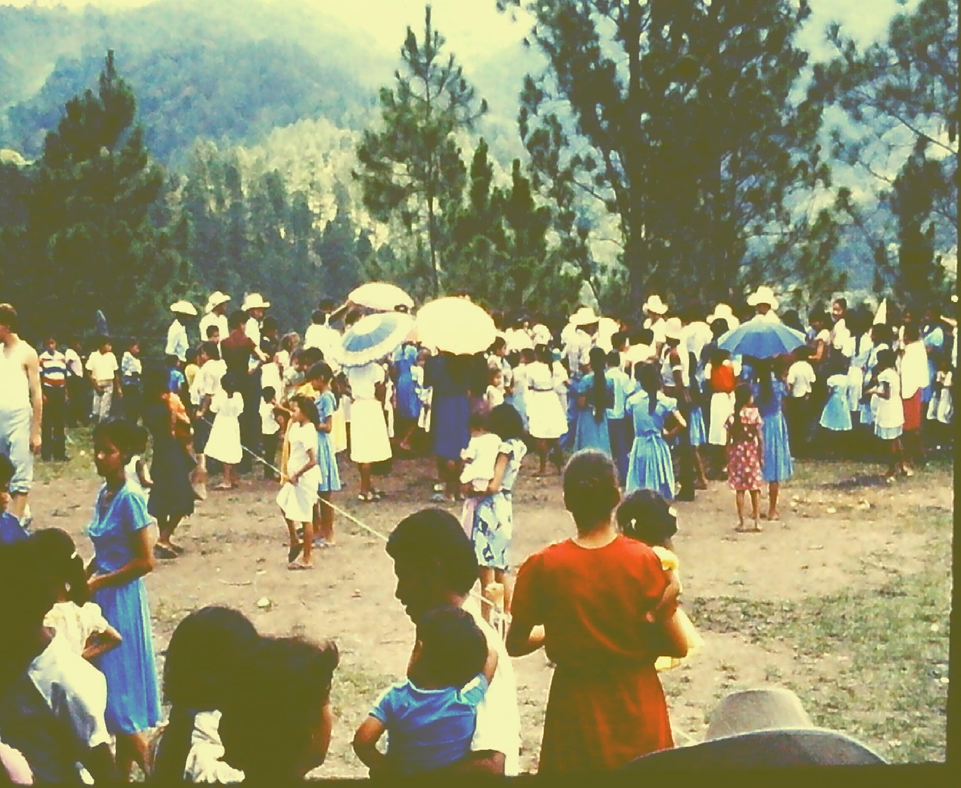



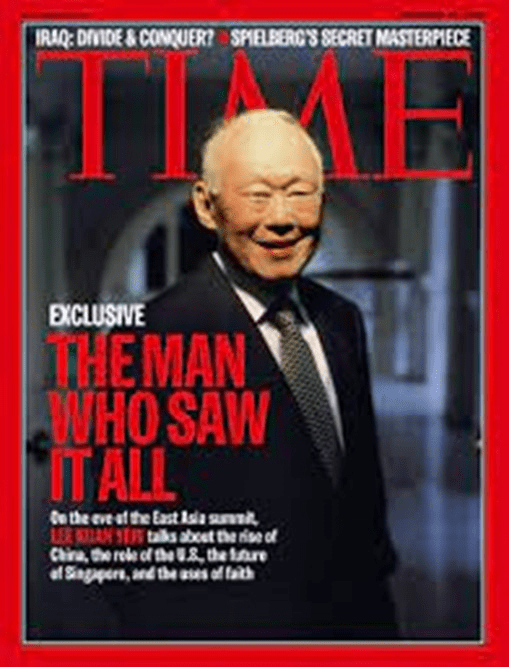
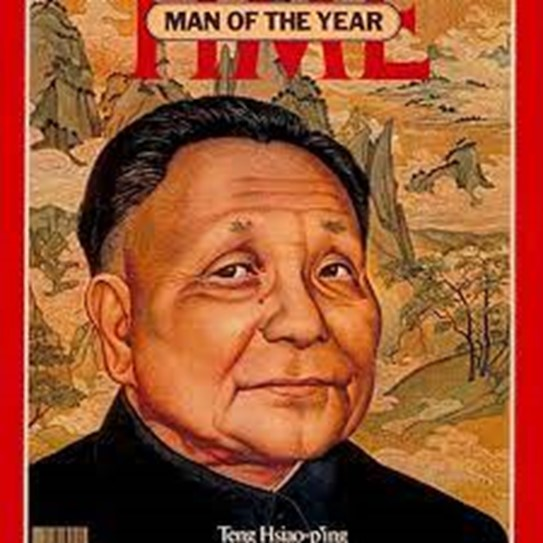
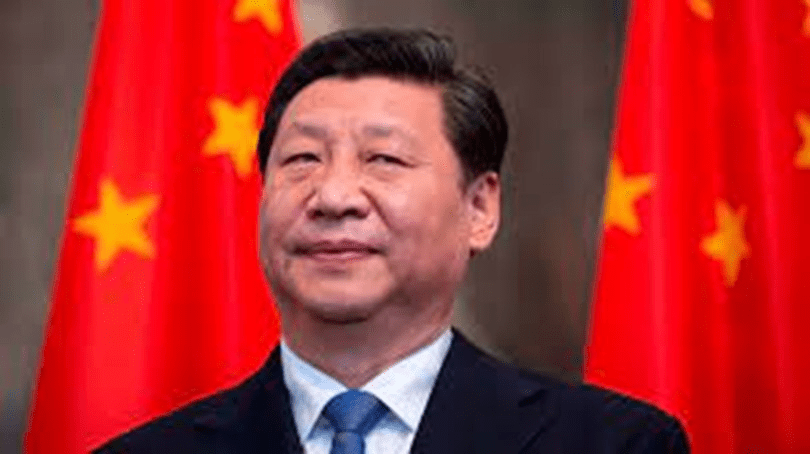

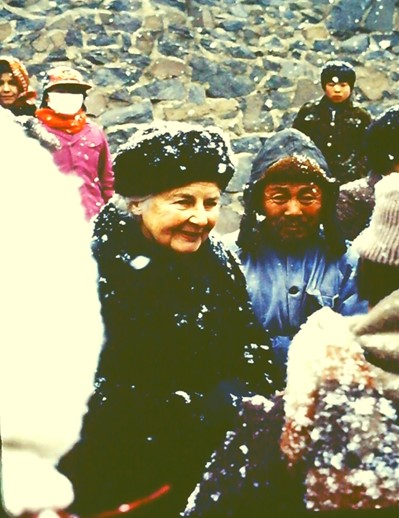

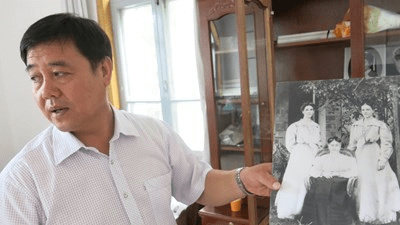
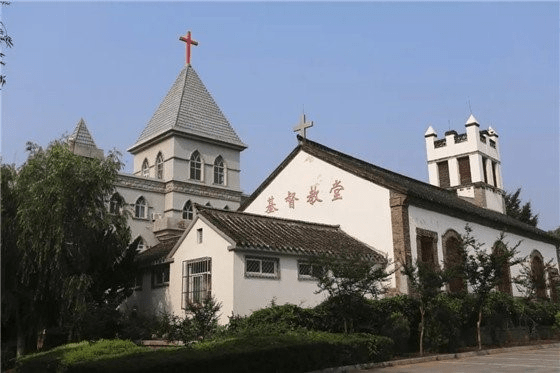


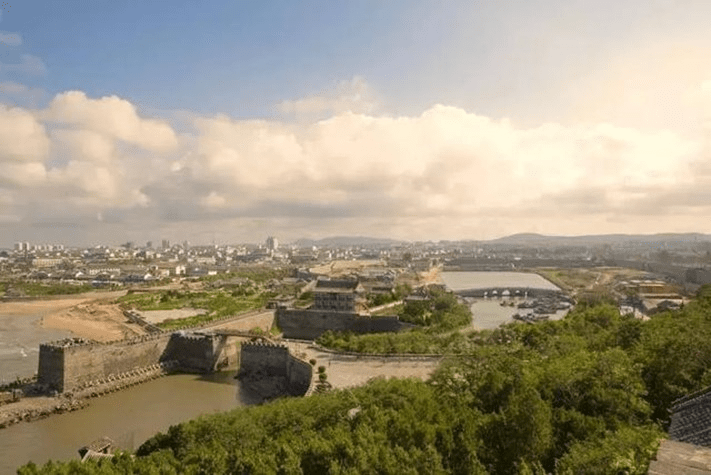

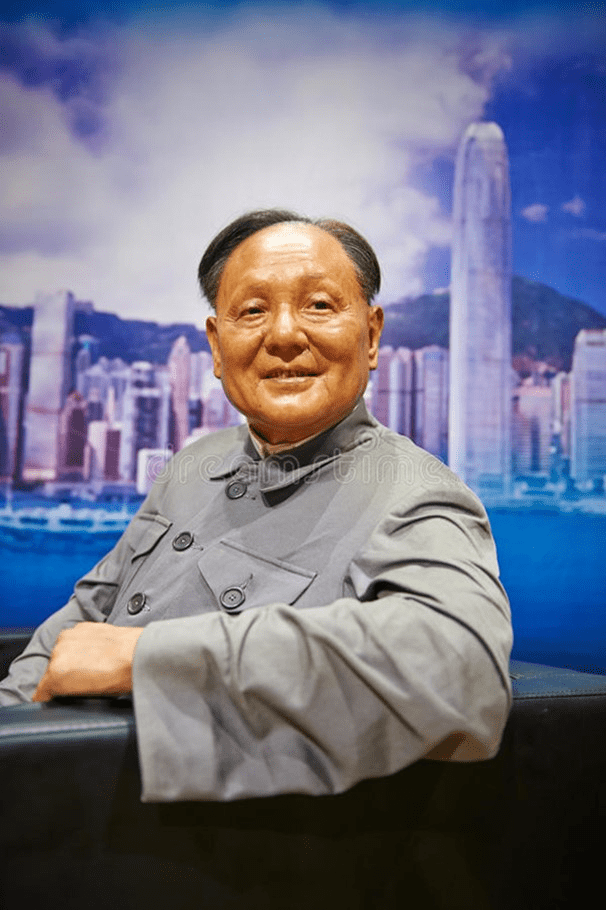

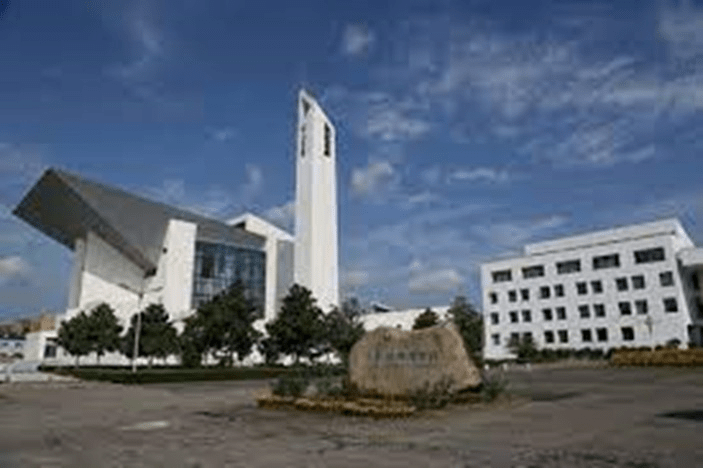

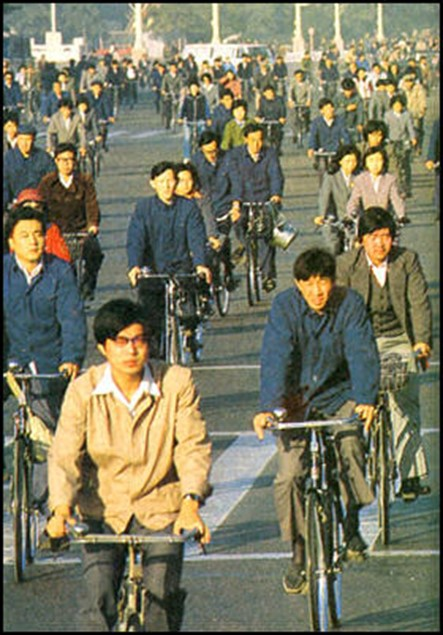

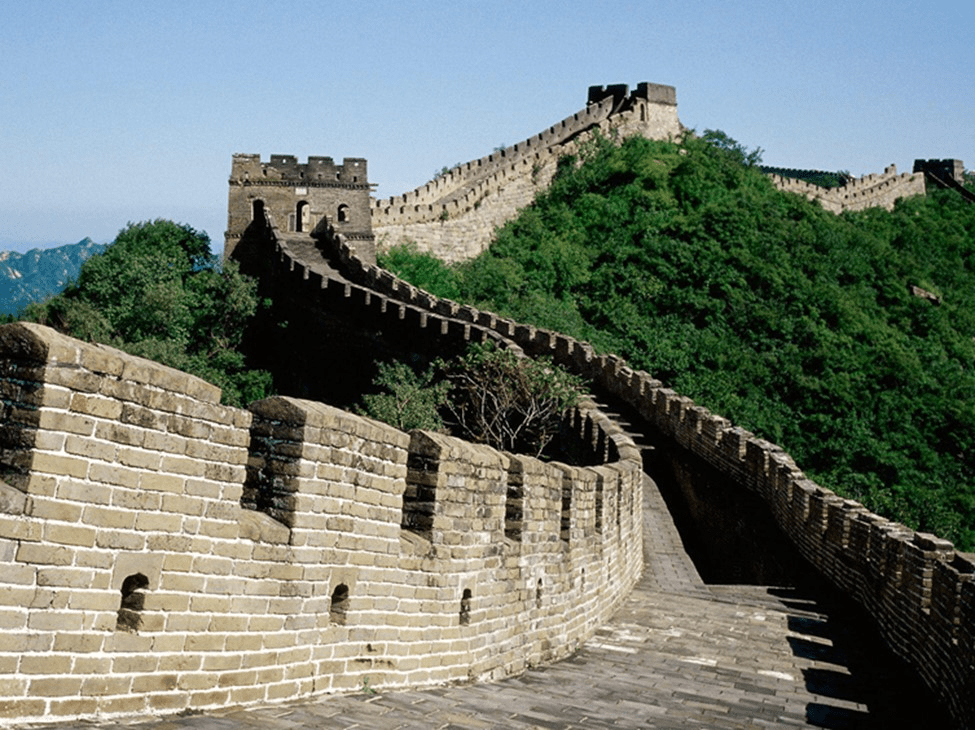



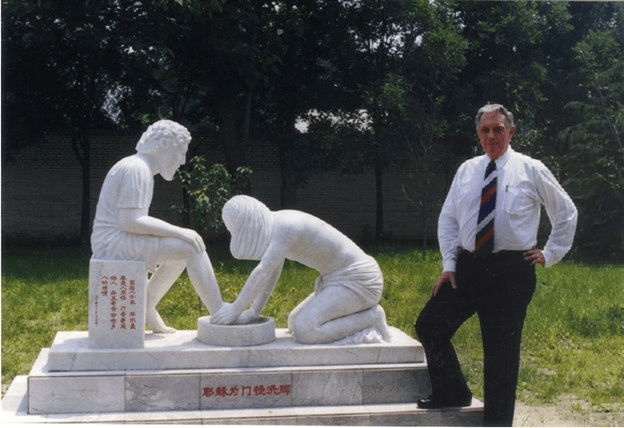
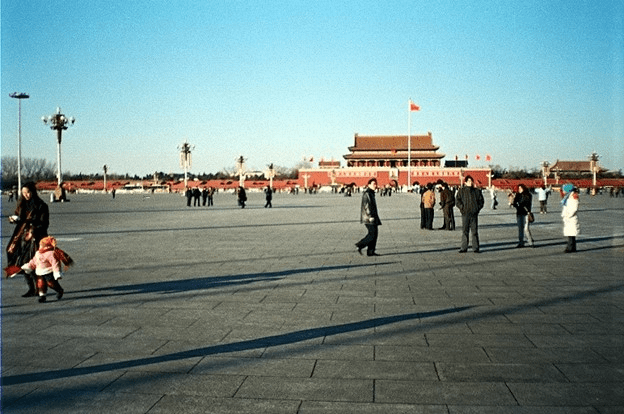


 True Texan Tales