America – Blessed by God

There has never been a nation like America in all of history. When you go through its history, in all honesty you must come to the conclusion that it has been blessed by God. I really think that I can show you why. If you would like to see if you agree with me, do read the following: Ron

“O Beautiful, For Spacious Skies, For Amber Waves of Grain”

As you probably know, these words are from “America the Beautiful”. In 1926 it was almost chosen as our National Anthem.

It was written by Katherine Lee Bates, born August 12, 1859. Daughter of a Congregational minister, Katherine Lee Bates taught high school, then English literature at Wellesley College. She hosted gatherings at her home for students and literary guests, including Robert Frost, Carl Sandburg and William Butler Yeats.

Of her 1893 Colorado journey, Katherine Lee Bates wrote: “Some of the other teachers and I decided to go on a trip to 14,000-foot Pikes Peak. We hired a prairie wagon. Near the top we had to leave the wagon and go the rest of the way on mules. I was very tired. But when I saw the view, I felt great joy. All the wonder of America seemed displayed there, with the sea-like expanse.”

“So, I was inspired to write ‘America the Beautiful'”.

John Fitzgerald Kennedy at a service in Washington as president said: “As we gather together to ask the Lord’s blessings and give Him our thanks, let us unite in those familiar and cherished words of America the Beautiful.”

President Ronald Reagan in meeting South Korean President Chun Doo Hwan, November 14, 1983: “At the worship service Sunday morning with our soldiers less than a mile from one of the most tyrannical regimes on Earth, a choir of little girls, all orphans, closing the service, singing “America, the Beautiful” in our language, was a spiritual experience.”

So, here are the complete words of Katharine Lee Bates’ classic poem:

O Beautiful for Spacious Skies, For Amber Waves of Grain, For Purple Mountain Majesties Above the Fruited Plain! America! America! God Shed His Grace on Thee And Crowned Thy Good with Brotherhood From Sea to Shining Sea! O Beautiful for Pilgrims Feet, Whose Stern Impassioned Stress A Thoroughfare for Freedom Beat Across the Wilderness! America! America! God Mend Thy Every Flaw, Confirm Thy Soul in Self-Control Thy Liberty in Law! O Beautiful for Heroes Proved In Liberating Strife, Who More Than Self Their Country Loved, And Mercy More Than Life! America! America! May God Thy Gold Refine Till All Success Be Nobleness And Every Gain Divine! O Beautiful for Patriots Dream That Sees Beyond the Years Thine Alabaster Cities Gleam Undimmed by Human Tears! America! America! God Shed His Grace On Thee And Crown Thy Good With Brotherhood From Sea to Shining Sea!

Deuteronomy 28 states: “And it shall come to pass, if thou shalt hearken diligently unto the voice of the Lord thy God, to observe and to do all his commandments. All these blessings shall come on thee, and overtake thee.”

Since all through scripture God promised to bless those nations who acknowledged and honored Him. So, following are those states in our Union who did just that in alphabetical order:

Alabama 1901, Preamble. We the people of the State of Alabama invoking the favor and guidance of Almighty God, do ordain and establish the following Constitution.

Alaska 1956, Preamble. We, the people of Alaska, grateful to God and to those who founded our nation and pioneered this great land.

Arizona 1911, Preamble. We, the people of the State of Arizona, grateful to Almighty God for our liberties, do ordain this Constitution.

Arkansas 1874, Preamble. We, the people of the State of Arkansas, grateful to Almighty God for the privilege of choosing our own form of government.

California 1879, Preamble. We, the People of the State of California, grateful to Almighty God for our freedom,

Colorado 1876, Preamble. We, the people of Colorado, with profound reverence for the Supreme Ruler of Universe.

Connecticut 1818, Preamble. The People of Connecticut, acknowledging with gratitude the good Providence of God in permitting them to enjoy.

Delaware 1897, Preamble. Through Divine Goodness all men have, by nature, the rights of worshipping and serving their Creator according to the dictates of their consciences.

Florida 1885, Preamble. We, the people of the State of Florida, grateful to Almighty God for our constitutional liberty establish this Constitution.

Georgia 1777, Preamble. We, the people of Georgia, relying upon protection and guidance of Almighty God, do ordain and establish this Constitution.

Hawaii 1959, Preamble. We, the people of Hawaii, Grateful for Divine Guidance establish this Constitution.

Idaho 1889, Preamble. We, the people of the State of Idaho, grateful to Almighty God for our freedom, to secure its blessings.

Illinois 1870, Preamble. We, the people of the State of Illinois, grateful to Almighty God for the civil, political and religious liberty which He hath so long permitted us to enjoy and looking to Him for a blessing on our endeavors.

Indiana 1851, Preamble. We, the People of the State of Indiana, grateful to Almighty God for the free exercise of the right to chose our form of government.

Iowa 1857, Preamble. We, the People of the State of Iowa, grateful to the Supreme Being for the blessings hitherto enjoyed, and feeling our dependence on Him for a continuation of these blessings establish this Constitution.

Kansas 1859, Preamble. We, the people of Kansas, grateful to Almighty God for our civil and religious privileges establish this Constitution.

Kentucky 1891, Preamble. We, the people of the Commonwealth of Kentucky, grateful to Almighty God for the civil, political and religious liberties.

Louisiana 1921, Preamble. We, the people of the State of Louisiana, grateful to Almighty God for the civil, political and religious liberties we enjoy.

Maine 1820, Preamble. We the People of Maine acknowledging with grateful hearts the goodness of the Sovereign Ruler of the Universe in affording us an opportunity and imploring His aid and direction.

Massachusetts 1780, Preamble. We the people of Massachusetts, acknowledging with grateful hearts, the goodness of the Great Legislator of the Universe in the course of His Providence, an opportunity and devoutly imploring His direction.

Michigan 1835, Preamble. We, the people of the State of Michigan, grateful to Almighty God for the blessings of freedom, and earnestly desiring to secure these blessings.

Minnesota 1857, Preamble. We, the people of the state of Minnesota, grateful to God for our civil and religious liberty, and desiring to perpetuate its blessings. 

Mississippi 1890, Preamble. We, the people of Mississippi, in Convention assembled, grateful to Almighty God, and invoking His blessing.

Missouri 1945, Preamble. We, the people of Missouri, with profound reverence for the Supreme Ruler of the Universe, and grateful for His goodness establish this Constitution.

Montana 1889, Preamble. We, the people of Montana, grateful to Almighty God for the blessings of liberty establish this Constitution.

Nebraska 1875, Preamble. We, the people, grateful to Almighty God for our freedom … establish this Constitution.

Nevada 1864, Preamble. We the people of the State of Nevada, grateful to Almighty God for our freedom establish this Constitution.

New Hampshire 1792, Part I. Art. I. Sec. V. Every individual has a natural and unalienable right to worship God according to the dictates of his own conscience.

New Jersey 1844, Preamble. We, the people of the State of New Jersey, grateful to Almighty God for civil and religious liberty which He hath so long permitted us to enjoy, and looking to Him for a blessing on our endeavors.

New Mexico 1911, Preamble. We, the People of New Mexico, grateful to Almighty God for the blessings of liberty.

New York 1846, Preamble. We, the people of the State of New York, grateful to Almighty God for our freedom, in order to secure its blessings.

North Carolina 1868, Preamble. We the people of the State of North Carolina, grateful to Almighty God, the Sovereign Ruler of Nations, for our civil, political, and religious liberties, and acknowledging our dependence upon Him for the continuance of those.

North Dakota 1889, Preamble. We, the people of North Dakota, grateful to Almighty God for the blessings of civil and religious liberty, do ordain.

Ohio 1852, Preamble. We the people of the state of Ohio, grateful to Almighty God for our freedom, to secure its blessings and to promote our common good.

Oklahoma 1907, Preamble. Invoking the guidance of Almighty God, in order to secure and perpetuate the blessings of liberty establish this.

Oregon 1857, Bill of Rights, Article I. Section 2. All men shall be secure in the Natural right, to worship Almighty God according to the dictates of their consciences.

Pennsylvania 1776, Preamble. We, the people of Pennsylvania, grateful to Almighty God for the blessings of civil and religious liberty, and humbly invoking His guidance.

Rhode Island 1842, Preamble. We the People of the State of Rhode Island … grateful to Almighty God for the civil and religious liberty which He hath so long permitted us to enjoy, and looking to Him for a blessing.

South Carolina 1778, Preamble. We, the people of the State of South Carolina … grateful to God for our liberties, do ordain and establish this Constitution.

South Dakota 1889, Preamble. We, the people of South Dakota, grateful to Almighty God for our civil and religious liberties establish this Constitution.

Tennessee 1796, Art. XI.III. That all men have a natural and indefeasible right to worship Almighty God according to the dictates of their conscience.

Texas 1845, Preamble. We the People of the Republic of Texas, acknowledging, with gratitude, the grace and beneficence of God.

Utah 1896, Preamble. Grateful to Almighty God for life and liberty, we establish this Constitution.

Vermont 1777, Preamble. Whereas all government ought to enable the individuals who compose it to enjoy their natural rights, and other blessings which the Author of Existence has bestowed on man.

Virginia 1776, Bill of Rights, XVI Religion, or the Duty which we owe our Creator can be directed only by Reason and that it is the mutual duty of all to practice Christian Forbearance, Love and Charity towards each other.

Washington 1889, Preamble. We the People of the State of Washington, grateful to the Supreme Ruler of the Universe for our liberties, do ordain this Constitution.

West Virginia 1872, Preamble. Since through Divine Providence we enjoy the blessings of civil, political and religious liberty, we, the people of West Virginia reaffirm our faith in and constant reliance upon God.

Wisconsin 1848, Preamble. We, the people of Wisconsin, grateful to Almighty God for our freedom, domestic tranquility.

Wyoming 1890, Preamble. We, the people of the State of Wyoming, grateful to God for our civil, political, and religious liberties establish this Constitution.

All through the Bible, the Holy Scriptures tell us that God promises to bless the nation that acknowledges God and honors Him. And as you see above, every one of the 50 states in our union have put in writing that they absolutely do just that.

Dr. Stanley as pastor of First Baptist Church of Atlanta, under Divine guidance, tells us that God absolutely, absolutely honors every one of His promises. So, that is why America has been blessed by God, and will continue to be as long as they keep his commandments.

The History of Writing

The “Times Complete History of the World” states: “No mention of a date appears before the start of human civilization about 5,000 years ago and the beginning of a written or pictorial history.”

“The part of Mesopotamia, the land between the Tigris and Euphrates Rivers, the ‘city’ was invented. It was here that we learned how to write.”

Writing was first on pieces of clay, then on papyrus reeds from the Nile Delta. The reeds, which grew 16 feet tall, had their outer rind removed, leaving the sticky inner cores, which were cut into strips, interwoven together, soaked, pressed, and then dried.

The word “paper” comes from the word “papyrus.” It was the main medium to write upon for nearly 3,000 years.

Writing was invented in China around 2,600 BC during the reign of the legendary Yellow Emperor. Instead of using reeds, the Chinese used bamboo, which was cut into strips and written upon vertically. These strips were tied together creating bamboo annals or books.

Writing was also upon palm leaves, bark, bones, and stone in other parts of the world. Writing was then made on parchment made from the skins of sheep and goats, and on vellum made from calfskin.

Reading and writing was, for the most part, limited to the ruling elite. It was the communication of the deep state class who wanted to control the ignorant and uneducated masses.

Anthropologist Claude Levi Strauss (1908-2008) wrote: “Ancient writing’s main function was to facilitate the enslavement of other human beings.”

Emphasizing how tyrants need the masses of people to be ignorant, George Orwell wrote in Nineteen Eighty-Four: “In the long run, a hierarchical society was only possible on the basis of poverty and ignorance.”

The National Archaeological Museum in Athens, Greece, in its section on Egyptian Artifacts, has a display on “Scribes,” stating: “Only a small percentage of ancient Egypt’s population was literate, namely the pharaoh, members of the royal family, officials, priests and scribes.

Particularly popular and lucrative, the scribe’s profession was mostly hereditary. Scribes had careers in the government, priesthood, and army. They began their rigorous training in their early childhood. Most of their training took place inside a building called the “House of Life,” attached to the temple. Scribes wrote on stone or clay sherds.”

Also in other countries, elite ruling classes always kept common people and slaves uninformed, prohibiting them from being educated or from communicating.

Thomas Aquinas wrote of Mohammed in Summa contra Gentiles, 1258: “It was a shrewd decision on his part to forbid his followers to read the Old and New Testaments, lest these books convict him of falsity.”

Ancient Israel was the first nation where the general population was literate. In the 4th century A.D., Church historian Eusebius of Caesarea quoted the Jewish historian Eupolemus, who wrote circa 150 B.C.: “Moses was the first wise man. He taught the alphabet to the Jews who passed it on to the Phoenicians, who passed it to the Greeks. Moses first wrote laws for the Jews.” (Praeparatio Evangelica, 9:26.1)

Levites taught the people the law, and taught them how to read the law. Israel functioned as a Hebrew republic for four hundred years before they sinned by asking for a king.

The democracy of ancient Athens and the republic of ancient Rome also required citizens to be educated and informed. Thomas Sowell wrote in Degeneration of Democracy, 6/2010: “A democracy needs informed citizens if it is to thrive, or ultimately even survive.”

In The Lessons of History (Simon & Schuster, 1968, p. 77), Will and Ariel Durant wrote: “Democracy is the most difficult of all forms of government, since it requires the widest spread of intelligence. Ignorance lends itself to manipulation by the forces that mold public opinion.”

James Madison wrote to W.T. Barry, August 4, 1822: “A people who mean to be their own Governors, must arm themselves with the power which knowledge gives. A popular government without popular information, or the means of acquiring it, is but a prologue to a farce or a tragedy, or perhaps both.”

On controlling education, George Orwell commented in his novel Nineteen Eighty-Four: “If the Party could thrust its hand into the past and say of this or that event, it never happened – that, surely, was more terrifying than mere torture and death?

And if all others accepted the lie which the Party imposed – if all records told the same tale – then the lie passed into history and became truth. ‘Who controls the past,’ ran the Party slogan, ‘controls the future; who controls the present controls the past’. And when memory failed and written records were falsified – when that happened, the claim of the Party to have improved the conditions of human life had got to be accepted, because there did not exist, and never again could exist, any standards against which it could be tested.”

Orwell added: “The most effective way to destroy people is to deny and obliterate their own understanding of their history.”

This is similar to the first emperor of China, Qin Shi Huangdi, who conquered many kingdoms to unify China in 221 BC. When he was criticized for not ruling as rulers had in the past, he ordered all of the hand-written records of the past to be burned and the scholars buried.

The ‘Basic Annals of the First Emperor of Qin‘ reported that Qin’s Chancellor, Li Si, told the Emperor in 213 BC: ” I, your servant, propose that all historians’ records other than those of Qin’s be burned. If anyone under heaven has copies of the Classics of History (Shu Jing)  they shall deliver them to the governor for burning.

Anyone who dares to discuss the Classics of History shall be publicly executed. Anyone who uses history to criticize the present shall have his family executed. Anyone who has failed to burn the books after thirty days of this announcement shall be subjected to tattooing and be sent to build the Great Wall.”

(So, we have discussed the history of paper and writing. Now let’s look at what happened with the invention of printing and the printing press:)

The Qin Dynasty was overthrown, and in 202 BC the Han Dynasty ruled China. In the following centuries, Chinese scribes developed the process of making paper from tree pulp and rags.

Beginning in 175 AD, during the Han Dynasty, scribes placed paper over stone engravings of texts of Confucius and made rubbings with charcoal. This developed into laying paper over raised stone letters covered with ink, a technique which spread to other countries like Japan, where a Nara Empress printed a Buddhist charm in 768 AD. Using a method with carved wooden or baked clay blocks, China, during the Tang Dynasty, created what could be considered the first “printed” book in 868 AD.

In 1234, Korea’s Goryeo Dynasty invented the first “metal” movable type printing press. In 1443, Korean Emperor Sejong the Great introduced a 24-letter han’gul alphabet which made printing practical.

Whereas China used pictogram characters, and Egypt used hieroglyphs, Western Civilization had been using phonetic characters dating back to a Semitic alphabet around 1500 BC. It was not until 1400 AD that Europeans first began using carved wooden blocks applied with ink to print religious messages.

Then in Germany, Johannes Gutenberg invented a printing press – the Western world’s first “metal moveable type” printing press.

On August 24, 1455, Gutenberg printed his masterpiece, the Gutenberg Bible, regarded as the first book of significance ever printed. No longer copied tediously by the hands of scribes, Bibles were soon mass produced.

Gutenberg wrote about his 42-line Gutenberg Bible, also called the Mazarin Bible, 1455: “God suffers in the multitude of souls whom His word can not reach. Religious truth is imprisoned in a small number of manuscript books which confine instead of spread the public treasure. Let us break the seal which seals up holy things and give wings to Truth in order that she may win every soul that comes into the world by her word no longer written at great expense by hands easily palsied, but multiplied like the wind by an untiring machine.”

Gutenberg continued: “Yes, it is a press, certainly, but a press from which shall flow in inexhaustible streams the most abundant and most marvelous liquor that has ever flowed to relieve the thirst of men. Through it, God will spread His word; a spring of pure truth shall flow from it; like a new star it shall scatter the darkness of ignorance, and cause a light hithertofore unknown to shine among men.”

“Taps”

We have heard the music “Taps” played all our lives.  It is most always played by a bugle at military funerals and at many other occasions.  Its sound is so plaintive that it almost seems emotional.  However, most have never heard of its origin.  I find its origin so interesting, that I wanted you to know about it also.  Do read it:

It all began in 1862 during the Civil War, when Union Army Captain Robert Elli was with his men near Harrison’s Landing in Virginia . The Confederate Army was on the other side of the strip of land.

During the night, Captain Elli heard the moans of a soldier who lay severely wounded on the field. Not knowing if it was a Union or Confederate soldier, the Captain decided to risk his life and bring the stricken man back for medical attention. Crawling on his stomach, the Captain reached the stricken soldier and began pulling him toward his encampment.

When the Captain finally reached his own lines, he discovered it was actually a Confederate soldier, but the soldier was dead. The Captain lit a lantern and suddenly caught his breath and went numb with shock. In the dim light, he saw the face of the soldier. It was his own son. The boy had been studying music in the South when the war broke out. Without telling his father, the boy had enlisted in the Confederate Army.

The following morning, heartbroken, the father asked permission of his superiors to give his son a full military burial, despite his enemy status. His request was only partially granted. The Captain had asked if he could have a group of Army band members play a funeral dirge for his son at the funeral.
The request was turned down since the soldier was a Confederate. But, out of respect for the father, they did say they could give him only one musician.

The Captain went through the young man’s pockets and found a piece of paper.  It had a series of musical notes.  For his one musician the Captain chose a bugler. He asked the bugler to play the series of musical notes he had found on the piece of paper in the pocket of the dead youth’s uniform.
This wish was granted. The haunting melody, we now know as ‘Taps’ used at military funerals was born. However, there were also words there.  So, as you read those words here, hum along the sound of Taps in your mind with each word.

Day is done.
Gone the sun.
From the lakes
From the hills.
From the sky.
All is well.
Safely rest.
God is nigh.

Fading light.
Dims the sight.
And a star.
Gems the sky.
Gleaming bright.
From afar.
Drawing nigh.
Falls the night.

Thanks and praise.
For our days.
Neath the sun
Neath the stars.
Neath the sky
As we go.
This we know.
God is nigh

Now you know the real history of Taps.

Man First Conquers Space

Elon Musk has reenergized America in the interest of exploring space. Brilliant young engineers are once again volunteering to become astronauts. So, I thought it would be prescient to review the history of when we first conquered space and walked on the moon. In compiling this I was amazed to discover how everyone of the first astronauts, especially those who ventured into outer space, became so much closer to God because of those experiences. James Irwin even came back from walking on the moon and became an evangelical minister to tell people about Jesus the rest of his life. Do read the following to see how their ventures into space brought those highly trained astronauts so much closer to God. Ron

After World War II, Werner von Braun, and 1,600 German scientists, surrendered to the United States in Operation Paperclip, stating: “I myself, and everybody you see here, have decided to go West. We knew that we had created a new means of warfare. We felt that only by surrendering such a weapon to people who are guided by the Bible could such an assurance to the world be best secured.”

On October 4, 1957, Soviets launched Sputnik 1, the first man-made satellite.

Werner von Braun and my best friend, Jack Smith developed America’s first space satellite, Explorer 1, launched on January 31, 1958. The Space Race was on. (Everyone was clamoring for the U.S. to put up a satellite like the Russians. The government tried its regular aircraft customers and they failed to get one up. Then Werner von Braun and Jack Smith used one of the rockets from McGregor, Texas and got one up in a few days.)

On April 12, 1961, Soviet cosmonaut Yuri Gagarin became the first person in space, completing one orbit of the Earth in 108 minutes, reaching an altitude of 91 miles.

Less than a month later, May 5, 1961, American Alan Shepard piloted the Mercury Freedom 7 to become the second person in space. His 15 minute flight reached an altitude of 101.2 nautical miles above the earth.

On February 20, 1962, Astronaut John Glenn piloted the Mercury Friendship 7. “Godspeed, John Glenn,” radioed backup-pilot Scott Carpenter from the blockhouse as the rockets fired up. Glenn became the first American to orbit the earth, circling 3 times in just under 5 hours, reaching an altitude of 162 nautical miles.

NASA’s first manned spaceflight program was Mercury, 1958-1963. Mercury Astronauts answered questions at a press conference in Washington, D.C., April 9, 1959: Alan Shepard, Malcolm Carpenter, Leroy Cooper, Gus Grissom, Walter Schirra, Donald Slayton, and John Glenn.

When questioned about his faith, John Glenn stated: “I don’t think any of us could really go on with something like this if we didn’t have pretty good backing at home, really. My wife’s attitude toward this has been the same as it has been all along through all my flying. If it is what I want to do, she is behind it, and the kids are too, a hundred percent.”

Glenn added: “I am a Presbyterian, a Protestant Presbyterian, and I take my religion very seriously, as a matter of fact.” Glenn told of teaching Sunday school classes, being on church boards, and doing church work with his family: “We are placed here with certain talents and capabilities. It is up to each of us to use those talents and capabilities as best you can. If you do that, I think there is a Power greater than any of us that will place the opportunities in our way, and if we use our talents properly, we will be living the kind of life we should live.”

John Glenn, who had flown 147 combat missions in World War II and the Korean War, addressed Congress in 1962: “I still get a lump in my throat when I see the American flag passing by.”

Later that year, President Kennedy stated at Rice University in Houston, September 12, 1962: “Space is there and we’re going to climb it, and the moon and planets are there and new hopes for knowledge and peace are there. And, therefore, as we set sail we ask God’s blessing on the most hazardous and dangerous and greatest adventure on which man has ever embarked.”

The Mercury Program was followed by the Gemini Program, 1961-1966, which had longer missions and developed techniques of orbital maneuvers, extra-vehicular activity, space rendezvous, docking and reentry. This put America ahead in the Space Race. Werner von Braun, father of modern space flight, developed the powerful Saturn V rocket capable of sending a spacecraft beyond Earth’s orbit in NASA’s Apollo Program.

An “astronaut” is defined as someone who has ascended over 62 miles (100km) above the Earth’s surface. As of 2021, over 570 individuals are in that group. Only 24 individuals have left Earth’s orbit, and only 12 have walked on the Moon.

The first mission to leave Earth’s orbit and fly around the moon was Apollo 8 in 1968.   The tiniest mistake would have sent them crashing into the moon’s surface or plummeting off into endless space. As they successfully went into lunar orbit, astronaut William Anders snapped the famous Earthrise photo that was printed in LIFE Magazine.

Apollo 8’s three man crew looked down on the earth from 250,000 miles away on Christmas Eve, 1968.

Commander Frank Borman radioed back a message, quoting from the Book of Genesis: “We are now approaching lunar sunrise. And for all the people back on Earth, the crew of Apollo 8 has a message that we would like to send to you:

“In the beginning God created the heaven and the earth. And the earth was without form, and void; and darkness was upon the face of the deep. And the Spirit of God moved upon the face of the waters. And God said, Let there be light: and there was light. And God saw the light, that it was good: and God divided the light from the darkness. And God called the light Day, and the darkness he called Night. And the evening and the morning were the first day.

“And God said, Let there be a firmament in the midst of the waters, and let it divide the waters from the waters. And God made the firmament, and divided the waters which were under the firmament from the waters which were above the firmament: and it was so. And God called the firmament Heaven. And the evening and the morning were the second day.

Commander Borman continued: “And God said, Let the waters under the heaven be gathered together unto one place, and let the dry land appear: and it was so. And God called the dry land Earth; and the gathering together of the waters called he Seas: and God saw that it was good.”

Frank Borman ended by saying: “And from the crew of Apollo 8, we close with good night, good luck, a Merry Christmas, and God bless all of you – all of you on the good Earth.”

After returning to earth, a reporter told Borman that a Soviet cosmonaut returned from space and said he did not see God. Borman replied: “I did not see Him either, but I saw His evidence.” Later Frank Borman described his voyage: “I had an enormous feeling that there had to be a power greater than any of us – that there was a God, that there was indeed a beginning.”

The first mission to walk on the moon was Apollo 11, which blasted off JULY 16, 1969, from Cape Kennedy.

President Richard Nixon stated in Proclamation 3919: “Apollo 11 is on its way to the moon. It carries three brave astronauts; it also carries the hopes and prayers of hundreds of millions of people. That moment when man first sets foot on a body other than earth will stand through the centuries as one supreme in human experience. I call upon all of our people to join in prayer for the successful conclusion of Apollo 11’s mission.”

On July 20, 1969, Astronauts Neil Armstrong and Buzz Aldrin, landed their lunar module, the Eagle on the moon. Buzz Aldrin read John 15:5 and partook of communion before exiting the lunar module. They spent a total of 21 hours and 37 minutes on the moon’s surface before redocking with the command ship Columbia.

President Richard Nixon spoke to the astronauts on the moon, July 20, 1969: “This certainly has to be the most historic telephone call ever made from the White House. The heavens have become a part of man’s world. For one priceless moment in the whole history of man all the people on this earth are truly one, one in our prayers that you will return safely to earth.”

President Nixon greeted the astronauts on the USS Hornet, July 24, 1969: “The millions who are seeing us on television now feel as I do, that our prayers have been answered. I think it would be very appropriate if Chaplain Piirto, the Chaplain of this ship, were to offer a prayer of thanksgiving.”

Addressing a joint session of Congress, September 16, 1969, Commander Neil Armstrong stated: “To those of you who have advocated looking high we owe our sincere gratitude, for you have granted us the opportunity to see some of the grandest views of the Creator.”

Apollo 12 Astronauts Charles “Pete” Conrad and Alan Bean walked on the moon for 31 hours.

Alan Bean later became an artist. One of his painting is of an astronaut kneeling in prayer on the moon, titled “We Came in Peace for All Mankind.”

On the Apollo 14 mission, February 6, 1971, Astronauts Edgar Mitchell and Alan Shepard left a tiny microfilm copy of the King James Bible aboard the lunar module Antares on the moon’s Fra Mauro highlands.

On Apollo 15’s mission, 1971, Astronaut James Irwin became the 8th person to walk on the moon. He spoke of leaving earth: “As we got farther and farther away it diminished in size. Finally it shrank to the size of a marble, the most beautiful marble you can imagine. That beautiful, warm, living object looked so fragile, so delicate, that if you touched it with a finger it would crumble and fall apart. Seeing this has to change a man, has to make a man appreciate the creation of God and the love of God.”

Jim Irwin and Dave Scott were mentioned in astronaut Alan Bean’s book: “Jim Irwin was one of my favorite astronauts. Jim was, unexpectedly, more religious than most of us realized. I can remember when he and Dave were riding along on their rover near the end of their third EVA and Dave said, ‘Oh, look at the mountains today, Jim. When they’re all sunlit isn’t that beautiful?’ Jim answered, ‘Really is, Dave. I’m reminded of a favorite Biblical passage from Psalms, ‘I look unto the hills from whence cometh my help.'”

Bean continued: ‘Jim would later say, ‘I was aware on the Moon that thousands of people on Earth were praying for the success of our mission. The hours I spent on the Moon were the most thrilling of my life. Not because I was there but because I could feel the presence of God. There were times I was filled with new challenges and help from God was immediate.'”

Alan Bean concluded: “Dave and Jim journeyed into space as test pilot astronauts and most of us returned the same way. But Jim changed outwardly. As he explained, ‘I returned determined to share with others that profound experience with God on the Moon and lift man into his highest flight of life.’”

Later, Astronaut James Irwin became an evangelical minister. Of his experience of walking on the moon, he stated: “I felt the power of God as I’d never felt it before. Being on the moon had a profound spiritual impact upon my life. Before I entered space with the Apollo 15 mission in July of 1971, I was a silent Christian, but I feel the Lord sent me to the moon so I could return to the earth and share His Son, Jesus Christ.”

He added: “Jesus walking on the earth is more important than man walking on the moon.”

Apollo 16 Astronaut Charles Duke wrote (Charles Duke: Moonwalker, Rose Petal Press, 2nd edition, 2011, p. 256-261): “I used to say I could live ten thousand years and never have an experience as thrilling as walking on the moon. But the excitement and satisfaction of that walk doesn’t begin to compare with my walk with Jesus, a walk that lasts forever.”

The Amazing Dr. Livingstone

I am sure you have heard of David Livingstone, the famous missionary to Africa. However, not much has been written about him in recent times. In his travels of 29,000 miles back and forth across Africa he introduced Christianity to the people of a plethora of tribes; most of whom had never even hear of Jesus. As the very first white man or any outsider to ever visit so much of Africa, it is interesting to me what to him was the most important thing that he found there. We know from his personal diary and his writings what it was. Please read what I have compiled below, if you would like to know also: Ron
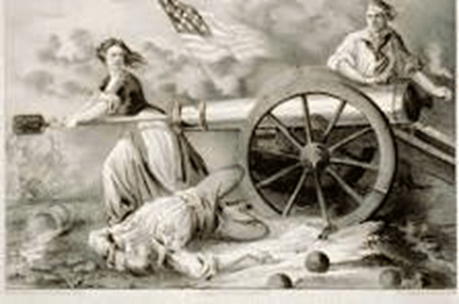
Dr. Livingstone was the internationally renowned missionary who had discovered the Zambezi River, Victoria Falls, and searched for the source of the Nile.

He had not been heard from in years and was rumored to have died. Stanley, a skeptic, was sent from America to find him and write a story about him if he could find him alive.

“Doctor Livingstone, I presume,” stated New York Herald reporter Henry Stanley on NOVEMBER 10, 1871, as he met David Livingstone on the banks of Africa’s Lake Tanganyika after searching all across Arica for him and finally finding him. His statement upon finding him became one of the most famous lines in modern history. I am sure you have heard it.

David Livingstone had been raised in the Church of Scotland, then the Congregational Church, and committed his life to Christ to become a medical missionary to China.

When the medical school required him to learn Latin, David Livingstone met a local Irish Catholic to tutor him, Daniel Gallagher, who later became a priest and founded St. Simon’s Church in Glasgow. David Livingstone’s plans changed when the Opium Wars broke out in China.

Livingstone was convinced by Missionary Robert Moffat to go to South Africa where there was “the smoke of a thousand villages, where no missionary had ever been.”

In his journal, David Livingstone wrote: “I place no value on anything I have or may possess, except in relation to the kingdom of Christ. If anything will advance the interests of the kingdom, it shall be given away or kept, only as by giving or keeping it, I shall promote the glory of Him to whom I owe all my hopes in time and eternity.”

Traveling 29,000 miles back and forth across Africa, David Livingstone was horrified by the Arab Muslim slave trade. His letters, books, and journals stirred up a public outcry to abolish slavery.

Livingstone often passed caravans of 1,000 slaves tied together with neck yokes or leg irons, marching single file 500 miles down to the sea carrying ivory and heavy loads. Slaves who complained were speared and left to die, resulting in slave caravans being traced by vultures and hyenas feasting on corpses.

David Livingstone recorded in his journal: “To overdraw its evils is a simple impossibility. We passed a woman tied by the neck to a tree and dead. We came upon a man dead from starvation. We passed a slave woman shot or stabbed through the body and lying on the path. Onlookers said an Arab who passed early that morning had done it in anger at losing the price he had given for her, because she was unable to walk any longer.”

He added: “The strangest disease I have seen in this country seems really to be broken heartedness, and it attacks free men who have been captured and made slaves.”

Livingstone estimated that each year 80,000 died while being captured or forced to march from the African interior to the Arab Muslim slave markets of Zanzibar.

Describing the Muslim slave trade as “a monster brooding over Africa,” Livingstone once walked 120 miles near Lake Nyasa without seeing a single human being, as Arab slave traders had so depopulated the area.

In 1862, David Livingstone received a steam boat, but attempts to navigate the Ruvuma River failed due to the paddle wheels continually hitting bodies thrown in the river by slave traders.

He had hoped to open up “God’s Highway” to bring “Christianity, Commerce and Civilization” into Africa, and thereby put an end to the Arab Muslim slave trade, as he wrote to the editor of The New York Herald: “And if my disclosures regarding the terrible Ujijian slavery should lead to the suppression of the East Coast slave trade, I shall regard that as a greater matter by far than the discovery of all the Nile sources together.”

Sadly, slavery of Africans still continues in Islamic dominated areas of Africa, and political groups that demand reparations for past slavery are strangely silent about modern-day slavery.

Fredrick Ngugi wrote May 5, 2017, Face2FaceAfrica.com: “It may be more than two centuries since the Trans-Atlantic Slave Trade ended, but slavery is still very much alive in many African countries as well as much of the ancient world. Other varied forms of slavery still exist across the continent, including domestic service, debt bondage, military slavery, slaves for sacrifice, local slave trade, and more. Here are the top five African countries where slavery is still rampant: Mauritania; Sudan; Libya; Egypt’s Sinai Peninsula; South Africa.”

Reaching the headwaters of the Congo at Lualaba River in 1871, which he mistakenly thought to be the Nile, Livingstone recorded that at Nyangwe he saw Arab Muslim slave traders massacre nearly 400 Africans.

Disheartened, he went back to Ujiji on Lake Tanganyika, where, after years of the world not hearing from him, The New York Herald reporter Henry Stanley found him.

Henry Stanley described the famous old missionary: “Here is a man who is manifestly sustained as well as guided by influences from Heaven. The Holy Spirit dwells in him. God speaks through him. The heroism, the nobility, the pure and stainless enthusiasm as the root of his life come, beyond question, from Christ. There must, therefore, be a Christ; and it is worth while to have such a Helper and Redeemer as this Christ undoubtedly is, and as He here reveals Himself to this wonderful disciple.”

David Livingstone, ever the explorer, stated: ”I am prepared to go anywhere, provided it be forward.”

Once he was attacked by a lion. Livingstone wrote that it: “caught me by the shoulder as he sprang, and we both came to the ground together. Growling horribly close to my ear, he shook me as a terrier does a rat.”

Livingstone was so loved by Africans that when they found him dead in 1873 near Lake Bangweulu, kneeling beside his bed after suffering from malaria, they buried his heart in Africa. His body was sent, packed in salt, back to England to be buried in Westminster Abbey.

Monuments around the world are dedicated to the memory of David Livingstone, as well as movies and documentaries, including the 1939 film Stanley and Livingstone, starring Spencer Tracy.

In his Missionary Travels and Researches in South Africa, 1857, Dr. David Livingstone revealed what motivated him: “The perfect fullness with which the pardon of all our guilt is offered in God’s Book, drew forth feelings of affectionate love to Him who bought us with His blood. A sense of deep obligation to Him for His mercy has influenced my conduct ever since.”

Dr. Livingstone

Georgia

The history of this great state is just amazing, especially its Christian history which was so integral to its founding. I find it so interesting that I have compiled a synopsis of that history from the time before its founding as a colony to the 20th Century. If you would like to know about this state’s amazing history, do read the following:

Ron
Early in his career, Eugene of Savoy, under the command of Polish King Jan Sobieski, helped repel 200,000 Ottoman Turks on September 11, 1683, thus saving the city of Vienna, Austria. Austrian Prince Eugene of Savoy went on to become one of Europe’s most famous commanders.

Savoy helped drive the Ottomans from Budapest in 1686. In 1687, he gallantly commanded a cavalry brigade defeating the Turkish army at the Second Battle of Mohács in Hungary.

This defeat was so significant that the Ottoman army mutinied against its leadership, resulting in the Grand Vizier, Sarı Süleyman Pasha, being executed, and the Sultan, Mehmed IV, being deposed.

Prince Eugene of Savoy was famous for his victory over 100,000 Islamic warriors at the Battle of Zenta, Serbia, September 11, 1697.

The Ottoman army then invaded Russia. The new Turkish Grand Vizier, Baltacı Mehmet, defeated Peter the Great’s Russian Army in the Russo-Turkish War (1710-1711).

Turks then went on the offensive, invading Greece and Venetian territories, led by Turkish Grand Vizier Damat Ali in the Turkish-Venetian War (1714-1718). Once again, Europe was rescued by Austrian Prince Eugene of Savoy in the Austro-Turkish War, 1716-1718. In 1716, Savoy defeated the Ottoman Turks at Petrovaradin, captured the Banat (areas of Romania, Serbia and Hungary) and the capital city of Timisoara. In 1717, Savoy recaptured Belgrade, Serbia, whose Christian population had been brutally crushed and enslaved by numerous Islamist campaigns dating back to 1521. Savoy’s successful halt of the Ottoman invasion into Europe resulted in the Turkish Empire suing for peace in 1718 with the Treaty of Passarowitz, as the sharia practice was, when you are strong, attack without mercy, but when you are weak, make treaties until you can become strong again.

One of the young soldiers fighting at the Battle of Belgrade, who served as an aide-de-camp to Prince Savoy, was 17-year-old Englishman James Oglethorpe.

Oglethorpe fought with distinction in the Austro-Turkish War, and then returned to England at the age of 21. He unintentionally killed a man in a brawl and spent five months in prison. Upon release, James followed in the footsteps of his father, Sir Theophilus Oglethorpe, and became a member of Parliament, where he served for 32 years, 1722-1754.

In Parliament, he became known for opposing slavery. In 1728, one of James Oglethorpe’s friends, Robert Castell, was unable to pay his debts and was thrown into London’s notorious Fleet Debtor’s Prison. At the time, in English prisons, prisoners had to pay the guards to get food and a decent room. As Castell was unable to pay, he was put in a cell with someone dying of smallpox. Castell caught the disease and died. When Oglethorpe heard the news, he was distraught. He began a national campaign for prison reform, and headed a parliamentary committee to investigate them. Steps were made to end the extortion and abuse of prisoners, and improve sanitary conditions.

James Oglethorpe conceived of an idea for a colony in America where poor debtors and religious refugees could get a second chance. He named the colony “Georgia” after Britain’s King George II.

Georgia’s Colonial Charter, 1732, stated regarding religious freedom: “There shall be a liberty of conscience allowed in the worship of God, and that all such persons, except papists, shall have a free exercise of their religion.”

Sailing on the ship Ann, the 115 settlers landed on JANUARY 13, 1733.

A year later, Protestant refugees from Salzburg, Austria, called “Salzburgers,” settled the town of Ebenezer, Georgia. In 1735, Moravian Christian settlers from Bohemia arrived and built Fort Argyle. Scottish Presbyterians arrived from New Inverness in 1736. And in the same year, Huguenot Protestant refugees arrived from France.

James Oglethorpe’s secretary was Charles Wesley, who later became a hymn writer, composing among others, the carol “Hark, the Herald Angel Sings.”

Charles Wesley’s brother, John Wesley, served in 1735 as Georgia’s Anglican minister. The Wesleys’ friend, Rev. George Whitefield, preached to enthusiastic crowds in Georgia in 1738, and later started an orphanage there.

On July 11, 1733, 34 Portuguese Sephardic Jews and 8 German Ashkenazic Jews, arrived in Savannah, Georgia. This was the largest group of Jews to land in North America prior to the Revolutionary War. They began the Holy Congregation Hope of Israel-“Kahal Kodesh Mickve Israel,” the third oldest Jewish congregation in the United States.

In 1742, during the War of Jenkin’s Ear, some 3,000 Spanish soldiers landed on Georgia’s St. Simon’s Island. Oglethorpe repelled the Spanish in the Battle of Bloody Marsh, July 7, 1742. The next year, Oglethorpe returned to England where he served in the military.

Beginning in 1755, Britain expelled all French Catholics from Acadia, Canada. Some expelled Catholics traveled to South Carolina, others to St. Dominique Island, and still others to the French Catholic Louisiana Territory, where the pronunciation of “Acadian” evolved to “Cajun.”

Other Protestants arrived in Georgia.

In 1772, Daniel Marshall established Kiokee Baptist Church – the first Baptist Church in Georgia. Georgia is also known for Polish General Casmir Pulaski, father of the American cavalry, who died fighting the British at Savannah In the Revolutionary War.

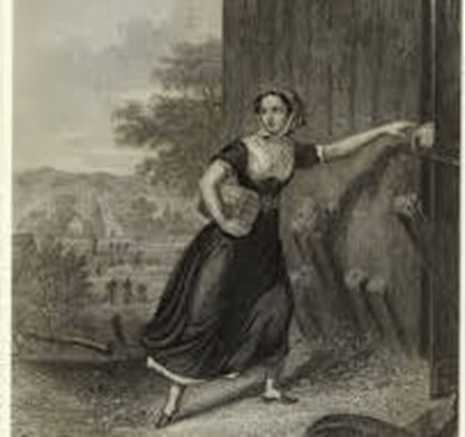
Georgia had many Revolutionary War patriots, such as Nancy Hart. While her husband was away, six British soldiers converged on their frontier home.

Soldiers shot her prize gobbler and ordered her to cook it. After feeding and serving them lots of wine Nancy grabbed one of their guns, promising to shoot the first one that moved. After shooting two, her husband showed up and they hung the rest.

Colonel Mordecai Sheftall of Georgia became the Continental Army’s highest ranking Jewish officer, serving as Deputy Commissary General for American troops in 1778.

In 1777, Georgia passed its first State Constitution, stating: “We the people of Georgia, relying upon the protection and guidance of Almighty God, do ordain and establish this Constitution.” Georgia’s Constitution, 1777, Article 6 stated: “Representatives shall be chosen out of the residents in each county and they shall be of the Protestant religion.”

In 1788, Georgia was the 4th State to ratify the U.S. Constitution. In 1789, Georgia’s population was over 82,000. It adopted a second Constitution which removed the Protestant requirement, simply stating: “All persons shall have the free exercise of religion.” A third Georgia Constitution was adopted in 1798, establishing religious toleration.

In the first 34 years of Georgia’s statehood, conflicts arose between settlers and Indians, especially when gold was discovered on Cherokee land in 1829, causing the Georgia Gold Rush. An Indian Removal Act was hurriedly rushed through a Democrat controlled Congress in 1830. This resulted in the tragic “Trail of Tears” where over 16,000 men, women, and children of the tribes Chickasaw, Choctaw, Creek, Seminole, and Cherokee, were evicted form their homes and rounded up at gun point by Federal troops. They were first put in wooden stockade Federal internment camps, then, in the bitter winter of 1838, marched from Georgia and southeastern regions of the United States to the Oklahoma Territory. Over 4,000 died on the march.

Georgia’s religious history included the Jewish Mickve Israel Congregation, which in 1786 had an attendance of 73. In 1790, Georgia’s Governor granted the Jewish congregation a State Charter. President Washington wrote to the Hebrew Congregation in Savannah, Georgia, May 1790: “May the same wonder-working Deity, who long since delivered the Hebrews from their Egyptian oppressors, planted them in the promised land, whose Providential Agency has lately been conspicuous in establishing these United States as an independent nation, still continue to water them with the dews of Heaven, and make the inhabitants of every denomination partake in the temporal and spiritual blessings of that people, whose God is Jehovah.”

The first Catholic residents moved into Georgia from Maryland around 1793. They initially had no priests, but when the French Revolution sparked a slave revolt on the Island of St. Dominique-Haiti, a few French priests fled to Georgia. In 1810, the State Legislature incorporated the Catholic Church of Augusta. In 1820, Irish Bishop John England was appointed over the State’s one hundred Catholics in Savannah, plus a few more in Augusta.

Bishop England founded America’s first Catholic newspaper, The United States Catholic Miscellany. In 1826, Bishop John England delivered the first Catholic Sermon in the U.S. Capitol, at a Sunday morning Church service held in the House of Representatives.

The overflow audience included President John Quincy Adams, who had previously referred to the Catholic Church in an address, July 4, 1821, as “fetters of ecclesiastical domination” incompatible with republican institutions.

Bishop England reassured the predominately Protestant audience, January 8, 1826: “We do not believe that God gave to the Church any power to interfere with our civil rights, or our civil concerns. I would not allow to the Pope, or to any bishop of our Church the smallest interference with the humblest vote at our most insignificant balloting box.”

In 1836, Methodists founded Emory College, named after Methodist Bishop John Emory, in the city of Oxford, and Wesleyan Female College at Macon — the first institution of learning founded specifically for women in America.

Georgia was devastated as the Civil War progressed, especially in the fall of Atlanta and General Sherman’s march to the sea.

The population of Georgia in 1870 was 1,184,109. In 1877, Georgia’s Constitution stated: “Relying upon the protection and guidance of Almighty God, all men have the natural and inalienable right to worship God, each according to the dictates of his own conscience.”

In 1877, Baptists founded Shorter College at Rome, and in 1881, Methodists founded Morris Brown College.

In 1895, history was made at the International Exposition in Atlanta when the black President of the Tuskegee Institute, Booker T. Washington, was invited to give a keynote address.

In 1900, the population of Georgia was 2,216,331. As of 1910, the State of Georgia gave full liberty of conscience in matters of religious opinion and worship, but did not legalize willful or profane scoffing. It was unlawful to conduct any secular business on Sunday.

As of 1910, the State of Georgia gave full liberty of conscience in matters of religious opinion and worship, but did not legalize willful or profane scoffing.

It was unlawful to conduct any secular business on Sunday. Georgia’s oath of office was administered with one hand upon the Bible and the other uplifted, with the affirmation: “You do solemnly swear in the presence of the ever living God.”  Legislative sessions opened with prayer.

When James Oglethorpe and the first settlers touched Georgia’s shore, JANUARY 13, 1733, they knelt while Rev. Herbert Henry offered prayer. They declared: “Our end in leaving our native country is not to gain riches and honor, but singly this: to live wholly to the glory of God.”

Their object was: “To make Georgia a religious colony.”

James Oglethorpe

John Quincy Adams

This great man was so very influential in American history. He not only was President of the Unite States, he was one of the only patriots who not only knew all of the Founding Fathers, including George Washington, but also knew Abraham Lincoln. I think you would be interested in the fact that he was one of the first who recognized how dangerous Muslims were. And no U.S. political figure was ever as great a scholar of the Bible as this amazing man. He mastered Russian, Dutch, Portuguese, French, German, Greek, Latin, and Hebrew as written in the time of Christ. His intellect was astounding. We can learn much from what such intellect chose to be centered upon. Do read some of his story that I have compiled below: Ron

The son of the second President, John Adams, John Quincy Adams had one of the longest careers in American politics.

His many positions included:

At age 11, he accompanied his father as part of a diplomatic team to France and the Netherlands, 1778;

At 14 , he was secretary to the American diplomat to Russia, 1781-1783;

At 17, he assisted his father’s diplomatic role in England, 1784;

President Washington appointed him U.S. Ambassador to the Netherlands, 1794-1797;

U.S. Ambassador to Portugal, 1796;

U.S Ambassador to Prussia, 1797-1801;

U.S. Senator from Massachusetts, 1803;-1808

Professor of Logic at Brown University, 1803-1808;

Professor Rhetoric & Oratory, Harvard University, 1806-1809;

Argued before Supreme Court, Fletcher v. Peck, 1809;

President Madison appointed him to be First U.S. Minister to Russia, 1809-1814;

Published Lectures on Rhetoric & Oratory, 1810;

President Madison nominated him to the Supreme Court, being confirmed unanimously by the Senate, but declined, 1811;

He negotiated the Treaty of Ghent, which favorably ended the War of 1812 (Britain intended to retain the territory around the Great Lakes);

President Madison appointed him U.S. Minister to Great Britain, appointed by Madison, 1815-1817;

U.S. Secretary of State, under President Monroe, 1817-1825, where he negotiated the Adams-Onis Treaty, obtaining Florida from Spain;

He was the 6th President of the United States, 1825-1829;

U.S. Congressman from Massachusetts, 1831-1848.

John Quincy Adams was the only U.S President to serve as a Congressman in the U.S. House of Representatives after having been President.

In Congress, he earned the nicknamed “The Hell-Hound of Slavery” for relentlessly speaking out against slavery. In 1839, he introduced a constitutional amendment to ban slavery in all new states entering the Union.

In 1841, at the age of 73, John Quincy Adams spoke for nine hours defending the 53 Africans accused of mutiny aboard the Spanish slave ship La Amistad. With the help of lawyer Francis Scott Key, he argued their case before the U.S. Supreme Court and won, giving them back their freedom.

He was the only major figure in American history to know both the Founding Fathers, including George Washington, and Abraham Lincoln.

The annotated John Quincy Adams-A Bibliography, compiled by Lynn H. Parsons (Westport, CT, 1993, p. 41): “The natural hatred of the Mussulmen towards the infidels is in just accordance with the precepts of the Koran. The fundamental doctrine of the Christian religion is the extirpation of hatred from the human heart. It forbids the exercise of it, even towards enemies.

He continued:

“In the 7th century of the Christian era, a wandering Arab spread desolation and delusion over an extensive portion of the earth. (Muhammad)

He declared undistinguishing and exterminating war as a part of his religion. The essence of his doctrine was violence and lust, to exalt the brutal over the spiritual part of human nature.”

“Prophet, We have made lawful to you the slave girls whom Allah has given you as booty.”

John Quincy Adams-A Bibliography reported that during the Barbary Pirate Wars: “Our gallant Commodore Stephen Decatur chastised the pirate of Algiers. The Dey (Omar Bashaw) disdained to conceal his intentions; ‘My power,’ said he, ‘has been wrested from my hands; draw ye the treaty at your pleasure, and I will sign it; but beware of the moment, when I shall recover my power, for with that moment, your treaty shall be waste paper.'”

Frederick Leiner wrote in The End of the Barbary Terror-America’s 1815 War Against the Pirates of North Africa (Oxford University Press): “Commodore Stephen Decatur and diplomat William Shaler withdrew to consult in private. The Algerians were believed to be masters of duplicity, willing to make agreements and break them as they found convenient.”

The Annotated John Quincy Adams-A Bibliography (NY: 1830) continued with the statement: “The vanquished may purchase their lives, by the payment of tribute; the victorious may be appeased by a false and delusive promise of peace. The faithful follower of the prophet may submit to the imperious necessities of defeat: but the command to propagate the Moslem creed by the sword is always obligatory, when it can be made effective. The commands of the prophet may be performed alike, by fraud, or by force.”

John Quincy Adams described Muslim behavior in “Essay on Turks” (The American Annual Register for 1827-28-29): “Such is the spirit, which governs the hearts of men, to whom treachery and violence are taught as principles of religion.”

Scottish philosopher David Hume wrote the Prophet of Islam in Of the Standard of Taste, 1760: “Let us attend to his narration; and we shall soon find, that the prophet bestows praise on such instances of treachery, inhumanity, cruelty, revenge, bigotry, as are utterly incompatible with civilized society.”

Winston Churchill described Muslim behavior in The Story of the Malakand Field Force (Dover Publications, 1898):   “Their system of ethics, which regards treachery and violence as virtues rather than vices, has produced a code of honor so strange and inconsistent, that it is incomprehensible to a logical mind.”

After reading the insight of John Quincy Adams, Winston Churchill and David Hume, one is faced with a perplexing question — if someone is capable of decapitating you, would they first be willing to lie to you about their intentions?

While General Andrew Jackson was fighting the British in the area of Louisiana, Mississippi, Alabama, and West Florida, John Quincy Adams was negotiating the Treaty of Ghent in Belgium, which ended the War of 1812.

Afterwards, he traveled to Paris and saw Napoleon being returned to power for his famous 100 last days as Emperor.

One of the major influences that shaped the views and actions of John Quincy Adams was the Bible, as he wrote in his diary, September 26, 1810: “I have made it a practice for several years to read the Bible through in the course of every year. I usually devote to this reading the first hour after I rise every morning. I have this morning commenced it anew, this time with Ostervald’s French translation.”

In September of 1811, John Quincy Adams wrote to his son from St. Petersburg, Russia: “My dear Son, you mentioned that you read to your aunt a chapter in the Bible or a section of Doddridge’s Annotations every evening. This information gave me real pleasure; for so great is my veneration for the Bible. It is of all books in the world, that which contributes most to make men good, wise, and happy. My custom is, to read four to five chapters every morning immediately after rising from my bed.

Adams continued:

It is essential, my son that you should form and adopt certain rules of your own conduct. It is in the Bible, you must learn them. ‘Thou shalt love the Lord thy God, with all thy heart, and with all thy soul, and with all thy mind, and with all thy strength, and thy neighbor as thy self.’ On these two commandments, Jesus Christ expressly says, ‘hang all the law and the prophets.'”

John Quincy Adams’ correspondence to his son is compiled in Letters of John Quincy Adams to his son, on the Bible and its Teachings, which contains his statement: “No book in the world deserves to be so unceasingly studied, and so profoundly meditated upon as the Bible.”

On March 13, 1812, John Quincy Adams noted: “This morning I finished the perusal of the German Bible.”

Adams wrote December 24, 1814: “You ask me what Bible I take as the standard of my faith — the Hebrew, the Samaritan, the old English translation, or what? I answer, the Bible containing the Sermon on the Mount. The New Testament I have repeatedly read in the original Greek, in the Latin, in the Geneva Protestant, in Sacy’s Catholic French translations, in Luther’s German translation, in the common English Protestant, and in the Douay Catholic translations. I take any one of them for my standard of faith.”

On December 31, 1825, John Quincy Adams wrote in his diary: “I rise usually between five and six. I walk by the light of the moon or stars, or none, about four miles, usually returning home. I then make my fire, and read three chapters of the Bible.”

The Real Origin of Americas Government

Very few people know the real origin of America’s government.  It is the origin of the Pilgrim’s Compact and the origin of the Colonial pastors sermons from which our Constitution was patterned. I really want you to know it. So, if you will read the following, you will for sure know:      Ron   

Hartford’s Traveler’s Square has a bronze statue of Connecticut’s first settlers and a plaque which reads: “In June of 1635, about one hundred members of Thomas Hooker’s congregation arrived safely in this vicinity with one hundred and sixty cattle. They followed old Indian trails from Massachusetts Bay Colony to the Connecticut River to build a community. Here they established the form of government upon which the present Constitution of the United States is modeled.”

This is a significant acknowledgment, that their “covenant” congregational church government became their colonial government, which then became the model for the U.S. Constitution. The U.S. Constitution was completely modeled on the sermon preached by the pastor of this church.

As explained by the famous historian Dr. Charles Wolfe in his writings in 1989: “The pastor of this church, Rev. Hooker preached a scholarly sermon that guided the men of Connecticut in framing the Fundamental Orders of Connecticut in 1639, commonly called ‘the world’s first complete written constitution’. And this document became the exact model of the America’s constitution”

In New England, instead of separation of church and state, it was pastors and churches that created the state. How could someone say, “Pastor, do not preach on politics” when it is a pastor’s sermon that became their constitution? How could someone say “Church members should not be involved in politics” when all there was in Hartford at that time was the church members?

President Calvin Coolidge stated at the 150th Anniversary of the Declaration of Independence, Philadelphia, July 5, 1926: “The principles which went into the Declaration of Independence are found in the sermons of the early colonial clergy who were earnestly undertaking to instruct their congregations in the great mystery of how to live. They preached equality because they believed in the fatherhood of God and the brotherhood of man. They justified freedom by the text that we are all created in the divine image, placing every man on a plane where he acknowledged no superiors, where no one possessed any right to rule over him, he must inevitably choose his own rulers through a system of self-government.

In other countries the authority was the king or ruler, a Mullah, a Potentate, a Czar……always, one supreme arthority. However, when the Pilgrims landed at Plymouth instead of way south where they were supposed to land where they had a governing charter, they had no governing instrument. So, they devised what they called a Charter. It was a form of government that was controlled completely by the people. This became an example for our Constitution. And as President Coolidge stated above, the Pastors of the Colonies that were formed in early America preached a form of self government that also became an examplr for our Constitution.

But where did they get those those revoutionary ideas for self government? The answer to that is what I have written all of this to finally explain.

Since the Pilgrims and the Colonial pastors were so very steeped in the Bible, it is only logical that their ideas about government came from the bible. In early and even most all later times, governments were ruled by a king or some other similar authority. The first government where the people ruled was the four hundred years that the “Children of Israel” had a republican government where the people were the rulers. It was the four hundred years where their government was the one they had when they finally lived in their Promised Land together.

During those first four hundred years in the Promised Land they had peace, prosperity, and they multiplied greatly. For all those years, they lived under a covenant with God. Their laws were those that God himself had set up and were given to the people by Moses on Mount Sinai directly from God. For all those years they strictly kept those laws out of reverence to God.

Eventually they most all decided that they wanted a king, like the other nations surrounding them had. God did not want them to have a king, but He finally let them have a king such as they were clamoring for. He warned them through his prophets that such a government was not nearly as good as the republican one with just the people ruling which they had prospered under since arriving in the Promised Land.

The got their king, King Saul; and sure enough he immediately executed over one thousand priests and prophets to solidify his authority. They were not nearly as well off as they had been during those four hundred years, but it was too late now.

Where did America’s founders get this idea of people ruling themselves?

They did draw some ideas from the Roman Republic and the Athenian city states. Ultimately, though, America’s New England founders looked back to Ancient Israel, that four hundred years where they prospered upon finally arriving in the Promised Land.

Harvard President Samuel Langdon gave an address, June 5, 1788, titled “The Republic of the Israelites an Example to the American States stating: The ISRAELITES may be considered as a pattern to the world in all ages. Government on republican principles, required laws; without which it would have degenerated immediately into absolute monarchy. How unexampled was this quick progress of the ISRAELITES, from abject slavery, ignorance, and almost total want of order, to a national establishment perfected in all its parts far beyond all other kingdoms and states! From a mere mob, to a well regulated nation, under a government and laws far superior to what any other nation could boast!”

Langdon concluded:

“It was a long time after the law of Moses was given before the rest of the world knew any thing of government by law. It was six hundred years after Moses before Grecian republics received a very imperfect code of laws from Lycurgus. It was about five hundred years from the first founding of the celebrated Roman empire before the first laws of that empire.”

Dr. Pat Robertson wrote in America’s Dates with Destiny, 1986: “What was happening in America had no real precedent, even as far back as the city-states of Greece. The only real precedent was established thousands of years before by THE TRIBES OF ISRAEL in the covenant with God and with each other.”

What was the Republic of the Israelites? Around 1,400 BC, the Children of Israel left Egypt and entered the Promised Land.

As explained in detail in the book “Rise of the Tyrant: Volume Two of Change to Chains-The 6,000 Year Quest for Global Control”:

*Ancient Israel was the first well-recorded instance of an entire nation ruled without a king, that first 400 year period in the Promised Land.

*Ancient Israel taught that everyone, male and females, was made in the image of the Creator who was not a respecter of persons, commanding judges to treat everyone equally before the law. This was the beginning of the concept of equality on planet earth. There was no royal family to curry favor with for the 400 year period prior to King Saul.

*Ancient Israel had a system of honesty, as God hates unjust weights and measures. This provided a basis for commerce.

*Ancient Israel had the land divided up and permanently titled to each individual family. This prevented a dictator from gathering up the land and putting the people back into slavery. If someone owned land, they could accumulate possessions: the Bible called this being blessed. And you could give away some of your possessions: the Bible called this “charity.” Karl Marx wanted the exact opposite, as he wrote in his Communist Manifesto, 1848: “The theory of the Communists may be summed up in the single sentence: Abolition of private property.”

*Ancient Israel had a bureaucracy-free welfare system. When someone harvested their field, they left the gleanings for the poor.

*Ancient Israel was the first nation where everyone was taught to read.

*Ancient Israel had no police, as the people were not only taught the Law, they were accountable to enforce it.

Albert Einstein stated: “The strength of the Constitution lies entirely in the determination of each citizen to defend it. Only if every single citizen feels duty bound to do his share in this defense are constitutional rights secure.”

*Ancient Israel had no prisons, as the Law required swift justice at the city gates and a “city of refuge” where fugitives could flee to await a trial.

*Ancient Israel had no standing army, as every man was in the militia, armed, and ready at a moment’s notice to defend his community.

*Ancient Israel had the people of every town gather in the meeting house — synagogue — where they were taught the Law and where they chose their elders who would sit in the gates:

  • Deuteronomy 1:3-13: “How can I myself alone bear … your burden? … TAKE YOU wise men, and understanding, and KNOWN AMONG YOUR TRIBES, and I will make them rulers over you.”
  • Deuteronomy 16:18–19 “Judges and officers SHALT THOU MAKE THEE IN ALL THY GATES which the Lord thy God giveth thee throughout thy tribes.”
  • Exodus 18:21 “Moreover thou shalt provide OUT OF ALL THE PEOPLE able men, such as fear God, men of truth, hating covetousness; and place such over them, to be rulers of thousands, and rulers of hundreds, rulers of fifties, and rulers of tens.”

But why would a person obey internal morals? Ancient Israel had the key ingredients: 1) God is watching everyone; 2) God wants you to be fair; and 3) God will hold you accountable in the future.

If you had the opportunity to steal and not get caught, you might considered it.

But if you remember God is watching, that He wants you to be fair, and that He will hold you accountable in the future, you would hesitate.

This is called having a “conscience.

Secretary of State William Jennings Bryan stated in 1908: “There is a powerful restraining influence in the belief that an All-seeing eye scrutinizes every thought and word and act of the individual.”

This only works, though, with the God of the Bible. An Islamic Allah permits lying, stealing, and raping infidel kafir non-Muslims. Only the God of the Bible declares that all men and women are equal, made in the image of the Creator, and to do unto others as you would have them do unto you.

E.C. Wines wrote in Commentaries on the Laws of the Ancient Hebrews, with an Introductory Essay on Civil Society & Government (NY: Geo. P. Putnam & Co., 1853): “Another of those great ideas, which constituted the basis of the Hebrew state, was liberty. The Hebrew people enjoyed as great a degree of personal liberty, as can ever be combined with an efficient and stable government. There is a powerful restraining influence in the belief that an All-seeing eye scrutinizes every thought and word and act of the individual.”

Ancient Israel’s unique system was dependent upon the Levites and priests teaching the Law.

Noah Webster wrote in the preface of his 1828 Webster’s Dictionary: “The Christian religion is the most important and one of the first things in which all children, under a free government ought to be instructed. No truth is more evident to my mind than that the Christian religion must be the basis of any government intended to secure the rights and privileges of a free people.”

(So, if you have been patient to follow along with these words and the history that they represent, now you know the real origin of America’s government.)

`

Virginia – First English Colony in Ameria

Many colonies were attempted in America. The Pilgimes, without a Charter, even formed their own government structure. Yet, most all were wiped out by the indians. However, Virginia was the first English colony in America that lasted. Its history is rather amazing, especially its religious history. I thought you may be interested in reading about America’s first English colony. Please do so below: Ron
Virginia

In 1585, Sir Walter Raleigh attempted to settle Roanoke Island, Virginia, which he named after the “Virgin Queen” Elizabeth the First.

The Grant for the Colony stated: “Elizabeth, by the Grace of God and of England, Defender of the Faith, grant to our trusty and well beloved servant Walter Raleigh to discover barbarous lands, not actually possessed of any Christian Prince, nor inhabited by Christian People. Upon finding such remote lands it shall be necessary for the safety of all men to live together in Christian peace, Ordinances agreeable to the laws of England, and also so as they be not against the true Christian faith.”

Thomas Jefferson wrote in his Autobiography, 1821: “The first settlers of Virginia were Englishmen, loyal subjects to their King and Church, and the grant to Sir Walter Raleigh contained an express proviso that their laws ‘should not be against the true Christian faith, now professed in the Church of England.'”

Unfortunately, due to the Spain’s Invincible Armada attacking England in 1588, supplies to the Roanoke colony were delayed. When ships finally arrived in 1590, they found the Roanoke settlement abandoned, causing it be referred to as the “Lost Colony.”

Sir Walter Raleigh personally lost 40,000 pounds sterling on the venture.

After more than two decades, the Virginia Company was formed. One of the investors in the Virginia Company was the Earl of Southampton, who also financed William Shakespeare.

King James the First granted to the Virginia Company the First Charter of Virginia, April 10, 1606, which stated: “For the Furtherance of so noble a Work, which may, by the Providence of Almighty God, hereafter tend to the Glory of His Divine Majesty, in propagating of Christian Religion to such People, as yet live in Darkness and miserable Ignorance of the true Knowledge and Worship of God.”

The next year, Captain Christopher Newport arrived on April 26, 1607, with 105 settlers on the ships Susan Constant, Godspeed, and Discovery. Their “First Landing” was at Cape Henry, named for Prince Henry of Wales, the eldest son of King James I.

Their first act was to erect a wooden cross and commence a prayer meeting, led by Church of England minister, Rev. Robert Hunt.

They ascended the James River, named for King James I, and settled Jamestown, the first permanent English settlement in America.

One of Jamestown’s leaders was Captain John Smith, who served on the Council and a one year term as Governor. As recorded in his book, The True Travels, Adventures and Observations of Captain John Smith in Europe, Asia, Africa and America. He had previously spent five years fighting the armies of Ottoman Sultans Mehmed III and Ahmed I in the Long Turkish War, 1593-1606, in Hungary, Wallachia, Moldova, Romania and Transylvania near the Black Sea. During one of the campaigns led by Romanian Prince Michael the Brave, John Smith introduced ingenious battle tactics using gunpowder, which resulted in a victory and his promotion to captain.

In one incident, Smith killed three Turks in hand-to-hand combat, for which he was awarded a coat of arms.

Captain John Smith was captured, made a slave in Constantinople, killed his master, escaped to Russia, then fought the Ottoman navy on the Mediterranean before returning to England in 1605, and setting sail for Virginia in 1606. After landing in Virginia, Smith was exploring in December of 1607 and captured by Chief Powhatan, who intended to bash his brains out, till his daughter Pocahontas interceded. Pocahontas later was baptized, the painting of which is in the U.S. Capitol Rotunda

As Indians smoked tobacco in “peace pipes,” and Indians were healthy, people in England thought that smoking tobacco would make one healthy, thus causing a great demand for the crop.

On May 23, 1609, King James granted a Second Charter of Virginia, which stated: “The principal Effect which we can expect is the Conversion and reduction of the people in those parts unto the true worship of God and the Christian Religion. It shall be necessary for all such of our loving Subjects to live together, in the Fear and true Worship of Almighty God, Christian Peace, and civil Quietness, with each other.”

The Colony was almost abandoned in 1610, had it not been for the providential arrival of more settlers and supplies brought by Lord De La War, for whom the Colony of Delaware was later named.

The Third Charter of Virginia, March 12, 1611, stated: “Our loving Subjects for the Propagation of Christian Religion, and Reclaiming of People barbarous, to Civility and Humanity, We have granted unto them the first Colony in Virginia.”

In May of 1611, the London Company sent Sir Thomas Dale to Virginia. He sailed up the James River and founded Henricus, the colony’s second settlement, also named after James’ eldest son, Prince Henry.

In 1619, Henricus became the location of the first English hospital in America and the first chartered college in the English colonies, initially designed for Powhatan’s children to learn trades, agriculture, and Christianity, “the work of conversion.”

Unfortunately, it was destroyed in the 1622 Indian uprising. The uprising started after Chief Powhatan died.

The new chief, Opechancanough, led coordinated surprise attacks in which Indians killed 347 men, women and children in outlying settlements, a full quarter of Virginia’s entire population.

Fortunately for Jamestown, an Indian convert to Christianity named Chanco, saved the town by warning Richard Pace. The account to the London Company, stated: “This slaughter was a deep and grievous wound to the yet weak and infant colony; but it would have been much more general, and almost universal, if God had not put it into the heart of a converted Indian, to make a discovery. This convert, whose name was Chanco, lived with one Richard Pace, who treated him, as his own son. The night before the massacre, another Indian, his brother, was with him; and told him of the Chief’s command, and that the attack would be performed the next day and urged him to rise and tell Pace. As soon as his brother was gone, the Christian Indian rose, and went and revealed the whole matter to Pace; who immediately gave notice thereof to Captain William Powel, and having secured his own house, rowed off before day to James-Town, and informed the Governor of it.”

A plaque erected at Jamestown reads: “In memory of Chanco, the Indian who lived with Richard Pace, in this county, and who on the night of March 22, 1622, informed Pace of Opechancanough’s plot and thus saved the Jamestown Colony.”

The Colony of Virginia suffered many droughts, famines, starvation, diseases, and attacks. Jamestown’s mortality rate was so high, that at times the dead were buried in mass graves. Between1608 and 1624, of the 6,000 settlers that came to Jamestown, only 3,400 survived.

Unfortunately, in 1624, King James the First revoked the Virginia Company charter and ruled directly over Virginia as a Royal Crown Colony.

Thus, the official denomination in Virginia was the Church of England, which was established from 1606 till 1786.

Noah Webster’s 1828 Dictionary defined “establishment” of religion as “The episcopal form of religion, so called in England.”  Establishment also meant that settlers had to take the “oath of supremacy.” The Oath of Supremacy, 1535, stated: “I declare that the King’s Highness is the only Supreme Governor of this Realm in all Spiritual or Ecclesiastical things.”

Church attendance was now mandatory. The Virginia House of Burgesses passed an ordinance in 1623: “To see that the Sabbath was not profaned by working or any employments, or journeying from place to place, On March 5, 1624, Virginia’s legislature passed the ordinance: “Whosoever shall absent himself from Divine service any Sunday without an allowable excuse shall forfeit a pound of tobacco”

It continued: “That there be an uniformity in our Church as near as may be to the Canons in England and that all persons yield ready obedience unto them under pain of censure.”

In 1699, the Virginia Assembly adopted the statutes of monarchs William and Mary allowing for limited toleration of some Protestant dissenters.

James Madison wrote to Robert Walsh, March 2, 1819: “The English Church was originally the established religion. Of other sects there were but few adherents, except the Presbyterians who predominated on the west side of the Blue Mountains. A little time previous to the Revolutionary struggle, the Baptists sprang up, and made very rapid progress. At present the population is divided, with small exceptions, among the Protestant Episcopalians, the Presbyterians, the Baptists and the Methodists.”

U.S. Supreme Court Justice Hugo Lafayette Black wrote in Engel v. Vitale, 1962: “As late as the time of the Revolutionary War, there were established Churches in at least eight of the thirteen former colonies. The successful Revolution against English political domination was shortly followed by intense opposition in Virginia where the minority religious groups such as Presbyterians, Lutherans, Quakers and Baptists had gained such strength.”

Justice Black continued: “In 1785-1786, those opposed to the established Church obtained the enactment of the famous ‘Virginia Bill for Religious Liberty’ by which all religious groups were placed on an equal footing.”

The “Virginia Bill for Religious Liberty,” drafted by Thomas Jefferson, prevented the government from infringing on the rights of conscience, January 16, 1786: “Almighty God hath created the mind free, and manifested his supreme will that free it shall remain by making it altogether insusceptible of restraint; that all attempts to influence it by temporal punishments are a departure from the plan of the holy author of our religion, who being lord both of body and mind, yet chose not to propagate it by coercions on either, as was in his Almighty power to do, but to extend it by its influence on reason alone”

Jefferson continued: “To compel a man to furnish contributions of money for the propagation of opinions which he disbelieves and abhors, is sinful and tyrannical, that laying upon him an incapacity of being called to offices of trust unless he renounce this or that religious opinion, is depriving him injuriously of those privileges to which he has a natural right, that the opinions of men are not the object of civil government, nor under its jurisdiction; that to suffer the civil magistrate to intrude his powers into the field of opinion is a dangerous fallacy, which at once destroys all religious liberty, because he being of course judge of that tendency will make his opinions the rule of judgment, and approve or condemn the sentiments of others, that truth is great and will prevail if left to herself”

Jefferson concluded: “Thus that no man shall be molested on account of his religious opinions or belief; but that all men shall be free to profess, and by argument to maintain, their opinions in matters of religion.”

So, because of the great victory of the American Revolution over England, all these protestant churches in Virginia now had complete freedom to worship God as they felt divinely directed.

Elizabeth I, Virgin Queen of England

Most people in the United States know amost nothing about the Virgin Queen of England. However, if she had not risen up and called upon God to assist her in destroying the great Spanish Armade anchored right there on the shores of England, there would not have been 13 Colonies in America and no United States. And we would all be speaking Spanish to this Day. So do read about her and what happened: Ron

The Story of England’s Virgin Queen

When Henry the Eighth died in 1547, his nine-year-old son by Jane Seymour, Edward the Sixth, reigned for six years.

Edward the Sixth

He advanced Protestantism in England, most notably by requiring the use of The Book of Common Prayer, prepared the Thomas Cranmer, the Archbishop of Canterbury. After the Bible, The Book of Common Prayer is considered the most influential book in the English language, followed by the works of Shakespeare.

When it became apparent that Edward’s illness was terminal, he passed over his older half sisters, Mary and Elizabeth, to appoint his Protestant first cousin, Lady Jane Grey as his heir.

Upon Edward’s death in 1553, Mary, Henry the Eighth’s oldest daughter, from his marriage to Catherine of Aragon, quickly ascended to power. She executed Lady Jane Grey – the Nine Day Queen, and put Elizabeth in the Tower of London, the same place where Elizabeth’s mother, Anne Boleyn, had been beheaded 18 years earlier.

Queen Mary

Queen Mary reigned 5 years. Her popularity suffered in 1554 when, at the age of 38, she married her 27-year-old first cousin, the future King of Spain, Philip the Second. Phillip spent most of his time absent from England, fighting in the Netherlands.

Mary repealed the Protestant reforms of her father, Henry the Eighth, and her half-brother, Edward the Sixth, and brought back the Heresy Acts. She had over 300 executed, resulting in the sobriquet “Bloody Mary.”

Among those she had executed were the Oxford Martyrs:

– Bishop Hugh Latimer, who had been Edward the Sixth’s chaplain;

– Reverend Nicholas Ridley, who had been the Bishop of London; and

– Thomas Cranmer, the former Archbishop of the Anglican Church, who published The Book of Common Prayer.

As they were about to be burned at the stake, October 16, 1555, Bishop Hugh Latimer exhorted Nicholas Ridley: “Play the man, Master Ridley. We shall this day light such a candle, by God’s grace, in England, as I trust shall never be put out.”

Thomas Cranmer was taken to a tower and forced to watch their execution. Cranmer was then given the opportunity to give a sermon to publicly renounce his Protestant teaching. Unexpectedly, he reaffirmed them, was immediately pulled from the pulpit, taken outside and burned at the stake. As he was engulfed in flames, he was heard saying “Lord Jesus, receive my spirit. I see the heavens open and Jesus standing at the right hand of God.”

Mary had two false pregnancies, then died, November 17, 1558, resulting in her half-sister Elizabeth becoming Queen.

Elizabeth I

Elizabeth continued the hierarchical Church of England, also called the Anglican Church, begun when her father separated from Rome in order to marry her mother, Anne Boleyn.

Some in England insisted that the Anglican Church separate even further from Rome. They wanted to “purify” it, resulting in them being called “Puritans.” Puritans had a theology influenced by John Calvin, Ulrich Zwingli, John Knox, and other Protestant Reformers.

Elizabeth attempted to take the middle ground between Puritan fundamentalist views on one side, and England’s centuries old Catholic heritage on the other.

At her Coronation in 1558, Elizabeth was questioned as to the presence of Christ in the Sacrament. She responded: “Christ was the Word that spake it, He took the bread and brake it, And what that Word did make it, I do believe and take it.”

Elizabeth stated: “There is only one Christ, Jesus, one faith. All else is a dispute over trifles.”

Elizabeth reissued The Act of Supremacy, declaring the Monarch was the: “Supreme Governor in all Spiritual or Ecclesiastical Things.”

She enacted The Act of Uniformity, making Anglican Church attendance compulsory, and required use of The Book of Common Prayer, though penalties for nonconforming were not extreme. Though an estimated 300 Catholic priests lost their jobs, Catholic “papists” or “recusants” were tolerated and simply had to pay a weekly fine for not attending the Anglican Church.

Elizabeth did not like Henry the Eighth’s Great Bible, which relied on the Latin Vulgate. She also did not like the Geneva Bible, which had John Calvin’s margin notes recommending Presbyterian church government of elders chosen as representatives of the congregation. She authorized the Bishops’ Bible, which supported an episcopalian church government led by Anglican bishops appointed by the monarch.

Anglicans drew their ideas of government from the Old Testament period of King Saul and afterwards, where Israel had an anointed King.

Puritans drew their ideas of government from the 400 year period pre-King Saul, where people of Israel were in a covenant with God and with each other.

The Hebrew Republic was the first instance in world history of a nation with millions of people and no king, maintaining order with an educated population where every citizen was taught God’s Law and personally accountable to God to follow it.

Puritans divided into two main forms of church government: Presbyterian and Congregational. Presbyterians favored elders, called presbyters, who gathered together to make decisions in local synod assemblies – synod is derived from the same root word as synagogue, which means “meeting place.” Congregationalists favored a church government were each congregation was completely independent. These were called Radical Puritans, Separatists, Independents, Dissenters, Non-conformists, Brownists – followers of Robert Browne, Baptists – followers of John Smyth, John Murton and Thomas Helwys. The latter were referred to as the “Pilgrims.” They believed the “gathered church” was founded by the Holy Spirit, not by man or the state, therefore each individual church had the right to determine its own affairs.

Pilgrim Separatists fled to Holland, and then later to America in 1620.

Mainstream Puritans came in large numbers beginning in 1630, with the Great Puritan Migration to escape the persecution of King Charles the First. In America, both Pilgrims and Puritans were generally referred to as “Congregationalists.”

During Queen Elizabeth’s 45 year reign, monumental achievements occurred. Shakespeare wrote 38 plays impacting world literature.

Sir Francis Bacon began the scientific revolution. In his treatise titled, Of Atheism, Francis Bacon declared: “A little philosophy inclineth man’s mind to atheism, but depth in philosophy bringeth men’s minds about to religion.”

In 1577, Sir Francis Drake began the second voyage in history to circumnavigate the globe, almost 60 years after Ferdinand Magellan’s first voyage.

In 1579, Oxford educated priest Thomas Stephens became one of the first western Christian missionaries, and probably the first Englishman, to reach India, converting many of the upper Indian society by writing Kristpurana – Story of Christ.

In 1600, English navigator William Adams, sailing for the Dutch East India Company, arrived in Japan.

In 1584, Sir Walter Raleigh began a colony he named Virginia, in honor of the “Virgin Queen Elizabeth.”

Virginia’s Charter, 1584, stated: “Elizabeth, by the Grace of God of England, Defender of the Faith, grant to our trusty and well beloved servant Walter Raleigh, to discover barbarous lands, not actually possessed of any Christian Prince, nor inhabited by Christian People. Upon finding such remote lands it shall be necessary for the safety of all men to live together in Christian peace, and Ordinances agreeable to the laws of England, and also so as they be not against the true Christian faith.” 

Phillip’s half-brother, Don Juan of Austria, in what was considered a miraculous victory, defeated the Ottoman Muslim fleet at the Battle of Lepanto in 1571.

Afterwards, instead of freeing the rest of the Mediterranean from Muslim control, Spain turned its attention to stopping the Reformation in Holland and England.

Beginning in 1572, Spanish General Alba, known as the Iron Duke, committed the “Spanish Furies,” pillaging, burning, raping and slaughtering in the Netherlands. This led to the Eighty Years War and eventually Holland’s independence.

Philip the Second of Spain had proposed marriage to Elizabeth, but she continually put him off. They were cordial until Elizabeth began aid the Netherlands. Considering this as aiding his enemies, Philip the Second of Spain sent his Invincible Spanish Armada to invade England in 1588.

The Armada consisted of 130 ships, 1,000 iron guns, 1,500 brass guns, 7,000 sailors, 18,000 soldiers, plus 30,000 soldiers from the Spanish Netherlands. It looked like the end of England and the Virgin Queen.

Queen Elizabeth told her troops, August 19, 1588: “Let tyrants fear. I know I have the body but of a weak and feeble woman; but I have the heart and stomach of a king, and of a king of England too, and think foul scorn that Spain, or any prince of Europe, should dare to invade the borders of my realm. I myself will take up arms, I myself will be your general. We shall shortly have a famous victory over those enemies of my God, of my kingdom, and of my people.”

(Many of us are convinced that God miraculously intervened at that point, in an amazing miracle.)

England’s smaller, more maneuverable vessels proved difficult for the Spanish to apprehend. Then, at midnight, July 28, 1588, Sir Francis Drake set eight English ships on fire and floated them downwind to the closely anchored Spanish ships of that great Spanish Armada.

In a panic, the Spanish ships cut anchor. And at that very moment, an unusual violent hurricane scattered and destroyed most of the Spanish Armada.

When King Philip the Second of Spain learned of the loss, he exclaimed: “I sent the Armada against men, not God’s winds and waves.”

If Spain would have won, there would not only have been no Anglican England, there would have been no Puritans, no Pilgrims, no New England, and no United States.

(This is a good place to end the story of England’s Queen Elizabeth I. However, this is not the end of the story. So much still happened because of her, includeing the founding of America. Do continue on, finishing this story of the Virgin Queen if you wish) Ron

In 1596 and 1597, Philip the Second again sent Armadas to England, but they were also destroyed in storms. These losses contributed to Spain’s financial bankruptcy and ended Spain’s monopoly of the seas.

England soon became a major European power, and joined the countries of Holland, Sweden, and France in founding colonies in America.

Adam Smith wrote The Wealth of Nations, 1776. In it he said: “The Spaniards, by virtue of the first discovery, claimed all America as their own, and such was the terror of their name, that the greater part of the other nations of Europe were afraid to establish themselves in any other part of that great continent; but the defeat of their Invincible Armada put it out of their power to obstruct any longer the settlements of the other European nations. In the course of the 17th century English, French, Dutch, Danes, and Swedes attempted to make some settlements in the new world.”

When Elizabeth died, March 24, 1603, James the First became King of England. He was the son of Mary Queen of Scots.

Though James’ mother was Catholic, and though he was raised and tutored by Scottish Presbyterians, when he became King he acted as an absolute monarch, embracing Anglicanism with all the hierarchical power concentrated in the hands of the King. James was noted for the Jamestown Colony and the King James Bible in 1611.

Before her death, Queen Elizabeth, the last monarch of the House of Tudor, stated in 1566: “I am your Queen. I will never be by violence constrained to do anything. I thank God I am endued with such qualities that if I were turned out of the Realm in my petticoat I were able to live in any place in Christendom.”

Elizabeth told William Lambarde in 1601: “He that will forget God, will also forget his benefactors.”

Rebellions and assassinations were a constant threat. In France, King Henry the Third was assassinated in 1589. France’s “Good King” Henry the Fourth survived at least a dozen attempts on his life before he was eventually assassinated in 1610.

Elizabeth faced the rebellion of the Catholic Northern Earls in 1569. Though Elizabeth was relatively tolerant toward Catholics, things changed when Pope Pius the Fifth officially excommunicated her in 1570, declaring her an illegitimate queen.

In response, she passed the Treason Acts of 1571, making it a crime for anyone to say she was not the legitimate queen.

The Religion Act was passed in 1580 making it high treason to persuade subjects to not be loyal to the Queen or the Church of England, increasing recusant fines to £20 a month or imprisonment for being absent from Anglican Church service, or attending a Catholic mass.

There were numerous plots to remove Elizabeth:

The Ridolfi Plot, 1571;

The Throckmorton Plot, 1583;

The Babington Plot, 1586.

When rumors arose in England of a possible assassination plot, Elizabeth executed dozens, including, sadly, her Catholic cousin, Mary Queen of Scots, who was under her protection.

Before her death, responding to questions from Parliament regarding succession after her death, Elizabeth stated: “I know I am but mortal and so therewhilst prepare myself for death, whensoever it shall please God to send it.”

Of her epitaph, Queen Elizabeth I had it put:  “I am no lover of pompous title, but only desire that my name may be recorded in a line or two, which shall express my name, my virginity, the years of my reign, and the reformation of religion under it.”

(End of the Story of the Virgin Queen, Elizabeth I}