This was one incredible woman. She was born in Missouri but wound up with her husband and two young children in Sherman, Texas. At the very worst part of the great depression, her husband just left her and the children. She figured that if they were not going to starve, she had better get a job.
She went downtown and walked around the square. She picked out the store that she liked best and went in and asked to see the manager. She made it into his office and presented her case. The manager said: “Let me see if I have got this right, lady. There are a host of people outside desperately wanting a job. So, you walked around the square and picked out my store to come and work for.” Mary said: “That is correct.”
The manger explained that he didn’t need any more employees and that besides, he had a list of job applicants a “mile long”. However, Mary was quite insistent, and finally proposed to work for no salary, only on commission. The manger was so taken-aback by this that he just agreed. So, she went down to work.
On that very first day, Mary observed that most everything in the store had a price that ended in 95 or 98 or 99 cents. She knew that women in those days most all mended their own clothing and were always needing another spool of thread. So, she put the tree with spools of thread up by the cash register, and had the women take their change in spools of thread which were priced in those days at one cent per spool.
The manager was so impressed that he hired her to a regular job before the day was over.
She then moved her children down to Dallas and studied to be a CPA. She became the bookkeeper/accountant for a prominent furniture store. At that store she observed that women would come in and buy a whole complement of furniture, but that they had no idea about what colors in their home would look best with the furniture, and especially what accessories would dress-up the room to go best with the furniture. Those thoughts never left her.
She eventually got a job with a fellow who was selling such accessories on the “party plan”. In “nothing flat” she had 500 women in her pyramid group. When the owner refused to pay the money and bonuses she had earned under the plan since it was so large, she left and formed her own company.
She named it Home Interiors and Gifts. She then needed a loan to furnish the capital to grow her company. She went around to most all the banks in downtown Dallas with no success. Finally, one banker was so intrigued with her, that he made her the loan. Later, when she was putting millions of dollars into that bank’s coffers, was he ever glad that he had decided to have faith in Mary Crowley. She stayed very loyal to that bank.
She not only recruited a multitude of ladies to work for her direct selling company, she was so influential with her powerful personality, that she influenced those ladies to totally remake their lives for the better and become close to God. Those ladies’ husbands loved her too since she insisted that her ladies take special care of their husbands in all ways.
Mary was especially noted for her “sayings” that she would give her ladies to inspire them. The company even had a little book of her sayings printed. It has a powder blue cover with gold writing on the cover.
Incredible Mary Crowley
Mary would tell those ladies, all across America, as she pointed at them: “Ladies, you be somebody; God didn’t have time to make a nobody!!!”
She trained her friend Mary Kay Ash how to do direct selling. Mary Kay concentrated on selling cosmetics and skin care products. They made an unwritten deal with each other that Mary Crowley would never sell cosmetics, and Mary Kay would never sell home interior products.
As a reward, Mary Kay would have her best producers get one of her pink Cadillacs for a year. However, Mary Crowley more concentrated on “mink”. To her mink represented success and “having arrived”. Over and over she would tell her ladies……..”Think Mink!” She became famous for it.
Mary had special philanthropies that she gave too, such as her Cancer Research Center, but on top of all that, she gave away approximately 8 million dollars every year to various other special causes, like putting certain young people through Dallas Baptist University with a full scholarship.
Mary just didn’t fool with the trivial. One of her famous sayings had to do with problems that would keep most folks up at night worrying about them. Mary would say: “I am not going to worry about that tonight. I am going to turn that over to Jesus to handle and just go on to sleep. He is going to be up all night anyway!”
She was particularly interested in Dallas Baptist University and its high academics set into a Christian context. That is where we first met, as Trustees of the University. I can’t really describe it, but we became so closely bonded together. It was out of the ordinary and most unusual. When she went off that board, having served her allotted terms, I am sure that is why I was asked to be Chairman of the Board of Trustees, when I was way too young for that job. Whatever Mary wanted, she usually got.
On quite a few occasions, Mary Crowley and Mary Kay Ash would have me to lunch at some big prominent luncheon spot in Dallas. They would have some specific project that they would want me to handle. But on those occasions, there would be 50 or 60 other women in there having lunch. They would all be watching these two famous and well known ladies sitting on both sides of this young man and earnestly talking to him. It was quite obvious that they would really like to know what those two well known ladies were telling him.
Mary Kay Ash on the left
Mary was so important to that company. When a big group of her ladies would be having a meeting somewhere in America it was imperative that she be there. No substitute would do. As a result, they had two Fan Jet Falcon’s and a compliment of pilots to be sure that she got there. The 2nd Falcon was just in case the first one may have some problem to keep it from flying that day. Mary was quite low-key as respects showing off, but her people insisted on those jet Falcon planes.
One of Mary’s Fan Jet FalconsInterior of Falcon
Late in her career she built herself a new house in one of Dallas’ “Silk Stocking” areas along Inwood road. I went there many times, but the first time, her house-warming occasion, was most impressive. “Everyone” was there. I distinctly remember visiting with Tom Landry (coach of the Dallas Cowboy’s) and his wife. Mary took me on a tour of it. I have seen some big closets. I have a big closet, but I have never seen one like the one in her bedroom. It was so long, that when you looked down it, past all that plethora of fur coats, it was like the two sides came together in the far distance.
Out back of the house on a little island in the creek she had built a private chapel. What I remember most about it was the high-backed chairs that Billy Graham had given her for it. They had come from a nunnery in Europe where the nuns would kneel in the seat of the chairs for their morning and evening prayers.
So, folks, I have gone through all this about Mary to just relate one little story concerning the theme of my new book.
At the Fairmont Hotel in Dallas in the late 1970’s there was this monster, prestigious dinner to honor a famous dignitary. All manner of people were there, including the President of the United States. As part of the program, toward the end, Mary was to speak for a short time, W. Clement Stone, who founded and was President of the Combined Insurance Companies of America and the founder of the Positive Mental Attitude Movement, was to speak for a short time, then the President was to speak, and finally Mary was to give a prayer to finish off the evening.
In order to accommodate all the dignitaries at the head table, they had constructed five levels behind it. Each level had continuous tables for eating with chairs behind them. By the time you got to the fifth level it was really high. I estimated at least over a full story in height.
I was placed in the next to the top level.
Mary now had cancer again. Most people there knew that this was probably the last time they would ever be seeing her in a public setting. The night before the dinner Mary called me. She knew that this was probably the last time she would ever be able to greet all the people there who would want to come up to see her. She also knew how tough and protective that her son could be…….that as soon as she was finished, he would just grab her and whisk her out.
She told me that the moment she finished her prayer, she wanted me to be standing right there beside her to shield her and make sure that she would be able to greet all those dear well-wishers. Mary said: “Ronald, you be right there beside me when I finish!!! Do you understand???”
So, the evening progressed. However, there was one near tragedy. Most of us had heard W. Clement Stone’s standard life story speech several times. But now he was really “up in years”. When he got up there in front of that mike he was speaking again as he had done so many, many times. He just started into his standard speech. We all knew that it lasted nearly an hour. No one wanted to wait an hour to hear the President. I was just cringing. The Master of Ceremonies for the evening didn’t know what to do. There was only one person there who could gracefully salvage the evening,…… Mary Crowley. Bless her heart, she slipped up there, put her arm around old Clement and led him back to his chair. I thought I could hear a sigh of relief across that whole vast audience.
But I had my problem. How was I going to be able to get down from my perch to be standing beside Mary just as she finished her prayer? Particularly how was I ever going to be able to get past all those Secret Service guys who were guarding the President. To come down those stairs while she was praying was going to look so out of place, which is exactly what those guys would be looking for.
The plan that I devised was to step up to the top level and walk behind all those people eating on the top level and go all the way down to the end and get down those end stairs someway. Ringing in my head were Mary’s words: “Ronald, you be there!!!”
So just as she started her prayer, I stepped up to the top level and started along behind the people there. I looked down and saw how very far it was to the concrete way down below. I remember thinking, there should be some kind of railing here. This is dangerous.
I hadn’t gotten but a very short distance when for some strange reason this big fellow just lurched back in his chair. I wasn’t expecting or anticipating such. He just toppled me off. I was headed down, head first, toward that distant concrete.
I don’t expect you to believe what happened next. I can’t even believe it. But so help me God, it is absolutely true. I just floated all the way down. I landed prone on my back as lightly as a feather. I have never ever felt such an absolutely peaceful feeling in my whole life as while I was floating down……..no broken neck, no broken leg!.
Now I was on the same level as the speaker’s rostrum. I walked around that built up structure, past two Secret Service guys, trying to look like I belonged there as best as I could. I was not stopped, and just as Mary finished her prayer, I was standing by her side.
Folks, please believe me. That floating descent was no accident!!!
As I mentioned elsewhere in this book, I was good friends with Bunker Hunt. He was a most interesting man. He really kept his thoughts quite simple. He was also very self-effacing. Even when he was considered one of the world’s richest men, being with him, you would never have guessed it if you did not know about it.
He had one trait that was very important even “consuming” to him. He wanted to know for sure what had happened in history and what was happening now. He like many of us, heard all kinds of rumors and conspiracy theories. Bunker wanted to know absolutely for sure which or if any of these were really true.
My first contact with him was just after my return from Russia that I have written about in this book. As I mentioned, few Americans had spent time in Russia after the Communists took over. In those early 1970’s when I was there, Russia was probably at what would have been considered the peak of its “meanness” and program to achieve world dominance.
Bunker had me spend almost 4 hours with him and his wife and his fine son one evening. He had me show all the colored slides that I had taken there and tell him about every story concerning the events of the time I was there. I asked him: “Why do you want to know all this?” And he answered: “Ronald, I want to know all about them and I don’t want to go myself!” So, I went through it all for him.
Since he wanted to know all the “for sure answers” he would pay large amounts of money to people who he thought may have the real answers to come and brief him. Many of them, most people may have never heard of, but he would find them. However, especially when some of them were fairly famous and important, it would occur to him at the last minute that it was going to be rather awkward for them to be speaking just to him. So, at those occasions he would invite a handful of folks to come and hear the briefing with him. I was one of the ones he would call.
To make this “come alive” for you and make this more real for you, let me give you just one example: FDR was a most unusual and interesting man. Many think that he was a Socialist or at least had those leanings. Surely some of his policies and attempted policies would lead one to believe that. But whatever his Marxist “leanings” were; he for sure had an extremely conservative side to him also. One reason that I know that was that during most all of his tenure in the White House he kept this very conservative retired army general right there with him.
This general, long dead now, had a daughter who was still living. Some of the things that she knew about, like what we now call the “deep state” so consumed her that she never married. But her father had confided everything that he knew to her. Bunker paid her to come and brief him and he asked me to be there.
I shall never forget some of the things she told us at that briefing. Here is just one………. Right at the end of Roosevelt’s tenure, shortly before he died, he attended the Yalta Conference.
There were four major conferences during WWII. Yalta was the one where Roosevelt, Churchill, and Stalin met there in the Crimea and decided that they would demand the unconditional surrender of Germany, and they made plans for what the world would look like after the war…..how it would be split up.
The general’s daughter said that the morning after the President had gotten back from the Yalta conference he walked past the general’s desk and threw this file down on the general’s desk. It was the full file from the Yalta conference.
He said: “General, see if we can live with this.”
The general shot back: “Mr. President, tell me what you think, first.”
Roosevelt said: “General, I was so sick, I don’t even know what happened there. Just let me know if we can live with it!”
The general went over the whole file that night and reported back first thing the next morning.
He said: “Mr. President, we absolutely cannot live with this!!!”
So Roosevelt said: “Well go see if you can undo it.” And he added: “I will give you personal letters from me.”
The general went straight to London and met with Churchill.
Churchill was quite cordial. Churchill told him that he could change anything there but one. Churchill was adamant that he wanted to keep Hong Kong for Britain.
However, you did not just go to Moscow and walk in and see Stalin. It did not matter if you had a letter from the President of the US. The general went to Moscow and tried to get an audience with Stalin several times with no success.
But the general had heard that Stalin would work and stay-up most all night and then sleep much of the day. The general never could explain to his daughter or even to himself why he had taken his old army uniform with all its medals and ribbons with him all the way to Moscow.
He put that uniform on, took the personal letter from Roosevelt, and showed-up at the door of the Kremlin at 3:00 in the morning. At that hour there was no one there with much authority. The officer that was there read the Russian copy of the letter and just took the general straight through to Stalin.
Stalin just burst out laughing. He said: “You are a man after my own heart! You know how to ‘operate’ and get things done!”
Of course, the general got nowhere with Stalin, though he really tried. Stalin now had the promise of the east half of Germany and most all of eastern Europe. He was not about to give any of that up.
Before we left, Bunker had one more question for this lady, and I shall never forget her answer.
At that time the KGB had taken over Nicaragua and was on the verge of taking over the rest of Central America and then Mexico. The liberal groups in New York were helping them. Bunker asked her: “Why are ‘those people’ helping the Communists; they are business people. They like to make money. That is not good for their businesses at all.” Bunker was not prejudiced in the least, but he really meant Jewish businessmen in New York.
And the general’s daughter answered: “Bunker, you just don’t realize how totally seductive it is to think you can achieve absolute power.”
I was also friends with Bunker’s father……Mr. H.L. Hunt. He was so dear, and bigger that life, and just “something else”. Have you ever known of anyone that was married to three different women at the same time.
I used to go up to his office and sit with him for as long as 2 hours at a time. He would pull that brown paper sack out of his desk (which you have probably heard about) and have lunch right there. It was usually just dried apricots and pecans. It was just him and me, though a few times Bill Harris showed up briefly.
Be patient with me while I tell you about Bill Harris.
I first met him at Baylor. He was on our famous Debate Team with me. Every Spring the Team would have an annual party where the freshman debaters who qualified were inducted into the Debate fraternity, Phi Kappa Delta. On two Springs the annual party was held at our home at Rainbow Lake. Everyone went fishing and had a big meal and a great time.
The Baylor debate coach, Professor Capps and his wife were famous all over America. Baylor and Notre Dame were considered by far the best two teams in the country. Baylor debaters had a big advantage, for at the debate tournaments when teams from other schools drew Baylor as an opponent, they felt frightened and at a disadvantage.
At one of those parties, everyone headed straight for the lake and piled into the several little boats there to bass fish. Poor Mrs. Capps was too slow. She did not get a seat in one of the boats. She had to fish off of the floating pier where one would expect little to no success. She put on this huge, ugly old fishing plug and cast it out just into the open water off the pier.
Mirabile Dictu, she hauled in the largest bass that was caught in that lake all year. Was she ever a proud lady.
Anyway, Bill Harris came to those parties.
He was a nice looking, fine Christian young man. He was not like the other guys. He had this amazing knack of injecting himself into any place or situation that he desired. So, he said to himself: “Instead of just getting a job like the other guys, I think I will go where the ‘power’ is.” Well, the most powerful man in America at that time was Lyndon B. Johnson………the powerful Leader of the United States Senate.
Bill Harris went up to Washington and actually become an assistant to Johnson. I think he was officially listed as a member of the Senate Office Staff, but he was close to Johnson.
Then after Bill was pretty much finished with Johnson, and Johnson had decided to be on the Ticket with Kennedy as Vice President, Bill Harris said to himself: “What shall I do now? I have been where the power is. I think I will now go were the money is.”
The richest man in America at that time was H.L. Hunt, so Harris came back to Texas. He had a few tasks to finish first, but he did actually become a personal assistant to Mr. Hunt.
He did all kinds of things for Mr. Hunt, even taking care of Hassie sometimes. OK, be patient with me again. I had better tell you about Hassie.
Do you know what the Oedipus Complex is? That is a term that Sigmund Freud gave to us to describe the event when an oldest child will develop a monstrous competition with their same sex parent. Mr. H.L.’s oldest son was named Hassie. When he came back from the war, he did act a little strange sometimes. He probably had what we now call Post Traumatic Stress Disorder.
Upon his return, he went into the oil business, too. He was really brilliant and good at it. He was finding way more oil than his father over in Mississippi. They developed a monstrous Oedipus Complex with each other. They say that the two of them would actually wrestle on the floor in the office.
Well, Mr. H.L. was not in the habit of ever losing. And he for sure did not lose this battle.
Hassie was being treated at Green Oaks Psychiatric Hospital in Dallas, but it did not seem to slow down his oil finding ability or his business acumen.
Do you know what a lobotomy is? That was a new procedure at the time where they would sever the nerves between the two front lobes of one’s brain from the rest of the brain. It was done to only the worst psychiatric patients…….the very worst and most dangerous. The person would then revert to the mentality of a 3 to no more than a 4 year old. I don’t think it is even done now
I don’t know exactly how much Mr. H.L. knew about it, but he had heard that it would make a person more tractable and manageable. Hassie did display some violent tendencies. His father had him sent to a State of Texas mental hospital. They didn’t know what to do to help him.
His father then had Hassie taken to the Mayo Clinic. Mr. Hunt expressed that it was his “hardest decision ever”. They gave Hassie what they described as only a partial lobotomy. When Green Oaks heard that it was being planned they just had a fit, trying to stop it, but to no avail. So now Hassie was somewhat incapacitated for life and required supervision 24/7 for the rest of his life but had no more “violent tendencies”.
It is my opinion that Mr. H.L. had a severe guilt complex about it for the rest of his life. When I would be sitting with him in his office, it seemed like no more than any 15-minute period would go by that he would not mumble something to himself about Hassie. I heard him mumble many times: “You know Hassie never was the same after he came back from the war.”
After Mr. H.L.’s first wife died, Miss Ruth became his wife and moved into the big house with her son, Ray Hunt, Helen, June, and Swanee……all later becoming incredibly successful. She did acknowledge that Mr. H. L. was their father. Miss Ruth was such a lovely lady. She would come up to my home at the ranch to have dinner. After dinner she dearly loved to sit in front of our big fireplace and listen to music.
Toward the end of his business career, Bunker Hunt (the son with Mr. H.L.’s first wife) became closer and closer to the Lord. When they were making the Jesus Film in Israel they found that it was going to take way more money than they had anticipated. Dr. Bill Bright came to see Bunker. I am not sure if Paul Eshelman was with him or not. Anyway, Bunker gave them one million dollars to finish the film.
Later, he would host weekend conferences across the country to help Campus Crusade raise money for evangelism and to finance teams to show the Jesus film all across the world. I attended many of those and saw a most curious thing at one in California.
Bunker became famous for accumulating all that silver as you have heard. People started saying that he and Herbert were trying to corner the silver market. The US Government and the “Deep State” allowed other countries to sue Bunker over it. They would have never allowed that to happen to someone more “liberal”.
To my knowledge and from what his nephews told me, it was never his plan to corner the silver market. He was just buying silver in massive amounts because he thought it was a good investment and a hedge against where the dollar will for sure someday have to go when the “big resent” happens. You know that we can most probably never come close to repaying all the debt that our country is accumulating.
Anyway, at the Christian Conference in California, an interesting young man showed up. He was driving a big new Rolls Royce and had a “trophy girlfriend” with him……not all that compatible with a Christian Conference to raise money for evangelism.
What was so curious was that Bunker would be earnestly talking with us about something and just walk over to the young man and put his arm around his shoulders. He would never say anything to the young man or stop conversing with us. And after awhile he would just walk away.
I made it a point to visit with the young man and get to know him. He had driven all the way down from Seattle where he lived.
At that particular time, silver had just about reached its peak. Bunker looked so smart and prescient. Also, on Wall Street and at other financial centers of the world, so many people were so very curious and wanting to know……..who or what entity was buying all this silver for Bunker. They had to be making a killing with all the commissions.
This was the man. This explained Bunker’s unusual, unconscious affection and feeling of closeness to him. The young man told me that very early on, when no one was interested in silver, he was one of the only individuals who had become bullish on it. He had only read about Bunker and his wealth, but he flew down to Dallas and walked into Bunker’s office and gave him his “pitch” on silver, and Bunker bought it. This young man was the one who had made all those silver purchases for the Hunts.
In the years after that, I would give Bunker reports on the millions of people who were finding God and getting saved into Heaven through seeing the Jesus film……..as I am sure others were telling him also.
On one occasion I told him that it had to be the most important thing that he had ever done in his whole life, for sure, for sure. I told him that he would meet literally millions of Christians in Heaven that would be so grateful to him in my opinion.
Do you know what he said? He said: “Ron, I am so glad for all those results, but to be perfectly honest, at that point in my life, giving that piece of money was like flipping a dime to the shoe-shine boy.” Wow! God works in mysterious ways.
On our very first trip to Honduras this grizzly old dude showed up and went with us. That trip was sponsored by Baptist Church in Hurst, Texas, since I would get a church to sponsor each of those medical teams that I took down there. This old dude had been the only medical doctor in a small town in Oklahoma for many, many years. His wife had died and he had retired, but he was convinced that God wanted him to be a medical missionary to Honduras.
He had already been down there to attempt this but could not get permission to practice medicine without having to go completely through their medical school. At his age, he did not think he should do that. However, when he heard that this church was sponsoring a 60 person medical team to go there, he decided that he could at least use that opportunity and go with us.
We were staying in a town on the east coast in the compound that had once been the headquarters for United Fruit. They still shipped their bananas out of that town, but no longer used this compound which was now converted into a hotel there on a lovely beach with most of the rooms being in the large houses where the officials of United Fruit hadonce lived. So it was that old Dr. Motes roomed with me and a few other guys. Right away I noticed that he had a12-string guitar with him, and I asked him if he could really play that thing. He said sure, and every morning he would play and sing praise music for us, whether we wanted it or not.
He was very effective as a doctor there and could speak some Spanish.
The pastor of that church in Hurst, Texas had been a pastor for many years in Honolulu. He took an old building that was abandoned and donated by the Salvation Army there and built it into the largest, most thriving church in Honolulu. I had originally encouraged him to go Hawaii since the population was mostly Buddhist, and supported him financially for years until his church got big enough.
He was not a typical pastor. Many pastors talk about sawing the limb off and expecting God to catch them, but very few actually do it. This guy would really do it. Anyway, one day he was going across the country to meet the new President of Honduras and his Pentecostal wife in the capitol city of Tegucigalpa . Mutual friends had arranged the introduction.
I asked him to see if he could arrange with the President for permission for Dr. Motes to practice medicine there. Sure enough, he came back with full written permission for Dr. Motes to practice there as a medical missionary. Dr. Motes just stayed. He did no even come back with us. However, before we left I took him aside and said: “Look dude, any one of these pretty young ladies would love to marry you for the security they so desperately want and need down here. When we come back next year I want to see you married to one of them.
Sure enough, before we left the States I heard that he had gotten married, so I was anxious to meet his new bride. Blanca was not that young, maybe a little past middle age, but she was lovely. So, I asked Dr. Motes to tell me all about it. He said: “Well Ronald, after you left I sat down and wrote out a long list of everything I needed a new wifeto be……..Like she should speak English, she should have a medical background, she should be dedicated to the Lord, she should have a heart for service, and many more things.” And I said: “So you just married her when she showed-up.” Dr. Motes said: “I had to. She fit ever single item on the list. I knew God had sent her.”
So every medical team trip I took down there after that, Dr. Motes and Blanca would come and be part of the team all the time we were there, no matter where they might be have been working across the country.
The Truck The Southern Baptists had an old bob-tail truck on the east coast of Honduras. A Baptist missionary at Progresso, a suburb of San Pedro Sula kept it. I was allowed to use it on most every medical trip that I took to that area of the country.
The truck was quite old with faded blue paint and with wooden rails around the back where my people could stand as we went along. It was pre-1973 with an old-fashion ignition system, sine most all vehicles post=1973 have a computerized ignition system.
I want to tell you about one afternoon. The medical team was scheduled to be in a certain remote village for the next two days. Two of the doctors and some nurses and a few other folks wanted to go visit the place on the afternoon before. They wanted to decide where we should locate the different parts of the clinic in the school where we were to be and move the desks and benches aside to be all prepared for the next morning.
I was supposed to be at a screening of the Jesus Film at a new Garifina church where the young missionary to the black Garifinas was to show the Jesus Film that night in Spanish, which I had brought with us. However, I needed to take the group on to that village and try to get back for the last of the film. I commandeered a local fellow who knew the location of the village, and we all piled into the old bob-tail truck and started up the highway. As I have mentioned, there was one narrow new blacktop highway that ran along to coast all the way from Tela to La Ceiba down near Nicaragua. After about 25 miles on the pavement, we turned off onto a dirt road. We went at least 15 miles and forded two rather large rivers before finally arriving at the village.
There were many houses and shacks scattered around the village, but very little infrastructure there. There was just the one dirt road through it, and a few buildings that went on down to the school.
We finished our tasks at the school, and just as we were going back through the little group of buildings, the truck suddenly just died. I tried the ignition, and nothing. Quite a crowd of people gathered around us and one of them raised the hood. These people are used to old vehicles so they proceeded to do the first thing that one should do. They proceeded to take the cables off the battery and scrape the inside of the cable clamps and the battery posts. They put them back on, clamped the cables down and I was very hopeful. I got back in the truck, tried the ignition…….and nothing. Nothing at all. Not even a grinding sound.
Here we were with dark coming on soon, so many miles from help, and no way to contact anyone from that remote site. Even if they had a phone somewhere in the village there was no way to get a call back to our folks. The phones down there at that time were so awkward, almost to the point of impossible. We were about 30 miles from San Pedro Sula, which has the highest rate of murders of any town on the planet, even those in the Middle East. You can check that on the internet…..not a good place for all those folks to spend the night. Really, that truck needed to start, but it was just dead.
I explained all that to the Lord, but I am sure that he already knew. But what happened next I will never forget. I went back and looked under the hood. I know quite a bit about cars and trucks, but I am just lost as a master mechanic. At that precise moment it was like a force just took hold of me. I cannot explain it. There were all kinds of old wires in that engine compartment and at least 30 or 40 black electrical tape covered connections. But my eyes suddenly became just riveted on one piece of old, black, dry electrical tape. I reached down and took hold of it and it just came off loose in my fingers. And there where it had been were two wires that had been twisted together, but were now just loose and apart.
A big noisy “aahhh” went up from the crowd. I had no idea what those wires went to, but I twisted them back together. I went back into the cab, tried the ignition, and that old truck fired up as smooth as could be. Much later I figured that the wires must have gone to the coil that that makes the spark plugs spark, and would be necessary for the truck to run. However at the time I had no idea, nor could I have known that they were pulled apart……..under that piece of old black tape.
We got on back to Tela just before 9:00 PM.
You can say that I was just lucky, but, folks, I personally consider that specific, divine intervention! It proved to me, once again, that God’s Spirit Power and His Powerful Angels are really there and available when they are really, really needed. How could I possibly have known which one of all those pieces of black tape needed to be pulled off.
45 minutes north of my house is a large kid’s prison. It is for youth ages 12 through 19. Most are ages 15 through 17. It is called the Gainesville State School, but believe me, it is a very secure prison. It is complete with the high inward curving electric fence and razor wire. Every vehicle coming out is scanned underneath with mirrors on poles to make sure no one is escaping in the undercarriage.
The worst of the worst are sent there. It is under the auspices of The Texas Youth Commission, an agency of the Government of Texas.
This prison is rather unique in that each youth is confined to his own individual room. In almost every case it is the first time these youth have stopped “running on the streets” and been confined to a room where they can think about their life and where it may be headed.
For the past 20 years I have had the privilege of presenting the Gospel to each youth that comes into that facility. In most cases, I see them two at a time in private, glassed-in rooms. When presented properly in a high- quality fashion after much prayer by several people, almost every one makes a decision to accept Christ and have God in their life.
If you ever wondered whether there really is a God out there, if you could be with me and see those kinds of boys just change right there in front of your eyes and pray with tears in their eyes, you would know that there had to be something there other than just my words to cause such a change. It amazes me every single time.
Seeing them two at a time seems better than singly, since making a decision about God in front of a peer tends to cement the decision and make it more meaningful.
I usually see between 10 and 12 each week, though more on some weeks. If I have to be gone, like out of the country, I must “double-up” on the days until I have caught-up with all who have come into the prison while I was gone.
I follow up with a letter to each boy. I include several stories with each letter. They love the stories, especially ones with an emotional message. In the Appendix of this book I have included a long list of the stories that they like best.
Some of these prison boys have experienced things that I will never experience, but from whom I have learned much. Some of them claim to be Devil Worshipers, but it is usually to gain attention from their peers. However, I have met a few there who have delved deep into “the real thing”. And what is interesting to me is that, without exception, every one of them as renounced Devil worship. When I have asked them to explain it to me, they all say pretty much the same thing. They say the Devil is powerful, and it is logical to assume that if you give yourself over to worshiping Him, he will take care of you on this earth. No. They say that the farther you go with the Devil, the more bad things happen to you. When they finally realized this, it caused them to flee from the whole thing.
I have literally thousands of letters from these youth, mostly thanking me for introducing them to the real God and telling me how their life has changed. Also, I thought it would be helpful to you for me to include in the Appendix approximately the same words that I share with these youth that God uses to convict them and guide them to make the decision to accept Christ. Without being dramatic, I honestly believe that God showed me just the right words.
If you have someone that you want to help make that same decision, I encourage you to try those same words that are in the Appendix. Of course, God does all the saving, but it can be such a privilege to be the one saying the words. (Approximately the same words shared with each youth over the past 20 yeas is included here.)
Approximately the Same Words Shared with the Prison Boys:
It is really boring in here for you guys; would you like me to stretch your brain a little?
OK, ?
What if the sun were 1/2 the distance to the earth than it is now? It could have been.
Yes. It would be about 850 degrees F. out there. Everything would be burned up.
But the sun could have been any distance…… so close that we are burned up, or so far away that we all would be frozen to death. Just a small fraction of its present distance either way and we would all be dead. Makes you wonder how it got in that perfect spot.
If we are going to stretch your brain we are going to have to make it a little harder!
What if the moon were 1/2 as close to the earth as it is now? It is not hot or cold; it is going around the earth like a big rock.
Yes, it would look a little larger, and it would look a lot brighter at night.
What else does the moon do for us right now?
When the moon goes over the ocean (and 75% of the earth is ocean), it pulls the water up a little. When the moon goes down, the water goes back down. This makes the tides in the ocean. Without the tides we would have no currents in the ocean. Without them both, the scientists tell us that almost no rain would fall upon the earth. They help with evaporation and get the clouds over to us.
But if the moon were 1/2 as close as now, the tides would cover the highest mountains on earth twice a day. A 2,000 foot wall of water would sweep across us twice a day. It would wipe away all buildings, trees, people, everything. Soon, even all the land would be washed away.
So the moon is just the perfect distance to keep us alive with rain, but not kill us with the tides. But it could have been any distance.
Are you staying with me? Shall we continue?
It is a little over 24,000 miles around the whole earth. Yet, it takes 24 hours for the earth to make one revolution. When you divide 24 hours into 24,000 miles, you find that we must be traveling 1,000 miles per hour at this very moment…..about the speed of a rifle bullet. It does not feel like it does it? But we are. When you get up about 35,000 feet in a plane and hit that jet stream where the air that is going with us sheers against the other air that is not, then you know it!
So…..what if we were only going 1/2 that fast, say 500 miles per hour? That is still fairly fast.
Well, yes, then every day would be 48 hours long. So what would that be like?
You know how hot it can get in August in your home town at about 4:00 in the afternoon, over 100 degrees F sometimes. What if on a day like that you had another 24 hours of sunshine before the night came?
It would get up above 200 degrees. All the crops would be burned up. It would catch the roof on fire….boil the water right out of the swimming pool.
And in January when that north wind whips through your town, you know how cold it can get at about 4:00 in the morning. What if, on a day like that, you had another 24 hours of darkness before the sun came up? It would get 100 degrees below zero. You would all freeze.
So…..it seems that the earth rotates at just the perfect speed for us to be alive, but not be burned up or frozen.
But it could be rotating at any speed. It happens to be rotating at just the perfect speed for you to be alive.
When we look out the window on a sunny day, the sky it looks what color. Sure, it is blue. Why is it not pink or green or black or white. It just looks blue. Let me explain it to you. The earth is surrounded by the atmosphere. And it is only 5 miles thick and then it is all gone. 5 miles is nothing out is space, like a little egg shell around the earth. When you look through those 5 miles it looks blue. When you get outside the 5 miles it looks black You have seen those pictures that the Astronauts take, always black back of them. Why does it look blue to us?
You are looking out through our atmosphere that surrounds the earth like a lovely blanket. We breath the oxygen in it and the trees breath the carbon dioxide. Actually, it looks blue because the sun is reflecting off the blue ocean and reflecting up into that atmosphere. We are called the blue planet.
But the scientists tell us that if it were just 10% thicker, its weight, plus the present atmosphere would crush us to death. You have 15 pounds of pressure on every inch of your body right now. It would not take much more to bust your bones.
But do you know what would happen if it were just 15% or 20% thinner? That is what is interesting to me.
There are thousands of meteorites that are trying strike the earth every minute. Your mom called them “shooting stars” when you were little. Right now they just barley burn up before they get to us. The friction coming through the atmosphere burns them up. A few get through, but not very many. But if that atmosphere layer were thinner, they would most all get through. They would wipe us out like bombs and bullets. Most are not much bigger than a very small pebble, but if a pebble hits you at 25,000 miles an hour, it blows your ass off, or something off.
But the atmosphere could have been any thickness. It happens to be the perfect thickness for us to be alive.
I can give you a 100 more like these, but if you solve mathematically for the probability of just these four arranged perfectly for us to be alive. You get over 150 billion to one that they could not have all happened together by accident at the same time.
If one is honest, the only answer one can honestly come to is that there has to be an Intelligence that guides all of this…..an author. You can call that God or whatever you wish, but it has to be there.
But indulge me just one more….one of my favorites:
The earth goes around the sun at a perfect angle of 23 degrees. That is what gives us our seasons. Without them, most crops would not grow.
It takes one year to go around.
The scientists tell us that if the earth ever got even two degrees off this perfect angle (either 21 or 25 degrees), vapors would move north and south from the equator and the ice caps at the poles would move all the way down to the equator…..the whole earth would turn to a block of ice.
Just two degrees…..you would think that it would wobble that much.
In fact, they think that it got off just 1/2 degree a few times in history, and that is what made the ice ages that you studied about in school.
Yes! There has to be an author…..an Intelligence that holds our life in the palm of His hand. That is the only conclusion that a truly honest scientist can draw. The mathematics are too overwhelming to say that we just adapted to these conditions. The Intelligence that is the author of this universe some of us do call God!
I have a group of friends down there in another dorm. They like to ask me tough questions. They say: “given what we have studied about the earth and the rest of the universe, we know that there has to be a God; but tell us, why did He make people? He did not have to make people.” They are just messing things up. Why didn’t he just stop with the bees and animals and the butterflies?
What would you tell them?
Here is what I told them: I said…..”Can you get a picture in your head of the one time in your life when the feelings between the people in your life were the very, very best? Maybe it was Christmas time. You were just a little guy. Your grandma had a big turkey cooking in the oven. They had all of those presents under the tree for you. It was really nice! You knew it would not stay that way. Things would get messed up. You would really wish to freeze those feelings just as they are in your ‘picture’ and keep them that way all of the time.”
I told them: “God made people to have those same feelings between Himself and them, only 1,000 even 10,000 times better…..through all of eternity.”
Then the boys said back to me: “That is great. We love that, but we have been reading the Bible and we have looked around out in the free world and we know that compared to the perfect purity and mathematical correctness of the Intelligence that runs and controls this whole universe, people have become so messed up, so dirtied up, so filthy compared to the perfect purity of the Intelligence that runs this universe….. There is no way that man can be with Him as He planned.
“Every man is too dirty to come into the presence of such purity.”
And I told them…..“that is correct. That is why God had to make a way to clean us up. He sent His only son to die for our sins as a way to cleanse us so that we could be able to spend eternity with Him.”
However, the boys had another question that I thought was really interesting. They said: “Man if God is so smart that He could make this whole universe; if he is so smart that he could make our bodies as complicated as they are………like your eyes take in light images, flip them upside down, send a chemical message to your brain, and your brain sends an electrical image to your legs and tells them to run because you saw a bear chasing you……otherwise that bear is going to eat your ass off, man”. So I said OK, dudes, I know how smart God is……….What is your question?
They wanted to know: “Well, if God is so smart that He could create the whole universe and the people in it…..why didn’t He just make all the people to be perfectly good and always make the right and perfect decisions? Then Adam and Eve would not have messed up. The Devil would have no power, for we would always make the right decisions. Then it would be like Heaven on earth…..you would not need any fences, any locks on your door, no police, no prisons.”
One boy even said, “You would not even need to wear clothes.” And I laughed and said, “Why?” And he said, “Because, no one would have any bad thoughts.” And I said, “well, that is right.”
“So, why didn’t God do it that way? He could have. Then everyone would be in Heaven with Him as He planned.”
So, how would you answer the boys? Why didn’t God do it that way? He could have.
Yes, I answered it, and here is my answer to them. I asked them: “What if you had a girlfriend, and all that she did, and all that she could do was just what your mind thought for her to do….and nothing else.”
Oh! I got some big grins. They could think of “lovey” things for this girl…..fantasy things.
Then they thought some more, and said: “No! That would not work!”
And I said: “Why?”
And they said: “Because that would be like having a robot or a machine for a girlfriend. What makes the magic and the feelings between me and my girl is that she chose me, though she could have chosen some one else………. and I chose her, though I could have chosen some one else.” That is what makes the ‘feelings’………..with no feelings there is no fun!
Oh, then the light went on in their heads!
The question was…..”Why didn’t God just make us to always make the perfect decisions?”
Because (just like with the girlfriend) He had to make us so that we could either choose Him or not choose Him, or (just like with the girlfriend) the fantastic relationship and feelings that He desires with us through all eternity could not be there. God could not get feelings back from a robot!
And the whole history of man is that he has chosen most everything but God!
I don’t know how it is in your town or where you have been “hanging out”, but it appears to me that God made people with a big, huge empty place down inside of them.
I am sure that it was His original intention for His Spirit Power to come into people and fill-up that empty place and make them feel full. But when that big place down inside is empty, it really eats on guys and drives them.
And most of your and my friends out there are not just running around; they are racing around trying to fill that empty place with something…..they think that if only they can get enough money, enough sex, the right wheels to ride on, enough good times and play, enough drugs. ……then that empty place will feel full. Some think if they can just have a wild enough good time, it will fill up the empty place. But it doesn’t. Some think if they all get together in a gang it will fill it up. But it doesn’t.
But the Living God created us and put the empty place there. Only He the Living Person of God can fill it and make you feel full!
I would like to propose to you that there are four Spiritual Laws. They exist just as sure as there is a law of gravity, but they are spiritual laws.
The First Law is ——-
That God loves you and offers a wonderful plan for your life.
The Second Law is ——
Man is sinful and separated from God. Thus he can not know and experience God’s love and the wonderful plan that He has for your life.
As we discussed earlier, God is so perfectly pure and man has become so dirty, man cannot get to God on his own merits. Jesus said no man has or will live a good enough life on his own to stand in God’s presence. However, God did not give up on us.
The Third Law is ——–
Jesus Christ is God’s only provision for man’s sin. Through Him you can know and experience God’s love and plan for your life.
God actually invaded human history in the form of a man to bridge the gap between the Perfect God and sinful man. How his dying on the cross and shedding his blood to wash us clean enough to be in Heaven, and then rose again on the third day to conquer death for all time is the greatest mystery of the universe and the crowning , supreme gift of all time.
Yet, some still have trouble understanding the necessity of being washed clean. Let me see if I can think of an example to make that “cleaning-up business more clear for both of us?
I know!!! The first time that I went to China , years ago, they gave me a banquet in the Great Hall of the People on Tiananmen Square just as they did for Nixon and Kissinger. It was so formal and fancy……… probably more so than going to dinner in the White House in our country. They had real linen table covers, real crystal glasses, plates painted with real gold, ivory chopsticks inlaid with gold. That dinner had 22 different entrées. Just one was a whole roast pig for each table of eight people. You would have had a great time there. You are probably a “professional eater” like I am. I hated to leave.
But the next day I had to be traveling on a train across that part of China . Suddenly, a young man came and sat beside me and wished to converse in English which he had been studying. See , China back then was still a Communist country. Everyone at that time was back of the fence there. They did not want you having a bible. They did not want any churches. The government controlled everything. Every family got only one baby. No more. So a person did not ever know they were hearing the truth, and I was probably the first outside person that he had ever met.
Any way, after a while he got his courage up and said to me: “I believe that there is a God.”
And I said: “Oh”, for I did not want to get him into any trouble. I knew he was not supposed to believe that.
Then he said: “I believe that God’s Spirit can live in a man.” And I thought, wow, you have learned a lot over here without a bible or any such thing.
Then things not really serious, for he said: “Can you and will you show me how to do that?” He wanted God’s Spirit to come live in him and fill up his empty place.
It was getting noisy where we were and there was a Communist lady in her uniform trying to listen, so we moved out between the cars on the train like in a spy movie.
And wow, God’s Spirit did come into the young man. It was an incredible thing to see as he just changed right there in front of my eyes and shed great tears of joy. I wish you could have seen it.
Of course, only God’s Spirit could have changed him like that. Certainly, just my words did not. However, what helped that Spirit get through to him was one little story that I told him. I do think that God really put the words of that story directly into my mouth so that he could understand. If you wish, I will share that same little story with you.
OK, I asked him if he had ever been “camping”. Then I said: “Oh, you wouldn’t know what that means, that doesn’t translate into Chinese.” However, he quickly said: “I have a master’s degree in English, certainly I know what going camping means…..you sleep out in the woods under the trees, you cook your food over a wood fire, you catch a wild pig and you roast him and eat him.”
So I said: “OK. Let us assume that you go camping for two whole weeks. You sleep out under the trees, you have a great time, you catch your wild pig and roast him and eat him. He is really good.”
And he said: “Oh, that would be fun, and I could get away from that dorm and all those guys where I live at college.”
Then I said: “But the whole second week that you are there, you really begin thinking how great a shower would feel and clean clothes. You start just dreaming about them.
“You stay the whole two weeks; you have a great time, but by now you are really dirty and you smell really bad, and it is time for you to go back. You start the long walk back to the dormitory where you live with your friends. You have had a grand time, but all the way back you are thinking and dreaming about how wonderful that shower and those clean clothes will feel.
“Finally, you arrive back and you see that all of your friends are getting on this bus. They are all dressed-up, fancy. You ask what is happening and they tell you—–’Oh, we have been invited to a banquet in The Great Hall of the People…..It is the chance of a lifetime for us. We have been getting ready all afternoon…..getting our hair combed just right, getting our shoes shined, and our ties on straight.’
“And you say: ‘Yes, you fellows really look great.’
“And they say: ‘Haven’t you heard!’
“And you say: ‘I haven’t heard anything. I have been out in the woods for two weeks!’
“And they say: ‘You were invited to this banquet too!’
“And you say: ‘No!’
“And they reply: ‘Yes! But it starts in just 15 minutes. We are already late leaving. Look!!! The bus is leaving right now. Jump on! You must go! It is the chance of a lifetime! You don’t have time to change or have a shower or get cleaned up. Hurry, hurry, hurry!’”
Oh! How could you go to such a beautiful banquet with all of those dressed-up people as dirty and smelly as he was. Those bad-ass Communist guards would never let you through the gate.
But the young man saw what I was trying to show him. Don’t you see. God has prepared Heaven like a great banquet for all of us—-for all of Eternity. He wants all of us to be there. But how can we be there in such purity and splendor—-as dirty and filthy as we have become? No matter how much He might love us, it just could not happen. But that is what the Forth Law is about.
Thus, The Forth Spiritual Law:
We must each one, individually receive Jesus Christ as our Savior and Lord. Then we can be in Heaven with Him, and know His love here and the wonderful plan that he has for our life here.
It is not enough to just believe in Him. The Devil believes in Him, but the Devil will not be in Heaven. Jesus called such a decision “being born again”…..having our souls washed clean. He did all the “work” for us when He died on the cross. But we have to each one individually accept it like accepting a contract.
Here is a person. The dots represent all the things in his life. The chair represents the throne in his life…..who is king, who is in charge, who is boss? This person is like most people we know…..his self is on the throne. He is in charge of his own life. I don’t know whether he is doing a good job or not. He believes there a God. He prays sometimes. He even goes to church sometimes. But as far as his life is concerned; he is in charge, and God is outside.
However, Jesus said in the back of the Bible (Revelation 3:20): “Behold, I stand at the door of every man’s heart and I knock”. He will not break the door down or force His way in, but you can open the door of your heart and invite Him in. His Spirit Power can come in and change your whole life.
That is what this second person has done. He has asked God to be on the throne of his life. And the things in his life are now getting arranged around God. His self is still there, but it is not running things, not in charge, not in control anymore. He will still sin and mess-up sometimes, because he is still trapped in a human body…..but he is on a new and different road now.
Which one of these two people is you, ?
Which would you like for it to be?
If you wish to be the second person, and ask God into your life, and really be born again, you can do so right now. I would want you to very be serious, and plan for a turning in your life.
OK, I will pray for a few seconds, and then I will say some words that you can repeat after me, quietly, but out loud, straight to God, if you really mean them.
“Father God, we come before you now. And as it says in your Holy Book, if we meet here in Your Name, Your Spirit Power will be right here with us, and we know that this is true, for You do not lie. Father God, this young person wishes to come now and ask you into his heart and life. He wants his sins to be forgiven. He wants a turning in his life. He wants to be washed clean. He wants to be saved into Heaven, and he needs your Spirit Power living inside him to help him. So, he is going to come now, Father God, and quietly say these words, to You:
‘Lord Jesus, I need you. Thank you for dying on the cross for my sins. Right now I open the door of my heart and receive You as my Savior and my Lord. Thank You for forgiving my sins, and for giving me eternal life. Now Lord, just take control of the throne of my life, and make me into the kind of person that you want me to be.
At 9:37 a.m., a third hijacked aircraft, this time American Airlines Flight 77, crashed into the Pentagon, just a 30-minute drive from the briefing room where Penney sat.
Almost simultaneously, another message came through the pipeline: there was another hijacked aircraft in the air and it was heading straight for Washington DC.
Heather and her group were not in the regular Air Force. They were in the Virginia Air National Guard. But they knew that they were the closest ones that could guard the Capital area. And they had taken an oath to guard the American people.
They sprang into action, but despite their professionalism, confusion swelled within the ranks. No one had anticipated such an attack, and there were no standing procedures to follow. Penney knew the hijacked aircraft would have to be intercepted and shot down before it could reach a target like the Capitol building, but there were no armed F-16s standing by for the job.
Every Fighting Falcon on the tarmac was equipped with dummy rounds and fake munitions meant to mimic real ordnance for training. It would take at least an hour to get the ammunition changed out and have missiles mounted on the aircraft’s hardpoints.
“We know we have to get airborne. We know we have to protect. I was so eager, so impatient, and yet so frustrated and angry, because we couldn’t,” Penney said.
“As I said, we’re with the DC Guard. We’re not part of our nation’s alert squadron.”
But waiting an hour wasn’t an option. The United States was under attack and the men and women of Andrews Air Force Base may have been the only thing standing between the American Capitol and what was now a 250,000-pound missile full of innocent people heading straight for it.
Penney was too junior in rank to do anything about it, but just then she saw Col. Marc “Sass” Sasseville scrambling to put on his flight suit, having just received the go-ahead from Vice President Dick Cheney to put fighters in the air and start searching for the hijacked airliner.
“Lucky, you’re coming with me,” the colonel shouted. (That was what they called Penney)
Jumping at the opportunity to get into the fight, Penney took off behind Sass, running to their respective F-16s. But the junior pilot had never had to scramble a fighter in combat conditions before.
Like any pilot, she deferred to her training, hurriedly beginning the checklist required to safely start an F-16 and get it ready to fly.
“Lucky, what are you doing? Get your butt up there and let’s go!” Sasseville shouted. So Penney jumped into the cockpit, fired up her engines, and screamed to her ground crew to yank out the wheel chocks keeping the aircraft from rolling.
As she began to taxi down the runway, her crew chief still had his headphones plugged into the fuselage, allowing the two of them to communicate directly. He was still pulling safety pins out of the fighter as it rolled down the tarmac.
By the time her crew chief unplugged, Sass was already in the air. Penney whispered to herself, “God, don’t let me [expletive] up” and followed right behind. They had made it into the sky, and only then did the gravity of the situation begin to set in.
Other Air Defense fighters from the regular Air Force were already in action, but they were all way out over the Atlantic. They had assumed from their training that any threat to the US would be coming from that direction. That left “Lucky” and “Sass” as the only defenders of the DC area.
As they flew low over the smoldering Pentagon at over 400 mph, the senior pilot considered their options. He already knew that with no munitions on board, they were on a suicide mission. That wasn’t the part troubling him. It was the aerodynamic design of their target that gave him pause.
“We don’t train to bring down airliners,” said Sasseville later.
“If you just hit the engine, it could still glide and you could guide it to a target. My thought was the cockpit or the wing.”
As they headed out to find Flight 93 which was now only 200 miles from DC, Col. Sasseville told Penney that he was going for the cockpit of the airliner. Penney decided in her mind that she would go for the tail. “Sass” was planning to hit his ejection button upon impact and maybe survive. However, “Lucky” was not planning on hitting her’s. She was planning to die upon impact.
As you know, Todd Beamer and his three new friends brought down Flight 93 themselves. And you have heard many times about how brave they were and how brave those firemen were to climb up into those burning buildings. But I am sending you this because you may not have heard about how brave this young blond girl was. Those firemen knew they were heading into danger, but “Lucky” knew she was going to die for sure as she streaked ahead in her Fighting Falcon!!!
On this 20th Anniversary of 9/11 I thought you would like to read the actual, verbatim transcript of Todd Beamer’s conversation with a GTE operator. He was a passenger on Flight 93 that crashed in Pennsylvania. He was able to get into a pantry on the plane and get ahold of an “air phone”. He and his three companions died as they overwhelmed the terrorist hijackers and put the plane into a death dive. Otherwise it would have been crashed into our US Capitol Building. These were regular folks who turned into major heroes.
Todd: Hello… Operator…listen to me…I can’t speak very loud. – This is an emergency. I’m a passenger on a United flight to San Francisco.. We have a situation here….Our plane has been hijacked…..can you understand me?
Lisa: (exhaling a deep breath to herself) I understand… Can the hijackers see you talking on the phone?
Todd: No
Lisa: Can you tell me how many hijackers are on the plane? Todd: There are three that we know of.
Lisa: Can you see any weapons? What kind of weapons do they have?
Todd: Yes…. they don’t have guns….they have knives – they took over the plane with knives.
Lisa: Do you mean…like steak knives?
Todd: No, these are razor knives…like box cutters.
Lisa: Can you tell what country these people are from?
Todd: No…..I don’t know. They sound like they’re from the mid-east.
Lisa: Have they said what they want?
Todd: Someone announced from the cockpit that there was a bomb on board. He said he was the captain and to stay in our seats and stay quiet.He said that they were meeting these men’s demands and returning to the airport… It was very broken English, and… I’m telling you…it sounded fake!
Lisa: Ok sir, please give me your name.
Todd: My name is Todd Beamer.
Lisa: Ok Todd….my name is Lisa…Do you know your flight number? If you can’t remember, it’s on your ticket.
Todd: It’s United Flight 93.
Lisa: Now Todd, can you try to tell me exactly what happened?
Todd: Two of the hijackers were sitting in first class near the cockpit. A third one was sitting near the back of the coach section. The two up. front got into the cockpit somehow; there was shouting. The third hijacker said he had a bomb. It looks like a bomb. He’s got it tied to his waist with a red belt of some kind. Lisa: So is the door to the cockpit open?
Todd: No, the hijackers shut it behind them.
Lisa: Has anyone been injured?
Todd: Yes, ..they…they killed one passenger sitting in first class. There’s been lots of shouting. We don’t know if the pilots are dead or alive. A flight attendant told me that the pilot and copilot had been forced from the cockpit and may have been wounded.
Lisa: Where is the 3rd hijacker now Todd?
Todd: He’s near the back of the plane. They forced most of the passengers into first class. There are fourteen of us here in the back. Five are flight attendants. He hasn’t noticed that I slipped into this pantry to get the phone. The guy with the bomb ordered us to sit on the floor in the rear of the plane……….oh Jesus.. Help!
Lisa: Todd….are you ok? Tell me what’s happening!
Todd: Hello…..We’re going down….I think we’re going to crash……Wait – wait a minute. No, we’re leveling off….we’re ok. I think we may be turning around…..That’s it – we changed directions. Do you hear me….we’re flying east again.
Lisa: Ok Todd…. What’s going on with the other passengers?
Todd: Everyone is… really scared. A few passengers with cell phones have made calls to relatives. A guy, Jeremy, was talking to his wife just before the hijacking started. She told him that hijackers had crashed two planes into the World Trade Center……Lisa is that true??
Lisa: Todd…..I have to tell you the truth…..it’s very bad. The World Trade Center is gone. Both of the towers have been destroyed.
Todd: Oh God —help us!
Lisa: A third plane was taken over by terrorists. It crashed into the Pentagon in Washington DC. Our country is under attack….and I’m afraid that your plane may be part of their plan.
Todd: Oh dear God. Dear God…….Lisa, will you do something for me? Lisa: I’ll try….if I can….Yes.
Todd: I want you to call my wife and my kids for me and tell them what’s happened. Promise me you’ll call..
Lisa: I promise – I’ll call.
Todd: Our home number is 201 353-1073…….You have the same name as my wife…Lisa….We’ve been married for 10 years. She’s pregnant with our 3rd child. Tell her that I love her…….(choking up)..I’ll always love her..(clearing throat) We have two boys.. David, he’s 3 and Andrew, he’s 1…..Tell them……(choking) tell them that their daddy loves them and that he is so proud of them. (clearing throat again) Our baby is due January 12th…..I saw an ultra sound…..it was great….we still don’t know if it’s a girl or a boy………Lisa?
Lisa: (barely able to speak) I’ll tell them, I promise Todd.
Todd: I’m going back to the group—if I can get back I will…
Lisa: Todd, leave this line open…are you still there?……
Lisa: (dials the phone..) Hello, FBI, my name is Lisa Jefferson, I’m a telephone supervisor for GTE. I need to report a terrorist hijacking of a United Airlines Flight 93….Yes I’ll hold.
Goodwin: Hello, this is Agent Goodwin.. I understand you have a hijacking situation?
Lisa: Yes sir, I’ve been talking with a passenger, a Todd Beamer, on Flight 93 who managed to get to an air phone unnoticed.
Goodwin: Where did this flight originate, and what was its destination?
Lisa: The flight left Newark New Jersey at 8 A.M. departing for San Francisco. The hijackers took over the plane shortly after takeoff, and several minutes later the plane changed course – it is now flying east.
Goodwin: Ms. Jefferson…I need to talk to someone aboard that plane. Can you get me thru to the planes phone?
Lisa: I still have that line open sir, I can patch you through on a conference call…hold a mo…..
Todd: Hello Lisa, Lisa are you there?
Lisa: Yes, I’m here. Todd, I made a call to the FBI, Agent Goodwin is on the line and will be talking to you as well.
Todd: The others all know that this isn’t your normal hijacking. Jeremy called his wife again on his cell phone. She told him more about the World Trade Center and all.
Goodwin: Hello Todd. This is Agent Goodwin with the FBI. We have been monitoring your flight. Your plane is on a course for Washington, DC. These terrorists sent two planes into the World Trade Center and one plane into the Pentagon. Our best guess is that they plan to fly your plane into either the White House or the United States Capital Building.
Todd: I understand…hold on……I’ll…….I’ll be back..
Lisa: Mr. Goodwin, how much time do they have before they get to Washington? Goodwin: Not long ma’am. They changed course over Cleveland; they’re approaching Pittsburgh now. Washington may be twenty minutes away.
Todd: (breathing a little heavier) The plane seems to be changing directions just a little. It’s getting pretty rough up here. The plane is flying real erratic….We’re not going to make it out of here. Listen to me….I want you to hear this….I have talked with the others….we have decided we would not be pawns in these hijackers suicidal plot.
Lisa: Todd, what are you going to do?
Todd: We’ve hatched a plan. Four of us are going to rush the hijacker with the bomb. After we take him out, we’ll break into the cockpit. A stewardess is getting some boiling water to throw on the hijackers at the controls. We’ll get them….and we’ll take them out. Lisa, …..will you do one last thing for me?
Lisa: Yes…What is it?
Todd: Would you pray with me?
They pray: Our father which art in Heaven Hallowed be thy name, Thy kingdom come, thy will be done on earth as it is in heaven. Give us this day our daily bread, And forgive us our trespasses As we forgive our trespassers, And lead us not into temptation But deliver us from evil For thine is the kingdom, and the power, and the glory Forever…..Amen The Lord is my shepherd, I shall not want… He makes me to lie down in green pastures He leads me beside the still waters He restores my soul He leads me in paths of righteousness for His name’s sake Yea, though I walk through the valley of the shadow of death I will fear no evil, for thou art with me…..
Todd: (softer) God help me…Jesus help me….(clears throat and louder) Are you guys ready?…….. Let’s Roll……………………
Smoke from the crash of Flight 03 seconds after is plunged straight into the earth at 550
On the second trip taking a medical team to Honduras I worked the projector showing the Jesus film each night, since the Hornstein’s were not there; and relied on the local Baptist missionary in Progresso to help with follow-up. He was a nice fellow who had previously worked in Nicaragua. He had been working there in a suburb of San Pedro Sulla for two years and only had a small church. He did counsel the people for us but did not seem to have his heart in it. And he finally told me that he did not “consider this to be part of his ministry”.
On the third medical team trip down there I was determined to have an “on fire” evangelist to be there to help us. Since I was Chairman of the Trustees of Dallas Baptist University in Dallas, I called out there and explained our need and asked whether they had such a person. They sent a fairly young lady down to my office. Her name was Onelia Lawrence. She was from Honduras and had just finished her third year of nursing school.
First thing I took her to lunch at a fine Mexican restaurant two doors down from my office. At this particular place you ate upstairs. We went up and got seated, but before our food came, a strange thing happened. All the Hispanic help came out from the kitchen and stood around our table. These people could feel the God in Onelia and were just drawn to her. It was so unusual and interesting. She said a few words to them about God in Spanish and they seemed satisfied and went back to their tasks.
I wanted to know her story………like why she was a little older than the other students and why was she in Dallas Baptist and how she got there? So, she patiently told me her story.
She had been a mountain girl in the central highlands of Honduras in the Province of Yoro. Most of the people are indigenous in the Yoro area, but she was Hispanic. While she was still a teen she realized that there must be a God, and she wanted to know Him. She went into the town of Yoro and moved in with a small group of Catholic nuns who lived there. She did everything she could think of for the Catholic Church there. She helped the priest with his tasks. She cleaned and kept the place spotless, but she said that she never really found God.
Sometime later a traveling evangelical evangelist came through town and held services in a brush arbor on the edge of town. She said that she went out and attended the services and for sure found Jesus and asked the real God into her life.
At that time they were cutting down the big fir and pine trees in those mountains and sending them to the
United States. The forestry company doing the work there had a forestry engineer in charge of the operation, and Onelia wound up marrying that fellow. That was really “making good” for a mountain girl, particularly from that poor part of Honduras.
He provided for her quite well, and they had three children, though Onelia said that she knew that he messed around with the other women down there.
Being a forestry engineer, he wanted to have a nice home for the family. He built a really nice place over to the east toward the Atlantic coast. He built it under the big trees almost right in the river that came down from the mountains so that it would stay cool in that hot climate. He built it strong and quite high to avoid any chance of flooding and they moved in with the baby and the other two young children.
Onelia then related that about this time she became overwhelmed with the desire to do something special for Jesus. Her husband did not understand. He told her that she read her bible and went to church on Sunday……like what else did she need to do?
Onelia said that about that time she had this dream. She had the same exact dream 6 nights in a row. She said that in the dream, Jesus came down and put his arms around the family and said that he was going to take them all off with Him. However, before they left, they were to sing a song together. Well, Onelia could not remember the words for the song, so Jesus said that she could not go, she had to stay.
When Onelia told her husband about the dream, he said: “Gee, Nelly, you have one of those church song books. Go through it and learn all of the words.”
On the seventh night, she was staying awake, reading her bible. She did want to have that dream again. Outside it was raining, really raining. Their area was not hit directly by a hurricane, but the back of one whipped around and dumped an enormous amount of rain. And what no one knew was that the dam of a large lake up in the mountains was threatened. It did break and thousands were killed and even the railroad tracks along the coast were washed away.
As Onelia was sitting there, an enormous wind just blew her bible off the table. It was the wind in front of a wall of water from that dam. She grabbed the baby up right out of the water as it rushed through the room. Then the whole house collapsed. As she was struggling in the water, a big log bore down upon her and hit her right in the face. She has implanted teeth there now, but they are not hers. Plus, that log knocked the baby right out of her arms.
She floated downstream for two or three miles and wound up in the top of an orange tree. She was in shock and dazed, but she estimates that she stayed in that tree for at least two days. All her night clothes were ripped off and she said that she made some crude covering from the orange branches.
Then she swears that what happened next is absolutely true. She said that this little dog swam by her tree, and that a deep voice, right out of the sky around her, plainly said: “Nelly, get down out of that tree and follow that dog.” She says that was the only thing that would have gotten her out of that tree. She followed the dog through the water that was about shoulder high, but as the water got more shallow, she realized that the water had been holding her up. She could now not get her legs to work, so she crawled after the dog as it got onto dry ground and went up over a hill. Then she crawled over and down the hill toward another body of water.
Just then a man saw her and came and took her to safety.
She says that they found the bodies of the two younger children and her husband, but that the vultures and already “gotten to him”. They never found the older boy. She always had hope that he may have survived. I even helped her try to find him later, but we were not successful.
Some wonderful Christians helped her get to Dallas and enroll in Dallas Baptist’s nursing school. And that is Onelia’s story.
She went with me on every trip after that. She was extremely effective in counseling after the Jesus Film was shown each night. Many nights there would be several hundred people who had come out of the dark to stand under the string of lights we set up, signifying the decision they wanted to make about having God in their life.
In our medical clinics we also wanted to tell the people about Jesus. If a pastor from the sponsoring church had gone with us, we would have him speak with Onelia translating, but most of the time it was just Onelia.
She had taught me to select a particular room in the different schools where we would hold the clinics. She insisted that we put only “room #4” on the door. We would ask the people to go to room numero cuarto after they had finished their respective medical treatments. She explained that if we put “counseling” or something like that on the door, those macho men would not go in. So, we just put número cuatro on the door or on a sign to go out to meet with her under a big tree in the yard when there was no appropriate room.
So, I was curious how things were going. I would slip into that room or out under the trees, and what I found was hard to believe. Without exception, almost every person was making a decision for God. I told Onelia that they were just being courteous or being grateful for their treatment. But she insisted that she was making it really tough. She said she was insisting that they be very serious and sincere about making a decision to ask Jesus into their hearts……that they should never just “play around” with God.
It took me three years to figure out what was really happening. These people had been reared in a culture where they thought that only a very wealthy person could be sure that they were going to heaven. They were the only ones who had enough money to pay the priest for enough dispensations to be sure they would get there.
Then Onelia would explain that with Jesus, they could have a relationship with God, himself, have him as part of their life, all for free. Then they would look around at me and the doctors and nurses and say to themselves: “These people are from the outside. They are educated. This lady must be telling us the truth.” So, they would readily make the decision, and Onelia would make sure they sincerely meant it.
Onelia Leading a Group to Dnow the Lord who have just Finished the Clinic. See her in her red shirt.
PS. As a highly trained surgical nurse, fluent in Spanish, Onelia could be making big money here in the US; but no. She is back down there in a poor area of Honduras without an income (other than a few donations) teaching the people Bible and ministering to their medical needs.
For many years I took 60+ member medical teams down to very remote parts of Honduras……..doctors, nurses, dentists, optometrists, pharmacists and just willing volunteers. We treated multitudes of people who had never seen a doctor or dentist or had access to a pharmacist or optometrist and probably never would for the rest of their life. We would usually set-up in a school that would let-out for the one or two days that we were there. Many times, out in the jungle, it would only have a dirt floor.
Crowds Waiting to See Dr. Youngerman
This old optometrist went with us on every group that I took down there. He was very competent and extremely effective. Among his clientele in the Dallas area was a large group of airline pilots. He would give them eye exercises to strengthen and adjust their vision so that they would be able to keep flying without needing glasses. In his office he had all the optometrist’s lenses and instruments, but he really did not need them. He could write a very accurate prescription for glasses without having to use all those instruments.
Dr. Youngerman looked just like his name sounds, very German, fairly short, even down to the little goatee. Most times he was my only optometrist. He was just incredible under all manner of hardships and circumstances.
I had an engineer friend who worked at Bell Helicopter. He had an instrument that could read the prescription in any pair of donated glasses. He would spend all year going through thousands of pairs of donated glasses and affixing their prescriptions to each one. I don’t think he ever went with us on the trips, but he was so very helpful.
We would take the glasses down in suitcases on the plane and wherever the eye clinic was, a group of lady volunteers would open the suitcases in a room next to where Dr. Youngerman was doing his work in his cubical that we would make for him. He would have each patient take the prescription that he wrote for them in to the ladies and they would search until they found the right prescription. Then before the patient left, we had a lady with a device for heating the plastic frames of the glasses to fit them properly to the patient’s head. If the glasses were wire frames the lady could just bend them to a proper fit.
But here is what I want to tell you about. On the very first trip down there, after working is some very remote spots, we did our clinic in a school in the central area of the town of Tela. It is the port from which United Fruit ships its bananas out to all over the world. At Tela and its whole surrounding area there is only one doctor. He has one little hospital, but is not set-up to do operations or even close to any kind of sophisticated medical work…..not even one real Registered Nurse.
However, as we ended that trip in Tela, we ran out of reading glasses, completely. And you know that is what most patients need. Later, we learned to buy enough reading glasses so that we would never run out again. We brought plenty of reading glasses, but that did not help us at that moment on that first trip.
I never knew how religious Dr. Youngeman was. I never knew what church he went to or if he ever went at all, but here is what he did. After they ran out, he went into the room with the suitcases of glasses and called all the lady volunteers together. He did not have any prayer with them. He just told them: “Ladies, I am going to keep writing prescriptions for reading glasses, and I want you to search in all these suitcases of glasses and see if you can find just one more pair.” And he just waked out.
Well, the rest of that day and for the next two days, each time, they kept finding just one more pair, all day long…..for real. It got so “spooky” for the ladies that they would not even talk about it. Folks, I consider that a real, tangible manifestation of God’s power and intervention.
But that is not the end of that story. Dr. Youngerman was a member of a men’s service club that met every month in downtown Dallas. As you know, they usually have speakers at those meetings.
A few years later, as program chairman, Dr. Youngerman asked me to come be the speaker for one of their meetings. Of course, I told those men about the reading glasses and what happened, and they were very amazed.
However, after the meeting, Dr. Youngerman took me aside after everyone else had left and said: “That is not the most amazing thing that happened that day on that trip.” So, after saying “really”, I asked him to explain. He related how that morning the mayor of that town had come in to get his eyes checked. Dr. Youngerman wanted to make a good impression on the mayor, for he knew that we needed permission to show the Jesus Film on the main square in that town, and that we also wanted permission to show it in their high school one night, also.
So, Dr. Youngeman related how he proceeded to check the Mayor’s eyes. And he said that in his whole career he could not remember ever having a patient with so many unusual and difficult problems with their eyes……just a mass of problems. He told the Mayor that he was going to go ahead and write him a prescription, but that he doubted that he could get such a prescription filled anywhere in Honduras, that he would probably have to go somewhere like Miami, Florida. The Mayor thanked him and went out. So, I asked what was so spectacular about that.
Then Dr. Youngerman related how after lunch he was walking through the room with all the suitcases of glasses and happened to glance over at one suitcase with a very long strip of paper attached to one of the glasses. It was the long prescription that the Bell Helicopter engineer had written for it. Dr. Youngerman said that when he read down it, every single item, verbatim, was exactly the prescription that he had written for the Mayor. He had them call the Mayor to come back. He put the glasses on the Mayor, and he could see perfectly. He went out praising those amazing Americans.
Dr. Youngerman said: “Ronald, you would have to be in my business to realize the sheer, almost impossible mathematical possibility of that ever happening by accident.” So, I found out how what I considered God’s spirit power was once again manifested in actual, tangible form when it was needed in that remote place.
Up until recently Churches and most all Christian activities in China have had almost total freedom. The Chinese government only wanted them to register with the government. There is so much potential unrest in China and so many different ethnic groups with their own “agendas”, this did not seem to be an unreasonable request. Many Christian groups even headquartered in the US , such as China Partner in Colorado Springs , have had great freedom for their activities in China . China Partner works with and supports the many Christian Seminaries across China by holding training seminars for the students and giving the students extensive quantities of training and pastoral reference books.
Pastor Yu is over all Christian activities in the Beijing area. We wanted him to come to Dallas and visit, however it took two years and great difficulty to get him permission. The reason was that when the Communists took over in China , they rounded-up all the Christian seminary students and incarcerated them. He was one of the ones rounded-up. They held him in prison for 27 years with consistent torture trying to get him to renounce any allegiance to Jesus.I tried to get him to talk about those years, but he never would. Finally, when he graciously escorted me to the Airport upon leaving Beijing after my second visit with him, he opened up and told me about it while we were in the back of his private car.
He said that as far as he could tell, he was the only seminary student being held that did not recant, commit suicide or loose his mind. With that background, the authorities there were not sure they wanted to allow him to leave the country.
When we finally got him to Dallas , he wanted the visit the different Christian seminaries there and also visit Dallas Baptist University . I personally took him to Dallas Baptist where he visited with some of the religion professors. However, though I never understood why at the time, he was so interested in one of the life size bronze statues there. There are several statues there showing Jesus’ apostles in scenes from the New Testament. However, one in particular has become more or less a motif for the University. It is a statue of Jesus washing Peter’s feet.
Pastor Yu took several pictures of it and had me take his picture standing next to it. Only later, when I was in Beijing with him did I learn why. There had been a Christian Seminary in downtown Beijing on very valuable land. Pastor Yu sold it and used the money to buy a factory on the north side of Beijing . Factories in China most all have dormitories to house the workers. This one also had many offices. With the dormitories and offices and quite a bit of land, it was ideal for a new Seminary.
Pastor Yu was so proud to take me there to see it and visit and speak with the students. Upon entering the gate to the grounds of the Seminary there was a roundabout in the road that led out to the different parts of the facility. Pastor Yu had taken those pictures from Dallas Baptist University and had commissioned one of the top artists in China to sculpt a life size statue of Jesus washing Peter’s feet out of two great blocks of pure white marble. He then had the scriptures from that section of the New Testament carved into the base and painted in bright crimson. He was so proud to show me. When I wanted to know why, he explained in detail: He said that the male students in China tend to have an authoritarian attitude when they become pastors. He wanted them to have a “servant attitude” and he felt that this statue in particular represented that servant attitude.
Pastor Yu’s Statue at his Seminary on the North Side of Beijing
After that 27 years of incarceration and torture, I can attest that Pastor Yu’s heart is so very pure and anxious to see the Gospel spread over the Beijing area. He is proving a very capable administrator with a dedicated staff there. When he took over the job, one of his first tasks was with the 2nd largest church in the city, the Gangwashi Church.
It had a very old pastor and only an aged congregation. Pastor Yu replaced the old pastor with a 35 year old lady pastor named, Pastor Du. She was very popular and really “on fire” for Jesus. They were soon holding 5 services a week with overflow crowds.
In Beijing the original formal buildings such as this church were set back from the street with large, tree covered open areas separating the buildings from the main streets. However, the land along the streets became quite valuable as commercial sites. Thus, the open land along the streets became built-up into commercial establishments. That meant that in order to reach the older buildings, it is now necessary to go down fairly wide alleyways. At this church, they were covering the alleyway with awnings to shield the sun and rain and setting out huge numbers of folding chairs to take care of the overflow crowds and then broadcasting the services to these outside folks.
I became good friends with Pastor Du. I also took a pastor from the Mid-Cities area of DFW who was the Chairman of the Board of Trustees of the Baptist’s Golden Gate Seminary in San Francisco and the Business Manager of that Seminary to Beijing with me. Pastor Du wanted my pastor friend to deliver the sermon for the Main Sunday Morning Service. His wife brought a beautiful Christian solo just before he preached. After his sermon he and his wife and his Seminary friend went into the church Conference Room. I stayed and did the follow-up with all of the many people who came forward after the sermon.
When I finally got back to the Conference Room with the others, I was surprised to find 5 people there from the United States State Department waiting on me. Like……….”What do you folks want?” They explained what we already knew, that President Clinton was to be in Beijing the following week. He was scheduled to bring the morning sermon at the largest church in the city, and Secretary of State Madeleine Albright was to bring the sermon at this church. They explained that their boss was a “nice lady” but that she did not have a clue about bringing a sermon at a Christian church. They wanted her to get up and say a few words and for us to bring the Sermon to the congregation. We explained that we had to leave, that we would not be able to be there. I never heard what happened on that following Sunday.
One of the people that I met doing the follow-up was a lovely older lady who was teaching English at the main technical university there in Beijing . We later became close friends on the internet and still are. She explained that those top students wanted to learn English just as it was spoken and written in the US , not as it is spoken and written in England and other places. This lady was a really strong Christian and wanted her students to be exposed to Christian principles, also. Later, I would send her very, very evangelical messages in English and she would use those as examples of just how English is currently written and expressed in the US . Then she would have those students debate, in English, subjects from my material; subjects like…..”Is there really a God?”, and “What is Jesus’ connection to that God?” She would then report back to me about those discussions.
That proved to me that there is religious freedom in China, because I doubt that one could get away with what she was doing at most of our liberal universities in the US……not as evangelical as what I was sending there.
Like I mentioned earlier, Pastor Du and I became good friends. We even visited together when she was able to come to the US two years later. But I was still skeptical on that trip about how really free Christians were.
I had heard that there was persecution of house churches in China . Pastor Du explained that such was true only if they refused to register. She said that there was no attempt to influence them or what they taught and said, that they only needed to be registered. She then went on to explain, much to my amazement that her church sponsored over 300 house churches for mostly older Christians who could not make it to the main church services and as an aid to spreading the Gospel over that part of Beijing .
But skeptical me, I said: “Would you please take me to visit one of those 300 house churches while they are having a service and have a totally unannounced visit?” She readily agreed. So, she and one of her male assistants set out to take me and my pastor friend. She only had the address and time of the meeting. It was poring down rain. We wandered all over that really old part of Beijing trying to find it. Finally, we were successful in locating the place, but the service had already started. The 40 or so people there were so startled at the four of us arriving, unannounced, that they wanted to stop their service and cut the watermelons right now.
We insisted that they go on with their service, thought my pastor friend and I could not understand the Chinese. I sat there and wished so much that I could interview those much older Christians. I speculated in my mind what most of them must have gone through during the trauma of the Cultural Revolution. When the sermon was finished and the last Chinese hymn was sung, they did cut the watermelons and we had great fellowship time together.
On this same trip I got closely acquainted with one of the staff members of Pastor Yu’s organization. He was young middle age and spoke perfect English. Late one afternoon we were walking all the way across Tiananmen Square to its east side.
Part of Tiananmen Square in Beijing
It was natural that I would bring up the subject of the massive student led rebellion that happened right there. I made the comment that they had made their statement and that they should have finally left and not remained to be slaughtered.
Much to my amazement he said, “No”, with very much emotion. He then said: “We almost, almost got rid of this oppressive government.” I was just shocked that he would say such. Then he went on to explain that he had been there and had been part of the student group.
By this time we were right on the east edge of that huge Square. He stopped and looked around and made mental calculations and said: “It was right here!!!” To which I said: “Right here what?” Then he went on and explained that he had been there several days and really needed a shave and to shower and clean-up. He said that he left, accomplished his tasks and had just returned right at dark. He explained to me that he had been in the Chinese Army and knew what that sound meant.
I asked: “What sound?”
He said it was the sound of an incoming mortar shell. He said that he instantly bolted away from the square toward the east and ran faster than he had ever run in his life. He said that everyone was killed right where he had been standing. He was knocked flat by the blast but was totally unhurt.
It was so dramatic to get this first hand account right there where it happened.
It is my opinion that it was God, Himself who saved this young man for the work that he is doing now for the advancement of God’s tasks there in the very heart of China!!!

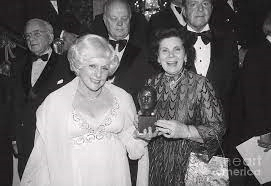





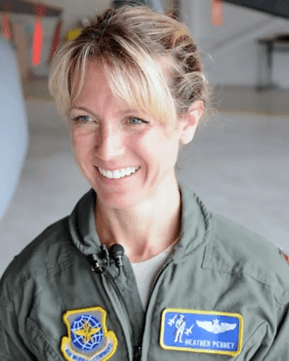


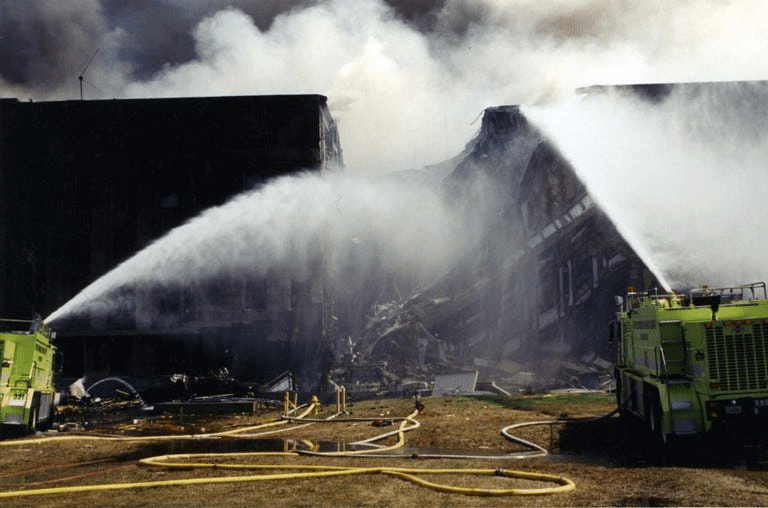


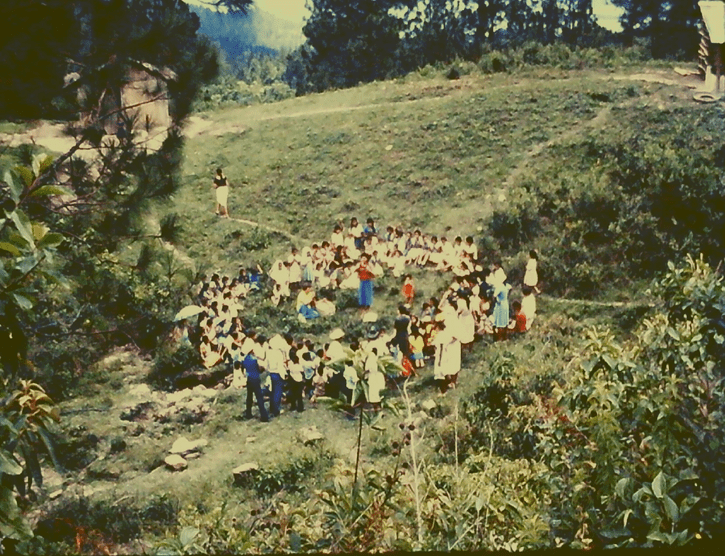



 True Texan Tales