In my book soon to be published, there is one incident that I want to tell you about. It happened on one of the trips to Honduras when I was taking medical teams there to treat the people in remote parts of the country.
After getting up at daylight, having breakfast, loading up the vehicles, and then treating the multitude of people in that heat and humidity, my doctors and nurses and dentists and the others were just exhausted by 4:00PM. I would send them back where we were staying to rest up and get ready for the next day.
However, Onelia, my super lady evangelist and I would stay at the site of that day’s clinic to show the Jesus Film that night. We would rest and recuperate while waiting for it to get dark. Usually a family or a single mother would want to fix us a dinner. It was most often the same thing, stewed chicken with tomatoes, rice and beans. They seldom fried the chicken because they were just too tough. They needed to be boiled.
On this one particular evening on what was the 4th or 5th trip down to Honduras, a nice couple wanted to fix us a dinner. They had designated a particular young rooster for the dinner, but the problem was that they could not catch the rooster. They chased it round and round and over and under all the structures there. As it got later and later, Onelia finally pulled out a 10 Lempira note and said it would go to the young person who could catch the rooster, for there was quite a crowd of youngsters gathered there. That did it. In nothing flat that rooster was caught and in the pot. The chicken stew was quite good with tomatoes and peppers and the seasonings that they use.
We showed the Jesus Film with great results. Many men and women came and stood under the string of lights that we would turn on after the film. They wanted to have God in their life, and were counseled by Onelia. Finally, we eventually got back to where we were staying. There was one waitress at the eating place there who was so very special. She knew what we were doing with the Jesus Film each night, and she would stay to give us a treat like a bowl of homemade ice cream upon our return.
About that time I noticed that my watch had quit. I knew that there was no way I could get another battery for it in that remote coastal town, and as “Jefe” in charge of everything, I just had to have a watch.
I went to my room where Bill Smith, the pastor of the sponsoring church was rooming with me. He had caught some kind of really bad virus or flu. He had been in bed all day and was so ill that he could not walk or hardly even talk. I explained to him that I just had to have a watch, and did not know what I was going to do. So all Bill Smith said was: “OK”.
I have mentioned before that this guy was not like other pastors. Other pastors will talk about sawing off the limb and having God catch them, but Bill Smith would really do it. And God would really catch him every time. Some of those catches were unbelievably spectacular.
I went into the back to my room to use the facilities and wash-up. But Bill got out of that bed, crawled to the door, and down the three steps and when I came back into the room, he was crawling back into the room through the door.
He reached up, handed me a watch and crawled back into bed. I said: “Where in the world did you get this watch?” And all he said was: “In the grass”, and promptly seemed to pass out again. That’s all he said.
The watch was wet from the dew on the grass. It had a nice black expandable band and the face was in both English and Spanish. So, you could say that was quite a coincidence, but I could say how did he know where it was in the grass, and how did it get there?
Folks, that was as much a tangible a miracle as one could ever see or imagine. One that you could touch and feel.
I only told one trusted Christian friend about it back in Dallas; for I figured no one else would ever believe me. And you know, the battery in that watch lasted for over 5 years. It seemed as if it was never going to stop. I wore it most of the time, and that friend still calls it my “miracle watch” to this day.
Here I am with the little Honduran girl (with the growth over her eye), ready to take her through Immigration. Please notice that I am wearing “the miracle watch”!!!
As I have written before, historians say that General Curtis Lemay was one of the most important warriors that our country ever had. During WWII we were not putting any effective bombs on the Japanese, and that had to be done if we were ever going to defeat them. However, he showed us how to do it.
lso, I have written you before how he was my hunting partner and bunk-mate on those pheasant hunts in the San Juaquin Valley in California. We really bonded, and he told me things that I don’t think he had ever shared with most anyone else.
The General With his Custom-made Green Hunting Clothes on Ready to Hunt
I have also written you about how so many people were desperately praying for our success against the Japanese, and how I believe God woke General Lemay up in the middle of the night and showed him what to do. However, I never showed you the details of that. Herewith are the details of things he shared about what he did in the Asia/Pacific Theatre:
Even though he was still in England, an inkling of what was to come was when Lemay was promoted over the heads of several colleagues at the age of 37 to become the youngest Major General in the US Army. However, he was soon sent back to the States.
Hap Arnold, the Commanding General of our Army Air Corps, was not much worried about the war in Europe at that point. He knew that we were going to have to try to defeat the Japanese. Other than the nuisance raid of Jimmy Doolittle, we had never put a bomb on them. He was convinced that unless we used strategic bombing like we were doing against the Germans, we could never defeat their fanatical troops on their home islands.
He was pinning all his hopes on the huge new airplane whose production he had been shepherding—–the B-29. He had already told Lemay that he expected Lemay to be the one to accomplish that task. However, this plane was so advanced and complicated that they were having all kinds of problems with it.
First, there had been a competition between Boeing and Douglas Aircraft for the contract. Boeing had been selected, but at Boeing’s plant in Nebraska there were all manner of delays and engineering changes.
The real answer was that it should take many years to perfect a plane like this, but Hap Arnold wanted it now to bomb Japan. And he was going to have it now, come “hell or high water”. Some of its chief designers had already been killed when it crashed with them on only its 2nd inaugural flight.
This plane weighed 135,000 pounds fully loaded and could carry 20,000 pounds of bombs. Its wingspan was half as long as a football field and it was a third as long as a football field.
It could fly at 32,000 feet for 4,100 miles without refueling.
It had supercharged air-cooled radial engines with 18 cylinders that produced over 3,700 hp each.
It carried a crew of 10 and was completely pressurized so that the crew did not need those cumbersome oxygen masks and fleece-lined flying suits.
It had two 50-cal. machine guns in each of four remotely controlled turrets, plus two 50-cal. machine guns and one 20mm cannon in its tail turret.
The Army ordered 1,600 of them after only its first flight, and eventually 3,970 were produced.
There were 900 engineering changes even after it had finished its test flights.
Its main problem was that its engines tended to swallow valves and then catch fire. Its magnesium crankcase burned with a fury that fliers had never seen before.
In summation: It was years before it should have been put into service, but Hap Arnold was determined to have it bomb Japan now. In retrospect, he was absolutely right, but also in retrospect, more airmen lost their lives from its mechanical problems than from enemy fire.
Lemay had never spent any time with Hap Arnold, and knew little about him. Lemay assumed that they would have long discussions about the B-29 and how to operate from India where he was being sent first and how to finally fly out to China from where he was supposed to bomb the Japanese. They had no such discussions. The reason was that Arnold had no clue what the answer was to any of these things. He just ordered Lemay to go to India and make it all work.
Lemay had no experience with Arnold, so when he said no, that he would not do it, everyone in Washington was amazed at his effrontery. Lemay was not going to go without flying this B-29 first and understanding how its engines were put together.
Arnold and his staff finally relented and flew him to Nebraska to fly the plane and get to know its engines. He took his wife, Helen, and his daughter with him, since the whole transport plane was just for him. Through some fortuitous circumstances they found some great quarters right on the lake and enjoyed some wonderful and happy times.
He flew the plane and watched closely as they put its engines together. He spent a month mostly learning all of its problems.
Hap Arnold and the others in Washington were getting more and more anxious to put some bombs on the Japanese’ ability to wage war. It was time for Lemay to go to what they called the China/Burma/India Theater and make things happen. General Wolfe was there over Air Force operations, but was very ineffective as respects any results or consequence.
They assigned a B-29 for Lemay to fly there, but kept delaying and delaying getting it ready. Finally, he sent his wife and daughter back home to Ohio and boarded a Douglas C-54. He got to the American base at Kharagpur , India on August 29, 1944.
That is where all of his supplies were located, including his fuel and bombs. However, the problem was that any missions against the Japanese were to be from a base in China . It was 1,300 miles way over the high Himalayas . Everything would have to be flown into China over what was called “The Hump”.
The Chinese base for him was in Sichuan, Province. At that time the city was called Chengtu. Today it is called Chengdu . What happened there is still a highly emotional thing for the Chinese, even to this day. They needed to construct an airfield for the US bombers, but they had no machinery for such a task——no road graders, no steam rollers for packing down a runway, nothing but hand tools. But it had to be done.
70,000 people from that area came together with only their hoes, and picks, and shovels, and wheelbarrows. Just the clay and dirt would not support the weight of those huge planes. They meticulously arranged river rocks like they were bricks and covered them with clay. To pack them, they went up into the mountains and cut out huge cylinders of rock for rollers. It took several hundred people to pull one of them up and down the runways. They worked feverishly and when they finished, they had constructed the longest runway in the world at that time and the largest parking area for planes. To this day, the task that those, mostly poor farmers accomplished primarily with their bare hands is a deeply emotional thing for Chinese that I have visited with.
That runway is covered with concrete now, but I have landed on it many times. China now builds huge infrastructure projects to keep their economy humming. They only use a part of it presently, but Chengdu has one of the largest air terminals in the world. It is certainly the largest I have ever seen.
Lemay was totally chagrined at these kinds of logistics. They had other cargo planes to fly over the hump, but all the B-29s had to be used to haul cargo too. It took seven trips over the hump to haul enough fuel for just one plane to go on a combat mission. It took 1,000 trips before they were ready for their first mission from Chengdu.
Washington felt that Lemay was way too valuable to ever risk another combat mission and issued those orders. Lemay practically burned up the communication channels back to Washington . He maintained that a Commander could not lead a successful operation unless he led his men into combat. Finally, they agreed to let him go on one mission—–only one. So, of course, he chose the first one.
After studying all the possibilities, he decided to bomb the big Japanese steel plants at Anshan in Manchuria. It was a main supplier of steel for the Japanese war effort, but he chose it for a different reason. It was reported to be defended by the best Japanese fighter aircraft and pilots. He wanted to see how good their pilots were, their tactics, and he particularly wanted to see how good were the B-29’s power driven gun turrets and central fire-control system.
General Lemay’s B-29 Ready for Him to Board for the Raid on Anshan in Manchuria
On September 8, they were ready for the mission. Lemay ’s outfit was called the Twentieth Bomber Command. They had 115 B-29s at Chengdu . They were loaded and made ready for Anshan . Lemay took his place in the lead plane. All but 7 of the Superfortresses got off the ground that day and 95 reached the Anshan steel plants.
They were all watching for Japanese fighters. As they approached the target, they suddenly found them, airborne, in squadron formation, poised to attack. Lemay , accustomed to facing German fighter squadrons in almost identical situations, expected now to get some answers to those important questions in his mind. Not just how clever and relentless were the Japanese pilots, but how tough and resourceful were the men in his new outfit?
The Japanese squadron leader totally misjudged the B-29s’ speed. He never dreamed planes that big would be going that fast. By the time he got turned around he was never able to catch them. His spotter plane did make one pass, but did no damage. Also, contributing to his problems was that his fighters were designed to fight at 17,000 feet, but the B-29s were bombing from 25,000 feet.
They dropped 200 tons of bombs. Japanese antiaircraft fire perforated several planes, including Lemay ’s. They lost only four planes on the mission. They managed to put much of the steel plant out of commission for at least a year, and the rest of it for at least 6 months.
Lemay never did explain to anyone why, but after their first mission to Anshan he grounded the entire 20th Air Force for an extended period of time. He set up intensive training groups for all the pilots, navigators, gunners, and maintenance crews. This was consistent with his almost paranoid emphasis on training that he had insisted on back in Germany.
Lemay managed to bomb two of the Japanese aircraft factories closest to China , but other than his logistical problems, he had the problem that there was almost no way to get weather information out of China . This was just intolerable and meant many aborted missions.
He was not a fan of the Communists, but he knew that Mao Zedong was not that far away down at Yenan from which he was fighting the Japanese and in a perfect position to send weather information. And even more important than the weather to Lemay was getting back the many pilots that were going down in northern China due to the B-29’s mechanical problems.
Lemay was awakened from his sleep again and had the unusual insight (that I am convinced that God Himself put into his head) that he should send a plane down to Mao and request his help. The next morning, he sent an officer from his communications section down to Yenan on a C-47 with all the communications equipment that he would need. He got a call back right away that Mao said he would cooperate.
That afternoon, Lemay loaded another C-47 completely full of medical supplies and sent it down to Mao. They say that those Chinese doctors spent all night unloading all these medical supplies and shedding big tears the whole time. All they had up to that time were bandages and splints and alcohol. They had never even seen the new sulfa drugs we had that would keep a wounded soldier from getting an infection from his wounds.
When Lemay heard that; the next morning he sent down another plane with doctors to show the Chinese how to best use all those medical items. After that, he not only got much better weather information, but every downed pilot was escorted safely back all the way to Chengdu.
General Lemay with the Japanese Sword as a Gift of Gratitude from Mao Zedong
Last year, some Chinese friends took me way up to Mao’s mountain hideout at Yenan. Because of its location in those mountains, I observed that it would be almost impossible to attack it successfully. I was allowed to go in and see Mao’s rooms, his bed, and even his little office. It was all very sparse, even the mostly bamboo buildings.
It was nothing like his sumptuous residence on the lake in Hangzhou after he took over all of mainland China and was absolute dictator. I have visited that residence too and can assure you it is not sparse like his hideout at Yenan.
By now, the US Marines had captured the Mariana Islands. They had not yet taken Iwo Jima and Okinawa, but they immediately began constructing airports on Tinian, Guam, and Saipan . There were still some Japanese hiding out and fighting, but just as soon as these fields were available, B-29s arrived and under General Hansell the 21st Air Force was formed there.
Yes, the B-29s were pressurized. Its engines were turbo-supercharged. Its guns were mechanized. And it was capable of operating at 35,000 feet, above the effective altitude of Japanese flak and the best Japanese fighters. But it took twenty-three tons of gasoline to get that high and all the way to Tokyo and back. That limited them to only three tons of bombs per plane.
Adding to that, and what no one had ever known before, was that some of the strongest jet-stream winds in the world were over the Japanese islands. Much of the time they were over 200 mph and shifted in different directions. This made precision bombing almost impossible.
On every mission that he tried, Gen. Hansell was losing 3 to 4 planes in the Pacific between Japan and the Marianna’s due to mechanical problems and achieving very little results. Hap Arnold and the other generals did not know the answers to all this, but they knew what they needed to do——get Lemay there and in charge.
On orders, he packed-up the 20th Air Force and moved to the Marianna’s. They merged the 20th and the 21st together into the largest bomber force in history. Tinian became the largest airfield in the world as respects numbers of planes.
There were still no adequate quarters there. Lemay slept in a tent with the rest of the guys for awhile. He also started his intensive training of all these new pilots, and navigators, and gunners, and ground crews. He got the whole operation into much better shape, but because of the problems with the jet-streams over Japan , his results were not much better that General Hansell’s.
As was usual with him, he did not believe in spending all this money and enormous effort without getting results. And they were not getting the desired results. At that point in the campaign the Navy brass asked Lemay to fly out and meet with them. They wanted to know if he thought it was necessary to take Iwo Jima, the little volcanic island that lay about half-way between Japan and the Marianna’s. His answer was an emphatic, “Yes”. He needed it for landing B-29s that could not make it back to the Marianna’s, and for a base for fighter planes to protect his bombers over Japan, and for air-sea rescue units to pluck his crews out of the Pacific when their planes went down near there.
He did help with bombing Iwo Jima a little in preparation for the landing, but at that time the Navy was much more interested in what they called Task Force 58. They were planning on sending this huge task force right up to the Japanese mainland and attacking Tokyo proper with their carrier planes. They promised Marine general, “Howlin’ Mad” Smith that they would shell Iwo for ten days prior to its invasion. They shelled for only 3 days and he really became “Howlin’ Mad”, and rightly so. He later wrote that “ Iwo Jima cost too much” because of the Navy’s preoccupation with their Task Force 58.
The Navy did send two-hundred plus ships for Task Force 58. They flew 2,074 sorties against Tokyo over three days, and dropped 513 tons of bombs and rockets. They also destroyed 415 Japanese planes with a loss of 102 of their own 1,091 planes.
On those same three days, an average of 167 B-29s flew 439 sorties and dropped a total of 1,220 tons of bombs (two-and-a-half times as much as the task force) on the Japanese Mainland. The B-29s shot down only 46 planes but lost only 5 of their own.
Meanwhile, Hap Arnold and Washington were boiling for better results against Japan ’s war-making infrastructure. Admiral Nimitz wanted to bring the 20th/21st Air Force under his control. And General McArthur of the Army, who was like and emperor looking for an empire, wanted it under his control.
With all the prayers being offered up about this war by Christians and non-Christians across the free world, I firmly believe that God was giving Lemay extraordinary help and insight. After my visits and correspondence with him, I just know that this is true. And at this particular moment in the war effort, I am confident that God’s Spirit Power directly intervened.
The President and Chairman of the Joint Chiefs of Staff had already conclusively determined that Mainland Japan would be invaded. The estimate was that between 500,000 and 1,000,000 US service men would die from what would be absolutely fanatical Japanese resistance. Lemay knew that too, and he felt deeply that he had to do something to prevent this carnage, that it was his personal responsibility.
Suddenly, on a particular night on Guam he was waked up in the middle of the night just like he was in Germany . Clearly in his mind was the answer——a simple answer that no one had thought of. The Japanese antiaircraft shells all had fuses to explode at 21,000 feet and up. It would take two to three weeks to change those fuses. He could bomb at low levels for at least that length of time without the big flak shells. They would just whiz right on by.
With millions of people praying that Japan would not win that war, I just know that it was God who waked him and gave him that answer.
He had been advised that at low levels the Japanese short range guns would shoot down all his planes if he ever tried, but it was clearly in his mind that this was not true. I just know that God was showing him that, and that he would have at least 3 weeks before the Japanese could install short range antiaircraft guns of any consequence and change those fuses.
Japan had intentionally decentralized 90% of its war related production into small subcontractor workshops placed in civilian districts. It made the Japanese war industry largely immune from conventional precision bombing with high explosives, all spread out and scattered among the civilian residences. Also, because of the threat of earthquakes all these civilian districts were made of wood and bamboo, not brick or stone.
General Lemay Giving the Briefing for Bombing Tokyo
When Lemay went into the briefing room and announced that tonight the B-29s were going to bomb Tokyo from between 5,000 and 6,000 feet, once again the guys wrote home: “Mama, I ain’t coming home!
”What really amazed them was when Lemay informed them that all guns and munitions and gun crews would be taken off the planes to make it possible to carry more incendiaries. The gunners wanted to fly anyway to keep their crews together, but they were required to stay home.
So on the night of March 9, 325 B-29’s were loaded with M-47 incendiary clusters, magnesium bombs, white phosphorus bombs, and napalm.
At just after midnight on March10 the pathfinders laid a huge, flaming X across that section of Tokyo where all those subcontractor workshops were located, making the parts for new aircraft. The main force followed and dropped 1,665 tons of incendiaries. They created the greatest fire storm in history.
Lemay was out on the flight line the next morning to meet General Powers; who was leading the mission, upon his return. As instructed, Powers was to climb to 10,000 feet after releasing his bombs. He said at first there was a sprinkling of fires throughout the target area. Then these fires grew until they merged into one great conflagration. By the time Powers turned for home, the center of Tokyo was an inferno.
Photos the next day showed that at least fifteen square miles of Tokyo had been obliterated. Official Japanese figures showed that there were 84,000 fatalities and 41,000 were badly injured. More than half the fatalities resulted from suffocation when the fire sucked all the oxygen up into the sky. A million people were left homeless and 267,200 buildings were destroyed. But the most important thing was that a great part of Japan ’s ability to make war was destroyed, especially in this area for making parts to construct aircraft.
Between March 1945 and August 1945 the B-29s destroyed over 40% of the built-up areas of 66 more Japanese cities the same way. The dropping of the two atomic bombs were under Lemay’s supervision, and people say they were the reason for Japan ’s surrender. I am sure that helped, but I am convinced that what happened to Tokyo and the 66 other cities was the main reason for all those hundreds of thousands of US service men not having to die.
Lemay was greatly criticized and castigated for killing so many civilians.
When I asked him about that here is what he told me: “When Japan surrendered and MacArthur flew in to take over its occupation, I was in the 2nd plane right behind him. On the way to the Occupation Headquarters I asked our driver to take me through that part of Tokyo that had been burned on the early morning if March 10. What I saw was that the only thing still standing were all those drill presses, lathes, and other machines for making aircraft parts. When I saw that, I felt vindicated.”
Our most accurate historians say that General Curtis Lemay was one of the most famous and important warriors that our country ever had. During WWII we were not putting any effective bombs on the Germans, that had to be done if we were ever going to defeat them until he showed us how to do it.
In the Pacific we were not putting any damage on the Japanese that had to be done if we were ever going to defeat them until he showed us how to do it. And at one point the Russians were a grave threat to us. They were not afraid of our President or our other generals, be they were deathly afraid of General Leman and the Strategic Air Command that he built and headed. Without him we may all be speaking German or Japanese or Russian today.
I have written you before how he was my hunting partner and bunk-mate on those pheasant hunts in the San Juaquin Valley in California. He told me things that I don’t think he had ever shared with most anyone else.
The General Bringing His Birds to Show Me
I have also written you about how so many people were desperately praying for our success against the Germans, and how I believe God woke General Lemay up in the middle of the night and showed him what to do. However, I never showed you the details of that. Herewith are those details and their results if you care to know. I find them fascinating:
Lemay was a good pilot, but he also became the best navigator that the Army Air Corps had.
They got the first B-17 in January 1936 at Langley Field, Virginia , but it was 1938 before they got production models to effectively train in. The US wanted to show off this long-range bomber to the world. The folks in Washington were also concerned about the growing influence of Germany and Italy in South America . Three Italian bombers, commanded by Bruno Mussolini, the youngest son of the Italian dictator had just visited Brazil.
It was decided to send 6 B-17’s all the way from Langley Field to Buenos Aires , Argentina . They wanted Curtis Lemay to be the Chief Navigator for this 11,952-mile trip. He said that they had no aircraft maps of South America . He said that he went by National Geographic’s Office and got some of their maps. That is all he had for navigation of this flight. They took off on February 16, 1938, and refueled in Miami , Panama , and Lima , Peru . They landed at the El Palomar Military Air Base in Buenos Aires on February 27. Three days later they provided a fly-over for the inauguration of President Roberto Ariz.
The people there had never heard anything like roar of those Cyclone-9 engines which provided 22,500 horsepower to each of the 6 planes.
Just after this flight the US Army Air Corps was in a big fight with the US Navy. The Army said their new long-range planes could provide protection to the US coasts. The Navy said that was impossible. So, a test was set up. The Air Corps was supposed to send a flight of B-17’s way off the coast of California and intercept the Battleship Utah in misty conditions with very low cloud cover. The whole success or failure of the mission was up to the Chief Navigator, Curtis Lemay. Even after being given the wrong coordinates on purpose by the Navy, Lemay found the ship and it was hit with three water bombs, much to the consternation of the US Navy.
Later, in a second test, Lemay found the Italian Liner Rex, 610 miles off the Atlantic coast. Still, the Navy was never convinced.
At Langley , Lemay formed the 305th Bomber Group. It was now just before Pearl Harbor . His recruits were subjected to relentless training, as Lemay believed that training was the key to saving their lives. “You train as you fight” was one of his cardinal rules. It expressed his belief that, in the chaos, stress, and confusion of combat (aerial or otherwise), troops or airmen would perform successfully only if their individual acts were second-nature, performed nearly instinctively due to repetitive training. Throughout his career, Lemay was widely and fondly known among his troops as “Old Iron Pants”, mostly because he demanded training way beyond that of any other commander. His demands for such training pervaded his whole military career.
After Pearl Harbor, he was ordered to England . He was now a Major and successfully got his 305th Group across the Atlantic and joined the 3rd Air Division of the 8th Air Force. Because of his dedication to training, he was later made Commander of the 3rd Air Division.
Those B-17’s were called Flying Fortresses because they had so many defensive guns, but Lemay was amazed that the gunners he was getting from the States had so little training, that “they just couldn’t hit anything”. He was criticized for using an inordinate amount of fuel for taking them on so many training flights to teach them how to shoot.
Lemay had never been in combat, so he was very intent on quizzing the commanders who had been on the few bombing missions that had been flown over France at that point in the conflict. They all told him the same thing: That those German 88mm’s were so formidable as anti-aircraft weapons that you had to fly a zigzag pattern over the target or everyone would be shot down from the flak, though many were shot down anyway. They all told him that a plane must not fly more than 10 seconds in one direction without changing direction. This was the operating procedure for all bombers in the 8th Air Force.
Lemay and his group flew several missions. He was lead pilot on every raid. However, it was just overwhelming consternation to him that the post raid photos showed that they were just not hitting anything. They were spending all that fuel and equipment and losing planes and getting guys killed, and so very few of their bombs were hitting the target.
They had that amazing new Norden Bombsight. US Airmen had to take an oath that they would guard it with their very life from falling into enemy hands. We did not even let the English have access to it for the same reason. It had a system that allowed it to directly measure the aircraft’s ground speed and direction, which older bombsights could only estimate with lengthy in-flight procedures. The Norden further improved on older designs by using an analog computer that constantly calculated the bomb’s impact point based on current flight conditions, and an autopilot that let it react quickly and accurately to changes in the wind or other effects. These features seemed to promise unprecedented accuracy, and they did in practice. But if you had to zigzag every 10 seconds, all that wonderful design was of little use.
General Lemay deeply believed that it was going to take success with strategic bombing of Germany to degrade their ability to wage war if we were ever going to defeat them. I am sure he was correct, too. The Germans were right on the verge of completing jet planes that could wipe out anything we had. They were also perfecting amazing rockets and were dangerously close to perfecting atomic bombs.
What happened next is why I have asked you to wade through all this history with me. I have already mentioned that more prayers were being offered up to God concerning WWII than any event at that point in human history. We can look back and see how those prayers were answered over and over, but here is what I consider to be one of the most important answers for its impact on the war in Europe .
Lemay was brooding on all this, when suddenly he was bolted from his sleep in the middle of the night. There, clearly in his mind was the answer, but it was so radical that he had to prove it. He never could explain even to himself why he had taken his old ROTC artillery manual from Ohio State with him all the way to England in his footlocker. He immediately got it out. It had been used by his old ROTC instructor there. He had been an artillery officer in WWI. He had drilled into Lemay and his fellow students the fundamentals of artillery warfare. The book had been written for French 75mm shells, but Lemay knew he could adapt it for the German 88’s.
He spent the rest of the night calculating the distance the 88 shell would have to travel to reach a B-17, the size of a B-17 at that distance, how fast the Germans were able to load the artillery piece with the next shell and a host of other parameters. He checked and rechecked his calculations and concluded that it would take 372 shells being fired to hit a plane if it were flying straight-in to the target without deviating at all. He knew, and I am convinced that God showed him that those were acceptable odds.
At the briefing the next morning of the 305th in their briefing room the guys were all assembled after their breakfast of eggs and spam and much black coffee. The back door opened, there was the “ten shun”. They all jumped to their feet, and “Old Iron Pants” walked up to the front. There was the weather report, and the maps of their target that day were put up. They were to hit the German submarine pens and the rail yards at St.Nazaire.
Then Lemay dropped the big one on them: They were to fly straight in from the first sighting of the target until all bombs were released. No one was to deviate the slightest bit.
Lemay had always encouraged his crews to speak up in a briefing if they felt it imperative to do so. At this point he rather wished he hadn’t allowed it, for all manner of commotion erupted. One pilot even stood up and said: “Sir, it just can’t be done!” Lemay informed them that it would be done, and that he would be flying the lead plane. That quieted things down, if he had that much conviction in his calculations to fly lead; but many guys wrote home: “Mama, I ain’t coming home!”
With no more talk, the men of the 305th got into their planes and prepared to take off. Twenty fortresses of the group took off. Four turned back because of mechanical problems and 16 continued on to the target, which wasn’t that bad in those days.
They got into an even tighter box formation as they neared St. Nazaire. For weeks and weeks Lemay had been having them practice a special box formation, flying very tightly together so that they would be protecting each other from enemy fighters. The thought of sending men in to die had been weighing more and more heavily on their commander. He devised the tight box formation with its resulting overlapping fire to protect them from the German ME-109s and the open engine FW-190s. These fighters used either 7.92mm MG machine guns or 20mm MG FF cannon, depending on the pilot’s preference. All were lethal to bombers but facing this tight box formation with all its overlapping firepower was something the German pilots had not faced before. If they could find a straggler that had drifted out of the formation, they pounced on it.
Eventually the entire 8th Air Force adopted Lemay ’s box formation.
As St. Nazaire came into sight, Lemay banked his plane into a straight, steady course and leveled his wings. When he looked around at the rest of the group, not a single plane wavered, even as the flak came up to meet them. The nasty little black clouds began to burst above, below, and among them. Later, when asked, Lemay said that after working out the artillery problem the flak did not particularly bother him, “But I certainly didn’t care for those flickering machine guns coming straight at me.”
He was making an unprecedented demand today, not only upon himself but on the other men in his group, when he insisted that all of them look into the muzzles of those machine guns and press forward with no evasive action and the flak of the German 88’s. Not every man is capable of such cool courage, and he knew it.
The flak was all around them at 21,000 feet, but they continued straight and level for 7 minutes when the bombardiers took over and adjusted their bomb sights. At 1:40 PM the first bombs fell. Two minutes later they were beyond the target.
Lemay’s plane was hit by two pieces of shrapnel and two guys in the back slightly injured. Five other planes reported being hit, but none went down. Six German fighters made passes at them but moved on after doing only minor damage. All 16 continued back toward base with no stragglers.
B-17 on Bombing Run over France
Lemay immediately summoned the rookie bombardier and asked how he had done. “I put bombs on the target. It was a good run, Boss”, he said. “Are you sure of that?” Lemay asked. “I am sure, but I could have done even better if it weren’t for those white clouds. They kind of got in the way.” Though he didn’t know it, those white clouds were from the flak bursts. There wasn’t a regular cloud in the sky that day.
All the 305th planes got back safely, told stories, and turned in their strike photos. It was two days before the intelligence officers of the 8th Air Force could analyze everything and turn in their mission report. The 305th had put twice as many bombs on target as any other bomber group and none of their planes had been shot down. Within three weeks, every group in the Eighth Air Force was flying straight-and-level bomb runs, taking no evasive action over the targets.
After several more raids Air Force intelligence concluded that: The 305th was attracting fewer fighter attacks than other groups. They were using more ammunition than other groups but shooting down fewer German planes.
They had a much lower loss rate than other groups.
When asked for his impressions of why by the intelligence section he gave these answers. Lemay said: 1. The 305th usually had more ships in the air than other groups, giving greater protection. 2. His stagger box formation gave them more firepower against an approaching enemy. 3. They were shooting at longer ranges. Lemay had decided that if fighters were welcomed by bullets before they even came close, they were not as likely to come close.
By now the 8th Air Force had doubled in size with the addition of new Groups from the US . Ira Eaker, still head of the 8th, was becoming anxious to bomb Germany , but the weather there remained dismal.
They bombed across France, even the airport at Paris where Lindbergh had landed. On July 17, 1943 they entered Germany for the first time in hopes of bombing the submarine plants at Hamburg , but the clouds were too thick to find the target. The clouds over Germany continued and continued.
Finally on July 24, Fred Anderson, the new head of Bomber Command became so disgusted with waiting that he decided to bomb elsewhere. He assembled 324 Fortresses, the largest group to go on a mission up to that time and sent them to German occupied Norway . They bombed the ports that the Germans were using and hit quite a few German ships and port facilities, though several of their targets were covered by clouds. But then the clouds cleared over Germany .
Immediately Eaker, still over the 8th Air Force, started what became known as Blitz Week. The 8th went on 6 missions in 7 days. On July 25 Andersen sent planes to Kiel, Hamburg , and Warnamunde, but the clouds were too thick. Lemay’s planes found a hole in the clouds and hit their secondary target of Rostock with impressive results. This was mostly due to Lemay ’s relentless drilling of his navigators’ and bombardiers’ studying of their targets before hand.
By then the Germans had transferred some of their best fighter squadrons back from the Eastern Front to oppose the bombers. On this raid they shot down 19 fortresses and many more on the rest of Blitz Week. By the end of the week the 8th Air Force had lost 100 bombers and over 1,000 men, but Lemay ’s 3rd had hit important targets. They knocked out rail yards, a rubber factory, and on July 30 they dropped 100 tons of bombs on the Fock-Wulf components factory at Kassel that shut it down for over a month.
Mostly because of Blitz Week the 8th Air Force crewmen suffered 75 emotional breakdowns in July of 1943. The stress of battle was bad enough, but their planes were not pressurized. The waist gunners had to have large open sections in the side of the plane through which to fire their 50 calibers. At 20,000 feet and above the temperature was 30 to 50 degrees below zero. Their oxygen masks would freeze up and cut off the oxygen supply, and they would not realize it until it was too late. Many times the plane’s oxygen system would be hit or just malfunction. They did not dare descend to a lower altitude so they could breath, for leaving the formation spelled certain death from fighters and flak.
Because of his exceptional leadership ability and all he added to the bombing campaign against the Germans, Lemay was asked to take over the whole 3rd Air Division of the 8th Air Force. This task called for him to be a Brigadier General, but he remained a Colonel for way longer than he should have. He was doing the work of a General but did not have the rank. When he finally got his General’s star, he remarked to his aids: “Well, it is about time.”
Because the P-47 fighters could not go very far with the B-17’s for protection, the bombers suffered horrendous losses. One of the reasons was that the fighters could not get auxiliary wing tanks. Lemay became furious when he found that one of the reasons the fighters did not get them was that Walter Reuther, who was head of the United Auto Workers Union and founder of the AFL-CIO and a big Civil Rights worker, and Women’s Rights worker was holding up their production back in the States. It is estimated that hundreds of bomber crews died because of it.
Lemay and some of the other generals confronted the head of the 8th’s Fighter Command. Their men were dying from lack of fighter support even on missions so short that wing tanks were not needed. What really rankled him was the Fighter Command’s policy of having one of the good fighter planes escort any fighter back to base that was having engine trouble. Lemay had previously been a fighter pilot for 8 years. He had no patience for such a policy when the good plane was so needed to protect his bombers. He informed Fighter Command that when one of his bombers had engine trouble, it had to fly back to base on its own. He walked out; but soon, because of his new-found influence with Hap Arnold back in Washington there was a new commander for Fighter Command.
Lemay did not go on any of the missions on Blitz Week. Ira Eaker was saving him to command something much more special. They wanted to make a two-pronged attack against the German’s big plant for making the Messerschmitt 109 at Regensburg on the Danube River and the Focke-Wulf 190 plant at Wiener Neustadt in eastern Austria. This was to be a double attack to spread the German fighters out more thinly. Also, to make them even more thin, they wanted to simultaneously hit the big ball bearing plant at Schweinfurt which was close to Regensburg .
Ira Eaker wanted Lemay to lead the attack against the Messerschmitt plant, while General Carl Spaatz, Commander of the Fifteenth Air Force in north Africa would hit the Focke-Wulf plant. At the same time General Bob Williams, commander of the First Division of the 8th Air Force was to hit the ball bearing plant at Schweinfurt . However, this was no ordinary mission for Lemay . After dropping his bombs at Regensburg they wanted him to fly on across the Alps to north Africa, refuel, resupply, and fly back across Germany and bomb a target there the next day. Since these targets were so far across Germany and were sure to be very well defended, this was going to be a dangerous mission.
The B-17’s could carry enough fuel to safely do this, but it was quite unusual. In preparation, Lemay flew to Africa and met with Col. Lauris Norstad who Hap Arnold considered one of the smartest men in the Air Force. He assured Lemay that the best base to land his B-17’s was at Telergma (about 60 miles inland from Tunis ). He assured Lemay : “Telergma is your field. It’s both a depot and a combat field. There you’ll have supplies, extra mechanics—-everything you need. That’s the place to land. You can get well serviced there. All the parts you need. All the maintenance people and support.”
Lemay left Norstad feeling confident about everything but the weather. Maybe he should have gone to Telergma to see for himself, but Norstad had such a good reputation that he just trusted him.
When he got back to England his bomb groups were getting ready for the special mission, though they did not know its details yet. At that time Lemay ’s Third Division consisted of Bomber Groups——94th, 95th, 96th, 100th, 385th, 388th, and 390th. In August the weather remained bad across Germany . By August 13 General Spaatz in Africa was tired of waiting for the Eighth to move against Regensburg . That day he sent his heavy bombers (including 3 B-24 groups) against the FW-190 plant at Wiener Neustadt, thus scrapping the two-pronged mission as it had been originally planned.
However, Eaker still planned his two-pronged attack against Schweinfurt . Clustered around the railroad yards of this small eastern Bavarian city were five huge factories which provided almost two-thirds of Germany ’s ball and roller bearings. At that time it was thought that the whole German war effort depended on these bearings.
Finally, the orders came for their mission the next day. At the briefing that evening, Lemay told his men to take rations for two days and that they would probably be sleeping on the ground for one or two nights. The men were very quiet. They knew that this was to be the 8th’s biggest, and the deepest penetration into Germany against two targets that were sure to be as well defended as any in the Third Reich.
Next morning the clouds were low and getting lower as Lemay rolled out of his bunk at three o’clock on August 17. And when the zero hour for takeoff approached the low clouds had reached the ground into a thick fog. Lemay figured that if men would escort the planes to the runway with flashlights, they could find their way to the end of the runway and take off.
The approval finally came and the props began to turn. They all got off and got through into the blue sky. Then began the huge job of assembling. The people on the ground could hear the noise of the roaring B-17’s and the Germans with their sophisticated listening devices would know that they were coming; they just did not know where.
The Ninety-sixth Bomb Group was to fly lead, and Lemay was the lead plane in that group. The assembly went smoothly and soon the Third was ready to head toward the Continent, but where were the eighteen squadrons of American Thunderbolts and the sixteen squadrons of British Spitfire fighters scheduled to escort them at least as far as Holland . And where was the First Division, which by now should have been assembling its 230 planes for its mission to Schweinfurt . If Lemay ’s Third Division was to act as a decoy as planned, the First would have to follow in 30 minutes.
Lemay got on the radio to Anderson at Bomber Command and asked what was wrong. He was informed that they could not get off the ground because of the low clouds. He was furious. He had trained his people how to do that. Why hadn’t the others been trained? Thought was given to scrapping everything, but that would have been bad for morale, and would involve all that assembling on another day.
Just then, it did not matter. The radio went dead in Lemay ’s plane. No order to return could be given.
General Lemay never told me if it actually went dead on its own, of if he just turned it off. Anyway, the whole Third Division turned east to the continent. They had used up so much fuel circling and waiting that they had to abort or go now if they were going to drop their bombs and reach Africa.
Lt. Col. Beirne Lay, a member of Ira Eaker’s staff went along as an observer and to get some combat experience. He described what happened from one of the rear most planes where he was riding. He said that as they approached Belgium about seventeen minutes after the Fortresses crossed the coast of the Continent, radial engine fighters approached. He hoped at first that they were the radial engine Thunderbolts, but no such luck. They were a hoard of FW-190s and bullet spitting ME-109s.
An exit door from one of the forward B-17s came hurtling through the formation with a man, who had apparently been sucked out with it. He had his knees tucked up and was just spinning over and over like a diver doing a triple summersault.
One of the fortresses fell gradually out of formation and drifted down to the right, and then moments later disintegrated in one giant explosion. The fighters kept pressing. In his rear plane he said they were flying through a hail of exit doors, tail assembles all manner of debris and partially opened parachutes.
He said that he watched one plane that was completely engulfed in flames but kept flying. He described how only the co-pilot got out through breaking his window. Lay said he crawled out but could not get through with his parachute on. He reached back, retrieved his chute and hooked his arms through it, and jumped off the plane. He hit the rear horizontal stabilizer and his chute never opened.
Lay said two FW-190s hurtled through the formation at a closing speed of five hundred miles per hour—-so fast that one of them nicked a pair of B-17s in passing. Smoke trailed from the wings of the bombers, but they stayed in formation. The 190 was not so fortunate. Smoke was trailing from its nose, and metal was flying from its wing as it plunged downward.
“After we had been under attack for a solid hour,” Lay reported, “it appeared certain that the One-hundredth Group that I was in was faced with annihilation. Seven of our group had been shot down, the sky was still full of fighters and more were coming up. And we still had 35 more minutes before we reached the target. I had long since mentally accepted the fact of death.”
German fighters were swarming all over the armada but concentrating on the battered and more vulnerable rear combat wings. Twin-engine ME-110s appeared on the scene to help the other fighters. They fired rockets from a distance and tried a new tactic of dropping bombs from above to explode in the midst of the fortresses. Col. Lay’s group had now lost 15 planes.
They finally reached the Initial Point from which they would begin their bomb run. Despite the onslaught, Lemay had led his division to the target. At 11:45 Lt. Dunstan Abel, the bombardier in Lemay ’s plane, dropped his load of explosives and incendiaries directly on the factory’s buildings, and the rest of the planes in the group released on his cue. Lemay ’s task force dropped 303 tons of bombs on the Messerschmitt plant in what proved later to be one of the most accurate bombardments of the war.
The fighters had disappeared as they approached the target; probably from running short of fuel They continued on toward the Brenner Pass in the alps, but 15 ME-110s and Junkers-88s caught up with them and they lost three more planes.
They formed up at a rally point south of the Alps and headed toward Africa . They had all suffered damage, but two fortresses were so badly damaged that they would never reach Africa . They headed into Switzerland for sanctuary as the others continued on. They moved on down the boot of Italy . At an airbase near Verona there were fighters on the ground, but they must have been Italian. They did not come up to attack.
As they left the southern tip of Italy they went into a gradual, gliding descent to save gas. They hit the African coast about 18 miles off course but found Telergma. 45 planes landed one behind the other at the shortest possible intervals. Others landed on two desolate fields right on the coast. They were running out of fuel from having circled so long over England . Four could not even make those two fields on the coast. They landed in wheat fields and dry lake beds. Another four did not even make the coast and ditched in the Mediterranean . Two of their crews were saved by air-sea rescue units. The other two were never heard from again.
Much to his consternation, Lemay found nothing was as Telergma had been described to him. There were no parts depots. There was not a single mechanic there. There were bombs and there was gasoline in 55-gallon barrels, but almost nothing else. Lemay was still fuming about this when Lt. Col. Beirne Lay arrived with the twelve remaining planes of the rearmost One-hundredth Group which had somehow managed to survive. Lay, who had just flown through Armageddon, and had watched countless Fortresses fall, including nine from the One-hundredth alone was glad to just be on the ground again and alive.
One of those B-17s “all shot to pieces” but Still flying
Lemay, knowing he was expected to bomb the next day sent a message back to Eaker in England with a preliminary report of his task force’s condition. By the time Eaker received Lemay’s message, he already knew about the Schweinfurt losses of the other armada. Though the damage to the vital German ball bearing plants had been as great as he had hoped; 36 of the 230 fortresses in Gen. Bob William’s First Division taskforce had been shot down. Added to Lemay ’s loss of 24, this brought the day’s toll to a disastrous 60, without counting the many planes that were so badly damaged they might never fly again. He knew the mission was dangerous, but he never expected to break a record.
Eaker immediately flew to Africa to assess the situation. What he found absolutely amazed him. Lemay had set up a headquarters tent and had his air crews scavenging the parts from the planes that were too damaged to ever fly again and repairing the other planes. Not a single man in the air crews was even close to a being a qualified mechanic except for one—– Lemay himself. He was directing everything for the repair job.
It took four days to refuel from those 55-gallon drums. Eaker insisted that they fly home on a safe route to avoid any more losses, but Lemay was determined to complete his mission.
The best estimate is that of the 145 B-17s with which Lemay left England for Regensburg and Africa , at least half were either lost or would never fly another mission. Never-the-less on August 24, most of the survivors “returned proudly across France and in broad daylight”, dropped 144 tons of bombs on the German-held air base at Bordeaux.
Lemay was sent back to the States to boost morale and sell war bonds. However, he got back to England as quickly as possible. And on his return, he found that many more bombers had arrived and that plans were being made for the Normandy Invasion on the Continent. Yet, one more change had happened.
The long-range P-51 Mustang was coming to England, squadron after squadron, to escort the B-17s all the way to their targets and back. These slender, fast, durable and deadly fighters, equipped now with Rolls-Royce Merlin engines, brought a dramatic change to the American’s daylight bombing effort. When Hermann Goering, Hitler’s Air Force Chief was captured after the war, he was asked when he knew they had lost the war. His immediate answer: “When those red-nosed fighters appeared over Berlin .”
I was privileged to get to know Dr. Hill. He had the huge church in the black, Watts area of Los Angeles. He was a really big black man both physically and otherwise. You may have seen him on one of his many TV appearances.
He was reared on the outskirts of La Grange, Texas. He never knew his real mother or father. He had been taken in by an older black lady when very young. He said that their house had only a dirt floor. I heard him tell of his upbringing at least three times. It struck such an emotional chord with me that I got big tears in my eyes every time I hear him relate it. And when I tried to relate it to others, I got chocked-up each time, like now.
He was called “Junior”. He only knew the lady who reared him as “Mama”. He never had very good clothes to wear to school, but they were always kept immaculately clean by Mama. When he got old enough to be in high school, Mama’s friends all told her to put that boy to work to help support you, but Mama said: “No, Junior’s going to finish high school”. When he finished high school they all insisted that Mama put him to work to help support them. But Mama said: “No, Junior’s going to go to college for sure.”
Dr. Hill said that though Mama did not have much money, she bought a bus ticket on the Greyhound bus to Prairie View, Texas near Houston where Prairie View A&M University was located. After the ticket, Mama only had twelve dollars left. She gave that to Junior, put him on the buss and told him: “Now Junior, you go on to college and I am going to be here praying. God is going to provide, ‘cause he wants you to go to college.’”
Dr. Hill said he got off that bus and walked up to the college where the Admissions area was. He said that he only had $8 left after a meal when the buss stopped along the way. He got in line with the other students. However, he kept staring at the big sign above the Admissions Desk that said in large letters…….You must have $120 to stay in this line. He says that he stayed in that line, because Mama told him to go to college and she would be at home praying. Finally, there were only eight people in front of him, but he kept looking up at that sign. Then there were only 3 people in front of him, but that big sign was still there.
He said that finally there was only one girl in front on him. He said that just as she walked away from the Admissions Table, this big voice boomed out…….”Junior Hill!!! Is there a Junior Hill here???” He sheepishly raised his hand and this man came up to him. The man informed him that he had a full scholarship there for him and a certificate for all his room and board. Dr. Hill said that to this day he never learned who provided those funds, but he knew that Mama was back home there kneeling on that dirt floor praying.
Dr. Hill was always trying to get across to people that many folks may experience privation on this earth as he once had, but he wanted them to know that if they stayed close to the Lord, they had great rewards coming to them after this life in Heaven. I shall never forget how he illustrated that to me one time. Like I mentioned, he had this huge church in Watts. The church had all manner of ministries there and a large office with many clerks and administrators.
Dr. Hill said that one day he was briskly walking through that office when he looked down and noticed this young lady at one of the desks. He slid to a stop right beside here. He was so big an imposing with such a commanding voice, that the poor girl was probably terrified. He looked down at her and said: “Girl, is you who I thinks you is?” She hung her head and looked down and said: “Yes Sir.” It was Natalie Cole, Nat King Cole’s only daughter. He was dead now, but his estate was worth many millions of dollars.
Dr. Hill said: “Girl, what in the world is you doin’ workin’ here as a clerk.” Her reply: “Dr. Hill, I hasn’t come into my inheritance yet.”
Later, when Natalie Cole got old enough to qualify for her inheritance, she became one of the wealthiest young ladies in Los Angeles, and went on to greatly expand the estate with her own music which studios blended in with her late father’s voice. Millions of those records were sold.
So, you get Dr. Hill’s point. So many folks have not come into their Heavenly inheritance yet, but they should all be looking forward to it. That will help them get through the rough times here now.
One time, Dr. Hill and I and Bunker Hunt (one of the three wealthiest men in the world at the time) and his wife were on our way to a conference in Florida. Dr. Hill was in First Class, but Bunker was back is economy class with me where he always flew. When we all got to the airport we took a stretch limousine together to the Doral Country Club where the conference was being held.
I had never known that Dr. Hill and Bunker Hunt’s wife both had bad cases of claustrophobia that came upon them on occasion. They got to telling those claustrophobia stories like I had never heard. Dr. Hill said that he was taking his children through Long Horn Cavern on a trip back to Texas. He said that he was doing all right until they clanged that big steel gate shut behind him. It and the closeness of the cavern hit him. He turned and said to the young man: “You need to open that gate, son.” The boy said: “No sir, you are with that group. You need to go on ahead into the cavern.” “You don’t understand son. You need to open that gate.” And Dr. Hill was so huge and imposing that the boy opened the gate.
Dr. Hill related that when the claustrophobia incidents would hit him most intensely, was on airplanes. He said that he actually had planes land to let him off on certain occasions.
So I asked him: “Dr. Hill, when was the last time that happened to you?” He said: “Last ‘a week.” So, I asked him to tell us about it. He said that he was on a plane back to New York from London where he had been speaking. On those first big 747’s they had a fairly large round widow in the door at the back of the plane. He said that in the middle of the flight the claustrophobia hit him. He said that he got up and walked back and looked down through that round widow at those blue waves in the middle of the Atlantic. He said: “Lord, you has got to see me through this. This ain’t no good place to land this plane!”
Another thing that Dr. Hill wanted to get across to people was how God does his work on our planet most times through very ordinary people. The way that he illustrated it was with the story of Moses leading his people out of Egypt to the Promised Land. Dr. Hill would say that those captive people had been praying for many, many years to be delivered from their captivity. Dr. Hill said: “Finally God answered their prayer. The Israeli Gazette had the headlines…..’God gonna deliver his people out of Egypt. God gonna send Moses.’ Wait a minute God, what’s this Moses business. That dude killed that man. That dude can’t even talk right. Let’s see about somebody else, God.’ But God said: ‘No, I am sending my servant Moses to deliver you.’”
And Dr. Hill would say: “God decided to do his work on this earth through regular peoples’. That is the dumbest way God could have ever do it. That is God’s Plan A. He ain’t got no plan B. He sent Moses, not an army of angels.”
So, I have gone through all this about Dr. E.V. Hill in anticipation of relating one thing or occasion to you. Some years ago when it looked like Teddy Kennedy was going to be swept into the Office of President of the U.S., the Christian people in America became quite concerned about the way the country was headed. Two little churches in Washington D.C. proposed that we have a national day of prayer and fasting on the Mall in Washington. Rather miraculously it quickly became a national movement. Christian ministries and churches and all manner of Christian groups joined in to be there to pray for our Country. Hundreds and hundreds of thousands of people felt compelled to go. But our liberal news media never reported a word of it. Several reliable Christian institutions have estimated that there were close to a million people there.
Early on the morning of that day they routed many of the Washington subways one-way into town to the Mall. Thousands and thousands of young people went the night before and spent that night on the grass of the mall in their sleeping bags. I had no intention of going, but in the afternoon of the day before; I just had to go. I got a plane ticket and packed a little bag and was able to spend the night in the home of one of our high government officials who lived in Virginia. I caught the subway early the next morning and went straight in.
I was able to maneuver fairly close to the speakers stand that had been set up. Some young people were passing out programs. I got one and was overwhelmed at all the Christian speakers…….like Billy Graham and Dr. Bill Bright and a host of others. However, the one that I really wanted to hear was Dr. E.V. Hill. Then I was just crushed when I saw on the program that all he was assigned to do was deliver an opening prayer.
A tropical storm had moved in and was situated just off the mouth of the Potomac. It had been raining steadily all night and was slated to rain all day and for the next three days. All those young folks who had spent the night before on the grass had slept in the mud in their wet bags. Things looked like they were going to be just miserable.
Then it was time for Dr. Hill’s opening prayer. Someone introduced him and he started to pray in his commanding voice. He started off rather calmly and built-up as he went along, but I shall never forget how he finished off. He said: “Lord, this here rain ain’t no good thing. I am asking you to do something about that, Lord. Amen!”
I had my eyes closed like most everyone else. But when I opened my eyes, it was to blinding sunlight. There was a hole in those thick clouds making a big ellipse only over the Mall with bright sunlight streaming down.
I never heard exactly how many people were there, but like I said, it was estimated there were close to a million. Later in the day there was a big parade of the states, all kinds of people from every state. I remember thinking that I never would have believed that there were that many evangelical Christians from Massachusetts when they passed by. There was a sign for every state, even though the states were not in alphabetical order. Finally, I could not stand it any longer; I had to join the parade. I fell in with a large group of nuns from Louisiana. I felt sorry for the food vendors. They thought they were going to make a killing, but we were all supposed to fast.
All day I watched those helicopters from the media and the government circling just inside the clouds on the inside of that sun-bathed ellipse. After I got back home and called back up there; they told me that just as the gathering had finished, the clouds moved back over the Mall and it did rain for three more days.
Folks, you can say that it was just a weather phenomenon that there was bright sun in my eyes the very second Dr. Hill finished his prayer, but you could never make me believe it. And I always wondered what those media folks thought as they circled just inside that big ellipse against the clouds in their helicopters, gazing down at the bright sunlight.
For many years it has been my privilege to lead medical teams to some of the most remote parts of Honduras. They usually consisted of approximately 60 people. Every trip, we had medical doctors, pharmacists, optometrists, nurses, dentists, and all manner of volunteer helpers. Every trip I would try to get a particular church to be a sponsor for that specific trip. The people would not necessarily all be from that church, but it just worked better that way. Most were either Baptist churches or Lutheran churches.
There were primarily two purposes. First, of course, was to treat the people; many of whom would never see a dentist or doctor the rest of their life and had never seen one before. The other reason was to show the Jesus Film every night, most of the time at the location of the clinic for that day. We would usually be in a school somewhere in the jungle or in the mountains. The school would recess for that day or some-times two days and allow us to use their facilities. Many a time there was only a dirt floor, but it was a school. Most times, I would go down two days ahead of time and get a doctor from that region when one existed there, and we would interact with the local public health person when there was one. We would together select the most needy sites. On two trips I remember that the First Baptist Church of Carrollton, Texas was the sponsor, and the ones going from there expressed the desire to go to especially needy places. I asked them if they were sure, and they assured me that they were really sure.
I took them into the Central Highlands of the Province of Yoro on the first paved road ever there which had just been completed. That whole province is mostly a minority area with many indigenous people. Even its governor who helped us greatly is an indigenous person. So, I took them to two Indian tribes who had seen Hispanic people, but had never seen an Anglo person………had never seen a white man. One Indian group walked all night to meet us at a school way up on a remote mountain top. Usually, my most critical part of the clinic is the dentists. They can only see so many patients. We early on learned that the people in remote parts of Honduras did not want to bother with fillings. They all wanted only extractions, for they would most probably never see another dentist, and that filling may be lost or have problems. However, these Indians had few dental problems. We realized that their diets were mostly wild game, not rice and beans.
I am digressing but let me tell you one thing about these Indians. Especially the men would sit in the room on a chair absolutely rigid and face straight ahead, but never move their body or head. However, their eyes would be darting all over the room. It was weird. Only when I got back did my oldest son in Austin explain the answer to me: “Dad, these guys spend their whole life hunting. They must sit absolutely still and only move their eyes to be successful. It becomes a habit ingrained into them.”
About a third of the way from Tela to La Ceiba on the east coast of Honduras is the De Leán Valley. When you pass it you see no people, it is just open country, but about 6 miles inland there are thousands of people scattered out under the massive mango trees that grow there. There is a small general store on the dirt road, but no real village or town.
They do have a really nice wooden school that was all freshly painted blue-grey when we went there. There are so many people there that we scheduled two days of clinic at that school. When we are at the same place for two days, the second day is usually fairly calm, since the people know that those who already have numbers are the ones who will be treated, and if you don’t have a number, you are not going to get in. So, I was looking forward to the second day.
I was one of the last to arrive with the big bob-tail truck all loaded with equipment and supplies. Much to my surprise the place was just a bedlam. There was a young Peace Corps fellow who had been teaching the people Marxism for several months. He was gone on our first day there but had come back that night and changed everyone’s numbers, mostly for his friends. I confronted him and asked him what the heck he thought he was doing.
He walked up close and ordered me not to invade his space. He meant his physical space. I informed him that I was about to eliminate “his space” all together. When he saw that I was 6’ 3” and 200 lbs and deadly serious, he backed off and promptly left.
I did not know that one of our doctors was good friends with President Reagan. He made a call to Washington later that evening, and that boy was back in the US by the next night.
There was just something about that place that was hard to understand. I am not sure that I can accurately feel evil, but I sure thought that I could there. Some of our volunteers said the same thing.
Our doctors had to treat an unusual number of machete wounds there.
I had brought the Jesus Film and projector and speakers and screen and the string of lights. I left them with a group of volunteers. They promised to start the film as soon as it was dark while I took the truck back to Tela and then returned later.
When I returned there was no film being shown and hundreds of people were wandering around under those big mango trees. The volunteers explained that the projector had just burned out. When I got it back to Dallas, the technicians there said they had never seen anything like the damage. They could not repair it.
On most every one of our trips to Honduras a small group of men from Church-on-the-Rock east of Dallas would go down with us on the plane. They had discovered that we could get them permission to get into the prisons all across Honduras for their prison ministry. I would not see them again until we left for home on the plane. However, they were always telling me how much they wanted to see the Jesus Film with us.
It turned out that they were passing by the De Leán Valley at just the right time to see the film. So, they were there. They expressed their disappointment at not getting to see the film. They also expressed their discernment that it seemed like the Devil just owned this place.
There were hundreds and hundreds of people still there, so not wanting to waste the occasion, I asked the leader of the Church-on-the-Rock guys to step up there and preach a good sermon. Some of the other guys in their group supplied some music, so a large crowd gathered. The projector was not working, but the speakers still were.
He spoke in Spanish, but I could understand most of his message, and I was very disappointed. I was expecting him to give an evangelical message and invite people to know Jesus. No, he was speaking about how important it was to forgive people, especially those who have wronged you. He kept saying in different ways that one just must not harbor hatred in one’s heart but ask God to help you forgive.
There was a businessman there from Tela who had come all the way there to see the film, and who spoke good English. I expressed my disappointment to him over this sermon, but he passionately told me no, that these people really needed to hear what was being said. He explained that all over Honduras and especially in this place, that it was almost the custom for the father or man in the family to go off and just abandon the family and take-up with a younger woman. This fellow explained that there were so very many men who harbored deep anger and hatred in their heart for that father who had abandoned them and caused so much hardship to them and their mother as a result.
When the speaker had finished he gave an invitation for those present to come forward and pray for God’s Power to help them to free themselves from the anger and resentment that they had been harboring inside themselves for so long. Then I heard something that I will never forget. Large numbers of men started just wailing at the top of their voices. It just kept up and kept up. They wanted God to help them get rid of that pent-up anger. It went on for the longest time, and I really learned something new.
Back in Dallas the next winter at Christmas time, Onelia (my evangelist lady who I wrote about before) wanted to go back down there for the Christmas holidays and minister to the people. I told her that I would pay her way, but under one condition…….that she would, for sure, show the Jesus Film in that De Lean Valley. She gave me her word that she would and promised to call back frequently with periodic reports.
On her first call back I asked if she had shown the film. She said that she tried, but that the projector had burned up again. So, I told her to go into San Pedro Sula and rent another projector.
I asked her about the little Pentecostal pastor that we met there who kept pleading with us to come back and help him. Onelia said: “Oh they killed him.”
On her next call back, I asked the same question. She said that she tried last night, but just as the film started, blood came all over the screen. I said: “What in the world do you mean?” She explained that a little mouse had gotten into the projector, and it ground him up and caused the screen to have the appearance of being covered with his blood. Like I said, it seemed that the Devil just owned that place.
Finally, I got some really strong older Christians together in Dallas, and with much powerful prayer, Onelia was finally able to show the film there in the De Leán Valley with great results.
On this one trip to Honduras, it was so very hot and humid. I worked mostly in the dental clinic, for there were always way more people needing relief from severe dental problems than we could possibly treat.
Before we go, I always ask the doctors going for the first time to go back and study some of the things that they had studied about in medical school but have never seen in their practice in the US. They will most likely encounter them there in the jungle. On this one occasion I remember that an older man came in with advanced jungle rot. His whole foot was grossly swollen and just covered in a mass of it. The doctor came over to me and said: “Ronald, I don’t know what to do about this. I can’t do an amputation down here. What shall I do?”
I told his nurse to spray it all down with Hydrogen Peroxide and bandage it up. The old gentleman went away happy and smiling.
Also, on this trip, I was walking through the room where the ladies were finding the glasses from all those that had been donated to match the prescriptions that Dr. Youngerman had written. They were then adjusting them to fit the heads of the patients with that prescription after those glasses had been found. Just as I was about to leave, I noticed this one lady who was just standing there, quietly crying.
Of course, I asked her what was wrong, like was she ill? She assured me that she was fine, but that it had to do with this one older Hispanic lady who had just left. She said that after she had fitted the lady with her new glasses, she just stood there looking at her hands. She asked the lady if something was wrong with her hands.
Did she need to go see one of the doctors? The Hispanic lady said that her hands were fine.
She just said: “This is the first time that I have been able to see my hands in as long as I can remember.”
This just struck an emotional chord with this lovely lady volunteer from Hurst, Texas and brought her to tears.
As you might suspect, finding the optimum job for each volunteer cam be a challenge. And in that heat and pressure, some folk’s temper gets the better of them late in the day.
On several trips this one guy went with us who was not mean, but just very aggressive. The other team members called him “Rambo”. I finally found just the right job for Rambo. Almost without exception almost everyone down there needs worming. It won’t last that long with the grownups, but we hope that the children will be able to stay worm free long enough for their mental facilities to develop so that they will not be impaired later in life. I learned to put Rambo out in the very front of each clinic. His job was to worm every single person coming into the clinic. It worked great, and he really “adapted himself” to the task.
But this trip, we encountered a major catastrophe. We ran out of worm medicine with several more days to go. I rely on the doctors to furnish the particular drugs that they think that they will need. Much of the time they are able to use the samples that the drug salesmen leave at their offices. However, someone slipped up this time and did not order nearly enough worm medicine.
On this trip our pharmacist was the pharmacy director for a Sack-and-Save store in Denton, Texas. He was a real character. Some might have described him as a “real piece of work.” He told me not to worry about it, that he would take care of it. And he for sure did. He went to the one agricultural store in that town of Tela and bought a supply of cattle spray. He was good; he knew what he was doing. He diluted it down sufficiently with some organic chemicals and that became our worm medicine. It turned out to be a bright pink, and, wow, was it effective. I kid you not, for years after that I got calls from down there wanting some more of that pink worm medicine. They had never had anything so effective.
So, I kept hearing a rumor on this one trip that some of the people had found a little girl and were planning on bringing her back with us. I did not investigate and did not talk with them, but only when we got to the airport at San Pedro Sula did I see the little girl. Her mother had dressed her in her best dress, and she was just a darling girl with the most engaging smile. Her problem was that this massive growth covered the whole area of what would have been her right eye…….that whole area of her face. I guessed her to be about 9 years old.
One of the doctors with us had called his friend in Mississippi who he knew specialized in such things. The doctor in Mississippi had promised to operate on her. Other than that horrible growth, she was just the cutest thing with her very best dress on. Her name is Valentina.
She may have that growth, but her Beautiful smile never left her face
I did not see her again until we got to Houston. I waited until most all of our group had gone through immigration. Then I looked way over where those huge curtains were pulled back from the floor to ceiling windows in the Houston terminal. There was this group of our people with the little girl. No one was headed toward immigration so I went over to see what was wrong.
They had panicked. They had realized that this girl had no passport and no visa to enter the United States. No one wanted to be the person to try to take her up to immigration, so they just handed her to me.
I don’t know how to tell you what happened next. Just believe me. At that moment this powerful rush of power or energy just invaded my body. It seemed to permeate every single cell. I suddenly felt as if I could walk through fire or even walk on water. I just took that little girl by the hand and said: “Come on ‘little darlin’ Valentina, let’s go to the Estados Unidos”. I headed straight ahead to the first open immigration station.
Ron and the Little Honduran Girl, headed to Immigration, and notice Ron’s “miracle watch”
I had my passport out, but, of course, she had nothing, not even any ID. There behind the counter was this huge black man in his green uniform. He was not fat, he was just really huge and quit official and imposing looking. He looked down at that little girl, and she just smiled up at him. Big tears welled up in his eyes. All he could say was: “Lord bless you sir, Lord bless you sir. You all just go right on.”
He did not check my passport or anything as respects Valentina. So, we just went right on. She sat next to me on the flight to Dallas. When we got there, I took her on up to my ranch west of Denton, Texas. She really enjoyed visiting with my two daughters and my two youngest sons by the swimming pool that looks out over the prairie. They were so kind to her.
Before dark, I took her back to Carrollton to Onelia. Onelia escorted her to Mississippi the next morning.
A few days later I called Onelia to inquire about the operation. She said that it was successful, but that the doctors told her that they estimated that the girl would have died in only 3 more weeks without that operation.
Onelia hopes to get her an artificial eye, later, some day.
On every trip that I took to Honduras, this wonderful, impressive lady went with us. Her name is Barbara Borre. She is over six feet tall and perfectly proportioned, not overweight and not skinny and very nice looking. She was one of the top Immigration Officials in the Dallas Region. Barbara just effused authority. Since her shoulders were a little wider than most women and the military way in which she carried herself made her all the more impressive, especially when she put on her Immigration uniform.
It was very helpful to have her on those trips, since she could tell us what we could take out of the US and what we could bring in. On every trip she worked in the Dental Clinic.
When she heard about the little Honduran girl that I have just described and how she was able to get into the US without a passport or even a visa, here is what Barbara said to me: “Ronald, I can tell you with authority, that was absolutely a miracle from God!”
PS: When writing this, I became curious about whatever happened to Valentina, so I called down there to Honduras just now. They told me that she was living up in the mountains with her father and doing fine.
The Texas Rangers are an elite law enforcement group. They were originally started to protect the early settlers from the Comanches Indians on the frontier. Then they were assigned to protect the people along the Mexican border from raids by bandits coming across from Mexico.
Rangers with a Group of Dead Outlaws they Shot
In my soon to be published book, I have a whole section on the Texas Rangers with some of their amazing true tales and exploits.
For many years I had a large office in downtown Dallas in the Adolphus Tower. It had lovely parquet wood flooring with lush deep green carpeting. There were big green leather chairs and beautiful western art on the walls by famous western artists. I had a faithful secretary who could take short-hand dictation and could check the accuracy of complicated bond and stock prices. I also had two young male assistants who traveled across the country finding specific real estate for purchase.
A few blocks up the street was a large, famous gun store. It was across the street to the north from the Dallas police station. Lawmen from all across Texas would come there to buy their guns which were priced at a large discount to them. It was so interesting to visit there since when some old gun collector would die, his widow would not know what to do with all those guns. However, this store would buy the whole collection and exhibit it.
I would sometimes go up there on my lunch hour and visit. On one particular day, while I was there, Captain Clint Peoples come in. He had just retired from being head of the Texas Rangers for many years. The people at the store made a big fuss about him being there. However, as head of the Texas Rangers he talked to almost no one in the media, and was still not accustomed to talking to people.
At that time my father was President of Central Freight Lines which just dominated the LTL freight business across Texas. One reason that businesses liked to use Central was that it was the only large freight lines business in the whole United States that was never in a union. Most all in the US were dominated by the Teamsters Union, controlled by Jimmy Hoffa and his thugs.
Central Freight Lines was a particular challenge to the Teamsters, being the only one not in their union. They continually put enormous pressure on Central to get them into their union. And in those days, the Teamsters would not fool with a National Labor Relations Board election to get them in, which was the proper legal process to go through. They would just kidnap the President’s son and hold him until they got a union. If it was taking too long for the company to capitulate, they would start sending back ears and fingers to accelerate the process. As the son of Central’s president, that is why I had to carry a gun for much of my early life. It was another reason that I liked to visit that famous gun store.
Anyway, as I mentioned, the folks at the store were so thrilled that Captain Clint Peoples had come in. They implored him to please wait for a little while. They explained that Captain Will Fritz had just retired and was living in a hotel suite just down the street. They wanted to go get him.
So, I decided to wait too, and see these two famous lawmen visit with each other. You have heard that name…….Will Fritz, but you can’t remember where. Well, he was the Captain of the Dallas Police Detectives when Kennedy was shot. He was the one who arraigned Oswald when he was taken into custody…….the only one who talked with him.
You have also seen the video showing Will Fritz many times. He was the fellow in the white hat just to the left of Oswald when Jack Ruby shot him in the basement of that Dallas Police building.
Anyway, I was not disappointed when Fritz came into the store to meet-up with Captain Peoples. Peoples knew that Fritz would never talk to the media about anything associated with the assassination, much to their consternation. They always wanted to know what Oswald may have told Captain Fritz.
So, Captain Peoples said: “Will, are those people still bothering you?”
“Oh yea, Clint. A few weeks ago the Washington Post said that if I would not answer their questions, they were going to have me investigated by the FBI!”
To which Peoples said with dripping sarcasm: “I’ll bet you were just scared to death weren’t you, Will.”
Those two old dudes were so very entertaining.
However, here is what I wanted to tell you: When the store folks went to get Will Fritz, everyone walked off and left Captain Peoples and me just sitting alone on couches across from each other. It was rather awkward, so I thought that I should introduce myself to Peoples. But he stopped me!
He said: “Don’t bother, I know you Ronald.”
“You know me Captain Peoples???”
And he said: “Son, I have protected you your whole life, but you never knew it.”
I was so overwhelmed that I almost cried.
Later I realized that Waco was Captain Peoples home-town and Central’s headquarters, and that it was a matter of principle with him that those Teamster thugs would never kidnap and harm me.
There were many “Fighting Texas Aggies” who contributed greatly to the Allied success in WWII. However, there were probably none more so than Richard Brooks from Waco, Texas. And you probably never heard of him. Many have been honored and commemorated down at College Station for their contributions to our military efforts, but he has not been. There is no statue or plaque there commemorating what he did. It is a fact that General Patton greatly admired Texas Aggies. And he said that mainly because of Richard Brooks, my mother’s younger brother. Here is his story:
He graduated and was commissioned an officer in the US Army at just the right time to be sent to England at the start of WWII.
General Patton was legendary there, as you know. He did not participate in the D-day landing. Instead, he was used as a decoy to cause the Germans to suspect a landing near Cherbourg, farther down the coast from Normandy. The Germans feared him above all other Allied leaders. That he was still in England after the D-day landings caused Hitler and most of his generals to think that the main landing was yet to come and be headed by Patton. That is one reason that they did not throw all their massed Panzer Divisions against the Normandy landing and throw the Allied invaders back into the ocean. They felt they needed to hold them back to oppose Patton.
Finally they realized that Normandy was the main force. It got bogged down in the hedge rows in that part of France and also moved slowly because of what many consider the over cautious tactics of Montgomery and General Bradley. They needed to break out of there. That was when General Patton was sent over.
He attacked from down to the right, away from most of the hedge rows. We have all heard how his tanks were out in front of everyone, sending the Germans reeling back. What most have not heard is that someone had to be out in front of those fast moving tanks, to get them across the multitude of bridges that the Germans blew as they retreated, the creeks, the ravines, and the tank traps that the Germans left. That job fell to Patton’s Engineering Corps.
And Richard Brooks was one of the officers in charge of Patton’s Engineering Corps for most all his operations. He had officers above him, but he was the ranking officer in front of those tanks…….”the tip of the spear”.
That made him the ranking officer to free every French town they encountered and the ranking officer to capture every German town they took. In Germany he had orders not to leave an armed population behind them. In each German town and village they took, he would call out the Mayor or “Burgermeister” and order them to pile all their guns in the square to be burned.
Captain Brook’s, father was the Chief Engineer on the Katy Railroad that ran from San Antonio to Kansas City. He was a very Godly man, but with few outside activities other that his important railroading job and church and Sunday school. It was my father who taught Richard how to hunt and fish and to appreciate and care for fine guns.
He told me, as his nephew, that it really pained him to destroy all those fine old firearms. He said that those old Germans would actually cry and shed tears as they threw those old guns onto the fire. Richard said that he almost cried with them. However, he saved back some of the best ones. He sent quite a few of those to me here in Texas. But he saved the very best ones for the small group of pilots that protected him.
See, he was out in front of those tanks. The only primary protection that he had was the small squadron of fighter planes that were assigned to strafe and fire their rockets in front of the tanks. They were all Douglas P-47s. Their air cooled 18-cylinder, Pratt & Whitney radial engines generated 2,600 hp. At a speed of 440 mph their speed equaled that of the much lighter and more glamorous P-51 Mustangs. While the Mustangs carried six 50 caliber guns and 1,800 rounds, these “Jugs” as they were called, each had eight 50 caliber guns with 3,400 rounds of ammo. The pilots just loved them. They had roomy cockpits and big comfortable seats.
Each of these planes could carry 3,000 lbs of armament, half that of a Flying Fortress. Its bombs and 5-inch rockets were very effective against those big German tanks. Since they were stationed at captured German airfields just behind Patton’s forces, they flew as many as 3 missions on many days. It was dangerous work,
flying those low-level sorties against the radar controlled anti-aircraft guns of the Germans. Many were shot down, and on those low-level strafing runs, your parachute was useless. However, without those brave P-47 Thunderbolt pilots, Brooks could never have done his job.
Brooks made sure that the pilots of those planes got some really fine German firearms, particularly the thin-walled 16 gauge shotguns.
One of the two of those 16 gages he sent me was so unique. It was a twin barrel 16-gauge shotgun with an 8mm rifle barrel just underneath the shotgun barrels. It had the standard shotgun sighting rib down between the shot gun barrels, but when one wished to fire the rifle, he could push on a little tab on the stock and a rifle sight would rise up right out of the shotgun rib.
He related how on one occasion they captured a big warehouse that was totally filled with the 22 caliber Mauser rifles that the Germans used to train their youth. He made sure that I got one of those, also, complete with its bayonet.
So, you might ask what all this has to do with the theme of this book about God intervening in a particular way with his Spirit Power to cause real, tangible miracles. Let me tell you.
As they were moving across Germany, one day Captain Brooks was down in a tree-covered ravine deciding the best way to get Patton’s tanks across it. A German soldier threw one their shrapnel grenades way up in the air over him. It exploded at the top of its arc. One cubical piece of the shrapnel slammed down and hit Captain Brooks. It entered the top of his back, went completely through his body, and came out against his belt. He said that all he felt was the hot metal burning his stomach and lodged against his belt from the inside. They rushed him to the field hospital, but he needed almost no medical attention.
After the war, when he first returned, he showed me that piece of shrapnel. His children told me that he never even showed it to them. It was cubical and about 3/4 of an inch on each side. What I will never forget is that on one side it had rough, serrated ribs; and there was khaki wool imbedded in that metal where it had gone through his wool coat. Now just think about it. How could a piece of hot metal that big go all the way through a man’s body from the top of his back down to the belt around his stomach and miss every blood vessel, and every organ, and every nerve? I consider that an absolute miracle that I literally held in my hand.
They say that Captain Brooks was back in action in only three days. A host of people were praying for protection and success for the Allied troops. Captain Brooks was so important to that effort at that very time; I just know that this miracle was one of the answers to those prayers. He needed to be there in front of those tanks.
Brooks and Patton were very frustrated that they were not allowed to circle and capture that sizable German army that was allowed to escape out of the forest after the Battle of the Bulge.
They were really frustrated when Eisenhower and Bradley held them at the Siegfried Line in what seemed like forever. They could have easily captured Berlin way before the Russians ever got there. Let’s not get too deep into the politics, but that was for sure a political decision, just like it was to let the Russians take and control most all of Eastern Europe. Our media never showed all those East European troops on our side committing public suicide in protest for allowing the Russians to take over their countries and make Communist satellites out of them.
Brooks was very self-effacing. He protested when they pinned all those medals on him. They wanted to promote him to Lt. Colonel or at least Major, but he insisted that he remain Captain Brooks.
Upon his return to Texas, he related a few of his experiences to me. One day I was allowed to see the sizable pile of medals he had been awarded. He protested every time that he did not want one, but they awarded them to him anyway. I picked one shiny medal up and asked him what it was awarded for. He insisted that he did not want it, but that they pinned it on him anyway; but I insisted on knowing what it was for.
He finally agreed to tell me. He said that they had fought all day and all the next night to save a particular old bridge in a German town. He did not want the Germans to blow it. He wanted it for his tanks to get across the river. Finally, they succeeded, and all the tanks got across. He said that he was so exhausted that he was just leaning against the far end of the bridge after the last tank had passed over.
At just that moment he was amazed to see a hidden steal door open across the road from him at the end of the bridge. He said that an immaculately dressed German officer stepped out and walked over and asked permission to surrender his troops to him. With Captain Brooks’ acquiescence, the German officer barked out orders and German troops started exiting……..several hundred of them. They were hidden in tunnels built into the end of that bridge and beyond.
Brooks told the German officer to take charge of the troops and have his junior officers to march them back across the bridge and down into the town where Patton and his staff were ensconced.
So, across the bridge and down into the town marched most of a whole German battalion with only Captain Brooks as their captor. They say it was an amazing sight. They insisted on giving him the medal for such a feat.
Under the stress and pressure of combat sometimes communications were quite short and even curt. An example was when in the Battle of the Bulge the German Panzer Divisions had the crossroads town of Bastogne completely surrounded. It happened during some of the worst snow and cold ever recorded in that area. On December 22, 1944 two German officers from the 47th Panzer Corp. and two German enlisted men from the 901st Panzer Grenadier Regiment came walking down the Arlon Road south of Bastogne carrying two white flags. The Germans had their own blindfolds with them. The two German enlisted men were left at a foxhole outpost and the two blindfolded German officers were taken to the Command Post of F Company, 327th Glider Infantry Regiment, which was a large foxhole located in a wooded area about a quarter mile away.
The Germans, a Major Wagner and a Lt. Henke (who could speak English) both from the 47th Panzer Corp., had a one- page, typed surrender demand in English. It noted that the Americans were completely surrounded. It said that the Germans would wait two hours and then open up with heavy artillery and four units of Anti-Aircraft guns and completely annihilate everyone in Bastogne and the surrounding area if the Americans did not agree to surrender. It appealed to “the Americans’ well-known humanity” that all the civilians there would not be killed if the surrender was accepted. It was signed “The German Commander”.
The paper was taken to the commanding General of the 101st Airborne, Gen. Anthony McAuliffe. After conferring with his staff, he sent back this typed short, curt reply that was typed in the center of a single sheet of paper:
December 22,1944
To the German Commander,
NUTS!
The American Commander
The second in command at Bastogne was Col. Bud Harper, the 327th’s Regimental Commander. Others above him were all wounded or out of action. He was not there. He was out inspecting his unit’s positions. He was summoned on the radio and he came in to their headquarters. Gen. McAuliffe had him read the German letter and before he could reply with an answer, the clerk came in with Gen. McAuliffe’s typed reply. When he read it, he just laughed and said that would be adequate.
The two German officers were still waiting at that foxhole out in the woods. They felt that since they had delivered a formal offer of surrender, they were due a formal reply. Gen. McAuliffe sent Col. Harper himself out to them with his reply.
The two blindfolded German officers were then driven to their entry point at the Arlon Road. The group was rejoined by PFC Premetz who could speak German. The blindfolds were removed and the Germans opened the envelope and looked at the reply. They asked, “What does this mean?” They obviously didn’t understand the American slang. Harper and Premetz discussed how to explain it. Col. Harper suggested, “Tell them to take a flying s**t!” Premetz thought about it, then straightened up, faced the Germans and said, “Du kannst zum Teufel gehen.” He told Harper it meant “You can go to Hell.” Then Col. Harper said, “If you continue to attack, we will kill every damn German that tries to break into this city.” The German Lt. Henke replied, “We will kill many Americans. This is war.” Harper then said, “On your way Bud, and good luck to you.” After Lt. Henke translated, the major acknowledged. They saluted and the Germans started to walk away. Harper angrily called out to them, “If you don’t know what I am talking about, simply go back to your commanding officer and tell him to just plain, ‘Go to Hell’.” After Henke translated, the major got angry and stormed off.
I am sure you have heard how General Patton was ordered to make a 90 degree turn and see if he could get to Bastogne and relieve it.
The artillery of the Germans had already been moved on to the west so they did not lay down the promised artillery barrage, but they bombed that night and heavily the next two with the their Luftwaffe. They made 17 attacks with tanks and troops, but the 101st doggedly held out.
Gen. Patton’s 3rd Army tanks did arrive at 4:50 in the afternoon on the day after Christmas. He had made one of the most amazing forced marches in US Army history and broke through the German encirclement.
The Rhine River was the last main barrier to the German heartland. The Germans had blown all the bridges across it as a defense. However, their explosive charges did not bring down the Ludendorff bridge at Remagen as they had planned. The extremely brave US Army engineers cut the wires and kicked off the remaining explosive charges that were still there, under heavy machine gun fire. A movie was made about it (The Bridge at Remagen).
However, the Americans were able to get a fairly sizeable group of soldiers and some armor across before the bridge finally came down. They were enough to make a fairly safe bridgehead on the other side of the river. However, they were not nearly enough to repulse the German counterattack that was being readied to annihilate them.
Captain Brooks had saved back a sizeable number of rubber rafts and the metal tracks to lay across them for just such an occasion. In nothing flat he had a bridge across the Rhine there. Patton’s tanks and support trucks rolled across. They not only saved the troops providing the beachhead, they began to roll into the area of the German Ruhr, the German heartland. However, before they charged straight ahead, they made a quick arc to encircle and capture 22,000 German troops.
Patton was just ecstatic that he had beaten Bradley and Montgomery across the Rhine. When Central Command heard about it, Eisenhower radioed wanting to know how he had done it. Montgomery and Bradley were still stopped by the Rhine River. Patton’s crossing was totally unexpected, especially by the Germans.
It is said that he sent back one of those short, curt replies just like Gen. McAuliffe did at Bastogne. Patton’s reply was only…………”One Texas Aggie!!!”
And here is the rest of the story:
In their blitz across Germany, Capt. Brooks told me of a German aviator that came down one day near them.
He was captured and brought to Capt. Brooks. He could speak very good English. Since they were moving so fast, there was really no place to put him under proper custody. He was quite well behaved and stayed with Brooks for several days. My Uncle Dick Brooks told me that the German Aviator Officer was just adamant that they should not be fighting each other. He strongly contended that: “They should all be fighting the Russians, together”.
Richard Brooks was as appalled as the other soldiers by what he saw as they liberated the German concentration camps. He did not want to talk much about it, but I learned this much about Dachau.
On April 25, 1945 the US Seventh Army’s 45th Infantry’s Division was tired, dirty, and pushing on to take the German town of Munich. Just ten miles from Munich is when they came upon Dachau.
Literal Photo of American Troops Approaching the Very Gates of Dacha
The first thing they saw was 40 German freight cars lined up on the train rails leading into the camp. They looked in and were shocked and amazed to see that the cars were stacked full of human corpses. Later count showed that there were 3,219 stacked in those cars.
Inside One of the Rail Cars at the Edge of Dachau
The 45th was in full battle mode and all hyped-up with the adrenalin of battle. They were immediately fired on by German SS troops in the towers of the concentration camp. They dispatched those and warily entered the camp, for they did not know how many SS troops may be lurking there to attack them, and they knew how dangerous and brutal the German SS was.
Then they saw the first of the 30,000 emaciated prisoners who were still there. 7,000 had been marched off in a “death march” the day before from Dachau to Tegernsee by the Germans in which most were either shot because they could not keep up or just died from the exertion and starvation in their emaciated state.
The troops of the 3rd Battalion saw the kilns where the corpses were still being burned. There were piles of corpses waiting to be burned. The stench of death just permeated the air. They were in full battle gear and still all hyped, not knowing who was there to shoot at them. And they were just overwhelmed and appalled at these sites.
Corpses at Dachau Waiting to be Burned
The 3rd Battalion of the 45th started rounding up the German SS officers and guards. It was never reported in the media, but these US troops were so appalled and viscerally sickened that they lined up many of those SS guards and started executing them. They had encountered SS troops before and knew how brutal and fanatical they were. These men of the 45th said: “To Hell with the Geneva Convention rules.” And they started taking their own revenge in their righteous indignation.
You don’t believe it? Look at this shot:
American Troops Taking Revenge
Some of the prisoners had not been there too long. They were not yet totally emaciated. When they saw the US soldiers rounding-up the Waffen SS Officers and guards, they became emboldened and took after the other German guards and officers.
One of the prisoners, Walenty Lenarczyk, said that immediately following the liberation the prisoners gained a newfound sense of courage. They caught the SS men “and knocked them down and nobody could see whether they were stomped or what, but they were killed.” As Lenarczyk put it, “We were, all these years, animals to them and it was our birthday.”
There’s a reporting of two liberated prisoners beating a German guard to death with a shovel and another witnessed account of a liberated prisoner stomping repeatedly on the face of a guard.
Two of the most notorious prison guards had been stripped naked by the prisoners before they were shot.
Jack Goldman was liberated at Dachau and became a U.S. Veteran of the Korean War. His father was killed in Auschwitz.
Goldman reflected on the Dachau liberation, the subsequent events that transpired, and the idea of vengeance. Though he doesn’t preach hatred, he understood the feelings of those prisoners.
“I knew men in camp who had sworn by everything that was holy to them that if they ever got out that they would kill every damn German in sight. They had to watch their wives mutilated. They had to watch their babies tossed in the air and shot.”
One vivid memory Goldman recalled from the liberation was the American troops taking their names. He said, “For the first time, we were no longer only numbers.”
After word of American soldiers killing SS Guards at Dachau spread, an investigation was ordered by Lt. Col. Joseph Whitaker. The “Investigation of Alleged Mistreatment of German Guards at Dachau” as it was called produced documents that were marked “secret.” Soldiers spoke under sworn testimony and in the aftermath were inclined to speak little more of whatever happened at the Dachau Concentration Camp after it was liberated.
Felix L. Sparks was a general who wrote a personal account of the events.
General Sparks wrote that, despite more exaggerated claims, “The total number of German guards killed at Dachau during that day most certainly did not exceed fifty, with thirty probably being a more accurate figure.”
I think Sparks was just trying to make things look better. Take a look at that last picture again.
The stories of US troops taking revenge in behalf of those prisoners and corpses was kept secret until 2001 when certain archives of WWII were finally released.
After the war Captain Brooks became Chief Engineer of American Airlines. He was first stationed in Dallas, and AA kept promising that they were going to move to Dallas, but he finally had to move to their headquarters in New York. They eventually did move to Dallas, but way too late for his purposes. He eventually resigned and moved back to Dallas to work for Braniff.
However, he knew something that he could never talk about. It deeply disturbed him all the rest of his life. One night it even caused him to take all his medals out into the backyard in New York and burn them.
I will just mention what it was without getting too deep into it. Others have completely confirmed it, and even written books about it.
General Patton was seriously considering coming back to the States and running for President. It was the opinion of those who knew, that he would have for sure been elected. Eisenhower was, and Patton was way more popular than Eisenhower at the time. Patton knew all about the Deep State, though it was not called such then. He did not owe anybody anything. He would have for sure cleaned it up. It was way worse then than it probably is now, even though it is still way bad now. We had not even translated the Verona Tapes back then. (Look them up on Google/Wikipedia.) There were so very many Russian/Communist agents all through our government. Our Intelligence people recorded all the radio transmissions going out of the US back to Russia, but they were never translated until many years later. That was the Verona tapes. Senator Joseph McCarthy wanted to do something about that plethora of Communist agents. He held hearings on the subject, but our liberal media just excoriated him. They even make his name into a bad word that is still used today…….”McCarthyism”.
It has never been publicized by our Media, but when we finally translated all those tapes, it showed that not
Only was McCarthy correct, he only scratched the surface.
The Deep State could not let Patton come back and clean that whole mess up. They could not let that happen. It is well documented now, that they had Patton assassinated. When he did not die from their staged “accident” at that railroad crossing, and was getting better, in collaboration with assistance from Russian Intelligence, they had him injected with the Russian drug that gives the appearance of a heart attack.
Brooks knew all that, but he had to just hold it inside until the day he died.
For many years I had a lovely office in Downtown Dallas. It had much space, dark green plush carpet, a big conference table, nice leather chairs, and lovely western art on the walls. I had a great secretary who took shorthand, and two different young male assistants.
However, since I lived in the Denton area, the commute could be quite burdensome, especially on hot August days. Occasionally I stopped at a Shell Station in Denton for gas. I usually used a large Buick sedan for the commute.
On one August afternoon I was in my GMC Suburban from the ranch on the way home. Since it held 40 gallons, I did not need to stop for gas very often. On this one afternoon it had plenty of gas, but as I passed that shell station the Suburban on its own volition just changed lanes and pulled into the back of the gas station and parked itself not at a gas pump, but in the back of the little Shell building………all on its own. It was in control, not me.
I sat there for a few minutes, wondering what in the world this was all about. Such had never happened before. I knew that they sold bread there in the little building, so I decided to just go in and get a loaf of bread. I selected a loaf from the rack and got in line to pay for it.
In those days it was just before we were able to pay at the pump. It was still necessary to go in and pay the cashier.
The cashier, who I had seen a few times before, was a quite attractive red-haired young lady. As it came my time to pay, she looked up and when she saw me she just brightened up with a big show of emotion. She said: “Oh, you came!” To which I replied: “Was I supposed to come?” She then said that she had been concentrating all afternoon intently that I would come. So, I replied: “Why me?” She then said that she had noticed the fancy Platinum American Express Card that I paid for my gas with. She said that no one else had one like that; to which I asked: “Why did you care?”
She then related how she had spent two semesters at the University of Texas at Austin but had fled away from there to Denton to get away from the drug crowd that she had fallen in with. She said that she had now decided to go back down there and join her old crowd. She said that she needed to lease a car to get back there but found that she could not unless she had a credit card. She wanted to ask me if I would loan her my American Express Card so that she could lease a car.
I told her that I understood, but that I did not think that going back to Austin to rejoin a drug crowd was a very wholesome thing to be doing.
At that point she hung her head and haltingly said that she agreed. She then said: “I know what I should be doing. I should be going to Dallas Baptist University and getting a nursing degree.”
Bing!!!
She had no idea that I was Chairman of the Board of Trustees of Dallas Baptist University. I asked her if she lived near there, and she said that she lived in walking distance in an apartment. I got her address and told her to meet me at 8:00 o’clock the next morning in front of her apartment.
The next morning I took her down all the way to Dallas Baptist University. We walked straight into the President’s office. He was a very powerful man. He had been Chief of Staff to the President of the United States in the White House. He had been Senior Vice President of one of America’s largest oil companies and was still on the Board of Trustees for Billy Graham’s Evangelistic Organization. He was a man of experience and action.
I told him that his girl needed to be enrolled there and that she did not have much money. He did not ask us to go around to the different departments and wait in line to get her enrolled. He had a senior person from each office come straight there to us…..from the Registrar’s office, the Financial Aids office, from the Academic Deans’ office, the Student Residence’s office, and all the others.
In less than an hour this young lady was enrolled in Dallas Baptist University, had financial aid help, and had her first semester’s class schedule.
Two years later I saw her again at a university function. She was doing great. She was a member of two Christian Service organizations and making good grades. Later I learned that she had graduated with honors and was engaged to a fine young man.
You can say that it was my imagination that my Suburban took control of itself and pulled into that Shell station and parked itself behind that little building. But I swear to you that it did it all on its own to my total astonishment.
It certainly is confirming when God intervenes obviously and physically into things according to his purposes.
I would usually take our medical teams to the east coast of Honduras. There are so many really poor villages of people there along the coast and inland from there. However, we went two times into the Province of Yoro in the central highlands, and the town of Yoro with teams sponsored by First Baptist Church of Carrollton, Texas. This is an extremely poor area of Honduras.
At Yoro there is a strange thing that happens every year, and sometimes two to four times a year. Fish fall from the sky. The locals call it, lluvia de pesces.
When I first heard of it, of course I did not believe it. How could such happen. But I met so many people from there, including my eventual evangelist lady, Onelia, that had gathered the fish in baskets and had sea food that they only get to eat that one or a few more times a year. They consider it a gift from God, and so many of these people are so desperately poor that they really need the protein, especially at that time of the summer.
This has been happening for generations. They say that in the mid 1800’s a Catholic missionary named Manuel de Jesús Subirana came to Yoro to minister to the people. He was so distressed over their poverty and lack of food that he fasted and prayed for three days and three nights. The people say that immediately after that the fish started falling and have done so ever since. A team from National Geographic actually got to be there and record it in the 1970’s. And on our second trip to Yoro I missed it by only two weeks.
There is a mountain range just to the west of Yoro. Onelia said that when the clouds got extremely black coming over those mountains she would ask the priest if it was time. He would say that they need to be even more black. Finally, he would say: “Get your baskets, it is time”. And after those clouds have passed, they would go out to this field and fill their baskets with fish.
Having an engineering degree and having taken all those science courses, I really wanted an explanation; so I set out to find the answer. Sometimes the fish are small and silver colored like sardines, but more often they are much larger. I got Onelia and some of the other people there to draw me pictures of exactly what the larger fish looked like.
I have had some great times with my father catching big sail fish in the Pacific fairly near shore in southern Mexico. Every time we went out, we would pass large schools of bonito schooling right on top of the water.
Those pictures that they drew looked exactly like the bonito, which are related to tuna fish.
Almost every afternoon, cold air would drift out from the mountains there and water spouts would drop down and just “play around” over the water. Sometimes we would have to wait until they went back up into the clouds before we could get back with our boat to where we were staying. I just know that sometimes those bonito were sucked up and carried over the mountains to Yoro. But you say, how could a storm be that strong?
On the afternoon that our medical team was coming back from the mountain where we had ministered to the Indians that had never seen a white man, I saw what it looks like. From our eclectic caravan of cars and trucks, we saw a storm coming toward us from the west. I have seen lots of weather, but I have never seen clouds that incredibly black and lightning that intense. Sometimes in Texas storm clouds will look dark blue, but these were absolutely black. I did not hear of any fish coming down that day, but I could see how a storm that intense could keep fish up there and carry them east.
So I thought that I was so smart for figuring out how this happened. Then I saw the pictures from National Geographic, the New York Times, and the History Channel and others that had recorded those fish. And I knew that I was not correct, for there were all kinds of fish and different colors. I have no “rational” or “practical” explanation. Some of those pictures showed fish with no eyes. They had to have come from some cavern or underground river to have no eyes. And why do those fish fall every year just in that spot……most in just one field adjacent to Yoro at La Unión. Maybe the people are correct. Maybe God is sending them protein as was promised to the missionary, Manuel de Jesús Subirana, so many, many years ago.
Of course, the people there consider it a direct gift from God, and I would not dispute them. They really need the protein. Sometimes the fish fall in town, but almost without exception, for several generations the fish fall in a particular field next to a suburb of Yoro called, La Unión. They even have a festival and parade in little La Unión every year where they elect a “Miss Falling Fish” as queen…..Senorita Lluvia de Peces…….or, Miss Fish Rain. She rides in a float dressed as a mermaid.
Fish That Have Fallen onto a Street in Yoro
Since I know some of you still won’t believe this, here is an article from the New York Times from last summer: Every Year the Sky ‘Rains Fish’ By KIRK SEMPLE JULY 16, 2017, THE NEW YORK TIMES YORO, Honduras — “Things don’t come easy in La Unión, a small community on the periphery of Yoro, a farming town in north-central Honduras.”
(Click on this site and read more of it, or paste it in your browser)
Like I wrote before, here in the U.S. which has so many churches and Christian media, evidently God does not need to show his Spirit Power so much. However, you get far enough away to places with little Christian influence, and one gets to see actual manifestations of God’s Spirit Power.


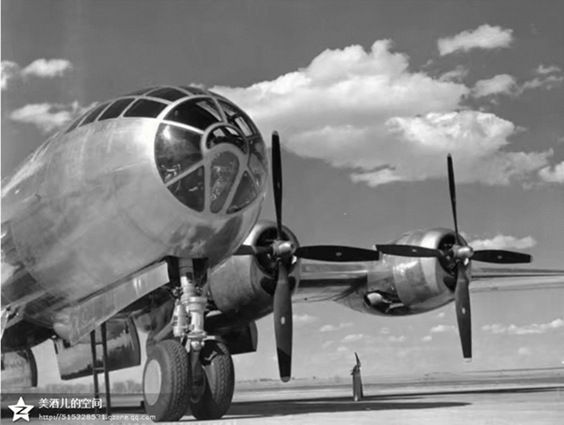
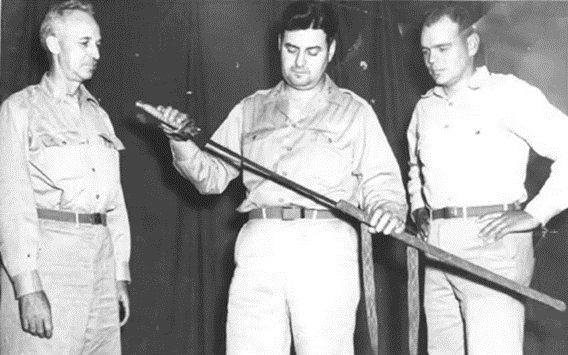
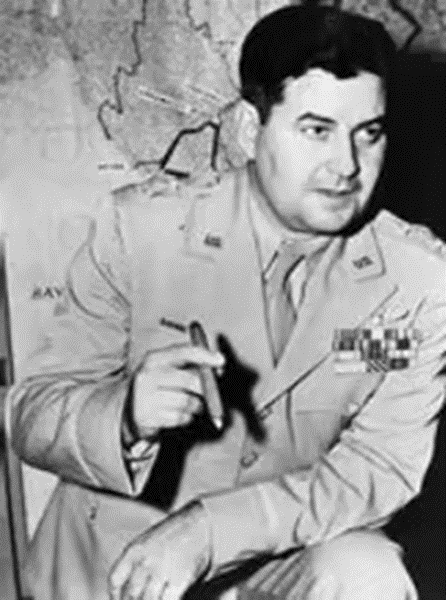

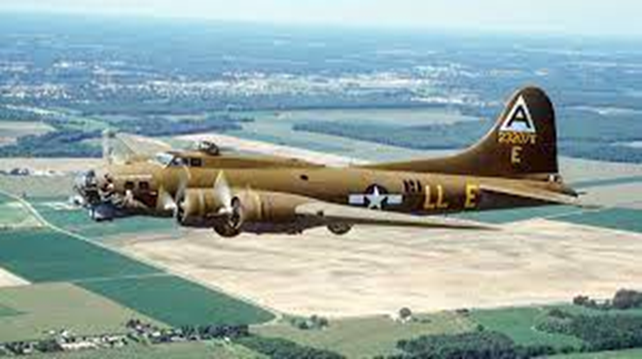




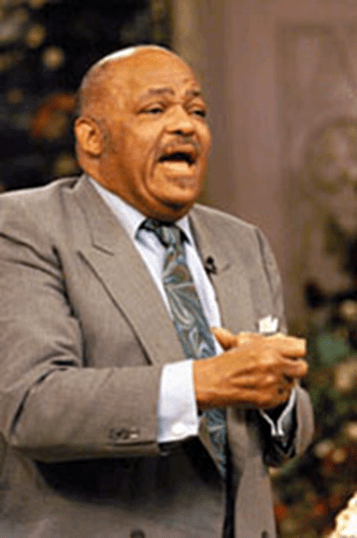


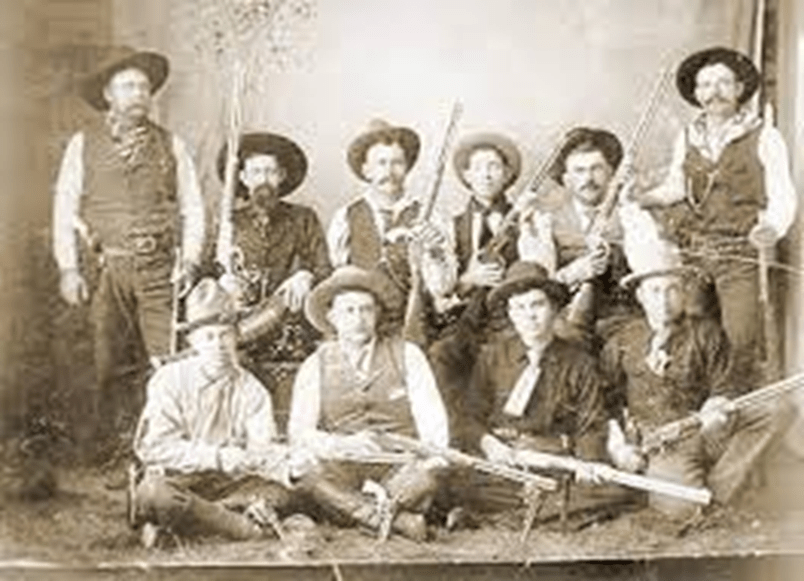
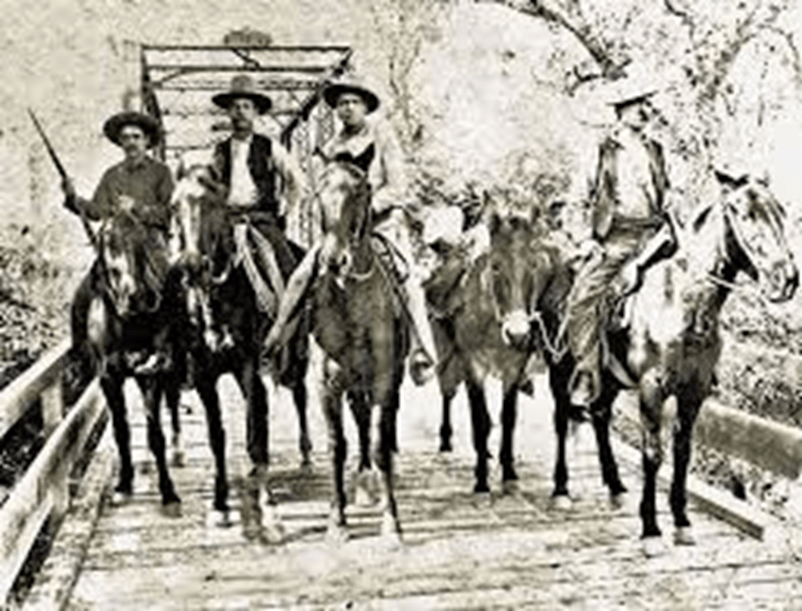

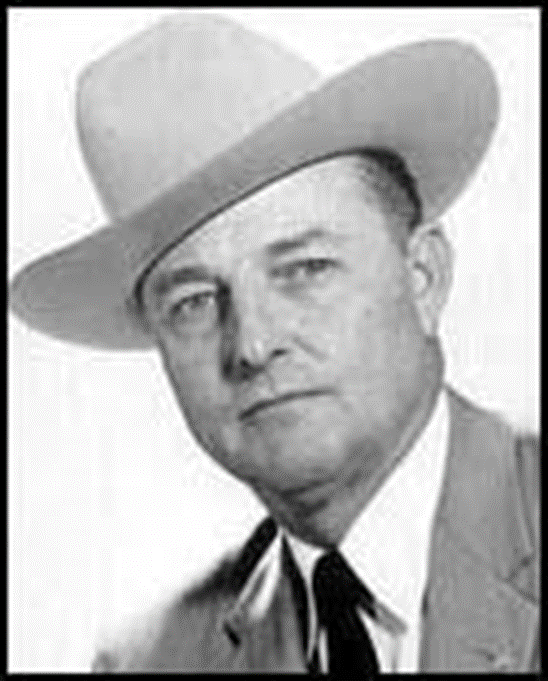
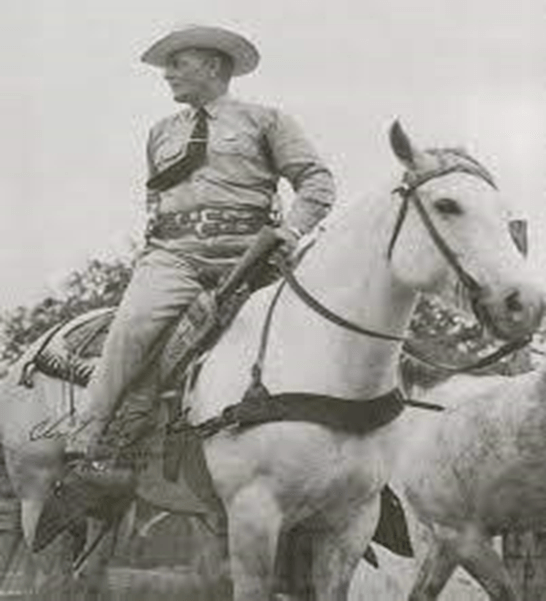

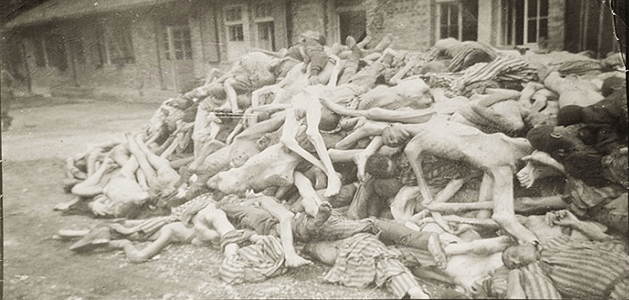
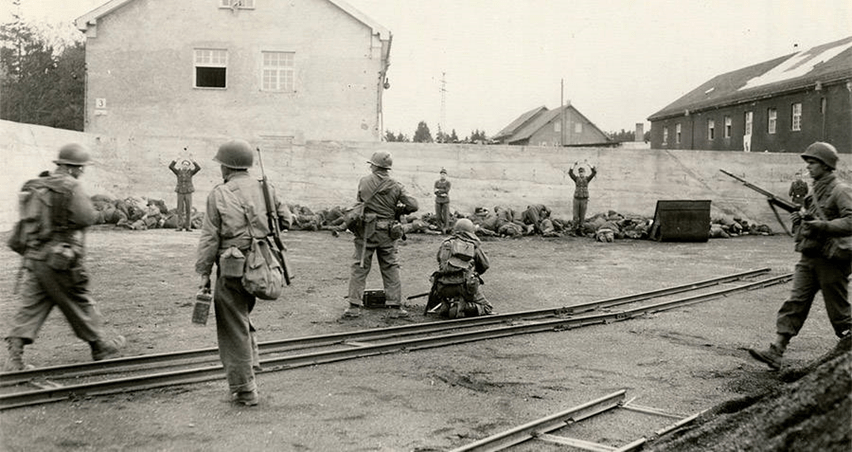





 True Texan Tales