Miss Ella

Ella Graham lived west of Waco , west of Crawford right close to where George Bush’s ranch is now located.  She was a good family friend and totally blind.  She went blind when she was only 4 years of age.  She thought that she could remember colors but was not sure.  She was in her early 70’s and had been the first blind school teacher ever in Texas in the little Crawford high school. 
She was very cultured and very romantic.  Even at her age she was still a beautiful white-haired lady.  When she was a student at Baylor they say she was just gorgeous.  Though the young men just lined-up to read her lessons to her back then, she never married.  She said that she felt that being blind, she would have been too much of a burden on a husband. 

But she was such a romantic person that she had gotten her degree at Baylor in Browning.   You know, Elizabeth and Barrett Browning the famous poets who wrote all those romantic poems and that romantic prose. Surely you have read it or heard it…….. like Elizabeth ’s Sonnet 43 as she wrote to her lover, Robert………. 

How do I love thee? Let me count the ways.   I love thee to the depth and breadth and height my soul can reach, when feeling out of sight for the ends of being and ideal grace.  I love thee to the level of every day’s most quiet need, by sun and candle-light.   I love thee freely, as men strive for right; I love thee purely, as they turn from praise.  I love thee with the passion put to use in my old griefs, and with my childhood’s faith.  I love thee with a love I seemed to lose with my lost saints. I love thee with the breath, smiles, tears, of all my life; and, if God choose, I shall but love thee better after death.” 

Wow!  Now that’s romantic!  And Robert Browning’s famous poem/song………Pippa Passes…….as innocent Pippa sings as she passes by……    

The year’s at the spring 
    And day’s at the morn; 
    Morning’s at seven; 
    The hillside’s dew-pearled; 
    The lark’s on the wing; 
    The snail’s on the thorn: 
    God’s in His heaven— 
    All’s right with the world!

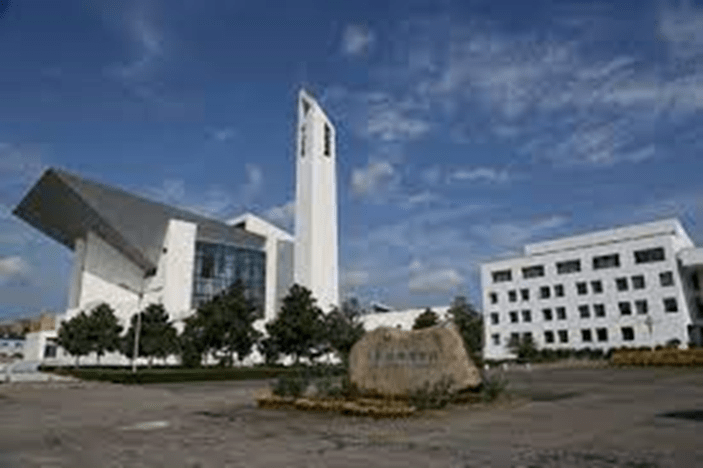
The famous Browning Library at Baylor has a bronze statue of Pippa out in front of it, and inside it has all the memorabilia of the Brownings’…….most all of their complete works and even their actual desks from which their writings were done.

Statue of Pippa at Baylor’s Browning Library

Yes, Miss Ella was such a romantic.  She wrote to me on an old typewriter with blue ink ribbon.  Her prose was like reading poetry.  I have kept all of her letters.   Many times when I would have a date with one of those beautiful Baylor girls, I would drive out to Crawford and take her along with us.  She would so enjoy it.  The girls would not mind as she lightly looked them over with her fingers.  She was always so interested in their hands.  She judged them some way or other by how their fingers were shaped.

She would particularly enjoy it when we would take her to the movies.  I think it was because this was something blind ladies never did. 

So, one time she was visiting our home at Rainbow Lake .  It was late in the afternoon.  We were sitting in front of that big picture window that looked down over the lake.  The other windows were wide open to let in the lovely Spring air.  And this daddy Cardinal was just singing his Springtime song at the top of his voice.

See, Miss Ella just loved Cardinals.  They would sing to her outside her bedroom windows near Crawford.  She would mention it sometimes in her letters as she was typing.  Her lovely stationary even had a picture of a red daddy Cardinal at the top of it.

Then, as we were listening to the bird’s song, Miss Ella said:  “Oh, Ronny, I do so wish that I could see a Cardinal!” 

And I must have just prayed, for I distinctly remember thinking:  “Lord, why can’t this lovely, Godly woman see a Cardinal?”

But I was jolted to attention, for my mother called to me to go out to the boat house and get some meat for supper out of the freezer.  I jumped-up and went out the kitchen door and opened the side door to the boat house.   Someone had left one of the big garage-type doors up off the floor for a few inches.  And this bird had gotten into the closed boat house.  There on the floor, right in front of the freezer was this gorgeous, scarlet Cardinal. 

He didn’t bolt up and fly against the glass windows as one would expect.  He just let me catch him.

Of course, I forgot about the meat and took him right back into the house.  Miss Ella got to carefully and lovingly see a real live Cardinal.  Her delicate fingers traced its whole body, especially that beautiful peak on its head from which it gets its name.

We eventually took it back outside and she let it go and it flew softly away.

Now you can say that was just a fortunate accident, but I know with the perfect timing and all, exactly where that bright red Cardinal really came from.   It was no accident for that bird to be right there at that exact moment just for Miss Ella to “see” it.

Ron’s Two Critters

Rumsey Strickland was a wonderful friend.  He started and owned Strickland Motor Lines for many years before he sold it.  However, after the sale he kept an office in downtown Dallas.  While I was managing the investment portfolios for that big insurance group, he was on my investment committee that oversaw my activities.

When you are going north up Oak Lawn Street from Downtown Dallas, the road splits and the left split becomes Preston Road.  Right on the north side of that split, behind the trees is a most beautiful, Spanish Style house.  That was Mr. Strickland’s home.  Behind it, along Turtle Creek are all those beautiful azaleas which so many people come to admire each Spring.   Mr. Strickland’s wife planted them and kept them well fed and watered.  Jerry Jones, the owner of the Dallas Cowboys owns that house now.

All Mr. Strickland’s children had died.  It was quite tragic.  So, I would go up to his office and visit with him, since he always seemed so lonely.  He really seemed to appreciate it.  And eventually we started to buy tracts of land together when I would find one at a good price that seemed to have big potential.  Of course, we bought tracts individually also.

I remember when he bought this little field that was planted in cotton.  I said:  “Mr. Strickland, why in the world would you buy a cotton field and pay $1.25 per square foot for it?”  He claimed that he figured it had great potential in spite of the price.  That tract is now the southeast quadrant of LBJ Freeway and the Dallas North Tollway that has all those big, tall, shiny buildings on it.  He had a great feel for real estate.

Later he bought a big ranch about 12 miles west of Ponder, Texas.  He wanted me to run cattle there and for us to be partners in the cattle heard.  I got a fairly large herd of Santa Gertrudis cattle from the big Callan Ranch at Lorena, Texas and located them there.  Since it had a nice little house, I got a cowboy to move there with his family to watch the cattle. 

When the cattle needed working, or spraying for flies, I would go there and help the cowboy.  It was a big place with lots of quail and good grass and water.  Since we kept spare horses there, I would just put my saddle and saddle blanket in the back of the pick-up to go help work the cattle.

At Texas A&M the professors say that the coyotes that came up from deep south Texas mixed with the red prairie wolves that lived on the north Texas prairies.  That hybrid was very vigorous and spread all across north Texas and beyond. 

The cowboy that lived on that ranch had noticed that one of those mother critters had a den along a small creek on the big pasture on the east side of that ranch.  When I had finished working there late one afternoon, I went down to that little creek and found that den.  I took the shovel and made a hole a little way back from the entrance to the den.  I could hear the pups making noise down there.  I knew that if they had their eyes still closed, I could get them out with no problem.  But if their eyes were already open, I would get bit for sure.

I reached down and brought out five little squally pups and put them in my saddle blanket.  I gave two to a hippie friend who made guitars and harpsichords on a property on the east side of Ponder.  I kept a male and a female and the Baton Rouge, Louisiana Zoo came and got the other one. 

I fed my two on milk until they were large enough to take more solid food.  My ranch had a really nice dog pen with a concrete base on all sides and very heavy wire that was over 10 feet high, with the bottom of the wire imbedded in the concrete.  It had heavy metal poles to support the wire and a secure metal gate.  It was a good place for these two critters.

 I had them stay in the pen about half of the time and run free on the ranch half of the time.  I have had many pet dogs of several breeds, but never anything like these two.  They were so much more quick than a dog.

The 1,600 acre ranch was about 3 ½ miles west of Interstate 35 on a paved county road with almost no traffic on it at all.  Our closest neighbor was 2 ½ miles away.  This was a perfect place and distance from the town of Denton for people to come and throw out cats and dogs that they did not want.  This happened regularly and consistently

You may not be aware that the very favorite food of coyotes is house cats.  That proved true for these two hybrid critters, too.  I have never known of a dog that could easily catch a cat, but it was no problem for these two.  This may seem cruel to you, but people would throw out so many cats on such a regular basis, that there was no way for them to catch enough song-birds and mice to survive.  I didn’t want to shoot the cats, and you couldn’t catch them, but these two took care of the problem.  My wife and I would go for a long walk along that lonesome road in front of the ranch on pretty nights, and these two would get at least one cat every time.  They quickly ate every scrap……feet, ears, tail and all.

Ron’s Prairie Wolf Hybrid has brought us a snake.  He can’t decide whether to leave it or eat it.

People would also drive out from town and drop out dogs, especially really mean ones that they just couldn’t keep in town.  My two red wolf hybrids could kill any dog, even when the dog was over twice their size.  They seemed to sense which ones were mean and which dogs were nice.  They never bothered the nice, tame ones, but it was death to the bad ones.  I was glad, because I didn’t want to have to shoot all those mean dogs, and you just couldn’t let them run free and kill the young calves.

These two hybrid wolves didn’t fight like a dog.  Dogs will fight one of two ways.  In both ways they will try to get at the other’s throat.  When fighting head-on they will try to make the other dog only bite the back of their neck where their skin is very thick.  But more often they will back up to each other so that the other dog must reach around to get at their throat.

These two red hybrids didn’t fool with all that and the dog didn’t expect or know what to do about it.  They would just rip open the dog’s rear flank where the skin was thin and incapacitate the dog in nothing flat, and then kill it by grabbing its throat.  I am sorry if this all sounds gruesome, but those were really mean dogs and this was just the way it was done.  Dogs will growl loudly and make a fierce noise when fighting, but these two would dispatch their job and never make a sound.

They would make big sounds when my cowboys would go by their pen and howl at them and get them to howling.  They would also howl back at the wild ones across the prairie too, especially at sundown and on moonlit nights.

 The Two Critters Inspecting a Big Bobcat

These animals are very mouth-oriented.  They were always interested in my hair when I would bend down or be sitting with them.  One night when everyone else in the house was asleep I went out to their pen to play with them.  They really wanted to put the whole top of my head in their mouths.  I finally let them do that.  They spent a long time at it.  I am sure it had to do with something deep down in their genes.  But from that moment we were totally bonded together as far as they were concerned.  I can’t explain it, but it was very obvious.  You wouldn’t believe how protective they were of me after that night.

One time when I was speaking at a conference up in New York, I was gone for over 10 days.  The rest of the family was off on a trip for the whole time.  So, when I got home, I let them out to roam for a few days.  Before the trip I had forgotten to tell the newspaper man not to deliver the newspapers while I was gone.  He delivered them only to the mailbox which as at the road about the distance of two city blocks from the house.   Since the mailbox only held one or two, there was quite a pile papers under the mailbox since I subscribed to several daily papers.

While I was unpacking my clothes, I kept noticing that these two critters were going back and forth from the house to the road, over and over.  Finally, I went out to see what this was all about.  I had never trained them for it, and I don’t know what was in their minds, but they were going down to that mailbox and each getting one newspaper and bringing it up to the house and putting it up on the porch, neatly in a  pile right at the front door.  They kept this up until every newspaper was right there by the front door.

Eventually the male died.   Then the female started going off for the night with the wild ones.  Then she started staying off for 2 or 3 days.  Finally, she never came back.  I have often wondered if she had a bunch of pups.

The Two Critters in their Pen


Arthur Blessitt

This is one interesting guy. He surfaced at the very height of the Hippie Movement.

Those of you that are old enough to remember 1967 and the years after that know of this extremely strange phenomenon. So many of the young people across the US started moving west, particularly to San Francisco and Los Angeles.

I remember attending the Financial Analysts Federation (which later became the Chartered Financial Analysts) Convention in San Francisco at the height of the Hippie Movement. Such sites and experiences I had never seen and have not seen since. Many of the “participants” were called the “Flower Children”.

I remember going down to the beach there where so many of them hung out. These young ladies would walk up to me and had me a flower. Drugs were rampant, and they also had places like what we would now call coffee houses where they congregated. Many of the young women were going topless.

They were all so very friendly. I did not stay in the Analysts Convention hotel, so I would ride the cable car to that hotel. One morning this one very attractive young lady on the cable car was telling me how she had a job or act at one of the coffee houses. She pled with me to come see her at her “place of employment” that night. There was nothing planed that first evening at the Convention so I went.

The first thing that I noticed there was that guys were going to bed early on the grass around the place in their sleeping bags. They were carefully laying out their banana peels to dry beside their sleeping bags. They maintained that they could “get high” by smoking dried banana peels.

I entered that place and the young lady spied me right off and ushered me over to her table. As entertainment in this place they had acts to watch while you ate items from their menu and had your coffee. The young lady showed me her act on the marquee. Much to my surprise, she was the “Topless Girl on the Trampoline”. She got topless right away and started her bouncing activities on this trampoline.

When she came back to the table, she wanted to seriously confide in me this big worry that she had. She was very concerned that with all that bouncing, her breasts would shrink and she would lose her job. I really had no answers or solutions for her.

On that trip I had rented a car and drove through the Haight-Asbury District. That summer of 1967 was, what is now known as “The Summer of Love”, the enlightened, psychedelic period was at its peak. It most all started in Haight Ashbury that would attract over 100,000 people to the area, quickly becoming an epicenter for free thinking, creative expression, free love, free drugs and free food. Driving through there I was amazed at the sites and the people.

The whole thing quickly spread to Los Angeles, particularly to the Sunset Strip area before spreading back across the US and eventually around the world.

A couple of years later I was in Hawaii on the Island of Kauai. If you have seen the famous old movie South Pacific you have seen Kauai. Most of the movie was filmed there, especially the mysterious, romantic part about Bali Hai. Do you remember those haunting lyrics?………..

Most people live on a lonely island
Lost in the middle of a foggy sea
Most people long for another island
One where they know they would like to be
Bali Ha’i may call you
Any night, any day
In your heart you’ll hear it call you
Come away, come away
Bali Ha’i will whisper on the wind of the sea
Here am I, your special island
Come to me, come to me

When the young lieutenant gets to finally go there, the big entrance and welcoming scene at Bali Hai was filmed right on the Napali Coast of Kauai.

When I was there, at the height of the Hippie Movement, the very ultimate hippie experience was at the Napali Coast. Those few that could get there would walk the 10 miles of trail along the cliffs to the little secluded valley and beach in the center of the Napali Coast. There they would shed all their clothes and live in little huts that they made from materials from the jungle and cover them with banana leaves.

The Hippie Movement grew and grew in Los Angeles along the Sunset Strip. That is when young Arthur Blessitt surfaced. He was a very strong Christian and as he expressed it at the time and later…..”totally in love with Jesus”.

He opened a coffee house right there on Sunset Strip and named it “His Place”. Hundreds of young people flocked to it. It was two stories inside with an open mezzanine with stairs leading up. Arthur had a big 12-foot cross hanging at an angle overhead. Here, mostly at night hundreds and hundreds of young people started turning to Jesus. It was later called the Jesus Movement.

There was nothing at all on the mezzanine floor but one functioning commode right in the center. It was here that the young people would literally and symbolically throw their drugs in that toilet and flush them away from their life.

Others were involved in starting the Jesus Movement, but it mostly initially all started with Arthur Blessitt. It spread up and down the California Coast. Just look at Arthur preaching to the flocks of Hippies as they are turning to Jesus……………….

Thousands were being baptized each week in the Pacific Ocean. Further down the coast in Costa Mesa, Calvary Chapel exploded with growth. Five hundred new converts were baptized each month at Pirate’s Cove on the Pacific coast, as the church embraced a wave of hairy, hippy youth turning to Jesus.

      Calvary Chapel in Costa Mesa filled with Jesus Movement Youth

Ted and Liz Wise were early adopters of the hippy revival in San Francisco. Ted was an arty beatnik, grafting on yachts and tripping out on drug highs. Meanwhile, Liz was a regular at the conservative First Baptist Church of Mill Valley. Reading the New Testament Ted says, “Jesus knocked me off my metaphysical ass!” Then, following a bad trip on LSD in early 1965, he responded publicly to a gospel invitation at Liz’s church.

Ted and Liz were soon spreading the word to their contemporaries. Yet, despite their best efforts to evangelize hippies through their more traditional church, the hairy bunch just didn’t feel at home there. They eventually pioneered an independent hristian commune, “The Living Room”, right there in Haight-Ashbury. Located in a 20 foot by 40 foot storefront, they offered food, rest and gospel chat. By the following year they were seeing 20 or more people making commitments to Jesus each week.
I have a friend from Germany who works in Public Health in Washington DC.

He originally received his medical degree in Germany but was very high up in The US Public Health Service. He told me that he sent a team out California to study this phenomenon. These young people who were highly addicted to drugs would be baptized in the Pacific, throw their hands up in the air to praise Jesus, and walk away without having any withdrawal symptoms. US Public Health Service had never seen anything like it.

The team from Washington validated what was happening, but I never heard what become of their study.

           Baptisms in the Pacific by the Hundreds and Hundreds in California

That young people led Jesus movement spread back east across the United States. Probably the greatest manifestation of it was EXPO 72.

That was an event that happened in Dallas, Texas in the summer of 1972. It is considered the largest one week gathering of people in the name of Jesus in world history. Many came for the event from around the Dallas/Ft. Worth area, but over 80,000 come from cities away from the Dallas area. They came from all over the US and even from other countries. I met military personnel who had gotten leave from their ships stationed off Vietnam and had bummed rides on military aircraft all the way to Dallas. When asked, they said (like most all the other folks) that: “We just felt that we were supposed to be there!”

I had a friend who was the main dentist in Prescott, Arizona who cancelled his appointments for the week and came and stayed at my ranch for the occasion.

Tens of thousands of young people came from churches across the country. Bus companies like Greyhound and Trailways completely sold out of busses. All hotels and motels in the area were completely booked and people took visitors into their homes. One night I ran into this black mother with several children who had no place to stay, so I took her home to the ranch for the night.

Many thousands of young people were housed in the dormitories of the universities in the area, such as the University of North Texas 35 miles north of Dallas. These groups slept in the university dorms, attended teaching sessions in the schools’ facilities, and then came to the Cotton Bowl for the evening services. Many of my Christian friends stayed up all night making sandwiches to feed all these visitors.

The Cotton Bowl in Dallas holds a little over 100,000 in its regular seating, but when all those seats were filled, the young people completely packed the whole space on the floor of the field.

The list of speakers were the top ones in the country for inspiring and leading people to know Jesus……..such as Billy Graham, and E.V. Hill, and Bill Bright and a host of others…..and of course Arthur Blessitt. Many of the nation’s top Christian musicians and singers were there, too.

Those evening services were just amazing. Many people there had never heard those Jesus Cheers that the host of young people were using.

This whole Explo 72 was started by those first young people at Campus Crusade. And, of course, Paul Eshelman was the main person in charge. There were whole special editions of the local news papers about EXPO 72. It was an amazing, what I would call, a “movement”.

Since it was the biggest thing that had ever happened in Dallas, the Dallas Mayor went down to its headquarters to observe how and why it was running so smoothly with all its complicated parts.

When he walked in and looked around and found Paul Eshelman, he exclaimed: “Why this whole thing is just a bunch of kids!”

To which Paul responded: “Mayor, who else do you think would dare to try such a thing!”

At this very time was when Campus Crusade had just come out with their little yellow book, The Four Spiritual Laws, which has proved to be one of the very best tools ever to lead someone to know Jesus and accept Christ. These were passed out to everyone, and there were many training sessions on how to use it most effectively.

I shall never forget going to one of those sessions in an auditorium and sitting behind a large group of Catholic nuns. These nuns were all meticulously taking notes on how to use the Four Spiritual Laws to lead people to Christ.

Whenever God’s Spirit just descends onto a group such as this, there are some very interesting and unexpected manifestations. The huge Fair Park Area where the Texas State Fair is held each year also contains the Cotton Bowl. Many people were there during the day for training sessions as well as for the big evening service. The City of Dallas has an absolute army of workers to clean-up behind such enormous crowds that leave mountains of trash there. Not this crowd. Those workers did empty all the trash containers each night, but they could not find so much as one piece of paper to sweep up in the whole place. They were just amazed.

I talked with some of the hotel people in Dallas. They were equally amazed. They said that when their maids came to make up the beds each morning and pick up the towels that are usually thrown around, every bed was already meticulously made up and every towel was carefully hung up. They had never seen anything like it.

The last event for this gathering was a huge outdoor service on the north side of downtown Dallas. No one knows for sure how many were there, but the crowd was just enormous. The sound system was set up to cover the whole crowd. Like all the other events at EXPO 72, you could just feel God’s Spirit permeating the whole place. It was a fitting conclusion.

The movement eventually moved over to the U.K. Much of their famous music scene turned to modern Christian songs.

Larry Eskridge, Historian at Stirling University in Scotland and later at Notra Dame, estimates at least 250,000 people become Christians. The evangelical churches in the U.K. are different even to this day as a result.

However, all this turning to Jesus almost did not happen. Go back with me to those very first days at Arthur Blessitt’s His Place on Sunset Strip.

So many, many young people were swearing off drugs, that Arthur’s His Place was beginning to make a major dent in the drug market in Los Angeles. It seems that a mafia group owned the building that Arthur was leasing. They decided that it would be in their “best interests” to cancel the lease and kick Arthur and all these young people out.

Arthur had to have a place to continue his work. He was not an authority on real estate; he was a dramatic witness for Jesus. He received wide-spread media coverage in that part of California for what he did. He chained himself to the lamp post right there on Sunset Strip and went on a fast. The young people would come at night and drape their bodies over him to keep him warm during the cold nights. He stayed and stayed, chained to that post.

Finally, the drug dealing mafia group backed off because of all the publicity, but not for long.

Now come back to Dallas with me. I am headed home to the ranch a little early one afternoon from Downtown Dallas. I am in my Buick sedan, but it is not going back to the ranch. I know this sounds weird, dramatic, and totally unbelievable, but it was headed to DFW airport and the American Airlines Terminal in spite of efforts on my part to the contrary. Simultaneously I had this overwhelming compulsion that I was to go to Los Angeles.

In those days they had those big signs as you went in the entrance to DFW Airport showing the next flights that were leaving and from what gate. I parked at one of those convenient spots in front of the gate for the next LA flight and headed straight to the ticket counter to buy a ticket to Los Angeles.

As I walked up, there was my pastor friend, Bill Smith, right in front of me. I have mentioned him several other places in this book. As I have already mentioned, many pastors talk about sawing the limb off and expecting God to catch them, but he is the only one that I know who actually lives that way.

“So, Bill, are you going to Los Angeles?”………”Yes.”

“Please tell me why you are going!”

And he says: “I don’t know, but I will find out when I get there.”

I told him that I thought I was supposed to go there, also; and he said: “I assumed as much.” So off to the west we went.

It was still afternoon when we arrived. I asked Bill if he now knew why we were here and he replied: “Arthur Blessitt needs us. Let’s go straight to His Place on The Strip.”

I had never been to Arthur’s His Place. I saw the big cross hanging ominously at its angle from the ceiling. I walked up and saw the toilet in the center of the mezzanine. And I shall never forget the big, tall dude who was laying there on the floor. He had “Jesus Loves Me” tattooed on his toes………..one letter on each toe. He was oblivious to anything around him as he was furiously writing in this notebook. I asked Arthur what he was writing about, and Arthur explained that he was writing personal instructions on what he considered the best way to cope with withdrawing from heavy drug use after accepting the Lord.

Then Arthur explained the desperate situation that he was in. It seems that the drug dealing mafia, the owners of his building, had returned with a vengeance. Arthur had an eviction notice to be out by that very night. He and the youth had prayed through most of the whole night before.

Arthur explained that it was not essential for him to have another coffee house immediately, but that he desperately needed a new address by the next morning for all their mail and telephones to be connected to that new address.

Bill Smith and I walked two blocks down and one block over to the lovely office building where so many of the top Hollywood actors and directors had their offices. Our good friend, Tennessee Ernie Ford, had his office there. Fortunately. Ole’ Ern’ was still there. He made some calls and directed us down to the leasing office for the building. I went over all the details with the leasing agent, and Arthur Blessitt had a fine, functioning office for the next morning in the most prestigious office building in LA.

The rest of the story…………….

You have probably heard about what I want to relate to you about Arthur Blessitt, since his exploits are now world famous.  Arthur says that right there, that night, God spoke to him; not like some religious types say those words, but actually spoke.  Arthur said that God told him to take that cross down and carry it completely across the whole nation.

Arthur put a little wheel on the bottom of that cross, put it on his shoulder and started to walk.  Many Christian leaders came and walked with him, including Billy Graham.  Books have been written about the plethora of adventures that he had, just amazing ones.  For see, after he had walked across the whole US, he decided that God wanted him to carry the cross across every country and province and principality and island of the whole world.  

I would encourage you to read one of the books about his adventures, but let me tell you just a little about his adventures with the cross here.

He has (as of this writing) now walked over 42,780 miles through 324 nations and territories and islands.  He is listed in the Guinness Book of World Records as “The World’s Longest Walk”.

He has carried that 12-foot cross and the one to replace it when it finally wore out, through wars, Christian hating countries, deserts and jungles.

He has actually faced a firing squad.

He has been in jail over 20 times.

He fasted for 40 days.

40,000 people walked with him across Communist Poland.

He has been on every major news network not only in the US, but most every other nation.

Pope John Paul II personally welcomed him to Rome and wanted his picture with Arthur.

During that vicious war in Lebanon when Yasser Arafat was cornered in Beirut and almost exterminated, Arthur went right through the dangerous lines to Arafat and told him how much he needed Jesus in his life.

He slept in Prime Minister Menachem Begin’s private home in Israel.

There is no telling how many just common people he met along the roads across the world and led to Jesus.

Going back now……….Just after taking the cross and walking across the United States, Arthur decided that God wanted him to walk across England, Scotland and Ireland.

Just before leaving, he held a rally in New York City in Duffy Square.   A reporter from the London Daily Mirror came up and asked if he could follow Arthur around and take some pictures.  And after Arthur had preached, the fellow wanted to know if Arthur was coming to England.  When Arthur told him that he was going very soon to walk across the country, the Reporter wanted to know if he already had tickets and when he was arriving.  Arthur showed him his flight that was to arrive on September 2.

Arthur said that he did not know a single soul in Great Britain.  They had a long flight that was diverted to Holland till the weather cleared in London.  What Arthur did not know was that on the very day of his arrival the largest news paper in England, The Daily Mirror, had a double headline entitled:  Suddenly, Jesus Christ is more popular than the Beatles.  Then it had a huge side headline:  ARE YOU LISTENING JOHN LENNON?

It was a huge article about how popular Jesus was becoming and all about the Jesus Movement that was going to be sweeping across England, and that the “leader of that movement, Arthur Blessitt, was arriving in London that afternoon.”

Their little group was so tired, not having slept for almost 24 hours.   Their children had been sick on the plane and smelled terrible and the men needed a shave and the women so wanted to clean-up and sleep. 

They gathered their bags and walked out of immigration.  Wow!  They were greeted by a huge group of reporters and flashbulbs and other well-wishers.  Arthur did not know a soul in England, and here he was the most popular guy in the country.  He could hardly keep up with the multitude of questions that were thrown at them.  They knelt and had a prayer.

One of the TV newsmen came up and said:  “I’ll collect your baggage. We want you on ‘Nationwide’ tonight.”

“‘Nationwide’? What’s that?” Arthur asked.

“It’s the largest news program in all of Britain. It’s on BBC at six o’clock.”

“Oh, we’re all so tired. Could we do it tomorrow night?”

“No, no! We want you tonight! And we want you to be on twenty-four hours.”

“How many hours?” Arthur gasped.

“Oh,” he laughed. “’Twenty-Four Hours’. That’s the name of our late-night talk show.”

The news people loaded them and their bags into taxies and on to the TV station.  Arthur and his wife kept protesting that they needed to clean-up, but the news people said:  “No, please, we want you just like you are. 

They all lay down in the studio and were soon fast asleep, but they were waked-up for the 6 o’clock “Nationwide” TV broadcast.  The newscast was quite a show. They had them sing “God’s Not Dead,” and then Arthur’s son Joel led in a Jesus cheer. During Arthur’s interview he told the TV audience that we were in England to bring Jesus and His promise of Life, and that we wanted British followers of Jesus to move “out of the staid old buildings and into the streets and house-to-house sharing about Jesus and helping the needy. Jesus called us into the world, not out of it.”

What Arthur did not know was that Time magazine had just come out with its overseas edition with Jesus on the cover.  That added to the Daily Mirror’s big story to its three-and-a-half million readers, plus the incredible two appearances on TV the night of their arrival made for the most miraculous welcome anyone could imagine. They hadn’t been there twenty-four hours yet and they were known all over Great Britain!

God took one man who didn’t know a single soul in the whole country and introduced him to the entire nation of 65 million people in a matter of hours!

The cross that Arthur had carried across the US was in such bad repair, that it was retired to Los Angles.  He went to a lumber yard in London and made up a new one complete with the wheel on the bottom.  This is the one that has been carried across the rest of the whole world.

His little group headed out across Great Britain and were warmly welcomed everywhere they went.  They angled up along the North Sea and across Scotland and Ireland.  They spoke to overflow crowds all along the way.  So many churches there had been boarded up or were put to other uses.  Arthur and his friends prayed at each one, that God would continue to awaken the country to Jesus.

When they had finished their walk, they returned to London and Arthur preached to huge crowds as the country was awakening to the Jesus Movement.  He spoke in Hyde Park at an event called “The Festival of Light” to 70,000 people.  It was on Saturday September 25th and was an awesome event.   Arthur was the last speaker and he closed by leading the crowd in singing “the Lord’s Prayer”.  People were weeping and praising God.

This all took place in 1971.  Arthur later returned to England and spoke to large crowds all through the summers of 1972 and 1973.  These were huge meetings. They were held in most of the key cities at football fields and large parks. Tens of thousands attended with thousands receiving Jesus as Savior. There was truly a national awaking at that time in Britain. The Jesus movement swept the nation.   Arthur said that he considered it to be one of the most powerful events he has ever known.

So, Arthur continued on his odyssey of carrying that cross across the whole world.  Here are just a few random excerpts of his adventures:

Near Baku, the capital of the Muslim nation of Azerbaijan, the engine of the Land Rover that was following him along the road just went to pieces.  The block was cracked and the rods were twisted into grotesque shapes.  They were hundreds of miles from the closest parts shop if there even was one in Baku with Land Rover engine parts.   There were so very many divine interventions for Arthur.  In this case there was a grizzly old bearded mechanic who took the engine completely apart, laid all the parts out on the desert sand and pounded those rods back into shape.  Fortunately, he did have some piston rings that fit.  Arthur said that after the old guy’s work, when he tried the ignition, that engine purred like a kitten.

Arthur went 11,000 miles across the many parts of Communist Russia.  In so many places when people saw that cross they just burst into tears.  They had thought they were the only Christians left on the planet with all that Communist persecution.

Of all the places he visited, Arthur told me that Bangladesh had the poorest people that he saw.  It has the seventh largest population in the world and is a strongly Muslim nation.  They were told that as Christians carrying a cross, they would not only not be welcomed but would face severe persecution.  However, they were featured in all the newspapers with pictures of their cross.  The people welcomed him so very warmly and were attentive and receptive to his evangelistic message.

In Cuba, the communist leaders gave him a hard time, but the people welcomed him, especially when they saw the pictures of him and his cross with the Pope.

In Cambodia, which I have already written about, Arthur arrived at just the most propitious time to lead many people to the Lord.  In that viciously war-torn place, Arthur was so happy to be there to represent Jesus and it must have shown.  At the airport a man rushed up to him and asked:  “Who are you?”  And Arthur told him his name, but the man said:  “Who are you, your face is glowing!”  Arthur did not miss that opportunity to explain why and witness to the man about Jesus.

In China, Arthur took that cross right up to the highest place he could find on the Great Wall.  He saw many conversion experiences in China.  On a remote part of Hainan Island, part of China, a man came up to Arthur and told him in perfect English that it was the first cross he had seen in 40 years and the first English words he had spoken in 40 years.  He told Arthur that he had thought he was the only Christian left in the world.  He had originally been reared by Christian missionaries from the US.

There is so much more to tell about the amazing adventures of Arthur Blessitt.  He just goes on and on infused with his amazing love for Jesus.  I don’t know where to stop.

                                   Arthur Blessitt and His Cross

Abkhazia  “Awesome, today we crossed into Abkhazia from Russia. There is war in this area as Abkhazia is fighting to break away from Georgia. Denise arrived at the border before me and had already made friends with the soldiers on the Georgian side.”

“A lady waiting on the roadside wants us to park at their house. She showed us a small corner of her living room with crosses where she would sit with her family every few days. They had no Bible and no church. At night a lady schoolteacher that speaks English and I had the privilege of explaining about Jesus and the entire family cried and invited Jesus to be their savior. We gave them a Bible and gospel material. The big question from all the people is how we got into the country and how we got through the roadblocks. Everyone must have permits or be known to the men manning the checkpoints!”

There was no way Denise and Arthur could get permission to carry the cross across Pakistan and into Afghanistan.  However, they flew to the area of Chitral and found people and a guide who considered it his mission from God to get Arthur across the very high mountain passes and trails.  You can read about his amazing adventures there on his web site.

Arthur and his son Joshua were determined to carry the cross on all seven continents.  That meant Antarctica, the seventh.  They finally accomplished it, overcoming all kinds of’ obstacles and finally walking among the penguins and seals and leading people to Jesus even there on the seventh continent.

Over and over in Africa and other places, Arthur has had attacks from Satan, usually from people under the influence of Satan.

Arthur led so many people to Jesus in Belize.  As in many other places, while he was preaching there. A man came in with a machete, determined to kill him.   He first attacked the cross and then came after Arthur.  The police came and took him away, but before Arthur was finished with his message, the Satan filled man came back and tried to kill Arthur again.  Fortunately, the police were still around and grabbed him just in time.  Time after time across the whole planet things just like this happened to Arthur.  He knows more than most anyone how alive the devil is.  Arthur seems to bring out overt opposition from the devil like no one else that I know of.

In the Himalayan Kingdom of Bhutan nothing is allowed but Buddhism, especially not a religious symbol of any other religion.  However, miraculously, Arthur and Denise were able to get the cross into the country.  They had a tour guide and a car and driver.  It is very unusual for just two people to be on a “tour” in that country.  They did not get to preach, but they led young men to the Lord anyway.  It was necessary to start at the beginning with Adam and Eve and go through the whole story.  The young men in their knee length traditional robes were moved to tears that Jesus had actually died for them.  They had great, meaningful conversions in that high, Buddhist country.  The converts even wanted to help carry the cross across the country, and the Police even waved to them along the road, as did the farmers who would leave their little fields and come up to greet them.

Arthur and Denise came to the Congo in 1996 just before their first big civil war broke out, not to be confused with many smaller ones earlier.   They found the capital of Brazzaville in almost indescribable turmoil.  They had the name of a Catholic sister which they finally found.  She was known by so many there and was of great help to them.  She knew more than most how much the cross and Jesus were needed there.  She took them to a house for the blind.  Arthur had great results there presenting the Gospel to those blind people through an interpreter that Sister Bridgett got for them.  Arthur was moved to tears by the way they all wanted to lovingly touch the cross and then go out and lovingly carry it.  He heard later that the blind people’s house was burned down after he left and many of them killed.  Sister Bridgett was able to flee the county to the US, but actually went back later to represent Jesus there.

So, I have been going through these countries and skipping most and am only at the “C’s”.  I won’t go though all the hundreds of other countries, even though Arthur has let me read his personal, hand-written notes from them.  If you would like to pursue his amazing adventures in them, go to his website and click on “Countries”.

So, I am sure God would have otherwise intervened for Arthur.  But it was certainly a privilege to be a part of God’s answer to the prayers of Arthur and the young people on that critical afternoon when they had to leave the Sunset Strip and help provide them with their needed place that they had to have by the next morning. 

When God decides to make you part of an answer to a prayer like theirs, I can attest that you had better just “follow along”.

The Covenant

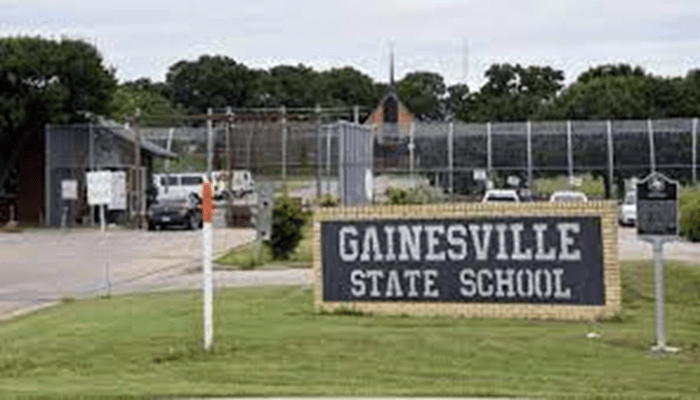
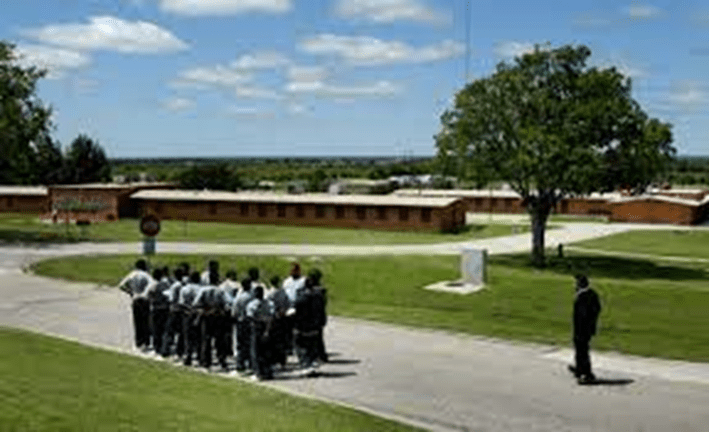
I have already described how I went every week to the large, high security prison, at Gainesville, Texas for for boys ages 12 to 19.  I did this for 20+ years to present the Gospel Story to each new boy who came into the prison.  Over the span of those years that amounted to thousands of youth (for at lest 12 each week).
Most of these sincerely prayed to accept Christ into their lives.  I admonished them to not “mess around” with God, but to really, really mean it.  I followed up with very many of them later.  On that occasion, I would tell them stories.  One of the stories that seemed to mean very much to them was the story of what a “Covenant” is.  I put that story in the Appendix of my soon to be published book, and below I am sending that story to you.  The story is written in the exact words that I used in telling it to those boys. 

The Covenant – (In the same words as told to each prison boy)

I wanted you to know what a “covenant” is.

The closest thing that we ever had to a covenant in this country and in Mexico was when the Indians would cut their wrists and put them together and let the blood run together as they were becoming Blood Brothers with each other. The reason that they did that was because they did not have police are FBI back in those days. They needed to have someone to watch their backside or their family’s backside.

It was the same way back in the Bible Times. They needed someone to watch their backside and their family’s backside. In those long ago times they did not call it “blood brothers” they called it going into covenant with someone. It was really for mutual defense and was most always in secret.

For nearly 3,000 years they had the same ceremony that they would go through when they went into covenant with someone. It was a strange affair. The first thing that they did was to build a fire. Then they were to walk a figure-8 with their covenant partner between two walls of blood. And you say, “ what do you mean……two walls of blood”? Well, they would take a big animal, like a bull or an ox, and they would split them into two halves. Then they would hang up the two sides or prop them up to make two walls of blood. The Bible says that when Abraham did his covenant, he took birds and goats and cut them in half and put them on bushes to make two walls of blood. Blood was important back then.

Anyway, after that, they would sit down across the fire from each other and exchange their outside coats or their outside robes. That was a symbol of putting on the other person.

Then they would exchange belts with each other. Now why would they do that? They did not wear pants. They wore robes. They did not have any pants to hold up with a belt. Their belts held their weapons…..like their sword and their dagger and their head-knocker. The belt went around the outside of their robe so that they could get at their sword quickly. This exchange was a symbol that if someone attacked one of them, he was attacking both of them.

Finally, they did cut their wrists a little bit and let the blood run together. And then they would do a strange thing. They would rub the black soot or the charcoal from the fire into the cut. Now why would they do that? They wanted to make a scar. That is how you make tattoo ink…..by grinding up charcoal and mixing it with water. See, you may be away from your “home boys” and someone is giving you trouble. You just cool roll that wrist over and they see the scar and realize that this guy is in covenant with someone. We are not facing one sword and two fists; we are facing two swords and four fists. He may be in covenant with some big, ugly dude…..with a big sword.

And another thing about the covenant that I want you to remember is that it lasted until the second generation, to the children. But the children would not be under the terms of the covenant unless they said “yes” to it or signed off on it. It would not be fair to put them in the covenant otherwise. Their fathers many have gone into the secret covenant with each other before they were even born.

And the most famous Covenant Story in the Bible was the story of David and Jonathan. They were in this strong, secret covenant with each other. Jonathan was King Saul’s oldest son and he was in line to be the king someday, which must have been confusing for David; because when he was a young boy, the High Priest had this secret ceremony and put this oil on his head and said that he was going to be the king someday.

Anyway, Jonathan and King Saul both got killed in this big battle. So, David started up to the Palace to become the new king. All the people already wanted him to be the king.

And in those days when someone from outside the king’s family came to be the king, the custom was that he always killed all of the king’s children and grandchildren. They did not want them to grow-up and take the kingdom over again someday. Of course, David would not do that, but if you did not know any better, you might assume that he would.

Well, before he died, Jonathan had this little boy named, Mephibosheth. And when the nurse that took care of that boy heard that David was on the way to the palace to become the new king, she was terrified. She was sure that he was going to kill this little boy. She grabbed that boy up and went racing through the palace, and she stumbled and the little boy went flying through the air, and he hit on these marble steps on his back. And the bible says that “he never walked any good” after that. It probably paralyzed his legs. But they took that boy way out to a town in the desert called, Lo-debar, and hid him out there with this family.

Well, David gets there and goes through all the ceremony of becoming the new king. He takes over the army. But he knew about this little boy. And he knew that the boy had the right to be in the covenant. He never mentions the covenant; that is a secret. But he keeps asking where the boy is. And nobody will tell him. They think that he wants to kill him. So, 17 years go by. That boy is over 18 years old now. And after all that time, finally, one of King Saul’s old advisors realizes that David is a good man, a godly man; he wouldn’t kill that boy. He tells him: “Sir, the last that I heard, that boy was still out there in the desert, in Lo-debar where they hid him.

Wow, David sends the royal chariots racing out there…….the sun glinting off their gold and silver…….they are throwing up a plumb of dust. That was like the Hummers in those days, but with horses. They circle around that town and come in there, and they found that boy. They put him on one of those chariots and race him back to town. They let him off right there in front of the palace. They say: “Boy, you walk straight up through there, the king is waiting on you right now.

Well he goes up there on his little crutches…….”clump, clump, clump”. And when he got there right in front of the king, he just threw those crutches out, just like that. Well, he just fell down right on his face. And King David says: “Stand that boy up”! Oh, gee, he thinks that his head is coming off right there…..whoosh, with a big sword.

No, King David gets up off of his throne (He never does that.) and goes down and talks to that boy quietly. He says: “Son, see that scar on my wrist? I was in covenant with your father. I am prepared to return all of your father’s and your grandfather’s lands to you; and all of their assets…….millions of dollars in gold.” All this little ugly dude has to do is say “Yes” to the covenant………to get all of that…………..

Man, he is no dummy. Of course he says “Yes” to the covenant. And Kind David says: “Son, you have the right to eat at the king’s table any time that you want, the rest of your life.” Wow, you can hear him up there the next morning. He is having breakfast with all of the princes and princesses. He says: “Pass the jam, man!” And they say: “Why you sorry-ass little bugger, what right do you have to be here at the King’s Table. And he says: “Ask the King about that scar on his wrist.” He was in covenant with Mephibosheth’s father. And now he has signed-off on the covenant. That makes him like the King’s own son, with all of the rights and privileges.

So why do I go through all of that long story of what a covenant is with my prison friend here? Because, Jesus used the story of what a covenant was to explain to those dumb-head people back there why he had come down to the earth. They knew what a covenant was, but they did not have a clue why he had come down to the earth. He explained to them that he had come down to the earth to, in effect, complete a covenant between God and man. So, if you are part of that covenant, you become like part of God’s family and inherit eternal life, and all that goes with that.

So, my friend, that time when you and I were looking at that little yellow Four Spiritual Laws book and we were looking at those two circles in the back, and I looked you right in the eye and said: “Which one of those circles do you want to be?” That was just like Mephibosheth standing there in front on Kind David, and King David saying: “Son, do you want to be part of the covenant or not part of the covenant?”

And you were not any dummy either. You said “Yes” to the covenant; and we prayed and you asked God, in effect, to put you in The Covenant.

So, I thought that story would have lots of meaning for you. And I want you to remember all your life that you are part of the Covenant. Don’t ever doubt it.

And God is not like some big judge up in the sky who whaps you up the side of the head whenever you do wrong. Of course, I wish that he would. But He expects us, out of gratitude for what He has done for us to try our best to keep his rules and to for sure be part of his church. So, I want you to get into a really good church when you get back to the free, and participate, and to be in its Sunday School, especially.

And I will be praying for you.

Artificial Intelligence

Supposedly highly intelligent “do-gooders” keep telling us that Artificial Intelligence (A-I) is going to replace the human brain. It ain’t going to happen. I have written you before that George Guilder has by far the most intelligent brain alive today as respects technology. He told us what the internet was going to be and do before we even knew what it was……and he told us in advance about all of the other great tech advances before they ever happened. And he personally knows and keeps in contact with all the other great tech minds. In this note that he sent me yesterday he proves that while A-I is useful, it cannot replace the human brain. Do read to his conclusion at the end………….
Ron

The Genesis of Synaptics and the Future of Computing

George Gilder

Dear Ronald, January 12, 2022

The intuitive mind is a sacred gift and the rational mind is a faithful servant. We have created a society that honors the servant and has forgotten the gift.
– Albert Einstein

During the holidays we had the opportunity to sit down with Federico Faggin’s recently published book, Silicon. Long-time readers of this newsletter are undoubtedly familiar with Faggin’s name and his pioneering work in semiconductors.

Federico has had many impressive technological accomplishments during his career. At the top of the list are leading the team at Intel (INTC) that developed the first microprocessor and collaborating with Caltech physicist Carver Mead on neuromorphic chips at Synaptics (SYNA). These accomplishments were highlighted in my books, Microcosm and The Silicon Eye.

We published a Monthly Report on Synaptics last summer and added the stock to the Paradigm Portfolio. Faggin no longer is involved with the company, but his innovative spirit is alive and well there. The company is prospering under the leadership of CEO and tech veteran, Michael Hurlston.

As Faggin recounts in his book, the technological vision he and Mead shared at Synaptics back in the mid-1980s had evolved to include general-purpose building blocks for making sensory systems based on neuromorphic integrated circuits (ICs). Bringing the vision to life entailed defining a family of chips for resolving generic pattern recognition problems based on learning rather than programming.

The I-1000
The key, said Faggin, was to address this class of problems with a small family of mostly analog chips. The general idea was to combine various numbers of four or five different types of chips to build a variety of pattern recognizers, just as is done today with memory chips for which the amount and organization depend on the complexity of the program and type of data needed.

Faggin points out that the operation of the entire system would be orchestrated by a general-purpose microprocessor or microcontroller. This goal, however, was easier said than done. They needed an overall architecture for neural networks that did not yet exist.

To develop the technology, the team at Synaptics first concentrated on solving several different pattern recognition problems for potential customers, while in parallel developing the basic VLSI technology for neural networks capable of continuous learning, along with imaging technology for vision systems.

One of the early custom projects at Synaptics was the design of a character recognition chip for Verifone to optically read the magnetic ink character set at the bottom of bank checks. This would help achieve higher accuracy than was possible with magnetic reading for which those characters had been explicitly designed. This chip was called the I-1000. Getting Verifone on board early on was a coup for Synaptics The company was a world leader in payment systems.

The I-1000 was a highly sophisticated chip containing several pieces, including an optical imager, two neural networks, several analog-to-digital converters for the output data, and the control logic to interface with a conventional microcontroller. The combination of the Synaptics I-1000 with a properly programmed microcontroller realized the entire electronics of the check reader.

Conscious Computers?
As Faggin recounts in his book, the development of the I-1000 chip taught the Synaptics team many useful lessons about the design of neural networks. It also led him into the study of the subject of consciousness and prompted him to ask the question of whether it was possible to make a conscious computer.

Faggin surmised that if consciousness arises from the brain, then a computer could be conscious as well, as least in principle. Taken by great curiosity, he began to ponder how he could make a conscious computer.

As he thought about it and reflected deeply on the characteristics of consciousness, he encountered a great obstacle: the complete lack of understanding scientists have about the nature of sensations and feelings. Consciousness, says Faggin matter-of-factly, is a fundamentally unsolved problem.

He observes that a machine can recognize a rose by its “emissions” through emulating natural processes, but it does not feel anything. Humans, by contrast, feel the aroma or scent as well as recognize the rose as the source of that feeling. In other words, where the name of the recognized object is another symbol, the scent of the rose is not a symbol, it is something else. It is, says Faggin, a sentient experience that connects us with our emotions and knowledge.

A computer that identifies a rose by its aroma only mechanically captures the pattern of electrical signals produced by appropriate sensors of the rose’s aromatic molecules (the chemical symbols). The computer is not aware of the scent of the rose, even though it may respond in various ways to the rose symbol.

Thus, says Faggin, the computer blindly responds to a rose the way it has been programmed to, or in the way it has automatically learned. Crucially, the computer can neither be aware nor consciously know anything. Hence, the comprehension brought by consciousness is not accessible to a computer.

Herein, notes Faggin, lies the fundamental limitation of artificial intelligence (AI).
Faggin’s insights on the limitation of AI are kindred with those I expressed in my book, Gaming AI. As I noted, the best, most complex and most subtle analog computer remains the human brain. AI poses no threat to it whatsoever.

I encourage you to pick up a copy of Faggin’s new book… and Gaming AI, too, if you haven’t already.

Regards,

George Gilder

Cattle Story

My big Santa Gertrudis cattle were what cattlemen call “good rustlers”. When other breeds would be sleeping in the shade on hot days, these would be out there eating and growing as a result.

They had another wonderful trait. My friends who have Herefords and particularly Black Angus have all kinds of calving problems. The Angus calves have such big, round heads when they are born; they very often need assistance with their birthing. The owners have to “pull” so many of their calves. Thus, they need constant watching during their birthing times.

However, the Santa Gertrudis calves have slender, elongated heads at birth which fill out later. I just left the mothers out in the pasture and they got through their birthing all on their own. Of all the hundreds of calves that we have had, I only had to pull one. I think the mother could have even managed it, but when I happened to see its hind-feet coming out first, and knew that it was being born backwards, I called the vet. We hooked the little chrome chain that is used for such purposes around its back legs and pulled it out with the pick-up truck. I have one of those winches on a pole with pads to fit across the mother’s rear and the little chains, but have never had to use it.

But that breed has one trait that gave us all kinds of trouble. Many of the mothers are extremely protective of their babies when they are first born. Those mothers can be quite dangerous at those times.

The females all had numbers branded on their hips. We needed to tattoo that number in the baby’s ear when it was first born. This was necessary to keep the records for each mother. If we waited, which happened sometimes, and got several mothers in a corral with their calves, it was hard to tell who was who’s. You would rope the calf which was much larger now. It would start bawling and several mothers would rush up to claim it. Who did it belong to?

The tattoo machine was a set of rotating numbers with needle like spikes for each number. You would dial the correct mother’s number for the calf’s ear, clamp the needle spikes through its ear, and then rub tattoo ink into all the holes. This was so much easier when the calf was first born.

I needed to rope the calf to get all this done, but if you just walked up to rope the baby, that mother would try to kill you. It didn’t work either to rope the baby on horseback, because you would have to get off the horse and on foot to work the tattoo machine.

I would usually drive the pick-up along-side the baby and try to get a loop around its neck. Then I would pass the rope back to my son, Mike, who was standing in the back of the truck. He would then pull the calf up into the bed of the truck. That is when the mother would raise all kinds of hell. She would jump up and get her front half into the truck bed and bang it up and down, making all kinds of noise and commotion. I would yell for Mike to keep the baby between him and the mother, so the mother would not hurt him.

Mike was a brave little dude, but that was really asking a lot of an 8 or 9-year old. While the mother was thus occupied with what sounded like tearing the whole back of the truck out, I would slip up there with Mike to complete the tattoo job.

Then came the job of getting back into the cab of the truck without that mother running me down or tearing the door off.

Before moving up to Denton County , I had two ranches down in Kaufman, County, one on each side of the town. The one where I lived was only 50 acres of black land prairie, but the one on the east side of Kaufman was much larger with sandy land with a big creek and many beautiful oak trees.

My first Santa Gertrudis were 10 mothers and a bull for the 50 acres. Like I mentioned before, this was the first breed ever from the United States . All other breeds came from other countries.

Starting in 1910 down on the huge King Ranch that covers a big part of far southeast Texas they started developing what they considered just the perfect cross of cattle. What they finally came to was a mix of 5/8ths pure bred Milking Shorthorn and 3/8ths purebred Brahman, with a little African cattle blood thrown in. This cross, with their selective help, had a beautiful dark red color. However, though they could get the cross they wanted, it would not breed true. The calves would be great, but would throw off to favor one of those parts when the mothers grew up, were bred and calved.

The King Ranch had many divisions. The largest was the Santa Gertrudis Division, named for the large stream that flowed through it. In those days the mostly Hispanic cowboys would stay out in “cow camps” to watch after and work the cattle.

In one of those camps in that Santa Gertrudis Division the cook kept one of their Milking Shorthorns to provide milk for the camp. To keep a cow giving milk, it was necessary to breed her so that she could have a calf occasionally. In this camp their Milking Shorthorn had this little calf. It became somewhat of a pet for the cowboys there. They usually would have castrated it, but they couldn’t catch it to cut it. As a result, they named it “Monkey” since it would always jump away from them.

Then as little Monkey started growing, he started developing beautiful confirmation. One day when one of the bosses was visiting the camp. He told them not to cut Monkey, to just let him grow up as a bull. Monkey did grow up into having the perfect confirmation and color that they were seeking. Then they discovered that his babies were the first ones that they ever had that would “breed true”.

Thus, the whole Santa Gertrudis breed came from what they eventually called, “Old Monkey”. They gave the breed its name from that Division of the King Ranch.

This Old Faded Picture is the Only One that Exists of Old Monkey

Let me tell you more about those first 10 cows that I got. Every ranch, especially a big one needs one “practically insane” cowboy. One who will get down into a pen with a killer cow and just do things that a sane person will never do. I am not talking about “brave”. I am trying to describe a cowboy who will do things that a sane human wouldn’t dare do. I had one of those cowboys that I will tell you about later.

W.W. Callan of Waco , Texas got some of the very first Santa Gertrudis that the King Ranch ever sold to the outside. He became one of the first big breeders of these cattle outside of the King Ranch. So, I got my first 10 cows and my bull from him. In fact, Mr. Callan and I had several cattle partnerships together, over the years.

Anyway, he had one of those kinds of necessary cowboys. He name was “Getch”. That is the only name that I ever heard, even though I came to know him fairly well. One time, later, on my ranch, a few of us discovered that we were trapped in a pen with a cow that had sharp horns and was determined to kill us to protect her baby. We all jumped out of the pen except Getch. I went over so fast that I didn’t even touch the rails and landed hard on my back on the outside.

Getch was trapped right in the corner of the pen by that cow, and I was sure he was going to be badly hurt. Getch just took off his cowboy hat, put it over that cow’s eyes and calmly eased over the rails.

Over the years, Mr. Callan would buy herds of these cattle from other ranches when he could get a bargain. On this one occasion he bought a big herd of cattle from the Sixty-Six Bar Ranch down in the heavy brush country in South Texas . The owner had been ill and then eventually died. All the while he had been ill those cattle had just run wild in that brush county. The Mexican cowhands just let them go wild while the owner was ill.

So, Mr. Callan purchased and brought that herd up to Waco to one of his ranches there. Naturally, Getch was the one chosen to handle that particular heard. Getch thought it would be a big joke to break me into the cattle business the “hard way”. He was mad anyway, because Mr. Callan had sold me a horse that Getch had really wanted.

So, when Mr. Callan told Getch to select 10 cows to send up to Kaufman for me, he chose the 10 meanest, wildest, most insane ones out of that whole South Texas heard and sent them to me. They all had that sixty-six brand on them, and to this day, I can still remember all their numbers branded on their hips.

Number 54 was just huge. She seemed quite gentle. She had a baby in October, just a little while after arriving on my 50 acres. Unfortunately, it was born during that freakish October cold spell that we had in the late 1960’s when the temperature got down to 5 degrees below zero. The calf froze to death before it could ever dry off from its birth.

My wife and I waited three days before we went down to the stock pond to see about it. Number 54 was still right there watching over it. I got out of the truck, but that mother put me up onto the top of the truck. I didn’t even have time to get back inside with my wife. I stayed up there for the longest time. Every time I tried to get down, here she came trying to whack me.

One of those 10 was a jumper. She couldn’t jump clear over the corral fence, but she would jump up on top of it and break the boards down. She could clear most any barbed wire fence though. One day she went “on a tear” and jumped all the fences until she was over into the third ranch to the north. My neighbors and I finally roped her and brought her back in a trailer.

However, the strangest one was number 27. I will never forget her. She wouldn’t bother you when you were on foot, but she “had a thing” about horses. She would put her nose down in the grass like she was eating, but if you watched closely, she was just holding her nose in the grass. She was not eating at all. She would wait until your horse was just opposite her and then she would charge up and get right up under your horse. She was so strong that she would almost lift your horse off the ground. To say the least, this was very disconcerting to a saddle horse.

I told you that I had one of those “insane cowboys” too. His name was Dave. I am not sure that I ever heard his real last name. He was a recovering alcoholic. He had been quite a hero in WWII, by piloting the landing craft in the Pacific back and forth under very heavy enemy fire. But he claimed he couldn’t remember a minute of it……all “hopped up” on torpedo juice.

I had a friend from the Reinsurance Department of the Insurance Company where I was Director of Investments. He loved to come out to the big ranch on the east side of Kaufman to help me.

We had moved Dave into the house on that ranch. He needed a helper, so I hired a nice-looking young cowboy right off the White Mountain Navajo Reservation in Arizona. He looked quite Anglo, but he was all Navajo. When he first arrived, right off the bus, he stayed the first two nights in our big white house on my 50 acres. When I asked why he acted so strange upon entering, he explained that he had always lived in a Navajo wickiup; that this was the first regular house that he could ever remember being in. He and Dave made quite a pair.

My Insurance Friend got Dave an old pick-up truck. They would go around to neighboring ranches and look for horses to buy at a bargain. I remember going with them on their first such foray. This gorgeous coal-black gelding came running up to the fence in a wild run shaking his head. My insurance friend, Bob, was from Oklahoma , and just fell in love with such wild beauty. He bought this registered Quarter House for almost nothing since the owner could not find any horse trainer who could tame him, much less gentle him to ride.

Dave promised Bob that he would break and train him, not to worry.

That horse broke my corrals all up on that ranch first thing. But Dave was really amazing with horses. A horse can’t buck unless he gets his head down. Dave took that horse down to the closest stock pond, finally got him saddled and put him out into the middle of the pond. Dave would then get on him with the water about chest high on the horse. The horse couldn’t buck him off since he couldn’t get his head down.

I later rode that horse bareback to check the cattle on that ranch since Dave had him so tame.

Dave got really sick one time. He was shoeing horses one day, since I had bought him a bellows and big anvil set-up that he had found over at the huge Canton First Monday Sale which is so famous. It was not far from that ranch.

One of the nails from the horse’s hoof scratched him on the wrist as he was pulling off its horse shoe. Being a “tough cowboy” he didn’t bother with doctoring it. Sure enough he caught real lock-jaw. You don’t hear about it much anymore, but he didn’t go to the doctor until his jaw was locked-down almost “for good”! We only had one doctor in that area: Old Doctor DeVlaming. He got Dave all well from his lock-jaw.

I had to go to DeVlaming one time. I got a case of ulcers from the stress of investing all that money at my young age. At age 26, four billion dollars (adjusted for inflation) is a lot of money in the stock and bond markets. That is when I really learned economics. I just thought I had learned it at Baylor.

I had the wonderful opportunity to be really close with Arthur Laffer and sat with him as he was first thinking out his Laffer Curve. For many years, I met with and was briefed by Alan Greenspan in New York 2 times each year before he became Fed Chairman. Every summer for many years I lived with and visited with Milton Friedman over two-week periods at the Life Officer’s Seminar in Illinois. I was privileged to spend hours of one-on-one time on different occasions with Beryl Sprinkel who Ronald Regan chose to be his economics advisor and guided so many of his policies. And I was even privileged to speak at the Institutional Investor’s Conference in New York with William McChesney Martin Jr. who was the longest serving Chairman of the Federal Reserve (20 full years) and visit with him and share thoughts one on one. There were many others, and they may not have made me any smarter, but they sure helped me recognize “the chaff from the wheat” in the finance world.

Dr. DeVlaming made me feel really proud. He said that down in that “backward area” I was the first patient he had ever had to treat for ulcers. When I asked why, he said: “No one else down here has ever generated enough mental activity to ever cause any ulcers.”

Anyway, I moved those 10 problem cattle that Getch had selected for me from the Sixty-six Ranch over to the Big Ranch with Dave and the young Navajo cowboy. I also moved the big white ducks my wife had, over to the pond near the house of those two. They practically lived off those big duck eggs.

One day two of my bulls got into a ferocious fight with the Brahman bulls from the neighboring ranch. They tore down a big section of fence. Dave went back there on that black horse to count the cattle and make sure the fence wires were back up onto their metal posts. He was just coming up to the heard, way back in the back of the ranch, but he didn’t figure on that number 27 cow.

Sure enough, she had her nose down in the grass like she was grazing, but when that black gelding got up even with her, she charged the horse. He reared up and she hit him right in the chest. “Wham”, over he went backwards. Dave got out of the saddle, but the saddle horn came right down on his wrist and just crushed the bones.

Like a good cowboy, he finished counting the cattle, took the horse back and unsaddled it and drove himself to the doctor, with that wrist just flopping the whole time.

He waited about two hours to see the doctor. When Dr. DeVaming saw that wrist, he said: “My gosh, Dave; why didn’t you say something.” He put a cast on the wrist and told Dave that he couldn’t do anything about those crushed bones, that the wrist would grow back, but that he would never be able to bend it again. But he didn’t figure on one of those old “insane cowboys”.

In only ten days, Dave cut that cast off and started bending that wrist back and forth as the bones grew back. Of course, a regular human couldn’t have stood that kind of pain. Eventually that wrist was almost as good as new.

One day on the weekend I got a collect call from Dallas . The operator explained that it was from the Dallas City Jail and from a guy named, Dave. So, I took the call.

Dave had “fallen off the wagon”. He was obviously still inebriated and said: “Boss, I am sad to tell you that I have come to town and visited the ‘houses of ill repute!’” The operator had stayed on the line and she nearly died laughing. She apologized and said she was never supposed to listen to conversations, but that she just had to hear this one. Bob went down to the jail and bailed him out and brought him back to the ranch.

Not long after that, is when I decided to leave that backward area and move up to Denton County .

I kept asking different businessmen and lawyers in Dallas : “If you could get your wife to agree to live out in the countryside where you would really like to be; exactly where would you most like to locate?” They nearly always said the same place: “I would go just west of Denton where you turn west off Interstate 35 on the way to Amarillo , where the country just opens up!”

So, I just decided to go and be there first. I was able to get this big house on a very lightly traveled parallel road three and one-half miles west of I-35 on this 1,600 acre ranch that I have already described earlier in this book.

After all this cattle business, I am sure that you suspect that I have deviated from the theme of this book about what appear to be amazing manifestations of God’s Spirit Power. No, believe it or not, I am still there, on cue.

I earlier described how Mr. Rumsey Strickland had bought this big ranch west of Ponder, Texas which was not too far west of my 1,600 acres, and how he had me put a large herd of Santa Gertrudis cattle on it. I got Mr. Callan to furnish the cattle. Two or three years later Mr. Callan found it necessary to exchange a group of those cattle for a different group that he wanted there, instead.

He sent some of his people up with long trailers to move them. They didn’t bring any horses since I volunteered to cut out the group they desired to move for them. Among those who came was Albert Day, driving one of those trucks. Albert was a fairly stocky Hispanic guy who was considered one of the finest judges of cattle, particularly this breed, in the whole country. I was so honored for him to be there. He later helped us select the cattle for our Lorena ranch whose “get” (babies) won all eight of those national shows after they grew up.

I trailered my King Ranch bred horse Suzie over to that ranch to do the cowboying. It was raining heavily, and the clouds were getting really black, but I got most of the ones the guys wanted across two creeks and to the corrals. It took a long time, since with what was obviously a major storm coming, those cows did not want to cooperate or swim those creeks. However, I had to go back for one more group.

Ron Heading Out to Cut Cattle into that Pen on His Faithful King Ranch Mare, Suzie. Notice How Her Ears are Already Pricked-up in Anticipation

That is when it just started really pouring down rain.We just had to finish before dark, not only because Albert and his guys wanted to get back to Waco , but I had to be in Dallas the next day for sure. The huge national convention for the Financial Analysts’ Federation was to be in Dallas for the first time, and I was the Hotel Chairman for the Convention. Most every security analyst and money manager in the whole country was going to be there, with all manner of important speakers.

I set out in that pouring rain to get the last group of cattle. I found them huddled in the far back pasture. They did not want to move. Suzie “worked her tail off” cutting them and we finally got them headed back to the east. By now we had to swim them across really swollen streams. The water was clear, but it had gotten deep.

Just west of the corrals is a deep creek and then a long, high rocky ridge. I got them off that ridge and headed down toward the corrals. Then I started along the top of that ridge. The rain was coming down in torrents and the wind was getting really, really strong. I could not see hardly anything through that rain, but I stopped by this little tree, right on top of the ridge.

I tightened-up on the reins and said to Suzie: “Girl, whatever is coming, we are in this together, hang on!!!”

When I finally got down off that ridge and swam Suzie across that creek to the corrals, Albert and the guys had gotten those cows penned and ready to be put into the trailers. However, the guys were all really excited.

They said: “Didn’t you see what happened!!”

I said: “No, I couldn’t see anything for all that rain, and besides, there was all that wind noise!!”

Albert Day said: “Ronald, God must have something else important for you to do in your life. That black tornado came right down that ridge. We could all see it. Just as it got to you and that tree and your horse, it jumped back up into the air, went right over you, and then came right back down to the ground. We never saw anything like it!!!!”

The Watch


In my book soon to be published, there is one incident that I want to tell you about.  It happened on one of the trips to Honduras when I was taking medical teams there to treat the people in remote parts of the country.

After getting up at daylight, having breakfast, loading up the vehicles, and then treating the multitude of people in that heat and humidity, my doctors and nurses and dentists and the others were just exhausted by 4:00PM.  I would send them back where we were staying to rest up and get ready for the next day.

However, Onelia, my super lady evangelist and I would stay at the site of that day’s clinic to show the Jesus Film that night.  We would rest and recuperate while waiting for it to get dark.  Usually a family or a single mother would want to fix us a dinner.  It was most often the same thing, stewed chicken with tomatoes, rice and beans.  They seldom fried the chicken because they were just too tough.  They needed to be boiled.

On this one particular evening on what was the 4th or 5th trip down to Honduras, a nice couple wanted to fix us a dinner.  They had designated a particular young rooster for the dinner, but the problem was that they could not catch the rooster.  They chased it round and round and over and under all the structures there.  As it got later and later, Onelia finally pulled out a 10 Lempira note and said it would go to the young person who could catch the rooster, for there was quite a crowd of youngsters gathered there.  That did it.  In nothing flat that rooster was caught and in the pot.  The chicken stew was quite good with tomatoes and peppers and the seasonings that they use.

We showed the Jesus Film with great results.  Many men and women came and stood under the string of lights that we would turn on after the film.  They wanted to have God in their life, and were counseled by Onelia.  Finally, we eventually got back to where we were staying.  There was one waitress at the eating place there who was so very special.  She knew what we were doing with the Jesus Film each night, and she would stay to give us a treat like a bowl of homemade ice cream upon our return.

About that time I noticed that my watch had quit.  I knew that there was no way I could get another battery for it in that remote coastal town, and as “Jefe” in charge of everything, I just had to have a watch.

I went to my room where Bill Smith, the pastor of the sponsoring church was rooming with me.  He had caught some kind of really bad virus or flu.  He had been in bed all day and was so ill that he could not walk or hardly even talk.  I explained to him that I just had to have a watch, and did not know what I was going to do.  So all Bill Smith said was:  “OK”.

I have mentioned before that this guy was not like other pastors.  Other pastors will talk about sawing off the limb and having God catch them, but Bill Smith would really do it.  And God would really catch him every time.  Some of those catches were unbelievably spectacular.

I went into the back to my room to use the facilities and wash-up.   But Bill got out of that bed, crawled to the door, and down the three steps and when I came back into the room, he was crawling back into the room through the door.

He reached up, handed me a watch and crawled back into bed.  I said:  “Where in the world did you get this watch?”   And all he said was:   “In the grass”, and promptly seemed to pass out again.  That’s all he said.

The watch was wet from the dew on the grass.   It had a nice black expandable band and the face was in both English and Spanish.  So, you could say that was quite a coincidence, but I could say how did he know where it was in the grass, and how did it get there? 

Folks, that was as much a tangible a miracle as one could ever see or imagine.  One that you could touch and feel.

I only told one trusted Christian friend about it back in Dallas; for I figured no one else would ever believe me.  And you know, the battery in that watch lasted for over 5 years.  It seemed as if it was never going to stop.  I wore it most of the time, and that friend still calls it my “miracle watch” to this day.

Here I am with the little Honduran girl (with the growth over her eye), ready to take her through Immigration.  Please notice that I am wearing “the miracle watch”!!!

General Lemay in Asia


As I have written before, historians say that General Curtis Lemay was one of the most important warriors that our country ever had. During WWII we were not putting any effective bombs on the Japanese, and that had to be done if we were ever going to defeat them. However, he showed us how to do it.

lso, I have written you before how he was my hunting partner and bunk-mate on those pheasant hunts in the San Juaquin Valley in California. We really bonded, and he told me things that I don’t think he had ever shared with most anyone else.

The General With his Custom-made Green Hunting Clothes on Ready to Hunt

I have also written you about how so many people were desperately praying for our success against the Japanese, and how I believe God woke General Lemay up in the middle of the night and showed him what to do. However, I never showed you the details of that. Herewith are the details of things he shared about what he did in the Asia/Pacific Theatre:


Even though he was still in England, an inkling of what was to come was when Lemay was promoted over the heads of several colleagues at the age of 37 to become the youngest Major General in the US Army. However, he was soon sent back to the States.

Hap Arnold, the Commanding General of our Army Air Corps, was not much worried about the war in Europe at that point. He knew that we were going to have to try to defeat the Japanese. Other than the nuisance raid of Jimmy Doolittle, we had never put a bomb on them. He was convinced that unless we used strategic bombing like we were doing against the Germans, we could never defeat their fanatical troops on their home islands.

He was pinning all his hopes on the huge new airplane whose production he had been shepherding—–the B-29. He had already told Lemay that he expected Lemay to be the one to accomplish that task. However, this plane was so advanced and complicated that they were having all kinds of problems with it.

First, there had been a competition between Boeing and Douglas Aircraft for the contract. Boeing had been selected, but at Boeing’s plant in Nebraska there were all manner of delays and engineering changes.

The real answer was that it should take many years to perfect a plane like this, but Hap Arnold wanted it now to bomb Japan. And he was going to have it now, come “hell or high water”. Some of its chief designers had already been killed when it crashed with them on only its 2nd inaugural flight.

This plane weighed 135,000 pounds fully loaded and could carry 20,000 pounds of bombs. Its wingspan was half as long as a football field and it was a third as long as a football field.

It could fly at 32,000 feet for 4,100 miles without refueling.

It had supercharged air-cooled radial engines with 18 cylinders that produced over 3,700 hp each.

It carried a crew of 10 and was completely pressurized so that the crew did not need those cumbersome oxygen masks and fleece-lined flying suits.

It had two 50-cal. machine guns in each of four remotely controlled turrets, plus two 50-cal. machine guns and one 20mm cannon in its tail turret.

The Army ordered 1,600 of them after only its first flight, and eventually 3,970 were produced.

There were 900 engineering changes even after it had finished its test flights.

Its main problem was that its engines tended to swallow valves and then catch fire. Its magnesium crankcase burned with a fury that fliers had never seen before.

In summation: It was years before it should have been put into service, but Hap Arnold was determined to have it bomb Japan now. In retrospect, he was absolutely right, but also in retrospect, more airmen lost their lives from its mechanical problems than from enemy fire.

Lemay had never spent any time with Hap Arnold, and knew little about him. Lemay assumed that they would have long discussions about the B-29 and how to operate from India where he was being sent first and how to finally fly out to China from where he was supposed to bomb the Japanese. They had no such discussions. The reason was that Arnold had no clue what the answer was to any of these things. He just ordered Lemay to go to India and make it all work.

Lemay had no experience with Arnold, so when he said no, that he would not do it, everyone in Washington was amazed at his effrontery. Lemay was not going to go without flying this B-29 first and understanding how its engines were put together.

Arnold and his staff finally relented and flew him to Nebraska to fly the plane and get to know its engines. He took his wife, Helen, and his daughter with him, since the whole transport plane was just for him. Through some fortuitous circumstances they found some great quarters right on the lake and enjoyed some wonderful and happy times.

He flew the plane and watched closely as they put its engines together. He spent a month mostly learning all of its problems.

Hap Arnold and the others in Washington were getting more and more anxious to put some bombs on the Japanese’ ability to wage war. It was time for Lemay to go to what they called the China/Burma/India Theater and make things happen. General Wolfe was there over Air Force operations, but was very ineffective as respects any results or consequence.

They assigned a B-29 for Lemay to fly there, but kept delaying and delaying getting it ready. Finally, he sent his wife and daughter back home to Ohio and boarded a Douglas C-54. He got to the American base at Kharagpur , India on August 29, 1944.

That is where all of his supplies were located, including his fuel and bombs. However, the problem was that any missions against the Japanese were to be from a base in China . It was 1,300 miles way over the high Himalayas . Everything would have to be flown into China over what was called “The Hump”.

The Chinese base for him was in Sichuan, Province. At that time the city was called Chengtu. Today it is called Chengdu . What happened there is still a highly emotional thing for the Chinese, even to this day. They needed to construct an airfield for the US bombers, but they had no machinery for such a task——no road graders, no steam rollers for packing down a runway, nothing but hand tools. But it had to be done.

70,000 people from that area came together with only their hoes, and picks, and shovels, and wheelbarrows. Just the clay and dirt would not support the weight of those huge planes. They meticulously arranged river rocks like they were bricks and covered them with clay. To pack them, they went up into the mountains and cut out huge cylinders of rock for rollers. It took several hundred people to pull one of them up and down the runways. They worked feverishly and when they finished, they had constructed the longest runway in the world at that time and the largest parking area for planes. To this day, the task that those, mostly poor farmers accomplished primarily with their bare hands is a deeply emotional thing for Chinese that I have visited with.

That runway is covered with concrete now, but I have landed on it many times. China now builds huge infrastructure projects to keep their economy humming. They only use a part of it presently, but Chengdu has one of the largest air terminals in the world. It is certainly the largest I have ever seen.

Lemay was totally chagrined at these kinds of logistics. They had other cargo planes to fly over the hump, but all the B-29s had to be used to haul cargo too. It took seven trips over the hump to haul enough fuel for just one plane to go on a combat mission. It took 1,000 trips before they were ready for their first mission from Chengdu.

Washington felt that Lemay was way too valuable to ever risk another combat mission and issued those orders. Lemay practically burned up the communication channels back to Washington . He maintained that a Commander could not lead a successful operation unless he led his men into combat. Finally, they agreed to let him go on one mission—–only one. So, of course, he chose the first one.

After studying all the possibilities, he decided to bomb the big Japanese steel plants at Anshan in Manchuria. It was a main supplier of steel for the Japanese war effort, but he chose it for a different reason. It was reported to be defended by the best Japanese fighter aircraft and pilots. He wanted to see how good their pilots were, their tactics, and he particularly wanted to see how good were the B-29’s power driven gun turrets and central fire-control system.

General Lemay’s B-29 Ready for Him to Board for the Raid on Anshan in Manchuria

On September 8, they were ready for the mission. Lemay ’s outfit was called the Twentieth Bomber Command. They had 115 B-29s at Chengdu . They were loaded and made ready for Anshan . Lemay took his place in the lead plane. All but 7 of the Superfortresses got off the ground that day and 95 reached the Anshan steel plants.

They were all watching for Japanese fighters. As they approached the target, they suddenly found them, airborne, in squadron formation, poised to attack. Lemay , accustomed to facing German fighter squadrons in almost identical situations, expected now to get some answers to those important questions in his mind. Not just how clever and relentless were the Japanese pilots, but how tough and resourceful were the men in his new outfit?

The Japanese squadron leader totally misjudged the B-29s’ speed. He never dreamed planes that big would be going that fast. By the time he got turned around he was never able to catch them. His spotter plane did make one pass, but did no damage. Also, contributing to his problems was that his fighters were designed to fight at 17,000 feet, but the B-29s were bombing from 25,000 feet.

They dropped 200 tons of bombs. Japanese antiaircraft fire perforated several planes, including Lemay ’s. They lost only four planes on the mission. They managed to put much of the steel plant out of commission for at least a year, and the rest of it for at least 6 months.

Lemay never did explain to anyone why, but after their first mission to Anshan he grounded the entire 20th Air Force for an extended period of time. He set up intensive training groups for all the pilots, navigators, gunners, and maintenance crews. This was consistent with his almost paranoid emphasis on training that he had insisted on back in Germany.

Lemay managed to bomb two of the Japanese aircraft factories closest to China , but other than his logistical problems, he had the problem that there was almost no way to get weather information out of China . This was just intolerable and meant many aborted missions.

He was not a fan of the Communists, but he knew that Mao Zedong was not that far away down at Yenan from which he was fighting the Japanese and in a perfect position to send weather information. And even more important than the weather to Lemay was getting back the many pilots that were going down in northern China due to the B-29’s mechanical problems.

Lemay was awakened from his sleep again and had the unusual insight (that I am convinced that God Himself put into his head) that he should send a plane down to Mao and request his help. The next morning, he sent an officer from his communications section down to Yenan on a C-47 with all the communications equipment that he would need. He got a call back right away that Mao said he would cooperate.

That afternoon, Lemay loaded another C-47 completely full of medical supplies and sent it down to Mao. They say that those Chinese doctors spent all night unloading all these medical supplies and shedding big tears the whole time. All they had up to that time were bandages and splints and alcohol. They had never even seen the new sulfa drugs we had that would keep a wounded soldier from getting an infection from his wounds.

When Lemay heard that; the next morning he sent down another plane with doctors to show the Chinese how to best use all those medical items.
After that, he not only got much better weather information, but every downed pilot was escorted safely back all the way to Chengdu.

  General Lemay with the Japanese Sword as a Gift of Gratitude from Mao Zedong

Last year, some Chinese friends took me way up to Mao’s mountain hideout at Yenan. Because of its location in those mountains, I observed that it would be almost impossible to attack it successfully. I was allowed to go in and see Mao’s rooms, his bed, and even his little office. It was all very sparse, even the mostly bamboo buildings.

It was nothing like his sumptuous residence on the lake in Hangzhou after he took over all of mainland China and was absolute dictator. I have visited that residence too and can assure you it is not sparse like his hideout at Yenan.

By now, the US Marines had captured the Mariana Islands. They had not yet taken Iwo Jima and Okinawa, but they immediately began constructing airports on Tinian, Guam, and Saipan . There were still some Japanese hiding out and fighting, but just as soon as these fields were available, B-29s arrived and under General Hansell the 21st Air Force was formed there.

Yes, the B-29s were pressurized. Its engines were turbo-supercharged. Its guns were mechanized. And it was capable of operating at 35,000 feet, above the effective altitude of Japanese flak and the best Japanese fighters. But it took twenty-three tons of gasoline to get that high and all the way to Tokyo and back. That limited them to only three tons of bombs per plane.

Adding to that, and what no one had ever known before, was that some of the strongest jet-stream winds in the world were over the Japanese islands. Much of the time they were over 200 mph and shifted in different directions. This made precision bombing almost impossible.

On every mission that he tried, Gen. Hansell was losing 3 to 4 planes in the Pacific between Japan and the Marianna’s due to mechanical problems and achieving very little results. Hap Arnold and the other generals did not know the answers to all this, but they knew what they needed to do——get Lemay there and in charge.

On orders, he packed-up the 20th Air Force and moved to the Marianna’s. They merged the 20th and the 21st together into the largest bomber force in history. Tinian became the largest airfield in the world as respects numbers of planes.

There were still no adequate quarters there. Lemay slept in a tent with the rest of the guys for awhile. He also started his intensive training of all these new pilots, and navigators, and gunners, and ground crews. He got the whole operation into much better shape, but because of the problems with the jet-streams over Japan , his results were not much better that General Hansell’s.

As was usual with him, he did not believe in spending all this money and enormous effort without getting results. And they were not getting the desired results.
At that point in the campaign the Navy brass asked Lemay to fly out and meet with them. They wanted to know if he thought it was necessary to take Iwo Jima, the little volcanic island that lay about half-way between Japan and the Marianna’s. His answer was an emphatic, “Yes”. He needed it for landing B-29s that could not make it back to the Marianna’s, and for a base for fighter planes to protect his bombers over Japan, and for air-sea rescue units to pluck his crews out of the Pacific when their planes went down near there.

He did help with bombing Iwo Jima a little in preparation for the landing, but at that time the Navy was much more interested in what they called Task Force 58. They were planning on sending this huge task force right up to the Japanese mainland and attacking Tokyo proper with their carrier planes. They promised Marine general, “Howlin’ Mad” Smith that they would shell Iwo for ten days prior to its invasion. They shelled for only 3 days and he really became “Howlin’ Mad”, and rightly so. He later wrote that “ Iwo Jima cost too much” because of the Navy’s preoccupation with their Task Force 58.

The Navy did send two-hundred plus ships for Task Force 58. They flew 2,074 sorties against Tokyo over three days, and dropped 513 tons of bombs and rockets. They also destroyed 415 Japanese planes with a loss of 102 of their own 1,091 planes.

On those same three days, an average of 167 B-29s flew 439 sorties and dropped a total of 1,220 tons of bombs (two-and-a-half times as much as the task force) on the Japanese Mainland. The B-29s shot down only 46 planes but lost only 5 of their own.

Meanwhile, Hap Arnold and Washington were boiling for better results against Japan ’s war-making infrastructure. Admiral Nimitz wanted to bring the 20th/21st Air Force under his control. And General McArthur of the Army, who was like and emperor looking for an empire, wanted it under his control.

With all the prayers being offered up about this war by Christians and non-Christians across the free world, I firmly believe that God was giving Lemay extraordinary help and insight. After my visits and correspondence with him, I just know that this is true. And at this particular moment in the war effort, I am confident that God’s Spirit Power directly intervened.

The President and Chairman of the Joint Chiefs of Staff had already conclusively determined that Mainland Japan would be invaded. The estimate was that between 500,000 and 1,000,000 US service men would die from what would be absolutely fanatical Japanese resistance. Lemay knew that too, and he felt deeply that he had to do something to prevent this carnage, that it was his personal responsibility.

Suddenly, on a particular night on Guam he was waked up in the middle of the night just like he was in Germany . Clearly in his mind was the answer——a simple answer that no one had thought of. The Japanese antiaircraft shells all had fuses to explode at 21,000 feet and up. It would take two to three weeks to change those fuses. He could bomb at low levels for at least that length of time without the big flak shells. They would just whiz right on by. 

With millions of people praying that Japan would not win that war, I just know that it was God who waked him and gave him that answer.

He had been advised that at low levels the Japanese short range guns would shoot down all his planes if he ever tried, but it was clearly in his mind that this was not true. I just know that God was showing him that, and that he would have at least 3 weeks before the Japanese could install short range antiaircraft guns of any consequence and change those fuses.

Japan had intentionally decentralized 90% of its war related production into small subcontractor workshops placed in civilian districts. It made the Japanese war industry largely immune from conventional precision bombing with high explosives, all spread out and scattered among the civilian residences. Also, because of the threat of earthquakes all these civilian districts were made of wood and bamboo, not brick or stone.

General Lemay Giving the Briefing for Bombing Tokyo

When Lemay went into the briefing room and announced that tonight the B-29s were going to bomb Tokyo from between 5,000 and 6,000 feet, once again the guys wrote home: “Mama, I ain’t coming home!

”What really amazed them was when Lemay informed them that all guns and munitions and gun crews would be taken off the planes to make it possible to carry more incendiaries. The gunners wanted to fly anyway to keep their crews together, but they were required to stay home.

So on the night of March 9, 325 B-29’s were loaded with M-47 incendiary clusters, magnesium bombs, white phosphorus bombs, and napalm.

At just after midnight on March10 the pathfinders laid a huge, flaming X across that section of Tokyo where all those subcontractor workshops were located, making the parts for new aircraft. The main force followed and dropped 1,665 tons of incendiaries. They created the greatest fire storm in history.

Lemay was out on the flight line the next morning to meet General Powers; who was leading the mission, upon his return. As instructed, Powers was to climb to 10,000 feet after releasing his bombs. He said at first there was a sprinkling of fires throughout the target area. Then these fires grew until they merged into one great conflagration. By the time Powers turned for home, the center of Tokyo was an inferno.

Photos the next day showed that at least fifteen square miles of Tokyo had been obliterated. Official Japanese figures showed that there were 84,000 fatalities and 41,000 were badly injured. More than half the fatalities resulted from suffocation when the fire sucked all the oxygen up into the sky. A million people were left homeless and 267,200 buildings were destroyed. But the most important thing was that a great part of Japan ’s ability to make war was destroyed, especially in this area for making parts to construct aircraft.

Between March 1945 and August 1945 the B-29s destroyed over 40% of the built-up areas of 66 more Japanese cities the same way. The dropping of the two atomic bombs were under Lemay’s supervision, and people say they were the reason for Japan ’s surrender. I am sure that helped, but I am convinced that what happened to Tokyo and the 66 other cities was the main reason for all those hundreds of thousands of US service men not having to die.

Lemay was greatly criticized and castigated for killing so many civilians.

When I asked him about that here is what he told me: “When Japan surrendered and MacArthur flew in to take over its occupation, I was in the 2nd plane right behind him. On the way to the Occupation Headquarters I asked our driver to take me through that part of Tokyo that had been burned on the early morning if March 10. What I saw was that the only thing still standing were all those drill presses, lathes, and other machines for making aircraft parts. When I saw that, I felt vindicated.” 

General Lemay in Europe

Our most accurate historians say that General Curtis Lemay was one of the most famous and important warriors that our country ever had. During WWII we were not putting any effective bombs on the Germans, that had to be done if we were ever going to defeat them until he showed us how to do it.

In the Pacific we were not putting any damage on the Japanese that had to be done if we were ever going to defeat them until he showed us how to do it. And at one point the Russians were a grave threat to us. They were not afraid of our President or our other generals, be they were deathly afraid of General Leman and the Strategic Air Command that he built and headed. Without him we may all be speaking German or Japanese or Russian today.

I have written you before how he was my hunting partner and bunk-mate on those pheasant hunts in the San Juaquin Valley in California. He told me things that I don’t think he had ever shared with most anyone else.

The General Bringing His Birds to Show Me

I have also written you about how so many people were desperately praying for our success against the Germans, and how I believe God woke General Lemay up in the middle of the night and showed him what to do. However, I never showed you the details of that. Herewith are those details and their results if you care to know. I find them fascinating:

Lemay was a good pilot, but he also became the best navigator that the Army Air Corps had.

They got the first B-17 in January 1936 at Langley Field, Virginia , but it was 1938 before they got production models to effectively train in. The US wanted to show off this long-range bomber to the world. The folks in Washington were also concerned about the growing influence of Germany and Italy in South America . Three Italian bombers, commanded by Bruno Mussolini, the youngest son of the Italian dictator had just visited Brazil.

It was decided to send 6 B-17’s all the way from Langley Field to Buenos Aires , Argentina . They wanted Curtis Lemay to be the Chief Navigator for this 11,952-mile trip. He said that they had no aircraft maps of South America . He said that he went by National Geographic’s Office and got some of their maps. That is all he had for navigation of this flight. They took off on February 16, 1938, and refueled in Miami , Panama , and Lima , Peru . They landed at the El Palomar Military Air Base in Buenos Aires on February 27. Three days later they provided a fly-over for the inauguration of President Roberto Ariz.

The people there had never heard anything like roar of those Cyclone-9 engines which provided 22,500 horsepower to each of the 6 planes.

Just after this flight the US Army Air Corps was in a big fight with the US Navy. The Army said their new long-range planes could provide protection to the US coasts. The Navy said that was impossible. So, a test was set up. The Air Corps was supposed to send a flight of B-17’s way off the coast of California and intercept the Battleship Utah in misty conditions with very low cloud cover. The whole success or failure of the mission was up to the Chief Navigator, Curtis Lemay. Even after being given the wrong coordinates on purpose by the Navy, Lemay found the ship and it was hit with three water bombs, much to the consternation of the US Navy.

Later, in a second test, Lemay found the Italian Liner Rex, 610 miles off the Atlantic coast. Still, the Navy was never convinced.

At Langley , Lemay formed the 305th Bomber Group. It was now just before Pearl Harbor . His recruits were subjected to relentless training, as Lemay believed that training was the key to saving their lives. “You train as you fight” was one of his cardinal rules. It expressed his belief that, in the chaos, stress, and confusion of combat (aerial or otherwise), troops or airmen would perform successfully only if their individual acts were second-nature, performed nearly instinctively due to repetitive training. Throughout his career, Lemay was widely and fondly known among his troops as “Old Iron Pants”, mostly because he demanded training way beyond that of any other commander. His demands for such training pervaded his whole military career.

After Pearl Harbor, he was ordered to England . He was now a Major and successfully got his 305th Group across the Atlantic and joined the 3rd Air Division of the 8th Air Force. Because of his dedication to training, he was later made Commander of the 3rd Air Division.

Those B-17’s were called Flying Fortresses because they had so many defensive guns, but Lemay was amazed that the gunners he was getting from the States had so little training, that “they just couldn’t hit anything”. He was criticized for using an inordinate amount of fuel for taking them on so many training flights to teach them how to shoot.

Lemay had never been in combat, so he was very intent on quizzing the commanders who had been on the few bombing missions that had been flown over France at that point in the conflict. They all told him the same thing: That those German 88mm’s were so formidable as anti-aircraft weapons that you had to fly a zigzag pattern over the target or everyone would be shot down from the flak, though many were shot down anyway. They all told him that a plane must not fly more than 10 seconds in one direction without changing direction. This was the operating procedure for all bombers in the 8th Air Force.

Lemay and his group flew several missions. He was lead pilot on every raid. However, it was just overwhelming consternation to him that the post raid photos showed that they were just not hitting anything. They were spending all that fuel and equipment and losing planes and getting guys killed, and so very few of their bombs were hitting the target.

They had that amazing new Norden Bombsight. US Airmen had to take an oath that they would guard it with their very life from falling into enemy hands. We did not even let the English have access to it for the same reason. It had a system that allowed it to directly measure the aircraft’s ground speed and direction, which older bombsights could only estimate with lengthy in-flight procedures. The Norden further improved on older designs by using an analog computer that constantly calculated the bomb’s impact point based on current flight conditions, and an autopilot that let it react quickly and accurately to changes in the wind or other effects. These features seemed to promise unprecedented accuracy, and they did in practice. But if you had to zigzag every 10 seconds, all that wonderful design was of little use.

General Lemay deeply believed that it was going to take success with strategic bombing of Germany to degrade their ability to wage war if we were ever going to defeat them. I am sure he was correct, too. The Germans were right on the verge of completing jet planes that could wipe out anything we had. They were also perfecting amazing rockets and were dangerously close to perfecting atomic bombs.

What happened next is why I have asked you to wade through all this history with me. I have already mentioned that more prayers were being offered up to God concerning WWII than any event at that point in human history. We can look back and see how those prayers were answered over and over, but here is what I consider to be one of the most important answers for its impact on the war in Europe .

Lemay was brooding on all this, when suddenly he was bolted from his sleep in the middle of the night. There, clearly in his mind was the answer, but it was so radical that he had to prove it. He never could explain even to himself why he had taken his old ROTC artillery manual from Ohio State with him all the way to England in his footlocker. He immediately got it out. It had been used by his old ROTC instructor there. He had been an artillery officer in WWI. He had drilled into Lemay and his fellow students the fundamentals of artillery warfare. The book had been written for French 75mm shells, but Lemay knew he could adapt it for the German 88’s.

He spent the rest of the night calculating the distance the 88 shell would have to travel to reach a B-17, the size of a B-17 at that distance, how fast the Germans were able to load the artillery piece with the next shell and a host of other parameters. He checked and rechecked his calculations and concluded that it would take 372 shells being fired to hit a plane if it were flying straight-in to the target without deviating at all. He knew, and I am convinced that God showed him that those were acceptable odds.

At the briefing the next morning of the 305th in their briefing room the guys were all assembled after their breakfast of eggs and spam and much black coffee. The back door opened, there was the “ten shun”. They all jumped to their feet, and “Old Iron Pants” walked up to the front. There was the weather report, and the maps of their target that day were put up. They were to hit the German submarine pens and the rail yards at St.Nazaire.

Then Lemay dropped the big one on them: They were to fly straight in from the first sighting of the target until all bombs were released. No one was to deviate the slightest bit.

Lemay had always encouraged his crews to speak up in a briefing if they felt it imperative to do so. At this point he rather wished he hadn’t allowed it, for all manner of commotion erupted. One pilot even stood up and said: “Sir, it just can’t be done!” Lemay informed them that it would be done, and that he would be flying the lead plane. That quieted things down, if he had that much conviction in his calculations to fly lead; but many guys wrote home: “Mama, I ain’t coming home!”

With no more talk, the men of the 305th got into their planes and prepared to take off. Twenty fortresses of the group took off. Four turned back because of mechanical problems and 16 continued on to the target, which wasn’t that bad in those days.

They got into an even tighter box formation as they neared St. Nazaire. For weeks and weeks Lemay had been having them practice a special box formation, flying very tightly together so that they would be protecting each other from enemy fighters. The thought of sending men in to die had been weighing more and more heavily on their commander. He devised the tight box formation with its resulting overlapping fire to protect them from the German ME-109s and the open engine FW-190s. These fighters used either 7.92mm MG machine guns or 20mm MG FF cannon, depending on the pilot’s preference. All were lethal to bombers but facing this tight box formation with all its overlapping firepower was something the German pilots had not faced before. If they could find a straggler that had drifted out of the formation, they pounced on it.

Eventually the entire 8th Air Force adopted Lemay ’s box formation.

As St. Nazaire came into sight, Lemay banked his plane into a straight, steady course and leveled his wings. When he looked around at the rest of the group, not a single plane wavered, even as the flak came up to meet them. The nasty little black clouds began to burst above, below, and among them. Later, when asked, Lemay said that after working out the artillery problem the flak did not particularly bother him, “But I certainly didn’t care for those flickering machine guns coming straight at me.”

He was making an unprecedented demand today, not only upon himself but on the other men in his group, when he insisted that all of them look into the muzzles of those machine guns and press forward with no evasive action and the flak of the German 88’s. Not every man is capable of such cool courage, and he knew it.

The flak was all around them at 21,000 feet, but they continued straight and level for 7 minutes when the bombardiers took over and adjusted their bomb sights. At 1:40 PM the first bombs fell. Two minutes later they were beyond the target.

Lemay’s plane was hit by two pieces of shrapnel and two guys in the back slightly injured. Five other planes reported being hit, but none went down. Six German fighters made passes at them but moved on after doing only minor damage. All 16 continued back toward base with no stragglers.

B-17 on Bombing Run over France

Lemay immediately summoned the rookie bombardier and asked how he had done. “I put bombs on the target. It was a good run, Boss”, he said. “Are you sure of that?” Lemay asked. “I am sure, but I could have done even better if it weren’t for those white clouds. They kind of got in the way.” Though he didn’t know it, those white clouds were from the flak bursts. There wasn’t a regular cloud in the sky that day.

All the 305th planes got back safely, told stories, and turned in their strike photos. It was two days before the intelligence officers of the 8th Air Force could analyze everything and turn in their mission report. The 305th had put twice as many bombs on target as any other bomber group and none of their planes had been shot down.
Within three weeks, every group in the Eighth Air Force was flying straight-and-level bomb runs, taking no evasive action over the targets.

After several more raids Air Force intelligence concluded that: The 305th was attracting fewer fighter attacks than other groups. They were using more ammunition than other groups but shooting down fewer German planes.

They had a much lower loss rate than other groups.

When asked for his impressions of why by the intelligence section he gave these answers. Lemay said:
1. The 305th usually had more ships in the air than other groups, giving greater protection.
2. His stagger box formation gave them more firepower against an approaching enemy.
3. They were shooting at longer ranges. Lemay had decided that if fighters were welcomed by bullets before they even came close, they were not as likely to come close.

By now the 8th Air Force had doubled in size with the addition of new Groups from the US . Ira Eaker, still head of the 8th, was becoming anxious to bomb Germany , but the weather there remained dismal.

They bombed across France, even the airport at Paris where Lindbergh had landed. On July 17, 1943 they entered Germany for the first time in hopes of bombing the submarine plants at Hamburg , but the clouds were too thick to find the target. The clouds over Germany continued and continued.

Finally on July 24, Fred Anderson, the new head of Bomber Command became so disgusted with waiting that he decided to bomb elsewhere. He assembled 324 Fortresses, the largest group to go on a mission up to that time and sent them to German occupied Norway . They bombed the ports that the Germans were using and hit quite a few German ships and port facilities, though several of their targets were covered by clouds. But then the clouds cleared over Germany .

Immediately Eaker, still over the 8th Air Force, started what became known as Blitz Week. The 8th went on 6 missions in 7 days. On July 25 Andersen sent planes to Kiel, Hamburg , and Warnamunde, but the clouds were too thick. Lemay’s planes found a hole in the clouds and hit their secondary target of Rostock with impressive results. This was mostly due to Lemay ’s relentless drilling of his navigators’ and bombardiers’ studying of their targets before hand.

By then the Germans had transferred some of their best fighter squadrons back from the Eastern Front to oppose the bombers. On this raid they shot down 19 fortresses and many more on the rest of Blitz Week. By the end of the week the 8th Air Force had lost 100 bombers and over 1,000 men, but Lemay ’s 3rd had hit important targets. They knocked out rail yards, a rubber factory, and on July 30 they dropped 100 tons of bombs on the Fock-Wulf components factory at Kassel that shut it down for over a month.

Mostly because of Blitz Week the 8th Air Force crewmen suffered 75 emotional breakdowns in July of 1943. The stress of battle was bad enough, but their planes were not pressurized. The waist gunners had to have large open sections in the side of the plane through which to fire their 50 calibers. At 20,000 feet and above the temperature was 30 to 50 degrees below zero. Their oxygen masks would freeze up and cut off the oxygen supply, and they would not realize it until it was too late. Many times the plane’s oxygen system would be hit or just malfunction. They did not dare descend to a lower altitude so they could breath, for leaving the formation spelled certain death from fighters and flak.

Because of his exceptional leadership ability and all he added to the bombing campaign against the Germans, Lemay was asked to take over the whole 3rd Air Division of the 8th Air Force. This task called for him to be a Brigadier General, but he remained a Colonel for way longer than he should have. He was doing the work of a General but did not have the rank. When he finally got his General’s star, he remarked to his aids: “Well, it is about time.”

Because the P-47 fighters could not go very far with the B-17’s for protection, the bombers suffered horrendous losses. One of the reasons was that the fighters could not get auxiliary wing tanks. Lemay became furious when he found that one of the reasons the fighters did not get them was that Walter Reuther, who was head of the United Auto Workers Union and founder of the AFL-CIO and a big Civil Rights worker, and Women’s Rights worker was holding up their production back in the States. It is estimated that hundreds of bomber crews died because of it.

Lemay and some of the other generals confronted the head of the 8th’s Fighter Command. Their men were dying from lack of fighter support even on missions so short that wing tanks were not needed. What really rankled him was the Fighter Command’s policy of having one of the good fighter planes escort any fighter back to base that was having engine trouble. Lemay had previously been a fighter pilot for 8 years. He had no patience for such a policy when the good plane was so needed to protect his bombers. He informed Fighter Command that when one of his bombers had engine trouble, it had to fly back to base on its own. He walked out; but soon, because of his new-found influence with Hap Arnold back in Washington there was a new commander for Fighter Command.

Lemay did not go on any of the missions on Blitz Week. Ira Eaker was saving him to command something much more special. They wanted to make a two-pronged attack against the German’s big plant for making the Messerschmitt 109 at Regensburg on the Danube River and the Focke-Wulf 190 plant at Wiener Neustadt in eastern Austria. This was to be a double attack to spread the German fighters out more thinly. Also, to make them even more thin, they wanted to simultaneously hit the big ball bearing plant at Schweinfurt which was close to Regensburg .

Ira Eaker wanted Lemay to lead the attack against the Messerschmitt plant, while General Carl Spaatz, Commander of the Fifteenth Air Force in north Africa would hit the Focke-Wulf plant. At the same time General Bob Williams, commander of the First Division of the 8th Air Force was to hit the ball bearing plant at Schweinfurt . However, this was no ordinary mission for Lemay . After dropping his bombs at Regensburg they wanted him to fly on across the Alps to north Africa, refuel, resupply, and fly back across Germany and bomb a target there the next day. Since these targets were so far across Germany and were sure to be very well defended, this was going to be a dangerous mission.

The B-17’s could carry enough fuel to safely do this, but it was quite unusual. In preparation, Lemay flew to Africa and met with Col. Lauris Norstad who Hap Arnold considered one of the smartest men in the Air Force. He assured Lemay that the best base to land his B-17’s was at Telergma (about 60 miles inland from Tunis ). He assured Lemay : “Telergma is your field. It’s both a depot and a combat field. There you’ll have supplies, extra mechanics—-everything you need. That’s the place to land. You can get well serviced there. All the parts you need. All the maintenance people and support.”

Lemay left Norstad feeling confident about everything but the weather. Maybe he should have gone to Telergma to see for himself, but Norstad had such a good reputation that he just trusted him.

When he got back to England his bomb groups were getting ready for the special mission, though they did not know its details yet. At that time Lemay ’s Third Division consisted of Bomber Groups——94th, 95th, 96th, 100th, 385th, 388th, and 390th.
In August the weather remained bad across Germany . By August 13 General Spaatz in Africa was tired of waiting for the Eighth to move against Regensburg . That day he sent his heavy bombers (including 3 B-24 groups) against the FW-190 plant at Wiener Neustadt, thus scrapping the two-pronged mission as it had been originally planned.

However, Eaker still planned his two-pronged attack against Schweinfurt . Clustered around the railroad yards of this small eastern Bavarian city were five huge factories which provided almost two-thirds of Germany ’s ball and roller bearings. At that time it was thought that the whole German war effort depended on these bearings.

Finally, the orders came for their mission the next day. At the briefing that evening, Lemay told his men to take rations for two days and that they would probably be sleeping on the ground for one or two nights. The men were very quiet. They knew that this was to be the 8th’s biggest, and the deepest penetration into Germany against two targets that were sure to be as well defended as any in the Third Reich.

Next morning the clouds were low and getting lower as Lemay rolled out of his bunk at three o’clock on August 17. And when the zero hour for takeoff approached the low clouds had reached the ground into a thick fog. Lemay figured that if men would escort the planes to the runway with flashlights, they could find their way to the end of the runway and take off.

The approval finally came and the props began to turn. They all got off and got through into the blue sky. Then began the huge job of assembling. The people on the ground could hear the noise of the roaring B-17’s and the Germans with their sophisticated listening devices would know that they were coming; they just did not know where.

The Ninety-sixth Bomb Group was to fly lead, and Lemay was the lead plane in that group. The assembly went smoothly and soon the Third was ready to head toward the Continent, but where were the eighteen squadrons of American Thunderbolts and the sixteen squadrons of British Spitfire fighters scheduled to escort them at least as far as Holland . And where was the First Division, which by now should have been assembling its 230 planes for its mission to Schweinfurt . If Lemay ’s Third Division was to act as a decoy as planned, the First would have to follow in 30 minutes.

Lemay got on the radio to Anderson at Bomber Command and asked what was wrong. He was informed that they could not get off the ground because of the low clouds. He was furious. He had trained his people how to do that. Why hadn’t the others been trained? Thought was given to scrapping everything, but that would have been bad for morale, and would involve all that assembling on another day.

Just then, it did not matter. The radio went dead in Lemay ’s plane. No order to return could be given.

General Lemay never told me if it actually went dead on its own, of if he just turned it off. Anyway, the whole Third Division turned east to the continent. They had used up so much fuel circling and waiting that they had to abort or go now if they were going to drop their bombs and reach Africa.

Lt. Col. Beirne Lay, a member of Ira Eaker’s staff went along as an observer and to get some combat experience. He described what happened from one of the rear most planes where he was riding. He said that as they approached Belgium about seventeen minutes after the Fortresses crossed the coast of the Continent, radial engine fighters approached. He hoped at first that they were the radial engine Thunderbolts, but no such luck. They were a hoard of FW-190s and bullet spitting ME-109s.

An exit door from one of the forward B-17s came hurtling through the formation with a man, who had apparently been sucked out with it. He had his knees tucked up and was just spinning over and over like a diver doing a triple summersault.

One of the fortresses fell gradually out of formation and drifted down to the right, and then moments later disintegrated in one giant explosion. The fighters kept pressing. In his rear plane he said they were flying through a hail of exit doors, tail assembles all manner of debris and partially opened parachutes.

He said that he watched one plane that was completely engulfed in flames but kept flying. He described how only the co-pilot got out through breaking his window. Lay said he crawled out but could not get through with his parachute on. He reached back, retrieved his chute and hooked his arms through it, and jumped off the plane. He hit the rear horizontal stabilizer and his chute never opened.

Lay said two FW-190s hurtled through the formation at a closing speed of five hundred miles per hour—-so fast that one of them nicked a pair of B-17s in passing. Smoke trailed from the wings of the bombers, but they stayed in formation. The 190 was not so fortunate. Smoke was trailing from its nose, and metal was flying from its wing as it plunged downward.

“After we had been under attack for a solid hour,” Lay reported, “it appeared certain that the One-hundredth Group that I was in was faced with annihilation. Seven of our group had been shot down, the sky was still full of fighters and more were coming up. And we still had 35 more minutes before we reached the target. I had long since mentally accepted the fact of death.”

German fighters were swarming all over the armada but concentrating on the battered and more vulnerable rear combat wings. Twin-engine ME-110s appeared on the scene to help the other fighters. They fired rockets from a distance and tried a new tactic of dropping bombs from above to explode in the midst of the fortresses. Col. Lay’s group had now lost 15 planes.

They finally reached the Initial Point from which they would begin their bomb run. Despite the onslaught, Lemay had led his division to the target. At 11:45 Lt. Dunstan Abel, the bombardier in Lemay ’s plane, dropped his load of explosives and incendiaries directly on the factory’s buildings, and the rest of the planes in the group released on his cue. Lemay ’s task force dropped 303 tons of bombs on the Messerschmitt plant in what proved later to be one of the most accurate bombardments of the war.

The fighters had disappeared as they approached the target; probably from running short of fuel They continued on toward the Brenner Pass in the alps, but 15 ME-110s and Junkers-88s caught up with them and they lost three more planes.

They formed up at a rally point south of the Alps and headed toward Africa . They had all suffered damage, but two fortresses were so badly damaged that they would never reach Africa . They headed into Switzerland for sanctuary as the others continued on.
They moved on down the boot of Italy . At an airbase near Verona there were fighters on the ground, but they must have been Italian. They did not come up to attack.

As they left the southern tip of Italy they went into a gradual, gliding descent to save gas. They hit the African coast about 18 miles off course but found Telergma. 45 planes landed one behind the other at the shortest possible intervals. Others landed on two desolate fields right on the coast. They were running out of fuel from having circled so long over England . Four could not even make those two fields on the coast. They landed in wheat fields and dry lake beds. Another four did not even make the coast and ditched in the Mediterranean . Two of their crews were saved by air-sea rescue units. The other two were never heard from again.

Much to his consternation, Lemay found nothing was as Telergma had been described to him. There were no parts depots. There was not a single mechanic there. There were bombs and there was gasoline in 55-gallon barrels, but almost nothing else.
Lemay was still fuming about this when Lt. Col. Beirne Lay arrived with the twelve remaining planes of the rearmost One-hundredth Group which had somehow managed to survive. Lay, who had just flown through Armageddon, and had watched countless Fortresses fall, including nine from the One-hundredth alone was glad to just be on the ground again and alive.

One of those B-17s “all shot to pieces” but Still flying

Lemay, knowing he was expected to bomb the next day sent a message back to Eaker in England with a preliminary report of his task force’s condition. By the time Eaker received Lemay’s message, he already knew about the Schweinfurt losses of the other armada. Though the damage to the vital German ball bearing plants had been as great as he had hoped; 36 of the 230 fortresses in Gen. Bob William’s First Division taskforce had been shot down. Added to Lemay ’s loss of 24, this brought the day’s toll to a disastrous 60, without counting the many planes that were so badly damaged they might never fly again. He knew the mission was dangerous, but he never expected to break a record.

Eaker immediately flew to Africa to assess the situation. What he found absolutely amazed him. Lemay had set up a headquarters tent and had his air crews scavenging the parts from the planes that were too damaged to ever fly again and repairing the other planes. Not a single man in the air crews was even close to a being a qualified mechanic except for one—– Lemay himself. He was directing everything for the repair job.

It took four days to refuel from those 55-gallon drums.
Eaker insisted that they fly home on a safe route to avoid any more losses, but Lemay was determined to complete his mission.

The best estimate is that of the 145 B-17s with which Lemay left England for Regensburg and Africa , at least half were either lost or would never fly another mission. Never-the-less on August 24, most of the survivors “returned proudly across France and in broad daylight”, dropped 144 tons of bombs on the German-held air base at Bordeaux.

Lemay was sent back to the States to boost morale and sell war bonds. However, he got back to England as quickly as possible. And on his return, he found that many more bombers had arrived and that plans were being made for the Normandy Invasion on the Continent. Yet, one more change had happened.

The long-range P-51 Mustang was coming to England, squadron after squadron, to escort the B-17s all the way to their targets and back. These slender, fast, durable and deadly fighters, equipped now with Rolls-Royce Merlin engines, brought a dramatic change to the American’s daylight bombing effort. When Hermann Goering, Hitler’s Air Force Chief was captured after the war, he was asked when he knew they had lost the war. His immediate answer: “When those red-nosed fighters appeared over Berlin .”

P 51 Mustang over Germany

E.V. Hill

I was privileged to get to know Dr. Hill.  He had the huge church in the black, Watts area of Los Angeles.  He was a really big black man both physically and otherwise.  You may have seen him on one of his many TV appearances.

He was reared on the outskirts of La Grange, Texas.  He never knew his real mother or father.  He had been taken in by an older black lady when very young.  He said that their house had only a dirt floor.  I heard him tell of his upbringing at least three times.  It struck such an emotional chord with me that I got big tears in my eyes every time I hear him relate it.   And when I tried to relate it to others, I got chocked-up each time, like now.

He was called “Junior”.  He only knew the lady who reared him as “Mama”.  He never had very good clothes to wear to school, but they were always kept immaculately clean by Mama.   When he got old enough to be in high school, Mama’s friends all told her to put that boy to work to help support you, but Mama said:  “No, Junior’s going to finish high school”.   When he finished high school they all insisted that Mama put him to work to help support them.  But Mama said:  “No, Junior’s going to go to college for sure.”

Dr. Hill said that though Mama did not have much money, she bought a bus ticket on the Greyhound bus to Prairie View, Texas near Houston where Prairie View A&M University was located.  After the ticket, Mama only had twelve dollars left.  She gave that to Junior, put him on the buss and told him:  “Now Junior, you go on to college and I am going to be here praying.  God is going to provide, ‘cause he wants you to go to college.’”

Dr. Hill said he got off that bus and walked up to the college where the Admissions area was.  He said that he only had $8 left after a meal when the buss stopped along the way.  He got in line with the other students.  However, he kept staring at the big sign above the Admissions Desk that said in large letters…….You must have $120 to stay in this line.  He says that he stayed in that line, because Mama told him to go to college and she would be at home praying.  Finally, there were only eight people in front of him, but he kept looking up at that sign.  Then there were only 3 people in front of him, but that big sign was still there. 

He said that finally there was only one girl in front on him.  He said that just as she walked away from the Admissions Table, this big voice boomed out…….”Junior Hill!!!  Is there a Junior Hill here???”   He sheepishly raised his hand and this man came up to him.  The man informed him that he had a full scholarship there for him and a certificate for all his room and board.  Dr. Hill said that to this day he never learned who provided those funds, but he knew that Mama was back home there kneeling on that dirt floor praying.

Dr. Hill was always trying to get across to people that many folks may experience privation on this earth as he once had, but he wanted them to know that if they stayed close to the Lord, they had great rewards coming to them after this life in Heaven.  I shall never forget how he illustrated that to me one time.  Like I mentioned, he had this huge church in Watts.  The church had all manner of ministries there and a large office with many clerks and administrators.

Dr. Hill said that one day he was briskly walking through that office when he looked down and noticed this young lady at one of the desks.  He slid to a stop right beside here.  He was so big an imposing with such a commanding voice, that the poor girl was probably terrified.  He looked down at her and said:  “Girl, is you who I thinks you is?”  She hung her head and looked down and said:  “Yes Sir.”   It was Natalie Cole, Nat King Cole’s only daughter.  He was dead now, but his estate was worth many millions of dollars.

Dr. Hill said:  “Girl, what in the world is you doin’ workin’ here as a clerk.”  Her reply:  “Dr. Hill, I hasn’t come into my inheritance yet.”   

Later, when Natalie Cole got old enough to qualify for her inheritance, she became one of the wealthiest young ladies in Los Angeles, and went on to greatly expand the estate with her own music which studios blended in with her late father’s voice.  Millions of those records were sold.

So, you get Dr. Hill’s point.  So many folks have not come into their Heavenly inheritance yet, but they should all be looking forward to it.  That will help them get through the rough times here now.

One time, Dr. Hill and I and Bunker Hunt (one of the three wealthiest men in the world at the time) and his wife were on our way to a conference in Florida.  Dr. Hill was in First Class, but Bunker was back is economy class with me where he always flew.  When we all got to the airport we took a stretch limousine together to the Doral Country Club where the conference was being held.

I had never known that Dr. Hill and Bunker Hunt’s wife both had bad cases of claustrophobia that came upon them on occasion.  They got to telling those claustrophobia stories like I had never heard.  Dr. Hill said that he was taking his children through Long Horn Cavern on a trip back to Texas.  He said that he was doing all right until they clanged that big steel gate shut behind him. It and the closeness of the cavern hit him.  He turned and said to the young man:  “You need to open that gate, son.”   The boy said:  “No sir, you are with that group.   You need to go on ahead into the cavern.”    “You don’t understand son.  You need to open that gate.”  And Dr. Hill was so huge and imposing that the boy opened the gate.

Dr. Hill related that when the claustrophobia incidents would hit him most intensely, was on airplanes.  He said that he actually had planes land to let him off on certain occasions.

So I asked him:  “Dr. Hill, when was the last time that happened to you?”   He said:  “Last ‘a week.”   So, I asked him to tell us about it.  He said that he was on a plane back to New York from London where he had been speaking.  On those first big 747’s they had a fairly large round widow in the door at the back of the plane.  He said that in the middle of the flight the claustrophobia hit him.   He said that he got up and walked back and looked down through that round widow at those blue waves in the middle of the Atlantic.  He said:  “Lord, you has got to see me through this.  This ain’t no good place to land this plane!”

Another thing that Dr. Hill wanted to get across to people was how God does his work on our planet most times through very ordinary people.  The way that he illustrated it was with the story of Moses leading his people out of Egypt to the Promised Land.  Dr. Hill would say that those captive people had been praying for many, many years to be delivered from their captivity.  Dr. Hill said:  “Finally God answered their prayer.   The Israeli Gazette had the headlines…..’God gonna deliver his people out of Egypt.  God gonna send Moses.’  Wait a minute God, what’s this Moses business.  That dude killed that man.  That dude can’t even talk right.  Let’s see about somebody else, God.’   But God said:  ‘No, I am sending my servant Moses to deliver you.’”

And Dr. Hill would say:  “God decided to do his work on this earth through regular peoples’.  That is the dumbest way God could have ever do it.  That is God’s Plan A.   He ain’t got no plan B.  He sent Moses, not an army of angels.”

So, I have gone through all this about Dr. E.V. Hill in anticipation of relating one thing or occasion to you.  Some years ago when it looked like Teddy Kennedy was going to be swept into the Office of President of the U.S., the Christian people in America became quite concerned about the way the country was headed.  Two little churches in Washington D.C. proposed that we have a national day of prayer and fasting on the Mall in Washington.  Rather miraculously it quickly became a national movement.  Christian ministries and churches and all manner of Christian groups joined in to be there to pray for our Country.  Hundreds and hundreds of thousands of people felt compelled to go.  But our liberal news media never reported a word of it.  Several reliable Christian institutions have estimated that there were close to a million people there.

Early on the morning of that day they routed many of the Washington subways one-way into town to the Mall.  Thousands and thousands of young people went the night before and spent that night on the grass of the mall in their sleeping bags.  I had no intention of going, but in the afternoon of the day before; I just had to go.  I got a plane ticket and packed a little bag and was able to spend the night in the home of one of our high government officials who lived in Virginia.  I caught the subway early the next morning and went straight in.

I was able to maneuver fairly close to the speakers stand that had been set up.  Some young people were passing out programs.  I got one and was overwhelmed at all the Christian speakers…….like Billy Graham and Dr. Bill Bright and a host of others.   However, the one that I really wanted to hear was Dr. E.V. Hill.  Then I was just crushed when I saw on the program that all he was assigned to do was deliver an opening prayer.

A tropical storm had moved in and was situated just off the mouth of the Potomac.  It had been raining steadily all night and was slated to rain all day and for the next three days.  All those young folks who had spent the night before on the grass had slept in the mud in their wet bags.  Things looked like they were going to be just miserable. 

Then it was time for Dr. Hill’s opening prayer.  Someone introduced him and he started to pray in his commanding voice.  He started off rather calmly and built-up as he went along, but I shall never forget how he finished off.   He said:  “Lord, this here rain ain’t no good thing.  I am asking you to do something about that, Lord.  Amen!” 

I had my eyes closed like most everyone else.  But when I opened my eyes, it was to blinding sunlight.  There was a hole in those thick clouds making a big ellipse only over the Mall with bright sunlight streaming down.

I never heard exactly how many people were there, but like I said, it was estimated there were close to a million.  Later in the day there was a big parade of the states, all kinds of people from every state.  I remember thinking that I never would have believed that there were that many evangelical Christians from Massachusetts when they passed by.   There was a sign for every state, even though the states were not in alphabetical order.   Finally, I could not stand it any longer; I had to join the parade.  I fell in with a large group of nuns from Louisiana.   I felt sorry for the food vendors.  They thought they were going to make a killing, but we were all supposed to fast.

All day I watched those helicopters from the media and the government circling just inside the clouds on the inside of that sun-bathed ellipse.  After I got back home and called back up there; they told me that just as the gathering had finished, the clouds moved back over the Mall and it did rain for three more days. 

Folks, you can say that it was just a weather phenomenon that there was bright sun in my eyes the very second Dr. Hill finished his prayer, but you could never make me believe it.  And I always wondered what those media folks thought as they circled just inside that big ellipse against the clouds in their helicopters, gazing down at the bright sunlight.

E.V. Hill delivering a sermon