Charles Goodnight – 5th and final Installment

In my soon to be published book, I tell the complete story of the incredible life of Charlie Goodnight.  Here is the final of continuing posts relating that life.   If any of it is not readable, or you want to see more stories like it, please go to my website and read it there.…… truetexantales.com Ron

As stated in the 1st Instalment, you don’t hear much about him in the history books, but Charlie Goodnight was one of the most influential men in developing early Texas and the Western US.  The Bible says that God is interested and involved in the founding and development of nations.  It is my opinion that He used Charlie Goodnight over and over again in the development of the Western US and particularly the Southwestern part.   He was one of the original men that protected the settlements along the frontier from the Indians.  These men were called “Rangers” and they predated what were later officially established as the “Texas Rangers”.

Continuing from 4th Installment:

So now let me get back to the story of the famous Charles Goodnight.

He continued with his lucrative cattle drives but tended to purchase herds coming up from Texas when they got up to his camp at Bosque Grande.  He would then trail them up through the Capulin Vega, over Raton Pass and into Colorado and even up to Wyoming . 

An old fellow named “Uncle Dick” Wootton had built a trail over Raton Pass and down into Colorado .  He had put up a toll station at the top and was charging ten cents a head for any stock going over the pass, whether it was one milk cow or three thousand Texas steers. 

Goodnight thought that was way too high and though he paid it the first time, swore that if the toll was not reduced, he would find another way into Colorado .  But old Wootton just laughed in his face, since that was the only trail over the pass and through. 

However, sure enough, on his next drive north, Goodnight blazed a trail off to the east of the pass which others took and pretty much put old Wootton out of business.

On the way to Raton Pass and a little off to the north at the entrance of the Cimarron Canyon a fellow named Lucien Maxwell had a great hacienda.  He also owed a massive Spanish land grant that covered over a million acres.  It was nearly a hundred miles across and spanned the whole northeastern corner of New Mexico and part of southern Colorado . 

Maxwell set a magnificent table of food most every night, served complete with grand silver service.  Goodnight related how fantastic the food was at this formal feast.  Any travelers coming east to Raton Pass or west up the Cimarron Canyon to Eagle’s Nest and the gold fields that had been discovered on the other side of Mt. Baldy were welcome.

Later in modern times this enormous land grant was named Vermejo Park .  I have spent some of the most enjoyable weeks of my life hunting and fishing on its streams and in its multitude of beautiful lakes.  It is 35 miles from the gate west of the town of Raton to its headquarters.  It is 70 miles on west of there through wild county on ranch roads to its western boundary, the crest of the Sangre de Cristo mountains .  Only a few people ever go there.

I discovered that in late October, between the time the few summer fishermen are gone and before elk season starts was the very best time to catch the giant trout at Vermajo Park .  I would wait until a sleet storm was passing over and pelting the water with sleet.  There are a few little aluminum boats available on the larger lakes.  I found that if I tied on a huge hellgrammite fly and cast it to drop straight down through one of the holes in the floating weeds around the edge of the lake, one of those huge trout would grab it. 

If it were a bass, he would bury up in the weeds, but those trout would bolt to the surface, and skip across the weeds to get out to the deep water.  An eight-pound trout on a light fly rod is a real experience.  I had to use a strong leader because they would lead the boat around over the lake until they finally wore down.

On those occasions, my wife and I would be the only guests on that whole immense place.  You felt almost guilty when you realized that there were all those people camped side by side in the Cimarron Canyon and along the Red River , and here you were, the only ones in that immense wilderness, going 60 miles and more without seeing another soul.  Those giant bull elk would whistle and challenge each other and then put up a big fight right there beside the lakes.

Anyway, back when Maxwell owned that place, there was a tribe of Ute Indians who lived on it and considered it their home.  They continually told Maxwell that if he ever sold it, they would for sure kill him.

On one occasion when Goodnight sold a large herd, he took back a note that Maxwell had given out as payment on some other transaction.  Charlie considered Maxwell’s note to be almost as good as gold and probably better than paper money.

So, as he was passing through on one of his drives, he visited Maxwell’s place and asked for payment.  Maxwell’s son had gone up by Mt. Baldy and had purchased a gold mine that was paying off very handsomely.  Maxwell took Goodnight up to the mine where they were smelting the gold.  Goodnight said that he was paid off in gold that was smelted into objects that looked like goose eggs. 

He told Maxwell that he was worried about traveling in that outlaw infested country with all that gold.  Maxwell solved the problem.  He had that band of Ute Indians escort Goodnight all the way back down the Cimarron Canyon , across his land grant, and beyond.  Charlie said the Indians kept to their trails on the high ground so as not to encounter any other people.  He said that it was the strangest feeling to be guarded and escorted and protected by a bunch of wild Indians for a change as opposed to being shot at by them.

He didn’t have much experience with the gold trade, but when he got back to Texas and cashed it in, he found that he had way more value than the face of Maxwell’s note.

Goodnight eventually needed a fairly permanent place in Colorado for stationing herds for sale and keeping horses and men for his drives.   He chose a place with good grass on the Apishapa river east and about midway of the trail from Raton Pass to Denver.  Here he wintered herds and engaged in cattle trade.  However, he really needed a more permanent spot that was better protected from the weather.

He chose a beautiful valley close to where the Charles River intersected the Arkansas River just northwest of Pueblo .  It had very nutritious grass and steep canyon walls in both sides to protect from the north winds and also to hold cattle in, since they were not even close to the time when barbed wire fences were used.  He would keep good bands of horses here, purchase cattle as needed, and hold over his best men for future drives.

After building a nice home there, Charlie, though still very active in buying and trailing and selling cattle herds, decided that it was time to get married.  Way earlier a very prominent lawyer from Tennessee had moved to the Cross Timbers area of Texas .  He had several sons who all fought for the Confederacy in the Civil War, and one beautiful daughter named Mary Ann “Molly” Dyer.  She was born in Madison County Tennessee September 12, 1839, but later became known as the “Darling of the open plains and Mother of the panhandle country”.

She learned the tough ways of the west, and Charlie dated and courted her off an on, even during the Civil War.

She had now moved back east to Kentucky , but Charlie went there, found her and married her in Hickman , Kentucky on July 26, 1870. 

They promptly headed west, first by boat to St. Louis , and then by rail to Abilene , Kansas , one of the toughest towns in the country.  After a night in the Drover’s Hotel they went by stage all the way to Pueblo , Colorado .  Charlie made sure that she was introduced to the more civilized ladies of Pueblo while they stayed at the Drover’s Hotel there.  That seemed to help that she found that she was not being taken to a totally uncivilized country.

She moved in with Charlie into the nice home he had built in the beautiful canyon enclosed valley where he had located his cattle and horses and his best, most trusted men.

He continued to prosper there in Colorado .  He helped start a bank in Pueblo , mostly to give better credit to the cattlemen.  He also was part owner of the slaughter company that he started there too.  As he prospered he bought several valuable properties in Pueblo , also.

As he would bring herds north from purchases of cattle from Texas, all those herds had to still go hundreds of miles out of their way to skirt the vast Llano Escatado that the Comanches controlled. 

Out of nostalgia you can take the side of the Indians today as is so popular with the Hollywood Crowd.  You can sympathize with the Indians, that the “white eyes” were encroaching on their vast hunting grounds.  However, in those days if you had friends or relatives or even family who were killed and butchered and cut into pieces while still alive and raped before being butchered you had little sympathy.  Sure, the Comanches and Kiowa’s and Apaches had their own culture and Hollywood and certain authors have glamorized it.  However, on the whole they were a vicious, brutal, savage bunch.

It is part of history that those settlers, particularly those in Texas spent uncounted hours in prayer in their churches and on their knees for God to protect them and their children and their women particularly from the Comanches.  And it is my opinion that, still in the theme of this book, God answered those prayers.

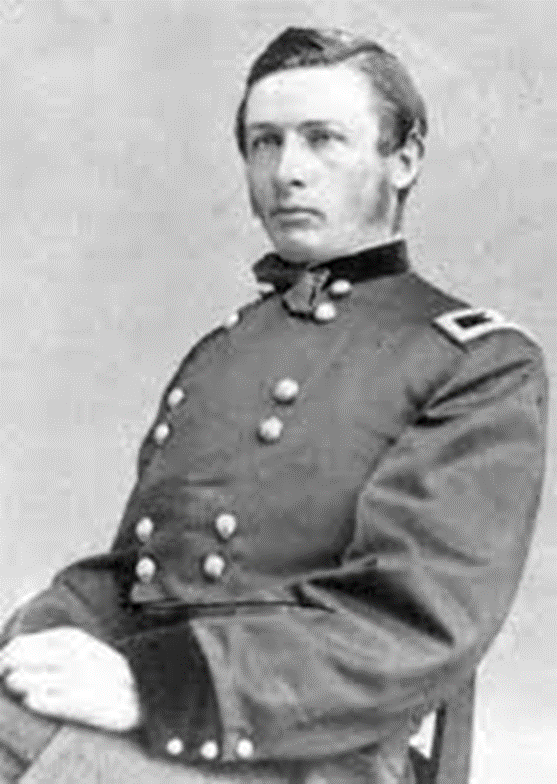
Large numbers of federal troops were now stationed across this frontier.  General Ranald S. MacKenzie, Commander of the 4th U.S. Cavalry, was in charge of those troops.  In the late summer of 1874 he made the statement that:  “It looks like I can fight the Comanche until the end of time and never win.”   They were located in the center of that vast almost completely flat Llano Estacado that was bigger than the State of Indiana .

General Ranald S. MacKenzie   

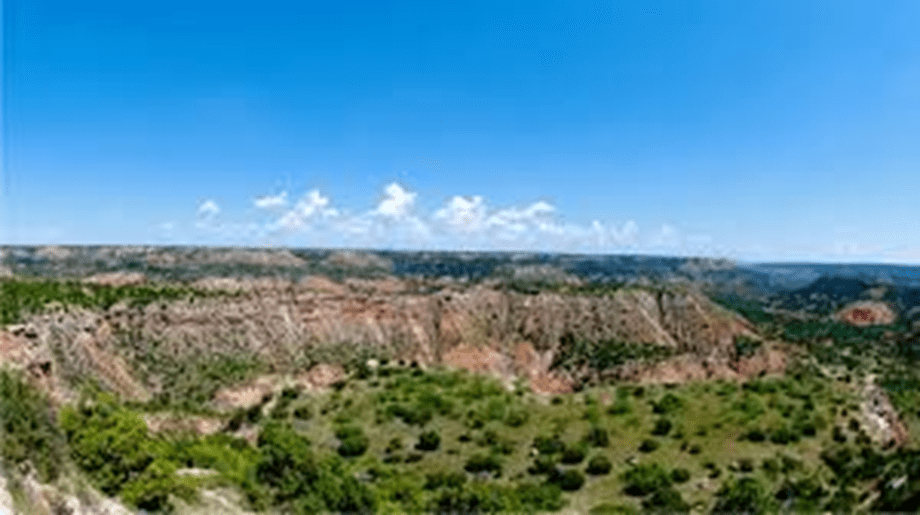
Mackenzie knew that they were ensconced in the Palo Duro Canyon that gashed across it.   If he could ever get his troops to it, and then down into it, they might fire on the Comanche’s if they were lucky,  but those hundreds of Comanches had myriad ways of escape in that rugged canyon with its plethora of intersecting side canyons and secret trails.

Just before Fall of 1874 here is what I think God finally actually showed General MacKenzie.  If he could surprise them down in that canyon and get their supplies and strike them in their home territory and above all else……kill their horses, he might stand some chance of prevailing.  They were considered the greatest light cavalry in the world, but without their houses, they would be helpless.  Apparently, no one had ever thought of that before.

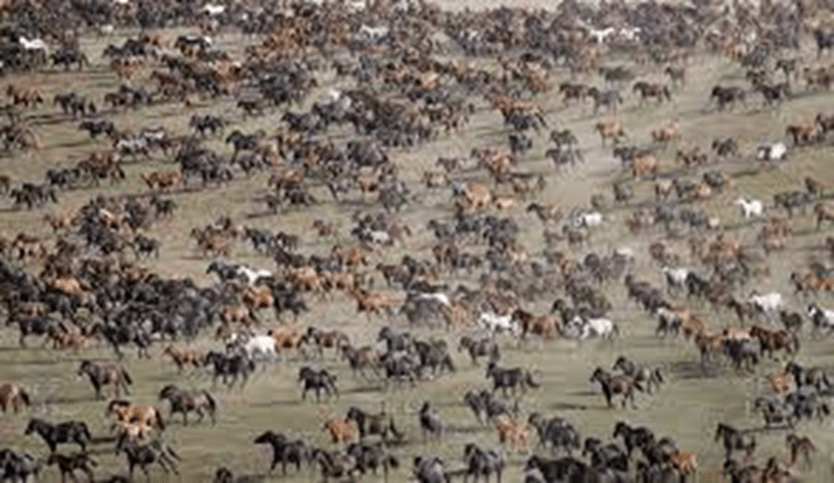
So, in the late Fall of 1874 General MacKenzie enlisted the aid of some friendly Indian scouts to show him one of the secret trails down into the Palo Duro.  After extensive scouting, those Indian scouts finally located where the main body of Comanches were camped.  MacKenzie massed his troops, and under cover of night slipped down into that canyon.  Just at daylight, they attacked.  The Comanche’s fired back at them, but quickly escaped as was expected.  However, they had to leave all their camp supplies and most significantly, their vast heard of horses.  Mackenzie did burn their camp and supplies, but his primary orders to his troops were to surround and trap those horses.

 The troops were ordered to kill most all of those horses.  Being cavalry men, most of them strenuously objected, but they followed orders.  There is no record of just how many, but it is estimated that they killed several thousand horses.  One report was that it took three days, and that the smell became so bad that they had to move their camp father away.

But that did it.  The Comanches and their great War Chief, Quanah Parker, the son of Cynthia Anne Parker and a Comanche brave, all finally agreed to leave their killing and raiding and move to a reservation in Oklahoma .  Some of them still went back to the plains to kill buffalo, but they stopped killing the “white eyes” at long last.

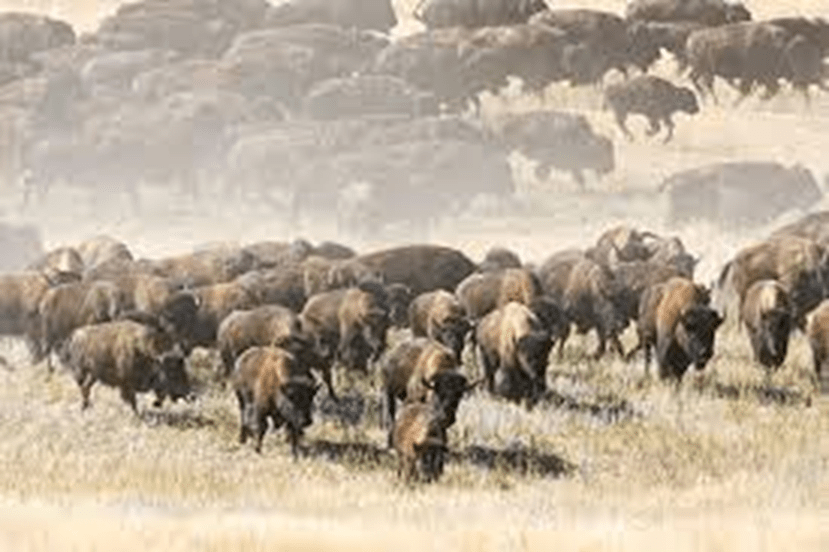
Some “uninformed” historians claim that the killing of the buffalo was what got the Comanche’s to Oklahoma , but in 1874 there were still thousands and thousands of buffalo.  It was General MacKenzie’s killing the Comanches’ great horse heard that did it. 

Goodnight, as was his custom continued to expand, not retreat.  He was greatly prospering by buying herds on credit and selling them up north for a quick profit.  He was also doing the same thing with real estate, mostly in the Pueblo area.  Then something happened that he was absolutely not prepared for and never expecting………..The Great Panic late in the year of 1873 hit.  It started in Europe, spread across the Atlantic to New York and New England , then across the whole US.

The Panics in those days were different from what we may call a depression.  They hit fast, did not last all that long, but were very deep and severe.  Banks failed; the entire economy came to a halt.  Commerce of all kinds just ceased.  The stock market crash that hit on October 24, 1929 may be an analogy…….when guys were jumping out of the windows of tall buildings in Lower Manhattan .

In Pueblo , the new bank failed like so many others.  Charles Goodnight was almost wiped out.  There were no buyers for cattle that he had purchased on credit.  He had just bought a valuable half block in downtown Pueblo for $8,000.  He sold it for $2,000 which he happy to get, even thought a new company come to town a short time later and paid $25,000 for it.

With no where to dispose of the cattle, they were just being held.  Charlie could see that eventually the grass was going to be made scarce there.  He had heard the news that the Comanches had finally been moved up to Oklahoma .  Things were so depressing in southern Colorado that he just wanted to get out. 

That was when his mind wandered back to the Llano Estacado, that great expanse of flat country into which he had chased the Comanches.  It was hundreds of miles across and just unexplored.  A great plateau, it covered what is now called the panhandle of Texas and southern New Mexico .  At that time in history it was probably comparable to the Empty Quarter in north Africa, where people just did not go.  It was just a vast empty unknown and overlooked expanse.  In 1875 the Tesas Rural Register and Immigrant’s Handbook advised the world that “it was improbable that these Staked Plains could ever be adapted to the wants of man, adding that this was the only uninhabitable portion of Texas”.

But Goodnight had been out on it and he could remember its miles of unbroken buffalo turf, its rich grama grasses and its scattered watering places that he had discovered.  However, there was one small group who knew it well and how to navigate it:  the Comanchreos who had crossed it again and again to trade with the Comanches, but they were all gone now.

With the problems and result of the Panic, Goodnight had the urge to just “start over”.  He had a strong lust to once again find virgin range. 

So, in the spring of 1875 he gathered 1,600 head of his best cattle, took a good contingent of his best men and headed toward Texas .  They crossed the Cimarron and headed down along the fertile valley of the Canadian.  He did not hurry the herd. 

On the south bank of the Canadian, in a wild section of eastern New Mexico he set up winter camp.  When his cattle and men were well settled, he headed back to his wife in Colorado , but come Spring in 1876 he was back.  He headed his outfit out across that vast, almost unknown Llano Estacado .  He wanted a permanent ranch.  He remembered that Palo Duro of the Comanches that he had once looked down into, but now had no idea how to find it. 

As luck would have it, he stumbled onto the camp of old Nicolos Martinez one of the old Comanchero traders.  Goodnight paid him to guide him and try to find that big canyon.  Even though old Martinez knew that country intimately, he wandered around trying to find the Palo Duro canyon again.  Even though it was huge, it cut abruptly down into all that flat county, so one could not look off and just see it.  By now they had wandered over to the south side of it.  Then one day, they abruptly came up to the precipice of it, old Martinez clapped his hands over his head and said in Spanish: “at last, at last……..al fin! al fin!”

Martinez now knew where he was.  He and Goodnight went back and he guided the heard along an old Indian trail past the springs northwest of present Amarillo , over the divide, across the headwaters of the Red River and then headed east.  They didn’t see the canyon until they were right on the brink of it.  Martinez showed them the old Indian trail that went right down into it.  

The cattle had to go single file along that trail.  They took the chuck wagon apart and tied the pieces of it and its provisions on the backs of its mules to get it down.  They were amazed at the beautiful, virgin grass in the bottom of that canyon.  As they proceeded down it, it became wider and wider.  There were also many buffalo scattered along the sides of it.  Before long they had 10,000 big, shaggy buffalo running in front of them.  They said the noise of all those running buffalo echoing off the walls of that canyon was deafening.

 When Goodnight came to just the perfect spot in the canyon where a lovely spring came down from the cap rock, he stopped and said:  “This is the place”.   He eventually built a lovely home there with all manner of corrals and outbuildings.  He later had other ranches over his long life, but always called this spot his Home Ranch.

When a Comanche brave was killed, it was the custom for his women to cut off their long braids.  Goodnight said that there were just piles of hair in that canyon.

So. in those days of open range and no fences, the walls of that canyon provided a perfect barrier to keep his cattle in.   And with its depth and steep walls, those cold Texas “northers” would just blow right over it.

He and his wife called that spot “home” for most all of the rest of their lives.

Over the years he imported better and better breeds of cattle and crossed them and became one of the best cattle breeders in all of west Texas .  Years later with the introduction of barbed wire he built many, many miles of fence, but this “home ranch” was always his favorite spot.  And one cannot escape the irony of how this ranger, plainsman, trail driving pioneer, after all those years of fighting Comanches, should wind-up with this great ranch as his home, deep in their Palo Duro Canyon.

                   End of the Story of the Incredible Charlie Goodnight

Charles Goodnight – 4th Installment

In my soon to be published book, I tell the complete story of the incredible life of Charlie Goodnight.  Here is the Fourth of several continuing posts relating that life. 

Charles Goodnight – 4th Installment

As stated in the 1st Instalment, you don’t hear much about him in the history books, but Charlie Goodnight was one of the most influential men in developing early Texas and the Western US.  The Bible says that God is interested and involved in the founding and development of nations.  It is my opinion that He used Charlie Goodnight over and over again in the development of the Western US and particularly the Southwestern part.   He was one of the original men that protected the settlements along the frontier from the Indians.  These men were called “Rangers” and they predated what were later officially established as the “Texas Rangers”.

Continuing from 3rd Installment:

By Goodnight and Loving’s third drive the Indians had figured out what was happening and that those cattle could be traded profitably.  On this drive they had all manner of trouble with the Indians.  On one of their first skirmishes one of the drovers got an arrow in his neck just below his ear.   If it had been a flint arrowhead they may have left it in, but it was one of those made from hoop iron that would for sure have caused infection.

The Comanche’s had learned to take as many hoops from the settler’s barrels as possible in their raids.  They had started making their arrowheads out of that hoop iron.  It was not only easier to fabricate but would cause death if not extricated in time.  

They had to get the iron arrowhead out of the cowboy’s neck.  All they had were a set of pinchers for pulling off horse’s shoes.  Charlie got three cowboys to hold the guy down while he pulled on the arrowhead with the pinchers.  He almost lifted all of them off the ground, but finally got it out.  The fellow miraculously survived by them applying poultices of cold mud.

They got past Horse Head Crossing and then Pope’s crossing by fighting off more Indians.   Loving wanted to go on ahead and get to Santa Fe where contracts for the sale of cattle were to be let in early August and it was already July.  Goodnight was very much against it.   There were too many Indians; but finally, he agreed if Loving would promise to hide out during the daytime and travel only at night.  He sent One-armed Bill Wilson, by far their toughest and most experienced cowboy with him.

The two of them traveled by night for two days, but both being very daring decided to travel on

starting at noon the next day.  They were crossing an open area with the Guadalupe mountains off to their left and the river about a mile to their right.  They were almost across the open area when they saw a big band of Comanche’s bearing down in them from the Guadalupe’s.  They raced for the river, went over the bank and took refuge in a ditch where the water had cut through a sand dune making a hiding place.   Wilson had Goodnight’s six-shot revolving rifle as well as his own six-shooter pistols.  Loving had his two six-shooter pistols as well as his repeating Henry Cartridge Rifle, the first one in that territory.  The only way to see into their little ditch was from across the river. 

There were several hundred Indians and when one tried to shoot them from across the river, Loving killed him, and no others threatened them from that spot.  The Indians kept shooting arrows up at a high angle to come straight down to try to hit the two.

Finally, one of the Indians started trying to parlay with them in Spanish.   They considered it a ruse, but Wilson stood up to speak with him anyway.  Immediately bullets rained down and Loving was shot through the arm with a bullet that went on into his side.  He was sure his wounds were mortal, but he survived, though with great pain.

Wilson noticed that the tall grass just above them was moving.  He knew that one of the Indians was sneaking up on them and parting the grass with his lance.  Just as Wilson was about to rise up and shoot him, there was the loud whirring of a rattle snake that the Indian had disturbed.  He backed out faster than he had sneaked in.

The two of them suffered terribly from the heat, but finally night came.  Wilson slipped down and got a boot full of water for Loving.  Wilson then proposed that he slip down the river and try to make an escape and get back to the heard.   Loving said he thought he could hold the Indians off and that if he couldn’t, he would shoot himself in preference to being captured and tortured to death.  Wilson spread out all their six-shooters in front of Loving’s good hand as well as Charlie’s revolver rifle.  He took the Henry because the water would not destroy its metallic cartridges. 

He slipped down to the river and took off his boots and all his clothes except his hat and his underpants and undershirt.  He hid them under the water and pushed off into the river.  He first had to go over a gravel shoal that was only three feet deep.  But the Indians had stationed a man on his horse right there in the middle of the river.  Fortunately, at just that moment a cloud came up over the moon.  This allowed him to slip by into the deep water. 

Wilson tried to swim with the rifle three times, but almost drowned.  He finally eased over to the bank and stuck the rifle barrel deep into the side of the bank under the water and went on down the river.  He eventually eased out of the river through a little cane break and started south for the heard.

Unfortunately for Wilson , Charlie had stopped the heard to rest it, and allow the men to wash their clothes and saddle blankets.  The heard was not thirty miles away as Wilson had calculated but was eighty-five miles away down the Pecos .

He traveled only at night the first night, but come daylight, he just kept going….through the blistering sun, the rocks and cactus and the thorns growing there.

Finally, Wilson took shelter in a cave under a bluff close to the river. 

At that exact time, Charlie was approaching that spot and knew about that bluff and cave.  He was sure the Indians were waiting for them there.  He thought he saw something red go into that cave in the far distance.  He had his men bunch-up the heard in preparation for an attack and spurred his house up there to check the spot out.  He intended to just look and then race back to the heard. 

When he got there, out of the cave came One-armed Bill Wilson.  His underclothes were red from the red silt in the river.  His eyes were blood-shot from the sun and his feet were swollen beyond recognition and leaving blood behind with every step.  Charlie got him back to the wagon and tore-up a blanket and soaked it in water to wrap his feet to stop the fever in them.  Charlie fixed him a cornmeal gruel and finally got him back to where he could talk.

Wilson related everything in detail, and Charlie set out immediately with four cowboys.  When they finally got to the spot, everything was just as Wilson had described it, but Loving was not there.  Neither were the Indians which Charlie was sure would still be there.

They found the clothes and the gun just as Wilson had accurately described, but no Loving.  They could see where at least a hundred arrows had been shot up and then down.  When Charlie scouted around, he saw that the Indians had just left, since the water was still coming down the bank of the river where they had climbed out.  Goodnight calculated that Loving must have slipped into the river at night and shot himself to keep from being captured since the sign in the sand showed that they had not taken him.

Actually, Loving had stayed in that sand ditch for two more days but was suffering so much from the heat and lack of food that he decided to slip out at night like Wilson had into the river. 

Instead of going down stream, he went up stream, hoping to get to the next crossing where he may find someone using the crossing that would help him.

He did finally make it to the crossing and hid in some China berry bushes.  He lay there for two days, suffering terribly from hunger, though he could get water. 

Eventually a wagon came down from Ft. Sumner to that crossing with three Mexicans and a young German boy.  They decided to camp there and cross the river the next morning.   When the little boy went off to gather wood for their fire, he discovered Loving.

Loving told them that he would give them two hundred and fifty dollars in gold if they would take him up to the Fort.  They turned back north and carried him in the wagon.  When they got within about fifty miles of the fort, a man from there, coming down, discovered them.  He raced back to the fort and the soldiers there brought down the Fort’s ambulance to retrieve Loving and give him medical help.

So, he continued the journey in the ambulance and the Mexicans followed to be sure they got their money.

Meanwhile Charlie continued on up the Pecos with the heard.  Actually, by this time he had two herds.  A fellow named Patterson had bought a heard and was having it trailed north by a bunch of Mexicans while he stayed at the Fort to receive it. 

The Indians had attacked it, took all its provisions and burned its chuck wagon, but had not taken the cattle.  Charlie intercepted the heard and agreed to provide food for the group and have his cowboys make sure the Mexicans did their job of pushing Patterson’s heard behind his.

When they got within about 80 miles of the Fort, Charlie was scouting on up ahead as usual.

He saw one man on horseback and was sure it was an Indian scouting for one of their war parties.  He cut in front of the rider, intending to kill him, but found that it was a white man.

Actually, it was Patterson, coming down to see what had happened to his heard.  He told Charlie that Loving was at the fort, but Charlie corrected him:  “Loving was killed by Indians back down the Pecos .” 

“Man, I tell you Loving is alive at the Fort and wanting to see you”

“Impossible!!!:”

Finally, Charlie was convinced.  He got on his best saddle horse and made that eighty miles without stopping.

They had put Loving into the little hotel that was there.  The wound in his side was healing, but his arm looked bad.

Charlie conferred with the young Fort surgeon who was from Scotland and had only been in the US for 2 years.  Charlie told him that the arm needed amputating and the surgeon agreed.  However, he kept hesitating to do it, which Charlie could not understand.

Loving told Charlie that some of their stolen horses and mules had been found where they had been sold and located up toward Santa Fe .  He wanted Charlie to go retrieve them, but he did not want to leave Loving.

He finally consented and went up there and got the animals back, but the arm still had not been amputated.  After waiting and waiting, Charlie finally told the young surgeon that he was going to amputate it, or he was going to have to put wounds on Goodnight.

He did finally amputate it above the elbow, but the artery leading down looked really swollen and bad.   It finally ruptured and it was necessary to put Loving to sleep again and tie it off again. 

The drugs they used in those days for anesthesia were really hard on a person’s system.  Loving was greatly affected by this second operation and finally died, though he was quite rational the whole time until his death.  Before he died, he had one major request of Goodnight.  He made Charlie promise him that he would take his body back to Texas and bury him in the Cemetery at Weatherford , Texas .

Charlie had other business to finish, but he eventually did that.  His cowboys got all the empty oil cans and other tin that they could find at the Fort.  They soldered them together and covered a box that Charlie had made with wheels attached to it.  They packed the body in salt and carried it back to Texas .  The grave can be viewed to this day in Weatherford.

Thirty years later Goodnight met up with that surgeon.  He asked the surgeon why he had not amputated Loving’s arm promptly as he should have.  All those years later, the surgeon answered him honestly.  He said:  “I had heard all these tales about you.  I was afraid that Loving would die anyway and I was sure you would shoot me dead if he died.”

So, folks, as you read all this, I would be surprised if these tales do not sound familiar to you.  Surely you may have read the book that was so popular a few years back called, “Lonesome Dove”.  And even if you did not read the book, surely you saw the TV series by the same name.

The gay author Larry McMurtry wrote “Lonesome Dove” and was consultant for the TV series.  Most everything in that book was stolen and plagiarized from J. Evetts Haley’s book called just “Goodnight”.   It was pretty much Haley’s life’s work to document Goodnight’s whole biography.

As one example in “Lonesome Dove” the partner and the main drover go off ahead of the heard.  They are intercepted by a band of Indians.  They hide under a shelf in this sandy bank of a river. The partner gets shot in the leg, and at night the cowboy slips off to go back and find the heard.  The Indians keep shooting arrows up at an angle to get them to come straight down and try to kill the partner.

The heard is way farther off than he anticipates.  He walks barefoot in his underwear for many, many miles through cactus and thorns.  Finally, when he is near death he finds the heard and is saved.  When the main character goes to find the partner, he finds the sandy shelf where he had

been hiding, but he is not there.  He had slipped away and was found by a traveler and taken into Denver to a hospital.   However, the surgeon at the hospital keeps putting of amputating his leg until it is too late, and he dies.  But before he dies, his partner, who has now found him, promises to grant his wish and take his body back to Texas to be buried.

So, I was waiting in an office in Dallas to keep an appointment and visiting with the receptionist about the TV section of Lonesome Dove we had both seen the night before.  I was talking about all the plagiarism and said:  “Well, you know that Larry McMurtry treated the women in Lonesome Dove so harshly since he is a ‘flaming gay dude’”.

And the nice lady receptionist said:  “Yes, I know, he is my first cousin”.

And I thought:  “Wow, have I messed-up now!”

But she graciously said:  “Don’t worry.  We don’t even let him come to our family reunions.”

So, after watching two more episodes of Lonesome Dove on the TV, I thought:  “I wonder if Mr. Haley knows how they have stolen so much of his historical book?”  I thought that he may still be alive.

My secretary found his telephone number way out in west Texas .  I just dialed the number and this old gravely voice promptly answered the phone.  I said:  “Mr. Haley, do you realize that those folks stole most every story in your book and are making a fortune with them?”

There was this long pause and he said:  “Aaaahh damn……..I’m glad somebody recognized that!!!”

I was so glad that I had called.

So now let me get back to the story of the famous Charles Goodnight.

To Be Continued

Charles Goodnight – 3rd Installment

In my soon to be published book, I tell the complete story of the incredible life of Charlie Goodnight.  Here is the Third of several continuing posts relating that life.   If any of it is not readable, or you want to see more stories like it, please go to my website and read it there……. truetexantales.com

Charles Goodnight – 3rd Installment

As stated in the 1st Instalment, you don’t hear much about him in the history books, but Charlie Goodnight was one of the most influential men in developing early Texas and the Western US.  The Bible says that God is interested and involved in the founding and development of nations.  It is my opinion that He used Charlie Goodnight over and over again in the development of the Western US and particularly the Southwestern part.   He was one of the original men that protected the settlements along the frontier from the Indians.  These men were called “Rangers” and they predated what were later officially established as the “Texas Rangers”.

Continuing from 2nd Installment:

On June 6, 1866 they headed out, full of optimism and spirit.

They headed to the west and a little south in order to skirt the Indians.  They passed what is now Abilene and then on to about 20 miles above where San Angelo was later built.  On each side of the front of the heard they put an experienced point man.   Along the sides of the heard the other men were strung out to keep a straight line and in the rear were the drags.  The men along the sides and rear alternated each day because of the dust.  Charlie rode about 10 to 15 miles ahead of the heard to scout for the best route and for the best place to graze and bed the heard each night.

On and on they traveled until they finally reached the head waters of the Middle Concho River .

Here they rested and watered the heard before heading to the Horse Head Crossing of the Pecos river.  From this resting place they knew they had to cross 80 miles of alkali dusty country without a drop of water.

After two days and nights the cattle and men were in terrible shape.  On later trips Charlie learned to keep the heard moving most of that whole distance even through the nights.  On the third night they just kept moving and on through most of the next day.

In the afternoon, Charlie decided to take the stronger two-thirds of the cattle on to the river. 

Horsehead Crossing of the Pecos

He then had Loving hold the weaker ones back as best as possible.

However when the cattle smelled that water, there was no holding them back.  They plunged straight on into the river.  There were some alkali ponds along the way to the river, and Charlie was able to keep the heard headed away from them, except for 6 head who were determined to drink there.  Three died before they even left the water, and the three others died only a short distance from it.

Charlie hurried back to help Loving with the weaker group.  By now about three hundred head who could not go any further were left for dead along the trail.  About this time the wind shifted and the remaining 500 head or so smelled the water and just went crazy and stampeded for the river somewhat just above the Horse Head Crossing.  They went straight off the steep bluff into the river.  Some drowned, others became stuck in the quicksand and none could climb the steep bluffs on each side of the river.  After two days, the hands were about dead also, so Charlie had them all ride off pushing the cattle that they saved ahead, and leaving over 100 head alive, bogged in the quicksand and stuck under the bluffs.

All his life, Goodnight hated that river.  With its brine and alkali and steep banks he had a term for it that he used frequently and said with savage feeling:  “The Pecos……the graveyard of the cowman’s hopes!!!

Steep Bluffs on the Pecos just above Househead Crssing

On this first drive they were very lucky not to have encountered any Indians.  That crossing was on the Indian’s main trail from the Palo Duro to Chihuahua in Mexico where the Comanche’s regularly raided before returning to Texas .

The outfit then trailed up the east side of the river until they got to a place called Pope’s Crossing where they went over to the west side.  Charlie said that in all his travels over his life that was the most desolate area he had ever encountered.  There was no game, no wildlife at all.  On his second trip there he said that he did finally see one wolf who was about starved, and that he killed it out of pity.

However, there were rattlesnakes.  Hundreds of them.  Charlie limited the cowhands from shooting to conserve ammunition, but one cowboy had brought a large supply of his own bullets.  And he hated rattlesnakes.   Before they left the Pecos he had collected 72 rattles to take back home.

Finally, they reached Bosque Redondo and Fort Sumner in New Mexico .  And here they found a most interesting situation.  With the help of Kit Carson the US Government had collected the Indians from the west of that area.  They had the Navajos from Arizona and the Mescalero Apaches from the New Mexico-Mexican border.  They were trying to make this a reservation for them, even though the land was too poor for adequate farming and these two groups of Indians were bitter enemies of each other.  They had about eighty-five hundred Indians who were about to starve. 

Later, the Navahos were allowed to go back to their native mountains and the Apaches just left, but at this moment, the soldiers considered this huge heard of cattle a “Godsend”. 

Charlie and Loving were able to sell their steers to the government agents for 8 cents per pound on the hoof. 

Loving took the remaining 700 or 800 cows on up through the Vega, past the old Capulin Mountain volcano, over the Raton Pass and sold them near Denver to the old cowman, John Wesley Iliff.

Charlie went back for another heard along the same trail they had come out on.  They would lay up in the shade in the daytime and then take the trail at dusk and travel all night to avoid Indians.  Their main problem was that soon after starting out, they encountered a major storm with heavy rain and lightning.  As a result their pack animals panicked and bolted away into the night.  They eventually found them, but all their provisions were gone.  It was a bleak trip back.  

When they got almost across the 80 miles of flat, open country without water, he and his three cowboys saw a big object off in the distance.  The cowhands were sure it was a group of Indians, but Charlie wasn’t sure.  However, since Goodnight had never had anywhere near $60,000 in gold in his whole life, he surely did not intend to lose it now.

The object looked like a group of about 20 Indians.  It was useless to try to turn back in that flat, open spot.

Charlie told the group that he would blast a way through the Indians with his six-shooters and for them to follow without firing.  He was sure that with their good horses they could outrun the Indians.

What they found instead of Indians was an amazing site way out there in that wild spot.   It was a huge wagon filled to the top with big, cold watermelons.  Old man Rich Coffee from their settlements who they knew well said he was on his way to trade in New Mexico and was taking the melons along to sell.  Charlie told him that he doubted that he would ever reach the settlements in New Mexico , but that he for sure had a ready market for a bunch of the melons right there.  They feasted on those cold melons.

On the seventeenth day after leaving Sumner they were back in Weatherford getting supplies for another drive.  Cattle were plentiful and a group of about 25 men helped him round up his own cattle and others that he bought.  He got together 1,200 big steers and these guys helped him road-brand them with the brand he and Loving used on the animals they were to drive.

After their work the whole group camped out for the night there on the Brazos. 

Charlie waked up in the middle of the night with the premonition that there were Indians there.  He waked the group of guys and told them, but they made fun if him for being “Indian bit”.  However, he and his men took their horses a good distance off and hid them in a thicket and went back to sleep. 

Sure enough, during the night the Indians took off all the horses of that other group of men.

Charlie hired a group of new hands, got his provisions and outfit together and headed that big group of steers to the west.

These steers were very skittish and prone to stampede.  First thing they encountered was the southern herd of buffalo heading south for the winter.  They had already separated into sexes as was their custom to do in the Fall.  What Charlie had run into was the male heard that was over 4 miles long.  He spooked their leaders back and thought he could trail his heard past them.  However, they suddenly bolted into a dead run and cut his heard in half.  Those scruffy steers just went crazy when those big black beasts burst upon them.  One group headed west with their tails curled and going full speed.  The other group headed pell-mell back toward the Brazos bottoms.  

It took almost an hour for all those buffalo bulls to pass.  They seemed to shake the earth and fill the air with the roar of their pounding hoofs.

With Charlie’s hard riding and due to the high quality of the hands he had hired and their good horses, all of those steers were finally stopped, rounded-up and put back together with no losses.

However, they were most of the way back to northern  New Mexico  before those skittish steers were broken to the trail.  Each night when they camped, two night riders were assigned to continuously circle the heard at a walk.  Every few hours they were spelled by a new couple of night riders.

Sometimes the heard would smell Indians.  Sometimes it would be the lightning from a sudden thunderstorm.  Sometimes you did not know what it was that would cause the heard to just bolt up and dash off into the night in a wild stampede.  Everyone had to get saddled as quickly as possible and try to turn the heard to where it would circle.  Riding full speed off into the night with those clashing horns was dangerous business.  You never knew if your horse would step into a prairie dog hole and throw you under the hoofs of the heard to certain death.

I have personally experienced some of what they must have felt.  Down in  Kaufman County before my children were born, we would catch wild cattle down in the river bottoms.  My two “insane cowboys” and I would trailer our horses there on Sunday afternoons and meet up with other adventurous guys.  Riding through those bottom land woods at breakneck speed and jumping logs and creeks to flush out wild, wild cattle was an adrenalin drenching experience.  We did not have prairie dog holes, but we had many armadillo holes.

What was really spooky for Charlie’s men was the blue light that would play across their horse’s ears during the storms.  It also played across the cattle’s horns.  This electrical display was something the men never got used to.

They had now learned how to cross the cattle across that 80 miles with no water.  They crossed it with ease this time, especially with only mature steers.

They eventually got up to Bosque Grande south of  Ft.   Sumner  where Loving had made a rather permanent camp since there was good grazing and water there.  They sold most of this heard at a fairly good price and wintered there in dugouts under the cliffs at this camp before starting back to the  Texas  frontier.

By now, the Comanches had discovered their trail and had camped just below the Horse Head Crossing for the winter.  Also, the big money that Goodnight and Loving were making was not lost on the other cattlemen back near  Ft.   Belknap  and Weatherford.  Three new herds were started along Goodnight’s trail.

The first heard was intercepted by Indians at Horse Head Crossing where they burned the outfit’s wagon and stole the whole heard.

Goodnight and Loving encountered the other two herds on their way back.  Charlie made a point to ride along the edge of the first one, inquiring of the drovers for the owner.  When he found him, he warned him about the Indians and suggested that he bunch the heard for defense.  Whereupon the owner informed Charlie that he was not afraid of Indians and that he hoped that he found them so that they could kill a few.

He found them alright.  The Comanche’s stole both of those herds also and trailed them off to their home in the Palo Duro. 

Between the Concho and the  Texas  frontier area, Charlie ran into what he described as one of the most amazing sights in his whole life.  The whole southern herd of buffalo, literally hundreds of thousands of them had evidently grazed the land clean and did not move on to another area and just stayed.  They had all died.  Charlie said that the air was filled with clouds of flies as a result of all those carcasses.   He said the carcasses were just thick for three whole days of riding through them.

One of the most interesting groups in this whole era were the Comancheros.   They were a dirty bunch from  New Mexico  who knew the way into the Indians’ camps.   They came to trade with the Indians.  The height of the trade was from 1850 to 1870.  They would bring beads and paint and other things of little value to barter for buffalo hides and pelts and other Indian goods. 

As the Indians acquired more and more horses and cattle, the Comancheros traded for these with ammunition, lead, muskets, pistols, knives, manta or calico, wines, whiskey, and breads of various kinds.  The poorer Comancheros would bring a small amount of goods on burros and trade for a small group of 10 or 12 cattle.  However, the more prosperous ones carried their goods in carretas or wagons and would trade for whole herds of cattle and horses.

Comancheros Trading with Comanches

Few of the Comanches could speak Spanish and much trade was carried on in a little valley called Tongues where their negotiations called for the use of many languages and dialects.  The river there is called Las Lenguas even to this day.

Farther north in the region of the Quitaque and the  Canadian river  was another little valley where the raiding Indians would come together to separate and split up their captives among the different bands.  This was to lessen escape and to hasten assimilation.  Here the mothers and children from  Texas  and  Mexico  went off into the different tribal bands.  There was much trade with the Comancheros here also, but for some reason the Comancheros did not seem interested in ransoming the captives back.  This wild area was known as a spot of heartache, of grief, and tragedy, and the Mexicans referred to it as Valle de las Langrimas……the Valley of Tears.

And so down these trails from the old towns in New Mexico came the Comancheros to the edge of the plains to barter with the Indians, mostly the Comanches.  But it was dangerous business.  Sometimes the Indians would follow the Comancheros back and repossess their herds and require the Mexicans to buy them back again.

                                                                To Be Continued

Charles Goodnight – 2nd Installment

In my soon to be published book, I tell the complete story of the incredible life of Charlie Goodnight.  Here is the Second of several continuing posts relating that life.   If any of it is not readable, or you want to see more stories like it, please go to my website and read it there……. truetexantales.com Ron

Charles Goodnight – 2nd Installment

As stated in the 1st Instalment, you don’t hear much about him in the history books, but Charlie Goodnight was one of the most influential men in developing early Texas and the Western US.  The Bible says that God is interested and involved in the founding and development of nations.  It is my opinion that He used Charlie Goodnight over and over again in the development of the Western US and particularly the Southwestern part.   He was one of the original men that protected the settlements along the frontier from the Indians.  These men were called “Rangers” and they predated what were later officially established as the “Texas Rangers”

Continuing from 1st Installment:

A company of Federal Troops was finally stationed there in that part of Texas.  Charlie was asked to scout for them.

Colonel Cureton from Waco also formed a company of rangers.  They like the other ranger groups would pursue the Indians as quickly as possible after a raid.  They would not take

provisions or blankets or other equipment for camping; they would just go.  I have personally always wondered why they did not take better provisions for such forays, though they would usually take a piece of salt pork and sometimes a little salt for the wild game they would kill.

About this time, during a heavy rain, the Comanches raided the houses of two new settlers.  These couples were not really wise to the ways of the frontier.  They did not even have guns.  The Comanches were particularly brutal in this attack.  They mutilated the settlers bodies and tied one of the women to the ground with stakes and violated her before shooting arrows into her body.

Baylor’s ranger group, Cureton’s ranger group and Colonel Ross’s troops from the fort started after these Comanches.  Even with all of the rain, Charlie Goodnight was able to follow their trail.  Their trail was crossed by two large herds of buffalo, but Charlie was able to stay on it.

The group of pursuers stopped to rest, but Charlie went on way up ahead and stationed one man in between to intercept any signal from him.

By now they were out in the very open country up near the Pease River.  That river was quite salty and gyppy, but Charlie knew that there was a fresh-water creek that entered the river up ahead.  He could also tell from their trail, that the Indians were no longer in a hurry, figuring they had outrun any pursuit.  He figured that the Indians would be camped up on that fresh-water creek.   He also spied some berry trees that the white’s did not like, but that were relished by the Indians.  He had his companion stay back and wait for any signal while he went up to those berry trees.

Sure enough, he could tell that two Indians had just left there and were headed toward that creek.   He signaled for the company to come on; that he had found the Indians.  Ross’s troopers headed a little to the east and the two ranger companies angled a little to the west.  The older troopers had good horses and topped the hill and headed down to the Indians’ camp with the younger troopers following.

Charlie looked back and could see the rangers strung out in a long line, depending on how good their horses were, with the sun glinting off their tin cups and their shiny rifles.  All stung out like that, they looked like a much larger group, and Charlie knew that the Indians would think the same thing.

The Comanche squaws and the older men in their camp had been butchering buffalo and had most of their horses loaded down with the meat.  Ross’s troopers had the best angle and reached there first.  They charged right through the camp, shooting each buck as thy came to them.  The new recruits coming behind probably couldn’t tell a buck from a squaw and proceeded to kill most all of the squaws.  Chief Nocona had a Spanish wife that he had captured long before.  She was wounded and crawled off into the grass.

Just beyond the camp was an absolutely flat piece of ground that the buffalo had grazed completely clean.  It was about a mile across.  The Indians that got on horseback would have faired much better to have headed off to the side into some sandy hills, but in their panic, they headed straight across that flat area.  Everyone of them was killed, and Colonel Ross engaged in hand to hand combat with the chief and finally killed him, too.  Ross claimed it was Chief Nocona, but Charlie was sure that it was another chief whose name was No-bah.

Among the confusion was a squaw on a fine iron-grey horse.  She was able to keep up with the bucks.  Ross ordered his Sergeant to take charge of her so that the recruits would not mistake her for one of the bucks and kill her.  She had a buffalo robe wrapped around her, and in its folds, a really small infant.

Charlie told later that she was in the most intense grief and distress that he had ever seen.  He said it made a deep impression on him.  He went over to her in an attempt to console her.  That was when he discovered that she had blue eyes.  Her skin was dark from having cut up all that meat, but Charlie was amazed to see that she had blonde hair.

He went over and told Judge Pollard with the Rangers that they had a white woman.  This news caused quite a stir.  Army Colonel Ross carried her and 30 or 40 head of Indian ponies back to his permanent camp on Elm Creek west of Fort Belknap , even though she tried to escape several times.

Colonel Cureton, with all his knowledge of the frontier and plains said that he had never heard of a battle with the Comanche where at least a few did not escape.  He asked Charlie to go out and cut for sign before it got dark.  Charlie did find the tracks of two Indian ponies and followed them for several miles.  As he topped a hill, he looked down onto an Indian camp with over a thousand Indians.  Charlie went back and told Cureton that it was his best judgment that they go back and catch-up with Ross.

Everyone there in the area of the soldier’s camp and Fort Belknap thought that the woman may be the long lost Cynthia Ann Parker who had been carried off when the Comanches’ and Caddo’s massacred the people at Fort Parker way down on the Navasota River back in 1836.  They sent word for Colonel Isaac Parker to come up there and see if he could identify her.  They also secured a fellow named Ben Kiggins to come.  He had been ransomed back from the Indians where he had been a captive for many years and could speak good Comanche.

When they were all there, they brought the woman out of her tent and into the group.  Failing to escape, she had now become sullen and morose.  The little infant that she called Prairie Flower in Comanche had also now died.

Kiggins told Colonel Parker that he thought that the one thing that the woman could remember would be the name that she had been called as a girl.  Parker said that he knew that his brother and his brother’s wife had called her Cynthia Ann.

When the women heard him say that and then repeat it, she stood up, faced them, patted herself and said:  “Me Cincee Ann”.  She went on to tell Kiggins that, though she regrets it, she indeed had a paleface ma and a paleface pa and that they called her Cincee Ann.  She went on to say that she now had a redman ma and a redman pa and that they have a name for her and that name is Palux.  She was also able to tell Kiggins many of the details of Fort Parker .

Actual Photo of Cynthia Ann Parker after Capture

They took her back to the piney woods of east Texas, but she was a stranger in a strange land now with people that “were not hers, and among the hated Tejanos”.  She longed for the treeless Plains where Nocona and her sons still hunted the buffalo.   She did finally escape and tried to get back, but she died of sinking grief and loneliness on the way.

Photo of Cynthia Ann’s Indian Husband

By now, the Civil War was starting.  Old Sam Houston did not want Texas fighting in any such war, but those independent Texans were so big on “state’s rights”.  Though almost none had slaves, they did not want to be told that they had to be confined to any union.

Many of the rangers went off to fight for the Confederacy, but the state officials convinced and paid Charlie Goodnight to stay and scout for the rangers that were assigned to protect the frontier from the Indians.  And that is how he spent the years of the Civil War.

The country where those rangers patrolled had most dramatic features.  For over two hundred miles to the northwest from the western cross timbers the country was undulating, but not too rough, though interspersed with a few sandy hills.  Beyond that the country became very broken.  It rose up in jagged brightly colored rocks and broken canyons to a high escarpment or the Quitaque, which today is called the Caprock.

The Quitaque or Caprock

The springs that come down from this jagged escarpment form the rivers that flow south and southeast across Texas .

 The Llano Estacado above the Caprock

On top of the escarpment the land is very level, almost flat as a table.  That begins what was called the “Staked Plains”.  However, cut across this immense, flat region was a big gash with rugged canyons along its sides that is called the Palo Duro Canyon .  It was here in the Palo Duro that the Comanche’s had their ultimate refuge.  For the longest time, white men dared not go near it.

Palo Duro Canyo

Way off to the west of it in New Mexico the country was fairly civilized with settled communities like Santa Fe and Taos and other communities.  The Indians there were mostly the peaceful Pueblos .

Off to the north, were settled communities in Colorado like Pueblo and Denver , and even north of there in Wyoming country were towns like Cheyenne .  However, you did not dare venture within two hundred miles of the Palo Duro Canyon country.   And in Texas , the settlements most all stopped at the western cross timbers as a result.

After the war, Union Soldiers came to help with the Indian problem.  They were not plainsmen like the rangers and had no knowledge of that wild country just described. 

Their officers asked Charlie to guide for them, and he had all kinds of problems keeping them alive.  Their officers were so “headstrong” and determined to be “in charge”.  Charlie’s problem with them was not the Indians.  The Indians would just steal their horses and escape with them.  The main problem was their lack of knowledge of how to survive in that wild county.  Time and again some headstrong Colonel would lead his troops off into that immense, flat tableland and start following the mirages that prevailed there.  Eventually they would be lost and start circling.  Many times Charlie saved them from certain death by getting them back to drinkable water.

On one of those occasions something happened that is being studied by medical doctors today.  This group of troopers went off on their own without proper scouts.  They felt quite safe because they carried wagons with a large quantity of water and had a large supply of mules.  They knew that if they got lost, they could always eat the mules.  Sure enough they got lost and had to stay out way much longer than anticipated.  Without a scout to get them buffalo or antelope they did have to eat mule meat.  Those men were consuming as much as 11 pounds of that meat a day.  But those mules were so lean that they had absolutely no fat on them.  When those troopers finally got back to their fort, several had died of starvation and the remainder were close to death.

What modern medical pathologists have recently studied, and with that as their example, is that one cannot process protein without at least a little fat to go along with it.  Those mules had no fat.

After the war was finished, Charlie and his partner, Sheek, went back to see how their cattle had faired during this extended period.  They had for sure multiplied, and were mixed with those having other brands, and with almost half unbranded.  It was necessary to brand all those roaming without a brand.  However, thieves and carpetbaggers had invaded and were putting their own brands on them. 

Charlie had been very scrupulous his whole life about who’s cattle belonged to whom.  He wasn’t very tall, but he became like a one-man army bringing order to the situation.  Being so tough, such an accomplished horseman, such a good marksman and just effusing authority all helped.

However, along with the carpetbaggers and thieves larger and larger bands of Indians began to raid this turbulent frontier.  They were killing as many as 12 settlers at a time and carrying of increasing numbers of captive women and children.   They were also trailing thousands of head of cattle back northwest.

By this time, 1864, Charlie and Sheek figured they had at least 8,000 head of cattle.  They bought other cattle, and had bought all of Varney’s CV cattle, giving him notes to pay in gold over three years. 

Some of the cattlemen set out southwest toward Mexico for more and less troublesome range.  However, Charlie decided to take a heard west and then up into New Mexico and on to Colorado if necessary.   He gathered up a heard of 2,000 steers and dry cows in preparation, but a band of several hundred Comanches came through on a raid and carried them all off while he was away getting ready for the drive.   This delayed him until the following Spring.

He bought an army wagon, and had its wood replaced with seasoned bois de’ark, some of the hardest wood anywhere for use on his drive.  The wagon had steel axels as opposed to the wooden ones on most of the frontier.  And Charlie had a drop-down counter installed in the back for cooking.  This was the first “chuck-wagon” ever used in Texas and has been little changed since.  He took 12 yoke of oxen to be used 6 at a time, alternating between the two sets.

Charlie gathered up another heard and then set out for Weatherford to buy flour and supplies.  On the way he passed Oliver Loving’s camp who was gathering a heard to trail to the east.  However, after conferring and figuring he asked to join Goodnight, and so the two joined forces and formed a partnership that was to last through many great adventures.  Loving was a sturdy and healthy age 54 and Goodnight was age 30.

Charlie could have easily blazed a trail straight northwest, directly to Colorado with all the knowledge he had gained with the rangers of that wild country.  However, they would have for sure lost their cattle and horses to the Comanche’s and Kiowa’s there.

Together they had over 2,000 head.  They were mostly long horn steers and about 800 mother cows.  Their 18 hands were the most experienced and toughest they could find.  And they had a sizable heard of horses for spare mounts.

On June 6, 1866 they headed out, full of optimism and spirit.

To Be Continued

Charles Goodnight

In my soon to be published book, I tell the complete story of the incredible life of Charlie Goodnight.  Here is the first of several continuing posts relating that life… …. Ron  

Charlie Goodnight

You don’t hear much about him in the history books, but Charlie Goodnight was one of the most influential men in developing early Texas and the Western US. The Bible says that God in interested and involved in the founding and development of nations. It is my opinion that He used Charlie Goodnight over and over again in the development of the Western US and particularly the Southwestern part. He was one of the original men that protected the settlements along the frontier from the Indians. These men were called “Rangers” and they predated what were later officially established as the “Texas Rangers”.

He father was born in Kentucky, grew up in Kentucky and married a girl named Charlotte Collier when he as age 20 and she was 15. They moved to southern Illinois just west of St. Louis and then soon moved a little north to Madison, County to escape the malaria in their area.

The elder Charles Goodnight worked so hard on their farm from dawn to dark. Young Charlie was born on March 5, 1836, only three days after Texas Declaration of Independence from Mexico. Charlie had a brother, Elijah, who was born 4 years prior.

Young Charlie started to school at age 7. He managed to finish only two annual semesters, but all his life he remembered and revered his teacher, Jane Hagerman. She instilled in him a life-long desire to learn which he was still doing even into his 90’s.

Since the elder Goodnight gave little thought his health, and did not take care of himself, he died of pneumonia from exposure to the elements in 1841.

Those were not days of economic independence for women. His mother soon married a neighboring farmer named Hiram Daugherty.

Young Charlie spent long periods out in the woods, particularly studying the animals and birds.

All his life he was very contemplative and dreamed of big exploits and goals. Even at age 93 he still dreamed of great ranching enterprises he would yet direct.

All over that part of the country there was so much talk of Texas and the magnificent opportunities and freedoms there. Finally, Hiram Daugherty loaded the family’s possessions onto two covered wagons and they set out for Texas. Young Charlie rode his little horse, Blaze, bareback all the way without saddle or even a saddle blanket.

They drove to Springfield Missouri, then to Little Rock, ferried across the Arkansas River and then the Red River into Texas. They passed Paris, the little trading post of Dallas where they crossed the Trinity and proceeded down the west side of it. That was where young Charlie saw his first buffalo. Some men, as was the custom, had rounded up a big group of them with huge, vicious, cur dogs and were leisurely shooting them down to collect their hides.

They eventually left the Trinity and traveled west. After leaving the Trinity they saw no settlers as they crossed the prairie until they got to the Robinson Plantation on the Little Brazos. They then crossed the Little Brazos to the town of Nashville on the main Brazos. The settlers there were “forted up” as protection from the Indians. They would fort up each night and then go out each day and work their farms.

Daugherty and family really liked the country there, though there were only a few settlers at Nashville.

They settled on a farm just below the junction of the Little Brazos and the main Brazos.

The only settler beyond them was a man from Georgia that was called Major, though he had never been in the army. He lived out to the west and beyond everyone else since he had two wives that he kept in the same house. Thus, he was not able to live near the other settlers with such unconventional circumstances. Charlie said the Major fussed that the two women could not get along and that he could not ever understand why, since no one else lived within 15 miles of them.

Soon after they settled there Charlie’s mother left Daugherty (Charlie always said with “good cause”). Now she was like a widow again out on that frontier with only Elijah, age 15, and Charlie, age 11. However, they “got by” with both boys doing the farming and working at odd jobs.

At about this time Elijah caught a baby wild mustang horse on the prairie. Charlie nursed that mustang on milk until it was old enough to eat on its own. Charlie loved that horse, but it never lost its wildness from its mustang blood. Charlie said that it must have bucked him off over a hundred times. He said it would not run away after bucking him off, but just stand there and wait for him to get back on and then buck again.

The family kept moving north, and eventually settled on a homestead 15 miles west of Waco between the Bosque River and the main Brazos River. Charlie had all manner of odd jobs, but still found time to hunt and fish out in that wild country.

He was particularly intrigued with the innate sense of direction that animals had. He watched how the mother alligators would go way out and scrape up a big mound of dirt and leaves and twigs and lay their eggs. The warmth of the decaying mass would hatch the eggs and the mother would later come all the way back to the same spot and lead the babies to the closest slough.

He also observed how that soft-shell turtles did the same thing. And one time one of their big sows broke out and went way off and made a thick bed of grass under a bluff and had nine little white piglets. Charlie gathered them up in a basket and took them back to the farm. He then got the mother back into her pen. However, he had no sooner gotten her back than those new-born piglets had make their way all the way back through the tall grass to their original bed.

He was so intrigued at this innate sense of direction that these animals had.

Very few humans ever have or develop this sense, but Charlie discovered that he had this same sense. It saved not only his life many times, but the lives of many other men that he was responsible for. He could travel with no compass even on the darkest night long distances directly to his destination.

At age 16 Charlie turned to freighting and hauling in Waco where he worked for two years.

In 1853 his mother married a preacher named Adam Sheek. Charlie described him as “a very devout Christian man, extremely kind, and in my estimation as nearly faultless as it is possible for a man to be.”

In 1856 Charlie formed a partnership with his stepbrother, J. Wes Sheek, who was three years his senior. Charlie said that between them they had three good horses, splendid firearms, a large wagon, and six yokes of cattle. These two set out to find their “fortune” in the world.

They first headed southwest to the San Saba country. They found a few settlers there along the San Saba river but decided there was no money to be made there, although they almost lost their horses to Indians while camped there.

For years they had heard about California. They figured there must be wealth to be had there and lost no time in starting for California. They headed straight north to intersect the Brazos and intersected it at old Fort Graham. From there they followed a military road to Fort Belknap. From there the immigrant road led straight toward California.

About this time they met up with Charlie’s brother-in-law, Alfred Lane. He talked them out of going to California and instead buying a large valley of land south of Weatherford, agreeing to finance their part of the deal. However, they discovered that they could not get good title to it, and so had to scrap that project.

They then met up with Sheek’s brother-in-law, Claiborn Varner. He proposed that Wes and Charlie take his heard of four hundred and thirty head of mostly mother cows and keep them for ten years wherever they pleased, taking every fourth calf as pay. They went down into Somervell County and received the heard which Varner delivered with the help of his negro slaves.

They wintered the cattle in a big bend of the Brazos about 15 miles from where Glen Rose is now located while they stayed in a log cabin near there. When Spring came in 1857 and new grass started up, they moved the heard northwest to wild, open country to a place called Black Springs in the Keechi Valley in the Western Cross Timbers.

At that time in Texas, except for deep east Texas, the whole country was all prairie except for two strips of post oak timber that went down from the Red River to an east-west line at about Ft. Worth. These two long, narrow strips of timber were on outcropping sandy strips that averaged between one-half a mile to ten miles in width. With all those hundreds and hundreds of miles of prairie on both sides and way south, these cross timbers were very prominent landmarks. If you were to start from Texarkana for the long trip to El Paso, those were about the only trees you saw, the whole way. Every thing else was prairie.

At the bottom terminus of the eastern cross timbers was a huge spring. That was where Sam Houston met with the Indians and brokered a peace with them that lasted until the Comanches came down from Colorado into Texas.

In 1857 the edge of the frontier lay about 100 miles west of the villages of Dallas and Waxahachie in spite of Indian troubles.

Since there was no market for calves and steers were not marketable until they were four or five years old, Wes and Charlie knew that though they were now “in business”, it would be a long time before they would be seeing any money payback. Charlie went to freighting or “whacking bulls” as they called it. He started with 6 yokes of oxen, but soon graduated to twelve yokes, with 24 head pulling one great wagon.

Their cattle soon settled-in along the grassy slopes of the Keechi and Charlie and Wes cut logs and built a nice cabin there. There were not only deer an turkey, but many fat bear for food. As soon as the cabin was finished, Charlie moved his mother and the preacher Sheek up there.

Meanwhile, Charlie kept freighting back and forth from that frontier to Houston and back for three years. On his last trip he hauled 13,000 pounds of salt on one load. Their one fourth of the calf crop was so meager that Wes, who had now gotten married, wanted to quit the contract. However, Charlie was so stubborn and principled that he was determined to keep on with it.

There had not been too much Indian trouble along that part of the frontier, but in the later part of 1858, their raids started becoming frequent. Near Charlie’s log house, a few miles up the cross timbers a young couple named Mason built a place in what they called Lost Valley. It was one of those double log houses with a habitation on both sides of what was called a dog trot in between. A couple named Cameron lived on the other side.

Mrs. Mason’s father was an interesting old fellow named Lynn. He raised fine horses, but he never rode them. He just walked everywhere he went no matter how far. On this one occasion he decided to go over to see his daughter. He walked the twenty miles from his ranch to the Mason’s Lost Valley place.

When he got there he found that the Indians had raided the day before. Mr. Mason was dead and his wife had gotten out to the cow lot where she had been shot down with a little baby in her arms. The little baby was still nursing its dead mother. However, their other child, about two or three years old was still alive in the house. Lynn found that the Cameron’s were both dead, too. The Cameron’s had a bright young ten year old boy who was taken off by the Indians, as was their custom with young boys; but he was later found alive where the Indians had shoved him off their horse when they were later pursued.

The men along the frontier began to organize into groups that were called “rangers”. One of the most formidable organizers was a fellow named John R. Baylor. He was over six feet tall and straight as an arrow. No one remembers his military background, but he was called, “General”.

Anytime one of those ranger groups went after Indians, they always wanted Charlie Goodnight with them. Charlie, even at that young age was just a natural scout and frontier’s man.

Charlie remembers that shortly after the killing of the Masons’ and the Camerons’ General Baylor took a group of rangers up north to hunt Indians. He had a passion for wanting them dead. Up in the north part of their western cross timbers they ran onto a large group of Comanches, who started firing at them from the timber. Charlie, always with a fine horse rode straight at them and flushed a small group out of the timber. He followed them until he closed on the last one. Charlie shot him between the shoulders with his pistol, but the Indian rode back into another stand of timber holding onto his saddle horn with both hands.

About then the much larger group of Indians began firing at the group of rangers from the timber. They killed one man and injured another. Baylor formed the men into a battle line and backed off a fairly safe distance. Right along the front of the timber this really brave Indian with a big eagle feather head-dress was riding back and forth yelling loudly and occasionally firing at them.

Charlie had loaned his good rifle to another fellow, and only had a shotgun. He noticed that there was a low line of brush between them and that Indian. He figured that he could crawl up into that brush and get close enough to kill him with the shotgun. As he was crawling up there, here came Baylor crawling behind him. He told Charlie that he could much better get the Indian with his rifle, to let him get the Indian.

As the Indian started slowly riding east, Baylor took a long time carefully sighting his rifle. When he finally shot, a big puff of eagle feathers blew-up over the Indian’s head. Charlie said Baylor thought for at least a minute and finally said: “Well, if I can’t kill him, at least I can pick him!”

To be continued

The Covenant

I have already described how I went every week to the large, high security prison, at Gainesville, Texas for boys ages 12 to 19.  I did this for 20+ years to present the Gospel Story to each new boy who came into the prison.  Over the span of those years that amounted to thousands of youth (for at lest 12 each week).

Most of these sincerely prayed to accept Christ into their lives.  I admonished them to not “mess around” with God, but to really, really mean it.  I followed up with very many of them later.  On that occasion, I would tell them stories.  One of the stories that seemed to mean very much to them was the story of what a “Covenant” is.  I put that story in the Appendix of my soon to be published book, and below I am sending that story to you.  The story is written in the exact words that I used in telling it to those boys.

The Covenant – (In the same words as told to each prison boy)

I wanted you to know what a “covenant” is.

The closest thing that we ever had to a covenant in this country and in Mexico was when the Indians would cut their wrists and put them together and let the blood run together as they were becoming Blood Brothers with each other. The reason that they did that was because they did not have police are FBI back in those days. They needed to have someone to watch their backside or their family’s backside.

It was the same way back in the Bible Times. They needed someone to watch their backside and their family’s backside. In those long ago times they did not call it “blood brothers” they called it going into covenant with someone. It was really for mutual defense and was most always in secret.

For nearly 3,000 years they had the same ceremony that they would go through when they went into covenant with someone. It was a strange affair. The first thing that they did was to build a fire. 

Then they were to walk a figure-8 with their covenant partner between two walls of blood.  And you say, “ what do you mean……two walls of blood”?  Well, they would take a big animal, like a bull or an ox, and they would split them into two halves. Then they would hang up the two sides or prop them up to make two walls of blood. The Bible says that when Abraham did his covenant, he took birds and goats and cut them in half and put them on bushes to make two walls of blood. Blood was important back then.

Anyway, after that, they would sit down across the fire from each other and exchange their outside coats or their outside robes. That was a symbol of putting on the other person.

Then they would exchange belts with each other.  Now why would they do that? They did not wear pants. They wore robes. They did not have any pants to hold up with a belt. Their belts held their weapons…..like their sword and their dagger and their head-knocker. The belt went around the outside of their robe so that they could get at their sword quickly. This exchange was a symbol that if someone attacked one of them, he was attacking both of them.

Finally, they did cut their wrists a little bit and let the blood run together. 

And then they would do a strange thing. They would rub the black soot or the charcoal from the fire into the cut.  Now why would they do that?  They wanted to make a scar.  That is how you make tattoo ink…..by grinding up charcoal and mixing it with water.  See, you may be away from your “home boys” and someone is giving you trouble.  You just cool roll that wrist over and they see the scar and realize that this guy is in covenant with someone. We are not facing one sword and two fists; we are facing two swords and four fists. He may be in covenant with some big, ugly dude…..with a big sword.

And another thing about the covenant that I want you to remember is that it lasted until the second generation, to the children.  But the children would not be under the terms of the covenant unless they said “yes” to it or signed off on it. It would not be fair to put them in the covenant otherwise. Their fathers many have gone into the secret covenant with each other before they were even born.

And the most famous Covenant Story in the Bible was the story of David and Jonathan. They were in this strong, secret covenant with each other. Jonathan was King Saul’s oldest son and he was in line to be the king someday, which must have been confusing for David; because when he was a young boy, the High Priest had this secret ceremony and put this oil on his head and said that he was going to be the king someday.

Anyway, Jonathan and King Saul both got killed in this big battle.  So, David started up to the Palace to become the new king.  All the people already wanted him to be the king.

And in those days when someone from outside the king’s family came to be the new king, the custom was that he always killed all of the old king’s children and grandchildren. He did not want them to grow-up and take the kingdom over again someday. Of course, David would not do that, but if you did not know any better, you might assume that he would.

Well, before he died, Jonathan had this little boy named, Mephibosheth. And when the nurse that took care of that boy heard that David was on the way to the palace to become the new king, she was terrified. She was sure that he was going to kill this little boy.  She grabbed that boy up and went racing through the palace, and she stumbled and the little boy went flying through the air, and he hit on these marble steps on his back.  And the bible says that “he never walked any good” after that.  It probably paralyzed his legs.  But they took that boy way out to a town in the desert called, Lo-debar, and hid him out there with this family.

Well, David gets there and goes through all the ceremony of becoming the new king.  He takes over the army.  But he knew about this little boy.  And he knew that the boy had the right to be in the covenant. He never mentions the covenant; that is a secret. But he keeps asking where the boy is. And nobody will tell him. They think that he wants to kill him.  So, 17 years go by.  That boy is over 18 years old now.  And after all that time, finally, one of King Saul’s old advisors realizes that David is a good man, a godly man; he wouldn’t kill that boy.  He tells him: “Sir, the last that I heard, that boy was still out there in the desert, in Lo-debar where they hid him.

Wow, David sends the royal chariots racing out there…….the sun glinting off their gold and silver…….they are throwing up a plumb of dust. That was like the Hummers in those days, but with horses. They circle around that town and come in there, and they found that boy. They put him on one of those chariots and race him back to town. They let him off right there in front of the palace. They say: “Boy, you walk straight up through there, the king is waiting on you right now.

Well he goes up there on his little crutches…….”clump, clump, clump”.  And when he got there right in front of the king, he just threw those crutches out, just like that.  Well, he just fell down right on his face. And King David says: “Stand that boy up”! Oh, gee, he thinks that his head is coming off right there…..whoosh, with a big sword.

No, King David gets up off of his throne (He never does that.) and goes down and talks to that boy quietly.  He says: “Son, see that scar on my wrist? I was in covenant with your father. I am prepared to return all of your father’s and your grandfather’s lands to you; and all of their assets…….millions of dollars in gold.” All this little ugly dude has to do is say “Yes” to the covenant………to get all of that…………..

Man, he is no dummy.  Of course he says “Yes” to the covenant.  And Kind David says: “Son, you have the right to eat at the king’s table any time that you want, the rest of your life.”  Wow, you can hear him up there the next morning. He is having breakfast with all of the princes and princesses. He says: “Pass the jam, man!”  And they say: “Why you sorry-ass little bugger, what right do you have to be here at the King’s Table.  And he says: “Ask the King about that scar on his wrist.” He was in covenant with Mephibosheth’s father.  And now he has signed-off on the covenant. That makes him like the King’s own son, with all of the rights and privileges.

So why do I go through all of that long story of what a covenant is with my prison friend here?  Because, Jesus used the story of what a covenant was to explain to those dumb-head people back there why he had come down from to the earth. They knew what a covenant was, but they did not have a clue why he had come down to the earth. He explained to them that he had come down from Heaven to the earth to, in effect, complete a covenant between God and man.  So, if you are part of that covenant, you become like part of God’s family and inherit eternal life, and all that goes with that.

So, my friend, that time when you and I were looking at that little yellow Four Spiritual Laws book and we were looking at those two circles in the back, and I looked you right in the eye and said: “Which one of those circles do you want to be?”  That was just like Mephibosheth standing there in front on Kind David, and King David saying: “Son, do you want to be part of the covenant or not part of the covenant?”

And you were not any dummy either.  You said “Yes” to the covenant; and we prayed and you asked God, in effect, to put you in The Covenant.

So, I thought that story would have lots of meaning for you. And I want you to remember all your life that you are part of the Covenant. Don’t ever doubt it.

And God is not like some big judge up in the sky who whaps you up the side of the head whenever you do wrong.  (Of course, I wish that he would.)  But He expects us, out of gratitude for what He has done for us to try our best to keep his rules and to for sure be part of his church.  So, I want you to get into a really good church when you get back to the free, and participate, and to be in its Sunday School, especially.

And I will be praying for you.

P.S. This is to all my many friends in China who read these stories ……………这是向所有读过这些故事的中国朋友问好。 请,请,如果您不介意,请给我发电子邮件并告诉我有关您的信息。 我的E-mail地址是………..ronald82@verizon.net

Large Bobcat

The famous King Ranch in south Texas has had some famous race horses over the years.  They have won six Triple Crown Races……Two Kentucky Derbies, one Preakness and three Belmont Stakes.  One of their Kentucky Derby winners, “Bold Venture” remains the only Kentucky Derby Winner to ever sire two other Kentucky Derby winners. 

However, most of the horses they breed down there are what we call “Using Horses”, those that are bred to handle and work cattle. 

My favorite and most faithful and useful horse ever was a mare from the King Ranch.  Her name was “Suzie”, that I have mentioned earlier.  I got her when she was still quite young.  She could work all day long and still have plenty of energy and spirit.  I bred her only one time (to my famous stud horse) and she produced a beautiful, Chestnut foal. 

My Famous Stud House

She had incredible ability as a cutting horse.  Have you have ever watched a cutting horse competition?  At the big ones the money prizes for the winners are huge.  They use a group of yearling cattle who want to stick together.  Then the competitor horse eases into the group and selects one animal.  It then eases it away from the group.  As the yearling usually in desperate fashion tries to get back into the group, the cutting horse competitor faces the yearling and keeps it away from the group. 

The judge of the competition grades the competing horses on how well they complete that task and how efficient and classical their movements are.  When the yearling darts to one side, trying to get back into its group, the cutting horse bounces its front legs in that direction and then cuts the yearling off and back away from the group. 

I have always thought that it looks really awkward when the horse has to bounce its front legs to the side to get into position to cut the yearling back off from the group.  My Suzie never fooled with that bouncing of her front legs.  She would just whirl quickly completely around to get into the proper position to keep whatever animal we were cutting out, away from the heard.  I never taught her to do that.  It just came natural to her.  She was not going to let that animal get back into the heard, and I thought it was way more efficient for her to whirl around that way, also.  However, you had better be seated well into that saddle or she would leave you in mid-air and on the way to the ground. 

                      Ron Heading out on Suzie to Work. Notice Her Ears all Pricked-up and Ready to Work

On most cattle ranches in Texas we plant wheat or oats in the Fall.  As this crop grows up all winter, it provides green grazing for the cattle in the winter months.  We would then either let the cattle graze the crop out in the spring, or take them off if there was plenty of rain and let the crop grow up and harvest the grain in the early Summer. 

On my 1,600 acre ranch near Denton one year we had a nice wheat crop growing on the plowed field way on the west side of the ranch.  It was at least a mile from the ranch house and corrals across that big prairie-grass field to the wheat.  You could drive a pick-up all over that grass field, but you had to be especially careful after a rain to avoid the many buffalo wallows in it.  Of course, the wild buffalo were all gone, but they had left these fairly deep depressions where they had wallowed in the dust and the mud.  Over the centuries they had carried off the dust and mud in their furry hides and left these deep depressions. 

Anyway, one morning a cowhand and I were on horseback to take a herd of cattle across that prairie grass field to graze on the nice green wheat.  We got them there and made sure that there was plenty of salty mineral for them.  You couldn’t just put them completely on the green wheat without plenty of mineral or they would bloat and die.  You needed salt in the mineral so they would not lick up too much of it. 

So, we were coming back the mile across that prairie-grass field and admiring the Fall colors since that field looked down on most of the surrounding countryside.  

Suddenly this huge bobcat jumped up right under our horses.  I am sure it was there to get one of the several newborn calves.  We would try to have the calves born in the early winter so that they could have access to the Spring grass at their maximum growth period, later. 

Suzie just bolted forward and cut that big cat back.  I had nothing to do with it.  It was just instinct from her genes and training to cut an animal back that was running away at high speed.  Then the cowboy’s horse cut the cat back toward us.  This went on, back and forth for some time until that big bobcat just stopped and sulked right there in the grass.  There were almost no trees in that big field.

I told the cowboy to stay right there with the cat, and I would go to the house and get a shotgun. 

I got a 12 gage with high-velocity number 6 shot and came all the way back. 

That cat had not moved.

I had never shot a high-velocity shotgun load from off of Suzie’s back.  She was so dependable, that I am sure everything would have been all right.   However, I eased out of the saddle to shoot from the ground.   Whenever you dropped her reins to the ground, she would stay right there. 

So, I walked toward the cat.  I wanted to get as close as possible, since number 6 shot are not that large.  When that cat saw me on the ground, and not on horseback……..zoom, here he came right at me.  Scary! I shot him coming full speed, “head on”!!! 

That dude was so big and impressive that I had him mounted.  He made a nice addition to my Den.  

P.S. This is to all my many friends in China who read these stories ……………这是向所有读过这些故事的中国朋友问好。 请,请,如果您不介意,请给我发电子邮件并告诉我有关您的信息。 我的E-mail地址是………..ronald82@verizon.net

D-Day June 6, 1944

Today is the university of D-Day. We must remember that very important event!!! Here are some words and pictures to help you remember:

Ron

The United States entered World War II on December 7, 1941, when Pearl Harbor was bombed by Imperial Japan, a Tripartite Pact partner with Nazi Germany and Italy’s Benito Mussolini

The turning point in the Pacific War was the Battle of Midway, June 4, 1942.

The turning point in Europe was D-Day, JUNE 6, 1944.

Over 160,000 troops from America, Britain, Canada, free France, Poland, and other nations landed along a 50-mile stretch of the Normandy coast of France.

In his D-Day Orders, JUNE 6, 1944, Supreme Allied Commander General Dwight Eisenhower sent nearly 100,000 Allied troops marching across Europe to defeat Hitler’s National Socialist Workers Party:

“You are about to embark upon the Great Crusade … The eyes of the world are upon you

… The hopes and prayers of liberty loving people everywhere march with you …

You will bring about … the elimination of Nazi tyranny over the oppressed peoples of Europe …

… Your task will not be an easy one. Your enemy is well trained, well equipped and battle hardened, he will fight savagely …

And let us all beseech the blessings of Almighty God upon this great and noble undertaking.”

It was the largest seaborne invasion force in world history, supported by 13,000 aircraft, 5,000 ships with 195,700 navy personnel.

Prior to the invasion, Allies attempted to mislead the Nazis as to where the attack would take place.

The invasion was supposed to take place June 5, but the weather was so bad aircraft could not fly. General Eisenhower gave the risky order to delay the attack 24 hours to allow the weather and tide to improve.

The night before, Allied aircraft launched an enormous air assault on Nazi defenses, batteries, and bridges.

Then paratroopers were sent in behind enemy lines to cut off their supplies.

President Ronald Reagan stated at the 40th Anniversary of D-Day:

“Something else helped the men of D-day: their rockhard belief that Providence would have a great hand in the events that would unfold here; that God was an ally in this great cause.

And so, the night before the invasion, when Colonel Wolverton asked his parachute troops to kneel with him in prayer he told them:

‘Do not bow your heads, but look up so you can see God and ask His blessing in what we’re about to do.’

Also that night, General Matthew Ridgway on his cot, listening in the darkness for the promise God made to Joshua: ‘I will not fail thee nor forsake thee.'”

President Reagan stated:

“40 years ago at this moment, the air was dense with smoke and the cries of men, and the air was filled with the crack of rifle fire and the roar of cannon.

At dawn, on the morning of the 6th of June, 1944, 225 Rangers jumped off the British landing craft and ran to the bottom of these cliffs.

Their mission was one of the most difficult and daring of the invasion: to climb these sheer and desolate cliffs and take out the enemy guns.

The Allies had been told that some of the mightiest of these guns were here and they would be trained on the beaches to stop the Allied advance.

… The Rangers looked up and saw the enemy soldiers — the edge of the cliffs shooting down at them with machineguns and throwing grenades.

And the American Rangers began to climb.

They shot rope ladders over the face of these cliffs and began to pull themselves up. When one Ranger fell, another would take his place.

When one rope was cut, a Ranger would grab another and begin his climb again. They climbed, shot back, and held their footing.

… Soon, one by one, the Rangers pulled themselves over the top, and in seizing the firm land at the top of these cliffs, they began to seize back the continent of Europe. Two hundred and twenty-five came here.

After 2 days of fighting, only 90 could still bear arms.”

At 6:30am, Allied forces began landing.

Troops ran across the heavily fortified beaches of:

• Utah Beach
• Pointe du Hoc
• Omaha Beach
• Gold Beach
• Juno Beach
• Sword Beach

Ocean water ran red with the blood of almost 9,000 killed or wounded.

In the next two and a half months, over two million soldiers arrived on the shores.

Paris was liberated on August 25, 1944, and the Nazi war machine was pushed back over the Seine River

It was a major turning point in World War II.

Reagan continued:

“The men of Normandy had faith that what they were doing was right, faith that they fought for all humanity, faith that a just God would grant them mercy on this beachhead or on the next.

It was the deep knowledge — and pray God we have not lost it — that there is a profound, moral difference between the use of force for liberation and the use of force for conquest.”

Shortly after D-Day, on July 20, 1944, a courageous German resistance movement was formed which attempted to assassinate Hitler, but he survived.

Hitler retaliated by killing over 7,000 Germans.

President Franklin Roosevelt stated JUNE 6, 1944:

“My fellow Americans: Last night, when I spoke with you about the fall of Rome, I knew at that moment that troops of the United States and our allies were crossing the Channel in another and greater operation …

I ask you to join with me in prayer:

Almighty God, Our sons, pride of our Nation, this day have set upon a mighty endeavor, a struggle to preserve our republic, our religion, and our civilization …

Give strength to their arms, stoutness to their hearts, steadfastness in their faith. They will need Thy blessings. Their road will be long and hard.

For the enemy is strong. He may hurl back our forces … We know that by Thy grace, and by the righteousness of our cause, our sons will triumph …

Some will never return. Embrace these, Father, and receive them, Thy heroic servants, into Thy kingdom …”

FDR concluded his D-Day Prayer:

“Help us, Almighty God, to rededicate ourselves in renewed faith in Thee in this hour of great sacrifice …

I ask that our people devote themselves in a continuance of prayer. As we rise to each new day, and again when each day is spent, let words of prayer be on our lips, invoking Thy help to our efforts.

Give us strength … and, O Lord, give us Faith. Give us Faith in Thee … With Thy blessing, we shall prevail over the unholy forces of our enemy …

And a peace that will let all of men live in freedom, reaping the just rewards of their honest toil. Thy will be done, Almighty God. Amen.”

FDR’s D-Day Prayer will be added to the World War II Memorial in Washington, D.C., thanks to the tireless efforts of Chris Long of the Ohio Christian Alliance who initiated The D-Day Landing Prayer Act (S 1044).

A bipartisan bill was introduced in the House by Ohio Congressman Bill Johnson, introduced in the Senate by Ohio Senator Rob Portman, and signed into law in 2014.

As the memorial is to acknowledge prayer, Federal funds cannot be used to avoid lawsuits, therefore all funds for the project must be voluntarily given.

The website for individuals to help with this historic project is: http://www.ddayprayerproject.org

President Donald Trump read a portion of Franklin Roosevelt’s D-Day Prayer at the 75th anniversary memorial event held in Portsmouth, England, with England’s Queen Elizabeth II, Prime Minister Theresa May, French President Emmanuel Macron, and other world leaders.

FDR stated in his D-Day Prayer that the war was “a struggle to preserve our republic, our religion, and our civilization.”

A Democrat, President Roosevelt shared his Christian nationalist sentiments during a Fireside Chat, April 28, 1942:

“THIS GREAT WAR effort must be carried through … It shall not be imperiled by the handful of noisy traitors — betrayers of America, betrayers of Christianity itself.”

FDR stated at Madison Square Garden, NY, October 28, 1940:

“WE GUARD AGAINST the forces of anti-Christian aggression, which may attack us from without, and the forces of ignorance and fear which may corrupt us from within.”

FDR stated in Brooklyn, New York, November 1, 1940:

“THOSE FORCES HATE democracy and Christianity as two phases of the same civilization. They oppose democracy because it is Christian. They oppose Christianity because it preaches democracy.”

FDR stated in a Labor Day Address, September 1, 1941:

“PRESERVATION OF THESE rights is vitally important now, not only to us who enjoy them, but to the whole future of Christian civilization.”

FDR addressed Congress, March 1, 1945:

“I SAW SEVASTOPOL and Yalta! And I know that there is not room enough on earth for both German militarism and Christian decency.”

Eleven months after D-Day, the war in Europe ended with an Allied victory on May 8, 1945.

FDR stated May 27, 1941:

“THE WHOLE WORLD is divided between … pagan brutality and the Christian ideal. We choose human freedom which is the Christian ideal.”

A Soldier in Afghanistan

So, I am off in Afghanistan 5 years ago doing things that would be challenging for an 18 year old, much less an old dude like me. I am sleeping on the concrete back of those piled-up sandbags and doing things that I can’t tell you about.

Two of my faithful guards who stayed up all night guarding me while I slept on the concrete just inside that building back of those sandbags.

In late 2001 in the aftermath of 9/11 we wanted revenge for the attack on the World Trade Center. The obvious initial choice for President Bush and our military leaders was the terrorists who had planned the attacks and their training camps for such attacks that were located in Afghanistan. 

The Special Forces and advisors that we sent in there put together what was called the Northern Alliance. It was really a collection of Afghan war lords let by Afghan General Dostum. They were being supported by US air power, but with a disadvantage. All military flights had to be launched from Uzbekistan or aircraft carriers in the Arabian Sea. We needed an airbase at Mazar-I-Sharif, for our aircraft had to carry so much fuel to come from those far off locations that they could not carry much munitions. Taking that town was our first priority in that war. Winning the battle to take it was our first significant victory in Afghanistan over the Taliban.  

Meanwhile, General Noor led 2,000 men of the ethnic-Tajik-dominated Jamiat-e Islami forces against the village of Ag Kupruk directly south of the city, along with six Special Forces soldiers and seven U.S. Air Force Combat Controllers who directed bombing from behind Taliban lines.  

The Taliban had taken the city in August of 1998 and had held it ever since. The Taliban were condemned by the United Nations (for whatever good that did) for massive massacres of the civilian Shia population at the time. On November 2, 2001, Green Berets from Operational Detachment Alpha 543 and small elements of the CIA Special Activities Division were inserted into the Dari-a-Balkh Valley. Their role was to support General Mohammed Atta Nur and his militia. Together they fought through the Dari-e-Souf Valley and had linked up with General Abdul Rashid Dostum and his forces and ODA 595 and the CIA team supporting Dostum. They had also battled through an intersecting valley south of Mazar-I-Sharif.  

On November 7 and 8, the Taliban were moving 4,000 fighters across the countryside towards Mazar-I-Sharif in preparation for battle to make sure they held the town. American big B-52 bombers bombed those Taliban fighters who were hiding, all concentrated in the Cheshmeh-ye Shafa gorge. That was the southern entrance to the city. This was one of the heaviest campaigns up to that point. The B-52’s wiped-out most of them. Nevertheless, the Taliban claimed they had infiltrated 500 fighters into the city to prepare for the coming battle. 

What was really interesting to me was the US Special Forces guys saying how amazed they were to see those brave, intrepid Afghan fighters charging the Taliban tanks on horseback.

U.S. Army Special Forces and U.S. Air Force Combat Controllers in “The first American cavalry charge of the 21st century” with General Dostum and his forces of the Afghan Northern Alliance

It has been a long time since US military men charged in actual, real battle on horseback. After these outlying parts of the city were taken, as many as 12,000 Taliban combatants as well as members of alQaeda and other foreign fighters began to withdraw towards Kunduz. However, the fighting for the town was still fierce. At least 600 Taliban died in the battle. 

And here is what was so fascinating to me about that battle. Just as the fighting for the town was beginning, A Mullah from Pakistan led approximately 900 Pakistani Muslim volunteers into the town to defend it. They were mostly only teenagers. They holed-up in the several buildings of the abandoned Sultan Razia Girls’ School and built up their fighting positions. Some officials from the town tried to get them to surrender but they vehemently refused. When they started shooting at Northern Alliance and US Special Forced, those guys shot back. And listen to this, all the while the battle was raging the Mullah was driving around in the school using a loudspeaker riveted onto a pickup truck and blaring out to his volunteers: “Those who die fighting for God don’t die! Those who go on jihad live forever, in paradise!”  

It is for sure most of them are there, for our guys killed most all of them. And following the battle, United States Air Force Sgt. Stephen E. Tomat was awarded the Silver Star for crawling right up under the heavy firing and calling in an air strike on six vehicles and the school.  

Also, approximately 1,500 Taliban were captured or defected. 

We now had an airfield so that our aircraft did not have to fly so far to do battle and could carry many more munitions since their sorties were much shorter.  

Following rumors that Taliban Mullah Dadullah might be headed to recapture the city with as many as 8,000 Taliban fighters, a thousand U.S. Army Rangers were airlifted into the city, which provided the first solid foothold from which Kabul and Kandahar could be reached. 

Also, after the battle was finished, US Army Civil Affairs Teams from the 96th Civil Affairs Battalion and Tactical Psychological Operations Teams from the 4th Psychological Operations Group assigned to both the Green Berets and Task Force Dagger were immediately deployed to Mazar-I-Sharif to assist in winning the hearts and minds of the inhabitants. 

I was on the first commercial air flight from Kabul to Mazar-I-Sharif and spent considerable time there. That girls school was quickly rebuilt.

Students at the 2002 reopening of the Sultan Razia girl’s school after its destruction

I had several local friends in Mazar-I-Sarif who took me through the several private schools that they had started now that the Taliban were gone. I was able to visit with the young male students, but the girls were afraid to talk with me or even have their picture taken. They were still traumatized by how girls were treated by the Taliban. They were also afraid of what the Taliban would do to them if they ever come back. And I can understand, for in such a case, someone may tell on them and no telling the punishment they would face for having talked to an American male. 

One of my prison boys (that I will tell you about later) was always wanting me to send him pictures of people that will inspire him. Recently I sent him a picture of some guys his very age of when I was in Mazar-I-Sharif. These guys and I really bonded. 

I wrote the prison boy the following: “I am sending this picture to you, so you can see how bright and hopeful these young men are. The reality is that they are stuck in a city in the north of Afghanistan, and have not a chance in hell of ever getting out of there or having any kind of opportunity for any kind of a good life. Because of their crazy customs, most of them will never even get the wife they want, because it would cost them $4,000 to $5,000 for the payment to her family, and they will never have that much. I had one of the older ones email me recently. He and this girl were deeply, desperately in love. But her family was giving her to an ugly old man who had the money to pay them for her. Can you imagine how desperate my young friend there felt. He loves her so very, very much, and she is going to that ugly old man for as long as he lives. 

“You can also imagine how intensely and desperately they desire to be in the U.S. and have all of the opportunities that you guys have. I want you to look at their faces and into their eyes and solemnly promise me and yourself that you will live a successful and special life when you get out from back of that prison fence, since they will never have the chances and opportunities that you have.”

 And as you read this I sincerely, no desperately, solicit your prayers for these particular boys. I can’t tell you all that we went through together that will keep us bonded for life. 

So, I went through all of this about Afghanistan as just background to tell you about a U.S., black soldier that I met there. He looked so whipped and beaten-down that I just asked him: “What in the world has happened to you, fella?” 

He said: “Man, you won’t believe what happened to me yesterday!!!”  

So I said: “Tell me about it.” 

And here is what he related……………….He said that he was out on patrol in his hum-vee and had gotten ahead of his unit. He decided to stop and wait for them. He was right on the edge of this little village. He said that this darling little girl came running across the street and just smiled up at him. He said he didn’t have any candy to give her, so he just gave her one of his water bottles. 

Then at that moment, her father came running across the street. He grabbed her by the hair, reached for that curved knife that the men carry in their belts and just cut her throat right there in the street.  

The soldier said: “Wow”, that he grabbed his weapon and wanted to “blow the bastard’s ass off right there!!” 

But the soldier knew what would happen to him if he did. So, he dared not do it.  

Now that black soldier has no visible wounds, but I assure you that he is wounded for life. Do please pray for him. God knows who he is. He really needs your prayers. God’s Spirit Power can comfort him.

P.S. This is to all my many friends in China who read these stories ………………这是向所有读过这些故事的中国朋友问好。 请,请,如果您不介意,请给我发电子邮件并告诉我有关您的信息。 我的E-mail地址是 …………….ronald82@verizon.net

Wayne

Folks, I’ll bet you do not know the real history of the name “Wayne”. I am sending you this is so you will always know…………………

General “Mad Anthony” Wayne raised a militia unit at the beginning of the Revolutionary War and participated in the invasion of Canada.

He fought in the Battle of Trois-Rivières, and led forces at Fort Ticonderoga and Mount Independence.

“Mad Anthony” Wayne

“Mad Anthony” Wayne fought at Brandywine in 1777, then harassed British General Howe as his troops marched towards Pennsylvania.

In 1778, Wayne attacked at the Battle of Monmouth.

He fought at Germantown, and quartered the winter at Valley Forge.

In July of 1779, when General George Washington asked if he could capture Stony Point, New York, Wayne replied:

“Issue the orders Sir, and I will storm hell.”

Wayne then led a well-planned and executed stealth, bayonet-only night attack and captured Stony Point.

In relaying the victory, Wayne wrote to Washington:

“Dear Gen’l, — The fort & garrison with Col. Johnston are ours. Our officers & men behaved like men who are determined to be free.”

Wayne was later awarded a medal by the Continental Congress.

Wayne led Lafayette’s forces in the 1781 Green Springs action and led a bayonet charge against British Lord Cornwallis’s troops in Virginia.

After the Revolution, Wayne was recalled by Washington to fight a British and Indian confederacy in the Battle of Fallen Timbers, 1794.

Major William Eaton, who later fought the Barbary Pirates, wrote of General Wayne:

“He endures fatigue and hardship with fortitude uncommon for a man of his years. I have seen him, in the most severe night of the winter of 1794, sleep on the ground, like his fellow-soldiers, and walk around the camp at four in the morning, with the vigilance of a sentinel.”

Twenty-three different cities and monuments were named after “Mad Anthony” Wayne across the US.

But I’ll bet you did not know about the following:

“Mad Anthony” Wayne’s courageous reputation was the model for actor John Wayne. That is why he was given the name Wayne.  Hollywood wanted to create a courageous character like “Mad Anthony”. But they never dreamed that he would become literally just like “Mad Anthony” Wayne!

John Wayne was born MAY 26, 1907.

His given name was Marion Mitchell Morrison, grandson of a Scots-Irish Presbyterian veteran of the Civil War.

He played football for U.S.C. and worked behind-the-scenes at Fox Studios.

Raoul Walsh, director of film The Big Trail (1930), first suggested his screen name be “Anthony Wayne” after Revolutionary War general “Mad Anthony” Wayne, but settled upon “John Wayne.”

He became an Academy Award winning actor for portraying cowboys and soldiers in action western and war films, appearing in over 200 films, and holding the Hollywood record of starring in 142 films.

John Wayne’s career took off when director John Ford cast him in epic western films such as:

· Fort Apache (1948);
· She Wore A Yellow Ribbon (1949); and
· Rio Grande (1950).

John Wayne became an icon of the U.S. Armed Forces for depicting the strength and sacrifice of American military personnel during World War II, Korea and Vietnam:

· The Flying Tigers (1942);
· The Fighting Seabees (1944);
· They Were Expendable (1945);
· Back to Bataan (1945);
· The Sands of Iwo Jima (1949);
· The Flying Leathernecks (1951)
· Operation Pacific (1951);
· The Longest Day (1962);
· In Harm’s Way (1965); and
· The Green Berets (1968).

These films had the international effect of publicizing America’s military might and moral values, as demonstrated when Japanese Emperor Hirohito visited the United States in 1975 and asked to meet John Wayne.

So, Folks, our national heroes of today have become so weak and mushy!!!  I contend that we need more men like Mad Anthony Wayne and like John Wayne!!!  Just look at some of the things that John Wayne said about our society and our country:

Wayne stated:

“Courage is being scared to death, but saddling up anyway.”

“All battles are fought by scared men who’d rather be some place else.”

“Life it tough, but it’s tougher if you’re stupid.”

Regarding socialism, John Wayne stated in an interview, May 1971:

“In the late Twenties, when I was a sophomore at USC, I was a socialist myself – but not when I left.

The average college kid idealistically wishes everybody could have ice cream and cake for every meal.

But as he gets older and gives more thought to his and his fellow man’s responsibilities, he finds that it can’t work out that way – that same people won’t carry their load.

I believe in welfare – a welfare work program. I don’t think a fella should be able to sit on his backside and receive welfare.

I’d like to know why well-educated idiots keep apologizing for lazy and complaining people who think the world owes them a living.

I’d like to know why they make excuses for cowards who spit in the faces of the police and then run behind the judicial sob sisters.

I can’t understand these people who carry placards to save the life of some criminal, yet have no thought for the innocent victim.”

Wayne also stated:

“Government has no wealth, and when a politician promises to give you something for nothing, he must first confiscate that wealth from you — either by direct taxes, or by the cruelly indirect tax of inflation.”

“I would think somebody like Jane Fonda and her idiot husband would be terribly ashamed and saddened that they were a part of causing us to stop helping the South Vietnamese. Now look what’s happening. They’re getting killed by the millions. Murdered by the millions. How the hell can she and her husband sleep at night?”

“My hope and prayer is that everyone know and love our country for what she really is and what she stands for.”

On MAY 26, 1979, the U.S. Congress awarded him the Congressional Gold Medal and President Jimmy Carter, who later awarded John Wayne the Presidential Medal of Freedom posthumously, stated: 

“I have today approved … a specially struck gold medal to John Wayne. For nearly half a century, the Duke has symbolized the American ideals of integrity, courage, patriotism, and strength and has represented to the world many of the deepest values that this Nation respects.” 

Ronald Reagan said November 5, 1984:

 “I noted the news coverage about the death of my friend, John Wayne.  One headline read ‘The Last American Hero’ … 

No one would be angrier than Duke Wayne at the suggestion that he was America’s last hero. 

Just before he died, John Wayne said in his unforgettable way, ‘Just give the American people a good cause, and there’s nothing they can’t lick.'” 

In his album, America-Why I Love Her, 1977, John Wayne stated:
 
“Face the Flag, son, and face reality. 

Our strengths and our freedoms are based in unity. 

The flag is but a symbol, son, of the world’s greatest nation,

And as long as it keeps flying, there’s cause for celebration. 

So do what you’ve got to do, but always keep in mind, A lot of people believe in peace … but there are the other kind. 

If we want to keep these freedoms, we may have to fight again. God forbid, but if we do, let’s always fight to win, 

For the fate of a loser is futile and it’s bare: No love, no peace … just misery and despair.Face the Flag, son … and thank God it’s still there.” 

Yes, Folks, today we need more men like Mad Anthony Wayne and John Wayne!!!

Also:
If you would like to watch the Jesus Film, get yourself all prepared to watch a wokderful full length movie, and then go to this site and be really blessed …………….. https://www.jesusfilm.org/watch/jesus.html/english.htm

如果你也想看耶稣电影,让自己准备好看一部完整的电影,然后去这个网站,真的很幸运………. …………https://www.jesusfilm.org/watch/jesus.html/chinese-mandarin.html