Stories – 4th Installment

For the last 20 years I have presented the Gospel to each new youth at the highly secure prison for the kids ages 13 to 19 at Gainesville, Texas.  It is the first time that most any of them have stopped “running on the streets” and had the time to think about their life.  Most every one made a decision to make God part of their life.  After our hour+ together I would write each one a letter.  As a result I corresponded more with many of them.  And in each letter I would enclose a group of short stories or poems.  They really liked them, especially those with an emotional message. You probably would not believe how many locked-up prison boys have loved theses little stories, and read them over and over.

In my soon to be published book I enclosed a long list of those short stories in the Appendix.  Since the prison boys liked them so much, I thought you may like to see some of them.  So, here is a fourth group of them for you.  And you are welcome to share them with others.

Ron

The File Room

17 year old Brian Moore had only a short time to write something for class. The subject was what Heaven was like. “I really wowe’d em,” he later told his father, Bruce. “It’s a killer. It’s the bomb. It’s the best thing I ever wrote.” It was also the last.

Brian’s parents had forgotten about the essay when a cousin found it while cleaning the teenager’s locker out at Teays Valley High School in Pickaway County. Brian had been dead only a few short days, but his parents desperately wanted every piece of his life near them, notes from classmates and teachers, his homework. Only two months before, he had written the essay about encountering Jesus in a file room full of cards detailing every moment of the teen’s life. But it was only after Brian’s death that Beth and Bruce Moore realized that their son had described his view of Heaven. “It makes such an impact that people want to share it. You feel like you are there”. Mr. Moore said.

Brian Moore died May 27, 1997, the day after Memorial Day. He was driving home from a friend’s house when his car went off Bulen-Pierce Road in Pickaway County and struck a utility pole. He emerged from the wreck unharmed but stepped on a downed power line and was electrocuted.

The Moore’s framed a copy of Brian’s essay and hung it among the family portraits in the living room. “I think God used him to make a point. I think we were meant to find it and make something out of it,”  Mrs. Moore said of the essay. She and her husband want to share their son’s vision of life after death. “I’m happy for Brian. I know that he’s in Heaven. I know I’ll see him.”

Brian’s Essay: The File Room

In that place between wakefulness and dreams, I found myself in the room. There were distinguishing features except for the one wall covered with small index card files. They were like the one’s in libraries that list titles by author or subject in alphabetical order. But these files, which stretched from floor to ceiling and seemingly endless in either direction, had very different headings. As I drew near the wall of files, the first to catch my attention was one that read “GIRLS I HAVE LIKED”. I opened it and began flipping through the cards. I quickly shut it, shocked to realize that I recognized the names written on each one. And then without being told, I knew exactly where I was .

This lifeless room with it’s small files was a crude catalog system for my life. Here were written the actions of my every moment, both big and small, in detail my memory couldn’t match. A sense of wonder and curiosity, coupled with horror, stirred within me as I began randomly opening files and exploring their contents. Some brought joy and sweet memories; others a sense of shame and regret so intense that I would look over my shoulder to see if anyone was watching.

A file named “FRIENDS” was next to one marked “FRIENDS I HAVE BETRAYED.” The title ranged from the mundane to the outright weird. “BOOKS I HAVE READ”, “LIES I HAVE TOLD”, COMFORT I HAVE GIVEN”, “JOKES I HAVE LAUGHED AT“. Some were almost hilarious in their exactness: “THINGS I’VE YELLED AT MY BROTHERS“. Others I couldn’t laugh at: “THINGS I HAVE DONE IN ANGER”, “THINGS I HAVE MUTTERED UNDER MY BREATH AT MY PARENTS“.  I never ceased to be surprised by the contents. Often there were many more cards than I expected. Sometimes there were fewer than I hoped. I was overwhelmed by the sheer volume of the life that I had lived. Could it be possible that I had the time in my 17 years to fill each of these thousands or even millions of cards? But each card confirmed this truth. Each was written in my own handwriting. Each card signed with my own signature,

When I pulled out the file marked “TV SHOWS THAT I HAVE WATCHED”, I realized the files grew to contain their contents. The cards were packed tightly, and yet after two or three yards, I hadn’t found the end of the file. I shut it, ashamed, not so much by the quality of the shows but more by the vast time I knew that file represented and the wasted time that it represented. When I came to a file marked “LUSTFUL THOUGHTS“, I felt a chill run through my body. I pulled the file out only an inch, not willing to test it’s size, and drew out a card. I shuddered at its detailed content. I felt sick to think that such a moment had been recorded. An almost animal rage broke on me. One thought dominated my mind: No one must ever see these cards! No one must ever see this room! I have to destroy them! In an insane frenzy I yanked the file out. It’s size didn’t matter now. I had to empty it and burn the cards. But as I took it at one end and began pounding it on the floor, I couldn’t dislodge a single card. I became desperate and pulled out a card, only to find it as strong as steel when I tried to tear it up! Defeated and utterly helpless, I returned the file to it’s slot. Leaning my forehead against a wall, I let out a long, self-pitying sigh!.

And then I saw it!  The title “PEOPLE I HAVE SHARED THE GOSPEL WITH“. The handle was brighter than those around it, newer, almost unused. I pulled on it’s handle and a small box not more than three inches long fell into my hands. I could count the cards it contained on one hand. And then the tears came. I began to weep. Sobs so deep that they hurt. They started in my stomach and shook me throughout! I fell on my knees and cried. I cried out of shame, from the overwhelming shame of it all. The row of file shelves swirled in my tear filled eyes. No one must ever, ever know of this room. I must lock it up and hide the key!

But then as I pushed away the tears, I saw Him. No, please not Him. Not here. Oh, anyone but JESUS. I watched helplessly as He began to open the files and read the cards. I couldn’t bear to watch His response. And in the moments I could bring myself to look at His face, I saw a sorrow deeper than my own. He seemed to intuitively go to the worst boxes. Why did He have to read every one? Finally He turned and looked at me from across the room. He looked at me with pity in His eyes. But this was a pity that didn’t anger me. I dropped my head, covered my face with my hands and began to cry again. He walked over and put His arms around me. He could have said so many things. But He didn’t say a word. He just cried with me, Then He got up and walked back to the wall of files. Starting at one end of the room, He took out a file, and one by one, began to sign His name over mine! “No!” I shouted rushing to Him. All I could find to say was “No, No!” as I pulled the card from him. His name shouldn’t be on these cards. But there it was, written in red, so rich, so dark and so very alive! The name of JESUS covered mine. It was written with His blood, He gently took the card back, He smiled a sad smile and began to sign the cards. I don’t think I’ll ever understand whether He did it so quickly or time just stood still, but the next instant it seemed I heard Him close the last file and walk back to my side, He placed His hand on my shoulder and said, “It is finished.”   

I stood up, and He led me out of the room. There was no lock on the door. Then I waked up and realized………There were still cards to be written, for I’m only 17.    

So, you still have time that Brian didn’t.

“I can do all things through Christ who strengthens me.” Phil. 4:13

“For God so loved the world that He gave His only Son, that whoever, believes in Him shall not perish but have eternal life.” John 3:16

Old Carl

Carl was a quiet man.

He didn’t talk much.  He would always greet you with a big smile and a firm handshake.  Even after living in our neighborhood for over 50 years, no one could really say they knew him very well.

Before his retirement, he took the bus to work each morning.  The sight of him walking down the street often worried us.  He had a limp from a bullet wound received in WWII.

Watching him, we worried that although he had survived WWII, he may not make it through our changing uptown neighborhood with its ever-increasing random violence, gangs, and drug activity.

When he saw the flyer at our local church asking for volunteers for caring for the church gardens behind the church buildings, he responded in his characteristically un-assuming manner.

Without fanfare, he just signed up.  He was well into his 87th year when the very thing we had always feared finally happened.

He was just finishing his watering for the day when three gang members approached him.  Ignoring their attempt to intimidate him, he simply asked, “Would you like a drink from the hose?”

The tallest and toughest-looking of the three said, “Yeah, sure”, with a wicked little smile.

As Carl offered the hose to him, the other two grabbed Carl’s arm, throwing him down.  As the hose snaked crazily over the ground, dousing everything in its way, Carl’s assailants stole his retirement watch and his wallet, and then fled.

Carl tried to get himself up, but he had been thrown down on his bad leg.  He lay there trying to gather himself as the minister came running to help him.  Although the minister had witnessed the attack from his window, he couldn’t get there fast enough to stop it.

“Carl, are you okay?  Are you hurt?” the minister kept asking as he helped Carl to his feet.  Carl just passed a hand over his brow and sighed, shaking his head.

“Just some punk kids.  I hope they’ll wise-up someday.”

His wet clothes clung to his slight frame as he bent to pick up the hose.  He adjusted the nozzle again and started to water.  Confused and a little concerned, the minister asked, “Carl, what are you doing?  “I’ve got to finish my watering. It’s been very dry lately,” came the calm reply.

Satisfying himself that Carl really was all right, the minister could only marvel.  Carl was a man from a different time and place.

A few weeks later the three returned.  Just as before their threat was unchallenged.  Carl again offered them a drink from his hose.  This time they didn’t rob him.

They wrenched the hose from his hand and drenched him head to foot in the icy water.  When they had finished their humiliation of him, they sauntered off down the street, throwing catcalls and curses, falling over one another laughing at the hilarity of what they had just done.  Carl just watched them.

Then he turned toward the warmth giving sun, picked up his hose, and went on with his watering.  The summer was quickly fading into fall.  Carl was doing some tilling when he was startled by the sudden approach of someone behind him.  He stumbled and fell into some evergreen branches.  As he struggled to regain his footing, he turned to see the tall leader of his summer tormentors reaching down for him.

He braced himself for the expected attack. “Don’t worry old man, I’m not gonna hurt you this time.”

The young man spoke softly, still offering the tattooed and scarred hand to Carl.  As he helped Carl get up, the man pulled a crumpled bag from his pocket and handed it to Carl.

“What’s this?” Carl asked.

“It’s your stuff,” the man explained. “It’s your stuff back.  Even the money in your wallet.”

“I don’t understand,” Carl said. “Why would you help me now?”

The man shifted his feet, seeming embarrassed and ill at ease.  “I learned something from you,” he said.  “I ran with that gang and hurt people like you.  We picked you because you were old and we knew we could do it.  But every time we came and did something to you instead of yelling and fighting back, you tried to give us a drink.  You didn’t hate us for hating you.  You kept showing love against our hate.”

He stopped for a moment. “I couldn’t sleep right after we stole your stuff, so here it is back.”

He paused for another awkward moment, not knowing what more there was to say.  “That bag’s my way of saying thanks for straightening me out, I guess.”

And with that, he walked off down the street.  Carl looked down at the sack in his hands and gingerly opened it.  He took out his retirement watch and put it back on his wrist.  Opening his wallet, he checked for his wedding photo.  He gazed for a moment at the young bride that still smiled back at him from all those years ago.

He died one cold day after Christmas that winter.  Many people attended his funeral in spite of the weather.  In particular the minister noticed a tall young man that he didn’t know sitting quietly in a distant corner of the church.

The minister spoke of Carl’s garden as a lesson in life, and how much Carl reflected Jesus‘ spirit and how Jesus would have us to live.  In a voice made thick with unshed tears, he said, “Do your best and make your garden as beautiful as you can.  We will never forget Carl and his garden.”

The following spring another flyer went up. It read: “Person needed to care for Carl’s garden.”

The flyer went unnoticed by the busy parishioners until one day when a knock was heard at the minister’s office door.

Opening the door, the minister saw a pair of scarred and tattooed hands holding the flyer.

“I believe this is my job, if you’ll have me,” the young man said.

The minister recognized him as the same young man who had returned the stolen watch and wallet to Carl. He knew that Carl’s kindness had turned this man’s life around.

As the minister handed him the keys to the garden shed, he said, “Yes, go take care of Carl’s garden and honor him.”

The man went to work and, over the next several years, he tended the flowers and vegetables just as Carl had done.

In that time, he went to college, got married, and became a prominent member of the community.  But he never forgot his promise to Carl’s memory and kept the garden as beautiful as he thought Carl would have kept it.

One day he approached the new minister and told him that he couldn’t care for the garden any longer. He explained with a shy and happy smile, “My wife just had a baby boy last night, and she’s bringing him home on Saturday.

“Well, congratulations!” said the minister, as he was handed the garden shed keys. “That’s wonderful!  What’s the baby’s name?”

“Carl,” he replied.

The Duck & the Devil:

There was a little boy visiting his grandparents on their farm. He was given a slingshot to play with out in the woods. He practiced in the woods; but he could never hit the target.

Getting a little discouraged, he headed back for dinner. As he was walking back he saw Grandma’s pet duck. Just out of impulse, he let the slingshot fly, hit the duck square in the head and killed it. He was shocked and grieved!

In a panic, he hid the dead duck in the wood pile; only to see his sister watching! Sally had seen it all, but she said nothing.

After lunch the next day Grandma said, “Sally, let’s wash the dishes.” But Sally said, “Grandma, Johnny told me he wanted to help in the kitchen..”

Then she whispered to him, “Remember the duck?” So Johnny did the dishes.

Later that day, Grandpa asked if the children wanted to go fishing and Grandma said, “I’m sorry but I need Sally to help make supper.” Sally just smiled and said, “Well that’s all right because Johnny told me he wanted to help.” She whispered again, “Remember the duck?” So Sally went fishing and Johnny stayed to help.

After several days of Johnny doing both his chores and Sally’s; he finally couldn’t stand it any longer. He came to Grandma and confessed that he had killed the duck. Grandma knelt down, gave him a hug and said, “Sweetheart, I know. You see, I was standing at the window and I saw the whole thing, but because I love you, I forgave you. I was just wondering how long you would let Sally make a slave of you.”

Thought for the day and every day thereafter:  Whatever is in your past, whatever you have done… the devil keeps throwing it up in your face (lying, cheating, debt, fear, bad habits, hatred anger, bitterness, etc.)…whatever it is…You need to know that God was standing at the window and He saw the whole thing. He has seen your whole life. He wants you to know that He loves you and that you are forgiven if you have accepted Him.

He’s just wondering how long you will let the devil make a slave of you.

The great thing about God is that when you ask for forgiveness; He not only forgives you, but He forgets. It is by God’s grace and mercy that we are saved.

DID GOD CREATE EVIL

At a certain university in the Northeast, there was a professor with a reputation for being tough on Christians. At the first class every semester, he asked if anyone was a Christian and proceeded to degrade and mock their statement of faith.
 

One semester, he asked the question and a young man raised his hand when asked if anyone was a Christian.

The professor asked, “Did God make everything, young man?”
 

“Yes he did, sir,” the young man replied.
 

The professor responded, “If God made everything, then God made evil, and if we can only create from within ourselves, then God is evil.”

The student didn’t have a response and the professor was happy to have once again proved the Christian faith to be a myth.

Then another student raised his hand and asked, “May I ask you something, sir?”
 

“Yes you may,” responded the professor.
 

The young man stood up and said “Sir, is there such a thing as cold?”
 

“Of course there is, what kind of a question is that?  Haven’t you ever been cold?”
 

The young man replied, “Actually, sir, cold does not exist. What we consider to be cold, is really only the absence of heat. Absolute zero is when there is absolutely no heat, but cold does not really exist.  We have only created that term to describe how we feel when heat is not there.”

The young man continued, “Sir, is there such thing as dark?”
 

Once again, the professor responded, “Of course there is.”
 

And once again, the student replied “Actually, sir, darkness does not exist. Darkness is really only the absence of light.  Darkness is only a term man developed to describe what happens when there is no light present.

” Finally, the young man asked, “Sir, is there such thing as evil?”
 

The professor responded, “Of course.  We have rapes, and murders and violence everywhere in the world, those things are evil.”   The student replied, “Actually, sir, evil does not exist.  Evil is simply the absence of God.  Evil is a term man developed to describe the absence of God.  God did not create evil.  It isn’t like truth, or love, which exist as virtues like heat and light.  Evil is simply the state where God is not present, like cold without heat or darkness without light.”

 The professor had nothing to say.
Stories – 3rd Installment

For the last 20 years I have presented the Gospel to each new youth at the highly secure prison for the kids ages 13 to 19 at Gainesville, Texas.  It is the first time that most any of them have stopped “running on the streets” and had the time to think about their life.  Most every one made a decision to make God part of their life.  After our hour+ together I would write each one a letter.  As a result I corresponded more with many of them.  And in each letter I would enclose a group of short stories or poems.  They really liked them, especially those with an emotional message.   You probably would not believe how many locked-up prison boys have loved theses little stories, and read them over and over.   

In my soon to be published book I enclosed a long list of those short stories in the Appendix.  Since the prison boys liked them so much, I thought you may like to see some of them.  So, here is a third group of them for you.  And you are welcome to share them with others.

Ron

The Contact Lens

Brenda was a young woman who was invited to go rock climbing. Although she
was scared to death, she went with her group to a tremendous granite cliff.
In spite of her fear, she put on the gear, took a hold on the rope, and
started up the face of that rock. Well, she got to a ledge where she could
take a breather. As she was hanging on there, the safety rope snapped
against Brenda’s eye and knocked out her contact lens. Well, here she is on
a rock ledge, with hundreds of feet below her and hundreds of feet above her.

Of course, she looked and looked and looked, hoping it had landed on the
ledge, but it just wasn’t there. Here she was, far from home, her sight now
blurry. She was desperate and began to get upset, so she prayed to the Lord
to help her to find it. When she got to the top of the rock, a friend
examined her eye and her clothing for the lens, but there was no contact
lens to be found.  She sat down, despondent, waiting for the rest of them to make it

up the face of the cliff. She looked out across range after range of mountains, thinking

of that Bible verse that says, “The eyes of the Lord run to and fro throughout the whole
earth.” She thought, “Lord, You can see all these mountains. You know every
stone and leaf, and You know exactly where my contact lens is. Please help
me.”  Finally, they walked down the trail to the bottom.

At the bottom there was a new party of climbers just starting up the face
of the cliff. One of them shouted out, “Hey, you guys! Anybody lose a
contact lens?”  Well, that would be startling enough, but you know why the
climber saw it?  An ant was moving slowly across the face of the rock,
carrying it!  Brenda told me that her father is a cartoonist. When she told
him the incredible story of the ant, the prayer, and the contact lens, he
drew a picture of an ant lugging that contact lens with the words, “Lord,
I don’t know why You want me to carry this thing. I can’t eat it, and it’s
awfully heavy. But if this is what You want me to do, I’ll carry it for
You.”

At the risk of being accused of being fatalistic, I think it would probably
do some of us good to occasionally say, “God, I don’t know why you want me
to carry this load.  I can see no good in it and it’s awfully heavy. But, if
you want me to carry it, I will.”

Remember . . . God doesn’t call the qualified, He qualifies the called.

And He doesn’t look for ability……just availability.

The Jaguar

A young and successful executive was traveling down a neighborhood street going a bit too fast in his new Jaguar. He was watching for kids darting out from between parked cars and slowed down when he thought he saw something. 

As his car passed, no children appeared.  Instead, a brick smashed into the Jag’s side door! He slammed on the brakes and drove the Jag back to the spot where the brick had been thrown.  The angry driver then jumped out of the car, grabbed the nearest kid and pushed him up against a parked car shouting, “What was that all about and who are you? Just what the heck are you doing.  That’s a new car and that brick you threw is going to cost a lot of money. Why did you do it?” 

The young boy was apologetic. “Please mister…please, I’m sorry…I didn’t know what else to do,” he pleaded. “I threw the brick because no one else would stop…” With tears dripping down his face and off his chin, the youth pointed to a spot just around a parked car. “It’s my brother, ” he said. “He rolled off the curb and fell out of his wheelchair and I can’t lift him up.” Now sobbing, the boy asked the stunned executive, “Would you please help me get him back into his wheelchair? He’s hurt and he’s too heavy for me.”

Moved beyond words, the driver tried to swallow the rapidly swelling lump in his throat. He hurriedly lifted the handicapped boy back into the wheelchair, then took out his fancy handkerchief and dabbed at the fresh scrapes and cuts. A quick look told him everything was going to be okay. “Thank you and may God bless you sir, ” the grateful child told the stranger. 

Too shook up for words, the man simply watched the little boy push his wheelchair-bound brother down the sidewalk toward their home.

It was a long, slow walk back to the Jaguar.  The damage was very noticeable, but the driver never bothered to repair the dented side door. He kept the dent there to remind him of this message:  Don’t go through life so fast that someone has to throw a brick at you to get your attention! 

God whispers in our souls and speaks to our hearts. Sometimes when we don’t have time to listen, He has to throw a brick at us.  It’s our choice:  Listen to the whisper…or wait for the brick!

Who’s Your Daddy?  (A true story)

A number of years ago a seminary professor was vacationing with his wife in Gatlinburg, Tennessee where they were eating breakfast at a little restaurant, hoping to enjoy a quiet family meal.

While they were waiting for their food, they noticed a distinguished looking, white-haired man moving from table to table visiting with the guests.  The professor leaned over and whispered to his wife:

“I hope he doesn’t come over here.”  But sure enough, the man did come over to their table.

“Where are you folks from?” he asked in a friendly voice.

“Oklahoma,” they answered.

“Great to have you here in Tennessee,” the stranger said. “What do you do for a living?”

“I teach at a seminary,” he replied.

“Oh, you teach preachers how to preach?  Well, I’ve got a really great story for you.”  And with that, the gentleman pulled up a chair and sat down at the table with the couple.

“See that mountain over there?” (pointing out the restaurant window).  Not far from the base of that mountain, there was a boy born to an unwed mother.  He had a hard time growing up, because every place he went, he was always asked the same question: 

‘Hey boy, Who’s your daddy?’

Whether he was at school, in the grocery store or drug store, people would ask the same question, “Who’s your daddy?”  He would hide at recess and lunchtime from other students.  He would avoid going in to stores because that question hurt him so bad.

When he was about 12 years old, a new preacher came to his church.  He would always go in late and slip out early to avoid hearing the question, “Who’s your daddy?”  But one day, the new preacher said the benediction so fast he got caught and had to walk out with the crowd.

Just about the time he got to the back door, the new preacher not knowing anything about him, put his hand on his shoulder and asked him,

“Son, who’s your daddy?”

The whole church got deathly quiet.  He could feel every eye in the church looking at him.  By now, everyone knew the answer to the question, ‘Who’s your daddy?’

This new preacher, though, sensed the situation around him and using discernment that only the Holy Spirit could give, said the following to that scared little boy.……..

‘Wait a minute!’ he said, ‘I know who you are.  I see the family resemblance now.  You are a child of God.’

With that he patted the boy on his shoulder and said:

‘Boy, you’ve got a great inheritance.  Go and claim it.’

With that, the boy smiled for the first time in a long time and walked out the door a changed person.  He was never the same again.  Whenever anybody asked him, ‘Who’s your Daddy?’ he’d just tell them,

‘I’m a Child of God.’

The distinguished gentleman got up from the table and said, “Isn’t that a great story?”

The professor responded that it really was a great story! As the man turned to leave, he said,

“You know, if that new preacher hadn’t told me that I was one of God’s children, I probably never would have amounted to anything!”  And he walked away.

The seminary professor and his wife were stunned.  He called the waitress over and asked her,

“Do you know who that man was who just left who was sitting at our table?”  The waitress grinned and said,

“Of course.  Everybody here knows him.  That’s Ben Hooper.  He’s the former governor of Tennessee!”

The Gift

A young man was getting ready to graduate from college.  For many months he had admired a beautiful sports car in a dealer’s showroom, and knowing his father could well afford it, he told him that was all he wanted.

As Graduation Day approached, the young man awaited signs that his father had purchased the car.  Finally, on the morning of his graduation, his father called him into his private study.

His father told him how proud he was to have such a fine son and told him how much he loved him.

He handed his son a beautifully wrapped gift box.

Curious and somewhat disappointed, the young man opened the box and found a lovely, leather-bound Bible, with his name embossed in gold.

Angry, he raised his voice at his father and said, “With all your money, all you give for graduation to me is a Bible?”  With that he became very angry and stormed out of the house.

Many years passed.

The young man was very successful in business.  He had a beautiful home and wonderful family.  He realized that his father was already very old and thought perhaps he should patch things up with him.

Being so angry, he had not seen him since that graduation day.

Before he could make arrangements to do so , he received a telegram telling him his father had passed away and willed all of his possessions to his son.  He needed to come home immediately and take charge.

When he arrived, a wave of sadness and regret enveloped his heart.

He began to search through his father’s important papers and saw the still gift-wrapped Bible, just as he had left it years ago.

With tears, he opened the Bible and began to leaf through the pages.  His father had carefully underlined a verse, Matt.7:11:

“If you, then, though you are evil, know how to give good gifts to your children, how much more will your Father in heaven give good gifts to those who ask Him!”

As he read those words, a car key dropped from the back of the Bible.  It had a tag with the dealer’s name, the same dealer who had the sports car he had desired.  On the tag was the date of his graduation and the words PAID IN FULL.

Sometimes we under-estimate our heavenly father’s plan and power and we do things in our own will without thinking about what God would want us to do.  But our God knows what to give and when to give, and He loves us very much.  

Stories – 2nd Installment

For the last 20 years I have presented the Gospel to each new youth at the highly secure prison for the kids ages 13 to 19 at Gainesville, Texas.  It is the first time that most any of them have stopped “running on the streets” and had the time to think about their life.  Most every one made a decision to make God part of their life.  After our hour+ together I would write each one a letter.  As a result I corresponded more with many of them.  And in each letter I would enclose a group of short stories or poems.  They really liked them, especially those with an emotional message. You probably would not believe how many locked-up prison boys have loved theses little stories, and read them over and over.

In my soon to be published book I enclosed a long list of those short stories in the Appendix.  Since the prison boys liked them so much, I thought you may like to see some of them.  So, here is a second group of them for you.  And you are welcome to share them with others.

HIGHWAY 109

Drunk man in an Oldsmobile
They said had run the light
That caused the six-car pileup
On 109 that night.

When broken bodies lay about
And blood was everywhere,
The sirens screamed out elegies,
For death was in the air.

A mother, trapped inside her car,
Was heard above the noise;
Her plaintive plea near split the air:
“Oh, God, please spare my boys!”

She fought to loose her pinioned hands;
She struggled to get free,
But mangled metal held her fast
In grim captivity.

Her frightened eyes then focused
On where the back seat once had been,
But all she saw was broken glass and
Two children’s seats crushed in.

Her twins were nowhere to be seen;
She did not hear them cry,
And then she prayed they’d been thrown free,
“Oh, God, don’t let them die!”

Then firemen came and cut her loose,
But when they searched the back,
They found therein no little boys,
But the seat belts were intact.

They thought the woman had gone mad
And was traveling alone,
But when they turned to question her,
They discovered she was gone.

Policemen saw her running wild
And screaming above the noise
In beseeching supplication,
“Please help me find my boys!

They’re four years old and wear blue shirts;
Their jeans are blue to match.”
One cop spoke up, “They’re in my car,
And they don’t have a scratch.

They said their daddy put them there
And gave them each a cone,
Then told them both to wait for Mom
To come and take them home.

I’ve searched the area high and low,
But I can’t find their dad.
He must have fled the scene,
I guess, and that is very bad.”

The mother hugged the twins and said,
While wiping at a tear,
“He could not flee the scene, you see,
For he’s been dead a year.”

The cop just looked confused and asked,
“Now, how can that be true?”
The boys said, “Mommy, Daddy came
And left a kiss for you.

He told us not to worry
And that you would be all right,
And then he put us in this car with
The pretty, flashing light.

We wanted him to stay with us,
Because we miss him so,
But Mommy, he just hugged us tight
And said he had to go.

He said someday we’d understand
And told us not to fuss,
And he said to tell you, Mommy,
“With Jesus’ help, he’s watching over us.”

The mother knew without a doubt
That what they spoke was true,
For she recalled their dad’s last words,
“With Jesus help, I will watch over you.”

The firemen’s notes could not explain
The twisted, mangled car,
And how the three of them escaped
Without a single scar.

But on the cop’s report was scribed,
In print so very fine,
An angel walked the beat tonight
On Highway 109.

Little Boy and Policeman

A little boy was selling newspapers on the corner, the people were in and out of the cold.

The little boy was so cold that he wasn’t trying to sell many papers.

He walked up to a policeman and said, “Mister, you wouldn’t happen to know where a poor boy could find a warm place to sleep tonight would you?

You see, I sleep in a box up around t he corner there and down the alley and it’s awful cold in there for tonight.

Sure would be nice to have a warm place to stay.”

The policeman looked down at the little boy and said, “You go down the street to that big white house and you knock on the door. When they come to the door you just say John 3:16, and they will let you in.”

So he did. He walked up the steps and knocked on the door, and a lady answered. He looked up and said, “John 3:16.” The lady said, “Come on in, Son.”

She took him in and she sat him down in a split bottom rocker in front of a great big old fireplace, and she went off. The boy sat there for a while and thought to himself :  John 3:16 ….. I don’t understand it, but it sure makes a cold boy warm.

Later she came back and asked him “Are you hungry?  “He said, “Well, just a little. I haven’t eaten in a couple of days, and I guess I could stand a little bit of food.”

The lady took him in the kitchen and sat him down to a table full of wonderful food. He ate and ate until he couldn’t eat any more. Then he thought to himself: John 3:16 …… Boy, I don’t understand it but it sure makes a hungry boy full.

She took him upstairs to a bathroom to a huge bathtub filled with warm water, and he sat there and soaked for a while. As he soaked, he thought to himself: John 3:16 ….. I sure don’t understand it, but it sure makes a dirty boy clean. You know, I’ve not had a bath, a real bath, in my whole life. The only bath I ever had was when I stood in front of that big old fire hydrant as they flushed it out.


The lady came in and got him.  She took him to a room, tucked him into a big old feather bed, pulled the covers up around his neck, kissed him goodnight and turned out the lights. As he lay in the darkness and looked out the window at the snow coming down on that cold night, he thought to himself: John 3:16 ….. I don’t understand it but it sure makes a tired boy rested.

The next morning the lady came back up and took him down again to that same big table now full of breakfast food. After he ate, she took him back to that same big old split bottom rocker in front of the fireplace and picked up a big old Bible.

She sat down in front of him and looked into his young face.  “Do you understand John 3:16?” she asked gently. He replied, “No, Ma’am, I don’t. The first time I ever heard it was last night when the policeman told me to use it.”  She opened the Bible to John 3:16 and began to explain to him about Jesus. Right there, in front of that big old fireplace he gave his heart and life to Jesus. He sat there and thought: John 3:16 .….. don’t understand it, but it sure makes a lost boy feel safe.

You know, I have to confess, I don’t understand it either, how God was willing to send His Son to die for me, and how Jesus would agree to do such a thing.   I don’t understand the agony of the Father and every angel in heaven as they watched Jesus suffer and die.   I don’t understand the intense love for ME that kept Jesus on the cross till the end. I don’t understand it, but it sure does make life worth living.

John 3:16   For God so loved the world, that he gave his only begotten Son, that whosoever believeth in him should not perish, but have everlasting life.  

I do Love God. He is my source of existence. He keeps me functioning each and every day, Phil 4:13.   If you love God and are not ashamed of all the marvelous things he has done for you, tell others.  


Little Girl – Pearls

The cheerful girl with bouncy little curls was almost five. Waiting with her mother at the checkout stand, she saw them: a circle of glistening white pearls in a pink foil box.
 
“Oh please, Mommy. Can I have them? Please, Mommy, please?”
 
Quickly the mother checked the back of the little foil box and then looked back into the pleading blue eyes of her little girl’s upturned face.  “A dollar ninety-five. That’s almost $2.00. If you really want them, I’ll think of some extra chores for you and in no time you can save enough money to buy them for yourself. Your birthday’s only a week away and you might get another crisp dollar bill from Grandma.”
 
As soon as Jenny got home, she emptied her penny bank and counted out 17 pennies. After dinner, she did more than her share of chores and she went to the neighbor and asked Mrs. McJames if she could pick dandelions for ten cents. On her birthday, Grandma did give her another new dollar bill and at last she had enough money to buy the necklace.
 
Jenny loved her pearls. They made her feel dressed up and grown up. She wore them everywhere…..Sunday school, kindergarten, even to bed. The only time she took them off was when she went swimming or had a bubble bath. Mother said if they got wet, they might turn her neck green.
 
Jenny had a very loving daddy and every night when she was ready for bed, he would stop whatever he was doing and come upstairs to read her a story.
 
One night when he finished the story, he asked Jenny, “Do you love me?”
 
“Oh yes, Daddy. You know that I love you.”
 
“Then give me your pearls.”
 
“Oh, Daddy, not my pearls. But you can have Princess – the white horse from my collection. The one with the pink tail. Remember, Daddy? The one you gave me. She’s my favorite.” “That’s okay, Honey. Daddy loves you. Good night.” And he brushed her cheek with a kiss.
 
About a week later, after the story time, Jenny’s daddy asked again, “Do you love me?”
 
“Daddy, you know I love you.”
 
“Then give me your pearls.”
 
“Oh Daddy, not my pearls. But you can have my baby doll, the brand new one I got for my birthday. She is so beautiful and you can have the yellow blanket that matches her sleeper.”
 
“That’s okay. Sleep well. God bless you, little one. Daddy loves you.” And as always, he brushed her cheek with a gentle kiss.
 
A few nights later when her daddy came in, Jenny was sitting on her bed with her legs crossed Indian-style. As he came close, he noticed her chin was trembling and one silent tear rolled down her cheek.
 
“What is it, Jenny? What’s the matter?” Jenny didn’t say anything but lifted her little hand up to her daddy. And when she opened it, there was her little pearl necklace.
 
With a little quiver, she finally said, “Here, Daddy. It’s for you.”
 
With tears gathering in his own eyes, Jenny’s kind daddy reached out with one hand to take the dime-store necklace, and with the other hand he reached into his pocket and pulled out a blue velvet case with a strand of genuine pearls and gave them to Jenny. He had them all the time. He was just waiting for her to give up the dime-store stuff so he could give her the genuine treasure.
 
So it is with our Heavenly Father. He is waiting for us to give up the cheap things in our lives so that he can give us beautiful treasure. Isn’t God good? Are you holding onto things which God wants you to let go of.  Are you holding on to harmful or unnecessary partners, relationships, habits and activities to which you have become so attached that it seems impossible to let go? Sometimes it is so hard to see what is in the other hand but do believe this one thing……………… God will never take away something without giving you something better in its place.

The Bargain

During one of the many Civil War battles, a young soldier found himself and his army being soundly defeated by the enemy.  He and his comrades hastily retreated from the battlefield in defeat, running away in fear of their very lives.

The enemy gave chase. The young man ran hard and fast, full of fear and desperation, and soon found himself cut off from his comrades. The soldier eventually came upon a rocky ledge containing a cave.

Knowing the enemy was close behind, and that he was exhausted from the chase, he chose to hide there. After he crawled in, he fell to his face in the darkness, desperately crying to God to save him and protect him from his enemies. He made a bargain with God. He promised that if God saved him, he would serve Him for the remainder of his days.

When he looked up from his despairing plea for help, he saw a spider beginning to weave its web at the entrance to the cave.  As he watched the delicate threads being slowly drawn across the mouth of the cave, the young soldier pondered its irony. He thought, “I asked God for protection and deliverance, and He sent me a spider instead. How can a spider save me?”

His heart was hardened, knowing the enemy would soon discover his hiding place and kill him. Then he did hear the sound of his enemies, who were now scouring the area looking for those in hiding.

One soldier with a gun slowly walked up to the cave’s entrance.  As the young man crouched in the darkness, hoping to surprise the enemy in a last-minute desperate attempt to save his own life, he felt his heart pounding wildly out of control.

As the enemy cautiously moved forward to enter the cave, he came upon the spider’s web, which by now was completely strung across the opening. He backed away and called out to a comrade,

“There can’t be anyone in here. They would have had to break this spider’s web to enter the cave. Let’s move on.”

Years later, this young man, who made good his promise by becoming a preacher and evangelist, wrote about that ordeal.

What he observed has stood by me in times of trouble, especially during those times when everything seemed impossible:

“Where God is, a spider’s web is as a stone wall…….  Where God is not, a stone wall is as a spider’s web.”

Stories

For the last 20 years I have presented the Gospel to each new youth at the highly secure prison for the kids ages 13 to 19 at Gainesville, Texas.  It is the first time that most any of them have stopped “running on the streets”and had the time to think about their life.  Most every one made a decision to make God part of their life.  After our hour+ together I would write each one a letter.  As a result I corresponded more with many of them.  And in each letter I would enclose a group of short stories or poems.  They really liked them, especially those with an emotional message. You probably would not believe how many locked-up prison boys have loved theses little stories, and read them over and over.

In my soon to be published book I enclosed a long list of those short stories in the Appendix.  Since they liked them so much, I thought you may like to see some of them.  So, here is a small group of them for you.  And you are welcome to share them with others.

                                                                             The Dime

Bobby was getting cold sitting out in his back yard in the snow. Bobby didn’t wear boots; he didn’t like them and anyway he didn’t own any.  The thin sneakers he wore had a few holes in them and they did a poor job of keeping out the cold. Bobby had been in his backyard for about an hour already. And, try as he might, he could not come up with an idea for his mother’s Christmas gift. He shook his head as he thought, “This is useless, even if I do come up with an idea, I don’t have any money to spend.”

Ever since his father had passed away three years ago, the family of five had struggled. It wasn’t because his mother didn’t care, or try, there just never seemed to be enough. She worked nights at the hospital, but the small wage that she was earning could only be stretched so far. What the family lacked in money and material things, they more than made up for in love and family unity. Bobby had two older and one younger sister, who ran the home in their mother’s absence. All three of his sisters had already made beautiful gifts for their mother. Somehow it just wasn’t fair. Here it was Christmas Eve already, and he had nothing. 

Wiping a tear from his eye, Bobby kicked the snow and started to walk down to the street where the shops and stores were. It wasn’t easy being six without a father, especially when he needed a man to talk to. Bobby walked from shop to shop, looking into each decorated window.  Everything seemed so beautiful and so out of reach.  It was starting to get dark and Bobby reluctantly turned to walk home when suddenly his eyes caught the glimmer of the setting sun’s rays reflecting off of something along the curb. He reached down and discovered a shiny dime.  Never before has anyone felt so wealthy as Bobby felt at that moment.

As he held his new found treasure, a warmth spread throughout his entire body and he walked into the first store he saw. His excitement quickly turned cold when the sales person told him that he couldn’t buy anything with only a dime.  He saw a flower shop and went inside to wait in line. When the shop owner asked if he could help him, Bobby presented the dime and asked if he could buy one flower for his mother’s Christmas gift. The shop owner looked at the poor, shabby little boy and his ten cent offering. Then he put his hand on Bobby’s shoulder and said to him, “You just wait here and I’ll see what I can do for you.”

As Bobby waited he looked at the beautiful flowers and even though he was a boy, he could see why mothers and girls liked flowers. The sound of the door closing as the last customer left, jolted Bobby back to reality. All alone in the shop, Bobby began to feel alone and afraid.

Suddenly the shop owner came out and moved to the counter. There, before Bobby’s eyes, lay twelve long stem, red roses, with leaves of green and tiny white flowers all tied together with a big silver bow. Bobby’s heart sank as the owner picked them up and placed them gently into a long white box.  “That will be ten cents young man.” the shop owner said reaching out his hand for the dime.

Slowly, Bobby moved his hand to give the man his dime. Could this true?  No one else would give him such a treasure for his dime!

Sensing the boy’s reluctance, the shop owner added, “I just happened to have some roses on sale for ten cents a dozen. Would you like them?”

This time Bobby did not hesitate, and when the man placed the long box into his hands, he knew it was true. Walking out the door that the owner was holding for Bobby, he heard the shop keeper say, “Merry Christmas, son.”

As he returned inside, the shop keeper’s wife walked out. “Who were you talking to out there and where are the roses you were fixing?”  Staring out the window, and blinking the tears from his own eyes, he replied:  “A strange thing happened to me this morning.  While I was setting up things to open the shop, I thought I heard a voice telling me to set aside a dozen of my best roses for a special gift. I wasn’t sure at the time whether I had lost my mind or what, but I set them aside anyway.  Then just a few minutes ago, a little boy came into the shop and wanted to buy a flower for his mother with one small dime.

“When I looked at him, I saw myself, many years ago.  I too, was a poor boy with nothing to buy my mother a Christmas gift.  A bearded man, whom I never knew, stopped me on the street and told me that he wanted to give me ten dollars.

“When I saw that little boy tonight, I knew who that voice was, and I put together a dozen of my very best roses.” The shop owner and his wife hugged each other tightly, and as they stepped out into the bitter cold air, they somehow didn’t feel cold at all.

Whether it is at Christmas or at any other time, Jesus is always there to feel with us and guide us to our highest thoughts and goals and motivations.  Though he really hates sin and wants no part of it, he will forgive us if we are really sorry and really want to repent and have things wiped “snow white” clean again.  This is possible through Jesus shed blood for those who have been born again and those who wish to be born again.

                                               Is Your Hut Burning?

The only survivor of a shipwreck was washed up on a small, uninhabited island.  He prayed feverishly for God to rescue him, and every day he scanned the horizon for help, but none seemed forthcoming. Exhausted, he eventually managed to build a little hut out of driftwood to protect Him from the elements, and to store his few possessions. Then one day, after scavenging for food, he arrived home to find his little hut in flames, the smoke rolling up to the sky.  The worst had happened; everything was lost.  He was stunned with grief and anger.  “God, how could you do this to me!” he cried.

Early the next day, however, he was awakened by the sound of a ship that was approaching the island.  It had come to rescue him.  “How did you know I was here?” asked the weary man of his rescuers.  “We saw your smoke signal,” they replied.

It is easy to get discouraged when things are going bad. But we shouldn’t lose heart, because God is at work in our lives, even in the midst of pain and suffering.  Remember, next time your little hut is burning to the ground….it just may be a smoke signal that summons the grace of God.

                                                                        THE SON

Years ago, there was a very wealthy man who, with his devoted  young son, shared a passion for art collecting.  Together they traveled around the world, adding only the finest art treasures to their collection.  Priceless works by Picasso, Van Gogh, Monet and many others adorned the walls of the family estate.

The widowed elder man looked on with satisfaction, as his only child became an experienced art collector.  The son’s trained eye and sharp business mind caused his father to beam with pride as they dealt with art dealers around the world.

As winter approached, war engulfed the nation, and the young man left to serve his country. After only a few short months, his father received a telegram.  His beloved son was missing in action. The art collector anxiously awaited more news, fearing he would never see his son again.

Within days, his fears were confirmed.  The young man had been killed while rushing a fellow soldier to a medic.

Distraught and lonely, the old man faced the upcoming Easter holidays with anguish and sadness. The joy of the season, a season that he and his son had so looked forward to, would visit his house no longer.  On Easter morning, a knock on the door awakened the depressed old man.

As he walked to the door, the masterpieces of art on the walls only reminded him that his son was not coming home.  As he opened the door, he was greeted by a soldier with a large package in his hand.  He introduced himself to the man by saying, “I was a friend of your son. I was the one he was rescuing when he died. May I come in for a few moments?   I have something to show you.”

As the two began to talk, the soldier told of how the man’s son had told everyone of his father’s love of fine art.  “I’m an artist,” said the soldier, ” and I want to give you this.”   As the old man unwrapped the package, the paper gave way to reveal a portrait of the man’s son.  Though the world would never consider it the work of a genius, the painting featured the young man’s face in striking detail.  Overcome with emotion, the man thanked the soldier, promising to hang the picture above the fireplace.  A few hours later, after the soldier had departed, the old man set about his task.

True to his word, the painting went above the fireplace, pushing aside thousands of dollars of other paintings.  And then the old man sat in his chair and spent Easter gazing at the gift he had been given.  During the days and weeks that followed, the man realized that even though his son was no longer with him, the boy’s life would live on because of those he had touched.  He would soon learn that his son had rescued dozens of wounded soldiers before a bullet stilled his caring heart.

As the stories of his son’s gallantry continued to reach him, fatherly pride and satisfaction began to ease the grief.  The painting of his son soon became his most prized possession, far eclipsing any interest in the pieces for which museums around the world wanted so much. He told his neighbors it was the greatest gift he had ever received.

The following spring, the old man became ill and passed away. The art world was in high anticipation.

With the collector’s passing, and his only son dead, those paintings would be sold at an auction.  According to the will of the old man, all of the art works would be auctioned on Easter day, the day he had received his greatest gift.

The day soon arrived and art collectors from around the world gathered to bid on some of the world’s most spectacular paintings.  Dreams would be fulfilled this day; greatness would be achieved as many would claim “I have a piece of the greatest collection.”  The auction began with a painting that was not on any museum’s list.  It was the painting of the man’s son. The auctioneer asked for an opening bid.  The room was silent.  “Who will open the bidding with $100?” he asked.  Minutes passed. No one spoke. From the back of the room came, “Who cares about that painting?  It’s just a picture of his son.”

Let’s forget it and go on to the good stuff.”   More voices echoed in agreement.  “No, we have to sell this one first,” replied the auctioneer.”

“Now, who will take the son?”  Finally, a friend of the old man spoke.

“Will you take ten dollars for the painting?  That’s all I have.  I knew the boy, so I’d like to have it.”  “I have ten dollars. Will anyone go higher?” called the auctioneer.  After more silence, the auctioneer said, “Going once, going twice. Gone.”  The  gavel fell. Cheers filled the room and someone exclaimed,  “Now we can get on with it and we can bid on these treasures!”   The auctioneer looked out over the audience and announced…….“the auction is over“.

Stunned disbelief quieted the room.  Someone spoke up and asked, “What do you mean it’s over? We didn’t come here for a picture of some old guy’s son.  What about all of these paintings?  There are millions of dollars of art here!  I demand that you explain what’s going on here?”  The auctioneer replied,  “It’s very simple.  According to the will of the father, whoever takes the son . . . gets it all!”

Just as those art collectors discovered on that Easter day, the message is still the same……the love of a Father……a Father whose greatest joy came from His Son, Jesus, who went away and gave his life rescuing others.  And because of that Father’s love…whoever takes the Son gets it all.

Have you taken Him into your heart yet?

                                                                     The Carpenter

An old carpenter was ready to retire. He was now 68 years old.  He was a master carpenter. He had been very valuable to his home building company.  All of their customers wanted him to be in charge of building their house.  He did such superior work.  He always used the very best materials.  He required #1 grade lumber in his houses.  Never #2 or #3.  However, his friends were going fishing in Alaska and he wanted to go with them.

He went in to see the boss.  He said nothing about the fishing trip, only that he was ready to retire.  The contractor was sorry to see his good worker go, but said that he certainly understood.

The contractor said that the carpenter could certainly retire…..he had his Social Security and he had plenty of  money in his pension plan to do so.  However, the contractor asked the carpenter to do just one more thing before leaving……….to build just one more house.  He did not want to build one more house.  He wanted to go on the fishing trip.  Yet, because of his long career there, he had to do it.

The carpenter never could explain why he did what he did.  He cut all of the corners building that house.  Their supplier was out of #1 grade lumber when the carpenter was anxious to start, so he used the #3 grade which would surely warp later.  He did not wait to stabilize the soil under the cement slab, so it would surely crack open later.  He just rushed it through in a sloppy manner he had never done before.

The carpenter finished his work and the boss came to inspect the house.  If he saw something wrong, he did not say anything.  The contractor boss just dropped the keys to the house in the Carpenter’s hand.  “This is your house“, he said, “my gift to you for all your years of faithful service……..a $300,000 house!”

What a shock!  What a shame!  If he had only known that he was building his own house, he would have done it all so very differently. He above anyone knew of all of the problems with the house.  Now he would be living the rest of his life in that house he had built none too well.

So it is with you. You are still a young man.  You are still building your house (your body, your mind, your soul, your spirit, your character).  You can build it anyway that you wish!  Later with a shock we look at the situation we have created and find that we must now live in the house we have built.  If we had just realized that, we would have done it differently. Think of yourself as the carpenter. Think about your house.  Each day you hammer a nail, place a board, or erect a wall.  Build wisely.  Use superior workmanship.  It is the only life and body you will ever build.  You will live in it for the rest of your life.  You can screw it up with drugs or alcohol or pornography or bad women, but it is the only “house” that you will ever have.  Even if you live in it for only one day more, that day deserves superior workmanship. 

How could one say it more clearly? Your life today is the result of your attitudes and choices in the past. 

Your life in the future will be the result of your attitudes and the choices you make today!

Charles Goodnight – 5th and final Installment

In my soon to be published book, I tell the complete story of the incredible life of Charlie Goodnight.  Here is the final of continuing posts relating that life.   If any of it is not readable, or you want to see more stories like it, please go to my website and read it there.…… truetexantales.com Ron

As stated in the 1st Instalment, you don’t hear much about him in the history books, but Charlie Goodnight was one of the most influential men in developing early Texas and the Western US.  The Bible says that God is interested and involved in the founding and development of nations.  It is my opinion that He used Charlie Goodnight over and over again in the development of the Western US and particularly the Southwestern part.   He was one of the original men that protected the settlements along the frontier from the Indians.  These men were called “Rangers” and they predated what were later officially established as the “Texas Rangers”.

Continuing from 4th Installment:

So now let me get back to the story of the famous Charles Goodnight.

He continued with his lucrative cattle drives but tended to purchase herds coming up from Texas when they got up to his camp at Bosque Grande.  He would then trail them up through the Capulin Vega, over Raton Pass and into Colorado and even up to Wyoming . 

An old fellow named “Uncle Dick” Wootton had built a trail over Raton Pass and down into Colorado .  He had put up a toll station at the top and was charging ten cents a head for any stock going over the pass, whether it was one milk cow or three thousand Texas steers. 

Goodnight thought that was way too high and though he paid it the first time, swore that if the toll was not reduced, he would find another way into Colorado .  But old Wootton just laughed in his face, since that was the only trail over the pass and through. 

However, sure enough, on his next drive north, Goodnight blazed a trail off to the east of the pass which others took and pretty much put old Wootton out of business.

On the way to Raton Pass and a little off to the north at the entrance of the Cimarron Canyon a fellow named Lucien Maxwell had a great hacienda.  He also owed a massive Spanish land grant that covered over a million acres.  It was nearly a hundred miles across and spanned the whole northeastern corner of New Mexico and part of southern Colorado . 

Maxwell set a magnificent table of food most every night, served complete with grand silver service.  Goodnight related how fantastic the food was at this formal feast.  Any travelers coming east to Raton Pass or west up the Cimarron Canyon to Eagle’s Nest and the gold fields that had been discovered on the other side of Mt. Baldy were welcome.

Later in modern times this enormous land grant was named Vermejo Park .  I have spent some of the most enjoyable weeks of my life hunting and fishing on its streams and in its multitude of beautiful lakes.  It is 35 miles from the gate west of the town of Raton to its headquarters.  It is 70 miles on west of there through wild county on ranch roads to its western boundary, the crest of the Sangre de Cristo mountains .  Only a few people ever go there.

I discovered that in late October, between the time the few summer fishermen are gone and before elk season starts was the very best time to catch the giant trout at Vermajo Park .  I would wait until a sleet storm was passing over and pelting the water with sleet.  There are a few little aluminum boats available on the larger lakes.  I found that if I tied on a huge hellgrammite fly and cast it to drop straight down through one of the holes in the floating weeds around the edge of the lake, one of those huge trout would grab it. 

If it were a bass, he would bury up in the weeds, but those trout would bolt to the surface, and skip across the weeds to get out to the deep water.  An eight-pound trout on a light fly rod is a real experience.  I had to use a strong leader because they would lead the boat around over the lake until they finally wore down.

On those occasions, my wife and I would be the only guests on that whole immense place.  You felt almost guilty when you realized that there were all those people camped side by side in the Cimarron Canyon and along the Red River , and here you were, the only ones in that immense wilderness, going 60 miles and more without seeing another soul.  Those giant bull elk would whistle and challenge each other and then put up a big fight right there beside the lakes.

Anyway, back when Maxwell owned that place, there was a tribe of Ute Indians who lived on it and considered it their home.  They continually told Maxwell that if he ever sold it, they would for sure kill him.

On one occasion when Goodnight sold a large herd, he took back a note that Maxwell had given out as payment on some other transaction.  Charlie considered Maxwell’s note to be almost as good as gold and probably better than paper money.

So, as he was passing through on one of his drives, he visited Maxwell’s place and asked for payment.  Maxwell’s son had gone up by Mt. Baldy and had purchased a gold mine that was paying off very handsomely.  Maxwell took Goodnight up to the mine where they were smelting the gold.  Goodnight said that he was paid off in gold that was smelted into objects that looked like goose eggs. 

He told Maxwell that he was worried about traveling in that outlaw infested country with all that gold.  Maxwell solved the problem.  He had that band of Ute Indians escort Goodnight all the way back down the Cimarron Canyon , across his land grant, and beyond.  Charlie said the Indians kept to their trails on the high ground so as not to encounter any other people.  He said that it was the strangest feeling to be guarded and escorted and protected by a bunch of wild Indians for a change as opposed to being shot at by them.

He didn’t have much experience with the gold trade, but when he got back to Texas and cashed it in, he found that he had way more value than the face of Maxwell’s note.

Goodnight eventually needed a fairly permanent place in Colorado for stationing herds for sale and keeping horses and men for his drives.   He chose a place with good grass on the Apishapa river east and about midway of the trail from Raton Pass to Denver.  Here he wintered herds and engaged in cattle trade.  However, he really needed a more permanent spot that was better protected from the weather.

He chose a beautiful valley close to where the Charles River intersected the Arkansas River just northwest of Pueblo .  It had very nutritious grass and steep canyon walls in both sides to protect from the north winds and also to hold cattle in, since they were not even close to the time when barbed wire fences were used.  He would keep good bands of horses here, purchase cattle as needed, and hold over his best men for future drives.

After building a nice home there, Charlie, though still very active in buying and trailing and selling cattle herds, decided that it was time to get married.  Way earlier a very prominent lawyer from Tennessee had moved to the Cross Timbers area of Texas .  He had several sons who all fought for the Confederacy in the Civil War, and one beautiful daughter named Mary Ann “Molly” Dyer.  She was born in Madison County Tennessee September 12, 1839, but later became known as the “Darling of the open plains and Mother of the panhandle country”.

She learned the tough ways of the west, and Charlie dated and courted her off an on, even during the Civil War.

She had now moved back east to Kentucky , but Charlie went there, found her and married her in Hickman , Kentucky on July 26, 1870. 

They promptly headed west, first by boat to St. Louis , and then by rail to Abilene , Kansas , one of the toughest towns in the country.  After a night in the Drover’s Hotel they went by stage all the way to Pueblo , Colorado .  Charlie made sure that she was introduced to the more civilized ladies of Pueblo while they stayed at the Drover’s Hotel there.  That seemed to help that she found that she was not being taken to a totally uncivilized country.

She moved in with Charlie into the nice home he had built in the beautiful canyon enclosed valley where he had located his cattle and horses and his best, most trusted men.

He continued to prosper there in Colorado .  He helped start a bank in Pueblo , mostly to give better credit to the cattlemen.  He also was part owner of the slaughter company that he started there too.  As he prospered he bought several valuable properties in Pueblo , also.

As he would bring herds north from purchases of cattle from Texas, all those herds had to still go hundreds of miles out of their way to skirt the vast Llano Escatado that the Comanches controlled. 

Out of nostalgia you can take the side of the Indians today as is so popular with the Hollywood Crowd.  You can sympathize with the Indians, that the “white eyes” were encroaching on their vast hunting grounds.  However, in those days if you had friends or relatives or even family who were killed and butchered and cut into pieces while still alive and raped before being butchered you had little sympathy.  Sure, the Comanches and Kiowa’s and Apaches had their own culture and Hollywood and certain authors have glamorized it.  However, on the whole they were a vicious, brutal, savage bunch.

It is part of history that those settlers, particularly those in Texas spent uncounted hours in prayer in their churches and on their knees for God to protect them and their children and their women particularly from the Comanches.  And it is my opinion that, still in the theme of this book, God answered those prayers.

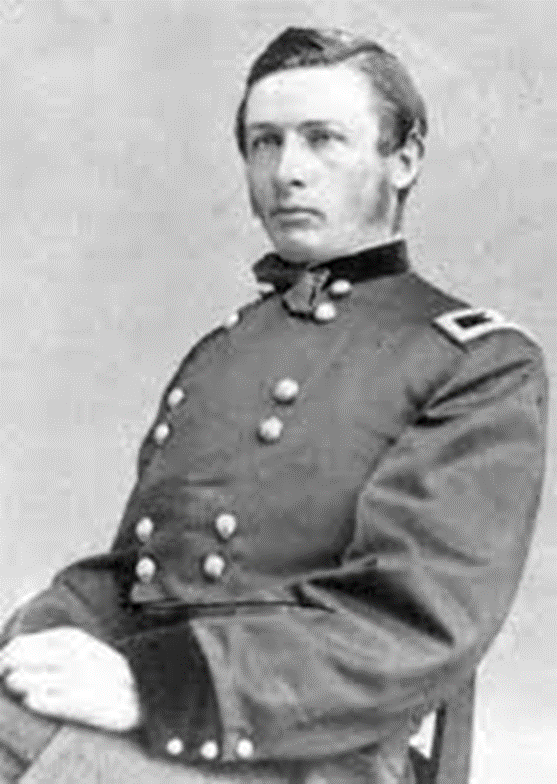
Large numbers of federal troops were now stationed across this frontier.  General Ranald S. MacKenzie, Commander of the 4th U.S. Cavalry, was in charge of those troops.  In the late summer of 1874 he made the statement that:  “It looks like I can fight the Comanche until the end of time and never win.”   They were located in the center of that vast almost completely flat Llano Estacado that was bigger than the State of Indiana .

General Ranald S. MacKenzie   

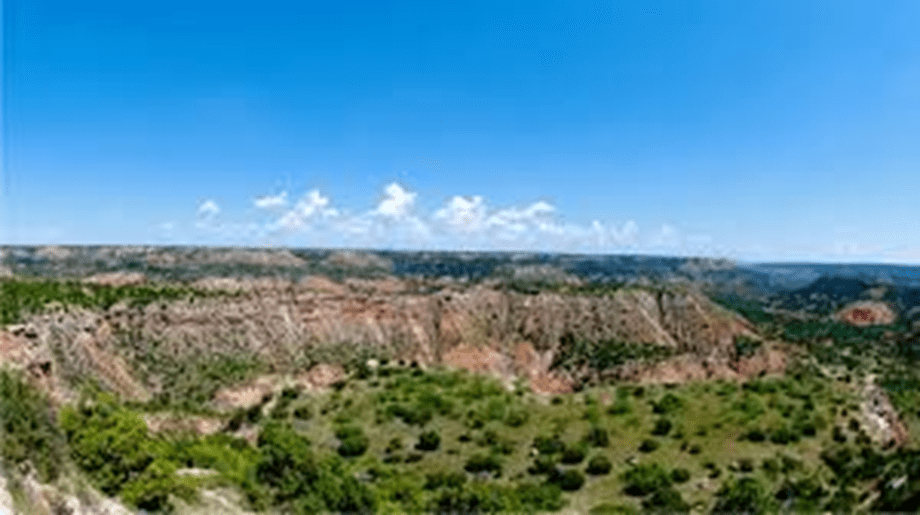
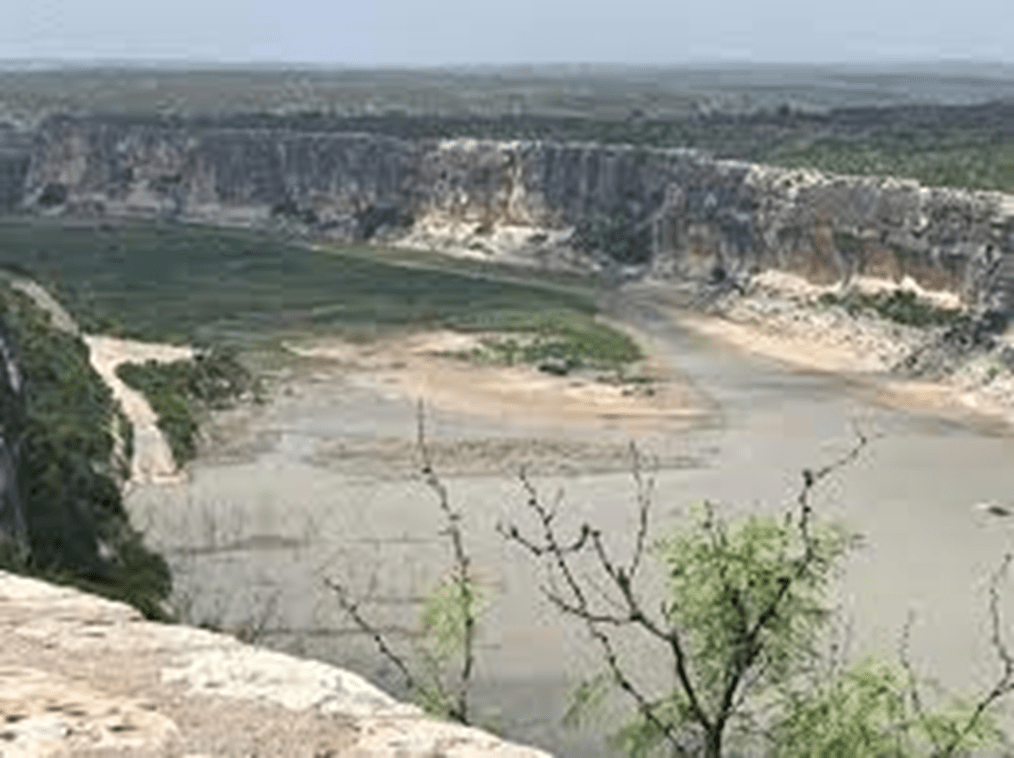
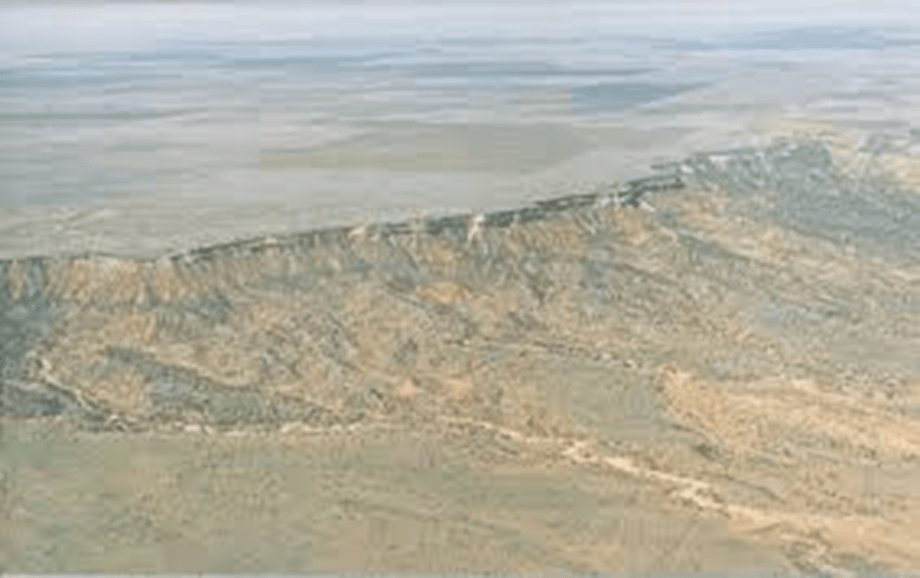
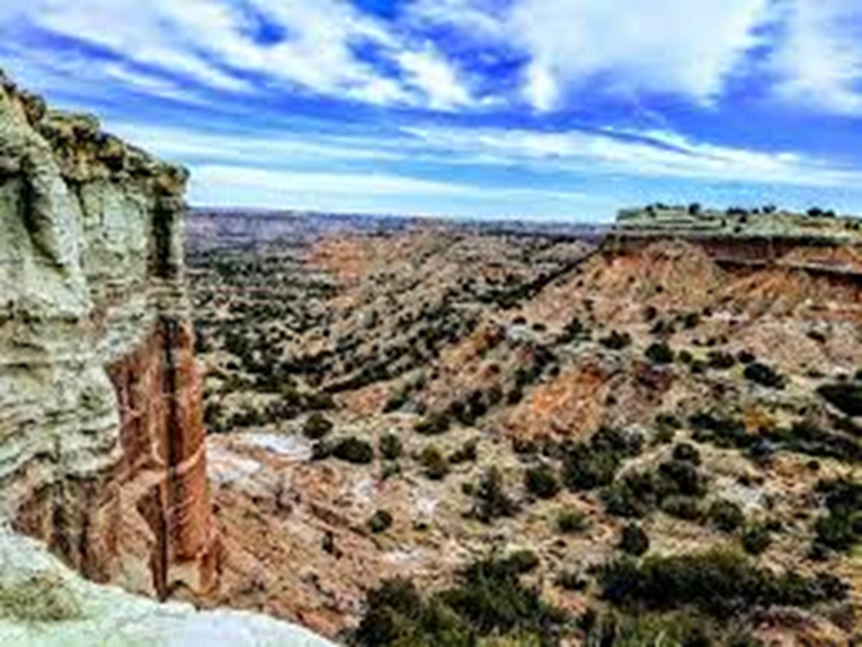
Mackenzie knew that they were ensconced in the Palo Duro Canyon that gashed across it.   If he could ever get his troops to it, and then down into it, they might fire on the Comanche’s if they were lucky,  but those hundreds of Comanches had myriad ways of escape in that rugged canyon with its plethora of intersecting side canyons and secret trails.

Just before Fall of 1874 here is what I think God finally actually showed General MacKenzie.  If he could surprise them down in that canyon and get their supplies and strike them in their home territory and above all else……kill their horses, he might stand some chance of prevailing.  They were considered the greatest light cavalry in the world, but without their houses, they would be helpless.  Apparently, no one had ever thought of that before.

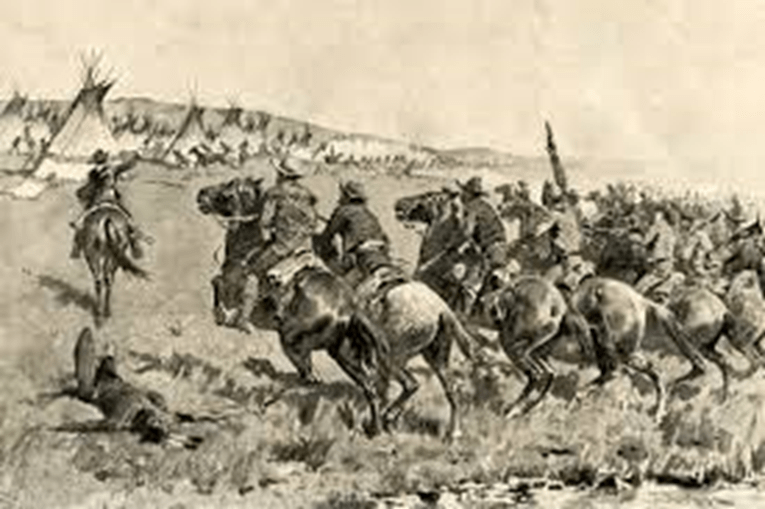
So, in the late Fall of 1874 General MacKenzie enlisted the aid of some friendly Indian scouts to show him one of the secret trails down into the Palo Duro.  After extensive scouting, those Indian scouts finally located where the main body of Comanches were camped.  MacKenzie massed his troops, and under cover of night slipped down into that canyon.  Just at daylight, they attacked.  The Comanche’s fired back at them, but quickly escaped as was expected.  However, they had to leave all their camp supplies and most significantly, their vast heard of horses.  Mackenzie did burn their camp and supplies, but his primary orders to his troops were to surround and trap those horses.

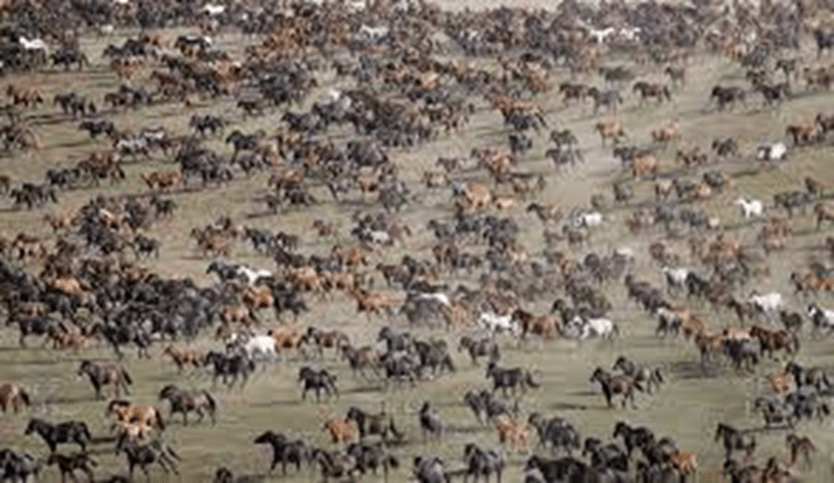
 The troops were ordered to kill most all of those horses.  Being cavalry men, most of them strenuously objected, but they followed orders.  There is no record of just how many, but it is estimated that they killed several thousand horses.  One report was that it took three days, and that the smell became so bad that they had to move their camp father away.

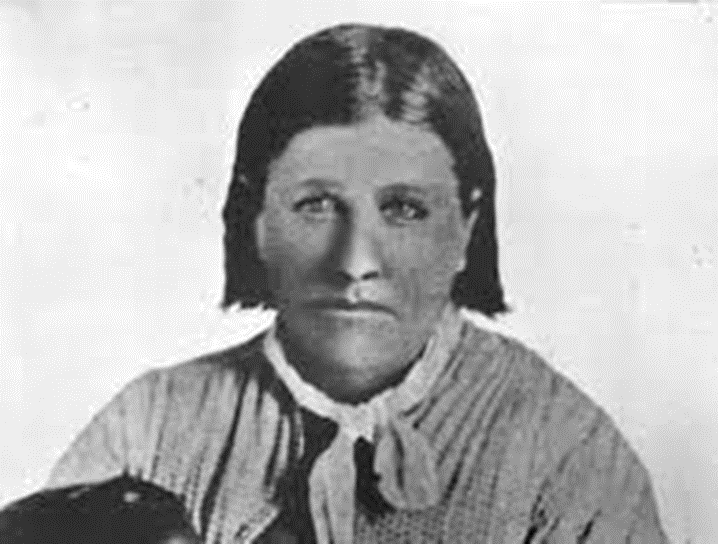
But that did it.  The Comanches and their great War Chief, Quanah Parker, the son of Cynthia Anne Parker and a Comanche brave, all finally agreed to leave their killing and raiding and move to a reservation in Oklahoma .  Some of them still went back to the plains to kill buffalo, but they stopped killing the “white eyes” at long last.

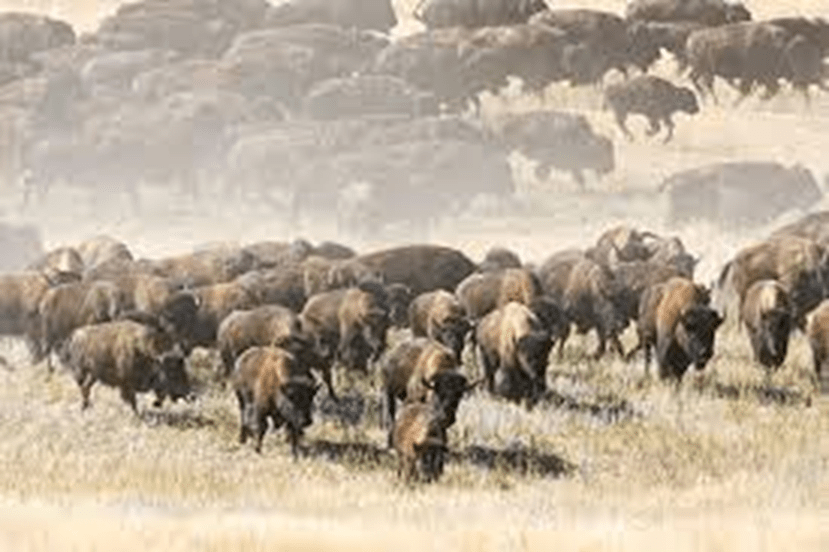
Some “uninformed” historians claim that the killing of the buffalo was what got the Comanche’s to Oklahoma , but in 1874 there were still thousands and thousands of buffalo.  It was General MacKenzie’s killing the Comanches’ great horse heard that did it. 

Goodnight, as was his custom continued to expand, not retreat.  He was greatly prospering by buying herds on credit and selling them up north for a quick profit.  He was also doing the same thing with real estate, mostly in the Pueblo area.  Then something happened that he was absolutely not prepared for and never expecting………..The Great Panic late in the year of 1873 hit.  It started in Europe, spread across the Atlantic to New York and New England , then across the whole US.

The Panics in those days were different from what we may call a depression.  They hit fast, did not last all that long, but were very deep and severe.  Banks failed; the entire economy came to a halt.  Commerce of all kinds just ceased.  The stock market crash that hit on October 24, 1929 may be an analogy…….when guys were jumping out of the windows of tall buildings in Lower Manhattan .

In Pueblo , the new bank failed like so many others.  Charles Goodnight was almost wiped out.  There were no buyers for cattle that he had purchased on credit.  He had just bought a valuable half block in downtown Pueblo for $8,000.  He sold it for $2,000 which he happy to get, even thought a new company come to town a short time later and paid $25,000 for it.

With no where to dispose of the cattle, they were just being held.  Charlie could see that eventually the grass was going to be made scarce there.  He had heard the news that the Comanches had finally been moved up to Oklahoma .  Things were so depressing in southern Colorado that he just wanted to get out. 

That was when his mind wandered back to the Llano Estacado, that great expanse of flat country into which he had chased the Comanches.  It was hundreds of miles across and just unexplored.  A great plateau, it covered what is now called the panhandle of Texas and southern New Mexico .  At that time in history it was probably comparable to the Empty Quarter in north Africa, where people just did not go.  It was just a vast empty unknown and overlooked expanse.  In 1875 the Tesas Rural Register and Immigrant’s Handbook advised the world that “it was improbable that these Staked Plains could ever be adapted to the wants of man, adding that this was the only uninhabitable portion of Texas”.

But Goodnight had been out on it and he could remember its miles of unbroken buffalo turf, its rich grama grasses and its scattered watering places that he had discovered.  However, there was one small group who knew it well and how to navigate it:  the Comanchreos who had crossed it again and again to trade with the Comanches, but they were all gone now.

With the problems and result of the Panic, Goodnight had the urge to just “start over”.  He had a strong lust to once again find virgin range. 

So, in the spring of 1875 he gathered 1,600 head of his best cattle, took a good contingent of his best men and headed toward Texas .  They crossed the Cimarron and headed down along the fertile valley of the Canadian.  He did not hurry the herd. 

On the south bank of the Canadian, in a wild section of eastern New Mexico he set up winter camp.  When his cattle and men were well settled, he headed back to his wife in Colorado , but come Spring in 1876 he was back.  He headed his outfit out across that vast, almost unknown Llano Estacado .  He wanted a permanent ranch.  He remembered that Palo Duro of the Comanches that he had once looked down into, but now had no idea how to find it. 

As luck would have it, he stumbled onto the camp of old Nicolos Martinez one of the old Comanchero traders.  Goodnight paid him to guide him and try to find that big canyon.  Even though old Martinez knew that country intimately, he wandered around trying to find the Palo Duro canyon again.  Even though it was huge, it cut abruptly down into all that flat county, so one could not look off and just see it.  By now they had wandered over to the south side of it.  Then one day, they abruptly came up to the precipice of it, old Martinez clapped his hands over his head and said in Spanish: “at last, at last……..al fin! al fin!”

Martinez now knew where he was.  He and Goodnight went back and he guided the heard along an old Indian trail past the springs northwest of present Amarillo , over the divide, across the headwaters of the Red River and then headed east.  They didn’t see the canyon until they were right on the brink of it.  Martinez showed them the old Indian trail that went right down into it.  

The cattle had to go single file along that trail.  They took the chuck wagon apart and tied the pieces of it and its provisions on the backs of its mules to get it down.  They were amazed at the beautiful, virgin grass in the bottom of that canyon.  As they proceeded down it, it became wider and wider.  There were also many buffalo scattered along the sides of it.  Before long they had 10,000 big, shaggy buffalo running in front of them.  They said the noise of all those running buffalo echoing off the walls of that canyon was deafening.

 When Goodnight came to just the perfect spot in the canyon where a lovely spring came down from the cap rock, he stopped and said:  “This is the place”.   He eventually built a lovely home there with all manner of corrals and outbuildings.  He later had other ranches over his long life, but always called this spot his Home Ranch.

When a Comanche brave was killed, it was the custom for his women to cut off their long braids.  Goodnight said that there were just piles of hair in that canyon.

So. in those days of open range and no fences, the walls of that canyon provided a perfect barrier to keep his cattle in.   And with its depth and steep walls, those cold Texas “northers” would just blow right over it.

He and his wife called that spot “home” for most all of the rest of their lives.

Over the years he imported better and better breeds of cattle and crossed them and became one of the best cattle breeders in all of west Texas .  Years later with the introduction of barbed wire he built many, many miles of fence, but this “home ranch” was always his favorite spot.  And one cannot escape the irony of how this ranger, plainsman, trail driving pioneer, after all those years of fighting Comanches, should wind-up with this great ranch as his home, deep in their Palo Duro Canyon.

                   End of the Story of the Incredible Charlie Goodnight

Charles Goodnight – 4th Installment

In my soon to be published book, I tell the complete story of the incredible life of Charlie Goodnight.  Here is the Fourth of several continuing posts relating that life. 

Charles Goodnight – 4th Installment

As stated in the 1st Instalment, you don’t hear much about him in the history books, but Charlie Goodnight was one of the most influential men in developing early Texas and the Western US.  The Bible says that God is interested and involved in the founding and development of nations.  It is my opinion that He used Charlie Goodnight over and over again in the development of the Western US and particularly the Southwestern part.   He was one of the original men that protected the settlements along the frontier from the Indians.  These men were called “Rangers” and they predated what were later officially established as the “Texas Rangers”.

Continuing from 3rd Installment:

By Goodnight and Loving’s third drive the Indians had figured out what was happening and that those cattle could be traded profitably.  On this drive they had all manner of trouble with the Indians.  On one of their first skirmishes one of the drovers got an arrow in his neck just below his ear.   If it had been a flint arrowhead they may have left it in, but it was one of those made from hoop iron that would for sure have caused infection.

The Comanche’s had learned to take as many hoops from the settler’s barrels as possible in their raids.  They had started making their arrowheads out of that hoop iron.  It was not only easier to fabricate but would cause death if not extricated in time.  

They had to get the iron arrowhead out of the cowboy’s neck.  All they had were a set of pinchers for pulling off horse’s shoes.  Charlie got three cowboys to hold the guy down while he pulled on the arrowhead with the pinchers.  He almost lifted all of them off the ground, but finally got it out.  The fellow miraculously survived by them applying poultices of cold mud.

They got past Horse Head Crossing and then Pope’s crossing by fighting off more Indians.   Loving wanted to go on ahead and get to Santa Fe where contracts for the sale of cattle were to be let in early August and it was already July.  Goodnight was very much against it.   There were too many Indians; but finally, he agreed if Loving would promise to hide out during the daytime and travel only at night.  He sent One-armed Bill Wilson, by far their toughest and most experienced cowboy with him.

The two of them traveled by night for two days, but both being very daring decided to travel on

starting at noon the next day.  They were crossing an open area with the Guadalupe mountains off to their left and the river about a mile to their right.  They were almost across the open area when they saw a big band of Comanche’s bearing down in them from the Guadalupe’s.  They raced for the river, went over the bank and took refuge in a ditch where the water had cut through a sand dune making a hiding place.   Wilson had Goodnight’s six-shot revolving rifle as well as his own six-shooter pistols.  Loving had his two six-shooter pistols as well as his repeating Henry Cartridge Rifle, the first one in that territory.  The only way to see into their little ditch was from across the river. 

There were several hundred Indians and when one tried to shoot them from across the river, Loving killed him, and no others threatened them from that spot.  The Indians kept shooting arrows up at a high angle to come straight down to try to hit the two.

Finally, one of the Indians started trying to parlay with them in Spanish.   They considered it a ruse, but Wilson stood up to speak with him anyway.  Immediately bullets rained down and Loving was shot through the arm with a bullet that went on into his side.  He was sure his wounds were mortal, but he survived, though with great pain.

Wilson noticed that the tall grass just above them was moving.  He knew that one of the Indians was sneaking up on them and parting the grass with his lance.  Just as Wilson was about to rise up and shoot him, there was the loud whirring of a rattle snake that the Indian had disturbed.  He backed out faster than he had sneaked in.

The two of them suffered terribly from the heat, but finally night came.  Wilson slipped down and got a boot full of water for Loving.  Wilson then proposed that he slip down the river and try to make an escape and get back to the heard.   Loving said he thought he could hold the Indians off and that if he couldn’t, he would shoot himself in preference to being captured and tortured to death.  Wilson spread out all their six-shooters in front of Loving’s good hand as well as Charlie’s revolver rifle.  He took the Henry because the water would not destroy its metallic cartridges. 

He slipped down to the river and took off his boots and all his clothes except his hat and his underpants and undershirt.  He hid them under the water and pushed off into the river.  He first had to go over a gravel shoal that was only three feet deep.  But the Indians had stationed a man on his horse right there in the middle of the river.  Fortunately, at just that moment a cloud came up over the moon.  This allowed him to slip by into the deep water. 

Wilson tried to swim with the rifle three times, but almost drowned.  He finally eased over to the bank and stuck the rifle barrel deep into the side of the bank under the water and went on down the river.  He eventually eased out of the river through a little cane break and started south for the heard.

Unfortunately for Wilson , Charlie had stopped the heard to rest it, and allow the men to wash their clothes and saddle blankets.  The heard was not thirty miles away as Wilson had calculated but was eighty-five miles away down the Pecos .

He traveled only at night the first night, but come daylight, he just kept going….through the blistering sun, the rocks and cactus and the thorns growing there.

Finally, Wilson took shelter in a cave under a bluff close to the river. 

At that exact time, Charlie was approaching that spot and knew about that bluff and cave.  He was sure the Indians were waiting for them there.  He thought he saw something red go into that cave in the far distance.  He had his men bunch-up the heard in preparation for an attack and spurred his house up there to check the spot out.  He intended to just look and then race back to the heard. 

When he got there, out of the cave came One-armed Bill Wilson.  His underclothes were red from the red silt in the river.  His eyes were blood-shot from the sun and his feet were swollen beyond recognition and leaving blood behind with every step.  Charlie got him back to the wagon and tore-up a blanket and soaked it in water to wrap his feet to stop the fever in them.  Charlie fixed him a cornmeal gruel and finally got him back to where he could talk.

Wilson related everything in detail, and Charlie set out immediately with four cowboys.  When they finally got to the spot, everything was just as Wilson had described it, but Loving was not there.  Neither were the Indians which Charlie was sure would still be there.

They found the clothes and the gun just as Wilson had accurately described, but no Loving.  They could see where at least a hundred arrows had been shot up and then down.  When Charlie scouted around, he saw that the Indians had just left, since the water was still coming down the bank of the river where they had climbed out.  Goodnight calculated that Loving must have slipped into the river at night and shot himself to keep from being captured since the sign in the sand showed that they had not taken him.

Actually, Loving had stayed in that sand ditch for two more days but was suffering so much from the heat and lack of food that he decided to slip out at night like Wilson had into the river. 

Instead of going down stream, he went up stream, hoping to get to the next crossing where he may find someone using the crossing that would help him.

He did finally make it to the crossing and hid in some China berry bushes.  He lay there for two days, suffering terribly from hunger, though he could get water. 

Eventually a wagon came down from Ft. Sumner to that crossing with three Mexicans and a young German boy.  They decided to camp there and cross the river the next morning.   When the little boy went off to gather wood for their fire, he discovered Loving.

Loving told them that he would give them two hundred and fifty dollars in gold if they would take him up to the Fort.  They turned back north and carried him in the wagon.  When they got within about fifty miles of the fort, a man from there, coming down, discovered them.  He raced back to the fort and the soldiers there brought down the Fort’s ambulance to retrieve Loving and give him medical help.

So, he continued the journey in the ambulance and the Mexicans followed to be sure they got their money.

Meanwhile Charlie continued on up the Pecos with the heard.  Actually, by this time he had two herds.  A fellow named Patterson had bought a heard and was having it trailed north by a bunch of Mexicans while he stayed at the Fort to receive it. 

The Indians had attacked it, took all its provisions and burned its chuck wagon, but had not taken the cattle.  Charlie intercepted the heard and agreed to provide food for the group and have his cowboys make sure the Mexicans did their job of pushing Patterson’s heard behind his.

When they got within about 80 miles of the Fort, Charlie was scouting on up ahead as usual.

He saw one man on horseback and was sure it was an Indian scouting for one of their war parties.  He cut in front of the rider, intending to kill him, but found that it was a white man.

Actually, it was Patterson, coming down to see what had happened to his heard.  He told Charlie that Loving was at the fort, but Charlie corrected him:  “Loving was killed by Indians back down the Pecos .” 

“Man, I tell you Loving is alive at the Fort and wanting to see you”

“Impossible!!!:”

Finally, Charlie was convinced.  He got on his best saddle horse and made that eighty miles without stopping.

They had put Loving into the little hotel that was there.  The wound in his side was healing, but his arm looked bad.

Charlie conferred with the young Fort surgeon who was from Scotland and had only been in the US for 2 years.  Charlie told him that the arm needed amputating and the surgeon agreed.  However, he kept hesitating to do it, which Charlie could not understand.

Loving told Charlie that some of their stolen horses and mules had been found where they had been sold and located up toward Santa Fe .  He wanted Charlie to go retrieve them, but he did not want to leave Loving.

He finally consented and went up there and got the animals back, but the arm still had not been amputated.  After waiting and waiting, Charlie finally told the young surgeon that he was going to amputate it, or he was going to have to put wounds on Goodnight.

He did finally amputate it above the elbow, but the artery leading down looked really swollen and bad.   It finally ruptured and it was necessary to put Loving to sleep again and tie it off again. 

The drugs they used in those days for anesthesia were really hard on a person’s system.  Loving was greatly affected by this second operation and finally died, though he was quite rational the whole time until his death.  Before he died, he had one major request of Goodnight.  He made Charlie promise him that he would take his body back to Texas and bury him in the Cemetery at Weatherford , Texas .

Charlie had other business to finish, but he eventually did that.  His cowboys got all the empty oil cans and other tin that they could find at the Fort.  They soldered them together and covered a box that Charlie had made with wheels attached to it.  They packed the body in salt and carried it back to Texas .  The grave can be viewed to this day in Weatherford.

Thirty years later Goodnight met up with that surgeon.  He asked the surgeon why he had not amputated Loving’s arm promptly as he should have.  All those years later, the surgeon answered him honestly.  He said:  “I had heard all these tales about you.  I was afraid that Loving would die anyway and I was sure you would shoot me dead if he died.”

So, folks, as you read all this, I would be surprised if these tales do not sound familiar to you.  Surely you may have read the book that was so popular a few years back called, “Lonesome Dove”.  And even if you did not read the book, surely you saw the TV series by the same name.

The gay author Larry McMurtry wrote “Lonesome Dove” and was consultant for the TV series.  Most everything in that book was stolen and plagiarized from J. Evetts Haley’s book called just “Goodnight”.   It was pretty much Haley’s life’s work to document Goodnight’s whole biography.

As one example in “Lonesome Dove” the partner and the main drover go off ahead of the heard.  They are intercepted by a band of Indians.  They hide under a shelf in this sandy bank of a river. The partner gets shot in the leg, and at night the cowboy slips off to go back and find the heard.  The Indians keep shooting arrows up at an angle to get them to come straight down and try to kill the partner.

The heard is way farther off than he anticipates.  He walks barefoot in his underwear for many, many miles through cactus and thorns.  Finally, when he is near death he finds the heard and is saved.  When the main character goes to find the partner, he finds the sandy shelf where he had

been hiding, but he is not there.  He had slipped away and was found by a traveler and taken into Denver to a hospital.   However, the surgeon at the hospital keeps putting of amputating his leg until it is too late, and he dies.  But before he dies, his partner, who has now found him, promises to grant his wish and take his body back to Texas to be buried.

So, I was waiting in an office in Dallas to keep an appointment and visiting with the receptionist about the TV section of Lonesome Dove we had both seen the night before.  I was talking about all the plagiarism and said:  “Well, you know that Larry McMurtry treated the women in Lonesome Dove so harshly since he is a ‘flaming gay dude’”.

And the nice lady receptionist said:  “Yes, I know, he is my first cousin”.

And I thought:  “Wow, have I messed-up now!”

But she graciously said:  “Don’t worry.  We don’t even let him come to our family reunions.”

So, after watching two more episodes of Lonesome Dove on the TV, I thought:  “I wonder if Mr. Haley knows how they have stolen so much of his historical book?”  I thought that he may still be alive.

My secretary found his telephone number way out in west Texas .  I just dialed the number and this old gravely voice promptly answered the phone.  I said:  “Mr. Haley, do you realize that those folks stole most every story in your book and are making a fortune with them?”

There was this long pause and he said:  “Aaaahh damn……..I’m glad somebody recognized that!!!”

I was so glad that I had called.

So now let me get back to the story of the famous Charles Goodnight.

To Be Continued

Charles Goodnight – 3rd Installment

In my soon to be published book, I tell the complete story of the incredible life of Charlie Goodnight.  Here is the Third of several continuing posts relating that life.   If any of it is not readable, or you want to see more stories like it, please go to my website and read it there……. truetexantales.com

Charles Goodnight – 3rd Installment

As stated in the 1st Instalment, you don’t hear much about him in the history books, but Charlie Goodnight was one of the most influential men in developing early Texas and the Western US.  The Bible says that God is interested and involved in the founding and development of nations.  It is my opinion that He used Charlie Goodnight over and over again in the development of the Western US and particularly the Southwestern part.   He was one of the original men that protected the settlements along the frontier from the Indians.  These men were called “Rangers” and they predated what were later officially established as the “Texas Rangers”.

Continuing from 2nd Installment:

On June 6, 1866 they headed out, full of optimism and spirit.

They headed to the west and a little south in order to skirt the Indians.  They passed what is now Abilene and then on to about 20 miles above where San Angelo was later built.  On each side of the front of the heard they put an experienced point man.   Along the sides of the heard the other men were strung out to keep a straight line and in the rear were the drags.  The men along the sides and rear alternated each day because of the dust.  Charlie rode about 10 to 15 miles ahead of the heard to scout for the best route and for the best place to graze and bed the heard each night.

On and on they traveled until they finally reached the head waters of the Middle Concho River .

Here they rested and watered the heard before heading to the Horse Head Crossing of the Pecos river.  From this resting place they knew they had to cross 80 miles of alkali dusty country without a drop of water.

After two days and nights the cattle and men were in terrible shape.  On later trips Charlie learned to keep the heard moving most of that whole distance even through the nights.  On the third night they just kept moving and on through most of the next day.

In the afternoon, Charlie decided to take the stronger two-thirds of the cattle on to the river. 

Horsehead Crossing of the Pecos

He then had Loving hold the weaker ones back as best as possible.

However when the cattle smelled that water, there was no holding them back.  They plunged straight on into the river.  There were some alkali ponds along the way to the river, and Charlie was able to keep the heard headed away from them, except for 6 head who were determined to drink there.  Three died before they even left the water, and the three others died only a short distance from it.

Charlie hurried back to help Loving with the weaker group.  By now about three hundred head who could not go any further were left for dead along the trail.  About this time the wind shifted and the remaining 500 head or so smelled the water and just went crazy and stampeded for the river somewhat just above the Horse Head Crossing.  They went straight off the steep bluff into the river.  Some drowned, others became stuck in the quicksand and none could climb the steep bluffs on each side of the river.  After two days, the hands were about dead also, so Charlie had them all ride off pushing the cattle that they saved ahead, and leaving over 100 head alive, bogged in the quicksand and stuck under the bluffs.

All his life, Goodnight hated that river.  With its brine and alkali and steep banks he had a term for it that he used frequently and said with savage feeling:  “The Pecos……the graveyard of the cowman’s hopes!!!

Steep Bluffs on the Pecos just above Househead Crssing

On this first drive they were very lucky not to have encountered any Indians.  That crossing was on the Indian’s main trail from the Palo Duro to Chihuahua in Mexico where the Comanche’s regularly raided before returning to Texas .

The outfit then trailed up the east side of the river until they got to a place called Pope’s Crossing where they went over to the west side.  Charlie said that in all his travels over his life that was the most desolate area he had ever encountered.  There was no game, no wildlife at all.  On his second trip there he said that he did finally see one wolf who was about starved, and that he killed it out of pity.

However, there were rattlesnakes.  Hundreds of them.  Charlie limited the cowhands from shooting to conserve ammunition, but one cowboy had brought a large supply of his own bullets.  And he hated rattlesnakes.   Before they left the Pecos he had collected 72 rattles to take back home.

Finally, they reached Bosque Redondo and Fort Sumner in New Mexico .  And here they found a most interesting situation.  With the help of Kit Carson the US Government had collected the Indians from the west of that area.  They had the Navajos from Arizona and the Mescalero Apaches from the New Mexico-Mexican border.  They were trying to make this a reservation for them, even though the land was too poor for adequate farming and these two groups of Indians were bitter enemies of each other.  They had about eighty-five hundred Indians who were about to starve. 

Later, the Navahos were allowed to go back to their native mountains and the Apaches just left, but at this moment, the soldiers considered this huge heard of cattle a “Godsend”. 

Charlie and Loving were able to sell their steers to the government agents for 8 cents per pound on the hoof. 

Loving took the remaining 700 or 800 cows on up through the Vega, past the old Capulin Mountain volcano, over the Raton Pass and sold them near Denver to the old cowman, John Wesley Iliff.

Charlie went back for another heard along the same trail they had come out on.  They would lay up in the shade in the daytime and then take the trail at dusk and travel all night to avoid Indians.  Their main problem was that soon after starting out, they encountered a major storm with heavy rain and lightning.  As a result their pack animals panicked and bolted away into the night.  They eventually found them, but all their provisions were gone.  It was a bleak trip back.  

When they got almost across the 80 miles of flat, open country without water, he and his three cowboys saw a big object off in the distance.  The cowhands were sure it was a group of Indians, but Charlie wasn’t sure.  However, since Goodnight had never had anywhere near $60,000 in gold in his whole life, he surely did not intend to lose it now.

The object looked like a group of about 20 Indians.  It was useless to try to turn back in that flat, open spot.

Charlie told the group that he would blast a way through the Indians with his six-shooters and for them to follow without firing.  He was sure that with their good horses they could outrun the Indians.

What they found instead of Indians was an amazing site way out there in that wild spot.   It was a huge wagon filled to the top with big, cold watermelons.  Old man Rich Coffee from their settlements who they knew well said he was on his way to trade in New Mexico and was taking the melons along to sell.  Charlie told him that he doubted that he would ever reach the settlements in New Mexico , but that he for sure had a ready market for a bunch of the melons right there.  They feasted on those cold melons.

On the seventeenth day after leaving Sumner they were back in Weatherford getting supplies for another drive.  Cattle were plentiful and a group of about 25 men helped him round up his own cattle and others that he bought.  He got together 1,200 big steers and these guys helped him road-brand them with the brand he and Loving used on the animals they were to drive.

After their work the whole group camped out for the night there on the Brazos. 

Charlie waked up in the middle of the night with the premonition that there were Indians there.  He waked the group of guys and told them, but they made fun if him for being “Indian bit”.  However, he and his men took their horses a good distance off and hid them in a thicket and went back to sleep. 

Sure enough, during the night the Indians took off all the horses of that other group of men.

Charlie hired a group of new hands, got his provisions and outfit together and headed that big group of steers to the west.

These steers were very skittish and prone to stampede.  First thing they encountered was the southern herd of buffalo heading south for the winter.  They had already separated into sexes as was their custom to do in the Fall.  What Charlie had run into was the male heard that was over 4 miles long.  He spooked their leaders back and thought he could trail his heard past them.  However, they suddenly bolted into a dead run and cut his heard in half.  Those scruffy steers just went crazy when those big black beasts burst upon them.  One group headed west with their tails curled and going full speed.  The other group headed pell-mell back toward the Brazos bottoms.  

It took almost an hour for all those buffalo bulls to pass.  They seemed to shake the earth and fill the air with the roar of their pounding hoofs.

With Charlie’s hard riding and due to the high quality of the hands he had hired and their good horses, all of those steers were finally stopped, rounded-up and put back together with no losses.

However, they were most of the way back to northern  New Mexico  before those skittish steers were broken to the trail.  Each night when they camped, two night riders were assigned to continuously circle the heard at a walk.  Every few hours they were spelled by a new couple of night riders.

Sometimes the heard would smell Indians.  Sometimes it would be the lightning from a sudden thunderstorm.  Sometimes you did not know what it was that would cause the heard to just bolt up and dash off into the night in a wild stampede.  Everyone had to get saddled as quickly as possible and try to turn the heard to where it would circle.  Riding full speed off into the night with those clashing horns was dangerous business.  You never knew if your horse would step into a prairie dog hole and throw you under the hoofs of the heard to certain death.

I have personally experienced some of what they must have felt.  Down in  Kaufman County before my children were born, we would catch wild cattle down in the river bottoms.  My two “insane cowboys” and I would trailer our horses there on Sunday afternoons and meet up with other adventurous guys.  Riding through those bottom land woods at breakneck speed and jumping logs and creeks to flush out wild, wild cattle was an adrenalin drenching experience.  We did not have prairie dog holes, but we had many armadillo holes.

What was really spooky for Charlie’s men was the blue light that would play across their horse’s ears during the storms.  It also played across the cattle’s horns.  This electrical display was something the men never got used to.

They had now learned how to cross the cattle across that 80 miles with no water.  They crossed it with ease this time, especially with only mature steers.

They eventually got up to Bosque Grande south of  Ft.   Sumner  where Loving had made a rather permanent camp since there was good grazing and water there.  They sold most of this heard at a fairly good price and wintered there in dugouts under the cliffs at this camp before starting back to the  Texas  frontier.

By now, the Comanches had discovered their trail and had camped just below the Horse Head Crossing for the winter.  Also, the big money that Goodnight and Loving were making was not lost on the other cattlemen back near  Ft.   Belknap  and Weatherford.  Three new herds were started along Goodnight’s trail.

The first heard was intercepted by Indians at Horse Head Crossing where they burned the outfit’s wagon and stole the whole heard.

Goodnight and Loving encountered the other two herds on their way back.  Charlie made a point to ride along the edge of the first one, inquiring of the drovers for the owner.  When he found him, he warned him about the Indians and suggested that he bunch the heard for defense.  Whereupon the owner informed Charlie that he was not afraid of Indians and that he hoped that he found them so that they could kill a few.

He found them alright.  The Comanche’s stole both of those herds also and trailed them off to their home in the Palo Duro. 

Between the Concho and the  Texas  frontier area, Charlie ran into what he described as one of the most amazing sights in his whole life.  The whole southern herd of buffalo, literally hundreds of thousands of them had evidently grazed the land clean and did not move on to another area and just stayed.  They had all died.  Charlie said that the air was filled with clouds of flies as a result of all those carcasses.   He said the carcasses were just thick for three whole days of riding through them.

One of the most interesting groups in this whole era were the Comancheros.   They were a dirty bunch from  New Mexico  who knew the way into the Indians’ camps.   They came to trade with the Indians.  The height of the trade was from 1850 to 1870.  They would bring beads and paint and other things of little value to barter for buffalo hides and pelts and other Indian goods. 

As the Indians acquired more and more horses and cattle, the Comancheros traded for these with ammunition, lead, muskets, pistols, knives, manta or calico, wines, whiskey, and breads of various kinds.  The poorer Comancheros would bring a small amount of goods on burros and trade for a small group of 10 or 12 cattle.  However, the more prosperous ones carried their goods in carretas or wagons and would trade for whole herds of cattle and horses.

Comancheros Trading with Comanches

Few of the Comanches could speak Spanish and much trade was carried on in a little valley called Tongues where their negotiations called for the use of many languages and dialects.  The river there is called Las Lenguas even to this day.

Farther north in the region of the Quitaque and the  Canadian river  was another little valley where the raiding Indians would come together to separate and split up their captives among the different bands.  This was to lessen escape and to hasten assimilation.  Here the mothers and children from  Texas  and  Mexico  went off into the different tribal bands.  There was much trade with the Comancheros here also, but for some reason the Comancheros did not seem interested in ransoming the captives back.  This wild area was known as a spot of heartache, of grief, and tragedy, and the Mexicans referred to it as Valle de las Langrimas……the Valley of Tears.

And so down these trails from the old towns in New Mexico came the Comancheros to the edge of the plains to barter with the Indians, mostly the Comanches.  But it was dangerous business.  Sometimes the Indians would follow the Comancheros back and repossess their herds and require the Mexicans to buy them back again.

                                                                To Be Continued

Charles Goodnight – 2nd Installment

In my soon to be published book, I tell the complete story of the incredible life of Charlie Goodnight.  Here is the Second of several continuing posts relating that life.   If any of it is not readable, or you want to see more stories like it, please go to my website and read it there……. truetexantales.com Ron

Charles Goodnight – 2nd Installment

As stated in the 1st Instalment, you don’t hear much about him in the history books, but Charlie Goodnight was one of the most influential men in developing early Texas and the Western US.  The Bible says that God is interested and involved in the founding and development of nations.  It is my opinion that He used Charlie Goodnight over and over again in the development of the Western US and particularly the Southwestern part.   He was one of the original men that protected the settlements along the frontier from the Indians.  These men were called “Rangers” and they predated what were later officially established as the “Texas Rangers”

Continuing from 1st Installment:

A company of Federal Troops was finally stationed there in that part of Texas.  Charlie was asked to scout for them.

Colonel Cureton from Waco also formed a company of rangers.  They like the other ranger groups would pursue the Indians as quickly as possible after a raid.  They would not take

provisions or blankets or other equipment for camping; they would just go.  I have personally always wondered why they did not take better provisions for such forays, though they would usually take a piece of salt pork and sometimes a little salt for the wild game they would kill.

About this time, during a heavy rain, the Comanches raided the houses of two new settlers.  These couples were not really wise to the ways of the frontier.  They did not even have guns.  The Comanches were particularly brutal in this attack.  They mutilated the settlers bodies and tied one of the women to the ground with stakes and violated her before shooting arrows into her body.

Baylor’s ranger group, Cureton’s ranger group and Colonel Ross’s troops from the fort started after these Comanches.  Even with all of the rain, Charlie Goodnight was able to follow their trail.  Their trail was crossed by two large herds of buffalo, but Charlie was able to stay on it.

The group of pursuers stopped to rest, but Charlie went on way up ahead and stationed one man in between to intercept any signal from him.

By now they were out in the very open country up near the Pease River.  That river was quite salty and gyppy, but Charlie knew that there was a fresh-water creek that entered the river up ahead.  He could also tell from their trail, that the Indians were no longer in a hurry, figuring they had outrun any pursuit.  He figured that the Indians would be camped up on that fresh-water creek.   He also spied some berry trees that the white’s did not like, but that were relished by the Indians.  He had his companion stay back and wait for any signal while he went up to those berry trees.

Sure enough, he could tell that two Indians had just left there and were headed toward that creek.   He signaled for the company to come on; that he had found the Indians.  Ross’s troopers headed a little to the east and the two ranger companies angled a little to the west.  The older troopers had good horses and topped the hill and headed down to the Indians’ camp with the younger troopers following.

Charlie looked back and could see the rangers strung out in a long line, depending on how good their horses were, with the sun glinting off their tin cups and their shiny rifles.  All stung out like that, they looked like a much larger group, and Charlie knew that the Indians would think the same thing.

The Comanche squaws and the older men in their camp had been butchering buffalo and had most of their horses loaded down with the meat.  Ross’s troopers had the best angle and reached there first.  They charged right through the camp, shooting each buck as thy came to them.  The new recruits coming behind probably couldn’t tell a buck from a squaw and proceeded to kill most all of the squaws.  Chief Nocona had a Spanish wife that he had captured long before.  She was wounded and crawled off into the grass.

Just beyond the camp was an absolutely flat piece of ground that the buffalo had grazed completely clean.  It was about a mile across.  The Indians that got on horseback would have faired much better to have headed off to the side into some sandy hills, but in their panic, they headed straight across that flat area.  Everyone of them was killed, and Colonel Ross engaged in hand to hand combat with the chief and finally killed him, too.  Ross claimed it was Chief Nocona, but Charlie was sure that it was another chief whose name was No-bah.

Among the confusion was a squaw on a fine iron-grey horse.  She was able to keep up with the bucks.  Ross ordered his Sergeant to take charge of her so that the recruits would not mistake her for one of the bucks and kill her.  She had a buffalo robe wrapped around her, and in its folds, a really small infant.

Charlie told later that she was in the most intense grief and distress that he had ever seen.  He said it made a deep impression on him.  He went over to her in an attempt to console her.  That was when he discovered that she had blue eyes.  Her skin was dark from having cut up all that meat, but Charlie was amazed to see that she had blonde hair.

He went over and told Judge Pollard with the Rangers that they had a white woman.  This news caused quite a stir.  Army Colonel Ross carried her and 30 or 40 head of Indian ponies back to his permanent camp on Elm Creek west of Fort Belknap , even though she tried to escape several times.

Colonel Cureton, with all his knowledge of the frontier and plains said that he had never heard of a battle with the Comanche where at least a few did not escape.  He asked Charlie to go out and cut for sign before it got dark.  Charlie did find the tracks of two Indian ponies and followed them for several miles.  As he topped a hill, he looked down onto an Indian camp with over a thousand Indians.  Charlie went back and told Cureton that it was his best judgment that they go back and catch-up with Ross.

Everyone there in the area of the soldier’s camp and Fort Belknap thought that the woman may be the long lost Cynthia Ann Parker who had been carried off when the Comanches’ and Caddo’s massacred the people at Fort Parker way down on the Navasota River back in 1836.  They sent word for Colonel Isaac Parker to come up there and see if he could identify her.  They also secured a fellow named Ben Kiggins to come.  He had been ransomed back from the Indians where he had been a captive for many years and could speak good Comanche.

When they were all there, they brought the woman out of her tent and into the group.  Failing to escape, she had now become sullen and morose.  The little infant that she called Prairie Flower in Comanche had also now died.

Kiggins told Colonel Parker that he thought that the one thing that the woman could remember would be the name that she had been called as a girl.  Parker said that he knew that his brother and his brother’s wife had called her Cynthia Ann.

When the women heard him say that and then repeat it, she stood up, faced them, patted herself and said:  “Me Cincee Ann”.  She went on to tell Kiggins that, though she regrets it, she indeed had a paleface ma and a paleface pa and that they called her Cincee Ann.  She went on to say that she now had a redman ma and a redman pa and that they have a name for her and that name is Palux.  She was also able to tell Kiggins many of the details of Fort Parker .

Actual Photo of Cynthia Ann Parker after Capture

They took her back to the piney woods of east Texas, but she was a stranger in a strange land now with people that “were not hers, and among the hated Tejanos”.  She longed for the treeless Plains where Nocona and her sons still hunted the buffalo.   She did finally escape and tried to get back, but she died of sinking grief and loneliness on the way.

Photo of Cynthia Ann’s Indian Husband

By now, the Civil War was starting.  Old Sam Houston did not want Texas fighting in any such war, but those independent Texans were so big on “state’s rights”.  Though almost none had slaves, they did not want to be told that they had to be confined to any union.

Many of the rangers went off to fight for the Confederacy, but the state officials convinced and paid Charlie Goodnight to stay and scout for the rangers that were assigned to protect the frontier from the Indians.  And that is how he spent the years of the Civil War.

The country where those rangers patrolled had most dramatic features.  For over two hundred miles to the northwest from the western cross timbers the country was undulating, but not too rough, though interspersed with a few sandy hills.  Beyond that the country became very broken.  It rose up in jagged brightly colored rocks and broken canyons to a high escarpment or the Quitaque, which today is called the Caprock.

The Quitaque or Caprock

The springs that come down from this jagged escarpment form the rivers that flow south and southeast across Texas .

 The Llano Estacado above the Caprock

On top of the escarpment the land is very level, almost flat as a table.  That begins what was called the “Staked Plains”.  However, cut across this immense, flat region was a big gash with rugged canyons along its sides that is called the Palo Duro Canyon .  It was here in the Palo Duro that the Comanche’s had their ultimate refuge.  For the longest time, white men dared not go near it.

Palo Duro Canyo

Way off to the west of it in New Mexico the country was fairly civilized with settled communities like Santa Fe and Taos and other communities.  The Indians there were mostly the peaceful Pueblos .

Off to the north, were settled communities in Colorado like Pueblo and Denver , and even north of there in Wyoming country were towns like Cheyenne .  However, you did not dare venture within two hundred miles of the Palo Duro Canyon country.   And in Texas , the settlements most all stopped at the western cross timbers as a result.

After the war, Union Soldiers came to help with the Indian problem.  They were not plainsmen like the rangers and had no knowledge of that wild country just described. 

Their officers asked Charlie to guide for them, and he had all kinds of problems keeping them alive.  Their officers were so “headstrong” and determined to be “in charge”.  Charlie’s problem with them was not the Indians.  The Indians would just steal their horses and escape with them.  The main problem was their lack of knowledge of how to survive in that wild county.  Time and again some headstrong Colonel would lead his troops off into that immense, flat tableland and start following the mirages that prevailed there.  Eventually they would be lost and start circling.  Many times Charlie saved them from certain death by getting them back to drinkable water.

On one of those occasions something happened that is being studied by medical doctors today.  This group of troopers went off on their own without proper scouts.  They felt quite safe because they carried wagons with a large quantity of water and had a large supply of mules.  They knew that if they got lost, they could always eat the mules.  Sure enough they got lost and had to stay out way much longer than anticipated.  Without a scout to get them buffalo or antelope they did have to eat mule meat.  Those men were consuming as much as 11 pounds of that meat a day.  But those mules were so lean that they had absolutely no fat on them.  When those troopers finally got back to their fort, several had died of starvation and the remainder were close to death.

What modern medical pathologists have recently studied, and with that as their example, is that one cannot process protein without at least a little fat to go along with it.  Those mules had no fat.

After the war was finished, Charlie and his partner, Sheek, went back to see how their cattle had faired during this extended period.  They had for sure multiplied, and were mixed with those having other brands, and with almost half unbranded.  It was necessary to brand all those roaming without a brand.  However, thieves and carpetbaggers had invaded and were putting their own brands on them. 

Charlie had been very scrupulous his whole life about who’s cattle belonged to whom.  He wasn’t very tall, but he became like a one-man army bringing order to the situation.  Being so tough, such an accomplished horseman, such a good marksman and just effusing authority all helped.

However, along with the carpetbaggers and thieves larger and larger bands of Indians began to raid this turbulent frontier.  They were killing as many as 12 settlers at a time and carrying of increasing numbers of captive women and children.   They were also trailing thousands of head of cattle back northwest.

By this time, 1864, Charlie and Sheek figured they had at least 8,000 head of cattle.  They bought other cattle, and had bought all of Varney’s CV cattle, giving him notes to pay in gold over three years. 

Some of the cattlemen set out southwest toward Mexico for more and less troublesome range.  However, Charlie decided to take a heard west and then up into New Mexico and on to Colorado if necessary.   He gathered up a heard of 2,000 steers and dry cows in preparation, but a band of several hundred Comanches came through on a raid and carried them all off while he was away getting ready for the drive.   This delayed him until the following Spring.

He bought an army wagon, and had its wood replaced with seasoned bois de’ark, some of the hardest wood anywhere for use on his drive.  The wagon had steel axels as opposed to the wooden ones on most of the frontier.  And Charlie had a drop-down counter installed in the back for cooking.  This was the first “chuck-wagon” ever used in Texas and has been little changed since.  He took 12 yoke of oxen to be used 6 at a time, alternating between the two sets.

Charlie gathered up another heard and then set out for Weatherford to buy flour and supplies.  On the way he passed Oliver Loving’s camp who was gathering a heard to trail to the east.  However, after conferring and figuring he asked to join Goodnight, and so the two joined forces and formed a partnership that was to last through many great adventures.  Loving was a sturdy and healthy age 54 and Goodnight was age 30.

Charlie could have easily blazed a trail straight northwest, directly to Colorado with all the knowledge he had gained with the rangers of that wild country.  However, they would have for sure lost their cattle and horses to the Comanche’s and Kiowa’s there.

Together they had over 2,000 head.  They were mostly long horn steers and about 800 mother cows.  Their 18 hands were the most experienced and toughest they could find.  And they had a sizable heard of horses for spare mounts.

On June 6, 1866 they headed out, full of optimism and spirit.

To Be Continued

Charles Goodnight

In my soon to be published book, I tell the complete story of the incredible life of Charlie Goodnight.  Here is the first of several continuing posts relating that life… …. Ron  

Charlie Goodnight

You don’t hear much about him in the history books, but Charlie Goodnight was one of the most influential men in developing early Texas and the Western US. The Bible says that God in interested and involved in the founding and development of nations. It is my opinion that He used Charlie Goodnight over and over again in the development of the Western US and particularly the Southwestern part. He was one of the original men that protected the settlements along the frontier from the Indians. These men were called “Rangers” and they predated what were later officially established as the “Texas Rangers”.

He father was born in Kentucky, grew up in Kentucky and married a girl named Charlotte Collier when he as age 20 and she was 15. They moved to southern Illinois just west of St. Louis and then soon moved a little north to Madison, County to escape the malaria in their area.

The elder Charles Goodnight worked so hard on their farm from dawn to dark. Young Charlie was born on March 5, 1836, only three days after Texas Declaration of Independence from Mexico. Charlie had a brother, Elijah, who was born 4 years prior.

Young Charlie started to school at age 7. He managed to finish only two annual semesters, but all his life he remembered and revered his teacher, Jane Hagerman. She instilled in him a life-long desire to learn which he was still doing even into his 90’s.

Since the elder Goodnight gave little thought his health, and did not take care of himself, he died of pneumonia from exposure to the elements in 1841.

Those were not days of economic independence for women. His mother soon married a neighboring farmer named Hiram Daugherty.

Young Charlie spent long periods out in the woods, particularly studying the animals and birds.

All his life he was very contemplative and dreamed of big exploits and goals. Even at age 93 he still dreamed of great ranching enterprises he would yet direct.

All over that part of the country there was so much talk of Texas and the magnificent opportunities and freedoms there. Finally, Hiram Daugherty loaded the family’s possessions onto two covered wagons and they set out for Texas. Young Charlie rode his little horse, Blaze, bareback all the way without saddle or even a saddle blanket.

They drove to Springfield Missouri, then to Little Rock, ferried across the Arkansas River and then the Red River into Texas. They passed Paris, the little trading post of Dallas where they crossed the Trinity and proceeded down the west side of it. That was where young Charlie saw his first buffalo. Some men, as was the custom, had rounded up a big group of them with huge, vicious, cur dogs and were leisurely shooting them down to collect their hides.

They eventually left the Trinity and traveled west. After leaving the Trinity they saw no settlers as they crossed the prairie until they got to the Robinson Plantation on the Little Brazos. They then crossed the Little Brazos to the town of Nashville on the main Brazos. The settlers there were “forted up” as protection from the Indians. They would fort up each night and then go out each day and work their farms.

Daugherty and family really liked the country there, though there were only a few settlers at Nashville.

They settled on a farm just below the junction of the Little Brazos and the main Brazos.

The only settler beyond them was a man from Georgia that was called Major, though he had never been in the army. He lived out to the west and beyond everyone else since he had two wives that he kept in the same house. Thus, he was not able to live near the other settlers with such unconventional circumstances. Charlie said the Major fussed that the two women could not get along and that he could not ever understand why, since no one else lived within 15 miles of them.

Soon after they settled there Charlie’s mother left Daugherty (Charlie always said with “good cause”). Now she was like a widow again out on that frontier with only Elijah, age 15, and Charlie, age 11. However, they “got by” with both boys doing the farming and working at odd jobs.

At about this time Elijah caught a baby wild mustang horse on the prairie. Charlie nursed that mustang on milk until it was old enough to eat on its own. Charlie loved that horse, but it never lost its wildness from its mustang blood. Charlie said that it must have bucked him off over a hundred times. He said it would not run away after bucking him off, but just stand there and wait for him to get back on and then buck again.

The family kept moving north, and eventually settled on a homestead 15 miles west of Waco between the Bosque River and the main Brazos River. Charlie had all manner of odd jobs, but still found time to hunt and fish out in that wild country.

He was particularly intrigued with the innate sense of direction that animals had. He watched how the mother alligators would go way out and scrape up a big mound of dirt and leaves and twigs and lay their eggs. The warmth of the decaying mass would hatch the eggs and the mother would later come all the way back to the same spot and lead the babies to the closest slough.

He also observed how that soft-shell turtles did the same thing. And one time one of their big sows broke out and went way off and made a thick bed of grass under a bluff and had nine little white piglets. Charlie gathered them up in a basket and took them back to the farm. He then got the mother back into her pen. However, he had no sooner gotten her back than those new-born piglets had make their way all the way back through the tall grass to their original bed.

He was so intrigued at this innate sense of direction that these animals had.

Very few humans ever have or develop this sense, but Charlie discovered that he had this same sense. It saved not only his life many times, but the lives of many other men that he was responsible for. He could travel with no compass even on the darkest night long distances directly to his destination.

At age 16 Charlie turned to freighting and hauling in Waco where he worked for two years.

In 1853 his mother married a preacher named Adam Sheek. Charlie described him as “a very devout Christian man, extremely kind, and in my estimation as nearly faultless as it is possible for a man to be.”

In 1856 Charlie formed a partnership with his stepbrother, J. Wes Sheek, who was three years his senior. Charlie said that between them they had three good horses, splendid firearms, a large wagon, and six yokes of cattle. These two set out to find their “fortune” in the world.

They first headed southwest to the San Saba country. They found a few settlers there along the San Saba river but decided there was no money to be made there, although they almost lost their horses to Indians while camped there.

For years they had heard about California. They figured there must be wealth to be had there and lost no time in starting for California. They headed straight north to intersect the Brazos and intersected it at old Fort Graham. From there they followed a military road to Fort Belknap. From there the immigrant road led straight toward California.

About this time they met up with Charlie’s brother-in-law, Alfred Lane. He talked them out of going to California and instead buying a large valley of land south of Weatherford, agreeing to finance their part of the deal. However, they discovered that they could not get good title to it, and so had to scrap that project.

They then met up with Sheek’s brother-in-law, Claiborn Varner. He proposed that Wes and Charlie take his heard of four hundred and thirty head of mostly mother cows and keep them for ten years wherever they pleased, taking every fourth calf as pay. They went down into Somervell County and received the heard which Varner delivered with the help of his negro slaves.

They wintered the cattle in a big bend of the Brazos about 15 miles from where Glen Rose is now located while they stayed in a log cabin near there. When Spring came in 1857 and new grass started up, they moved the heard northwest to wild, open country to a place called Black Springs in the Keechi Valley in the Western Cross Timbers.

At that time in Texas, except for deep east Texas, the whole country was all prairie except for two strips of post oak timber that went down from the Red River to an east-west line at about Ft. Worth. These two long, narrow strips of timber were on outcropping sandy strips that averaged between one-half a mile to ten miles in width. With all those hundreds and hundreds of miles of prairie on both sides and way south, these cross timbers were very prominent landmarks. If you were to start from Texarkana for the long trip to El Paso, those were about the only trees you saw, the whole way. Every thing else was prairie.

At the bottom terminus of the eastern cross timbers was a huge spring. That was where Sam Houston met with the Indians and brokered a peace with them that lasted until the Comanches came down from Colorado into Texas.

In 1857 the edge of the frontier lay about 100 miles west of the villages of Dallas and Waxahachie in spite of Indian troubles.

Since there was no market for calves and steers were not marketable until they were four or five years old, Wes and Charlie knew that though they were now “in business”, it would be a long time before they would be seeing any money payback. Charlie went to freighting or “whacking bulls” as they called it. He started with 6 yokes of oxen, but soon graduated to twelve yokes, with 24 head pulling one great wagon.

Their cattle soon settled-in along the grassy slopes of the Keechi and Charlie and Wes cut logs and built a nice cabin there. There were not only deer an turkey, but many fat bear for food. As soon as the cabin was finished, Charlie moved his mother and the preacher Sheek up there.

Meanwhile, Charlie kept freighting back and forth from that frontier to Houston and back for three years. On his last trip he hauled 13,000 pounds of salt on one load. Their one fourth of the calf crop was so meager that Wes, who had now gotten married, wanted to quit the contract. However, Charlie was so stubborn and principled that he was determined to keep on with it.

There had not been too much Indian trouble along that part of the frontier, but in the later part of 1858, their raids started becoming frequent. Near Charlie’s log house, a few miles up the cross timbers a young couple named Mason built a place in what they called Lost Valley. It was one of those double log houses with a habitation on both sides of what was called a dog trot in between. A couple named Cameron lived on the other side.

Mrs. Mason’s father was an interesting old fellow named Lynn. He raised fine horses, but he never rode them. He just walked everywhere he went no matter how far. On this one occasion he decided to go over to see his daughter. He walked the twenty miles from his ranch to the Mason’s Lost Valley place.

When he got there he found that the Indians had raided the day before. Mr. Mason was dead and his wife had gotten out to the cow lot where she had been shot down with a little baby in her arms. The little baby was still nursing its dead mother. However, their other child, about two or three years old was still alive in the house. Lynn found that the Cameron’s were both dead, too. The Cameron’s had a bright young ten year old boy who was taken off by the Indians, as was their custom with young boys; but he was later found alive where the Indians had shoved him off their horse when they were later pursued.

The men along the frontier began to organize into groups that were called “rangers”. One of the most formidable organizers was a fellow named John R. Baylor. He was over six feet tall and straight as an arrow. No one remembers his military background, but he was called, “General”.

Anytime one of those ranger groups went after Indians, they always wanted Charlie Goodnight with them. Charlie, even at that young age was just a natural scout and frontier’s man.

Charlie remembers that shortly after the killing of the Masons’ and the Camerons’ General Baylor took a group of rangers up north to hunt Indians. He had a passion for wanting them dead. Up in the north part of their western cross timbers they ran onto a large group of Comanches, who started firing at them from the timber. Charlie, always with a fine horse rode straight at them and flushed a small group out of the timber. He followed them until he closed on the last one. Charlie shot him between the shoulders with his pistol, but the Indian rode back into another stand of timber holding onto his saddle horn with both hands.

About then the much larger group of Indians began firing at the group of rangers from the timber. They killed one man and injured another. Baylor formed the men into a battle line and backed off a fairly safe distance. Right along the front of the timber this really brave Indian with a big eagle feather head-dress was riding back and forth yelling loudly and occasionally firing at them.

Charlie had loaned his good rifle to another fellow, and only had a shotgun. He noticed that there was a low line of brush between them and that Indian. He figured that he could crawl up into that brush and get close enough to kill him with the shotgun. As he was crawling up there, here came Baylor crawling behind him. He told Charlie that he could much better get the Indian with his rifle, to let him get the Indian.

As the Indian started slowly riding east, Baylor took a long time carefully sighting his rifle. When he finally shot, a big puff of eagle feathers blew-up over the Indian’s head. Charlie said Baylor thought for at least a minute and finally said: “Well, if I can’t kill him, at least I can pick him!”

To be continued

The Covenant

I have already described how I went every week to the large, high security prison, at Gainesville, Texas for boys ages 12 to 19.  I did this for 20+ years to present the Gospel Story to each new boy who came into the prison.  Over the span of those years that amounted to thousands of youth (for at lest 12 each week).

Most of these sincerely prayed to accept Christ into their lives.  I admonished them to not “mess around” with God, but to really, really mean it.  I followed up with very many of them later.  On that occasion, I would tell them stories.  One of the stories that seemed to mean very much to them was the story of what a “Covenant” is.  I put that story in the Appendix of my soon to be published book, and below I am sending that story to you.  The story is written in the exact words that I used in telling it to those boys.

The Covenant – (In the same words as told to each prison boy)

I wanted you to know what a “covenant” is.

The closest thing that we ever had to a covenant in this country and in Mexico was when the Indians would cut their wrists and put them together and let the blood run together as they were becoming Blood Brothers with each other. The reason that they did that was because they did not have police are FBI back in those days. They needed to have someone to watch their backside or their family’s backside.

It was the same way back in the Bible Times. They needed someone to watch their backside and their family’s backside. In those long ago times they did not call it “blood brothers” they called it going into covenant with someone. It was really for mutual defense and was most always in secret.

For nearly 3,000 years they had the same ceremony that they would go through when they went into covenant with someone. It was a strange affair. The first thing that they did was to build a fire. 

Then they were to walk a figure-8 with their covenant partner between two walls of blood.  And you say, “ what do you mean……two walls of blood”?  Well, they would take a big animal, like a bull or an ox, and they would split them into two halves. Then they would hang up the two sides or prop them up to make two walls of blood. The Bible says that when Abraham did his covenant, he took birds and goats and cut them in half and put them on bushes to make two walls of blood. Blood was important back then.

Anyway, after that, they would sit down across the fire from each other and exchange their outside coats or their outside robes. That was a symbol of putting on the other person.

Then they would exchange belts with each other.  Now why would they do that? They did not wear pants. They wore robes. They did not have any pants to hold up with a belt. Their belts held their weapons…..like their sword and their dagger and their head-knocker. The belt went around the outside of their robe so that they could get at their sword quickly. This exchange was a symbol that if someone attacked one of them, he was attacking both of them.

Finally, they did cut their wrists a little bit and let the blood run together. 

And then they would do a strange thing. They would rub the black soot or the charcoal from the fire into the cut.  Now why would they do that?  They wanted to make a scar.  That is how you make tattoo ink…..by grinding up charcoal and mixing it with water.  See, you may be away from your “home boys” and someone is giving you trouble.  You just cool roll that wrist over and they see the scar and realize that this guy is in covenant with someone. We are not facing one sword and two fists; we are facing two swords and four fists. He may be in covenant with some big, ugly dude…..with a big sword.

And another thing about the covenant that I want you to remember is that it lasted until the second generation, to the children.  But the children would not be under the terms of the covenant unless they said “yes” to it or signed off on it. It would not be fair to put them in the covenant otherwise. Their fathers many have gone into the secret covenant with each other before they were even born.

And the most famous Covenant Story in the Bible was the story of David and Jonathan. They were in this strong, secret covenant with each other. Jonathan was King Saul’s oldest son and he was in line to be the king someday, which must have been confusing for David; because when he was a young boy, the High Priest had this secret ceremony and put this oil on his head and said that he was going to be the king someday.

Anyway, Jonathan and King Saul both got killed in this big battle.  So, David started up to the Palace to become the new king.  All the people already wanted him to be the king.

And in those days when someone from outside the king’s family came to be the new king, the custom was that he always killed all of the old king’s children and grandchildren. He did not want them to grow-up and take the kingdom over again someday. Of course, David would not do that, but if you did not know any better, you might assume that he would.

Well, before he died, Jonathan had this little boy named, Mephibosheth. And when the nurse that took care of that boy heard that David was on the way to the palace to become the new king, she was terrified. She was sure that he was going to kill this little boy.  She grabbed that boy up and went racing through the palace, and she stumbled and the little boy went flying through the air, and he hit on these marble steps on his back.  And the bible says that “he never walked any good” after that.  It probably paralyzed his legs.  But they took that boy way out to a town in the desert called, Lo-debar, and hid him out there with this family.

Well, David gets there and goes through all the ceremony of becoming the new king.  He takes over the army.  But he knew about this little boy.  And he knew that the boy had the right to be in the covenant. He never mentions the covenant; that is a secret. But he keeps asking where the boy is. And nobody will tell him. They think that he wants to kill him.  So, 17 years go by.  That boy is over 18 years old now.  And after all that time, finally, one of King Saul’s old advisors realizes that David is a good man, a godly man; he wouldn’t kill that boy.  He tells him: “Sir, the last that I heard, that boy was still out there in the desert, in Lo-debar where they hid him.

Wow, David sends the royal chariots racing out there…….the sun glinting off their gold and silver…….they are throwing up a plumb of dust. That was like the Hummers in those days, but with horses. They circle around that town and come in there, and they found that boy. They put him on one of those chariots and race him back to town. They let him off right there in front of the palace. They say: “Boy, you walk straight up through there, the king is waiting on you right now.

Well he goes up there on his little crutches…….”clump, clump, clump”.  And when he got there right in front of the king, he just threw those crutches out, just like that.  Well, he just fell down right on his face. And King David says: “Stand that boy up”! Oh, gee, he thinks that his head is coming off right there…..whoosh, with a big sword.

No, King David gets up off of his throne (He never does that.) and goes down and talks to that boy quietly.  He says: “Son, see that scar on my wrist? I was in covenant with your father. I am prepared to return all of your father’s and your grandfather’s lands to you; and all of their assets…….millions of dollars in gold.” All this little ugly dude has to do is say “Yes” to the covenant………to get all of that…………..

Man, he is no dummy.  Of course he says “Yes” to the covenant.  And Kind David says: “Son, you have the right to eat at the king’s table any time that you want, the rest of your life.”  Wow, you can hear him up there the next morning. He is having breakfast with all of the princes and princesses. He says: “Pass the jam, man!”  And they say: “Why you sorry-ass little bugger, what right do you have to be here at the King’s Table.  And he says: “Ask the King about that scar on his wrist.” He was in covenant with Mephibosheth’s father.  And now he has signed-off on the covenant. That makes him like the King’s own son, with all of the rights and privileges.

So why do I go through all of that long story of what a covenant is with my prison friend here?  Because, Jesus used the story of what a covenant was to explain to those dumb-head people back there why he had come down from to the earth. They knew what a covenant was, but they did not have a clue why he had come down to the earth. He explained to them that he had come down from Heaven to the earth to, in effect, complete a covenant between God and man.  So, if you are part of that covenant, you become like part of God’s family and inherit eternal life, and all that goes with that.

So, my friend, that time when you and I were looking at that little yellow Four Spiritual Laws book and we were looking at those two circles in the back, and I looked you right in the eye and said: “Which one of those circles do you want to be?”  That was just like Mephibosheth standing there in front on Kind David, and King David saying: “Son, do you want to be part of the covenant or not part of the covenant?”

And you were not any dummy either.  You said “Yes” to the covenant; and we prayed and you asked God, in effect, to put you in The Covenant.

So, I thought that story would have lots of meaning for you. And I want you to remember all your life that you are part of the Covenant. Don’t ever doubt it.

And God is not like some big judge up in the sky who whaps you up the side of the head whenever you do wrong.  (Of course, I wish that he would.)  But He expects us, out of gratitude for what He has done for us to try our best to keep his rules and to for sure be part of his church.  So, I want you to get into a really good church when you get back to the free, and participate, and to be in its Sunday School, especially.

And I will be praying for you.

P.S. This is to all my many friends in China who read these stories ……………这是向所有读过这些故事的中国朋友问好。 请,请,如果您不介意,请给我发电子邮件并告诉我有关您的信息。 我的E-mail地址是………..ronald82@verizon.net