(St. Patrick’s Day is celebrated every year on March 17, which marks the date of his death. Many celebrate on this day with drinking and parades and festivities, but few know the real story of this man’s amazing life. Below, I have chronicled a brief history of it. Do read it so that you will know the story of his amazing life.)
The backstory of Saint Patrick begins with the Great Wall of China along the Mongolian border having large sections completed by the Later Eastern Han Dynasty in 220 AD. This made it harder for the Huns to attack into China, so they turned westward, attacking and displacing tribes throughout Central Asia.
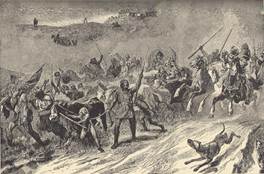
These tribes migrated further west, overrunning the western borders of the Roman Empire: Visigoths, Ostrogoths, Franks, Anglos, Saxons, Alemanni, Thuringians, Regains, Jutes, Picts, Burgundians, Lombards, Alans, and Vandals.
Rome had to withdraw its Legions from other areas of the Empire, such as the frontiers of Britain, in order to place them along the Roman border. This left Britain, which had been a Roman territory since Julius Caesar 55 BC, unprotected.
Ireland was ruled by the bloodthirsty, superstitious pagan Druids.
Thomas Cahill wrote in How the Irish Saved Civilization (Random House, 1995): “Romans, in their first encounters with these exposed, insane warriors, were shocked and frightened. They were howling and, it seemed, possessed by demons, so outrageous was their strength featuring all the terrors of hell itself. The Druids, from whom Halloween originated, believed that the trees and hills were inhabited by good and evil spirits which constantly needed to be appeased.”
Cahill continued: “(Druids) sacrificed prisoners of war to the war gods and newborns to the harvest gods. Believing that the human head was the seat of the soul, they displayed proudly the heads of their enemies in their temples and on their palisades; they even hung them from their belts as ornaments, used them as footballs in victory celebrations, and were fond of employing skull tops as ceremonial drinking bowls. They also sculpted heads – both shrunken, and decapitated heads.”
Patrick’s British name at birth was Sucat, but his Latin name was “Patricius,” meaning “Nobleman.”
Around 405 A.D., at the age of 16 years old, while working on his father’s farm near the sea, 50 currachs (longboats) filled with raiders weaved their way toward the shore.
Mary Cagney, author of the article “Patrick The Saint” (Christian History, Issue 60), wrote: “With no Roman army to protect them (Roman legions had long since deserted Britain to protect Rome from barbarian invasions), Patricius and his town were unprepared for attack. The Irish warriors, wearing helmets and armed with spears, descended on the pebble beach. Their braying war horns struck terror into Patricius’ heart, and he started to run toward town. The warriors quickly demolished the village, and as Patricius darted among the burning houses and screaming women, he was caught. Barbarians dragged him aboard a boat bound for the east coast of Ireland.”
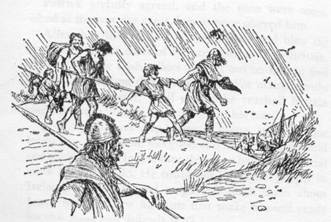
For six years Patrick herded animals for a Druid chieftain. He wrote in his life’s story, called The Confession of Saint Patrick: “But after I came to Ireland, every day I had to tend sheep, and many times a day I prayed; the love of God and His fear came to me more and more, and my faith was strengthened. And my spirit was moved so that in a single day I would say as many as a hundred prayers, and almost as many in the night, and this even when I was staying in the woods and on the mountains; and I used to get up for prayer before daylight, through snow, through frost, through rain.
There the Lord opened the sense of my unbelief that I might at last remember my sins and be converted with all my heart to the Lord my God who comforted me as would a father his son.”
Then Patrick had a dream, as he wrote: One night I heard in my sleep a voice saying to me: `It is well that you fast, soon you will go to your own country.’ And again a voice saying to me: `See, your ship is ready.’
And it was not near, but at a distance of perhaps two hundred miles. Then I took to flight. I went in the strength of God who directed my way, until I came to that ship.” He ran away and found a ship taking wolf-hounds back to Europe to sell as dogs and they let him come along.
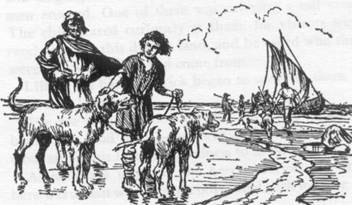
He eventually made his way back to Britain and was reunited with what was left of his family with whom he stayed.
Then, when he was about 40 years old, he had another dream calling him back to Ireland as a missionary.
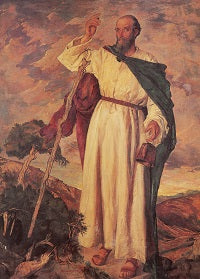
In his Confession, Patrick wrote: “In the depth of the night, I saw a man named Victoricus coming as if from Ireland, with innumerable letters, and he gave me one and while I was reading I thought I heard the voice of those near the western sea call out: ‘Please, holy boy, come and walk among us again.’ Their cry pierced my very heart, and I could read no more, and so I awoke.”
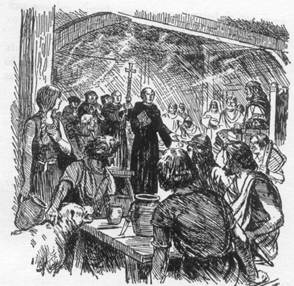
Patrick returned to Ireland where he confronted the Druids, and converted chieftains.
The Druids tried to ambush and kill Patrick nearly a dozen times: “Daily I expect murder, fraud or captivity, but I fear none of these things because of the promises of Heaven. The merciful God often freed me from slavery and from twelve dangers in which my life was at stake–not to mention numerous plots. God is my witness, who knows all things even before they come to pass, as He used to forewarn even me of many things by a divine message. I came to the people of Ireland to preach the Gospel, and to suffer insult from the unbelievers. I am prepared to give even my life without hesitation and most gladly for His name, and it is there that I wish to spend it until I die.”
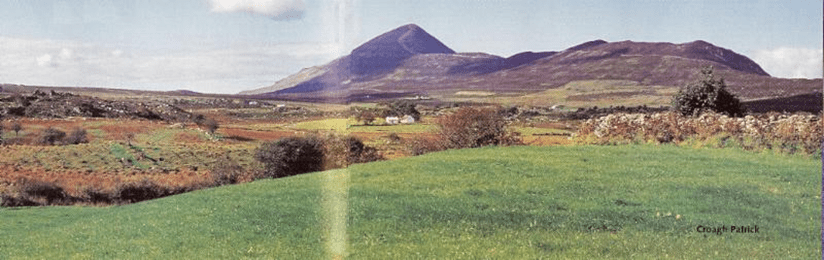
Encyclopedia Britannica stated that Patrick challenged: “royal authority by lighting the Paschal fire on the hill Slane on the night of Easter Eve. “It chanced to be the occasion of a pagan festival at Tara, during which no fire might be kindled until the royal fire had been lit.”
As Patrick’s fire on the Hill of Slane illuminated the countryside, King Loigaire (King Leary) is said to have exclaimed: If we do not extinguish this flame it will sweep over all Ireland.”
Mary Cagney, in “Patrick the Saint” (Christianity Today, Issue 60), wrote: “Predictably, Patrick faced the most opposition from the Druids, who practiced magic and advised Irish kings. Biographies of the saint are replete with stories of Druids who ‘wished to kill holy Patrick’. One biographer from the late 600’s, Muirchu’, described Patrick challenging Druids to contests at Tara. The custom was that whoever lit a fire before the king on that night of the year (Easter’s eve) would be put to death. Patrick lit the paschal fire before the king on the Hill of Slane. People saw Patrick’s fire throughout the plain, and the king ordered 27 chariots to go and seize Patrick. Seeing that the impious heathen were about to attack him, Patrick rose and said clearly and loudly, ‘May God come up to scatter his enemies and may those who hate him flee from his face.’ By this disaster, caused by Patrick’s curse in the king’s presence because of the king’s order, seven times seven men fell. And the king driven by fear, came and bent his knees before the holy man.'”
Many miraculous acts were attributed to Patrick.
In his thirty years of ministry, Saint Patrick is credited with baptizing 120,000 people and founding 300 churches. He used the three-leaf clover to teach the Trinity.
In his Confession, Patrick wrote: “I had long had it in mind to write, but up to now I have hesitated. I was afraid lest I should fall under the judgment of men’s tongues because I am not as well read as others. As a youth, nay, almost as a boy not able to speak, I was taken captive. Hence to-day I blush and fear exceedingly to reveal my lack of education; for I am unable to tell my story to those versed in the art of concise writing — in such a way, I mean, as my spirit and mind long to do, and so that the sense of my words expresses what I feel.”
In his letter to Coroticus, he wrote: “I, Patrick, a sinner, very badly educated.”
Coroticus was a tyrant king in Britain who carried off some of Patrick’s converts into slavery. Patrick wrote to him: “You prefer to sell them to a foreign nation that has no knowledge of God. You betray the members of Christ as it were into a brothel. Ravenous wolves have gulped down the Lord’s own flock which was flourishing in Ireland, and the whole church cries out and laments for its sons and daughters.”
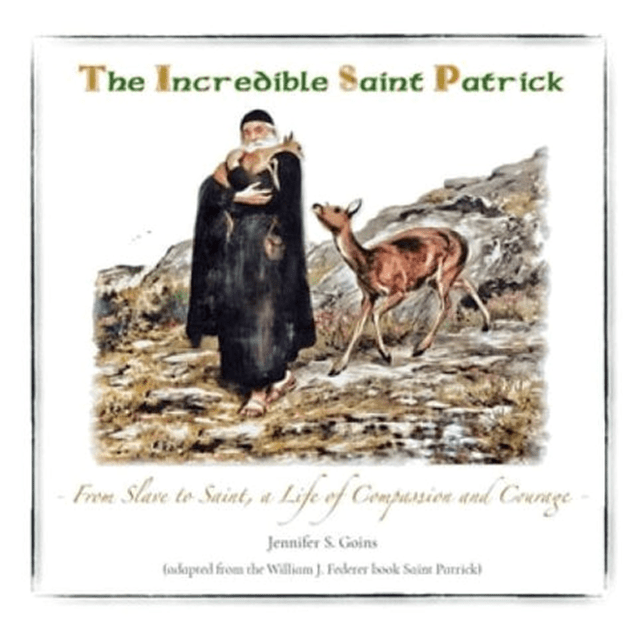
Leslie Hardinge wrote in The Celtic Church in Britain (Random House, 1995): “Wherever Patrick went and established a church, he left an old Celtic law book, Liber ex Lege Moisi (Book of the Law of Moses) along with the books of the Gospel.” . So, when the Irish converted to Christianity, they abandoned their pagan Druid laws, which Patrick replaced with Bible-based Latin-Irish laws. This became called the “Senchus Mor” or “Code of Patrick.”
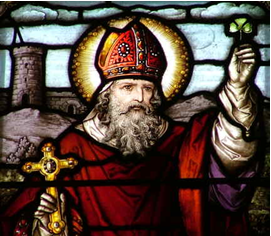
On MARCH 17, around 461 AD, Saint Patrick died. Patrick’s influence was so profound that over 1500 years later, there is still a date on the calendar to remember him.
An enormous wave of immigration occurred as a result of the Great Irish Potato Famine, 1845-1849. Millions of Irish died in Ireland and millions immigrated, causing the Catholic population in America to increase to 20 percent.
33 million Americans have Irish ancestry, composing about 11 percent of the U.S. population. Twenty-two U.S. Presidents have some Irish ancestry. Communities across America have Saint Patrick’s Day Parades, where all, both Protestants and Catholics, join together in celebrating St. Patrick and Irish heritage.
In his Confession, Saint Patrick wrote: “Patrick the sinner, an unlearned man to be sure. None should ever say that it was my ignorance that accomplished any small thing, it was the gift of God.”
The World Book Encyclopedia (Chicago, IL: Field Enterprises, Inc., 1957, p. 6142) stated of Saint Patrick: “He found Ireland all heathen and left it all Christian.”
Ron
 True Texan Tales