From 1714 to 1718, James Oglethorpe was a military aide under the command of Prince Eugene of Savoy fighting to drive the Muslim Turks out of Belgrade, Serbia.
After the battle, at the age of 22, Oglethorpe returned to England, where he entered Parliament and worked for prison reform after one of his friends died in debtors prison.
In 1732, Oglethorpe founded the Colony of Georgia in America for poor debtors and persecuted Christians. Oglethorpe defended Georgia from attacks launched out of Spanish Florida.
General James Oglethorpe’s secretary was Charles Wesley. Charles’ brother, John Wesley, served as the colony’s Anglican minister. John Wesley’s efforts to evangelize the Indians proved more difficult than anticipated, and his strict religiosity was resented by the colonists.
In 1737, John and Charles Wesley returned to England where they were befriended by a Moravian missionary named Peter Boehler, who was waiting for a ship to sail to Georgia. Peter Boehler shared with the Wesleys regarding the indwelling of the Holy Spirit, which resulted in their “Aldersgate experience” in May of 1738.
John Wesley wrote: “In the evening, I went very unwillingly to a Society in Aldersgate-Street, where one was reading Luther’s preface to the Epistle to the Romans. About a quarter before nine, while he was describing the change which God works in the heart through faith in Christ, I felt my heart strangely warmed. I felt I did trust in Christ; Christ alone, for salvation; and an assurance was given me, that he had taken away my sins, even mine, and saved me from the law of sin and death.”
John Wesley went over to Europe and lived with the Moravians for eight months. He accepted their faith “the religion of the heart.” The Wesleys’ began preaching that God’s grace was free for all. They influenced George Whitefield, who spread the Great Awakening Revival throughout the American colonies.
God is just, and therefore He must judge every sin; but God is love, as He provided His Son to take the judgement for our sins. The Lamb is God’s way to love us without having to judge us! This was foreshadowed when Abraham was taking his son, Isaac, to the top of Mount Moriah, Genesis 22:7-8: “Isaac spake unto Abraham. My father behold the fire and the wood: but where is the lamb for a burnt offering? And Abraham said, My son, God will provide himself a lamb for a burnt offering.”
This passage has a double meaning: First, that God will provide a sacrifice, a ram caught by its head in a thorn bush on top of Mount Moriah; and Second, that God will provide a sacrifice, His only begotten Son, upon whose head was a crown of thorns.
Charles Wesley wrote in a hymn published in 1738: “Amazing love! How can it be, That Thou, my God, shouldst die for me?”
Charles Wesley was the 18th child of Rev. Samuel and Susanna Wesley, born December 18, 1707, in Epworth, England. Susanna Wesley home-schooled all her 19 children, giving them a classical education which included learning Latin and Greek. Charles Wesley excelled in his studies. He attended Westminster School and Christ Church, Oxford, where he came to the attention of Garret Wellesley, a member of the British Parliament with a large fortune in Daugan, Ireland. Having no child, Garret Wellesley offered to adopt Charles as his heir, but Charles declined. Garret Wellesley then decided to leave his estate to his cousin Richard Colley Wellesly, the father of Arthur Wellesley, Duke of Wellington, who became famous for his role in defeating Napoleon at the Battle of Waterloo in 1815.
After graduating from Oxford, Charles Wesley sailed to the Colony of Georgia in 1732, serving as secretary to the colony’s founder, General James Oglethorpe.
In 1739, Charles Wesley penned “Hark! how all the Welkin – Heaven – rings.” George Whitefield suggested the first line be changed to “Hark! The Herald Angels Sing.” The song was put to the music of Lutheran composer Felix Mendelssohn, grandson of the notable Jewish philosopher, Moses Mendelssohn. “Hark! the Herald Angels Sing” was first published in 1739 in the collection Hymns and Sacred Poems. It was republished in George Whitefield’s Collection of Hymns for Social Worship in 1754.
In America, at this time, the French and Indian War was heating up. British General Edward Braddock fought the Battle of the Monongahela in 1755, assisted by the young officer named George Washington, who was miraculously spared. Also at the battle on the side of the British was 20-year-old wagon driver Daniel Boone. Colonial Americans found hope in singing Charles Wesley’s hymn:
“Hark, the Herald Angels sing, Glory to the new-born King, Peace on earth, and mercy mild, God and sinners reconciled.
Joyful all ye nations rise, Join the triumph of the skies; with angelic host proclaim, Christ is born in Bethlehem.”
Hark! The herald angels sing, “Glory to the newborn King!”
Christ by highest heav’n adored, Christ the everlasting Lord! Late in time, behold Him come, Offspring of a Virgin’s womb, Veiled in flesh the Godhead see, Hail the incarnate Deity!
Pleased as man with man to dwell, Jesus, our Emmanuel, Hark! The herald angels sing,”Glory to the newborn King!”
Hail the heav’n-born Prince of Peace! Hail the Son of Righteousness! Light and life to all He brings, Ris’n with healing in His wings.
Mild He lays His glory by, Born that man no more may die, Born to raise the sons of earth, Born to give them second birth.
Hark! The herald angels sing, “Glory to the newborn King!”
The same year Charles Wesley was born, 1707, Isaac Watts wrote the carol “Joy to the World,” which became one of the most published Christmas hymns in North America.
“Joy to the world! The Lord is come; Let earth receive her King;
Let every heart prepare him room, And heaven and nature sing,
And heaven and nature sing, And heaven, and heaven, and nature sing.
Joy to the world! The Saviour reigns; Let men their songs employ;
While fields and floods, rocks, hills, and plains
Repeat the sounding joy, Repeat the sounding joy,
Repeat, repeat the sounding joy.
No more let sins and sorrows grow, Nor thorns infest the ground;
He comes to make His blessings flow Far as the curse is found,
Far as the curse is found, Far as, the curse is found.
He rules the world with truth and grace, And makes the nations prove
The glories of His righteousness, And wonders of His love,
And wonders of His love, And wonders, wonders, of His love.”
At this time in Europe, composer George Frideric Handel was at a low point in his career, having suffered partial paralysis on his left side due to a stroke.
Incredibly, beginning August 22, 1741, George Handel composed “Messiah” in only 21 days, as part of a series of concerts in Dublin to benefit charities.
In Messiah, Handel included a line from the Book of Job 19:25:
“I know that my Redeemer liveth.”
The premiere was met with overwhelming success.
When it was performed in London, King George II stood to his feet during the singing of the “Hallelujah” Chorus.
In reflecting on the “Hallelujah Chorus,” 1742, Handel expressed what he saw in his mind and spirit that he expressed in the music:
“I did think I did see all heaven before me, and the great God Himself.
Another popular Christmas carol first published in 1751 was “O Come, All Ye Faithful,” originally written in Latin as “Adeste Fideles.” It is one of the oldest hymns, with attributions to 11th century Cistertian monks, 13th century St. Bonaventure, 17th century Portugal’s King John the Fourth, or 18th century John F. Wade, with music by John Reading:
“O come, all ye faithful, Joyful and triumphant,
O come ye, O come ye, to Bethlehem.
Come and behold Him, Born the King of angels!
– Chorus –
O come, let us adore Him, O come, let us adore Him,
O come, let us adore Him, Christ the Lord.
God of God, Light of Light,
Lo! he abhors not the Virgin’s womb;
Very God, Begotten not created.
– Chorus –
O come, let us adore Him, O come, let us adore Him,
O come, let us adore Him, Christ the Lord.
Sing, choirs of angels, Sing in exultation;
Sing, all ye citizens of heaven above!
Glory to God, In the highest;
– Chorus –
O come, let us adore Him, O come, let us adore Him,
O come, let us adore Him, Christ the Lord.
Yea, Lord, we greet Thee, Born this happy morning;
Jesus, to Thee be glory given; Word of the Father,
Now in flesh appearing.
– Chorus –
O come, let us adore Him, O come, let us adore Him,
How the world’s most famous Christmas carol came to be written and set to music:
O come, let us adore Him, Christ the Lord.”
How “Silent Night” the world’s most famous Christmas carol came to be written and set to music:
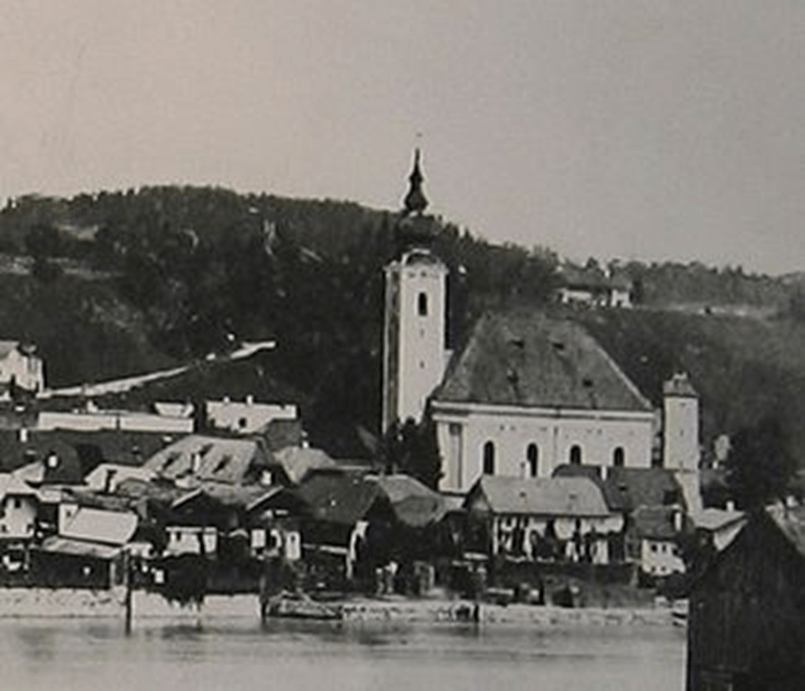
In 1818, a roving band of actors was performing in towns throughout the Austrian Alps. On December 23, they arrived at Oberndorf, a village near Salzburg, where they were to re-enact the story of Christ’s birth in the small Church of St. Nicholas.
Unfortunately, the St. Nicholas’ church organ wasn’t working and would not be repaired before Christmas. Because the church organ was out of commission, the actors presented their Christmas drama in a private home. That Christmas presentation of the events in the first chapters of Matthew and Luke put assistant pastor Josef Mohr in a meditative mood. Instead of walking straight home that night, Mohr took a longer way to his house. The longer path took him up on a hill overlooking the village.
From that hilltop, Mohr looked down on the peaceful snow-covered village. Reveling in the majestic silence of a wintry night, he recalled a poem he had written a couple of years before about the night angels announced the birth of the Messiah to shepherds.
Mohr decided those words might make a good carol for his congregation the following evening at their Christmas Eve service. The problem was he didn’t have any music to which that poem could be sung. So, the next day, Mohr went to see the church organist, Franz Xaver Gruber. Gruber only had a few hours to compose a melody that could be played on a guitar. By that evening, Gruber had composed a musical setting for the poem. That the church organ was inoperable no longer mattered. They now had a Christmas carol that could be sung without an organ.
On Christmas Eve, the small Oberndorf congregation heard Gruber and Mohr sing their new composition to the accompaniment of Gruber’s guitar.
Weeks later, well-known organ builder Karl Mauracher arrived in Oberndorf to fix the organ in St. Nicholas church. When Mauracher finished, he let Gruber test the instrument. Gruber began playing the simple melody he had written for Mohr’s poem. Impressed, Mauracher took copies of the music and words back to his own Alpine village, Kapfing. There, two well-known families of singers — the Rainers and the Strassers — heard it. Captivated by “Silent Night,” both groups put the new song into their Christmas repertoire.
The Strasser sisters spread the carol across northern Europe. In 1834, they performed “Silent Night” for King Frederick William IV of Prussia, who liked it so much he ordered his cathedral Christmas Eve group to perform it.
Twenty years after “Silent Night” was written, the Rainers brought the song to the United States, singing the original German version at New York City’s Trinity Church.
In 1863, nearly fifty years after being sung in German, “Silent Night” was translated into English by either Jane Campbell or John Young. Eight years later, that English version made its way into print in Charles Hutchins’ Sunday School Hymnal. Today, the words of “Silent Night” are sung worldwide in more than 300 languages.
Artists who have recorded it in English include Bing Crosby, Elvis Presley, and Mariah Carey. Bing Crosby’s version is one of the best-selling singles of all time.
Here are the complete lyrics of Silent Night in English:
“Silent night, holy night
All is calm, all is bright
Round yon virgin mother and Child
Holy Infant so tender and mild
Sleep in heavenly peace
Sleep in heavenly peace
Silent night, holy night
Shepherds quake at the sight
Glories stream from heaven afar
Heavenly hosts sing halleluia
Christ the Savior is born
Christ the Savior is born
Silent night, holy night
Son of God, love’s pure light
Radiant beams from Thy holy face
With the dawn of redeeming grace
Jesus Lord at Thy birth
Jesus Lord at Thy birth”
Ron
 True Texan Tales