One of the most amazing episodes in the modern history of mankind was the French Revolution. The attempt to bring it to young America was a most perilous time for our young county. Below, I have chronicled some of its history and the result of the attempt to bring it to the young republic of America.
In 1781, the monarchs of France, 27-year-old King Louis XVI and 26-year-old Queen Marie Antoinette, sent the French navy and army to help America gain independence from Britain.
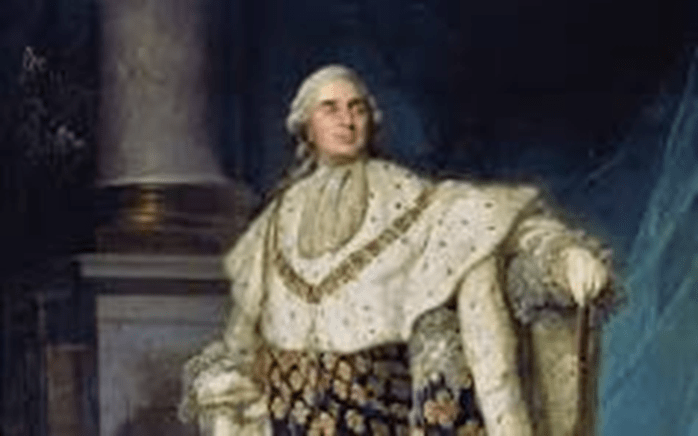

In return, France gained very little, except an enormous amount of debt.
On the verge of financial collapse, France then experienced a terrible famine in 1788. The people blamed the King and Queen.
Anti-monarchists referred to Queen Marie Antoinette as Madame Déficit. According to Jean-Jacques Rousseau, when she was told the people did not have bread, her naive reply was: “Let them eat cake.”

On July 14, 1789, an anarchist mob went through the streets of Paris and stormed the the Bastille Fortress which had been used as the police prison. The king, endeavoring to be an enlightened monarch, allowed rioters space to blow off steam, and withheld police from responding with force. Sadly, the more benevolence he showed, the more the unruly rioters became embolden to commit increased violence.
On October 5, 1789, a peaceful protest began — a Women’s March demanding bread, but it escalated into a violent mob which surrounded the King’s Palace at Versailles. The Marquis de Lafayette attempted to convince the crowd to show moderation, but they ignored him.
Disgruntled soldiers sympathetic to the demonstrators, failed to defend the palace. Finding an unguarded door, rioters barged in. Two guards were killed, with one’s head placed on a pike. The Queen fled through a secret passage to the King’s chamber.
With the mob now numbering 60,000, the King and Queen were escorted back to Paris, where they became captives in the Royal residence called the Tuileries. On June 20, 1791, the Royal family tried escaping by carriage at night. They almost made it out of France, but someone recognized the king’s face from having seen it on French currency. One again, the royal family were captives in the Tuileries.
Left-wing “Jacobin Club” agitators, most notably Maximilien Robespierre, whipped the city into an anti-king frenzy. The Tuileries were stormed August 10, 1792. The naive King ordered his loyal Swiss guards, who had sworn to defend him, to stand down. Instead of showing restraint, the mob slaughtered hundreds of the Swiss guards.

Following the example of England’s regicide in 1649, with the beheading of its regent King Charles I, France committed regicide on January 21, 1793, with the beheading its regent, King, Louis XVI. The French Revolution quickly turned into a bloodbath, called the Reign of Terror.
The motto of the French Revolution sounded noble, “liberté, égalité, fraternité,” which stood for liberty, equality and fraternity=– “fraternity” being another word for socialism. At issue was the mutually exclusive nature of these words: “liberty” being experienced individually, but “fraternity” being the collective, the mob, the social contract state.
In France, “equality” was “equity” — was everyone having an equal amount of stuff, material possessions. It was called “The reign of Terror”. The terror was not just an unfortunate side effect it was the Revolution’s source of collective energy. From the very beginning, violence was the motor of the revolution.
Robespierre began accusing, arresting, and beheading:
- first all the royalty;
- then the wealthy;
- then the farmers and businessmen;
- then those hoarding food;
- then the religious clergy;
- then the former revolutionaries.
Over 40,000 French citizens who held to old values, were falsely accused by the new intolerant government of being domestic terrorists. These citizens were arrested, interrogated, imprisoned and beheaded in Paris.
The French Revolution initiated an intentional campaign to separate French society from its Judeo-Christian past and replace it with a civic religion of state worship.
Not wanting a constitution that was “Done in the year of the Lord,” as the U.S. Constitution was, the French made 1792 the new “Year One.” They did not want a seven day week with a Sabbath day of rest, as this was derived from the Bible, so they devised a ten day “decade” week, and ten month year.
The new secular government proceeded to:
- Forbid crosses as being offensive;
- Religious monuments were destroyed;
- Statues were torn down, including that of Good King Henry IV;
- Christian graves were desecrated, including that of Ste. Genevieve, the patron saint of Paris who called the city to pray when Attila the Hun was attacking in 451 AD;
- Public and private worship and education outlawed;
- Priests and ministers, along with those who harbored them, were executed on sight;
- Churches were closed or used for “immoral,” “lurid,” “licentious,” “scandalous” “depravities.”
Robespierre put a prostitute in Notre Dame Cathedral, covered her with a sheet, and called her “the goddess of reason” to be worshiped.
So many were being beheaded, a more efficient machine was invented to do it —the guillotine.
During this time, French privateers ignored treaties and by 1798, had seized nearly 300 American ships bound for British ports. Talleyrand, the French Minister of Foreign Affairs, demanded millions of dollars in bribes to leave America’s ships alone.
Alexander Hamilton and others condemned the French Revolution and its attempt to overthrow Christianity. So, the cry went up across America, “Millions for defense, not a cent for tribute.”

American college campuses were being infiltrated by “decadent, ungodly and immoral Francophiles” — the term used to describe those fascinated with culture, infidelity and irreligion which was being exported from France.
President Adams declared a Day of Fasting, March 23, 1798, and again, March 6, 1799.
As America and France came perilously close to war, second President John Adams asked George Washington, now retired at Mount Vernon, to again be Commander-in-Chief of the Army.
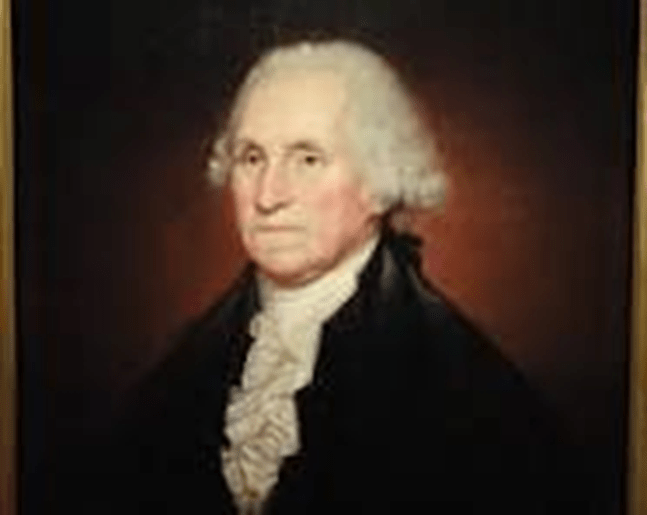
Washington wrote the following words in reply: “Satisfied you have exhausted, to the last drop, the cup of reconciliation, we can, with pure hearts, appeal to Heaven for the justice of our cause; and may confidently trust the final result to that kind Providence who has, heretofore, and so often, signally favored the people of these United States. Feeling how incumbent it is upon every person to contribute at all times to his country’s welfare, and especially in a moment like the present, when everything we hold dear and sacred is so seriously threatened, I have finally determined to accept the commission of Commander-in-Chief.”
Washington was not asked to be President again since head of the American Army was a more powerful position.
Now head of the Army again, George Washington, though now old, decreed that under no circumstances would anything like the French Revolution ever be tolerated in the United States of America. And it for sure was not.
George Washington died only a year later on July 13, 1798. But that was enough time to make sure that his “decree” was for sure enforced.
 True Texan Tales