This great man was so very influential in American history. He not only was President of the Unite States, he was one of the only patriots who not only knew all of the Founding Fathers, including George Washington, but also knew Abraham Lincoln. I think you would be interested in the fact that he was one of the first who recognized how dangerous Muslims were. And no U.S. political figure was ever as great a scholar of the Bible as this amazing man. He mastered Russian, Dutch, Portuguese, French, German, Greek, Latin, and Hebrew as written in the time of Christ. His intellect was astounding. We can learn much from what such intellect chose to be centered upon. Do read some of his story that I have compiled below: Ron
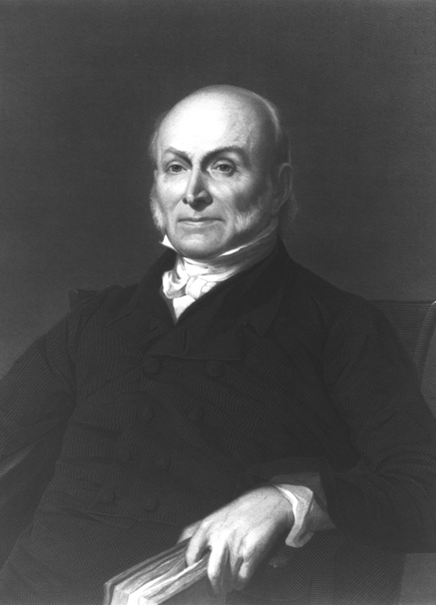
The son of the second President, John Adams, John Quincy Adams had one of the longest careers in American politics.
His many positions included:
At age 11, he accompanied his father as part of a diplomatic team to France and the Netherlands, 1778;
At 14 , he was secretary to the American diplomat to Russia, 1781-1783;
At 17, he assisted his father’s diplomatic role in England, 1784;

President Washington appointed him U.S. Ambassador to the Netherlands, 1794-1797;
U.S. Ambassador to Portugal, 1796;
U.S Ambassador to Prussia, 1797-1801;
U.S. Senator from Massachusetts, 1803;-1808

Professor of Logic at Brown University, 1803-1808;
Professor Rhetoric & Oratory, Harvard University, 1806-1809;
Argued before Supreme Court, Fletcher v. Peck, 1809;
President Madison appointed him to be First U.S. Minister to Russia, 1809-1814;
Published Lectures on Rhetoric & Oratory, 1810;
President Madison nominated him to the Supreme Court, being confirmed unanimously by the Senate, but declined, 1811;
He negotiated the Treaty of Ghent, which favorably ended the War of 1812 (Britain intended to retain the territory around the Great Lakes);
President Madison appointed him U.S. Minister to Great Britain, appointed by Madison, 1815-1817;
U.S. Secretary of State, under President Monroe, 1817-1825, where he negotiated the Adams-Onis Treaty, obtaining Florida from Spain;
He was the 6th President of the United States, 1825-1829;
U.S. Congressman from Massachusetts, 1831-1848.
John Quincy Adams was the only U.S President to serve as a Congressman in the U.S. House of Representatives after having been President.
In Congress, he earned the nicknamed “The Hell-Hound of Slavery” for relentlessly speaking out against slavery. In 1839, he introduced a constitutional amendment to ban slavery in all new states entering the Union.
In 1841, at the age of 73, John Quincy Adams spoke for nine hours defending the 53 Africans accused of mutiny aboard the Spanish slave ship La Amistad. With the help of lawyer Francis Scott Key, he argued their case before the U.S. Supreme Court and won, giving them back their freedom.
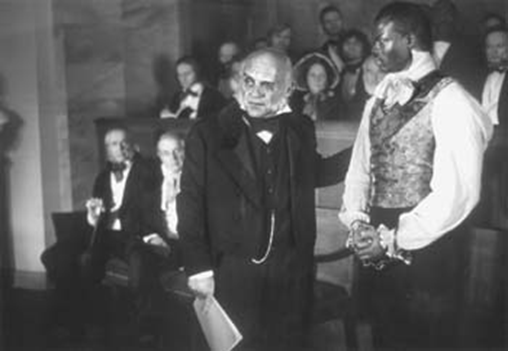
He was the only major figure in American history to know both the Founding Fathers, including George Washington, and Abraham Lincoln.

The annotated John Quincy Adams-A Bibliography, compiled by Lynn H. Parsons (Westport, CT, 1993, p. 41): “The natural hatred of the Mussulmen towards the infidels is in just accordance with the precepts of the Koran. The fundamental doctrine of the Christian religion is the extirpation of hatred from the human heart. It forbids the exercise of it, even towards enemies.
He continued:
“In the 7th century of the Christian era, a wandering Arab spread desolation and delusion over an extensive portion of the earth. (Muhammad)
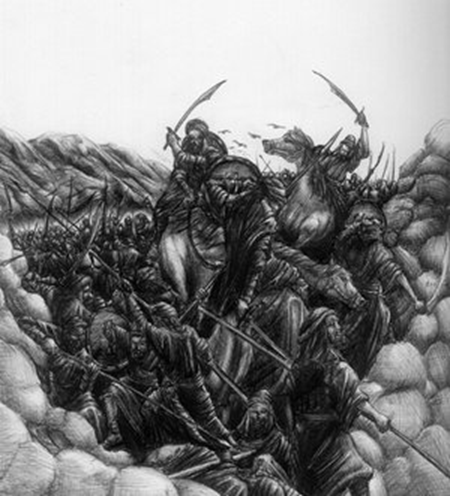
He declared undistinguishing and exterminating war as a part of his religion. The essence of his doctrine was violence and lust, to exalt the brutal over the spiritual part of human nature.”
“Prophet, We have made lawful to you the slave girls whom Allah has given you as booty.”
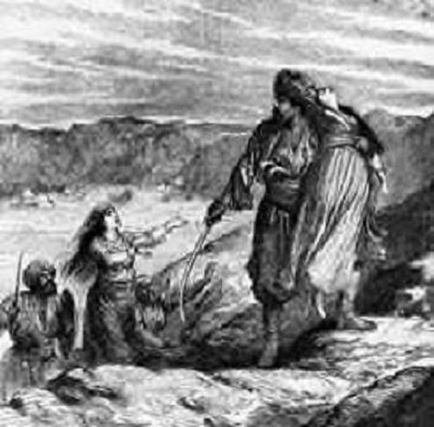
John Quincy Adams-A Bibliography reported that during the Barbary Pirate Wars: “Our gallant Commodore Stephen Decatur chastised the pirate of Algiers. The Dey (Omar Bashaw) disdained to conceal his intentions; ‘My power,’ said he, ‘has been wrested from my hands; draw ye the treaty at your pleasure, and I will sign it; but beware of the moment, when I shall recover my power, for with that moment, your treaty shall be waste paper.'”

Frederick Leiner wrote in The End of the Barbary Terror-America’s 1815 War Against the Pirates of North Africa (Oxford University Press): “Commodore Stephen Decatur and diplomat William Shaler withdrew to consult in private. The Algerians were believed to be masters of duplicity, willing to make agreements and break them as they found convenient.”

The Annotated John Quincy Adams-A Bibliography (NY: 1830) continued with the statement: “The vanquished may purchase their lives, by the payment of tribute; the victorious may be appeased by a false and delusive promise of peace. The faithful follower of the prophet may submit to the imperious necessities of defeat: but the command to propagate the Moslem creed by the sword is always obligatory, when it can be made effective. The commands of the prophet may be performed alike, by fraud, or by force.”
John Quincy Adams described Muslim behavior in “Essay on Turks” (The American Annual Register for 1827-28-29): “Such is the spirit, which governs the hearts of men, to whom treachery and violence are taught as principles of religion.”
Scottish philosopher David Hume wrote the Prophet of Islam in Of the Standard of Taste, 1760: “Let us attend to his narration; and we shall soon find, that the prophet bestows praise on such instances of treachery, inhumanity, cruelty, revenge, bigotry, as are utterly incompatible with civilized society.”
Winston Churchill described Muslim behavior in The Story of the Malakand Field Force (Dover Publications, 1898): “Their system of ethics, which regards treachery and violence as virtues rather than vices, has produced a code of honor so strange and inconsistent, that it is incomprehensible to a logical mind.”
After reading the insight of John Quincy Adams, Winston Churchill and David Hume, one is faced with a perplexing question — if someone is capable of decapitating you, would they first be willing to lie to you about their intentions?
While General Andrew Jackson was fighting the British in the area of Louisiana, Mississippi, Alabama, and West Florida, John Quincy Adams was negotiating the Treaty of Ghent in Belgium, which ended the War of 1812.

Afterwards, he traveled to Paris and saw Napoleon being returned to power for his famous 100 last days as Emperor.
One of the major influences that shaped the views and actions of John Quincy Adams was the Bible, as he wrote in his diary, September 26, 1810: “I have made it a practice for several years to read the Bible through in the course of every year. I usually devote to this reading the first hour after I rise every morning. I have this morning commenced it anew, this time with Ostervald’s French translation.”
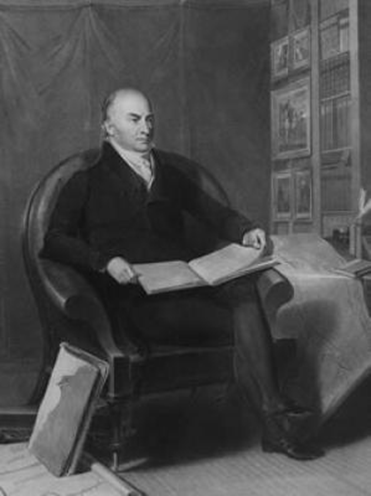
In September of 1811, John Quincy Adams wrote to his son from St. Petersburg, Russia: “My dear Son, you mentioned that you read to your aunt a chapter in the Bible or a section of Doddridge’s Annotations every evening. This information gave me real pleasure; for so great is my veneration for the Bible. It is of all books in the world, that which contributes most to make men good, wise, and happy. My custom is, to read four to five chapters every morning immediately after rising from my bed.
Adams continued:
It is essential, my son that you should form and adopt certain rules of your own conduct. It is in the Bible, you must learn them. ‘Thou shalt love the Lord thy God, with all thy heart, and with all thy soul, and with all thy mind, and with all thy strength, and thy neighbor as thy self.’ On these two commandments, Jesus Christ expressly says, ‘hang all the law and the prophets.'”
John Quincy Adams’ correspondence to his son is compiled in Letters of John Quincy Adams to his son, on the Bible and its Teachings, which contains his statement: “No book in the world deserves to be so unceasingly studied, and so profoundly meditated upon as the Bible.”
On March 13, 1812, John Quincy Adams noted: “This morning I finished the perusal of the German Bible.”
Adams wrote December 24, 1814: “You ask me what Bible I take as the standard of my faith — the Hebrew, the Samaritan, the old English translation, or what? I answer, the Bible containing the Sermon on the Mount. The New Testament I have repeatedly read in the original Greek, in the Latin, in the Geneva Protestant, in Sacy’s Catholic French translations, in Luther’s German translation, in the common English Protestant, and in the Douay Catholic translations. I take any one of them for my standard of faith.”
On December 31, 1825, John Quincy Adams wrote in his diary: “I rise usually between five and six. I walk by the light of the moon or stars, or none, about four miles, usually returning home. I then make my fire, and read three chapters of the Bible.”
 True Texan Tales