At this time of year we hear a lot about Hanukkah. However, few really know its history or even where it came from. If you would like to know its real story and history, do read the following:
Ron
The origin of lights at this season can be traced back to the Jewish Festival of Lights, or Feast of the Dedication, in Hebrew called “Hanukkah.”
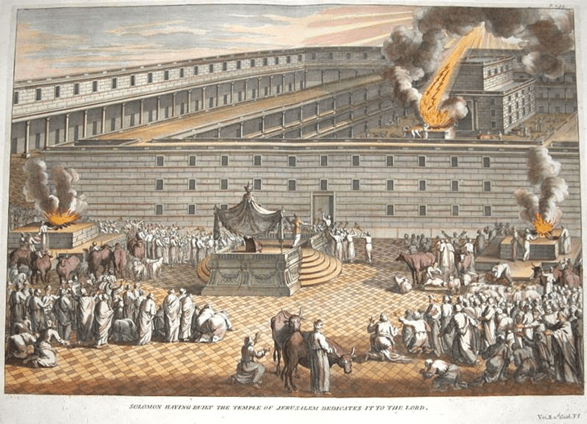
Solomon’s week-long dedication of the First Temple began on the 1st day of the Hebrew month Tishri, in the 10th century B.C., ending on the 8th day of Tishrei. First Kings 8; Second Chronicles 7.
Beginning in 597 B.C., the army of Babylon surrounded Jerusalem, deposed King Jehoiachin, and deported the first group of Jews. Babylonian’s army returned and destroyed the First Temple on the 9th day of the month of Av, circa 587 B.C., and made a second deportation of Jews.
The prophet Jeremiah wrote in chapter 25: “And it shall come to pass, when seventy years are accomplished, that I will punish the king of Babylon, and that nation, saith the Lord.”
And Jeremiah wrote in chapter 29: “For thus saith the Lord, That after seventy years be accomplished at Babylon I will visit you, and perform my good word toward you, in causing you to return to this place.”
The prophet Daniel read Jeremiah’s prophecy and wrote in chapter 9: “In the first year of his reign I Daniel understood by books the number of the years, whereof the word of the Lord came to Jeremiah the prophet, that he would accomplish seventy years in the desolations of Jerusalem.”
In 539 B.C., Cyrus of Persia captured Babylon, the ancient world’s largest city. Shortly after, Cyrus let Jews return to Jerusalem after 70 years of captivity.
The Book of Ezra, chapter 6, recorded how Jews built the Second Temple and dedicated it circa 516 B.C.
Around 334 B.C., Alexander the Great invaded from the west and speedily conquered the Medo-Persian Empire.
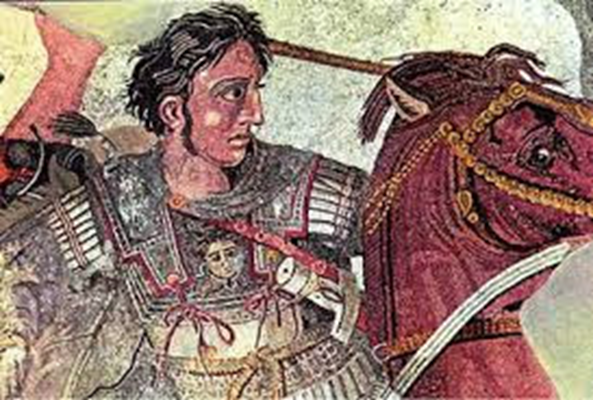
The prophet Daniel foretold in chapter 8: “The male goat was coming from the west over the surface of the whole earth without touching the ground; and the goat had a conspicuous horn between his eyes. He came up to the ram that had the two horns, which I had seen standing in front of the canal, and rushed at him in his mighty wrath and he struck the ram and shattered his two horns. (Reference to Alexander)
At the height of his power, Alexander the Great suddenly died and his four generals divided up his empire.
Daniel had foretold: “The male goat magnified himself exceedingly. But as soon as he was mighty, the large horn was broken; and in its place there came up four conspicuous horns toward the four winds of heaven.”
The common understanding is that Alexander’s Empire, after numerous “Diadochi” battles, was divided up thus among his four generals:
- Lysimachus ruled Thrace & Asia Minor;
- Cassander ruled Macedonia and Greece;
- Ptolemy ruled Egypt and into the Middle East;
- Seleucus ruled the rest of the Middle East, Syria, Babylon, Persia, and parts of India, collectively known as the “Seleucid Empire”.
Daniel wrote further: Around 167 B.C., out of the Seleucid Empire, there arose an aggressive king, Antiochus the Fourth Epiphanes.
And as expressed by Daniel: “Out of one of them came forth a rather small horn which grew exceedingly great toward the south, toward the east, and toward the Beautiful Land.”
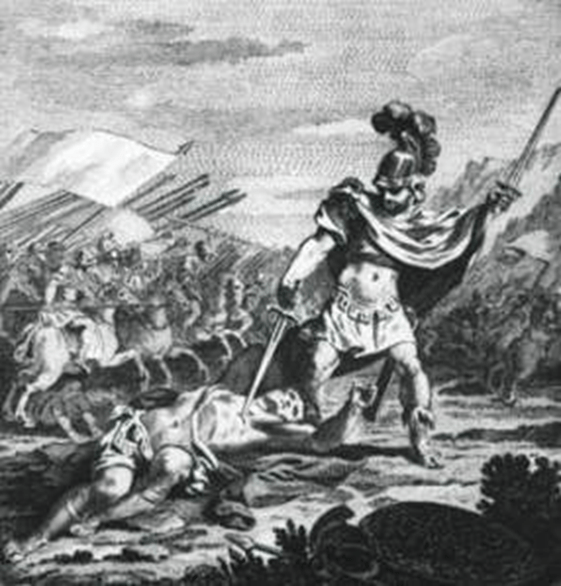
Antiochus attacked Jerusalem, as reported in 2nd Book of Maccabees 5:11-14: “The king thought that Judea was in revolt. Raging like a wild animal, he set out from Egypt and took Jerusalem by storm. He ordered his soldiers to cut down without mercy those whom they met and to slay those who took refuge in their houses. There was a massacre of young and old, a killing of women and children, a slaughter of virgins and infants. In the space of three days, eighty thousand were lost, forty thousand meeting a violent death, and the same number being sold into slavery.”
The prophet Daniel foretold in chapter 11:22-27: “While returning to his land with great riches, his heart shall be moved against the holy covenant and return in rage against the holy covenant, and do damage. And forces shall be mustered by him, and they shall defile the sanctuary fortress; then they shall take away the daily sacrifices, and place there the abomination of desolation.”
Antiochus the Fourth Epiphanes tried to force the Jews to abandon their beliefs and adopt the Greek culture, as recorded in 2 Maccabees 5:11-14: “Not long after this the king sent an Athenian senator to force the Jews to abandon the customs of their ancestors and live no longer by the laws of God; also to profane the temple in Jerusalem and dedicate it to Olympian Zeus. They also brought into the temple things that were forbidden, so that the altar was covered with abominable offerings prohibited by the laws. A man could not keep the sabbath or celebrate the traditional feasts, nor even admit that he was a Jew.
Women arrested for having circumcised their children were publicly paraded about the city with their babies hanging at their breasts and then thrown down from the top of the city wall. Others, who had assembled in nearby caves to observe the sabbath in secret, were betrayed and all burned to death.”
Though they were persecuted, Daniel prophesied: “But the people who know their God shall be strong, and carry out great exploits.”
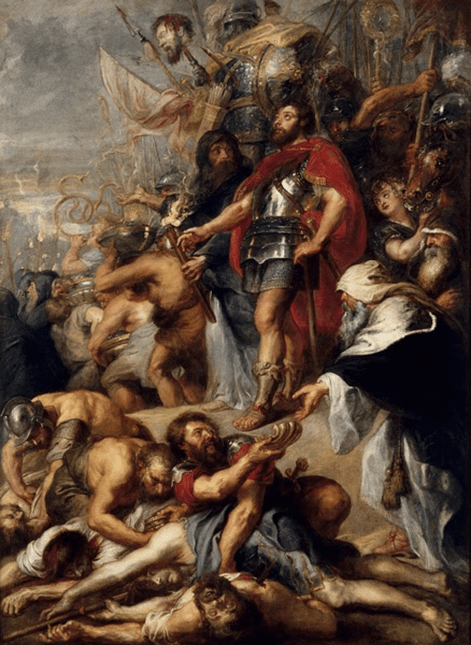
Around 167 B.C., Mattathias and his sons began the Maccabean Revolt against Antiochus Epiphanes. Judas Maccabaeus was finally successful in driving the enemy out circa 164 B.C. When the Second Temple was cleansed of all pagan defilement, a week long re-dedication began on the 25th day of Kislev, circa 164 B.C.
There was a problem though, there wasonly found enough holy olive oil to light the golden lamp stand, the menorah, for one day, and it would take a week before more could be made. The decision was made to relight it anyway, and miraculously, the light burned for eight days.
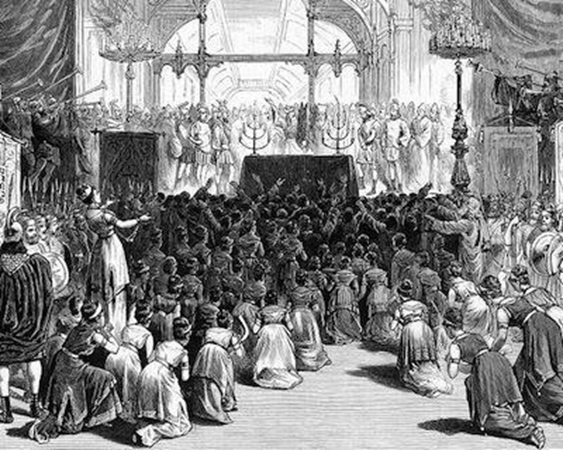
This is celebrated annually as the Feast of Dedication, also known as the Festival of Lights, or HANUKKAH, which is the Hebrew word for “dedication.”
Flavius Josephus wrote in the Jewish Antiquities (12.7.6-7 316-325) that circa 164 BC: “The generals of Antiochus’ armies having been defeated, Judah Maccabee assembled the people and told them that after the many victories which God had given them they ought to go up to Jerusalem and purify the Temple. But when he with the whole multitude came to Jerusalem and found he Temple deserted, its gates burned down, and plants growing in the Temple of their own accord because of the desolation, he and those with him began to lament.”
Josephus continued: “When he had carefully purged it he brought in new vessels, the menorah, the table and the incense altar, which were made of gold. And on the 25th day of the month Kislev, which the Macedonians call Apellaios, they lighted the lights that were on the menorah, and offered incense upon the altar, and laid the loaves upon the table, and offered whole burnt offerings upon the new altar. As it happened, these things took place on the very same day on which, three years before, the divine worship had been reduced to an impure and profane form of worship; for the Temple had remained desolate for three years after being made so by Antiochus.”
Josephus concluded: “And so Judah and his fellow citizens celebrated the festival of the restoration of the sacrifices of the Temple for eight days. They honored God, and delighted themselves with psalms of praise and the playing of harps. Indeed, they were so very glad at the revival of their customs and, after so long a time, having unexpectedly regained their right to worship, that they made it a law for their posterity that they should keep a festival celebrating the restoration of their Temple worship for eight days.”
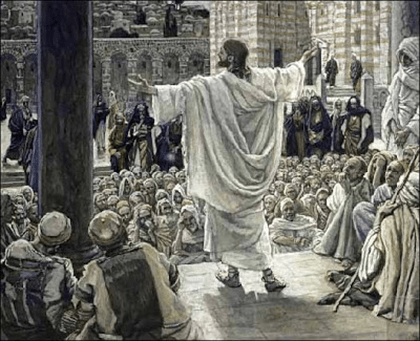
The New Testament Book of John, chapter 10:22-23, recorded that even Jesus observed the Feast of Dedication: “At that time the Feast of the Dedication took place at Jerusalem; it was winter, and Jesus was walking in the temple in the portico of Solomon. The Jews then gathered around Him, and were saying to Him, ‘How long will You keep us in suspense? If You are the Christ, tell us plainly.'”
The many centuries of Hanukkah candles being lit during the winter might have been an inspiration for the Christian tradition of putting lights in tree branches to depict the sky above Bethlehem.
Various U.S. Presidents acknowledged Hanukkah:
Franklin D. Roosevelt wrote to Samuel I. Rosenman, President of the Jewish Education Committee in New York, December 16, 1940: “Dear Sam, Please convey my best wishes to your co-workers in the Jewish Education Committee of New York, at the annual Hanukkah Dinner. Our modern democratic way of life has its deepest roots in our great common religious tradition, which for ages past has taught to civilized mankind the dignity of the human being, his equality before God, and his responsibility in the making of a better and fairer world. The world is engaged in a great spiritual struggle to test whether that ancient wisdom is to endure, or whether some few men shall dominate multitudes of others and dictate to them their thinking, their religion, their living. We need the sustaining, buttressing aid of those great ethical religious teachings which are the heritage of our modern civilization. For not upon strength nor upon power, but upon the spirit of God’ shall our democracy be founded.”
President Ronald Reagan stated in his Hanukkah Message, 1983: “Whether we be Americans or Israelis, we are all children of Abraham, children of the same God. The bonds between our two peoples are growing stronger, and they must not and will never be broken.
President George H.W. Bush stated in his Hanukkah Message, 1991: “When Judah Maccabee and his followers prepared to rededicate the Temple in Jerusalem, they found only enough oil to light the menorah for one night. Miraculously, it lasted eight.”
President Donald J. Trump remarked on Hanukkah, December 12, 2017: “The miracle of Hanukkah began more than 2,000 years ago, when the practice of Judaism was made punishable by death. A small band of Jewish patriots rose up and reclaimed their Jewish identity by vanquishing a mighty army. In their pursuit to rededicate their holy temple, the Jewish heroes found only enough oil to light the temple’s menorah for one night. However, a miracle occurred and with God’s grace the oil lasted for eight days. On this holiday, we are proud to stand with the Jewish people who shine as a light to all nations. We also stand with the people of Israel, the Jewish State, which has itself a miraculous history of overcoming the tallest of odds. We hope that those observing the holiday here, in Israel, and around the world have a wonderful holiday.”
The end, and asking Jesus’ blessing on the new year.
 True Texan Tales