This is Constitution Week in America. In that context I have provided you the following:
The most common form of government in world history is power concentrated into the hands of one person.
The most common form of government in world history is power concentrated into the hands of one person.
This person is called by different names in different countries: King, Khan, Caesar, Kaiser, Czar, Sultan, Maharaja, Emperor, Chairman Mao, Comrade Stalin, or El Presidente.
Though the name changes, the function remains the same — one person rule.
At the time of the American Revolution, the King of England was the most powerful king on the planet.
The writers of the Constitution had one overriding concern — how to prevent power from re-concentrating.
They designed Constitution to take the concentrated power of a king and separate it into three branches and pit the branches against each other in a three-way tug-of-war to check power; then separate power into Federal and State levels, then tie up this Federal Frankenstein with ten handcuffs–the First Ten Amendments.
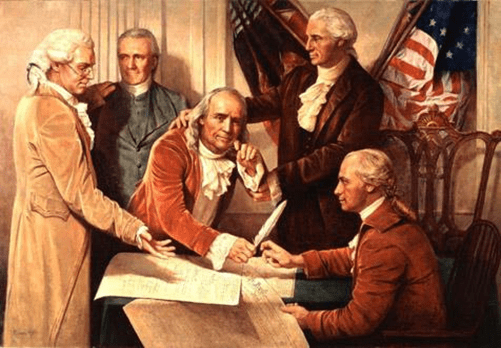
In a word, the U.S. Constitution is simply a way to prevent a President from ruling through mandates and executive orders — to prevent one-person rule.
The founders sacrificed to brake away from a tyrant who had weaponized law enforcement against his political opponents, as they admitted in the Declaration of Independence: “The history of the present King of Great-Britain is a history of repeated injuries and usurpations, all having in direct object the establishment of an absolute Tyranny over these States.
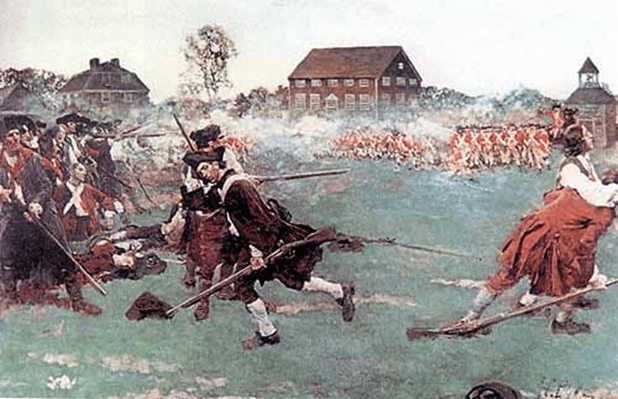
He has made judges dependent on his Will alone.
He has erected a multitude of new offices, and sent hither swarms of officers to harass our people.
A Prince whose character is thus marked by every act which may define a Tyrant, is unfit to be the ruler of a free people.”
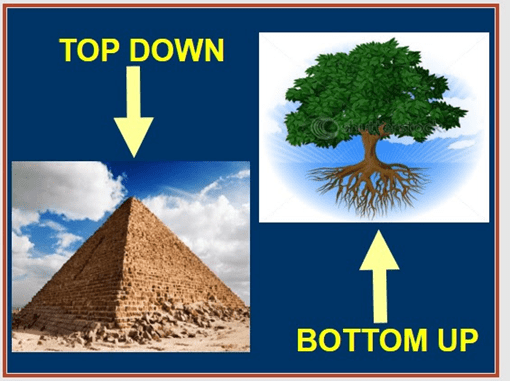
A monarchy is where the power flows TOP-DOWN, from the king through a deep-state bureaucracy to the lowly subjects below.

In contrast, in democracies and republics, the power flows BOTTOM-UP, from the citizens to their elected public-servant representatives.
It is the difference between a dead pyramid, ruled from top-down, and a living tree, where every root, even the tiniest, must participate from the bottom-up to keep the tree alive; every citizen must be involved.
Where kings have “subjects” who are subjected to the king’s will, democracies and republics have “citizens.”
“Citizen” is a Greek word having the meaning of co-ruler, co-sovereign, co-king.
Citizens are in charge of their own lives, and together, are in charge of the country.

“Polis” is the Greek word for “city.”
Residents of the city were called “polités” — the Greek word for “citizen.”
“Politics” is simply “the business of the city.”
The Latin word “civics” means “relating to a citizen.”
Aristotle wrote in his work Politics (335-323 BC): “Man is a political animal.”
Now know……………A republic differs from a democracy.
The word “democracy” has two general definitions:
- one is a general reference to “popular” governments, where the population, the people rule themselves;
- the other is an actual system of government.
As an actual system of government, a democracy only worked on a small-scale where THE PEOPLE rule directly by being present at every meeting.
A republic, on the other hand, is where THE PEOPLE rule indirectly through their representatives.
As a system of government, a DEMOCRACY only successfully worked on a small scale, like the Greek city-states that began to around 800 BC.
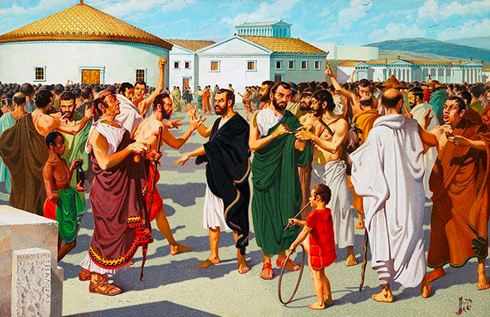
City-states were limited in size, as logistically, every citizen had to go to the marketplace everyday to discuss every issue face to face. It was very time consuming.
If a democracy grew larger than where citizens could travel the distance to the market everyday, power subtlety transferred to the busy-body messengers who carried news of the issues back and forth, and they could slant it any way they wanted.
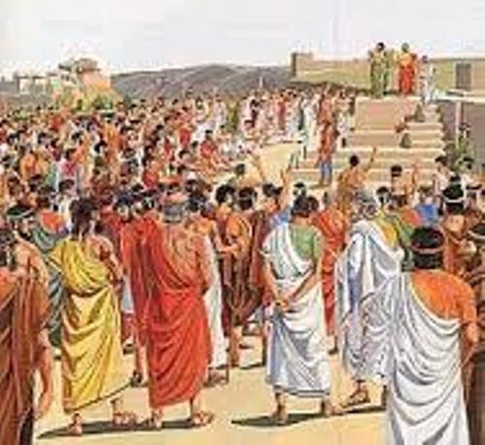
Republics could grow larger than democracies, as citizens could spend their time taking care of their families and farms, and have representatives in their place go to the market everyday to discuss politics.

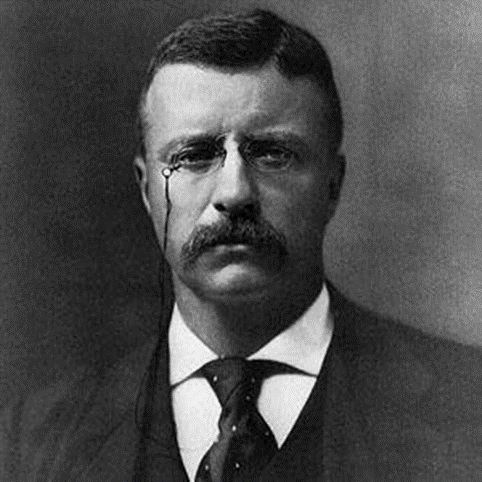
America’s republic is unique in that it has grown to have the most citizens of any republic in world history, as Theodore Roosevelt stated October 24, 1903: “In no other place and at no other time has the experiment of government of the people, by the people, for the people, been tried on so vast a scale as here in our own country.”
In the Roman Republic, “representatives” were hereditary positions.

The American Republic is a hybrid, where representatives are democratically elected.
A “constitutional” republic limits representatives with a set of rules approved by the citizens.
Where democracies are susceptible to being whipped into a frenzy, allowing a majority to carry out sudden mob justice, constitutional republics are slower to change, especially when they have the goal of guaranteeing to citizens’ their Creator-given rights.
America’s founders designed a government that was intentionally slow to change — frustratingly slow at times in making good changes, but thankfully slow in making irreversible bad changes.
The founders realized it could take a lifetime to build a mansion and one irresponsible match to burn it down in a day.
A signer of the Constitution James McHenry noted in his diary (American Historical Review, 1906), that after Ben Franklin left the Constitutional Convention, he was asked by Mrs. Elizabeth Powel of Philadelphia:
“Well, Doctor, what have we got, a republic or a monarchy?”
Franklin replied, “A republic, if you can keep it.”

 True Texan Tales