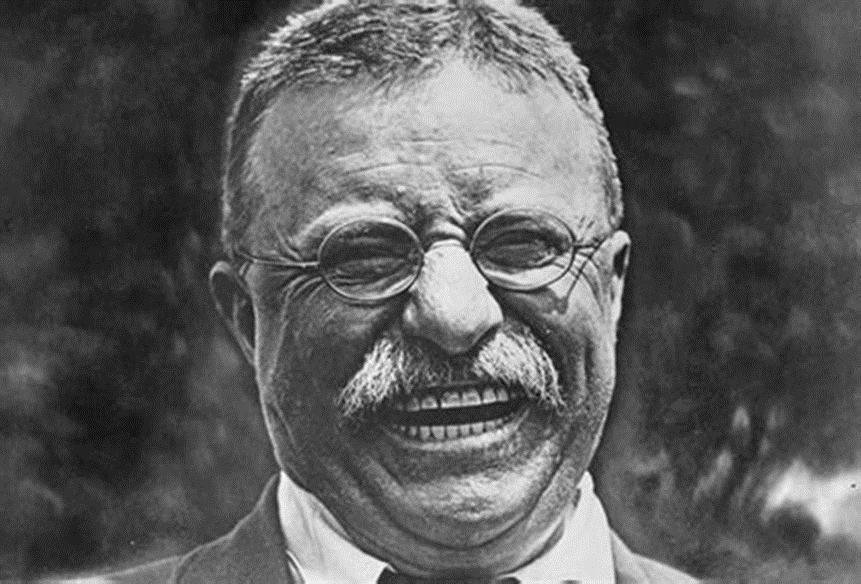
Yes, you have heard stories about this man, how he stormed San Juan Hill with his Rough Riders, and how Franklin Roosevelt gained the White House on his coat tailes. However, his whole life was so amazing and so influenced our America, that I wanted you to have the opportunity to see his whole story, as shown below: Ron
Theodore Roosevelt, Jr., was born October 27, 1858.
As a child, he had debilitating asthma, often waking up at night as if being smothered to death.
At 6-years-old, he watched Abraham Lincoln’s funeral procession from the window of his grandfather’s mansion in Union Square, New York City.
Theodore was home-schooled as a child, becoming fascinated with animals and zoology after seeing a dead seal in a local market.
His father, Theodore Roosevelt, Sr., was a successful New York business leader, who helped raise support for the Union during the Civil War.
Young Theodore described him: “My father, Theodore Roosevelt, was the best man I ever knew. He combined strength and courage with gentleness, tenderness, and great unselfishness. He would not tolerate in us children selfishness or cruelty, idleness, cowardice, or untruthfulness.”

His father took the family on trips to Europe in 1869 and 1870, and Egypt in 1872, and helped found New York’s Metropolitan Museum of Art.
At 15-years-old, Roosevelt wrote of their trip to Jerusalem: “In the afternoon we went to the Wailing Place of the Jews.”
After being accosted by older boys on a camping trip, Roosevelt began exercising. He became an accomplished boxer and a third-degree brown belt in judo.
He entered Harvard in 1876.

He was devastated in 1878 upon news of the sudden death of his father, who had told him: “Take care of your morals first, your health next, and finally your studies.”
After graduation, he attended Columbia University Law School in New York.
While there, at the age of 23, he wrote a significant book, The Naval War of 1812 (published in 1882).
The book was so well received that just four years later, the U.S. Navy ordered a copy of it to be placed on every ship.
The book influenced Rear Admiral Alfred Thayer Mahan to write The Influence of Sea Power Upon the French Revolution and Empire, 1793–1812 (published in 1892).
This book revolutionized naval warfare, causing not only the United States, but Britain and Germany, to improve their navies.
Roosevelt began attending meetings of New York’s 21st District Republican Association.
When 20th President, Republican President James Garfield, was assassinated in 1881, and Chester Arthur became the 21st President, Roosevelt decided to run for state assemblyman.
He won in 1882, and dropped out of law school to pursue politics.

He was reelected in 1883, and again in 1884, the same year Democrat Grover Cleveland was elected the 22nd U.S. President.
In 1880, Theodore married Alice Hathaway Lee.

Four years later, in 1884, their daughter, Alice Lee Roosevelt, was born. Tragically, two days later, on February 14, 1884, Roosevelt’s mother, Mittie, died of typhoid, and later that afternoon, in the same house, his wife, Alice, died of kidney failure.
Roosevelt scratched in his diary a large black “X” with the words “The light has gone out of my life.”
Attending the Republican National Convention in June of 1884, he gave a speech in support of John Roy Lynch, an African-American former slave, recommending he be chosen as the temporary chair of the Convention.
After bitter political battles, Roosevelt retired from politics, left his baby daughter with his sister, and went to ranch in the Dakotas.
Roosevelt wrote that: “A cattle rancher had few of the emasculated, milk-and-water moralities admired by the pseudo-philanthropists; but he does possess, to a veryhigh degree, the stern, manly qualities that are invaluable to a nation.”

While there, he wrote three books: Hunting Trips of a Ranchman; Ranch Life and the Hunting-Trail; and The Wilderness Hunter.
Roosevelt bought a herd and ranched for three years, till the severe winter on 1886-1887 killed most of his cattle.
He returned east and married a childhood friend, Edith Kermit Carow, on December 2, 1886, at St George’s Church in Hanover Square, London.

Together they had five children, and also raised daughter Alice from his first marriage.
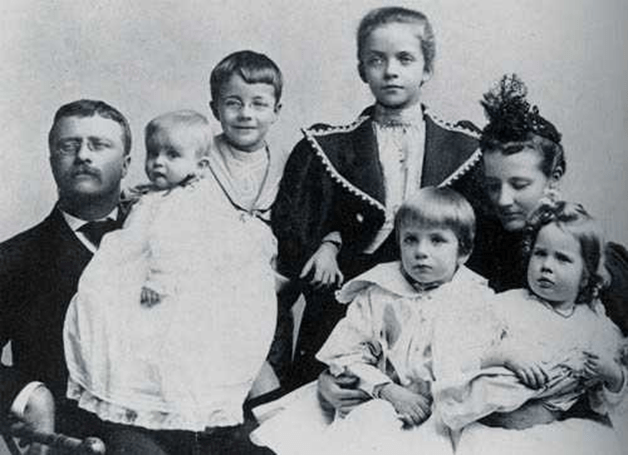
In 1886, he ran for Mayor of New York City, but lost.
He wrote another book: The Winning of the West.
Roosevelt campaigned for Republican Benjamin Harrison, who won election as the 23rd U.S. President.
Harrison appointed Roosevelt to the United States Civil Service Commission.
In 1892, Democrat Grover Cleveland won his second term, as the 24th President, and reappointed Roosevelt to the same position.
Before the mafia came to New York, the local police “ran” the crime in their districts.
In 1894, the Mayor of New York appointed Roosevelt to the City Police Commissioners, where he became president of the board, reforming the department, cleaning out corruption, and installing telephones in the station houses.

Roosevelt was for law and order. He walked officers’ beats on the streets after midnight to make sure they were on duty.
On Sundays to make sure all stores were closed to comply with New York’s Sunday Closing Blue Laws, which were put in place to promote observance of the Lord’s day of worship.
Roosevelt was the first to bring Jews into the police force, calling them his “Maccabees.”
Journalist Jacob Riis of the Evening Sun newspaper, wrote in his book How the Other Half Lives, of the terrible conditions the millions of immigrants suffered:
“When Roosevelt read my book, he came. No one ever helped as he did. For two years we were brothers in (New York City’s crime-ridden) Mulberry Street.
There is very little ease where Theodore Roosevelt leads, as we all found out.
The lawbreaker found it out, and lived to respect him. For the first time a moral purpose came into the street. In the light of it, everything was transformed.”
In 1897, when William McKinley became the 25th President, he appointed Roosevelt as the Assistant Secretary of the Navy.
With the help of Alfred Thayer Mahan, Roosevelt built up the U.S. Navy, especially battleships.
On February 15, 1898, USS Maine exploded in Cuba’s Havana Harbor, beginning the Spanish-American War.
Roosevelt immediately sent orders for the Navy to prepare for war. Admiral George Dewey later credited this as a key factor in quick victory in the Battle of Manila Bay.
Roosevelt resigned his position as Assistant Secretary of the Navy and organized the first Volunteer Cavalry, “The Rough Riders,” which helped capture Cuba’s San Juan Hill.

Upon his return to New York in 1898, Roosevelt ran for Governor and won.
In the 1900 Republican Convention, he was chosen to be the Vice-Presidential running-mate for William McKinley’s reelection.
When McKinley was assassinated on September 6, 1901, Theodore Roosevelt became America’s youngest President.
As the 26th U.S. President Theodore Roosevelt, a Republican, was the first President to invite an African American, Booker T. Washington, to dine in the White House on October 16, 1901.

Southern Democrat newspapers condemned him, as printed in The Memphis Scimitar: “The most damnable outrage which has ever been perpetrated by any citizen of the United States was committed yesterday by the President, when he invited a n…. to dine with him at the White House.
It would not be worth more than a passing notice if Theodore Roosevelt had sat down to dinner in his own home with a Pullman car porter, but Roosevelt the individual and Roosevelt the President are not to be viewed in the same light.”
Roosevelt addressed the Long Island Bible Society in 1901:
“Every thinking man realizes that the teachings of the Bible are so interwoven and entwined with our whole civic and social life that it would be literally — I do not mean figuratively, I mean literally — impossible for us to figure to ourselves what that life would be if these teachings were removed.
We would lose almost all the standards by which we now judge both public and private morals; all the standards toward which we, with more or less of resolution, strive to raise ourselves.
Almost every man who has by his lifework added to the sum of human achievement of which the race is proud, has based his lifework largely upon the teachings of the Bible.
Among the greatest men a disproportionately large number have been diligent and close students of the Bible at first hand.”
Roosevelt took on his era’s version of big tech globalist elites by being a “trust-buster,” breaking up monopolies, such as John D. Rockefeller’s Standard Oil Account.
He exposed deep-state corruption in the Bureau of Indian Affairs, Land Office, and Post Office.

After Upton Sinclair’s book, The Jungle (1906), Roosevelt harnessed public opinion to pass the Meat Inspection Act and the Pure Food and Drug Act.
He intervened to settle labor disputes.
On March 17, 1905, St. Patrick’s Day, President Theodore Roosevelt gave away in marriage his deceased brother’s daughter, Eleanor, to wed her fifth cousin, once removed, Franklin D. Roosevelt.
Capitalizing on Theodore’s name, Franklin rose in politics to become the 32th U.S. President.
Theodore Roosevelt is considered the first “conservationist president.”
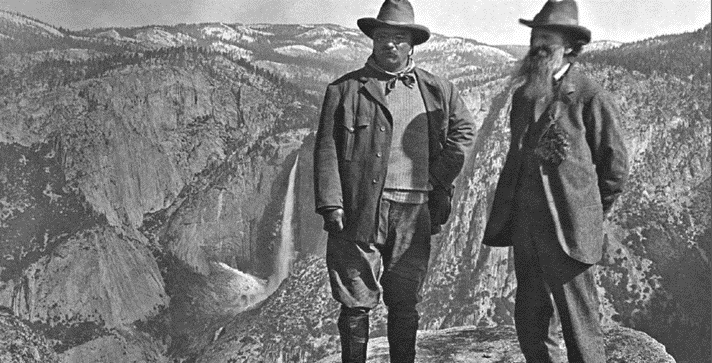
He created the U.S. Forest Service, designating:
5 National Parks;
18 U.S. National Monuments;
51 bird reserves,4 game preserves,
150 National Forests,being responsible for a total of 121 forest reserves in 31 states.
He set 230,000,000 acres under public protection and by the end of his second term established 150 million acres of reserved forestry land.
In his foreign policy, he assisted in 1904 to negotiate a Japan-Russian Treaty, for which he won the Nobel Peace Prize.
He intervened in the First Moroccan Crisis, the Venezuelan Crisis, and settled the dispute with Britain over the Alaskan border.
He helped Panama separate from Columbia, and began building the Panama Canal.
Roosevelt argued for the protection of Jews of North Africa.
Ambassador Michael B. Oren noted in Power, Faith and Fantasy, that in Roosevelt’s negotiations with Morocco, he insisted they:
“Secure his country’s customary concerns in the area, protecting North African Jews from oppression and American merchants from unfair restrictions and fees.”
He pressured Romania and Russia to treat their Jewish populations fairly.
After a massacre of Jews in Kishinev, in the Bessarabia Governorate of the Russian Empire, Roosevelt wrote: “I need not dwell upon a fact so patent as the widespread indignation with which the Americans heard of the dreadful outrages up on the Jews in Kishineff.”
In 1906, Roosevelt became the first president to appoint a Jew as a Cabinet Member – Secretary of Commerce and Labor Oscar Solomon Straus, who owned, with his brother, the Macy’s Department Store.
He wrote to Straus: “I don’t know whether you know it or not, but I want you to become a member of my Cabinet. I have a very high estimate of your character, your judgment and your ability, and I want you for personal reasons.
There is still a further reason: I want to show Russia and some other countries what we think of Jews in this country.”
Roosevelt stated: “To discriminate against a thoroughly upright citizen because he belongs to some particular Church, or because, like Abraham Lincoln, he has not avowed his allegiance to any Church, is an outrage against the liberty of conscience.
In my Cabinet at the present moment there sit side by side Catholic and Protestant, Christian and Jew, each man chosen because in my belief he is peculiarly fit to exercise on behalf of all our people the duties of the office.”
A member of the Dutch Reformed Church, Theodore Roosevelt stated in 1909: “After a week on perplexing problems it does so rest my soul to come into the house of The Lord and to sing and mean it, ‘Holy, Holy, Holy, Lord God Almighty’. (My) great joy and glory that, in occupying an exalted position in the nation, I am enabled, to preach the practical moralities of the Bible to my fellowcountrymen and to hold up Christ as the hope and Savior of the world.”
Theodore Roosevelt also championed a type of muscular, manly Christianity, addressing the Holy Name Society, August 16, 1903:
“I am not addressing weaklings, or I should not take the trouble to come here. I am addressing strong, vigorous men, who are engaged in the active hard work of life men who have strength to set a right example to others. You cannot retain your self-respect if you are loose and foul of tongue, that a man who is to lead a clean and honorable life must inevitably suffer if his speech likewise is not clean and honorable. A man must be clean of mouth as well as clean of life — must show by his words as well as by his actions his fealty to the Almighty. We have good Scriptural authority for the statement that it is not what comes into a man’s mouth but what goes out of it that counts.”
He added:
“Every man here knows the temptations that beset all of us in this world. At times any man will slip. I do not expect perfection, but I do expect genuine and sincere effort toward being decent and cleanly in thought, in word, and in deed. I expect you to be strong. I would not respect you if you were not. I do not want to see Christianity professed only by weaklings; I want to see it a moving spirit among men of strength.”
Roosevelt continued:
“I should hope to see each man become all the fitter to do the rough work of the world and if, which may Heaven forfend, war should come, all the fitter to fight. I desire to see in this country the decent men strong and the strong men decent.”
He added:
“There is always a tendency among very young men to think that to be wicked is rather smart; to think it shows that they are men. Oh, how often you see some young fellow who boasts that he is going to ‘see life,’ meaning by that that he is going to see that part of life which it is a thousandfold better should remain unseen!
I ask that every man here constitute himself his brother’s keeper by setting an example to that younger brother which will prevent him from getting such a false estimate of life.
Example is the most potent of all things. If any one of you in the presence of younger boys, and misbehave yourself, if you use coarse and blasphemous language before them, you can be sure that these younger people will follow your example and not your precept.
It is no use to preach to them if you do not act decently yourself.
The most effective way in which you can preach is by your practice The father, the elder brothers, the friends, can do much toward seeing that the boys as they become men become clean and honorable men.”
Roosevelt concluded:
“I have told you that I wanted you not only to be decent, but to be strong. These boys will not admire virtue of a merely anemic type. They believe in courage, in manliness. They admire those who have the quality of being brave, the quality of facing life as life should be faced, the quality that must stand at the root of good citizenship in peace or in war.
If you are to be effective as good Christians you must possess strength and courage, or your example will count for little with the young.
I want to see every man able to hold his own with the strong, and also ashamed to oppress the weak. I want to see him too strong of spirit to submit to wrong. I want to see each man able to hold his own in the rough work of actual life outside, and also, when he is at home, a good man, unselfish in dealing with wife, or mother, or children.
Remember that the preaching does not count if it is not backed up by practice. There is no good in your preaching to your boys to be brave, if you run away.”
After his Presidency, he helped William Howard Taft to be elected the 27th President.
Roosevelt then led a Smithsonian safari in Africa in 1909.

He then traveled to meet world leaders, from Egypt to Austrian-Hungarian Emperor Franz Joseph, Germany’s Kaiser Wilhelm II, England’s King George V.
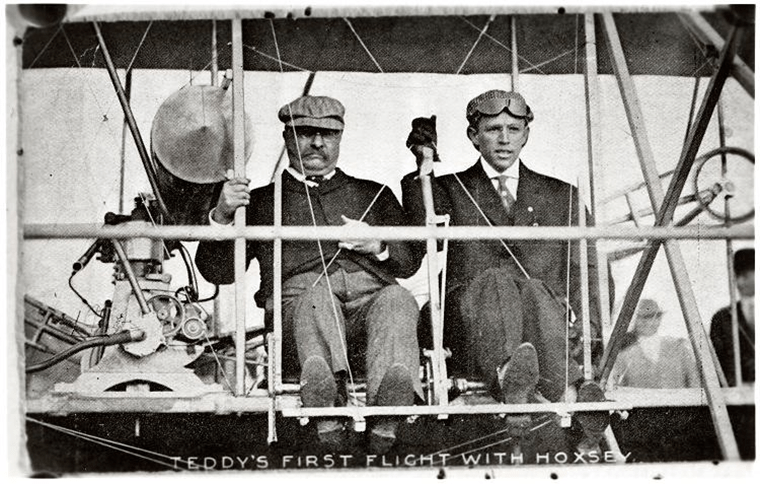
In St. Louis, Missouri, 1910, Roosevelt was the first person who had been President to fly in an airplane.
At a campaign speech in Milwaukee, October 14, 1912, a saloonkeeper shot Roosevelt in the chest. As the bullet did not hit any vital organs, Roosevelt stood back up and finished his speech, with blood staining his shirt.
On June 28, 1914, Austria’s Archduke Franz Ferdinand was assassinated in Sarajevo, beginning World War I.
As America was preparing to enter the War, the New York Bible Society published a pocket New Testament and Book of Psalms in 1917 to be handed out to all the U.S. soldiers, with Theodore Roosevelt writing the introduction:
“The teachings of the New Testament are foreshadowed in Micah’s verse (Micah vi. 8):
‘What more does the Lord require of thee than to do justice, and to love mercy, and to walk humbly with thy God?’
DO JUSTICE; and therefore fight valiantly against the armies of Germany and Turkey, for these nations in this crisis stand for the reign of Moloch and Beelzebub on this earth.
LOVE MERCY; treat prisoners well, succor the wounded, treat every woman as if she was your sister, care for the little children, and be tender to the old and helpless.
WALK HUMBLY; You will do so if you study the life and teachings of the Saviour.
May the God of justice and mercy have you in His keeping.-(signed) Theodore Roosevelt.”
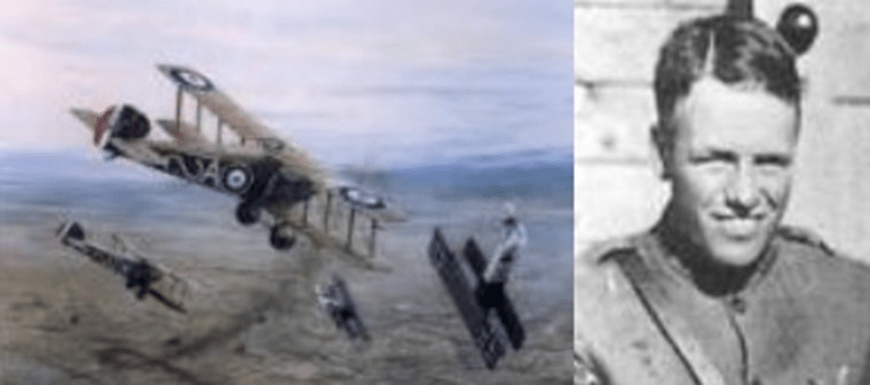
During World War I, Roosevelt’s son Quentin was pilot in Europe, but was tragically shot down and killed July 14, 1918.
Theodore Roosevelt died less than six months later, on January 6, 1919, at the age of 60.
Vice-President Thomas R. Marshall stated: “Death had to take Roosevelt sleeping, for if he had been awake, there would have been a fight.”
The End
 True Texan Tales