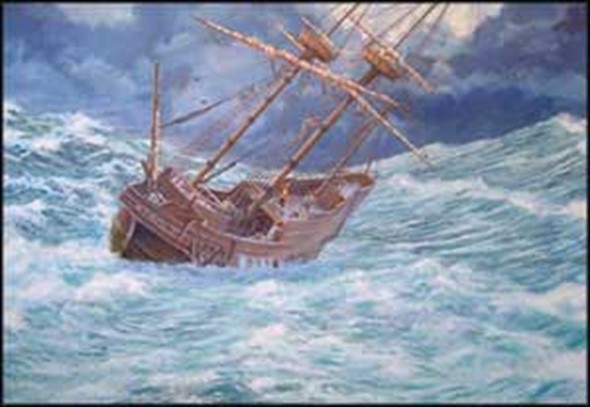
SEPTEMBER 16, 1620, according to the Gregorian Calendar, 102 passengers set sail on the Pilgrims’ ship, Mayflower, with the blessings of their separatist pastor, John Robinson. Their 66-day journey of 2,750 miles encountered storms so rough the beam supporting the main mast cracked and was propped back in place with “a great iron screw.” One youth, John Howland, a servant of John Carver, was swept overboard by a freezing wave and barely rescued.
His descendants include: Signer of the U.S. Constitution Nathaniel Gorham, Ralph Waldo Emerson, Henry Wadsworth Longfellow, Jane Austin, Franklin D. Roosevelt, George Bush, Sarah Palin, Humphrey Bogart, and Alec Baldwin. Howland was described in colonial records as a “godly man and an ardent professor in the ways of Christ.”
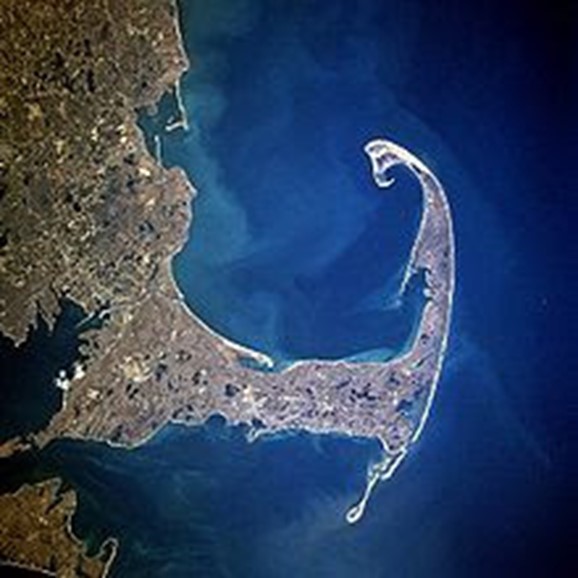
The Mayflower intended to land in Virginia but was blown off-course to Massachusetts. With the weather too dangerous to sail any more so Captain Christopher Jones insisted the Pilgrims disembark.
With no “king-appointed” person on board with authority to take charge, the Pilgrims had a question – who would be in charge?
They did something unique. They gave themselves authority and created their own “covenant” government — The Mayflower Compact. They had a charter to found a colony way farther south, but not at Plymouth. This Compact that they constructed abord ship as their governing authority eventually became the model for our U.S. Constitution. It was the first instrument for founding a government from “The People”….. A Republic, as opposed to a government under a King.
This Compact was first proposed by their Pastor Robinson and modeled on the Covenants as described in the Bible.

Pastor Robinson is prominently depicted kneeling in prayer in a painting in the U.S. Capitol Rotunda -The Embarkation of the Pilgrims.
Of the Pilgrims’ landing at Plymouth, Massachusetts, Governor William Bradford wrote: “Being thus arrived in a good harbor, and brought safe to land, they fell upon their knees and blessed the God of Heaven who had brought them over the vast and furious ocean, and delivered them from all the perils and miseries thereof, again to set their feet on the firm and stable earth, their proper element.”
Though half died that first bitter winter, Governor William Bradford wrote: “Last and not least, they cherished a great hope and inward zeal of laying good foundations … for the propagation and advance of the gospel of the kingdom of Christ in the remote parts of the world.”
Ralph Waldo Emerson wrote in his article “American Civilization, published in The Atlantic Magazine, April, 1862: “America is another word for Opportunity. Our whole history appears like a last effort of the Divine Providence in behalf of the human race.”
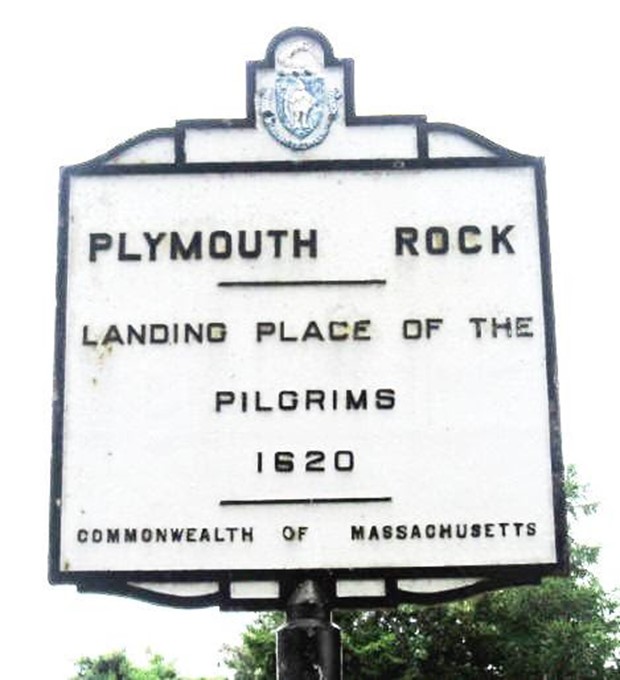
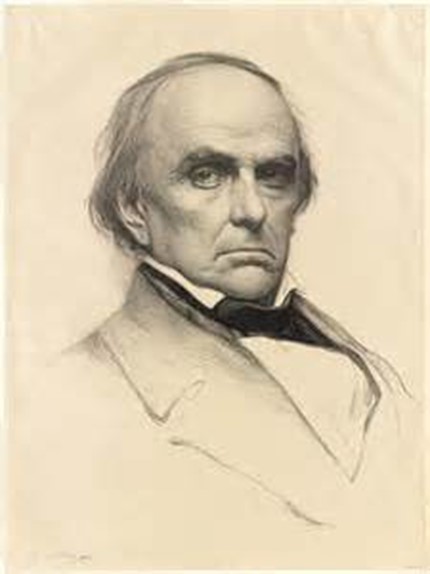
At the Bicentennial Celebration of the landing of the Pilgrims at Plymouth Rock, Secretary of State Daniel Webster stated December 22, 1820: “There is a … sort of genius of the place, which … awes us. We feel that we are on the spot where the first scene of our history was laid; where the hearths and altars of New England were first placed; where Christianity, and civilization … made their first lodgment, in a vast extent of country … ‘If God prosper us,’ might have been the … language of our fathers, when they landed upon this Rock … ‘We shall here begin a work which shall last for ages … We shall fill this region of the great continent … with civilization and Christianity …'”
Webster continued: “The morning that beamed … saw the Pilgrims already at home … a government and a country were to commence, with the very first foundations laid under the divine light of the Christian religion … Our ancestors established their system of government on and religious sentiment … Whatever makes men good Christians, makes them good citizens. Our fathers came here to enjoy their religion free and unmolested; and, at the end of two centuries, there is nothing upon which we can pronounce more confidently … than of the inestimable importance of that religion to man …”
Webster added a rebuke to pastors who refuse to address politics: “The African slave-trader is a pirate and a felon; and in the sight of Heaven, an offender far beyond the ordinary depth of human guilt … If there be … any participation in this traffic, let us pledge ourselves here, upon the rock of Plymouth, to extirpate and destroy it … I invoke the ministers of our religion, that they proclaim its denunciation of these crimes, and add its solemn sanctions to the authority of human laws. If the pulpit be silent whenever or wherever there may be a sinner bloody with this guilt within the hearing of its voice, the pulpit is false to its trust …”
Webster reflected further: “Whoever shall hereafter write this part of our history … will be able to record no … lawless and despotic acts, or any successful usurpation. His page will contain no exhibition of … civil authority habitually trampled down by military power, or of a community crushed by the burden of taxation … He will speak … of that happy condition, in which the restraint and coercion of government are almost invisible and imperceptible …”
Webster concluded his Plymouth Rock address: “Finally, let us not forget the religious character of our origin. Our fathers were brought hither by their high veneration for the Christian religion. They journeyed by its light, and labored in its hope. They sought to incorporate its principles with the elements of their society, and to diffuse its influence through all their institutions, civil, political, or literary. Let us cherish these sentiments, and extend this influence still more widely; in the full conviction, that that is the happiest society which partakes in the highest degree of the mild and peaceful spirit of Christianity.”
(My good friend, Marshall Foster stayed at my ranch with me many, many times. Together, we made many plans and proposed many Christian projects.)

Marshall Foster of the World History Institute wrote in “A Shining City on a Hill,” February 27, 2013: “Four hundred years ago the conflict between tyranny and liberty was red hot …When King James died in 1625, his son Charles the First ascended to the throne with the arrogance of a Roman emperor. He was the quintessential ‘divine right’ monarch. He declared martial law and suspended the rights of the individual …
The king’s inquisitors at his ‘Star Chamber’ in the tower of London used torture techniques to ‘discover the taxpayer’s assets’ …
A turning point in public opinion took place on January 30, 1637. Three prisoners were locked down in the pillory in London before a huge crowd…… These men included a Puritan minister, a Christian writer and Dr. John Bastwick, a physician.
What was their crime? They had written pamphlets disagreeing with the king’s religious views. The sheriff began by branding the men with red hot irons on the forehead with an S.L. for seditious libel …”

Dr. Foster continued:
“The tyranny of the king … finally aroused the Christian sensibilities of the people. They would no longer tolerate burnings or mutilations for matters of conscience on religious views …
The persecutions drove tens of thousands of liberty loving believers to follow the Pilgrims to New England where they laid the foundation for the world’s most biblically based nation.”
 True Texan Tales