I have written you before about the amazing men who signed the Declaration of Independence and founded our Country. By signing that Document, they pledged opposition to the greatest empire on earth with the largest and most powerful army and navy. To form a Republic in opposition to such powerful forces was very dangerous and also seemed impossible. However, they had something on their side that Great Britain did not…..The Mighty God of the Universe. Of that small group, many you have heard about, but some of the most important ones, you probably have not. One of those was Dr. Benjamin Rush. Here is his story:
Dr. Benjamin Rush had studied medicine in Philadelphia, then in Europe under the world’s foremost physicians, and then returned to Philadelphia in 1769.
Though his practices were archaic by today’s standards, he is considered by some as the “Father of American Medicine” for his work on staff at the Pennsylvania Hospital, where he opened the first free medical clinic.
He was among the first to recognize alcoholism as a disease and began to promote temperance.
Dr. Rush wrote the first textbook on mental illness and psychiatry, recommending treatment with kindness, earning him the title “Father of American Psychiatry.”
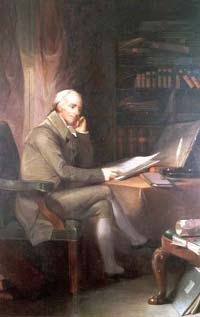
He was a member of the Continental Congress and signed the Declaration of Independence.
His wife was Julia, was the daughter of Richard Stockton, also a signer of the Declaration of Independence.
Thomas Paine consulted with Dr. Benjamin Rush when writing his stirring pamphlet Common Sense.
Rush helped write Pennsylvania’s Constitution and was as a member of the Pennsylvania State Convention which ratified the U.S. Constitution in 1787.
He was Treasurer of the U.S. Mint.
Rush helped found Dickinson College to train physicians, and the Philadelphia Dispensary.
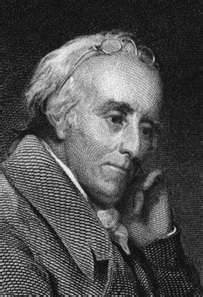
During the dread summer of 1793, Dr. Rush stayed in Philadelphia battling the disease of Yellow Fever which killed thousands.
He was the first to recognize that yellow fever was not contagious, leading to the later discovery that it was spread by mosquito bites.
Dr. Rush and other founders, including George Washington, donated to Richard Allen, founder of the African Methodist Episcopal Church.
Dr. Benjamin Rush supported ending slavery prior to the Revolution, forming a Society for the Abolition of Slavery.
Perhaps Dr. Benjamin Rush’s most beloved contribution to American history was in 1812 encouraging John Adams to write to Thomas Jefferson, breaking the silence which had existed between them for years due to earlier political differences.
A proponent of public education for young women as well as men, Dr. Benjamin Rush wrote his Thoughts Upon the Mode of Education Proper in a Republic, 1786: “I proceed … to inquire what mode of education we shall adopt so as to secure to the state all of the advantages that are to be derived from the proper instruction of the youth; and here I beg leave to remark that the only foundation for a useful education in a republic is to be laid on the foundation of religion.
Without this there can be no virtue, and without virtue there can be no liberty, and liberty is the object and life of all republican governments. But the religion I mean to recommend in this place is that of the New Testament … Its doctrines and precepts are calculated to promote the happiness of society and the safety and well-being of civil government.
Dr. Rush founded a Sunday School Union and the Philidelphia Bible Society.
He wrote in A Plan for Free Schools, 1787: “Let the children … be carefully instructed in the principles and obligations of the Christian religion. This is the most essential part of education.”

Rush wrote to Jeremy Belknap, July 13, 1789: “The great enemy of the salvation of man, in my opinion, never invented a more effectual means of extirpating (removing) Christianity from the world than by persuading mankind that it was improper to read the Bible at schools.”
| Dr. Benjamin Rush wrote in an essay, “A Defense of the Use of the Bible as a School Book: ” included in his 1798 work, Essays, Literary, Moral and Philosophical: “The Bible, when not read in schools, is seldom read in any subsequent period of life. It should be read in our schools in preference to all other books from its containing the greatest portion of that kind of knowledge which is calculated to produce private and public temporal happiness.” |
Rush wrote in Essays, Literary, Moral, and Philosophical, 1798: “I know there is an objection among many people to teaching children doctrines of any kind, because they are liable to be controverted. But let us not be wiser than our Maker If moral precepts alone could have reformed mankind, the mission of the Son of God into all the world would have been unnecessary. The perfect morality of the Gospel rests upon the doctrine which, though often controverted has never been refuted: I mean the vicarious life and death of the Son of God.” He added: “Vicarious” is defined in Merriam-Webster’s Dictionary as: “suffered by one person as a substitute for another or to the benefit or advantage of another: substitutionary.”
Dr. Rush stated: “Without religion, I believe that learning does real mischief to the morals and principles of mankind.”
He wrote his Thoughts Upon the Mode of Education Proper in a Republic, 1786: “A Christian cannot fail of being a republican … for every precept of the Gospel inculcates those degrees of humility, self-denial, and brotherly kindness which are directly opposed to the pride of monarchy. A Christian cannot fail of being useful to the republic, for his religion teaches him that no man ‘liveth to himself.’ And lastly a Christian cannot fail of being wholly inoffensive, for his religion teaches him in all things to do to others what he would wish, in like circumstances, they should do to him.”
Dr. Benjamin Rush explained in Essays, Literary, Moral, and Philosophical, 1798: “Christianity is the only true and perfect religion, and that in proportion as mankind adopts its principles and obeys its precepts, they will be wise and happy. In contemplating the political institutions of the United States, I lament that we waste so much time and money in punishing crimes and take so little pains to prevent them.
We profess to be republicans, and yet we neglect the only means of establishing and perpetuating our republican forms of government, that is, the universal education of our youth in the principles of Christianity by the means of the Bible. For this Divine book, above all others, favors that equality among mankind, that respect for just laws, and those sober and frugal virtues, which constitute the soul of republicanism.”
On July 9, 1788, in a letter to Elias Boudinot regarding a parade in Philadelphia, Dr. Benjamin Rush stated: “The Rabbi of the Jews locked arms of two ministers of the Gospel was a most delightful sight. There could not have been a more happy emblem.”

Dr. Benjamin Rush wrote: “I have been alternately called an Aristocrat and a Democrat. I am neither. I am a Christocrat. I believe all power … will always fail of producing order and happiness in the hands of man. HE alone who created and redeemed man is qualified to govern him.”
Rush died in Philadelphia on April 19, 1813, and was buried in the yard of Christ’s Church.
John Adams wrote: “Another of our friends of seventy-six is gone, my dear Sir, another of the co-signers of the Independence of our country. A better man than Rush could not have left us, more benevolent, more learned, of finer genius, or more honest. I know of no Character living or dead who has done more real good in America.”
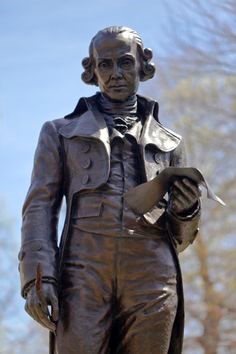
Memorials to Dr. Benjamin Rush stand on Navy Hill in Washington, D.C., and near the Harvard Square Library.
During his final illness, he wrote to his wife: “My excellent wife, I must leave you, but God will take care of you. By Thy glorious resurrection and ascension, and by the coming of the Holy Ghost, blessed Jesus, wash away all my impurities, and receive me into Thy everlasting kingdom.”
 True Texan Tales