It does say in the Bible that God is involved in the affairs of nations. In that context He used some incredible people in the founding of America. One of the most important was Captain John Smith. Following is some of what I consider his God directed story and life:
Captain John Smith

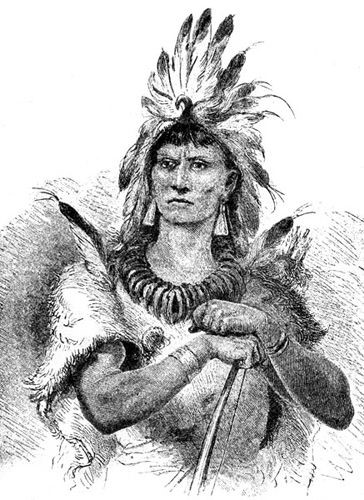
Americans are aware of the story of the founding of Jamestown, Virginia, in 1607, where Captain John Smith was about to be killed by Chief Powhatan but was saved by the pleadings of 11–year–old Pocahontas. Smith wrote in his New England’s Trials, 1622: “God made Pocahontas, the King’s daughter the means to deliver me.”
What many may not be aware of is that prior to founding Virginia, John Smith fought the Turks who were invading Hungary and what appears to be by God, to be directed into many other adventures.
John Smith joined the Austrian forces and fought in the “Long War” against the Muslim Ottoman Turks in Eastern Europe.
Mehmed the Third, 1566–1603, became Ottoman Sultan in 1595. He had his 16 brothers strangled to death to eliminate rivalry to his throne. Bertrand Russell, who received the Nobel Prize for Literature, stated in his Nobel Lecture, 1950:
“Over and over again in Mohammedan history, dynasties have come to grief because the sons of a sultan by different mothers could not agree, and in the resulting civil war universal ruin resulted.”
Sultan Mehmed the Third raised an army of 60,000 and in 1596 conquered the Hungarian city of Erlau. He defeated the Austrian Habsburg and Transylvanian forces at the Battle of Mezõkeresztes.
John Smith joined the ranks of Austrian Hapsburg Earl of Meldritch, and was assigned to the General of Artillery, Baron Kisell. Smith marched with German, French, Austrian and Hungarian troops to fight Muslims who had captured Budapest and were invading Lower Hungary, Wallachia, Moldovia, Romania and Transylvania near the Black Sea.
In 1600–1601, during the campaign of Romanian Prince Michael the Brave, John Smith introduced ingenious battle tactics. When Muslims were besieging the garrison at Oberlymback, Smith devised a method of signaling messages with torches and using gunpowder to create diversions. The resulting victory earned him the rank of captain with a command of 250 horsemen.
At the siege of Alba Regalis, Smith assisted Duc de Mercoeur by devising makeshift bombs of earthen pots filled with gunpowder, musket shot and covered with pitch, and catapulted them into the city, leading to an evacuation.
Muslims had captured the city of Regall, located in a pass between Hungary and Transylvania, “the Turks having ornamented the walls with Christian heads when they captured the fortress.”
Smith fought under General Moyses, serving the Prince of Transylvania, Sigismund Bathory, to lead a campaign to regain the city. During a lull in the fighting, the bashaw – officer of the Turks put out a challenge. In a “David and Goliath” style contest, the 23–year–old John Smith was chosen to fight. He defeated the bashaw, cutting off his head. To avenge the bashaw’s death, another Muslim challenged Smith and lost his head. This happened a third time, resulting in Smith being awarded a “coat-of- arms” depicting three severed turbaned heads.
General Moyses, with Captain John Smith, soon recaptured Regall, then Veratis, Solmos and Kapronka. At Weisenberg, Prince Sigismund Bathory conferred on John Smith a shield-of-arms with “three Turks’ heads.”
John Smith continued in the regiment of Earl Meldritch, fighting in 1602 for Radu Serban to defend Wallachia against invading Turkish Muslims. In the battle, the Earl of Meldritch was killed along with 30,000 soldiers. John Smith was wounded and left for dead: Smith among the slaughtered dead bodies, and many a gasping soul with toils and wounds lay groaning among the rest. However, found by the pillagers he was able to live, and perceiving by his armor and habit, his ransom might be better than his death, they led him prisoner with many others.
At Axopolis, Smith was sold with other prisoners at the slave market to Bashaw Bogall, “so chained by the necks in gangs of twenty they marched to Constantinople.” There, Smith was pitied by Bashaw Bogall’s mistress, who sent him to her brother, Tymor Bashaw.
Unfortunately, Tymor “diverted all this to the worst cruelty,” stripped Smith naked, shaved him bald, riveted an iron ring around his neck, clothed him in goat skins and, as slave of slaves, was given only goat entrails to eat.
Following a beating received while thrashing in a field, Smith seized the opportunity and killed his master. He hid the body in the straw, put on his master’s clothes, took a bag of grain and rode off toward Russia. After 16 days he reached a Muscovite garrison on the River Don, where the iron ring was removed from his neck.
With their help he found his way through Poland back to his troops in Transylvania. After being released from service with a large reward, John Smith traveled through Europe to Morocco in Northern Africa to fight Muslim Barbary pirates in the Mediterranean Sea. In 1605, at the age of 26, he returned to England. It is amazing to me that now Captain John Smith survived these amazing exploits at such a young age. However, he was not nearly finished with adventures that seemed to be God directed.
In 1606, Captain John Smith set sail to help found Jamestown, Virginia, the first permanent English colony in North America. In 1614, six years before the Pilgrims arrived, Smith explored Maine and Massachusetts Bay.
In his Advertisements for Unexperienced Planters, published in London, 1631, John Smith wrote about what he considered the necessity to worship God:
“When I first went to Virginia, I well remember, we did hang an awning — which is an old sail — to three or four trees to shadow us from the sun, our walls were rails of wood, our seats unhewed trees, till we cut planks, our pulpit a bar of wood nailed to two neighboring trees, in foul weather we shifted into an old rotten tent, for we had few better … this was our church, till we built a homely thing like a barn ….. We had daily Common Prayer morning and evening, every day two Sermons, and every three months the holy Communion, till our Minister died — Robert Hunt — but held our Prayers daily, with an Homily on Sundays.”
So, the Bible says that “God is involved in the affairs and founding if nations”. And he certainly used Captain John Smith in this first real settlement in the founding of America. And as I mentioned at the beginning of this story: At the founding of Jamestown, Virginia, in 1607, where Captain John Smith was about to be killed by Chief Powhatan but was saved by the pleadings of 11–year–old Pocahontas. Smith wrote in his New England’s Trials, 1622: “God made Pocahontas, the King’s daughter the means to deliver me.”

 True Texan Tales